Shortwave listening and everything radio including reviews, broadcasting, ham radio, field operation, DXing, maker kits, travel, emergency gear, events, and more
Many thanks to SWLing Post contributor, Alexander (DL4NO), who writes:
Parallel to the Hamradio fair in Friedrichshafen, Germany, there are talks and whole conferences. Over the last years, the “Software-Definded Radio Academy” (SDRA) was one of them.
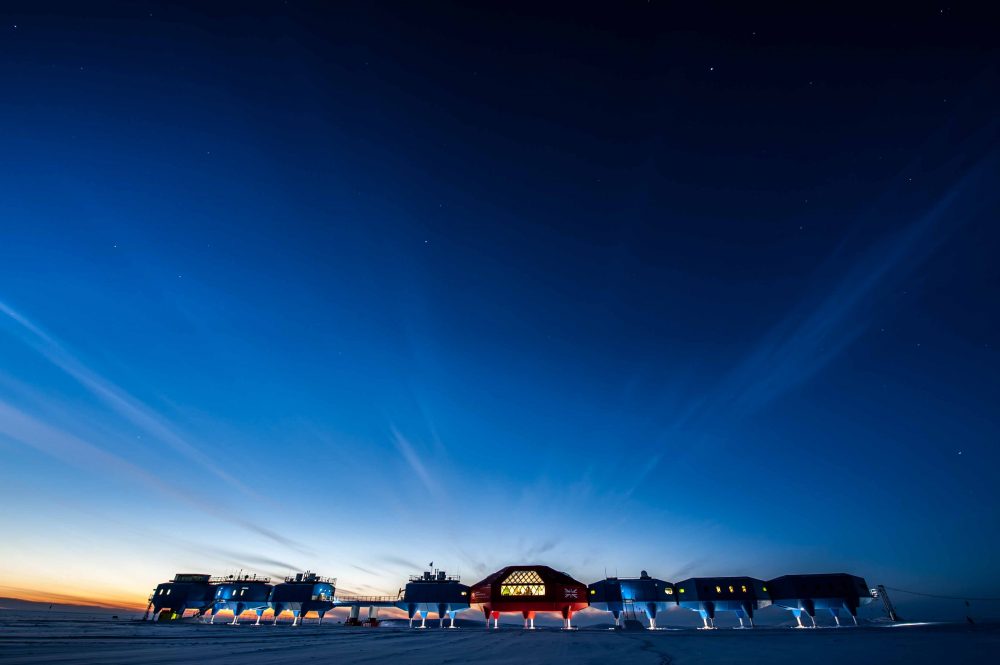
Halley VI Research Station on the Brunt Ice Shelf in Antarctica (Source: British Antarctic Survey)
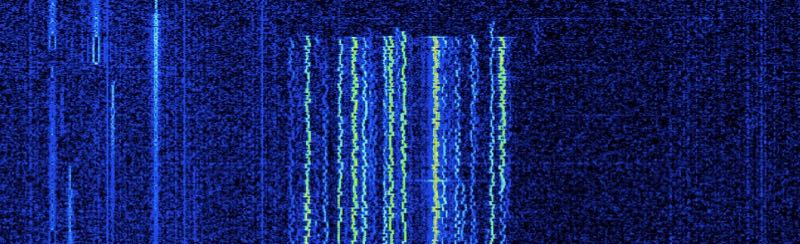
On Friday, 21 June 2019, the BBC World Service officially transmitted the 2019 BBC Antarctic Midwinter Broadcast–an international radio broadcast intended for a small group of scientists, technicians, and support staff who work for the British Antarctic Survey.
This is one of my favorite annual broadcasts, and I endeavor to listen every year. Once again, the SWLing Post called upon readers to make a short recording of the broadcast from their locale.
Below are the entries, roughly organized by continent and country/region. We had a total of twenty seven recordings submitted from all seven continents this year–simply amazing!
Putting this post together takes almost a full dedicated day sorting recordings and formatting them for the Post. If I’ve somehow missed including your entry, please contact me; I’ll amend this post.
So, without further ado we begin with a recording made in Antarctica at Germany’s Neumayer-Station III:
The 2019 BBC Antarctic Midwinter Broadcast Recordings
Antarctica
Neumayer Station III, Antarctica
SWL: Andreas Mueller, DL3LRM Location: Neumayer-Station-III, Antarctica Notes:
Hello Thomas,
Cheers from Antarctica, I am the radio operator and electronic
engineer of the 39th overwintering team at Germany’s Neumayer-Station
III. Thanks to your blog and post on Facebook I got aware of the
annual BBC broadcasts to Antarctica, and was able to sneak away from
the festivities to enjoy these 30 minutes. And would like to provide
a recording as requested by you.
SWL report by Andreas Mueller, DL3LRM
Location: 70°40’S, 008° 16’W, Neumayer-Station-III, Antarctica
Equipment: Yaesu-450D, Commercial Broadband Dipole 2x35m
The recording is about two minutes long, first 30 Seconds on 5875kHz,
then I switched to 7360kHz and remained there for the rest of the
show. I also have my little FT-817 running as a backup and control
unit, and it also confirmed that 7360kHz was the best frequency, with
S7 to S8 Signal strength, and some fading now and then. 5875kHz was
about S5, and I cannot remember hearing anything on 9455kHz, but I
have to admit that I checked that frequency only briefly.
Thanks again for bringing that broadcast to my attention, it really
was a special treat for me on that day.
SWL: Vermont M. Coronel Jr. Location: Manila, Philippines Notes:
Recording of the 2019 BBC Antarctic Midwinter Broadcast. Signal was, I believe coming in from Ascension Island. Signal was very weak since the Sun was already above the horizon at the time of broadcast. I continued to listen for a few minutes and towards the end of the broadcast. I heard greetings from the relatives of those who are currently stationed in the Antarctic. This is a once a year special program to the scientists and support staff in the British Antarctic Survey Team. Received in Quezon City with a 45 foot antenna. -Vermont
Ciao Thomas, I am Davide Borroni from Italy my city is Saronno . I send you my videos, made with my receivers: R&S EK 56, Siemens E401 and R1251. The signal on all three frequencies was excellent here in Italy. As an antenna I used a magnetic loop of 2 meters in diameter.
I hope you like my videos
73s
Very good signal to all frequency + 20 Db !
Utc Time 21.30-20.00
Frequency 7.360-5.875-9.455
Setup: Rx jrc nrd 91, jrc nrd 545 dsp, WJ 8718-9, antenna loop Wellbrook ALA 1530.
Rx Marconi Marine Apollo and Zeppelin antenna 16.2 Mt.
[L]istened to the programme bbc antarctica on 5875 khz and 7360 khz sinfo 54554 both using a sangean ats 818 with a 27 metre antenna long wire. good job and wonderful broadcast. Sending mp3 recording.
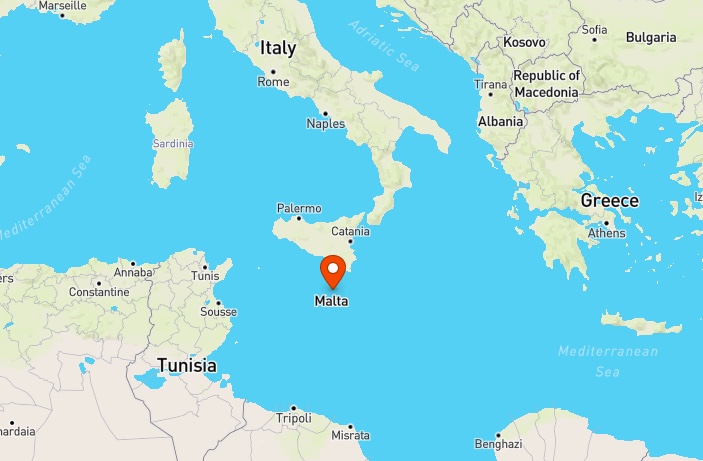
Greeting from Malta
Adrian swl 9H4001SWL
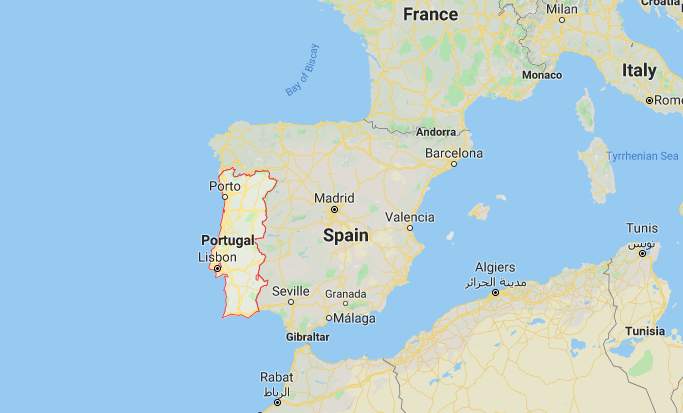
Portugal
SWL: Nuno Oliveira Location: Santarem, Portugal Notes:
This is the video from Santarem, Portugal with the 3 frequencies.
The first video is a Tecsun PL-880 with a 1 meter aluminium rod outside and 12 meters of RG58 coax.
Here is a link to my youtube recording of this years BBC Antartic Midwinter broadcast.
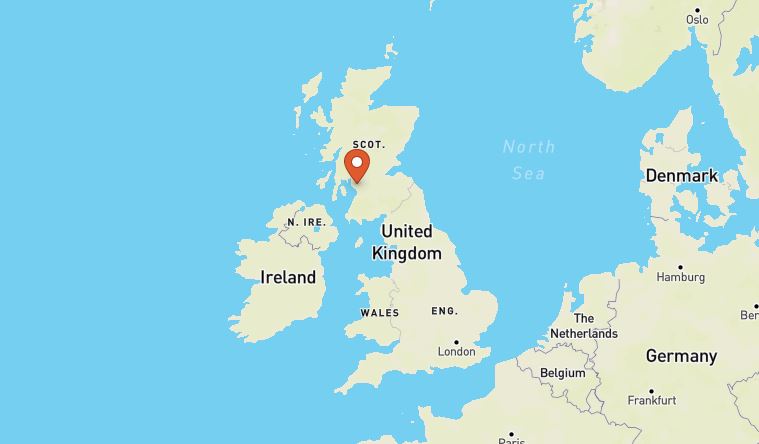
All three signals were good readable at my location in Scotland.
The best reception I got was from Ascension Island on 7360 AM, as there was Ute QRM on 5875.
Details of my RX etc are on the youtube video.
Thanks again,
Regards and 73,
Steven
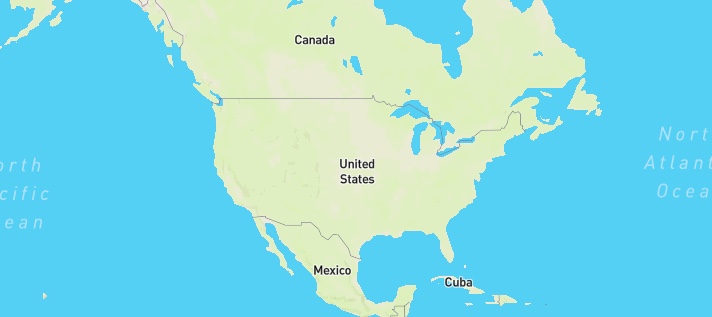
SWL: Richard Langley Location: Hanwell, New Brunswick Notes:
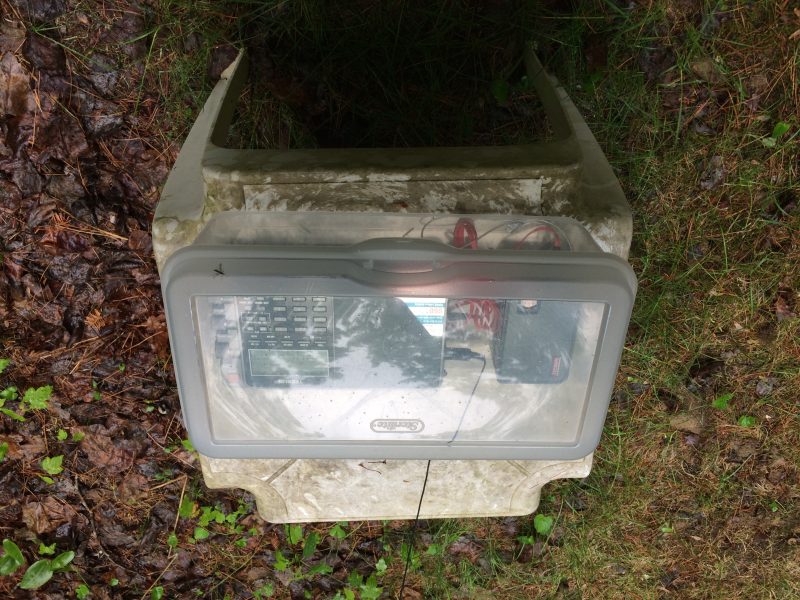
I obtained a good recording of the BAS broadcast here in New Brunswick, Canada, on 9455 kHz using a Tecsun PL-880 receiver outdoors at my house with a Tecsun AN-03L 7-metre wire antenna strung to a nearby tree. Attached is a two-minute clip from the start of my recording. Also attached is a photo of the “listening post” at the back of my mosquito-infested backyard. Note the mosquito on the protective box housing the receiver and recorder!
https://youtu.be/3rGxxBMWiVw is “49 seconds of the 2019 BBC Antarctic Midwinter Broadcast as received at WA1LOU in Wolcott, CT, USA using an ICOM IC-R8600 receiver and Hy-Gain 18 AVT/WB-A vertical antenna. I programmed the four frequencies that were originally announced for the broadcast into the IC-R8600, but learned afterwords that only three were used (5875, 7360, 9455). I had solid copy on 9455 throughout the broadcast. 7360 had a lot of fading, but was still fair copy throughout the broadcast. 5875 was very poor copy during the last 10 minutes; there was no copy for the first 20 minutes.”
SWL: Bob (W2RWM) Location: North Babylon, NY Notes:
Receiving frequency was 7360 kHz. 5875 had a continuous buzz, 9455 was fading in and out too much to understand.
Location is on North Babylon, NY, USA
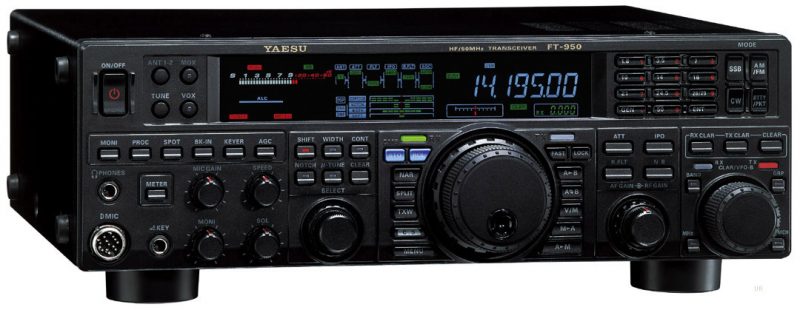
Equipment is a Yaesu FT-950 and an HyEndFed 80-10 meter antenna oriented North and South.
SWL: Don N7DCP Location: South Africa (remotely controled from Idaho) Notes:
This is Don, I am in southwest Idaho. Could only hear a slight carrier locally on 9455 MHz. So used a remote SDR in South Africa to record the audio file. Thanks and 73!
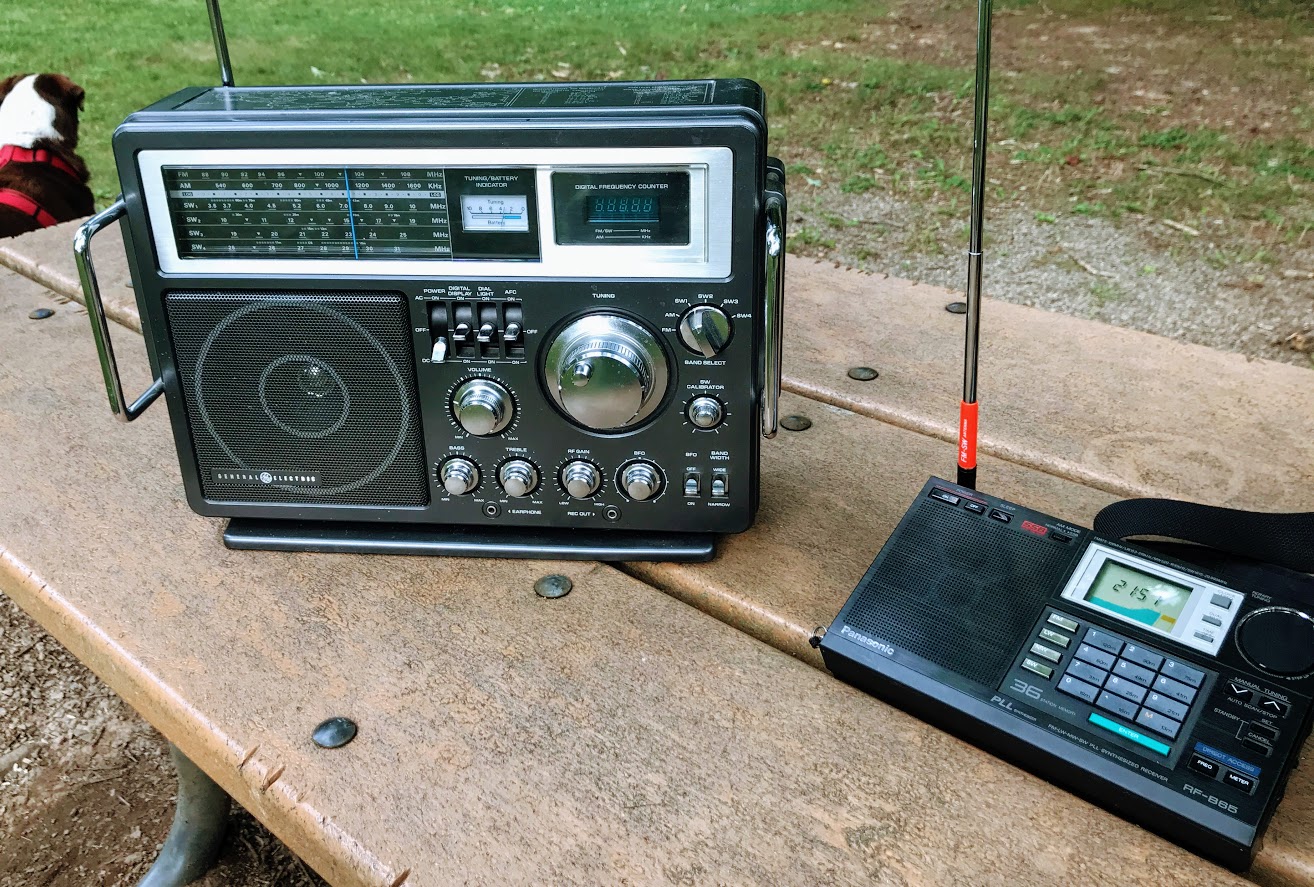
The GE 7-2990A (left) and Panasonic RF-B65 (right)
SWL: Thomas Witherspoon K4SWL Location: Asheville, North Carolina Notes:
Out of the the three Midwinter Broadcast frequencies (5875, 7360, and 9455 kHz), I could receive the 7,360 kHz signal from Ascension Island best.
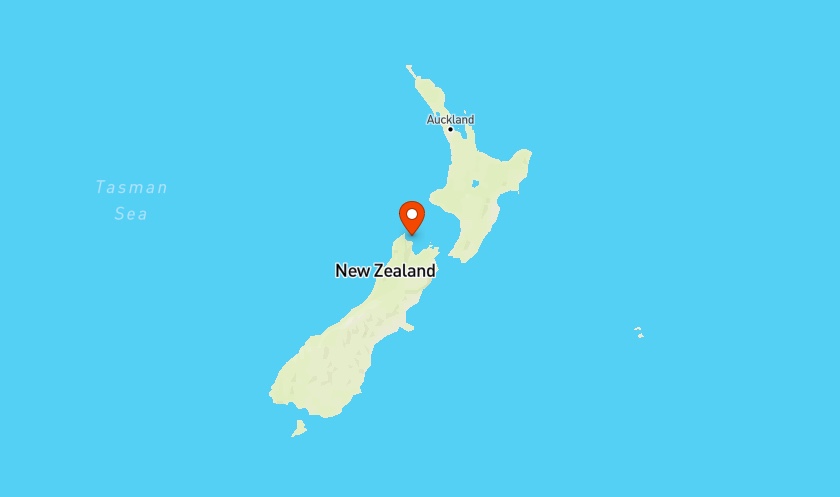
SWL: Chris Mackerell Location: Marahau, New Zealand Notes:
Here’s the first minute of the 2019 BBC Antarctic Midwinter Broadcast as heard here at my home in Marahau, New Zealand.
5875 is in USB to avoid the Stanag signal nearby, the others in Synchronous AM mode.
All three were easily readable here for the entire broadcast.
All received using the same Elad FDM-DUOr receiver & Wellbrook loop antenna.
South America
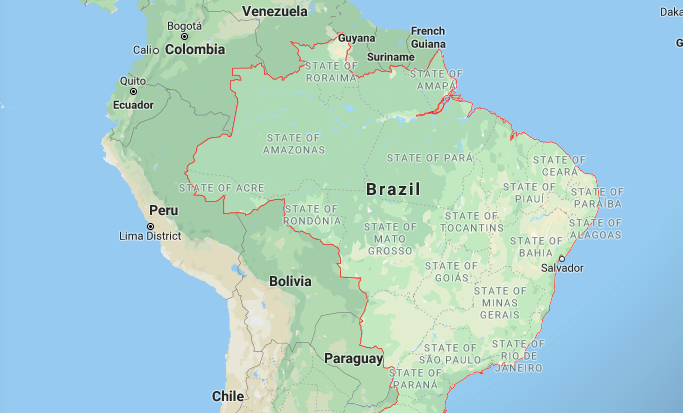
Brazil
SWL: Rodrigo de Araujo Location: Belo Horizonte, Brazil Notes:
How are you? I’m PY4004SWL (Southeast Brazil).
For the first time I tried to listen to the BBC Solstice broadcast to Antarctica and it worked. The only problem is that I wrongly noted the 7350 frequency and with that I lost the Ascencion transmission in 7360, certainly the one that was best heard by the SWLs in my region. Still, I got “taped” 5875 and 9455, the latter with better results. I hope my recordings are useful to those who study propagation.
I have used two radios and 2 kinds of antennas that can be seen and a telescopic as well.
SWL: José Roberto da Silva Cunha Location: Governador Valadares, Minas Gerais, Brazil Notes:
Geographical coordinates:
18 58´45´´ S
41 57´ 30´´ W
Grid locator: GH91ad
With the inclusion of Antarctica, this is the first year we’ve been sent reports from all continents! Amazing!
Once again, many thanks to all of you who submitted your recordings of the BBC Midwinter Broadcast!
We’ll be sharing this post with both the British Antarctic Survey and the BBC World Service. And to all of you, from the SWLing Post: Happy (Belated) Midwinter! Happy Summer/Winter Solstice!
Here’s the description from the C.Crane product page:
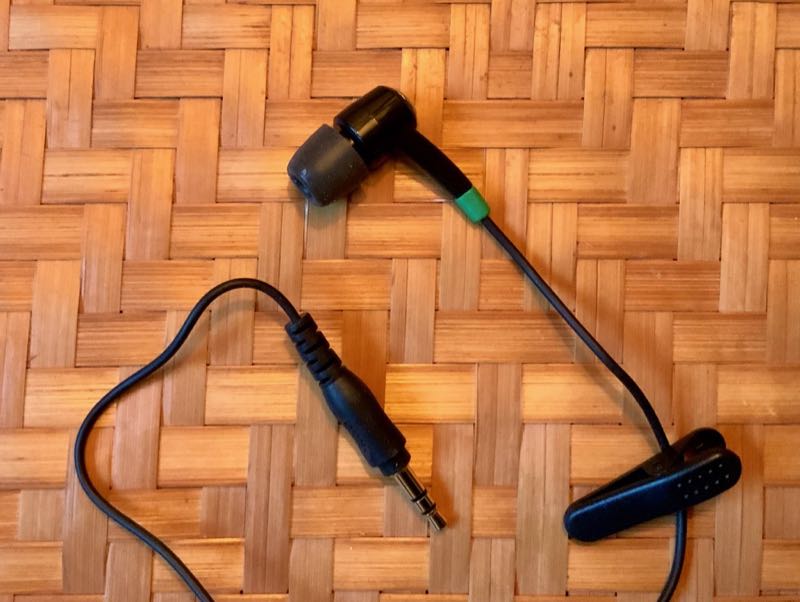
Single Earbud Optimized For Voice
The CC Buds™ Solo single earpiece provides a unique advantage over traditional earbuds because it allows you to interact better with others while listening to radio, podcasts or audiobooks (your boss will love you). The integrated stereo to mono plug works with smartphones, radios, tablets, and most other audio devices.
The Solo can give you a safety advantage when running, biking, or walking because you are more likely to hear if danger approaches. The cable is Kevlar™ reinforced for maximum durability. It is perfect for scanner radio listening. Can work well for law enforcement when greater awareness is needed.
Audio is tuned for superior voice clarity. Included are three silicone and three compressible foam covers––sized small, medium, and large. The small covers usually fits a small ear comfortably. Standard 3.5 mm headphone jack. Cord Length 48″.
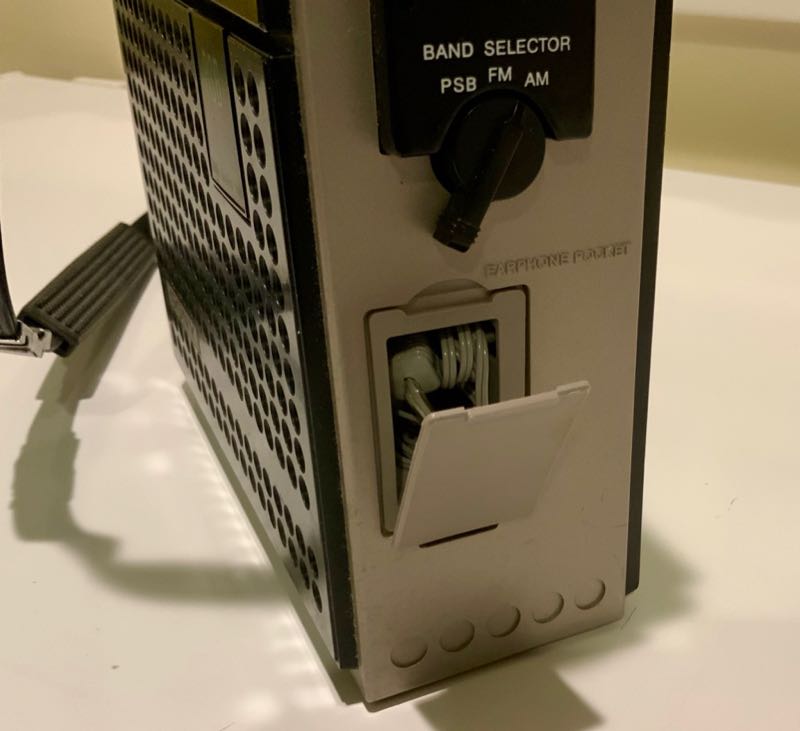
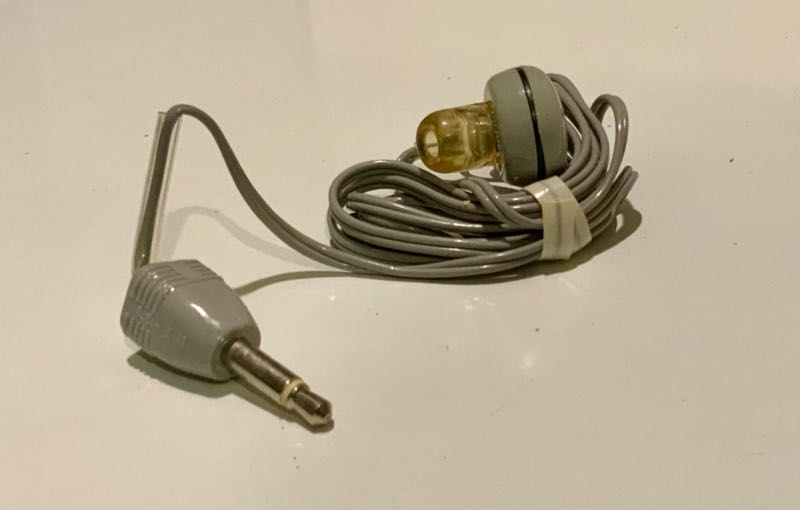
At first blush, the idea of a single earpiece smacks of vintage solid-state radios. I’ve a number of classic portables that were designed around a hard-plastic single earpiece–anyone else remember those?
In fact, my Sony ICF-5500W (above) even has a little compartment to house its custom earpiece.
The Sony ICF-550W’s unforgiving 1970s era earpiece.
In my youth, I carried a hard plastic single earpiece with me everywhere, especially at school, because it made listening to the radio and still having some situational awareness possible. [Unfortunately, I was known to listen to the radio during classes…what a renegade I was back then!]
If you, too, used those hard plastic earpieces, I doubt you’d have ever described them as “comfortable.” I never found them even remotely so. Those earpieces were functional, but the audio they produced was tinny and it was always difficult to keep them in my ear.
Think of the CC Buds Solo as the earpiece we all wish we could have had back then!
The Solo includes numerous earpiece options, a carry bag and owner’s manual.
Here are some of the CC Buds Solo pros:
The audio quality is superb for spoken word
The earpiece is very comfortable (see notes below)
The audio plug allows for mono listening on stereo devices (obviously a must in 2019)
Features a super-strong Kevlar-reinforced cord
Includes a clothing clip that acts as strain relief
Ships with a small, soft carry bag
So does the Solo deliver what it promises? Yes, it does.
What I really love is the number of soft silicon and foam earpieces that ship with the Solo: a total of seven options, when including the default earpiece.
If you’ve ever used in-ear earbuds, you’ll understand the importance of swapping out the soft earpieces to a size that best suits your ears––that is, to a size that makes for a comfortable seal.
The Solo might also be useful if your hearing is a bit better in one ear than the other.
Unlike single earpieces of old, it’s actually a pleasure to use the CC Buds Solo earpiece.
Before using the Solo, I would often wear only the right earpiece of my stereo earbuds when I needed to be able to hear the environment around me. This obviously isn’t ideal because the left earpiece would dangle, catch on my shirt or otherwise get in the way, and often lead to jerking out the right earpiece. Not to mention, it led to an awkward muffling (or altogether missing) of some of the sound in that other dangling earbud when stereo sound is split or processed differently for each ear. Clearly, not the best way to listen.
Note the adjustable clothing clip.
Now, when I’m driving, working, or walking, I can use the Solo clipped it to my shirt; it’s a more simple and annoyance-proof solution that allows for greater mobility and permits me to hear all of the intended sound.
I’ve only used the Solo for spoken word; primarily AM/SW broadcast band listening and for listening to podcasts.
These days, while I’ve been at work on a home renovation, podcasts have become an essential part of my day by helping me pass the time while painting, sanding, cleaning, mowing, doing yard work, or carrying out other tedious tasks. A good podcast definitely keeps it fun. The Solo makes podcast listening easy.
And of course, the Solo is also a great solution for listening to audio books, too.
I’ll admit, when I first saw the product announcement for the CC Buds Solo, I was curious if there’d still be a market for a mono earpiece. I suppose I proved it, myself, as I have found it quite useful when I don’t need the total isolation or stereo sound from two in-ear earbuds.
C.Crane kindly sent me two samples of the CC Buds Solo at no cost to me. I’ve used one for evaluation purposes and C.Crane is kindly allowing me to give the other away to a lucky SWLing Post reader.
Here’s how you can enter our Solo giveaway!
As I mentioned, I consume a lot of podcasts these days. Here are just a few you might want to check out:
Please leave a comment with some of your favorite podcasts or radio shows for a chance to win! Next Tuesday (July 30, 2019) I’ll pick a winner at random from the comments section and ship them a brand new CC Buds Solo single earpiece courtesy of C.Crane!
Many thanks to SWLing Post contributor, David Iurescia (LW4DAF), who shares the following news via Zenit.org:
“The Brazilian program of Vatican Radio-Vatican News resumes its short-wave transmissions in the Amazon region,” announced the portal of Vatican News in Brazilian today, Monday, July 15, 2019, given the proximity of the holding of the Synod for Amazonia (October 6-27, on the theme: “New Ways for the Church and For An Integral Ecology.”
“For over 61 years, Brazil has been listening to the Pope’s voice through Vatican Radio. On August 1, after a period of absence, the Brazilian program of the papal station will return to Amazonia in short wave,” announced the same source.
And it adds: “Thus Vatican Radio-Vatican News shows its attention to an important region of Brazil, for which the radio is its main means of communication. The Pope’s voice will be listened to again on radio by more than 25 million people, who live in this lung of the planet. The decision to broadcast in short wave responds to the geographic reality of Amazonia.”
Vatican News recalls: “Created in March of 1958, twenty-seven years after the foundation of Vatican Radio, on February 12, 1931, the Brazilian program has followed seven pontificates, from Pius XII to Francis. At present, the Brazilians of Vatican Radio-Vatican News offer a wide gamut of daily programs in a multi-media style through different platforms: radio, Web and social networks.”
It also recalled: “On the occasion of the 50th anniversary, in March 2008, Benedict XVI expressed his gratitude to the said program for the inestimable service of proclaiming the Gospel and promoting communion between the Church and the people of Brazil.”
Published on: 2018/11/20, Rev. 1.0 July 2018, Rev. 1.1 Nov 2018
Author: Chavdar Levkov LZ1AQ
Setup
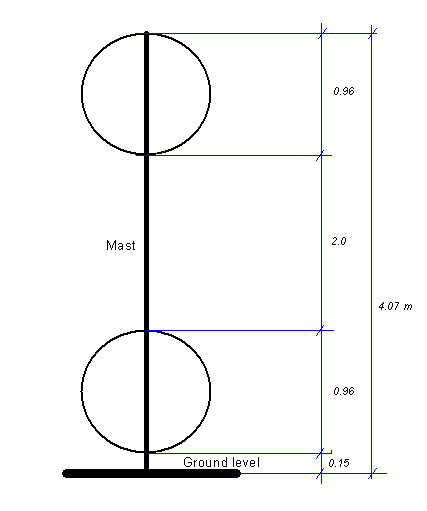
Two identical small loops were placed one above the other according to Fig.1. One of the loops is very low – almost on the ground. The other one is placed at height which usually is used by the loop users. Two AAA-1C wideband active antenna amplifiers were used. Their gain difference was not more than 0.3 dB. The feeder was FTP cable each 20 m long. No cable baluns were used. The outputs were connected through two way antenna switch to a SD RX (Perseus). I used a measurement technique described in – A Periodic Switching Technique to Compare Receiving Antenna Performance in the Presence of Strong Fading. This is a precise method to compare two receiving antennas with real sky wave signals and the resolution can be less than a decibel. The idea is to switch periodically between two antennas and to estimate their difference on a calibrated graphic strength meter of a SD radio.[…]
I’ve often assumed height had little effect on the performance of an HF loop antenna–this evaluation seems to support that theory. Thanks for sharing this, Harald!
One of our frequent contributors, Tom Laskowski, has digitally converted numerous magnetic tape recordings from his personal collection to share with the archive. Tom made the following recording of the Voice of America on July 20, 1979 at 0500 UTC on the 31 meter band.
Tom notes:
The first 4:30 is from a VOA newscast that aired before the main part of the program.
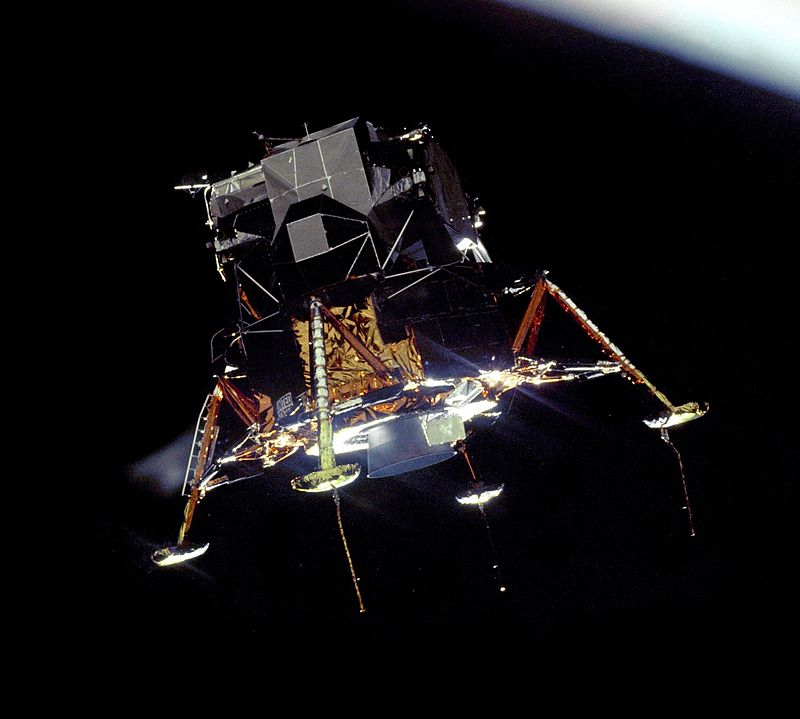
The main recording was presented on the 10th anniversary of the Apollo 11 moon landing. I enjoy listening to this every year on the landing anniversary.
I’ve enjoyed listening to this 10th anniversary presentation as we, today, celebrate the 50th anniversary of the moon landing::
[Update:] Tom also shares another recording that marks this anniversary:
I thought this might be [another] appropriate file to upload considering we are marking the 50th anniversary of Apollo 11. I recorded this program thirty years ago on July 20, 1989 [5.975 MHz at 0400 UTC] the 20th anniversary of the Apollo 11 moon landing. Omnibus takes a look back at the historic Apollo mission and how and why it happened:
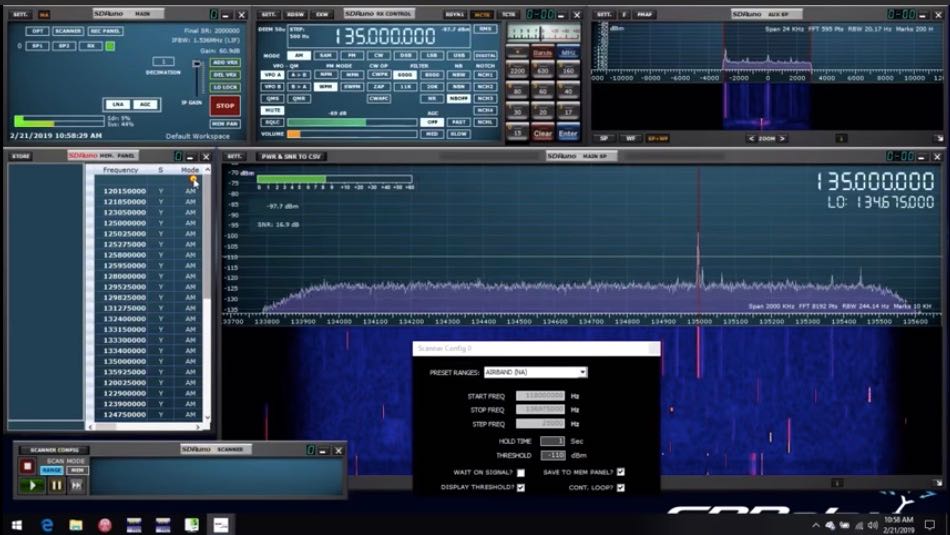
Besides making great receivers, one of the things I love about SDRplay is their focus on providing user documentation and tutorials. We’ve mentioned before that SDRplay’s Mike Ladd (KD2KOG) actively creates tutorial videos exploring a number of SDRplay topics. To date, he’s produced over 20 videos–!
If you own an SDRplay product, I’d strongly recommend checking out Mike’s video list even if you feel you’re already a pro user. The videos are easy to follow and are chock-full of SDRuno tips and tricks.
I’ve pasted the latest links to the Mike’s videos below but I would encourage you to check the SDRplay YouTube channel (link below) and this page for the latest episodes as they are regularly updated.
As SDRplay RSPs get used for more and more receiver applications, we felt we didn’t want to lose sight of the large number of people who love short wave listening and HF ham radio, so we have created “Ham Guides” as a place where we focus on providing tuition and help for all aspects of receiving radio signals at 30MHz and below. This includes set up and use of SDRuno, and tips and techniques on key related topics such as decoding, propagation and antennas.