Category Archives: Shortwave Radio

Kenwood R-2000: Luke’s simple fix for a frozen encoder

Many thanks to SWLing Post contributor, Luke Perry, who writes:

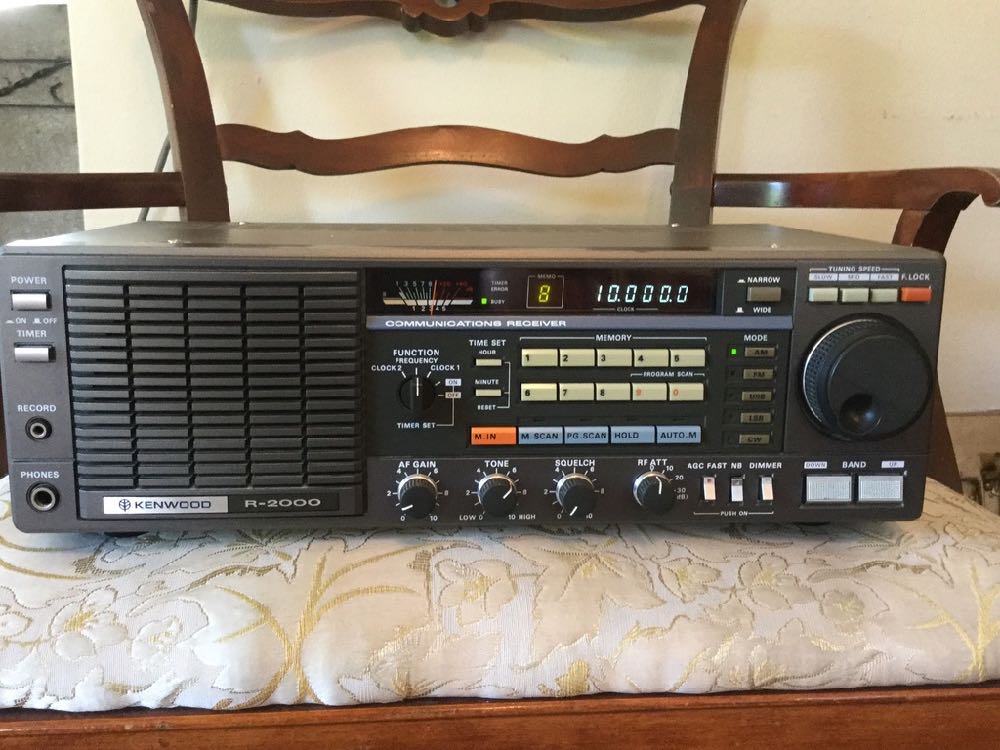
Hi Thomas, I thought I would share with the people on the SWLing Post my new radio purchase.

I needed a receiver with a noise blanker as you might (or might not) recall my issue that I was having with electrical noise at my listening location. So I saw this on the local Craigslist for $50 and called right away and I was lucky to be the first one to respond.

The seller was the original owner and he had bought it back in the 80’s after coming back from Saudi Arabia so he could listen to the BBC. It was fully working but when I got home I noticed that tuning dial was not working and this set does not have direct frequency input for some reason.
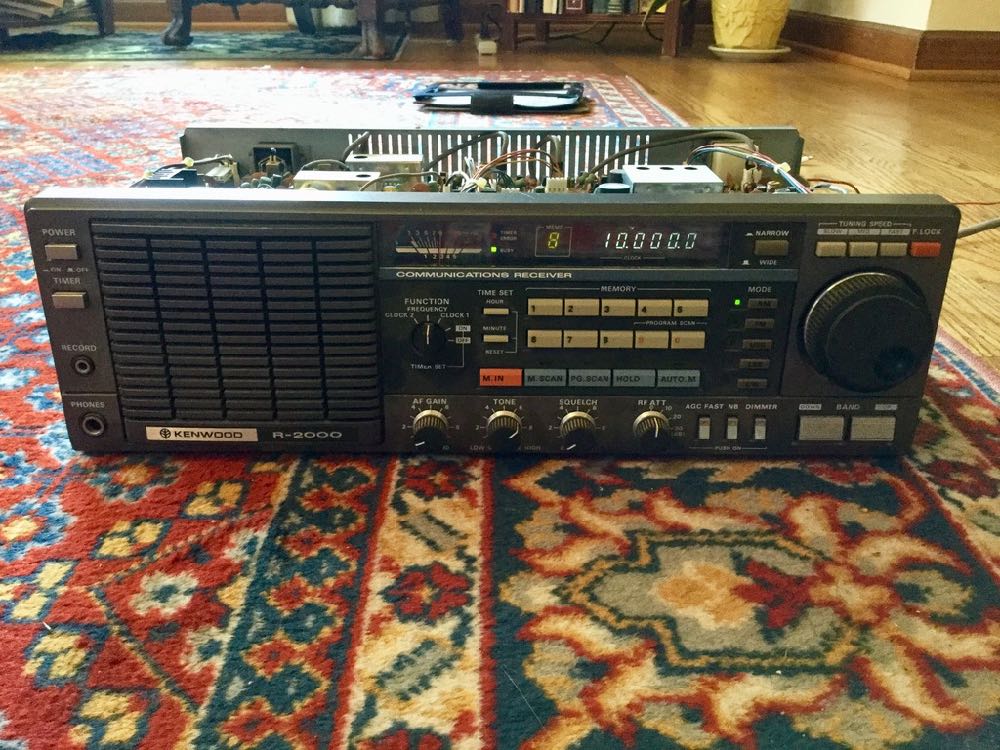
I went online and scoured the internet for a possible fix and found a old posting that said to adjust the pots on the encoder board behind the main tuning knob. I found a service manual online and located the position of the board and thankfully that was the fix. But for some reason the position that they both were in was not the correct position so I don’t know if someone had been in there before but I doubt it.
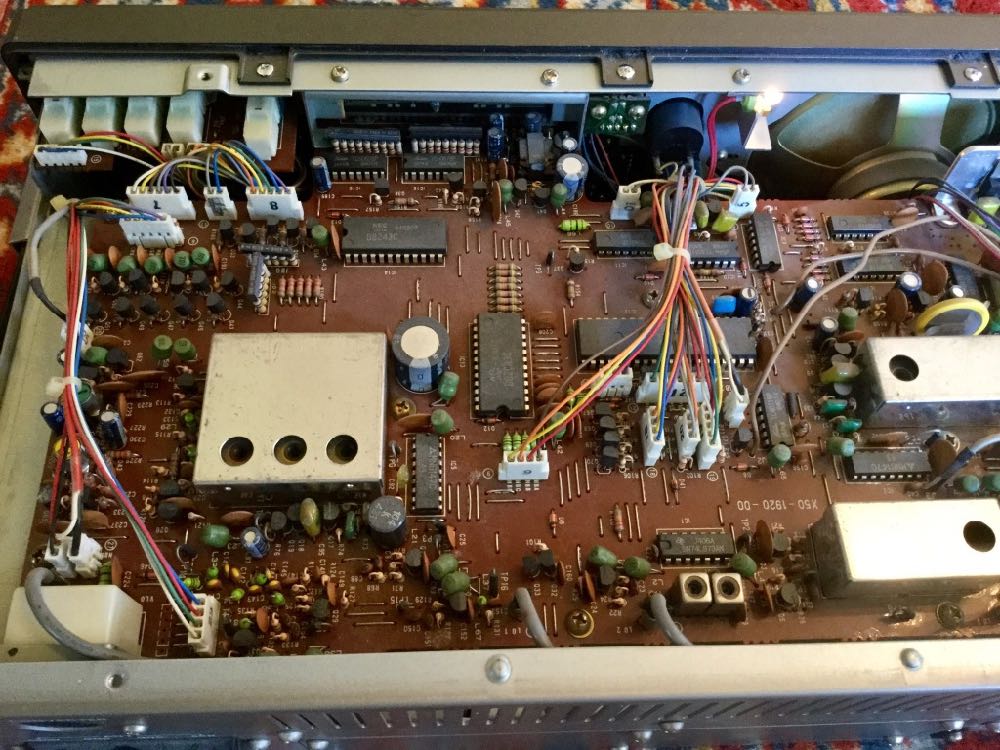
Anyway, I am very happy with the purchase and the noise blanker seems to really work as I could not listen to any frequencies above 5 MHz on my old radio due to RFI. Also, the R-2000 seems to be very sensitive just from the small wire antenna that I have been using so I plan to get a better antenna and I am hoping to get some good DX catches.

Anyway, I thought I would share the news of my new purchase and hopefully the fix for the tuning knob might be of some use to others down the road.

I’m so glad you found the fix for the encoder function, Luke. Thank you for sharing because, no doubt, others will be searching for this solution. Sounds like it was a simple enough fix and certainly did the trick. If you ever need to re-cap the R-2000, you can find kits like this one to make the process easier. If you don’t want to do the work yourself, my friend Vlado recaps radios for a very reasonable price.

I’m sure you know you really snagged a deal grabbing that R-2000 for $50! Wow!

HAARP WSPR 80m transmissions July 30 – Aug 1

(Source: Southgate ARC)

Chris Fallen KL3WX will be using 80 kilowatts into the massive HAARP antenna array in Alaska for WSPR experiments in the 80m band from July 30 to August 1

Chris KL3WX tweeted:

WSPR experiments are tentatively planned to occur between 2300 and 2400 hours UTC on July 30, 31, and Aug 1. Most broadcasts will be at the 80m dial frequency default in WSJT, that is 3.5926 MHz with AM (3 dB loss) because HAARP does not have an upper side band (USB) mode yet!

For updates follow Chris KL3WX on Twitter at
https://twitter.com/ctfallen

University of Alaska Fairbanks HAARP
https://twitter.com/uafhaarp

HAARP FAQ
https://www.gi.alaska.edu/haarp/faq

WSPRnet
http://wsprnet.org/

Dan spots a Barlow Wadley XCR-30 in “The Looming Tower”

Many thanks to SWLing Post contributor, Dan Robinson, who writes:

[This Barlow Wadley XCR-30 (above)] appears in Episode 4 of The Looming Tower on Hulu. Shown sitting in a slum in Nairobi (or a location posing as Nairobi), tuned to what sounds like Radio Australia…

Great catch, Dan! If I ever find an XCR-30 in great shape, I think I’ll snag one. I’ve always loved their simple, all-business front panel and legendary–once benchmark–performance.

Of course, I’ll add this post to our ever growing archive of radios in film!

“Slow Scan Radio” is a new digital program on Channel 292

(Source: Southgate ARC via Mike Hansgen)

New Datamodes programme on BC bands

Starting on Wednesday 25th of July 2018 at 1830 UTC, there will be a new 30 minute programme featuring various datamodes, such as SSTV and some of the more complex and interesting PSK modes.

The programme is called ‘SLOW SCAN RADIO’, and will go out on 6070 kHz AM via the transmitter of German based relay station Channel 292, and should be audible throughout many parts of Europe.

http://www.channel292.de/schedule-for-bookings/

My Radio Spectrum Archive HOPE XII presentation on Hackaday

Wow! Thank you, Hackaday:

HOPE XII: TIME TRAVEL WITH SOFTWARE DEFINED RADIO

by: Tom Nardi

It’s easy to dismiss radio as little more than background noise while we drive. At worst you might even think it’s just another method for advertisers to peddle their wares. But in reality it’s a snapshot of the culture of a particular time and place; a record of what was in the news, what music was popular, what the weather was like, basically what life was like. If it was important enough to be worth the expense and complexity of broadcasting it on the radio, it’s probably worth keeping for future reference.

But radio is fleeting, a 24/7 stream of content that’s never exactly the same twice. Yet while we obsessively document music and video, nobody’s bothering to record radio. You can easily hop online and watch a TV show that originally aired 50 years ago, but good luck finding a recording of what your local radio station was broadcasting last week. All that information, that rich tapestry of life, is gone and there’s nothing we can do about it.

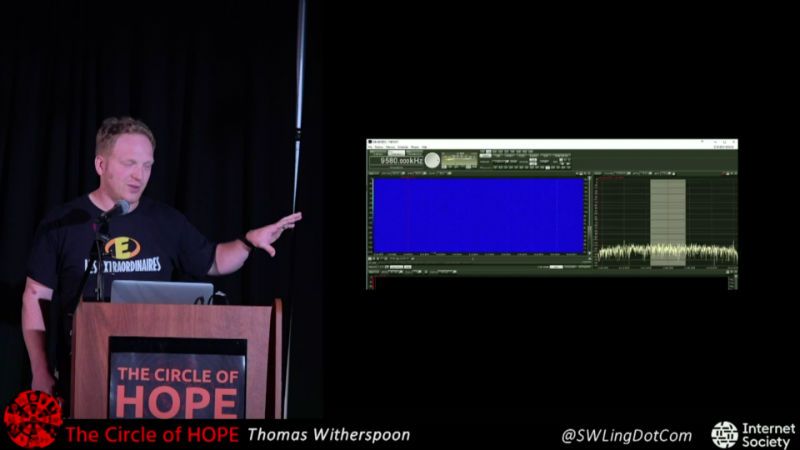
Or can we? At HOPE XII, Thomas Witherspoon gave a talk called “Creating a Radio Time Machine: Software-Defined Radios and Time-Shifted Recordings”, an overview of the work he’s been doing recording and cataloging the broadcast radio spectrum. He demonstrated how anyone can use low cost SDR hardware to record, and later play back, whole chunks of the AM and shortwave bands. Rather than an audio file containing a single radio station, the method he describes allows you to interactively tune in to different stations and explore the airwaves as if it were live.[…]

Continue reading the full article at Hackaday.

Boat Anchor Tuesday: Hallicrafters S-40B and SX-100

Many thanks to SWLing Post contributor, Chris Peters, who shares the above photo for Boat Anchor Tuesday and writes:

I was lucky enough to recently pick up both these familiar faces for $150.

Hallicrafters S-40B and SX-100

Both are in decent shape but are due for a recap and alignment.

Wow–both of these are classic sets, Chris! After a recap and alignment, I think you’ll especially be impressed with the performance that SX-100 delivers! Thank you for sharing!

Post readers: If you’d like to share a photo of your boat anchor on Boat Anchor Tuesdaysimply send me an email with the photo and a short description. I’ll put it in the pipeline to publish!

Elecraft KX2/KX3: An inexpensive adapter for earphone and mic operation

Many thanks to SWLing Post contributor, Mike Hansgen (K8RAT), who shares this message from Wayne (N6KR) of Elecraft. This message was originally posted on the Elecraft email reflector:

Several KX2/KX3 users have asked what I use as an adapter to go from an iPhone headset to the rig’s headphone and mic jacks.

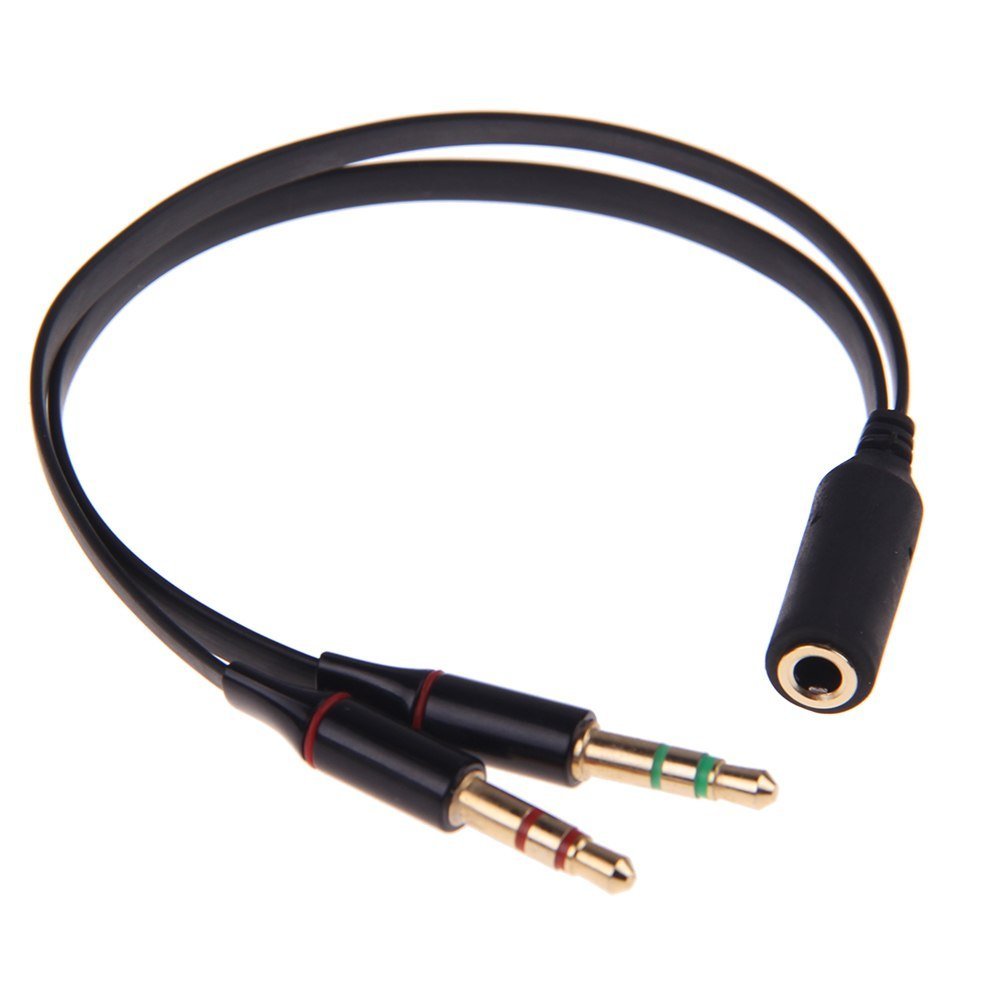
Here it is.

This unit works beautifully with both my old and new iPhone headsets. The combination of the headset and this adapter take a tiny amount of space in my go-bag. Audio reports are great, even with speech compression set to max (MENU:TX CMP).

You’ll need to set MENU:MIC BIAS to ON, and I also recommend setting MIC BTN to OFF.

You can tap the XMIT button to start voice-mode transmit, or use VOX. See VOX menu entries in the owner’s manual.

Note: There’s a rumor that one legacy version of the iPhone headset was different from the others. I don’t have any info on this, but it means there’s a slight risk that this $6 adapter won’t work in your case. But it certainly works with the earpods I bought a couple of months ago.

73,
Wayne
N6KR

Thanks for sharing this, Mike! I’ve just placed an order for this little adapter. When doing field operations, I always use in-ear headphones, but a separate hand mic because I don’t like packing or wearing bulky headsets. I’ve a couple of earbud/mic sets (neither an Apple brand) that should work brilliantly with this adapter.

Click here to view on Amazon.com (affiliate link).