Category Archives: Shortwave Radio

BBG sets five-year goals

(Source: Radio World via Richard Langley)

BBG Sets Itself a Series of Five-Year Goals

Agency points to security, need to keep pace with changing media landscape

The Broadcasting Board of Governors has a definite goal for the next five years — advance America’s national interests, work in tandem with the current administration’s national security strategies, and keep its networks up to speed with the way the media landscape has changed.

The board, known widely as BBG, recently released its 2018–2022 Strategic Plan titled “Information Matters: Impact and Agility in U.S. International Media.” The plan was presented to the board during the group’s March board meeting in Washington.

“This plan is a comprehensive roadmap for moving the agency forward in the next five years, including significantly increasing our audience reach,” said BBG Chief Executive Officer and Director John F. Lansing.[…]

Click here to read the full article at Radio World.

“The Shape of Water” features a benchmark Cold War receiver

Many thanks to SWLing Post contributor, Dan Hawkins, who writes:

The Academy Award for Best Picture of 2018 goes to Guillermo de Toro’s “The Shape of Water.

This celebrated shortwave radio appears several times in the move as a prop for the Cold War-era control room of Richard Strickland (played by Michael Shannon).

Oh what a celebrated shortwave radio indeed! How could it be a Cold War without this benchmark boat anchor?!? Thanks for this fantastic addition to to our growing archive of radios in film, Dan!

Post readers: Anyone recognize or–better yet–own this amazing machine? Please comment!

Backpack Shack 2.0: an update from the field

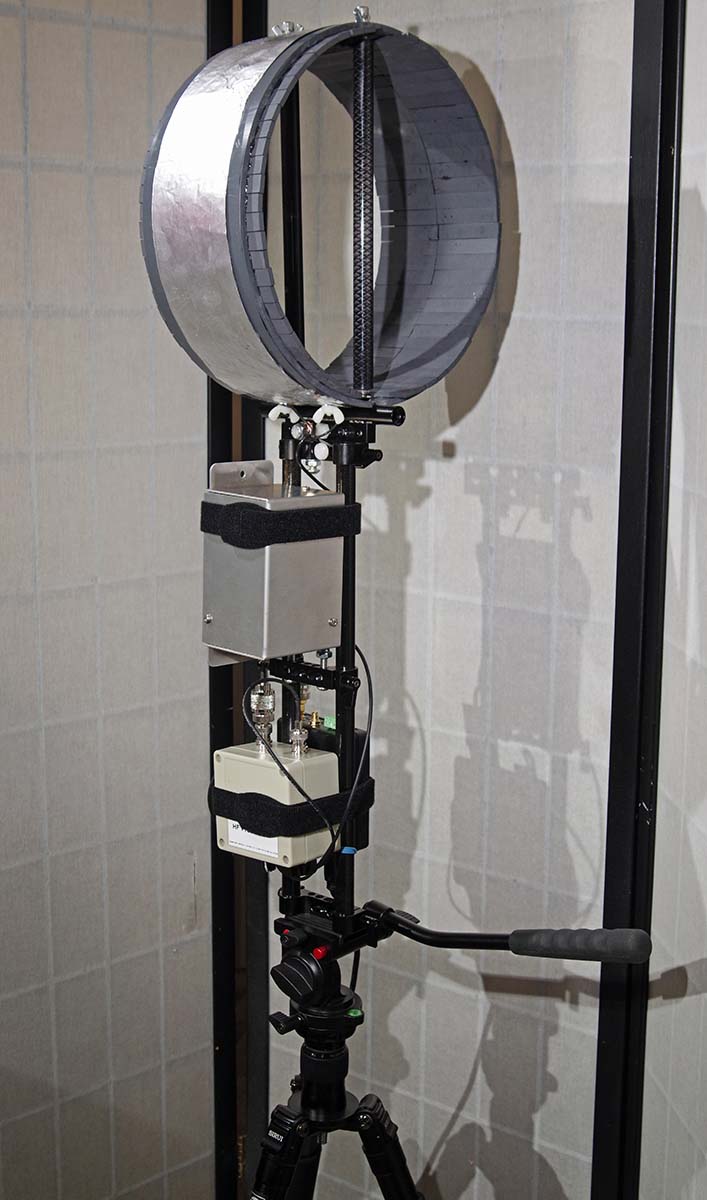
Finished Backpack Loop 2.0 and accessories assembled together

Many thanks to SWLing Post contributor, TomL, who shares the following update about his homebrew Backpack Shack 2.0 portable loop antenna:


Quick Field update

by TomL

This is just a quick Field Update for my Backpack Shack 2.0 antenna. It is not the most powerful antenna but in the right location it can be useful, especially with using an SDR. It was used during February in two Forest Preserve (County Park) locations outdoors and once from my usual Grocery Store parking lot!

Field Recordings

Please excuse some of the computer generated noises (caused by a slow CPU) as well as some audio connector problems on a couple of recordings.

Each Time is in UTC and Frequency in kHz. Where can you hear unique programming like these samples except Shortwave Radio??? Enjoy!

VOA, @03:00 on 6080 kHz in English from Sao Tome towards Africa (backside of their antenna, opposite of my location)

China Radio Int’l, @23:00 on 9415 kHz in Vietnamese from Beijing (not sure if this traveled around Antarctica to get to me or a backside of their antenna over the North Pole?)

WHR, @15:59 on 9965 kHz in Korean from T8WH Palau

Mighty KBC, @01:48 on 6150 kHz in English from Nauen Germany (announcer sound effects included!)

Voice of Greece, @20:34 on 9420 kHz in Greek from Avlis (unique stylized Greek music, INTERESTING artistic expression)

Vatican Radio, @20:27 on 9660 kHz in English from Vatican City to Africa

WINB, @21:30 on 9610 kHz in English from Red Lion, PA USA (a FUN song about promoting Radio listening!)

And my favorite Government-run authentic folk music station of Mexico, tiny 1KW XEPPM @04:17 on 6185 kHz with clear station ID

I will be working on a larger version of this antenna to transport in my car as well as a small VHF loop antenna for the outside deck for Air/Police/Weather scanning.

Hope to report sometime this Spring.


Thank you so much for the update, Tom! It looks to me like you’re having an amazing time with you homebrew loop in the field! 

As always, keep us in the loop! (Yeah…bad pun, I know!)

BBG budget includes plans for shortwave

Many thanks to SWLing Post contributor, Richard Langley who shares the following item from Kim Elliott. Note that this news is dated February 22, 2018 (yes, it was lost in my drafts folder!):

Broadcasting Board of Governors budget request includes plans for shortwave

Kim Andrew Elliott
22 February 2018

The Broadcasting Board of Governors, consisting of VOA, RFE/RL, Radio Free Asia, Radio/TV Martí, Radio Sawa and Alhurra, is slated for a $24 million budget reduction in fiscal year (FY)
2019.

Of course, Congress will review and probably will modify the President’s budget request for BBG and other agencies.

Here are excerpts from the budget request pertaining to shortwave:

“TSI [Technology, Services and Innovation, i.e. BBG engineering] continues to move the BBG from traditional broadcasting technologies, such as cross-border radio transmissions shortwave (SW) and medium wave (MW serving regions where these platforms are no longer popular, to other delivery systems that are rapidly growing in effectiveness and are less expensive to operate (e.g., FM radio, DTH satellite, internet streaming, mobile, and social media). …

“As part of its multi-year global network realignment, TSI will continue to focus efforts on upgrading its shortwave capacity at the Kuwait Transmitting Station, even as use of SW decreases. With superior strategic location and extremely low operating costs, this station will be able to serve the overwhelming majority of legacy SW audiences in the most cost-effective manner possible, at a fraction of the cost of other BBG operated site or expensive leased capacity. …

“Over the years, the use of shortwave (SW) radio has declined globally. TSI has responded by consolidating broadcasts to more cost-effective transmitting stations and reducing or even eliminating SW where it is no longer relevant. In markets where SW does still retain a sizable, valuable audience, TSI is committed to making SW service available in the most cost-effective way possible. To meet this need, TSI has been upgrading the Kuwait Transmitting Station (KTS), which enjoys a superior strategic location and extremely low operating costs. In FY 2017 TSI continued to expand that facility, and in FY 2018 TSI will procure and install new antennas. In FY 2019, TSI is committed to investing in the KTS expansion further, utilizing whatever resources may be available, in order to realize longer-term savings. Ultimately, the BBG’s goal is to be able to serve most legacy SW audiences from this one site, at a fraction of the cost of all the other transmitting stations, so that other, more expensive sites may be scaled back or closed.

Philippines relay will close

“In FY 2017, TSI completed the closure of the station in Sri Lanka and in FY 2018 will close the BBG facility in Poro, Philippines. TSI’s systematic and thorough review of all transmission leases will continue in FY 2019, identifying further opportunities for savings. In the years between 2010 and 2016, total costs associated with Cross Border Radio (SW and MW ) have declined by over $25 million (34.5%), and we expect this decrease to continue as we respond to market needs and as the Administration and Congress authorize us to shutter less effective legacy facilities …

“[I]n China, including Tibet, TSI will continue to provide satellite TV and radio service via Telstar 18, the most popular satellite in China, for only a fraction of the cost of the BBG’s legacy shortwave and medium wave transmissions to the region. This allows TSI to leverage the widespread use of satellite receiver dishes across the country and provide accessible programming where local cable and internet access is restricted. In FY 2018, TSI will procure additional satellite capacity on this satellite, allowing BBG to simultaneously distribute HD and SD TV programming and capitalize on the migration of Chinese audiences to HDTV, while not stranding legacy SD users. …

“Radio remains a very popular platform in many BBG markets, particularly Africa. BBG global weekly radio audiences increased by a stunning 28 million in 2016 alone and by 35 million since 2012. While shortwave continues to be a relevant means of delivery in several African markets, in most countries rapid growth and competition in the media market have shifted radio
habits almost entirely towards FM. The BBG provides 24/7 FM radio programming in over 30 markets across the continent. …

But good news for Kuwait and Greenville stations

“As part of its multi-year global network realignment, TSI will continue to focus efforts on upgrading its shortwave capacity at the Kuwait Transmitting Station, even as use of SW decreases. With superior strategic location and extremely low operating
costs, this station will be able to serve the overwhelming majority of legacy SW audiences in the most cost-effective manner possible, at a fraction of the cost of other BBG operated site or expensive leased capacity. …

“The BCI [broadcasting capital improvement] funds in FY 2018 (and base funds in FY 2019) will be used to continue the planned reconfiguration and expansion of the shortwave broadcast
infrastructure at the Kuwait Transmitting Station. This will allow BBG to enhance transmission to multiple regions, including Africa, and achieve cost savings for shortwave broadcasts.
Because of the very low cost of electrical power in Kuwait, the Kuwait Transmitting Station is the least expensive IBB station to operate. This project will allow the agency to shift mission-critical but higher cost transmissions from other stations in the IBB network to Kuwait.

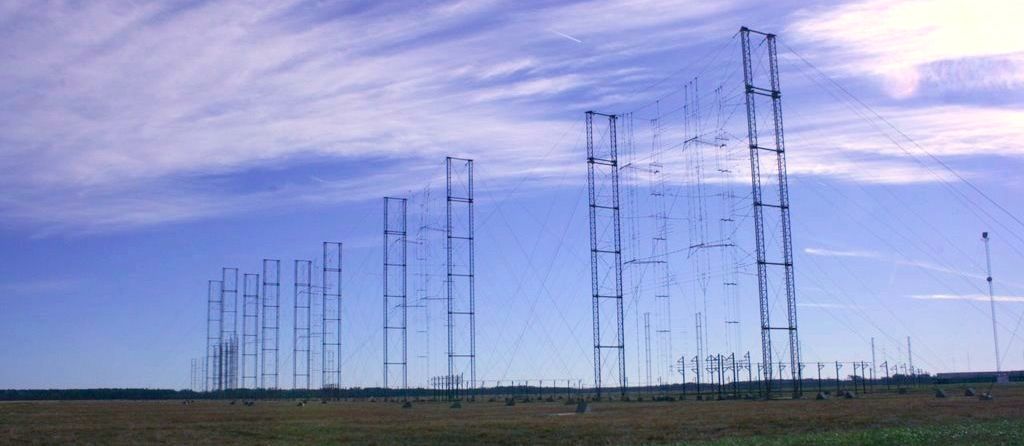
“TSI will install and deploy three newer SW transmitters at the Greenville, NC Edward R. Murrow transmitting station enabling a doubling of frequencies servicing Cuba and making it extremely difficult for the Cuban government to effectively block Radio Marti signals into the Island. …

“To serve audiences in less developed areas of the world, the BBG must continue to broadcast via traditional technologies, such as shortwave, and maintain capability and improve efficiency on these platforms by replacing antiquated equipment. But to stay relevant in competitive news markets and serve current and future audiences, the BBG must continue to invest in new cutting-edge technology. In areas where ownership and usage of shortwave radio has declined significantly, the Agency has evolved away from broadcasting in that medium. The BBG has closed transmission stations, repurposed equipment and invested these savings in
platforms that the audience has shifted to, primarily television and digital media.”

The entire FY2019 BBG budget submission is here:
https://www.bbg.gov/strategy-and-performance/budget-submissions/

CATSync: A new tool to control WebSDRs with your tabletop radio

(Source: Southgate ARC)

Introducing CATSync – The new CAT tool for WebSDRs

Oscar, DJ0MY, has developed a new software tool for radio amateurs and SWLs.

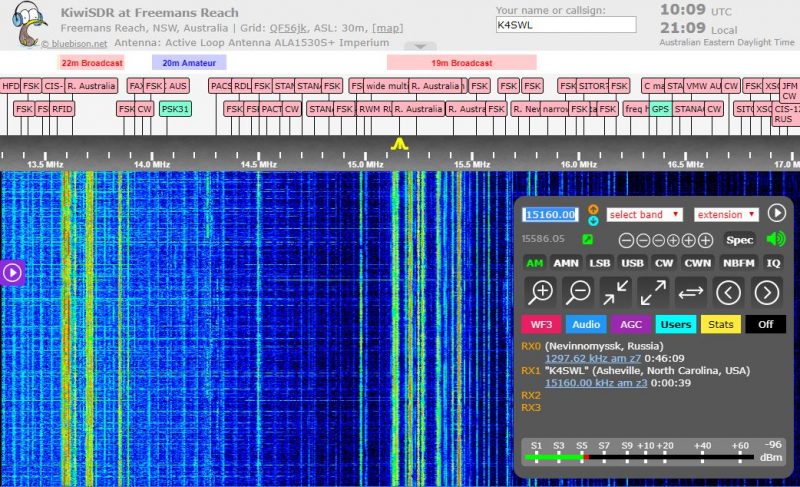
CATSync allows the user to control public WebSDR receivers with a real rig connected via CAT. It supports the classical Web-SDR servers as well as the newer Kiwi SDR servers publically available on the internet.

This gives you access to dozens of web based receivers with the comfort of tuning your rig at home. This software helps you to bring you back into the fun of ham radio when you are suffering from local temporary or permanent high noise levels in an urban QTH location.

The software has the following features:

  • Synchronizes any public WebSDR server with your real RIG…
  • Supports a wide number of RIG’s (it uses the popular OmniRig engine)
  • Supports WebSDR and KiwiSDR browser based SDR receivers
  • Tune the VFO of your radio and see the web SDR follow in real time !
  • Switch modes (SSB, CW, etc.) on your radio and see the web SDR switch mode in real time.
  • Listen to the same frequency as your rig via web SDR
  • Ideally suited e.g. for people suffering from local QRM
  • Can track RX or TX VFO (e.g. to find that split of a DX station) if radio CAT supports both simultaneously
  • Can be interfaced with popular logging software using OminRig or via VSPE port splitter

For more information visit the author’s website: https://catsyncsdr.wordpress.com/

See a YouTube video of CATSync under: https://www.youtube.com/watch?v=UbSHfkjhx0c

Click here to read the full article on the Southgate ARC.

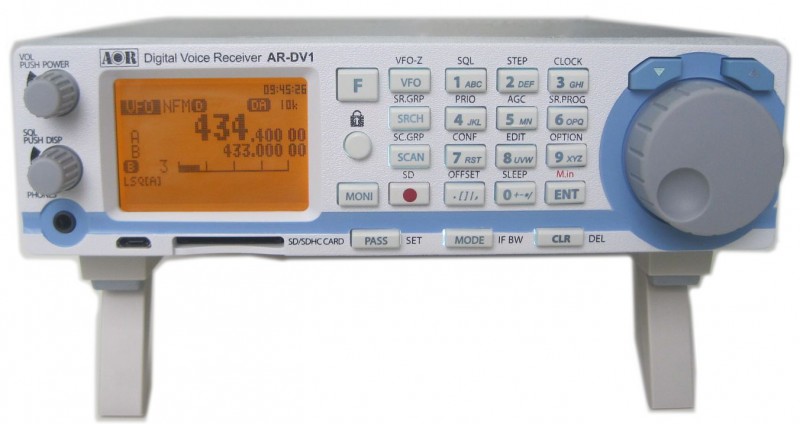
Dave’s review of the AOR AR-DV1 Digital Voice Receiver

Many thanks to SWLing Post contributor, Dave Zantow (N9EWO), who has recently posted his review of the AOR AR-DV1 digital voice receiver.

As with many of Dave’s reviews, this evaluation takes a close look at HF and mediumwave performance which isn’t the AR-DV1’s strong suit. Dave notes:

“[Though] not what the receiver was designed for, RF performance on MW / HF bands (and the terrible audio quality) are mediocre at best.”

Click here to read Dave’s review.

Thanks, Dave! Your review reflects comments I’ve received from some Post readers who’ve purchased the AR-DV1 as well. Many were particularly upset with the audio quality. Of course, the AR-DV1 is marketed as a digital voice receiver, thus audio likely favors “narrow” voice audio.

Ampegon Group encourages use of shortwave for “secure data transmission and high-speed communications”

(Source: Ampegon)

(Source: Radio World via Mike Hansgen)

The author [Dr. Simon Keens] is head of sales and marketing for the Ampegon Group.

TURGI, SWITZERLAND — There are many innovative ways the industry can use shortwave broadcasting to provide secure data transmission and high-speed communications.

The modern world increasingly requires available real-time secure communications between centralized locations and often to many receivers in unknown locations thousands of kilometers away.

[…]Information transfer via the internet or via fiber optic cable was once the reference. However, the use of such technology means that the information is only delivered to fixed points. In addition, the use of third-party infrastructures provides a security risk and increases transport cost.

Today, near-instant communication to unknown, remote receivers using shortwave is being developed as a new secure means of communications without the need for external providers, delivering signals directly to multiple, or even mobile, destinations regardless of fixed infrastructure. Messages may be dispatched much faster, thus for situations where time is critical, each additional second could be profitable and even save lives.[…]

Click here to read the full article at Radio World.