Category Archives: Shortwave Radio

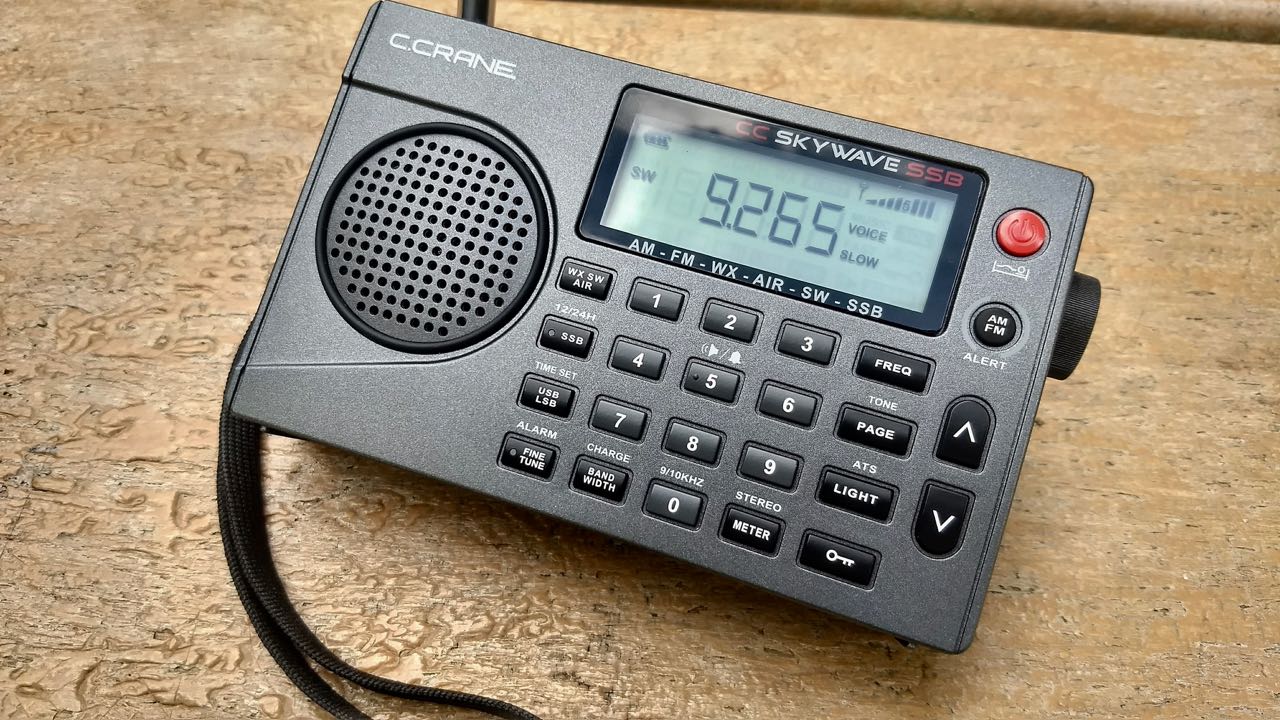
Colin’s review of the CC Skywave SSB

Many thanks to SWLing Post contributor Colin Newell of DXer.ca who shares part one of his review of the CC Skywave SSB.

Colin’s review is nothing short of glowing and he obviously has a first production unit that isn’t plagued with the DSP noises five of my review units had.

As I stated in my review, the Skywave SSB is an impressive little receiver when DSP noises and birdies aren’t an issue. My Beta unit is a lot of fun to put on the air and has become my go-to “Swiss Army Knife” travel radio.

I will be testing an early second production unit of the CC Skywave SSB later this year and will post my evaluation here on the Post.

Click here to read part one of Colin’s review.


The HF Voyager: Make contact with an “autonomous ocean-going drone”

The HF Voyager (Source: JRF Amateur Radio Club)

(Source: Southgate ARC)

David, AA6YQ, author of DXLab – ‘Better DXing Through (Free) Software’, posted the following: ‘Jupiter Research Foundation Amateur Radio Club (JRFARC) has integrated an HF transceiver with an autonomous ocean-going drone. Our mission is to deploy a ham radio station that roams the world’s oceans while providing an opportunity for amateur radio operators everywhere to make contacts with rare locations.’

“We sent this new Voyager out to the open ocean on its way to California on January 15th, 2018 as a passenger on the JRF HUMPACs mission. As they search for ‘missing’ humpback whales, JRF’s pilots will guide HF Voyager to sections of the Equatorial North Pacific that are not normally available to ham operators. The station will use FT8 and PSK-31 on the 20 meter band as its primary operating modes. You may also find it using WSPR in times of poor propagation.”

See http://www.jrfarc.org/hf-voyager/

The portal in http://hfvportal.jrfarc.org/ takes a minute or two to display data.

The club plans to give a certificate of recognition to operators world-wide that have a confirmed contact with the HF Voyager. In the future we hope to collaborate with Amateur Radio organizations and publishers to sponsor operating events and contests for HF Voyager contact milestones.

Gridsquare collectors, maritime operating fans, Islands on the Air participants, and all other hams interested in this unique opportunity to make a contact with an autonomous roving maritime station should find this to be an exciting new aspect of their favorite hobby.

Be sure to check out our HF Voyager Blog for updates and schedules:
http://www.jrfarc.org/hf-voyager-updates

I think this is a pretty fascinating project–especially if the system can withstand the rigors of ocean travel and can be tracked and picked up later for replacement and upgrades.

I had never spent much time on the HF digital modes until last year when I caught the FT8 bug. While FT8 lacks some of the social nuances of, say SSB voice and CW, it is a fascinating mode that seems to defy HF propagation rules. It’s certainly an accessible way to work HF stations across the globe with a very modest setup. I think it’s an ideal pairing for a project like the HF Voyager.

Even if you don’t have a ham radio license, with an HF receiver and a free PC application, you can receive/decode FT8 contacts from across the globe.

Did your first shortwave radio change your world?

At the Winter SWL Fest this year, we had an open forum hosted by Skip Arey and Dan Robinson called “Shortwave Memories” where SWLs were invited to speak about what shortwave radio has meant to them throughout their lives. I was a fantastic session chock full of nostalgia.

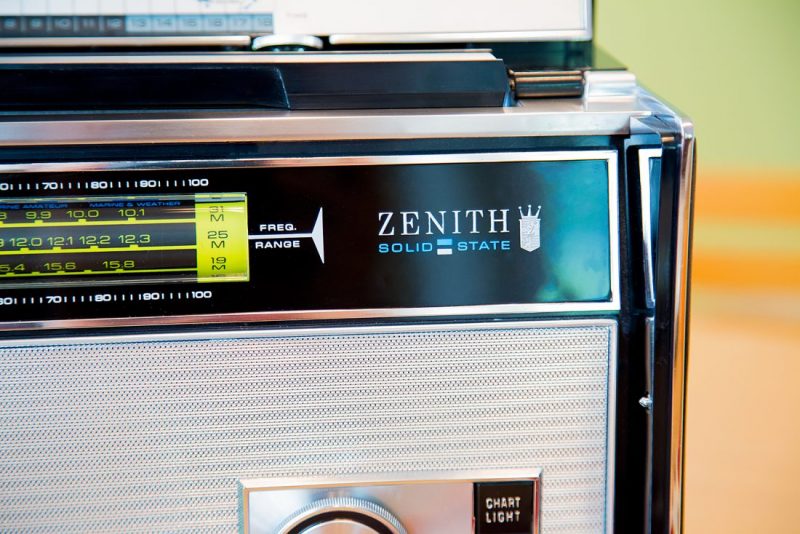
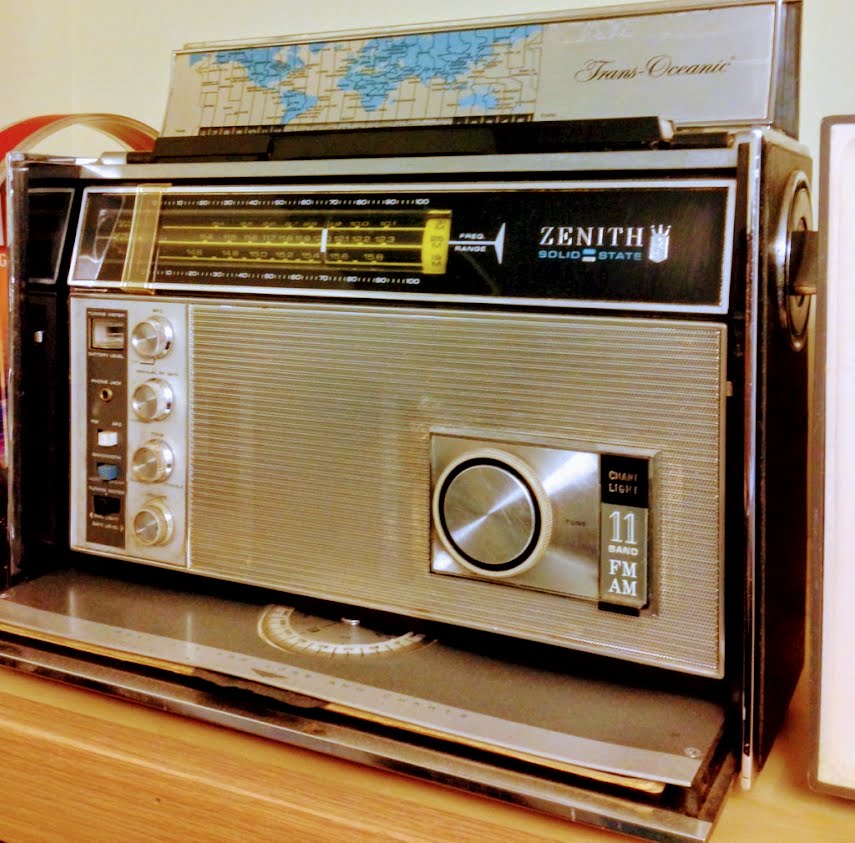
I was asked to speak and started by talking about my first proper shortwave set: the Zenith Transoceanic (photo above).

Although I first got a taste for the shortwaves on my father’s console radio (a 1936 RCA Model 6K3)–it was in our living room and I did not have ready access to it.

My Great Aunt (who lived next door to us) must have learned that I was fascinated with radio, and one unforgettable day she surprised me by giving me her late son’s Zenith Transoceanic.
It was as if I had won the lottery.

For the first time, I could actually have access to the shortwaves from the comfort of my bedroom and could listen anytime I wished.

I quickly made a little listening post complete with a map, log book and paper to scratch notes. I was transported to every corner of the planet with that magical solid state set.

That Zenith set turned out to be a catalyst for a strong interest in geography, history, politics, language and travel. I learned that through SWLing, I could hear unfiltered voices from across the globe. Mind you, this was in the late 1970s and early 80s–long before the internet, long before mobile phones.

Of course, I still have my Zenith Transoceanic and will always keep it in working order.

I’m curious: What was your first radio? Did it have any meaningful impact on your life?  Do you still have your first radio? Please comment!

Also, if you’d like to share even more detail and photos, consider submitting an article for our Listener Posts series

Mark your calendar: Global HF Weekend – March 30, 31, and April 1, 2018

Many thanks to SWLing Post contributor, Andrew Yoder, who shares details about the upcoming Global HF Pirate Weekend:

Next Global HF Weekend – March 30, 31, and April 1, 2018

It’s still a couple weeks away, so be sure to mark the next Global HF Pirate Weekend on your calendar.

The idea behind the Global HF Weekends are to promote friendship through radio around the world. The hope is that listeners will be able to hear different stations and for broadcasters to reach distant locations. Anyone may participate.

The last one, which occurred during the first weekend of November 2017, was very successful. A handful of North American stations were reported on Europe and vice versa. And South American stations were heard in the North. Other stations were active specifically for the weekend, but just for a local or regional audience.

We’ll see how many stations show up during the next GHFW. It seems unlikely that stations will be using 13 meters this time and much more likely that stations will be trying the 6900-kHz range and possibly 31 and 25 meters.

March 30, 31, & April 1, 2018
Maybe 15010-15090 kHz, probably 6200-6400 kHz and 6800-6990 kHz

Of course, these were general frequency ranges used by pirates during prior Global HF Pirate weekends. Some stations will surely operate on frequencies and times outside of these ranges. In fact, the way conditions have been lately, frequencies at or below 15 MHz seem like they will be more effective for intercontinental broadcasting. These will be updated on the Hobby Broadcasting (http://hobbybroadcasting.blogspot.com/) blog as it happens and also check the loggings on HF Underground (https://www.hfunderground.com/).

NHK WORLD expands and rebrands as NHK WORLD-JAPAN

Many thanks to SWLing Post contributor, David Iurescia (LW4DAF), who shares the following announcement from NHK WORLD:

Expansion under a new brand
– NHK WORLD-JAPAN Launches in April –

NHK WORLD, the international broadcasting service of NHK, makes a fresh start as NHK WORLD-JAPAN in April. The new name is intended to establish wider global recognition for the service’s Japanese roots in advance of the 2020 Tokyo Olympic and Paralympic Games. NHK WORLD-JAPAN will provide a Japanese perspective in trustworthy news coverage and programming in this part of the world. Closer coordination with NHK’s domestic services will supply even more content to satisfy the interests of the global audience.

Check out NHK’s announcement and expanded programs on their website.

RRI 2018 Summer Broadcast Frequencies

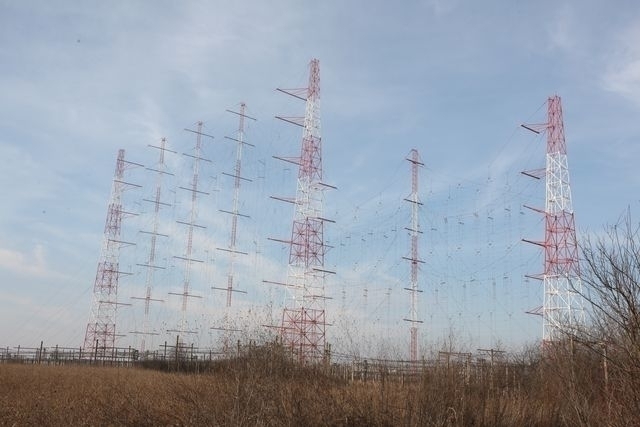
RRI’s Tiganesti-based shortwave transmitter centre (Photo source: Radio Romania International)

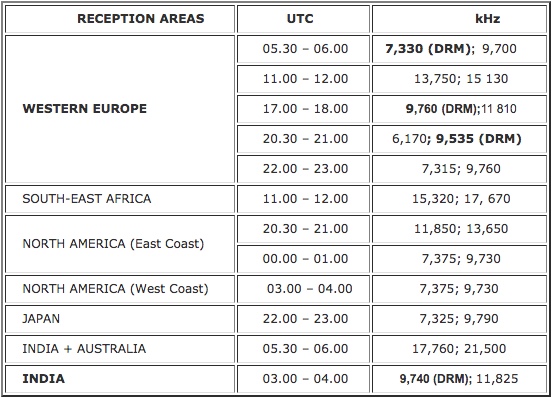
Many thanks to SWLing Post contributor, David Iurescia, who shares this announcement by Radio Romania International which contains their 2018 Summer Broadcast schedule effective March 25, 2018:

RRI broadcast frequencies valid as of March 25 to October 27, 2018