Category Archives: Shortwave Radio

Vintage Radio: How to read a logging scale

Many thanks to SWLing Post contributor, Charlie Liberto (W4MEC) for the following guest post:


Vintage receiver frequency counter…sort of

by Charlie Liberto (W4MEC)

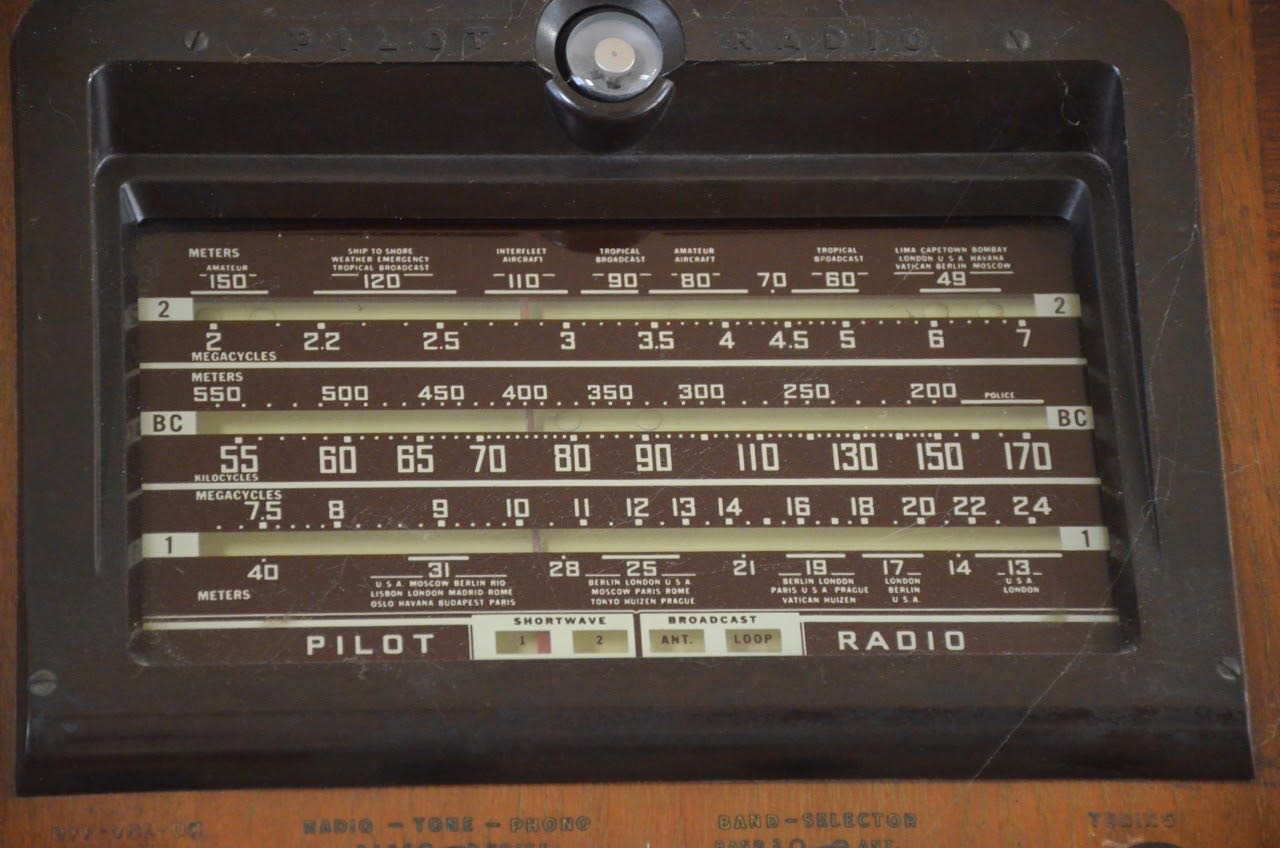
You probably know what a log book is, and maybe a logarithm, but do you know what a ‘Logging Scale’ was meant for? If you are a modern SWL’er, and have a receiver built in the last 40 years or so, you probably don’t have that mysterious 0 to 100 range on your dial, as shown at the top of the picture of the Hallicrafters S20-R main dial, and you may not have a dial at all, peering without question at a digital display of your received frequency.

The Logging Scale on older and vintage receivers had two functions: to let you find a station you might be looking for, when you knew the frequency it would be on, and to determine the frequency of a station, but you had to have known references. How to do that on those old scales that may have had 50 kHz or even 500 kHz hash marks between whole Megahertz numbers, or in that era, KC or MC numbers? The process is fairly straight forward, but did require you to know the operating frequency of at least 2 stations on the band of interest, and the closer they were to the mystery frequency, the better.

Let’s say you are looking for WLMN that is supposed to begin its operation day on 6025 kHz. and your receiver has a mark every 250 kHz between 5 and 7 MHz, that’s pretty iffy as to setting the dial. Now, you know that station WABC is on 5500 kHz, and station GXYZ is on 6525 kHz, so, tuning in WABC you note what number the pointer on the dial is over on the logging scale, maybe it is 40. Then you tune to GXYZ and you find it on 70 on the logging scale. The known difference in frequency between WABC at 5500 kHz and GXYZ at 6525 is 1025 kHz, and the logging scale number difference is 40 to 70 or 30 divisions. Take the 1025 kHz separating your two known stations, divided by the 30 logging scale divisions and you get 34.167 kHz per division. Some more math, the station you are looking for, WLMN is on 6025 kHz, which is 525 kHz away from WABC at 5500 kHz., divide 525 kHz by the logging scale frequency versus division number of 34.167 kHz which equals approximately 16. Take that 16, add it to WABC logging scale number of 40, and you should expect to hear WLMN on logging scale 56 on the dial.

Of course you can flip this process around. If you heard WLMN, but did not know it’s frequency, the same procedure worked backwards to interpolate the logging scale 56 into kHz, added to the WABC frequency/log number, or subtracted from GXYZ numbers, and you would figure out WLMN was on 6025 kHz.

What did this process do? It ‘calibrated’ your receiver dial to known checkpoints by using known frequencies of stations, such that you had a better idea of where you were frequency wise, but it did have it’s limitations. Older receiver dials usually had the lower frequencies divisions of a band close together, and as you tuned to higher frequencies on the same band, hash marks for frequencies got farther apart, while the logging scale stayed linear. This was because builders used the simpler straight line capacitance variable capacitor for tuning, instead of the straightline wavelength or straight line frequency style which would have made the dial more linear. If you used two stations on the low end to set a logging scale reference, chances are it will be quite a bit off in the frequency versus logging scale number on the high end of the dial. So, if you could find two stations that bracketed the one you were examining, that would assure the most accuracy.

After all that, you are probably saying thank God and a lot of engineers for a digital readout.


Thank you, Charlie, for an excellent tutorial and example of using dial logging. I’ve had a number of vintage radios over the years with logging scales and it took some digging to discover how they worked. While digital radios make the process as easy as pie, vintage radios are worth the extra effort! 
Skycast Services experimental HF license renewed

Many thanks to SWLing Post contributor, @experimradio, who notes:

Experimental Radio Service license renewed 1 March 2018 for this HF station.

Good luck extracting useful intelligence from this:

https://apps.fcc.gov/els/GetAtt.html?id=170747&x=.

Copy of license:

https://apps.fcc.gov/els/GetAtt.html?id=205708&x=.

Thank you for the tip! You’re right–vast portions of this documentation have been marked out.

Kuwait updates shortwave transmitters

(Source: Kuwait News Agency via Mike Hansgen)

KUWAIT, March 8 (KUNA) — Minister of Information Mohammad Al-Jabri on Thursday opened a project updating shortwave transmitters from analogue to digital radio mondiale (DRM) broadcasting systems, at Kabd radio station.

This is a new achievement for the ministry to be added to a series of vital projects that aim to keep pace with the rapid technical progress around the globe, Al-Jabri told KUNA and the Kuwait TV.

Kabd station, through the new DRM system, will allow “Kuwait’s voice” to reach the entire Middle East region, Europe and Asia, he noted.

Kuwaitis have planned and supervised the project, the minister said, noting that updating the infrastructure of radio stations aims to cope with latest digital broadcasting development, the minister said.

Al-Jabri praised officials, and all the personnel at the ministry’s Engineering Affairs Sector, for their hard sincere efforts.

Click here to read the full article at the KUNA website.

Jazz From The Left: A slight schedule change

Many thanks to Raoul with Jazz From The Left, who writes:

My program, Jazz from the Left, continues on WRMI. With a slight schedule change.

From Jeff White:

“We now have Jazz from the Left on at 0000 UTC Wednesday on 7730 kHz, and at 0100 UTC Thursday on 5850, 9395 and 9455 kHz.”

By the way, for fans of jazz on shortwave radio, I recently found dozens and dozens of air checks of Willis Conover playing jazz on the VOA. These are all excellent quality recordings from the 1950’s through 1970’s [at the University of North Texas Library]. Click here to browse the recordings. Enjoy!

Thank you, Raoul! Your show is excellent–the new time on WRMI has been noted in my calendar.  And thanks for mentioning the UNT archive–it is indeed a superb collection (click here to read an archived post).

Guest Post: Listening To Pirate Radio Stations from South America

Many thanks to SWLing Post contributor, Chris Smolinski, who shares the following guest post. Note that this post has also been published on Chris’ excellent blog, Radiohobbyist.org:


Listening To Pirate Radio Stations from South America

by Chris Smolinski

Looking for a new DX challenge? In addition to shortwave pirate stations in the USA, and Europe (Europirates as we call them), there’s a relatively new group of pirate radio stations being heard in North America, those from South America.

It’s really only been the previous year that we’ve confirmed that there’s a significant number of pirate radio stations in South America that can be received here. Radio Pirana has been known for some time, and I believe thee were a few reports of it, and at least one other station that I cannot remember the name of, but that’s about it. For years there have been logs of very weak UNID stations heard on the 43 meter band (6800-7000 kHz), presumed to be pirates of some sort, and it is possible some of these were South American pirates.

Most of these stations use homemade transmitters, often of the “Lulu” design, with a IRF510 or similar MOSET RF final stage. That means they are generally in the 15 or 20 watt carrier range, although some are higher power. That also means that unless otherwise noted, all of these stations use AM mode, and in general the frequency is highly variable, easily varying 100 Hz or more from night to night, or even during transmissions.

One important caveat: Since most of these stations use relatively low power, and due to the long distances involved, signal levels are generally weak, although occasionally when conditions are excellent (especially if there’s grayline propagation), they can put in stronger signals. I am fortunate to live in a rural area with relatively low noise/RFI levels, and have several high end receivers and large antennas. My primary setup for catching these stations is a netSDR receiver and a 670 foot Sky Loop antenna. You’re going to want to use the best receiver and antenna you can for catching these stations, you’re not likely to have good (or any) results with a portable SW radio, RTL dongle, or small/indoor antenna. Also, I record the entire 43 meter band nightly on my netSDR, and then go through the recordings each morning. This lets me catch stations that may only appear for a brief period of time. That said, you can still hear them with a reasonable HF setup, although it may take persistence, checking each night, until conditions permit reception.

It’s well worth checking the Latin American Pirate logging forum on the HF Undergroundwebsite, to see what is presently being heard. The HF Underground is the best way to keep up to date with the hobbyist radio scene in general, with dedicated forums for North American PiratesEuropirates, and of course radio in general.

And for those of you into collecting QSLs – many of these stations are reliable QSLers!

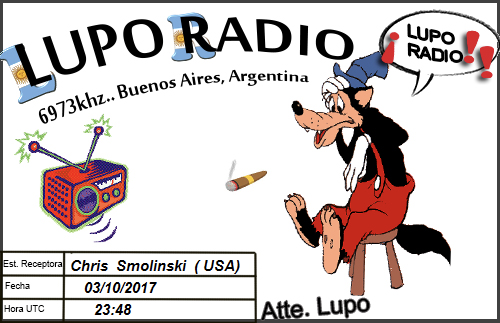
In general, the easiest station to hear is Lupo Radio from Argentina. It is on the air most evenings on 6973 kHz in AM mode. At least at my location, it puts in the strongest and most reliable signal. Usually in the SIO 222 to 333 range, sometimes stronger. There are frequent IDs. I use Lupo Radio as a “beacon” to gauge how good conditions are to South America on 43 meters.

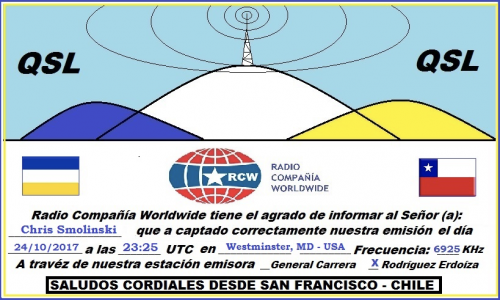
Another station that is often on the air is RCW – Radio Compañía Worldwide from Chile. They use 6925.13 kHz, and their carrier is more stable and usually on this offset frequency, which makes it easier to determine that it’s likely you’re hearing them vs a US pirate station.

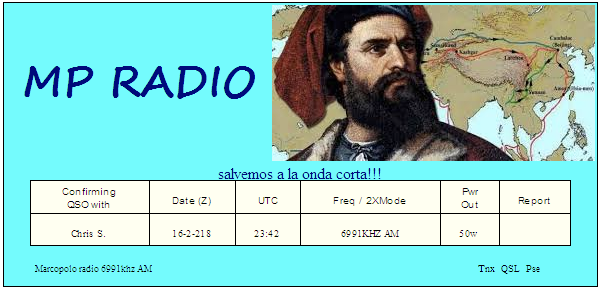
New to the scene is Radio Marcopolo on 6991 kHz.

Also new to the scene is an as yet UNID pirate from South America on 6934.9 kHz. I have received them for several weeks now in the local evenings, usually starting around the 2300-0300 UTC window. They put in a respectable signal (relatively speaking), strong enough for Shazam to ID songs. They have frequent breaks in their transmission, with the carrier often going off and on many times during a broadcast. They also occasionally transmit audio test tones, and sometimes seem to relay audio from licensed stations in Argentina such as Radio El Mundo. This could be someone testing a new transmitter? A new mystery to solve!

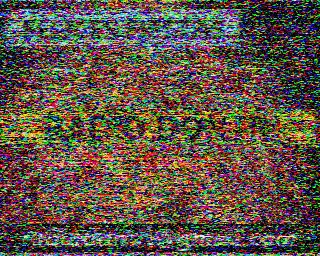
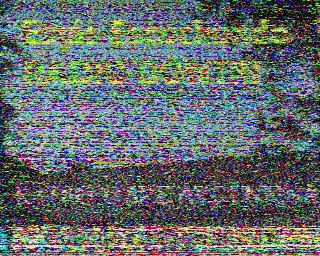
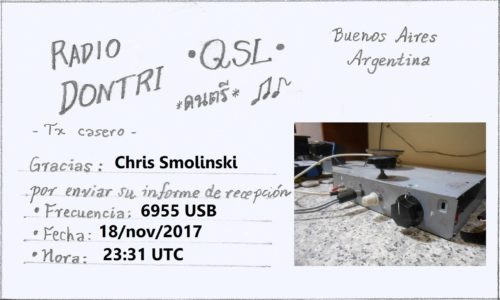
Radio Dontri is somewhat unique in that they use USB mode, on 6955 kHz. They also send SSTV, which is sometimes easier to receive than music, and helps to verify that you’re actually hearing them, vs a US pirate on 6955. They tend to drift a lot, however, which can make decoding the SSTV transmissions challenging.

Outside the 43 meter band, there is Rádio Casa 8000 kHz. I have only received weak carriers from this station, although partly that may be because I do not frequently check for it, and it does not turn up on my overnight SDR recordings.

Radio Triunfal Evangélica is other station outside of the 43 meter band, they use the nominal frequency of 5825 kHz, often closer to 5824.9 kHz. Again I have only received a carrier from them. As the name implies, they are a religious station, affiliated with a church.

Now that we’ve talked about the pirate stations from South America, we should probably mention things you are likely to hear that are not pirates. Specifically, what we call Peskies (or Pesky as the singular), short for pescadores, the Spanish word for fishermen. Peskies generally use LSB mode, and can be heard on many frequencies in the 43 meter band, engaging in QSOs. Years ago, pirate listeners started to call these stations pescadores, since some of them were indeed fishermen, and could be heard discussing related matters. It might be better to think of most of them as freebanders/outbanders, much in the tradition of those transmitting on 11 meters. There’s a logging forum on the HFU dedicated to Peskies, if you’re interesting in learning more about them.

Occasionally they use AM mode. We’ve logged several on 6965 kHz (+/- of course), that at first were thought to be pirates. But they never transmitted music, and after some discussions with DXers in South America, it was determined that they were more properly considered peskies.


Many thanks, Chris, for sharing this excellent guest post with us! Until the Winter SWL Fest last week, I had no idea South American pirates were on the rise–what a great opportunity to catch interesting DX!

Readers, check out this and other posts on Chris’ website Radiohobbyist.org.

Rob notes that shortwave radios are still on the shelf in St. Petersburg

Many thanks to SWLing Post contributor, Rob Gray, who writes:

Shortwave Radios in a St. Petersburg retail store
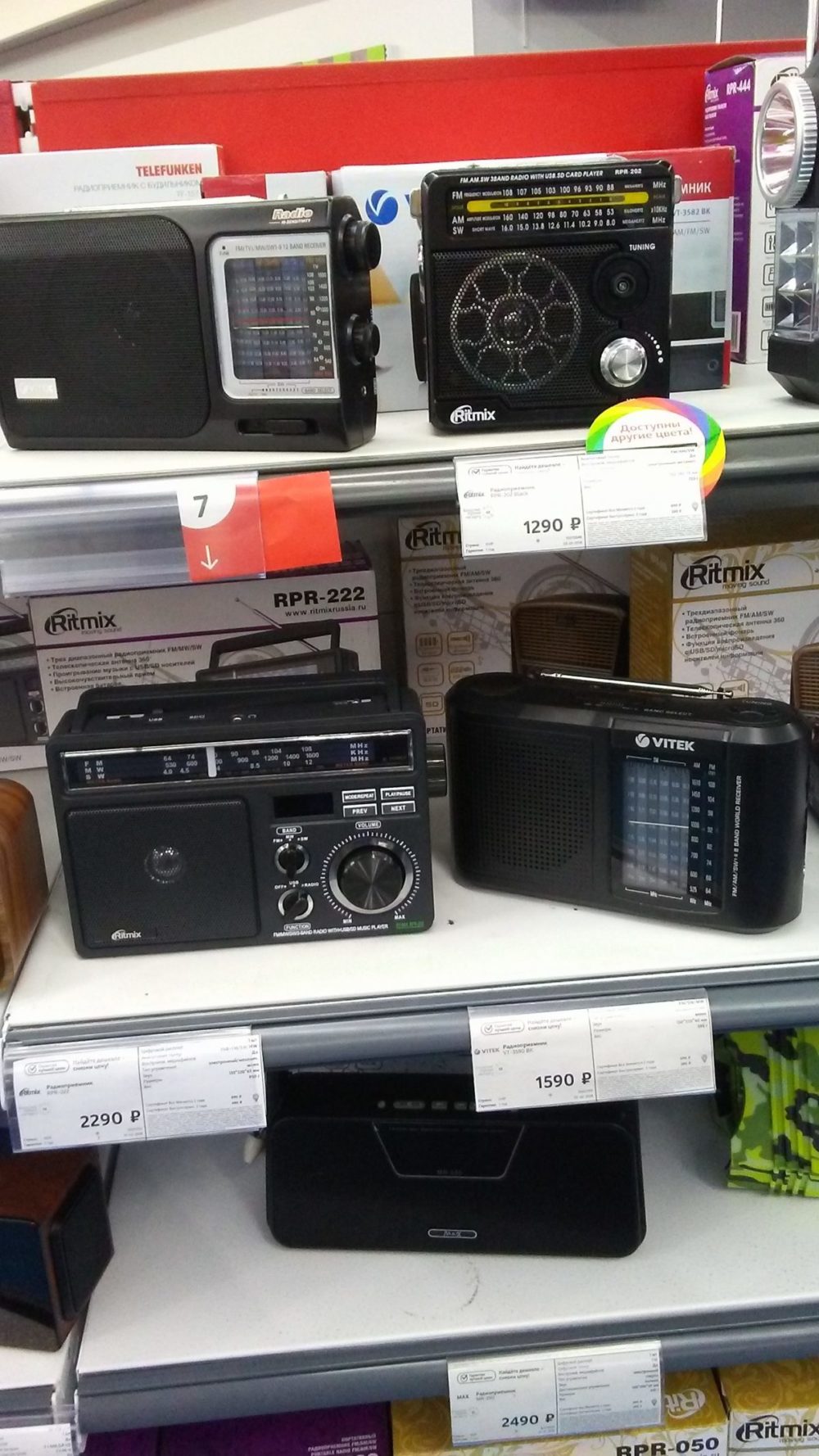
I took this snap today while visiting in St. Petersburg Russia for a few months. Not exciting radios by any means, but given this store was something like a Best Buy, I thought it was interesting that shortwave still has a small presence.

Thanks for sharing, Rob! I can’t think of the last time I visited an electronics retailer and found as many shortwave radios on the shelf. At least, not since the days of RadioShack.

Additional VORW Radio test transmissions this weekend

Many thanks to SWLing Post contributor, TheReportOfTheWeek, who writes:

Starting this Thursday (March 1st) I will be conducting a test transmission of VORW Radio Int. on 5950 kHz via radio station WRMI. The intended reception area is the state of Florida! This is understandably tricky considering that the transmitter site is in the target area itself, but this test is to determine if listeners in Florida can be adequately served via this Florida-based site.

Also, here is the full broadcast schedule, each show features some misc talk and commentary and some listener requested music. It can make for a fun listen!

Thursday 2000 UTC – 7780 kHz – WRMI 100 kW – Eastern North America
Thursday 2300 UTC – 9955 kHz – WRMI 100 kW – South America
Friday 0000 UTC (Thu 7 PM Eastern) – 7730 kHz – WRMI 100 kW – Western North America
Friday 0100 UTC – 9455 kHz – WRMI 100 kW – Central America
Friday 0100 UTC – 9395 kHz – WRMI 100 kW – North America
Friday 0100 UTC – 7780 kHz – WRMI 100 kW – Eastern North America (additional)
Friday 0100 UTC – 5950 kHz – WRMI 100 kW – Test transmission to Florida (additional)
Friday 0100 UTC – 5850 kHz – WRMI 100 kW – North America
Sunday 2100 UTC – 9395 kHz – WRMI 100 kW – North America
Sunday 2100 UTC – 7780 kHz – WRMI 100 kW – North America

Questions, comments, reception reports and music requests may be sent to [email protected]

Reception reports will receive a QSL!