Category Archives: Shortwave Radio

Caversham Park featured on The Fifth Floor

Many thanks to several SWLing Post readers who shared this excellent radio documentary on the BBC World Service website:

The Fifth Floor: Watching the World

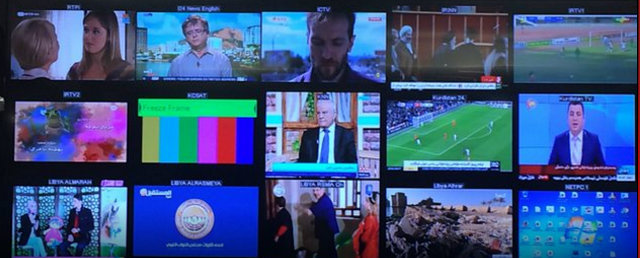
Caversham Park is the home of BBC Monitoring which for over 70 years has been the eyes and ears of the BBC, watching, translating and analysing the world’s media and social media. David Amanor visits the former stately home to meet some of the journalists who’ve witnessed history unfold in their own countries, from the Cold War to the Syrian conflict.

Senior Editors Simona Kralova and Chris Greenway take us back in time to tell the story of how this grand house become a hub for information gathering, from the era of morse code and typewriters to satellites and social media.

Sifting information from misinformation has always been part of the service’s DNA. Ukrainian Vitaliy Shevchenko, Iraqi Mina al-Alami, and Source Manager and morse code man Al Bolton discuss the challenges of sourcing reliable information in the past, and today.

Watching distressing news from home is part of daily life for many journalists. Vesna Stancic from Bosnia, Syrian Lina Shaikhouni and Pinar Sevinclidir from Turkey discuss the personal impact of living the story.

There are also lighter moments to be enjoyed at Caversham, particularly for the musical, including Co-ordinating Editor Tom Mulligan, and Iranians Arash Ahmadi and Mahtab Nikpour, who do a good turn on the guitar, jaws harp and drums when not analysing Iranian politics and tales of chubby Chinese squirrels.

Click here to listen to the radio documentary on the BBC website.

Vatican Radio being absorbed into new Secretariat for Communications

Many thanks to SWLing Post contributor Andrea Borgnino who shares this item from the National Catholic Register:

[O]n December 31, 2016, after more than 80 years of operation, Vatican Radio is being absorbed into the new Secretariat for Communications. The move is part of Pope Francis’ reorganization of Curial offices, and is intended to make better use of the Vatican’s limited financial resources. According to Catholic World News, broadcasting programs will continue—at least for the near-term future—but Vatican Radio will no longer have its own corporate identity.

Today, Vatican Radio employs a staff of 355 representing 59 nationalities, mostly lay people, who together produce more than 66 hours of daily programming (24,117 hours annually). There are currently 45 languages used on air, and 38 languages on the website. Programs are broadcast via short wave, medium wave, FM and satellite.

In recent years, Vatican Radio has experimented with digital transmission technologies (DRM, T-DAB, T-DMB). Their news reports and bulletins have been widely distributed through newsletters, podcasts, audio and video, paving the way to a Web TV. Vatican Radio and CTV began their own YouTube channel in 2010, operating in four languages, and on Twitter (6 channels).

Today with the reform of Vatican communications operations, Vatican Radio director Msgr. Dario Vigano has indicated that he plans to pare down short-wave radio operations. Other broadcasts will continue, but with an eye to controlling costs: Vatican Radio has been losing between €20 and €30 million ($21 – $31.5 million) annually.[…]

Click here to read the full article.

Chris’ 2016 Pirate Radio Year in Review

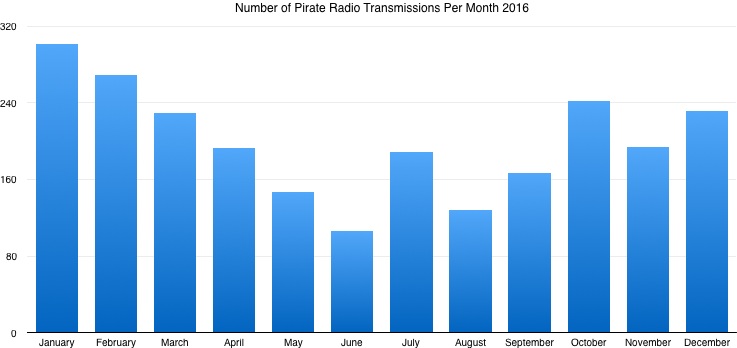
Many thanks to Chris Smolinski who has, once again, crunched the numbers to give us a look at HF pirate radio activity in 2016.

[…]To gauge shortwave pirate radio activity in 2016, I analyzed the Shortwave Pirate loggings forum of the HF Underground (http://www.hfunderground.com). A computer script parsed the message thread titles, as well as the timestamps of the messages. This information was used to produce some statistics about the level of pirate radio activity. Of course, as Mark Twain has written: “There are three kinds of lies: lies, damned lies, and statistics.” Still, let’s see what we can learn.

There were 13,860 messages posted to 2,398 unique threads, compared to 13,944 messages posted to 2,183 unique threads in 2015. Activity levels are essentially flat, but still at historically high levels. Back in the 1990s, it was not uncommon for an entire month to go by with only a handful of pirate stations logged. If you want to know when the “golden age” of shortwave pirate radio was, I would say it is right now.[…]

Chris has posted his full analysis on RadioHobbyist.org.

As you can tell from Chris table at the top of this page, January is a very active month for HF pirates. If you’ve never chased pirate radio stations, check out our pirate radio primer. Pirate radio DXing is incredibly fun!

DSWCI archives now online

Many thanks to SWLing Post contributor, Harald Kuhl, who shares the following message sent by Anker Petersen of the The Danish Shortwave Club International (DSWCI):

Dear DSWCI members.

In a few hours the DSWCI exists no longer.

But our webmaster Rolf Wernli has done a tremendous job between Christmas and New Year by changing our wellknown website to an electronic archive with good reading for all members !

If our former website appears, it is because it has been saved in your computer.

Please type www.dswci.org, press Enter and the new website should appear.

Enjoy and have a Happy New Year!

Best 73,

Anker

What a brilliant resource! Thank you, Harald, for passing this information along and many thanks to the fine folks at the DSWCI for sharing their archives with the radio community!

Click here to browse the archives at the DSWCI website.

Looking at HF OTH RADAR

Many thanks to SWLing Post contributor, Trevor, who shares this link to a blog post from Daniel Estevez describing the characteristics of HF OTH RADAR:

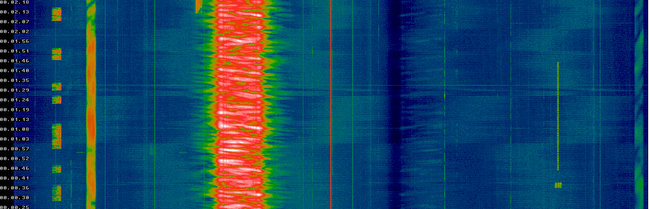
Most amateur operators are familiar with over-the-horizon radars in the HF bands. They sometimes pop up in the Amateur bands, rendering several tens of kilohertzs unusable. Inspired by Balint Seeber’s talk in GRCon16, I’ve decided to learn more about radars. Here I look at a typical OTH radar, presumably of Russian origin. It was recorded at my station around 20:00UTC on 8 December at a frequency around 6860kHz. This radar sometimes appears inside the 40m Amateur band as well.

Above this post you can see a waterfall plot of the radar signal. It’s the wide red signal. It is 15kHz wide and pretty strong, but severely affected by frequency-selective fading. Looking at the IQ recording in Audacity, it is clear that the radar uses pulses with a 50Hz repetition rate. This explains the characteristic sound of this radar when received with a conventional SSB radio. It sounds similar to AC hum (here in Europe, of course).

Continue reading on Daniel’s blog…

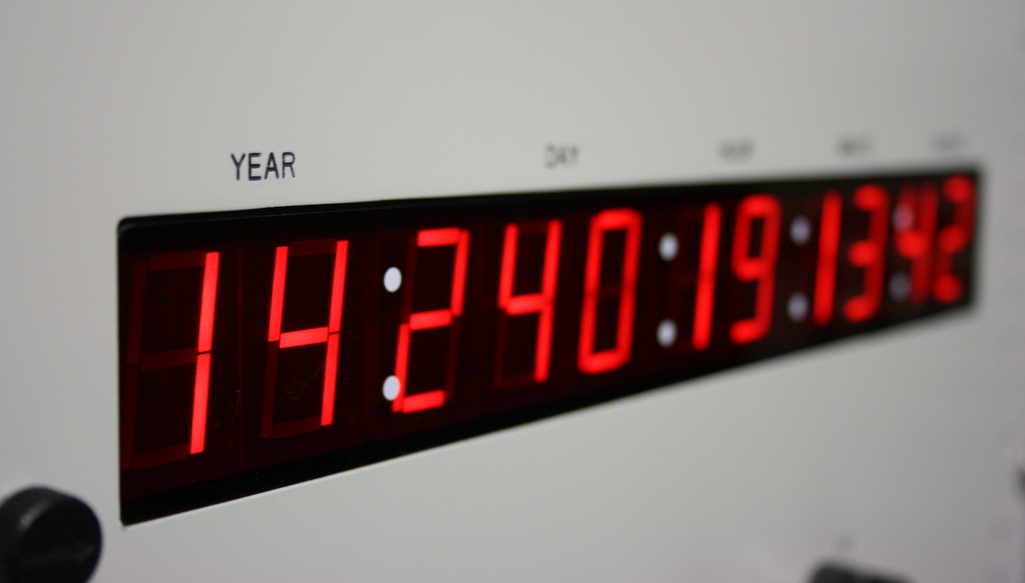
Leap second added to 2016

(Source: NPR)

Here’s a timely reminder for all you would-be revelers out there: Be careful with your countdowns this New Year’s Eve. There will be a little extra time to bask in the glow of a retreating 2016 — or curse its name, as the case may be.

Whatever your inclination may be, one thing is certain: Before the year is out, the world’s foremost authority on time will be adding one more second to the clock.

In a bulletin released this summer, the International Earth Rotation and Reference Systems Service, or IERS, said it would be necessary to introduce a “leap second” at the end of December. Timekeepers use this added second much as leap years are used — to bring the world’s atomic clocks in sync with the Earth’s own distinctive rhythm, which in this case is determined by its rotation.

This leap second isn’t the first. Since 1971, the world has added leap seconds with some regularity — typically every two to three years — and the latest leap second was added only last year, in June.

Continue reading at NPR…

Last year, I recorded the 2015 Leap Second via WWV–click here to read that post. Though such a subtle change, it is fun to hear that extra second added. I plan to record the full 31 meter band New Year’s Eve–hopefully, I’ll also catch the 10,000 kHz WWV Leap Second!

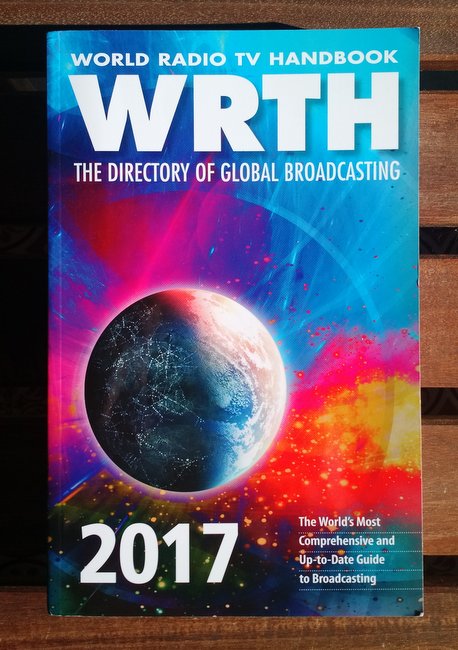
WRTH 2017: A look inside

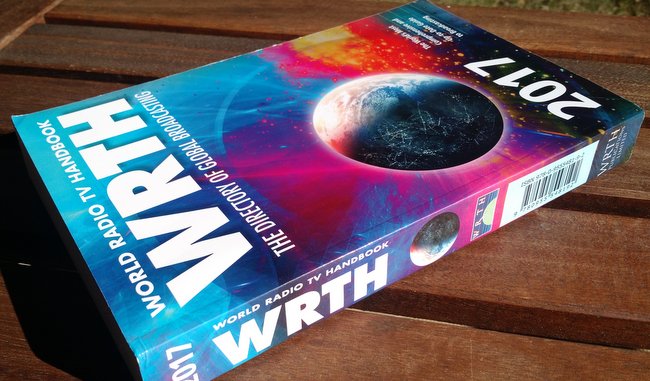
I received my copy of the 2017 World Radio and TV Handbook (WRTH) directly from the publisher last week, just prior to Christmas holiday ravels. As I mention every year, I look forward to receiving this excellent staple radio reference guide–and this is their 71st edition!

WRTH’s team of noted DXers from around the world curate frequencies and broadcaster information by region; while I’m not sure how they orchestrate all of this, the end result is truly a symphony of radio information. In addition to broadcaster listings, WRTH’s radio reviews, feature articles, and annual HF report make for excellent reading.

But the WRTH isn’t just a frequency guide: the publication always devotes the first sixty or so pages to articles relating to various aspects of the radio hobby. Following, I offer a quick overview of these.

The first article always features a WRTH contributor:  this year, WRTH’s International Editor, Sean Gilbert, tells us what sparked his interested in the hobby and what lead to his career with WRTH which started in 2000.

The second set of articles is always my favorite: WRTH receiver reviews.
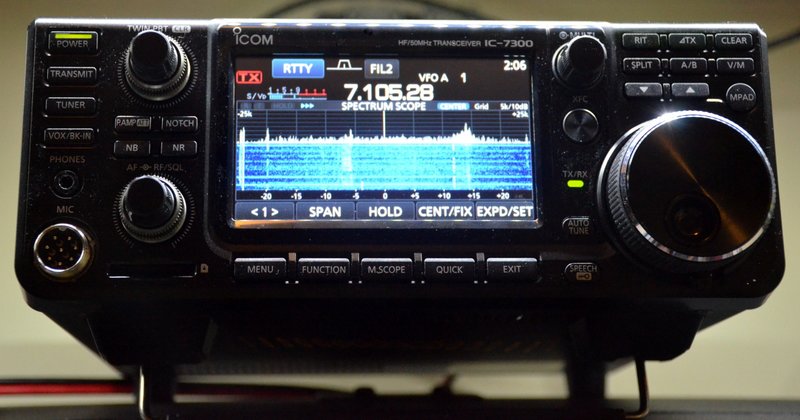
This year, WRTH begins with a review of the Icom IC-7300 general coverage transceiver.  They also review the Reuter Elektronik RDR55D, and re-visit the SDRplay RSP1. Following radio reviews, they evaluate the excellent Wellbrook ALA1530LNP magnetic loop antenna and the Bonito AAS300 3 way active RF splitter.

The following article focuses on one of my favorite shortwave broadcasters, The Mighty KBC. WRTH contributor, Max van Arnhem traces the broadcaster’s history and gives us a little insight about the people behind this music powerhouse. If you’re a KBC fan, you’re in for a treat!

I was very happy to find that the following feature article explores the world of Remote Reception. No doubt, remote listening is becoming one the most accessible ways many of us discover and enjoy our hobby today–especially as it can be difficult for some of us to fight urban radio interference.
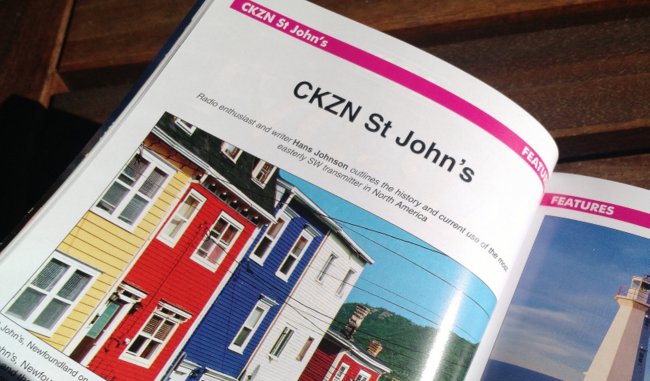
Following this, WRTH writer, Hans Johnson, features an article on CKZN St. John’s Newfoundland.  In this short article, Johnson covers the history and mission of this shortwave relay, dating back to the days when Newfoundland was a British dominion. Looking forward, Johnson notes that the CBC intend to not only continue this service directed at Labrador’s most remote areas, but it intends to replace their 1 kW Elcom Bauer transmitter in the coming years. This pleases me to no end as I’ve always loved snagging this particular relay of CFGB from my home here in North Carolina.

Next, DXer Rob Shepard writes about his travels in South America and the Pacific. Being an avid traveller myself, I love reading about others’ adventures across the globe with radio. Shepard even notes some catches from the Queen Mary II. I’ve never had the chance to do DXing while maritime mobile, but I hope to someday.

The following article features Danish radio enthusiast, Vagn Fentz, who has collaborated with WRTH since one of its very first editions. His radio history starts back when he was a schoolboy in Denmark during WWII, listening to the radio in secret. His story gives us insight into both his own world and that of the WRTH over the years.

Next, Michael Pütz outlines the progress, so far, of setting up an HF disaster relief radio network: the IRDR Project. If you haven’t heard of the IRDR project, this article makes for a great primer and also speaks to the potential future of a radio network that could have major positive impact over vast regions in the wake of disaster.

The final article–a tradition–is the WRTH  HF propagation report/forecast by Ulf-Peter Hoppe. Always an informative read (despite the fact we’re heading into a solar minimum).

The 71st is another fantastic edition of the World Radio TV Handbook. I’ve never been disappointed with WRTH, in truth. Their publishing standards are such that the quality of their reviews, their writing, and (most importantly) their broadcast listings are simply unparalleled.
For DXers who collect QSL cards, you’ll find that broadcaster contact information in WRTH is often more up-to-date than a broadcaster’s own website. When readers contact me asking for QSL information from an obscure broadcaster, the first place I search is the current WRTH. Remember: their information is based on volunteer contributors who specialize in specific regions of the world–the most knowledgeable regional DXers keep this publication accurate.

Purchase your copy of WRTH 2017 directly from WRTH’s publishers, or from a distributor like Universal Radio (US) and Amazon.com (US), Radio HF (Canada), or BookDepository.com (International).