Category Archives: Shortwave Radio

Unlocking Rare DX Treasures with SDR-Console’s Powerful Data File Analyzer Tool

Finding Rare DX with the Data File Analyzer

By Don Moore

Don’s DX traveling stories can be found in his book Tales of a Vagabond DXer

I’ve been a real jack-of-all-trades in my over five decades of DXing. I began with SWBC (shortwave broadcast) but soon branched out to medium wave and voice utility. Later I added longwave beacons and more recently I’ve gotten into digital utility stations. My goal has always been to log lots of different stations from lots of different places. And the rarer they are, the better.

For SWBC and medium wave stations, as well as scheduled utility broadcasts such as marine and aeronautical weather reports, the DXing process is simple. You tune to a frequency at a time when a station is scheduled to be on the air. It’s either there or it’s not there. If it’s not there then maybe propagation isn’t right or maybe your antenna/receiver setup isn’t the best for that frequency band or the station’s power level. You tune away to find something else with plans to try again another day.

But it’s not always that easy. Most utility stations do not have fixed schedules and only come on as needed. The best example of that is two-way marine, aeronautical, and military voice communications.

In eastern North America, tune to 8906 kHz anytime from late afternoon until morning and set your receiver to USB mode. You’ll probably hear empty static at first but it’s unlikely that more than ten or fifteen minutes will pass before you’ve heard some aeronautical traffic. The frequency is assigned for communication on the North Atlantic and is heavily used by aircraft communicating with New York Radio, Gander Radio (Newfoundland, Canada), and Shanwick Radio (Shannon, Ireland). If you keep listening, the frequency will probably be occupied around 25% of the time. Wherever you are in the world, there are a few heavily used air frequencies like 8906 kHz and listening to them can be fascinating. But I want to log more than just a few easily heard stations.

Sticking to aeronautical DX, there are many assigned frequencies for different regions and air routes around the world. But propagation to those distant areas is unpredictable and less-used routes have fewer flights. Fewer flights mean less radio communication and more empty static. The most interesting frequencies may only see traffic a few times a week.

Hearing the rarest voice utility DX requires listening to lots of empty static just to get a brief DX catch. For years my process was simple. I would set my receiver to an interesting frequency and leave the tape recorder running while I sat nearby listening and doing something productive. I got some very good DX over the years that way. But I don’t want to think about how many long hours of empty static I listened to in order to get that DX.


SDRs offered some improvement. Instead of audibly monitoring a specific frequency I could now make a spectrum recording that included a band of interest, say the 8815 to 9040 aeronautical band. During playback I could visually monitor the SDR waterfall for interesting signals. That works. But watching an SDR waterfall scroll by for three or four hours gets tedious quickly.

(When I refer to SDRs, I mean ones consisting of a small box that is connected to and controlled from a computer using a software program. None of this applies to models such as the Malachite line or the Icom IC-R8600, which use SDR technology inside but mostly function as a traditional receiver.)

Finding a Better Way

That better way is, I think, one of the most exciting DX tools out there – the Data File Analyzer in the SDR-Console program. Since I learned about it a few years ago, the Analyzer has gotten me all kinds of catches that I probably wouldn’t have gotten otherwise. Let’s start with an overview and then dig into the how-to.

SDR-Console is one of the better-known SDR programs and it works well with most of the common SDR radios on the market, including the Airspy, Elad, Perseus, and SDR-Play models. Here’s what the main window looks like:

The Data File Analyzer is a second window that produces a scrollable waterfall display for the entire length of an SDR spectrum recording. The display is similar to a standard waterfall with frequencies along the bottom and times along the side. However, there is also a scroll bar on the right side for browsing through the entire length of the recording. Instead of watching a four-hour spectrum recording slowly roll by in real time, I can scroll through the window looking for DX.

And this is what makes the Data Analyzer really useful. When I spot an interesting signal, I click on it and that causes the main window to start playing at that time and frequency. Now going through a four-hour spectrum recording takes from a few minutes to around half an hour, depending on how much DX I find.

Here’s a closeup of part of that same screen of spectrum recording made on 24 October 2024 at a DXpedition in western Pennsylvania, USA.

“A” marks a short exchange between an aircraft and Ndjamena Radio in Chad on 8894 kHz. “B” is Niamey Radio in Niger on 8903 kHz. “C” is Gander Radio on 8891 kHz. Just to the left of that is a string of digital signals. “D” is New York Radio on 8918 kHz. Again, there is a string of digital signals just to the left. Finally, “E” is communication from Dakar Radio in Senegal and Sal Radio in the Cape Verde Islands on 8861 kHz. I caught four African aero stations in just four-and-a-half minutes. I could also show you long stretches of time when there was nothing interesting coming in. With the Data File Analyzer I was able to visually find and focus on the DX and not waste my time with the empty static.

Here’s another image taken at the same DXpedition. Notice the three transmissions between 8820 to 8845 that seem to be mirroring one other.

That turned out to be Flightwatch Brisbane, the Australian regional aeronautical network. It uses multiple transmitter sites on 8822, 8831, and 8843 kHz to cover the entire country. I had never logged it before and I doubt I would have found it if DXing in the traditional manner.

The How-To

Here I’m going to assume that you already have SDR-Console installed and know the basics of how to use it, including making spectrum recordings. (If not, see the links at the end.) This article was written using version 3.4 of SDR-Console. Some of the functionalities described are not in earlier versions, so upgrade if you are not up to date. And I should point out that while you can do this on a single monitor, it works more smoothly if you have a dual monitor setup and can put each window on a different screen. Continue reading
Bridging Two Worlds: Shortwave Listening Meets Amateur Radio

When the SWL and Amateur Radio hobbies meet

by  Dan Greenall

Many of us who are also amateur radio operators, got their start in the hobby through simply listening to shortwave radio, or perhaps, to stations in the AM or FM broadcast bands.  I suppose it is then inevitable that these two hobbies are bound to connect with each other from time to time.  Here are a few examples of this that relate to my experiences.

In 1972, while doing a random band scan on shortwave, I came across a point-to-point radio station from Managua, Nicaragua that was transmitting a repeating test message (recording attached below):

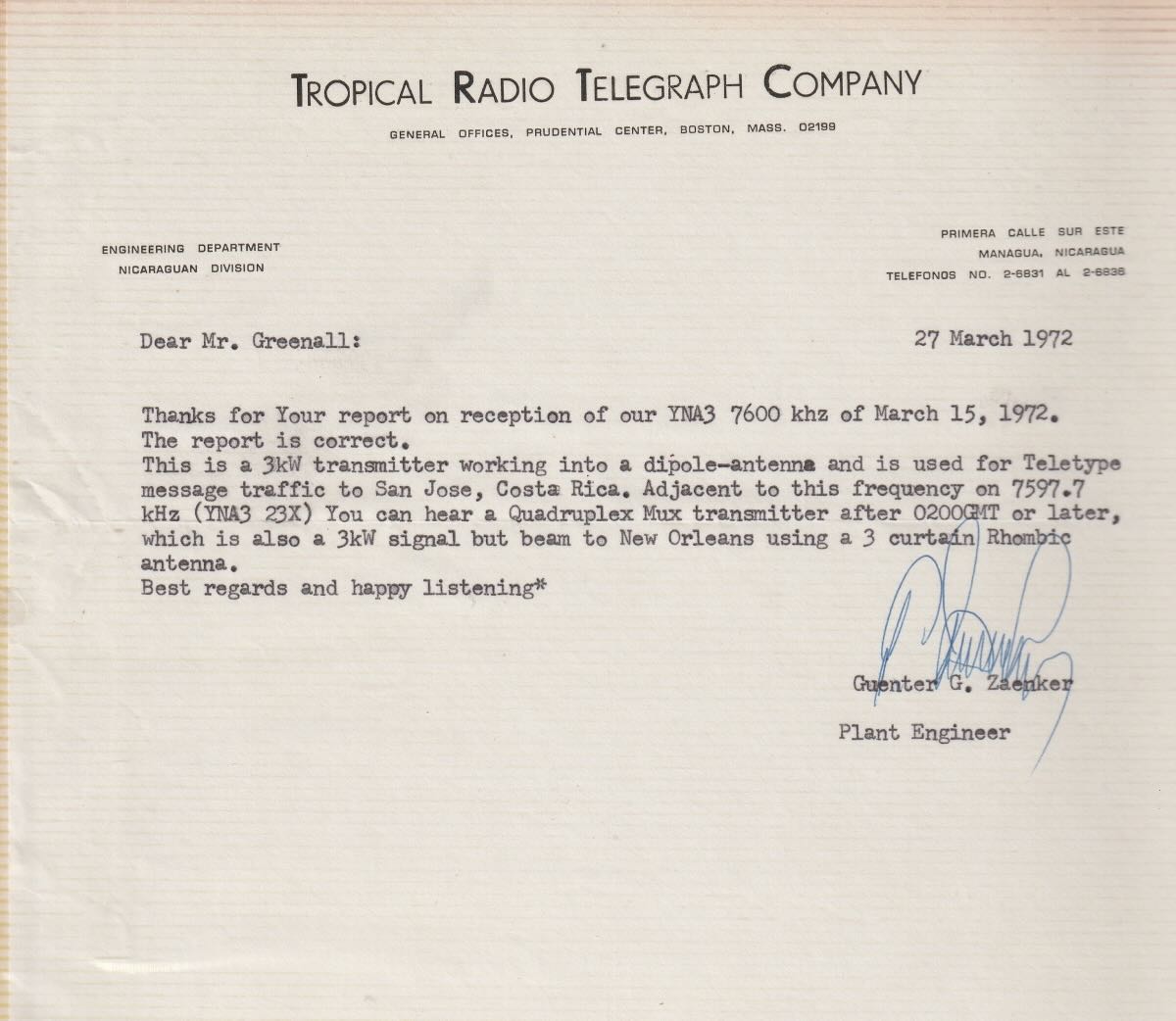
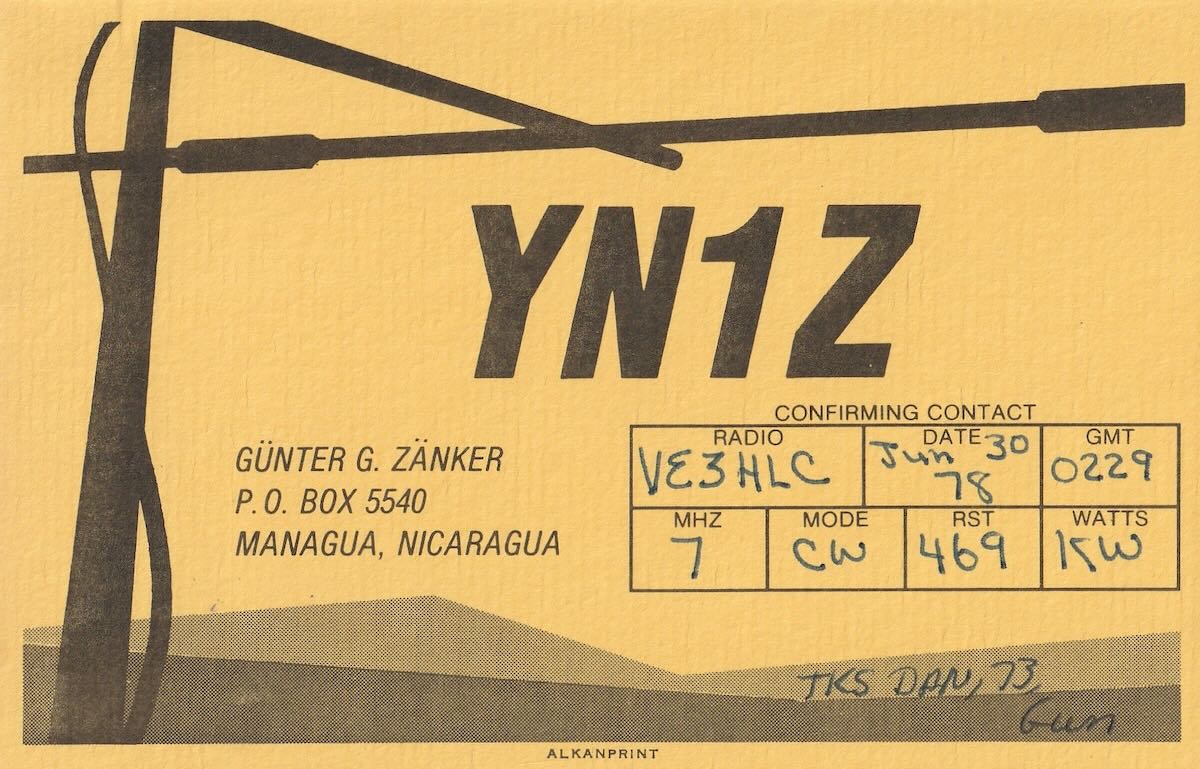
The station was operated by the Tropical Radio Telegraph Company and I sent off a reception report in hopes of receiving a QSL from them.  As luck would have it, the Plant Engineer, Guenter G. Zaenker, responded with a friendly letter including some details about their transmitter power and antennas used.

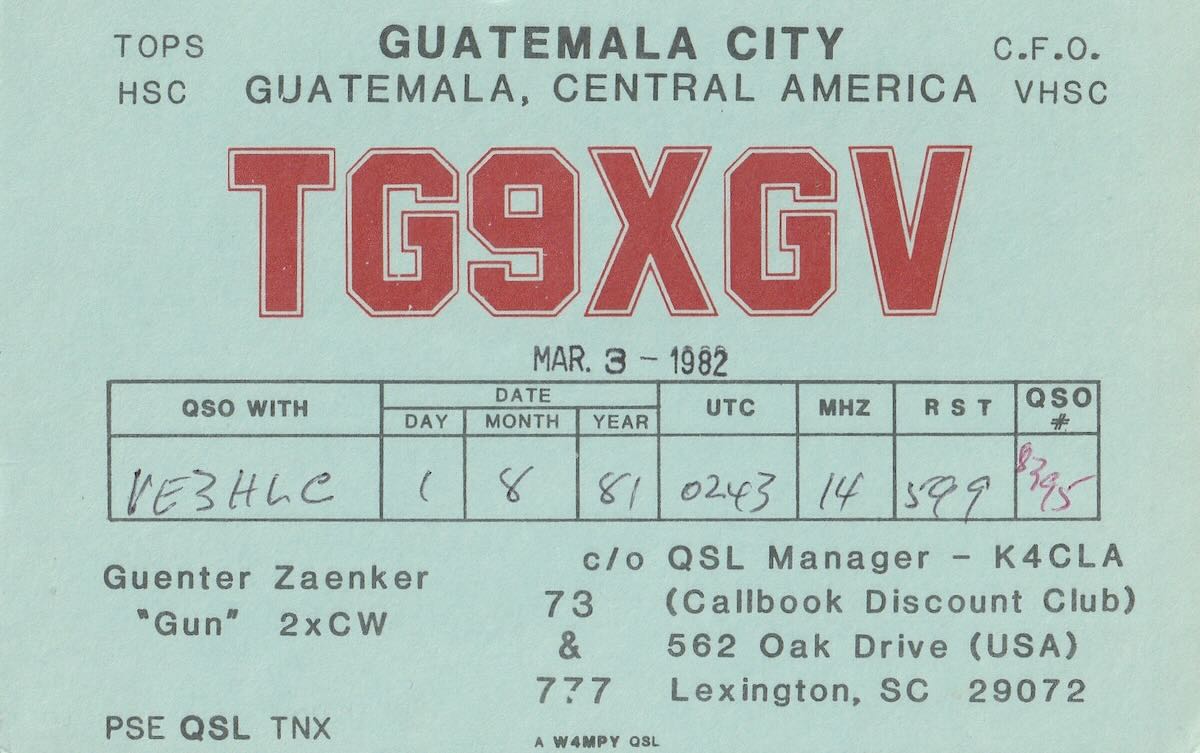
A couple of years later, when I got my amateur radio licence (VE3HLC), my SWL activities took a back seat to ham radio for a while.  In 1978, I received a QSL for a contact with station YN1Z in Managua who turned out to be none other than Guenther G. Zaenker.

I worked Guenter for a final time as TG9XGV in Guatemala City, Guatemala. How is that for completing a hat trick!

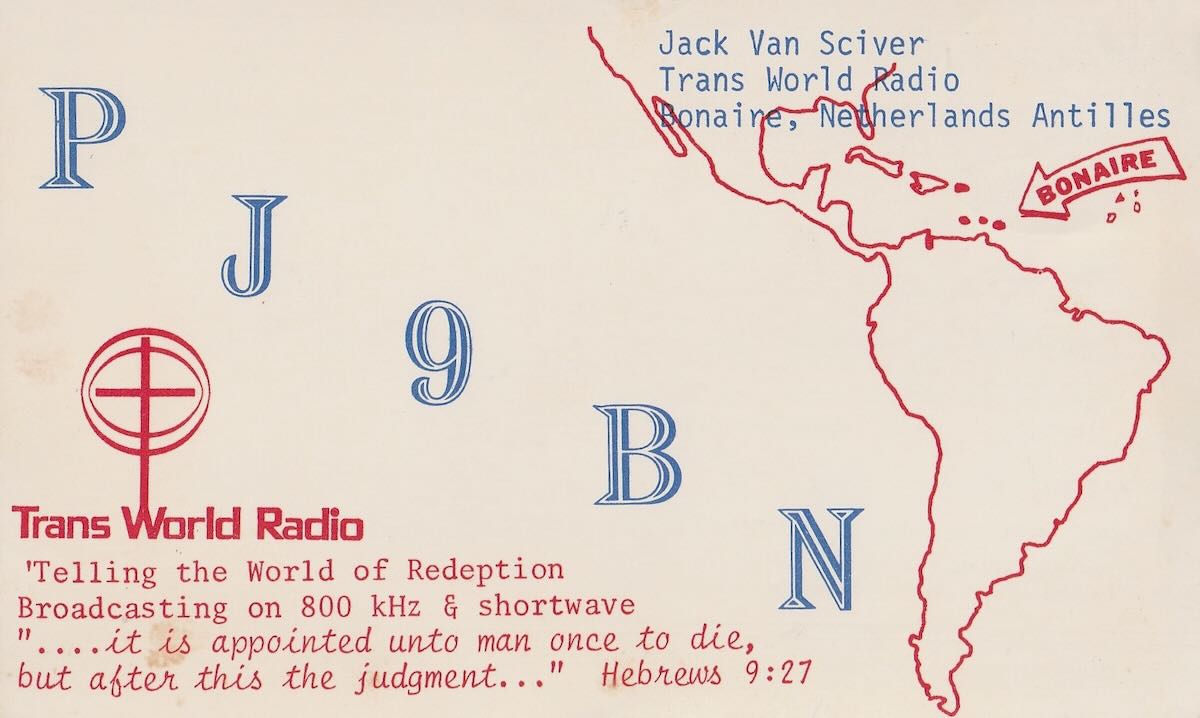
Shortly after receiving my amateur radio ticket in 1974, I made a contact with station PJ9BN, Jack Van Sciver on the island of Bonaire in the Netherlands Antilles.

It turns out he worked at Trans World Radio, a broadcaster I had listened to regularly on the SWBC bands and it was quite exciting to discover this connection.  Attached is a link to a recording I made of this station that same year as they were concluding a segment of their popular DX Special program:

https://archive.org/details/trans-world-radio-bonaire

It seems that Jack is still going strong as I recently found this link to his current amateur callsign NA3F: https://www.qrz.com/db/NA3F

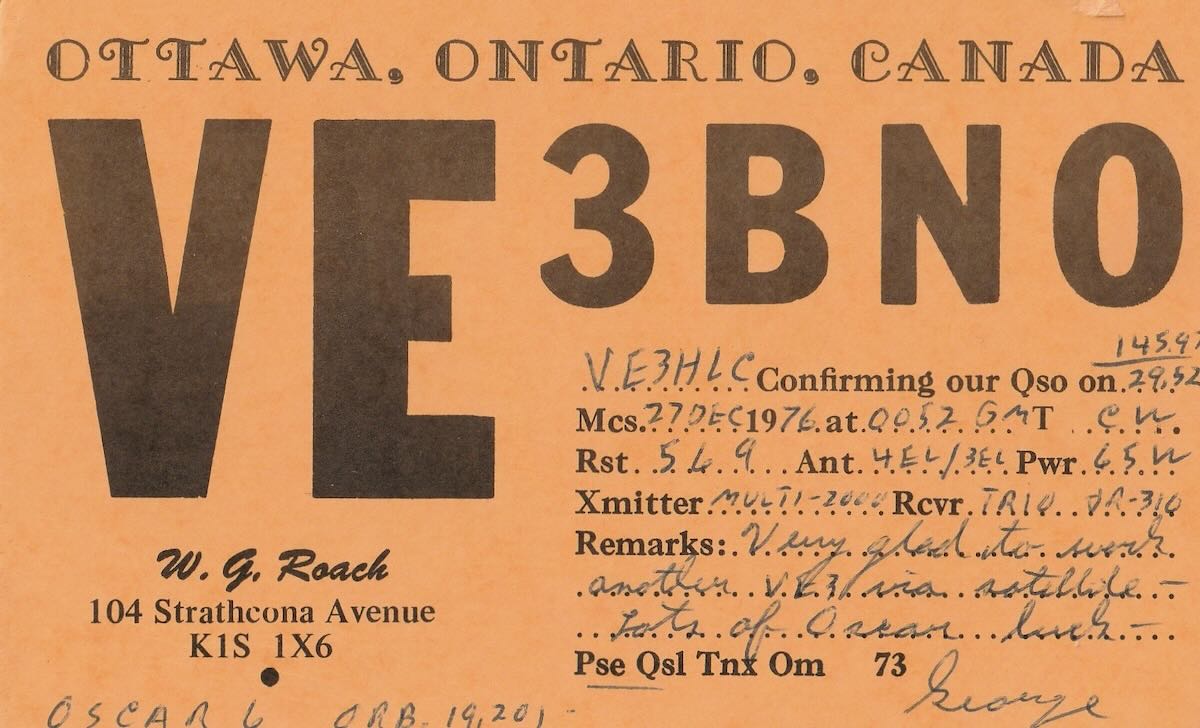
A final note, I had made a 2-way contact through the Oscar 6 amateur radio satellite (uplink on 2 metres, downlink on 10 metres) in 1976 with W.G. “George” Roach in Ottawa, Ontario.

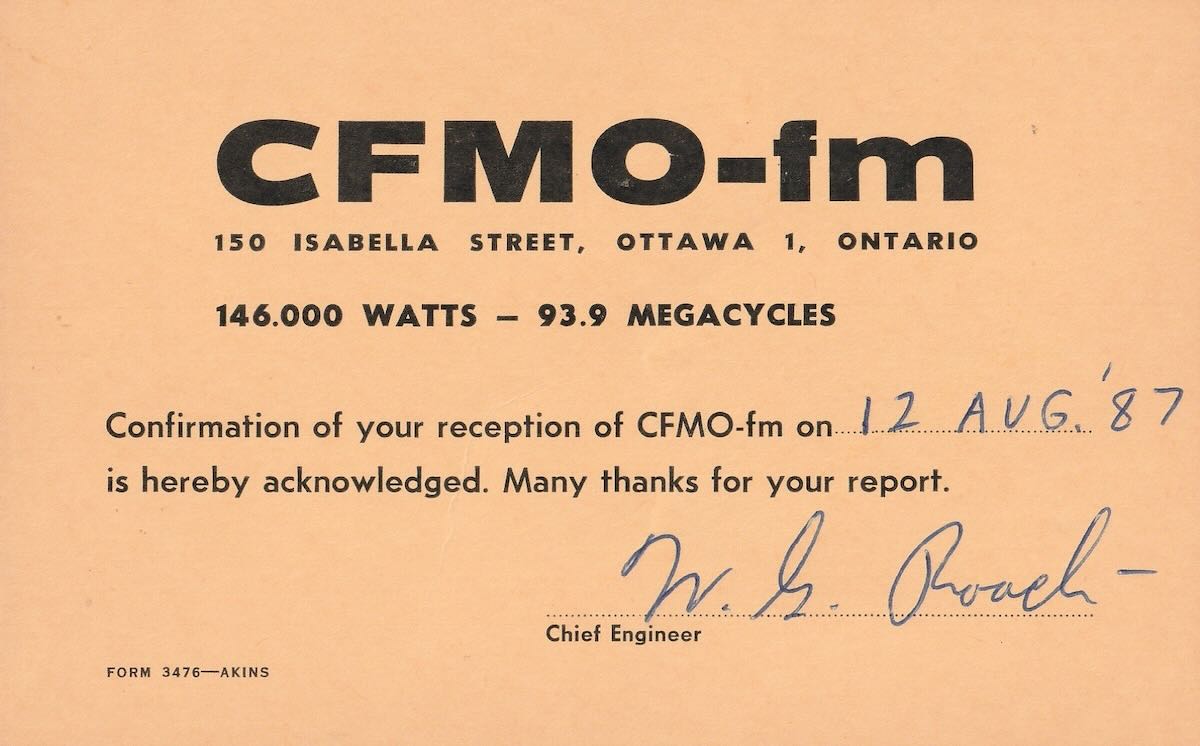
Some 11 years later, I was able to pick up station CFMO FM on 93.9 MHz, over 300 miles away, through some great ducting conditions.  When I received a QSL from the station, it was signed by W.G. Roach who was the chief engineer at CFMO FM.

It certainly is a small world!  I wonder how many others out there have experiences similar to mine?

Why Jeff Returned the Qodosen DX-286

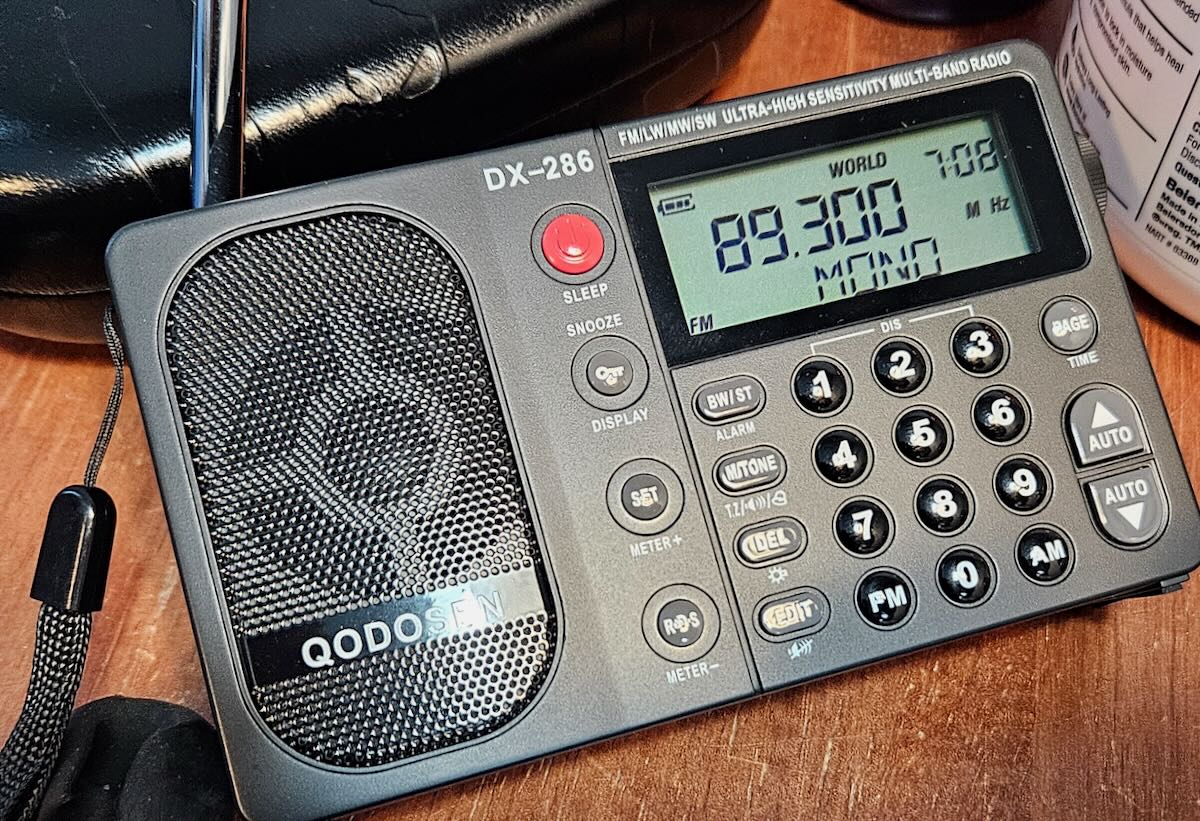
Many thanks to SWLing Post contributor Jeff McMahon, who notes that he’s published his thoughts about the Qodosen DX-286 [SWLing Post affiliate link] over on his blog, The Herculodge. While the DX-286 had solid AM reception, its audio quality and build didn’t quite meet his needs.

In the end, Jeff opted for a more robust choice for his setup. Curious about his experience with the DX-286 and why he made the switch? Read Jeff’s review here.

Downtempo and warmth for your radio dial

Hi to all SWLing Post community! FastRadioBurst 23 here letting you know what the Imaginary Stations crew are putting out over those airwaves this week.

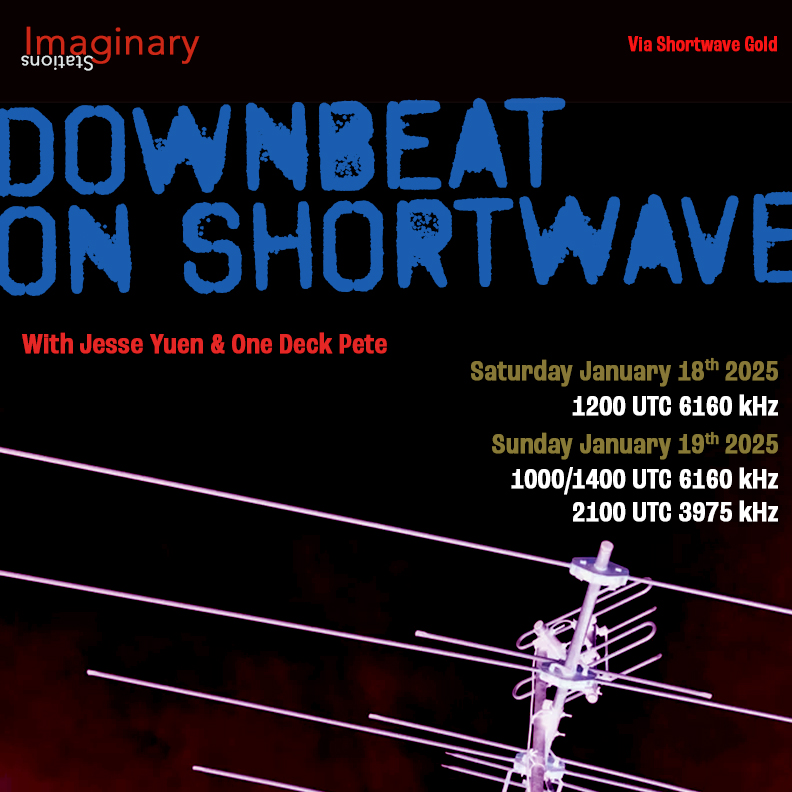
On Saturday 18th January 2025 at 1200 hrs UTC on 6160 kHz and also on Sunday 19th January 2025 at 1000/1400 hrs UTC on 6160 kHz and at 2100 UTC on 3975 kHz via Shortwave Gold will bring you a one-off programme called Downbeat on Shortwave. Jesse Yuen and One Deck Pete bring you two 15 minute downtempo mixes each, so kick off your stress shoes and tune into some ambient and downtempo vibes and drift away.

On Wednesday January 22nd January 2025 at 0300 UTC via WRMI we have WARM 3 as an antidote to those cold winter nights. More heart (and feet) warming tunes from the Imaginary Stations boilerhouse maintenance crew. Here’s the trailer for the show.

For more information on all our shows, please write to [email protected] and check out our old shows at our Mixcloud page here.

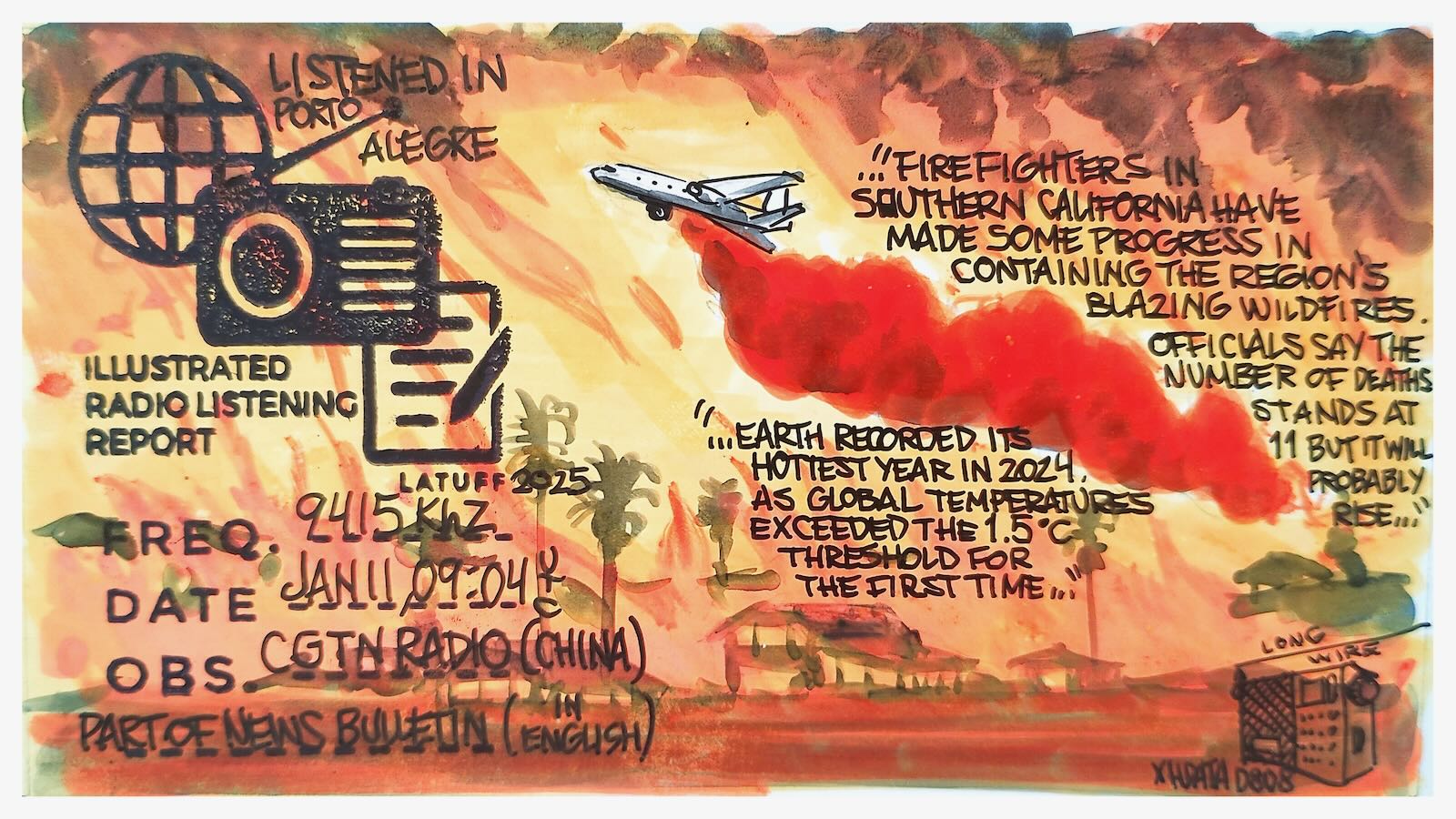
Carlos’ Illustrated Radio Listening Report Special: Los Angeles Wildfires (Vatican Radio, NHK, CGTN and Kyodo News) from January 11, 2025

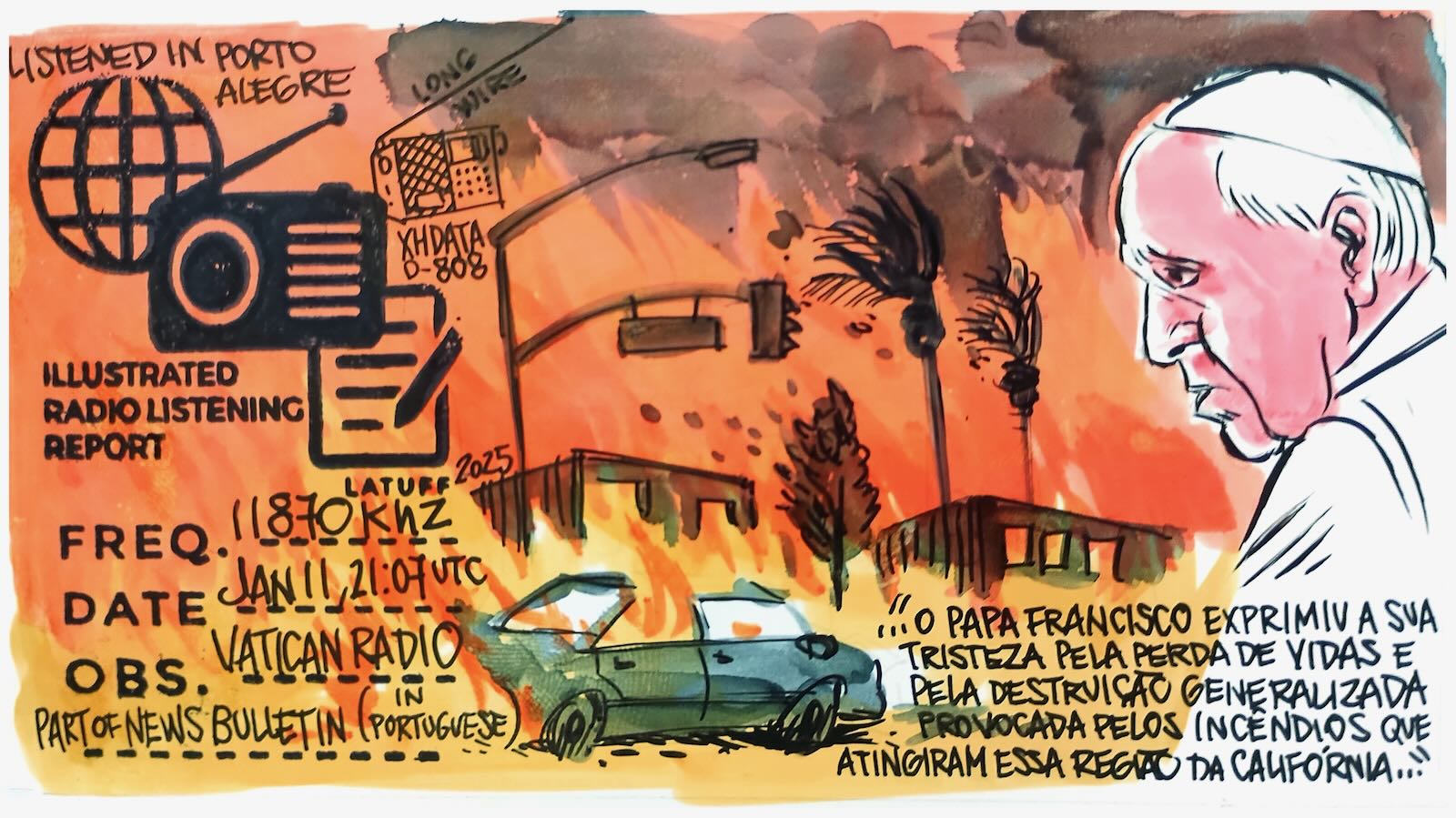
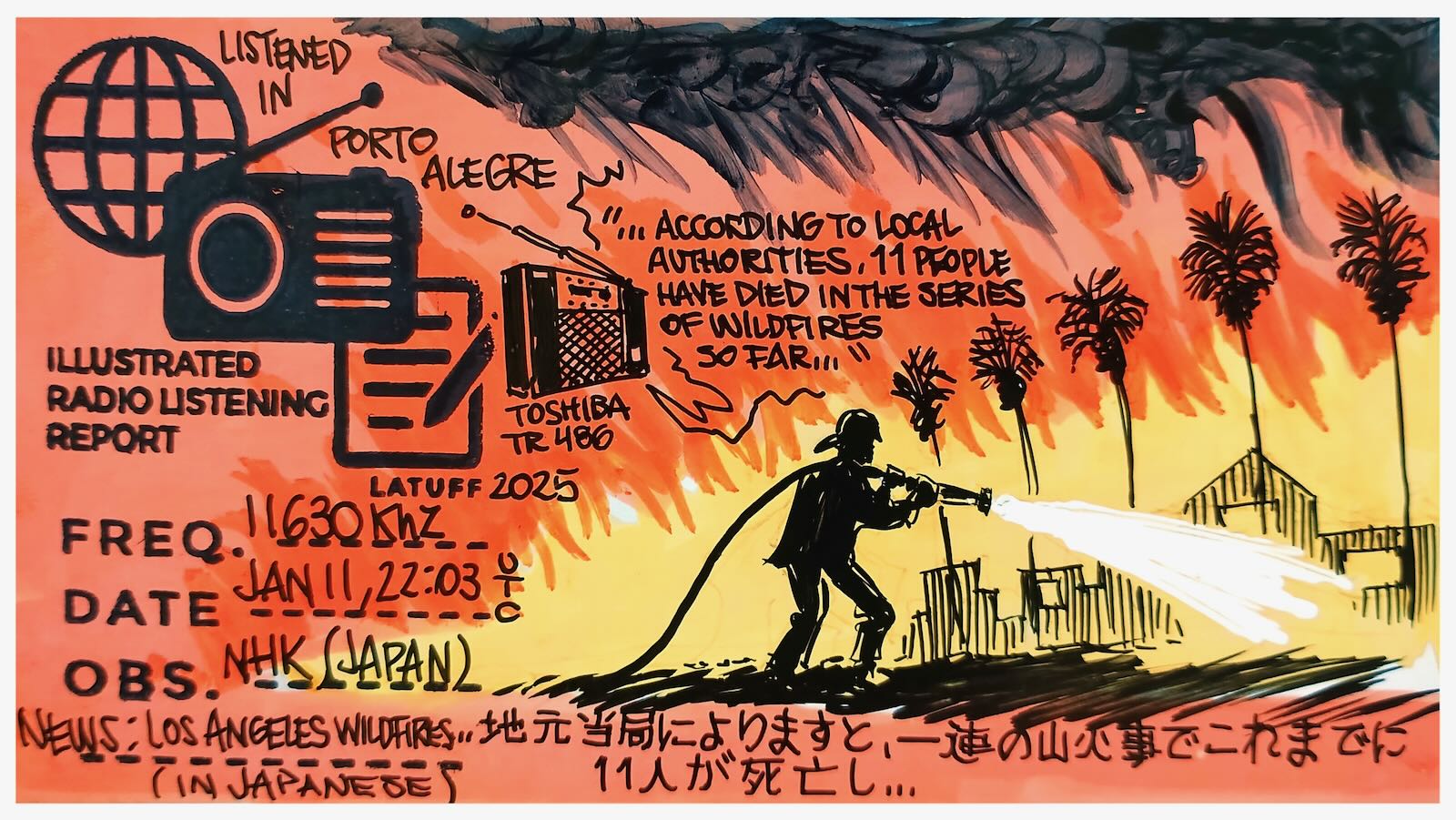
Many thanks to SWLing Post contributor and noted political cartoonist, Carlos Latuff, who shares the following illustrated radio listening reports, all covering the ongoing Los Angeles Wildfires.


Part of Vatican Radio’s news bulletin (in Portuguese), listened in Porto Alegre:

“In a telegram to the Archbishop of Los Angeles, in the United States of America, Dom José Gómez, Pope Francis expressed his sadness at the loss of life and the widespread destruction caused by the fires that have hit this region of California. In a message signed by the Cardinal Secretary of State, Pietro Parolin, the Holy Father assures his spiritual closeness to the affected communities and entrusts the souls of the deceased to the loving mercy of Almighty God, sending his sincere condolences to those who mourn their loss.

The Pontifex also prays for the emergency teams and grants his blessing to all as a promise of consolation and strength in the Lord. To date, at least 11 people have died and 150,000 have been evacuated due to the devastating fires that hit the Los Angeles region. In addition to the loss of human lives, the fire left a trail of destruction with economic losses of between 135 and 150 billion dollars.”

Click here to view on YouTube.


Part of NHK news bulletin (in Japanese) about Los Angeles wildfires. Listened (indoor) in Porto Alegre in a Toshiba TR486 receiver, telescopic antenna.

Click here to view on YouTube.


Part of CGTN Radio news bulletin (in English).
Firefighters have made some progress in Southern California, earth recorded its hottest year in 2024. Listened in Porto Alegre, Brazil.

Click here to view on YouTube.


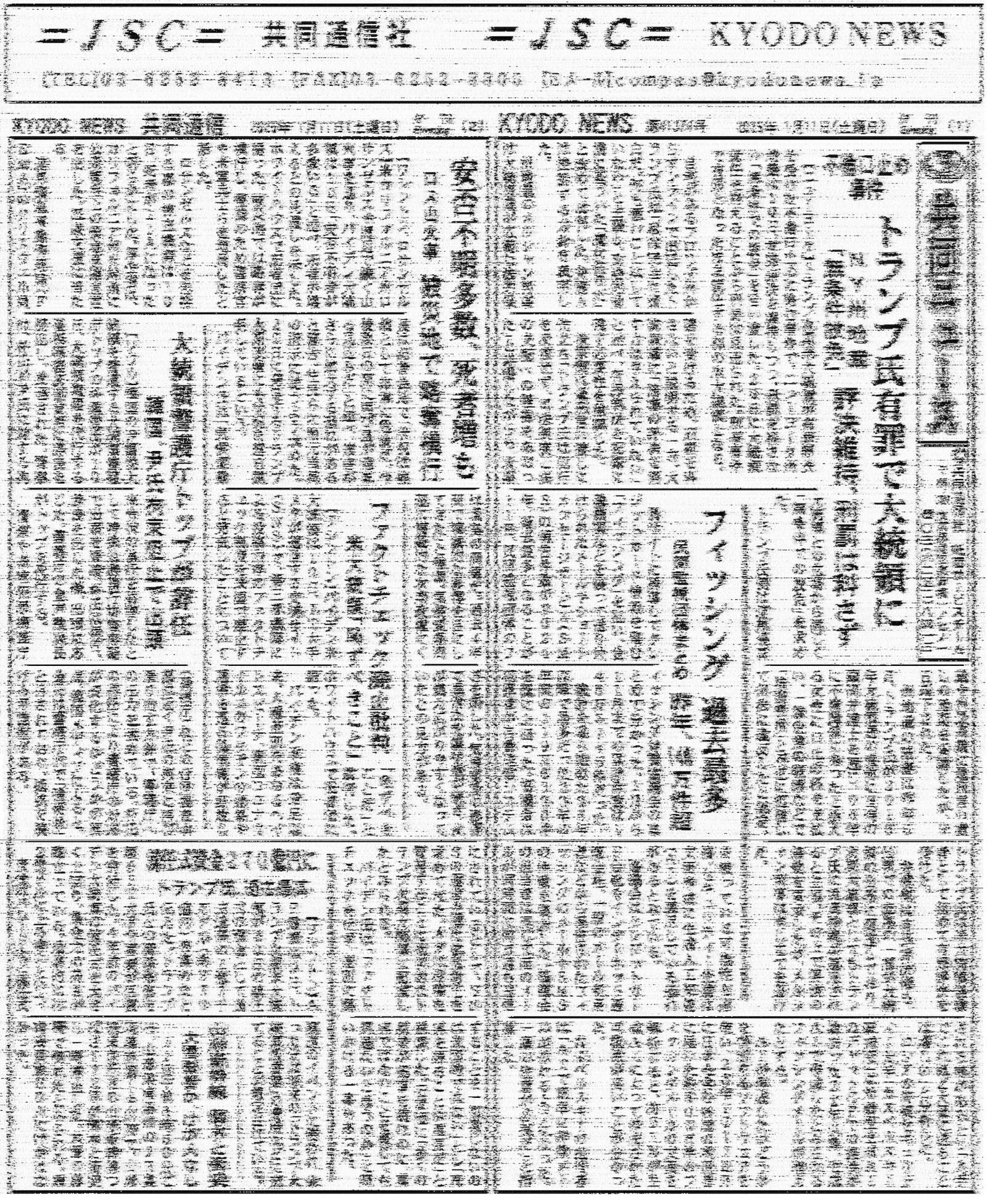
Kyodo News Evening Edition radiofax, 16970 kHz: “L.A. wildfire death toll rises, as many remain uncontacted”.

Don Moore’s Photo Album: Chota, Peru

Don Moore’s Photo Album: Chota, Peru

by Don Moore

More of Don’s traveling DX stories can be found in his book Tales of a Vagabond DXer

For DXers of Latin American stations, the period from about 1978-1998 was the golden age of DXing Peru. Those years saw an explosion of shortwave broadcasting from small towns, especially in northern Peru. Most of the stations were unlicensed and few lasted long. I tell the complete story of the period in Tales of a Vagabond DXer. However, the book doesn’t have many pictures as that would have made it much more expensive to produce and to buy. Fortunately, this blog is a perfect place to share photographs.

In those days one of the biggest radio hotspots in Peru was the department of Cajamarca. Over one hundred stations broadcast on shortwave, however briefly, just from that department. Cajamarca is a special place to me because I visited the region in 1985 during the height of the radio boom and visited over a dozen stations in the towns of Chota, Bambamarca, Cutervo and Celendín and the city of Cajamarca.

Chota is the largest town in the central part of Cajamarca department and played an important role in the development of broadcasting in small provincial towns.  It’s about 140 kilometers north of Cajamarca but in between is cold barren Andean altiplano rising to over 4,000 meters elevation. In 1985 the bus ride took twelve hours and we encountered ice storms coming and going.

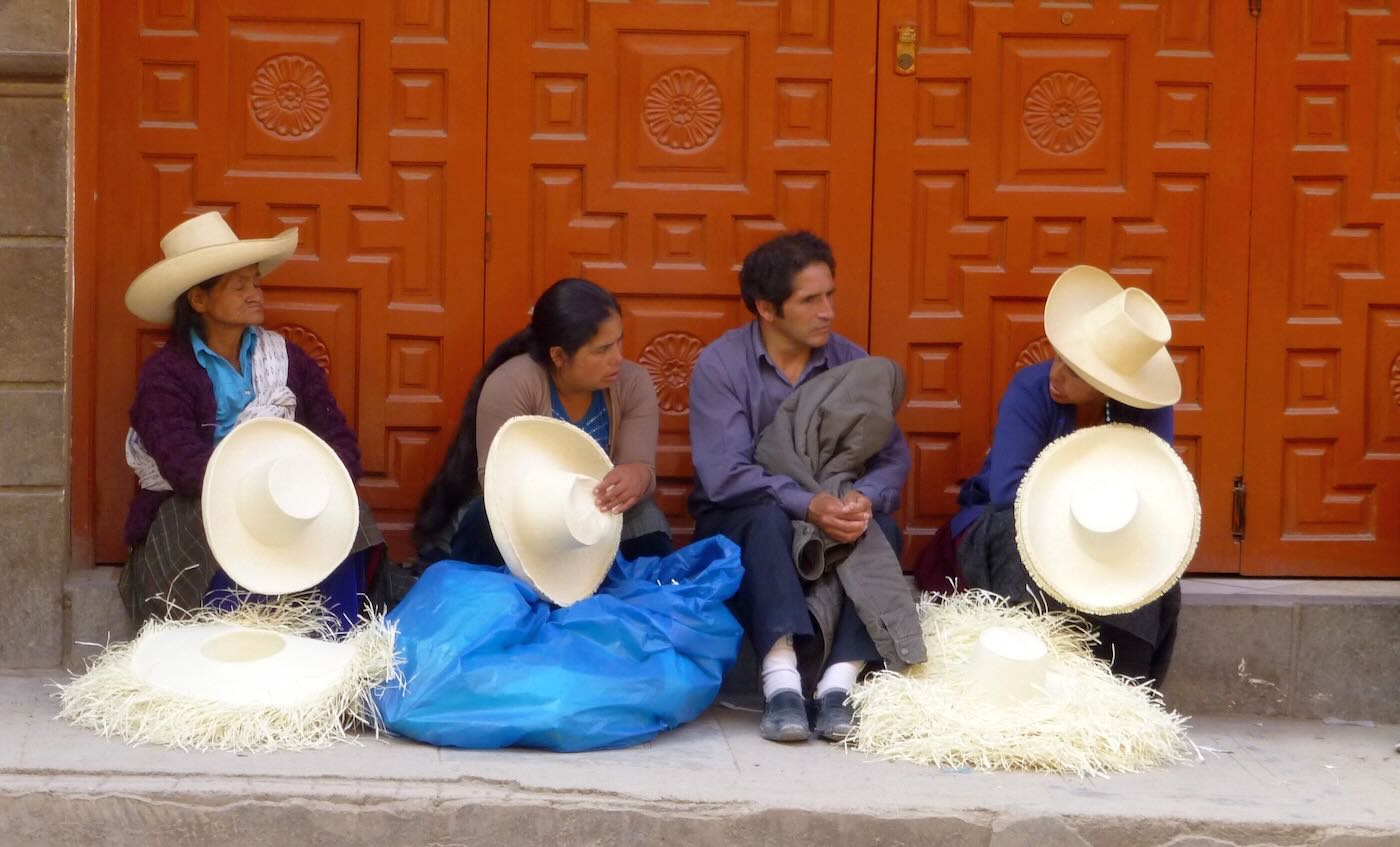
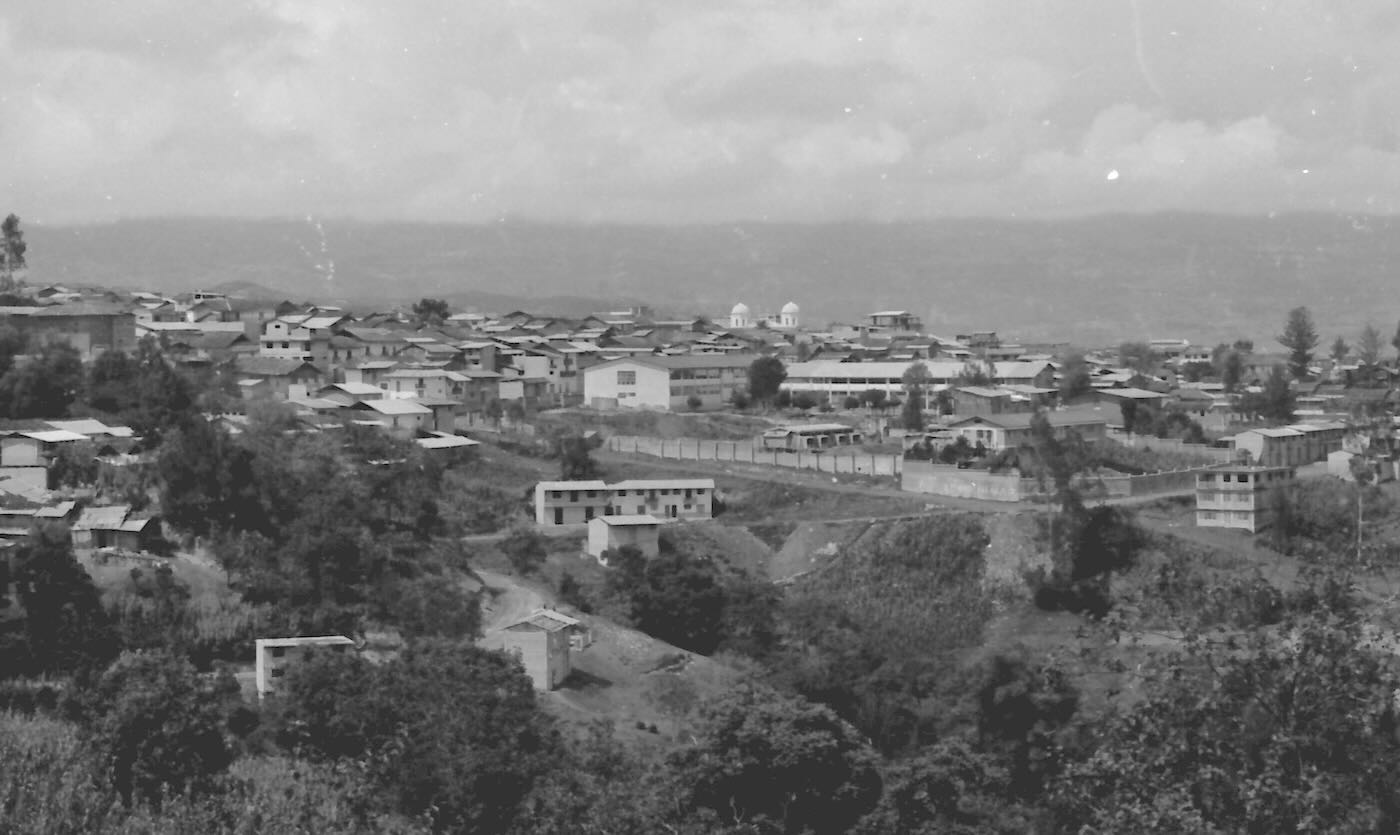
In 1985 Chota was a sleepy Andean town in a fertile river valley.

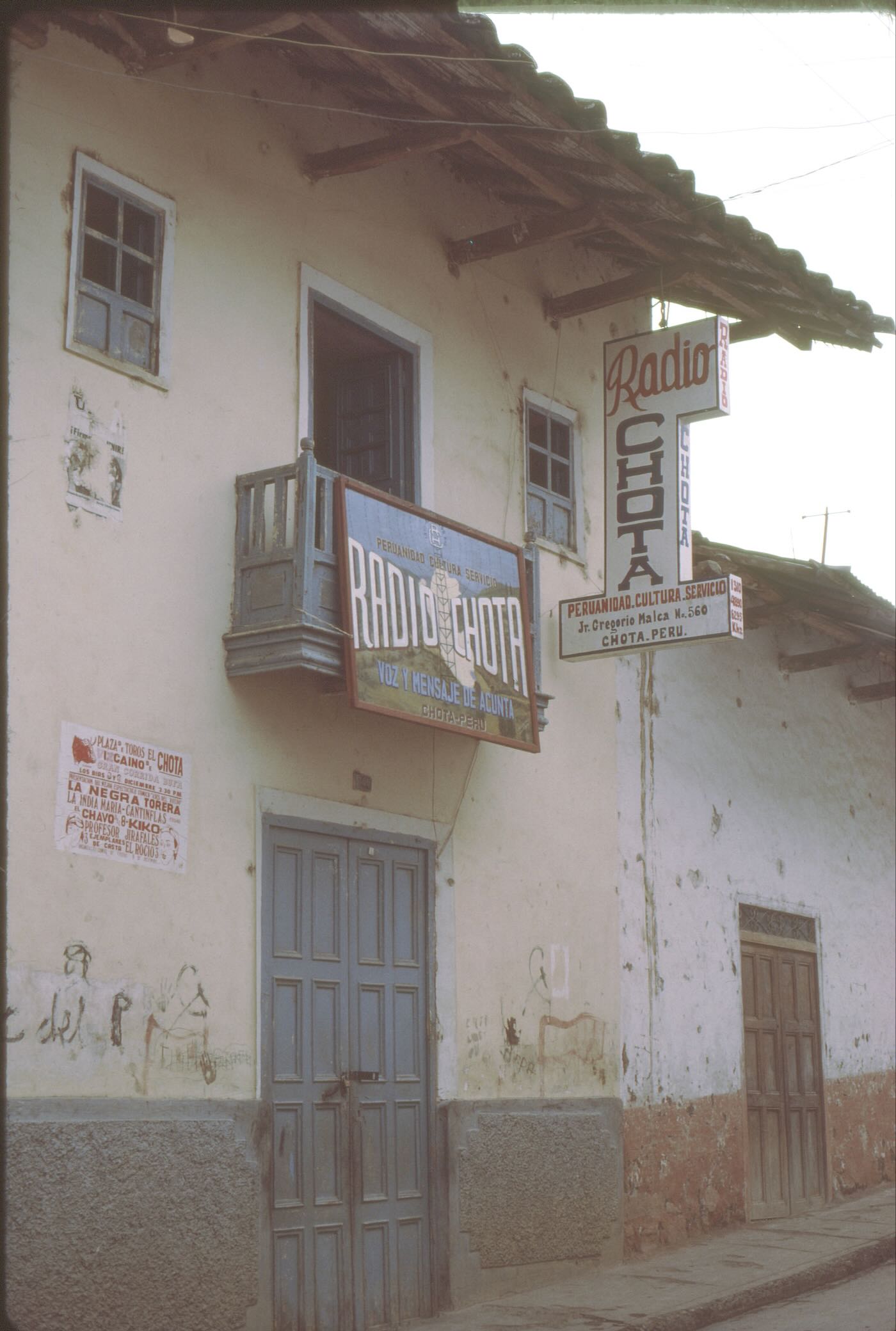
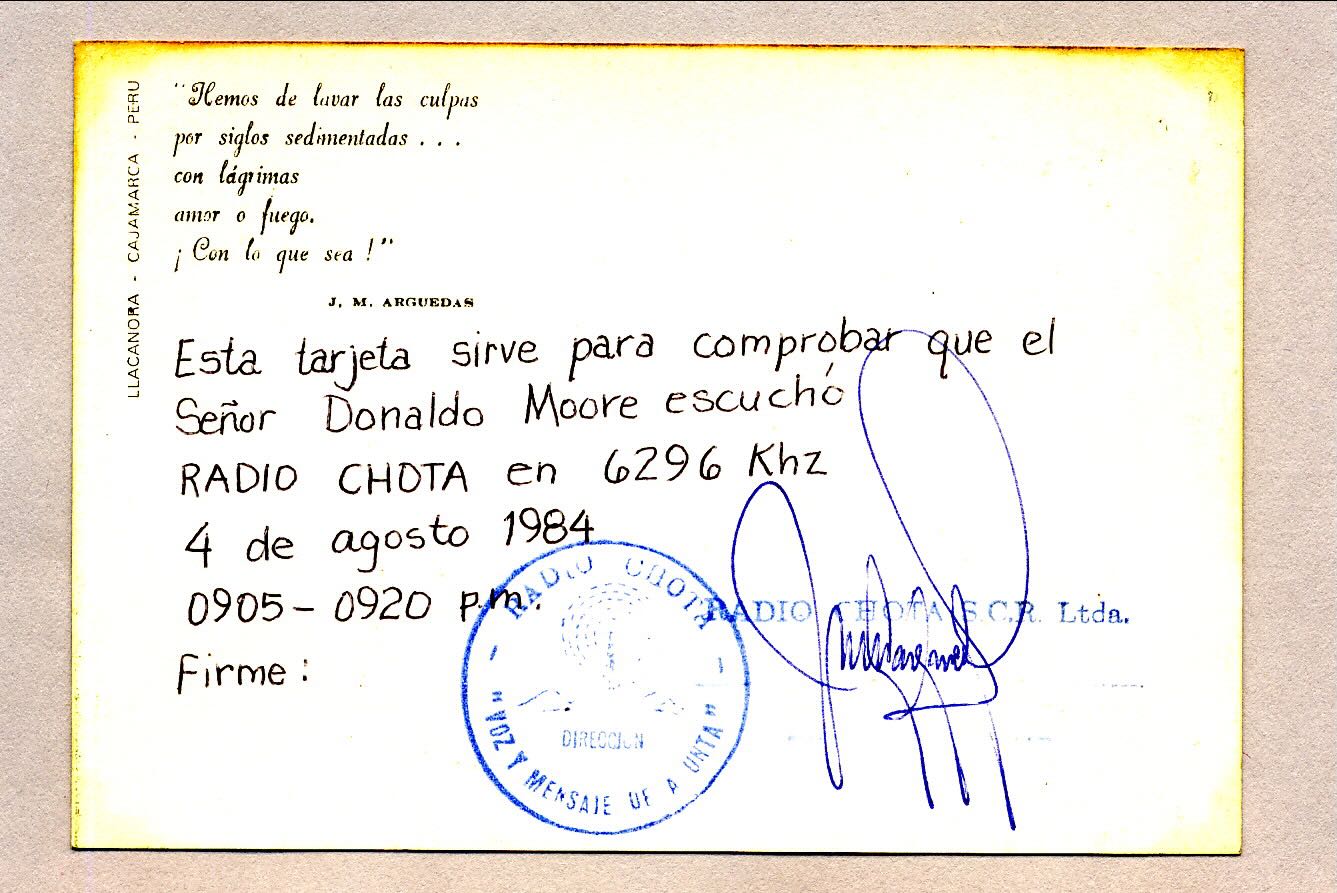
Radio Chota was already seven years old when I visited in March 1985. The station only had a medium wave license but also broadcast unlicensed on the out-of-band shortwave frequency of 6296 kHz where it was widely heard by DXers. Later they received a shortwave license and were assigned 4890 kHz but several years passed before they actually switched frequencies. Radio Chota was a success story and is still on the air today.  Most of the stations I visited in 1985 were not so lucky.

QSL collection of Don Moore … www.DonMooreDXer.com …

Radio Chota as heard on 6296 kHz in 1982 via On the Shortwaves:

Radio Chota as I heard it in Quito, Ecuador on 4890 kHz in 1997:

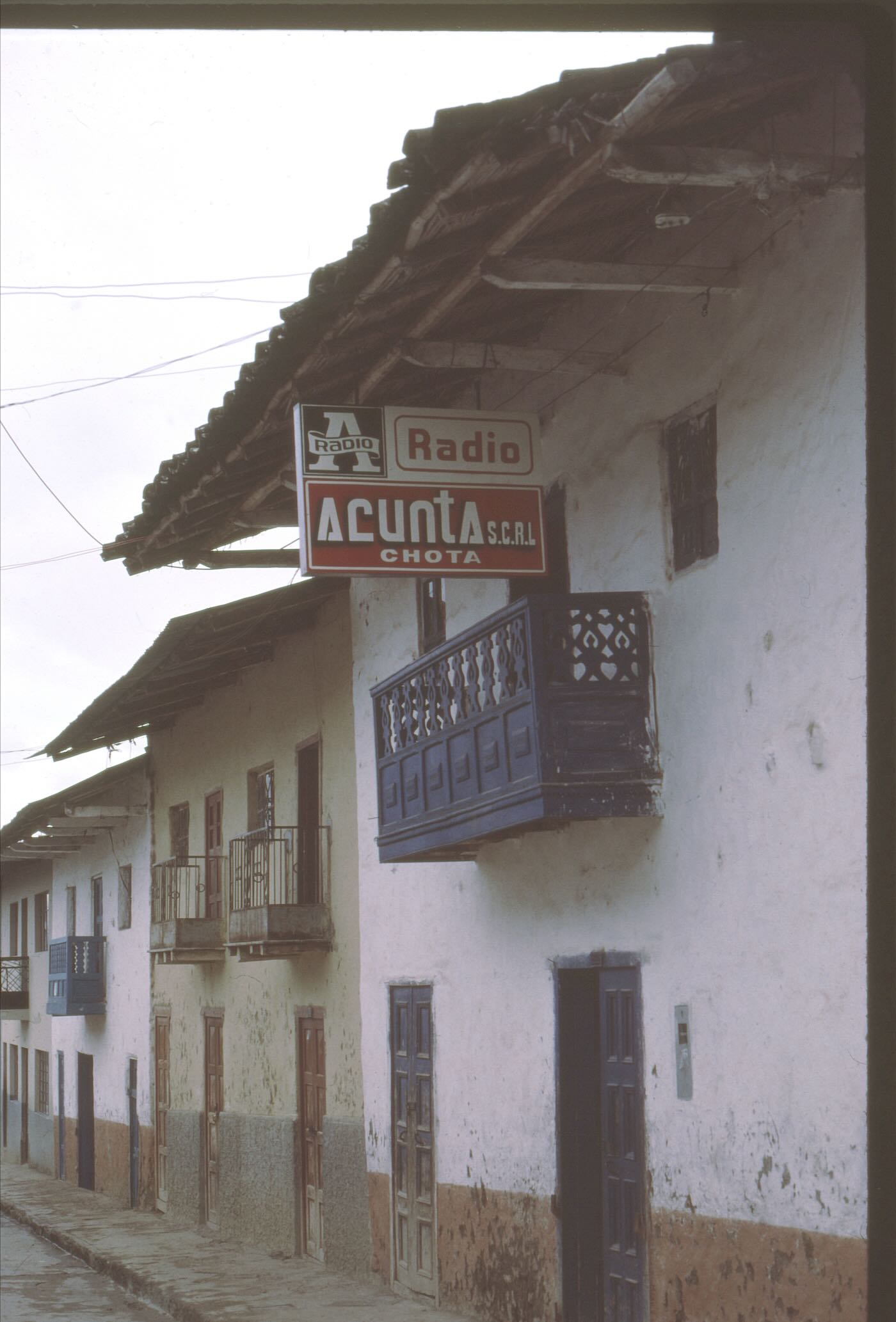
Radio Acunta was a more typical broadcaster of the period. The station broadcast irregularly in 1984 and 1985 with a homemade 100-watt transmitter. The station didn’t survive but the transmitter with its crystal-controlled frequency of 5800 kHz was a good starter set. Over the next several years DXers followed its movements around northern Peru as it was sold from one would-be station to another.

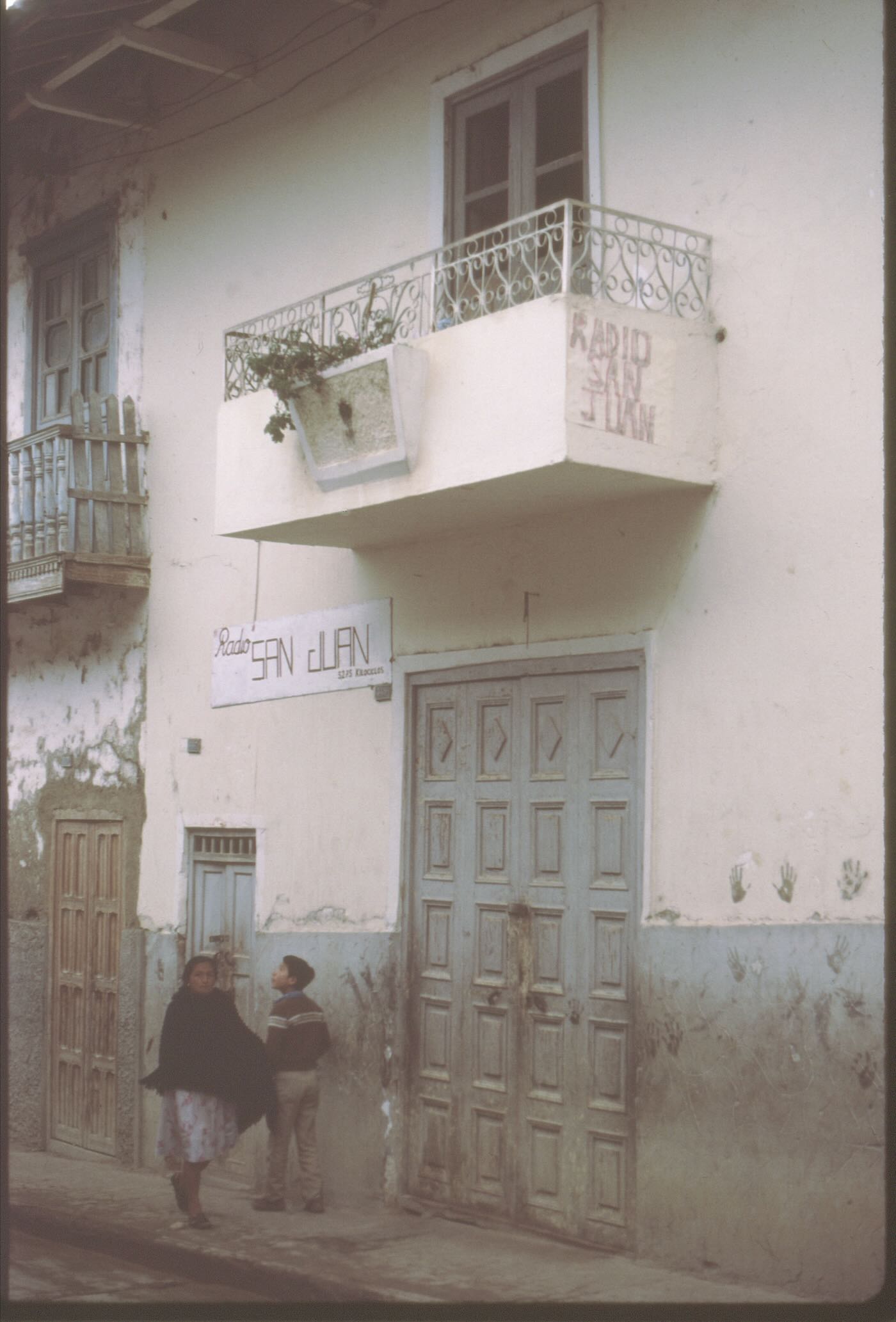
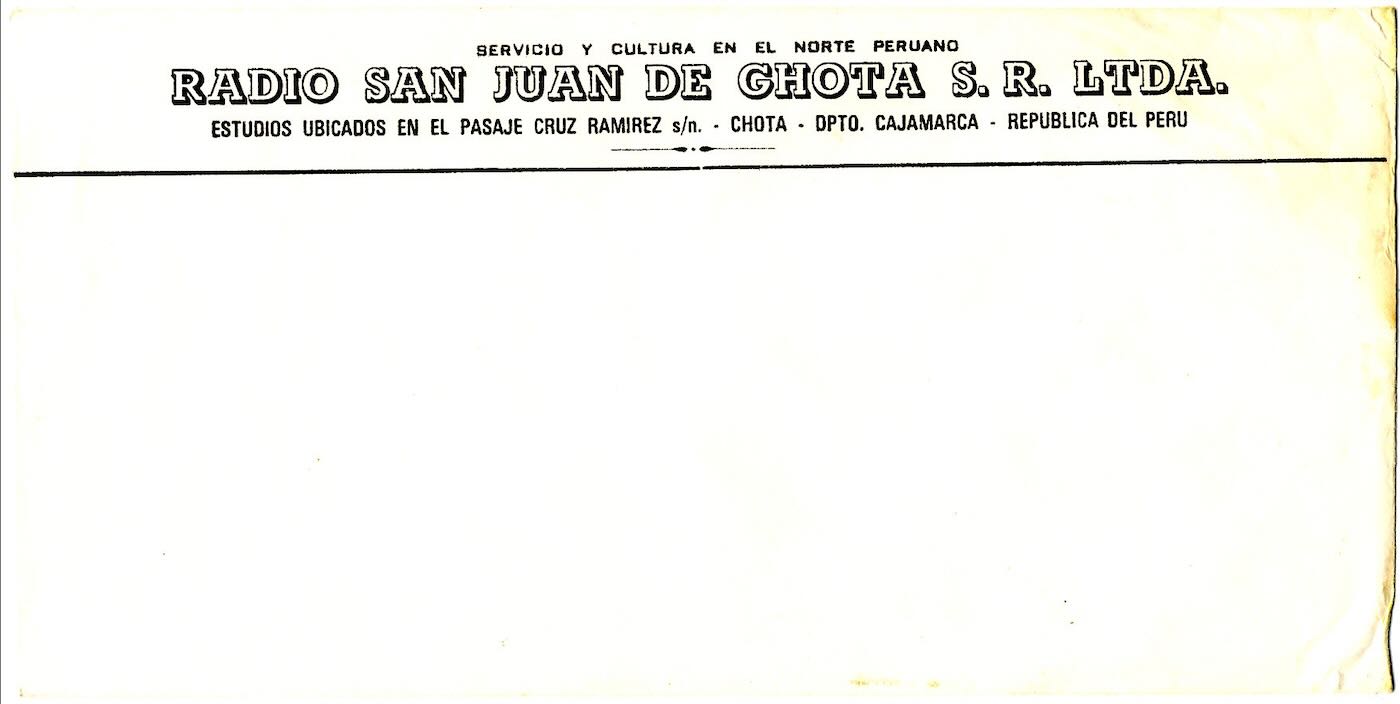
This picture with the homemade posterboard signs really captures the transient nature of broadcasting in rural Peru in the 1980s. Radio San Juan de Chota was on 5274 kHz for a few months in late 1984 and early 1985. I doubt they ever had permanent signs made. They did, however, have professionally printed envelopes.

Recording of Radio San Juan de Chota via On the Shortwaves:

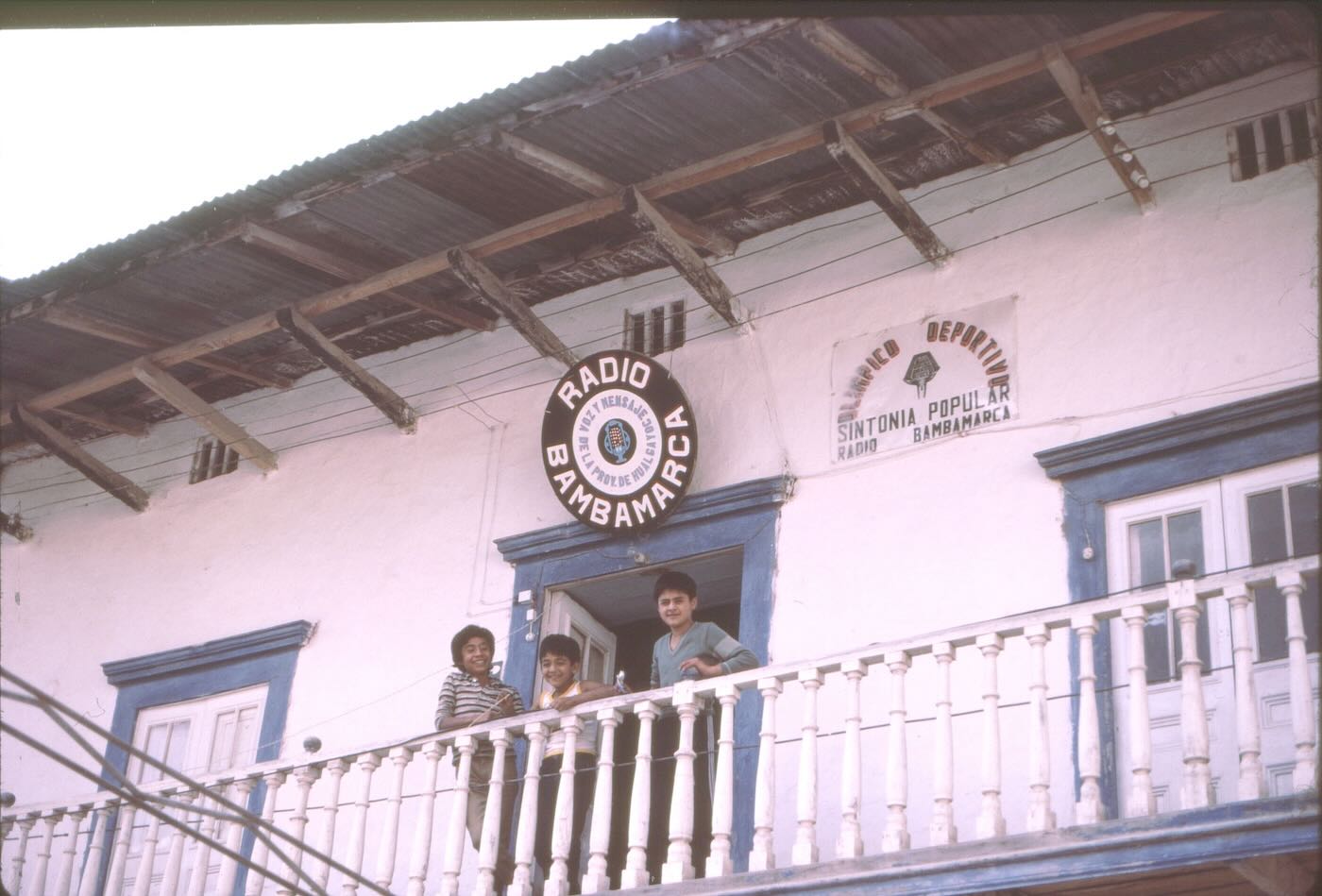
Bambamarca is a smaller farming town 20 kilometers south of Chota. It was also home to several shortwave stations over the years. Radio Bambamarca had a short appearance on 5657 kHz in the mid-1980s.

Return to Chota

I always expected to return to the Cajamarca area someday. Finally, in November and December 2017, I revisited all the places I had seen in 1985 and more while researching my historical travelogue Following Ghosts in Northern Peru. A few months later, in May 2018, I returned to the city of Cajamarca and Chota with my DX travel buddies, John Fisher and Karl Forth. Continue reading