Category Archives: Shortwave Radio

WRTH A15 update

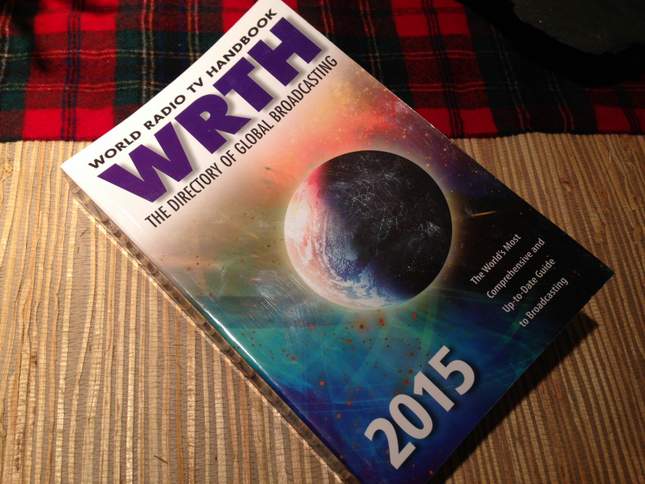
WRTH2015

(Source: WRTH Facebook group via Sean Gilbert)

***ANNOUNCEMENT***

WRTH has released their A15 International Radio & COTB schedules file. The A15 schedules file is available for free download (whilst donations are appreciated, they are by no means mandatory).

Use the following link, and click on “International Updates”:

www.wrth.com/_shop/?page_id=444

This file is in PDF format and you will need a PDF viewing program (such as the free Adobe Acrobat Reader) in order to open this file. The pdf id 2.3MB in size and contains 78 pages, consisting of: Summer (A season) 2015 LW/MW & SW schedules for International broadcasters and Clandestine & Other Targeted (COTB) Broadcasts; International DRM broadcasts; a ‘By Frequency’ listing of the broadcasters; Selected language broadcasts (English, French, German, Spanish and Portuguese); and finally a list of sites used in the schedules, together with name, location, co-ordinates and type (LW/MW &/or SW).
Despite the doom and gloom surrounding shortwave and international broadcasting, please be assured there is still a lot to listen to, broadcast in many, many languages to all parts of the world. There are even new SW stations popping up from time to time. There are at least 6 new entries in this file, that have come on air since WRTH2015 was published. That has to be encouraging!

If you haven’t already got your copy of WRTH2015, you can still order on-line direct from our website or from Amazon.com (At last Amazon seems to have sorted out whatever issue they had, which caused unacceptable delays and annoyance for our valued readership). Using the A schedules together with the printed WRTH gives you powerful tools to help you get the most from your listening.
American Radio History site adds Monitoring Times issues

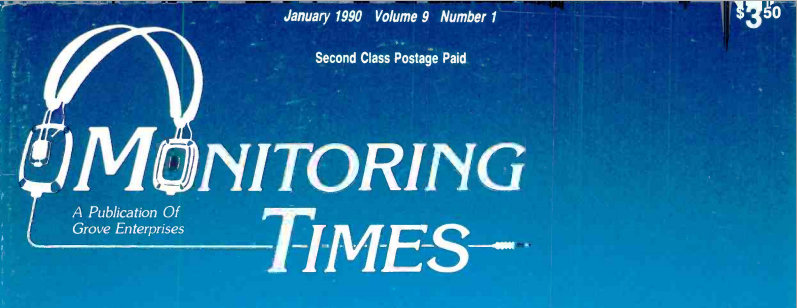
MonitoringTimesCover

The American Radio History website has just announced the addition of 75 issues of the late Monitoring Times magazine to their free downloads archive. These issues span 1983-1993, making a nice stroll down memory lane for many of us.

Click here to view on the American Radio History website.

2015 Annual Meeting of the NASB in Washington DC

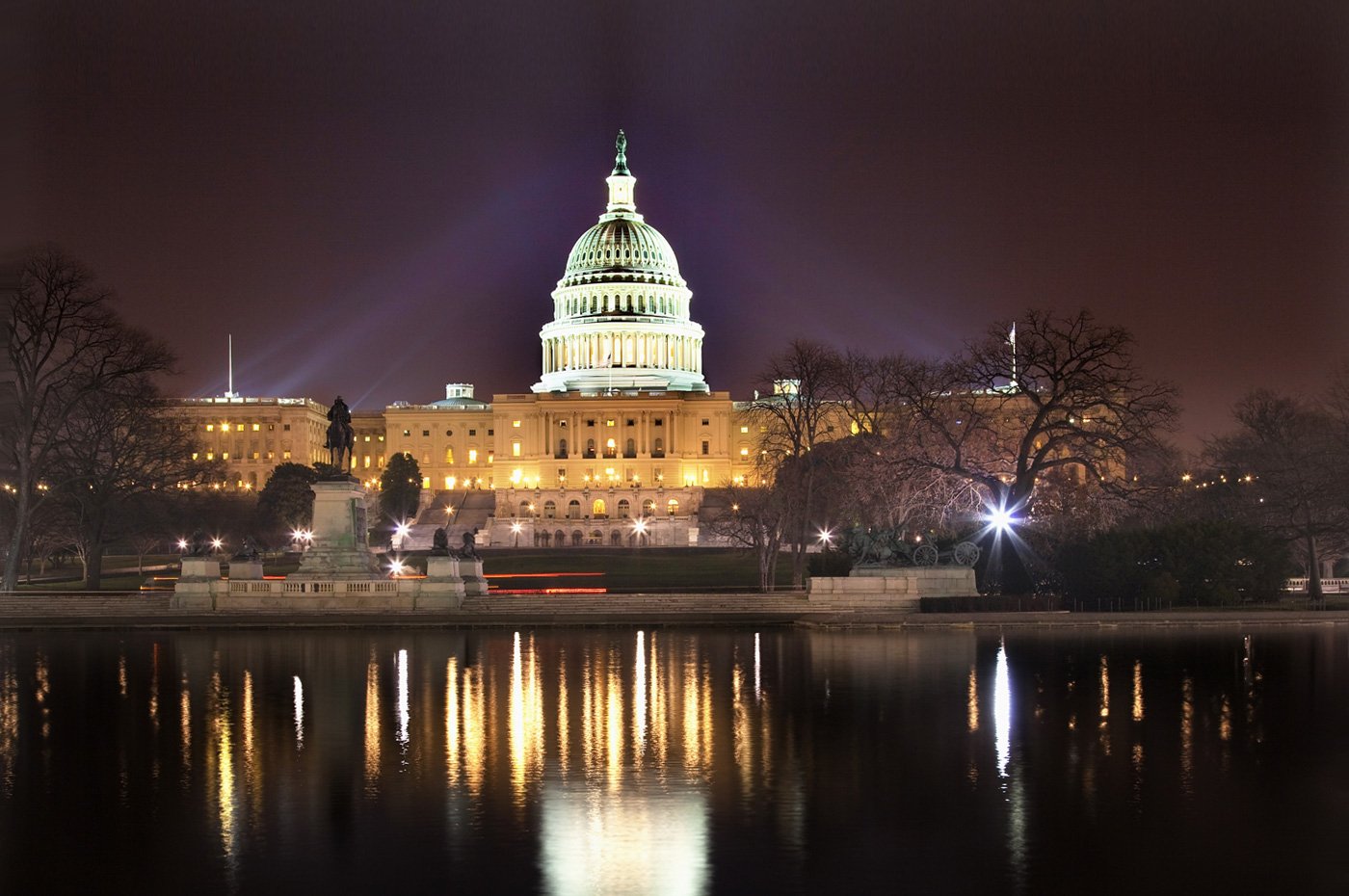
Washington_Capitol

If you can make the trek to Washington DC on May 21st and 22nd, you might consider attending the 2015 NASB (National Association of Shortwave Broadcasters) Annual Meeting. Attendance is free of charge, but you must register in advance (click here for the registration form).

The meeting is being held at the Radio Free Asia headquarters at 2025 M Street NW, Washington, DC 20036.

I attended and even presented at an NASB meeting some years ago and really enjoyed the experience. Indeed, if this meeting wasn’t on the heels of the Dayton Hamvention, I would most likely attend this year as well. Perhaps if the stars align, I might just make it anyway.

I’ve pasted the full itinerary below, but if you’re interested in attending, you should read all of the meeting details at the NASB website.

Thursday, May 21
12:00-12:30 pm – Tour of Radio Free Asia (group one)
12:30-1:00 pm – Tour of Radio Free Asia (group two)
1:00 pm – Official Opening of 25th annual meeting of the NASB by Libby Liu, President, Radio Free Asia
1:05 pm – Opening remarks by Brady Murray, President, NASB; and A.J. Janitschek, RFA
1:15 pm – “The Peoples’ Radio: Media Expansion in Hitler’s Germany” – presentation by Dr. Jerry Plummer, WWCR
1:45 pm – FCC Update – Tom Lucey, FCC International Bureau
2:00 pm – 25 Years of the NASB – Doug Garlinger, former NASB President
2:30 pm – Coffee Break
3:00 pm – TWR Presentation, including KTWR DRM Trials – Lauren Libby, President, TWR
3:30 pm – HFCC Oman Conference – slide show by Jeff & Thais White, WRMI
4:00 pm – HFCC Brisbane Conference – slide show from Ken Lingwood, Reach Beyond Australia
4:15 pm – Finally, Some Good News from Madagascar! – Charles Caudill, President, World Christian Broadcasting
4:30 pm – Coffee Break
5:00 pm – End of Thursday afternoon presentations – break before dinner
7:00 pm – Meet at St. Gregory Hotel lobby – walk together to Irish restaurant for dinner
7:30 pm – Dinner at Irish Whiskey Public House, 1207 19th Street, NW
Friday, May 22
9:00 am – DRM Update from Calvin Carter, Continental Electronics (DRM Consortium Steering Board member)
9:30 am – IBB Engineering Update – Gerhard Straub, US International Broadcasting Bureau
10:00 am – “Ubuntu – Radio Ready” by A.J. Janitschek, Radio Free Asia
10:30 am – Coffee Break
11:00 am – Shortwave Audience Research and VOA Radiogram – Update from Dr. Kim Andrew EIllott, IBB
11:30 am – Update on KVOH, Voice of Hope – Africa and Voice of Hope – Israel – presentation by John Tayloe and Ray Robinson
12:00 pm – Lunch at Meiwah Chinese restaurant, 1200 New Hampshire Ave. NW (a short walk from Radio Free Asia)
2:00 pm – NASB Business Meeting – topics to be discussed include plans for the 2016 annual meeting, updating the NASB website, a 25th anniversary NASB QSL/contest for shortwave listeners, a possible NASB shortwave listeners meeting in Brisbane, Australia in conjunction with the HFCC Conference in August, financial reports, election of officers
4:00 pm – Brief board meeting for NASB Board members
4:30 pm – Adjournment. Dinner on your own.

Greece to re-open state broadcaster, ERT

logo-ert-open-bw-color-2Many thanks to SWLing Post reader, Ayar (HB9EVW), who shares this news via Reuters:

(Reuters) – Greece’s parliament passed a bill on Wednesday to reopen the state broadcaster abruptly unplugged nearly two years ago, in a symbolic move to heal what Prime Minister Alexis Tsipras has called a “great wound” of the country’s bailout programme.

Re-opening The Hellenic Broadcasting Corporation (ERT) has been a priority for his leftist Syriza party, which fiercely protested the way television screens went black at midnight on June 11, 2013, after the then conservative-led government decided to shutter the 75-year-old institution.

[…]ERT’s shock closure, with newscasters cut off in mid-sentence, was one of the most drastic measures to help meet the terms of the country’s 240 billion-euro international bailout.

It sparked a wave of protests and the withdrawal of a partner from the coalition government at the time, igniting what many view as the beginning of Syriza’s rise to power.

For weeks, journalists broadcast a bootleg news channel over the Internet, defying management orders to leave the shuttered broadcaster’s headquarters. Hundreds rallied outside the building in daily protests, as musicians from ERT’s national symphony orchestra performed, some in tears. The government has said it plans to rehire the musicians.

I actually recorded the moment the Voice of Greece went off the air on shortwave, only to return (as basically a pirate radio station) only a few hours later. Click here to listen to the recording.

Click here to read the full Reuters article above.

BBC shortwave frequencies and schedule for Nepal earthquake relief

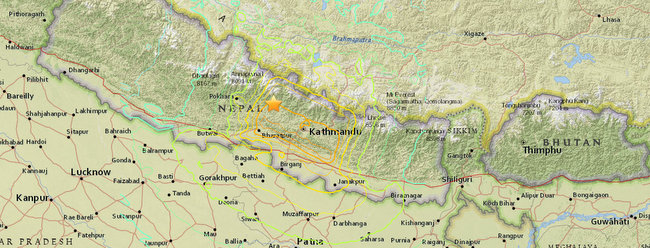
Nepal-Earthquake-Map

BBC-Nepal(Source: BBC Media Centre press release)

BBC World Service broadcasts Lifeline programmes in Nepal

In response to the aftermath of the earthquake in Nepal, the BBC World Service is now broadcasting additional programming on shortwave in both Nepalese and in English.
BBC Media Action – the BBC’s international development charity – is working with the Nepali Service on BBC World Service (radio and online) and local partner radio stations to broadcast ‘Lifeline’ programming.

Liliane Landor, Controller of World Service Languages, says: “Information is vital and we are doing all we can to make sure that our audiences in the affected areas receive their local and regional news as well as ‘Lifeline’ programming designed to give practical information to help deal with the aftermath of the earthquake.”

The Nepali language programme is available on shortwave as follows:

Nepali dawn transmission (01:30-01:45 GMT)
11995 kHz (25 metre band)
15510 kHz (19 metre band)

Nepali evening transmission (15:00-16:00 GMT)
9650 kHz (31 metre band)
5895 kHz (49 metre band)

The availability of World Service English on short wave to Northern India and Nepal has been extended with the service now starting one hour earlier than normal at 23.00 GMT.

Additional frequencies for World Service in English (to S Asia) from 23:00 GMT to 24:00GMT
5895 kHz (49 metre band)
9540 kHz (31 metre band)

From 00:00GMT the broadcasts continue as normal on 12,095kHz, 9,410kHz and 5970kHz

AIR and BBC design programming for post-earthquake Nepal

SX-99-Dial

(Source: RMbiz)

MUMBAI: In the wake of recent earthquake that affected Nepal and India, All India Radio (AIR) and British Broadcasting Corporation (BBC) have designed special programming for affected areas of Indo-Nepal border and Nepal respectively. AIR is also transmitting services through their External Services Division (ESD).

AIR stations in Patna, Darbhanga, Gorakhpur, Lucknow, Gangtok, Siliguri, Guwahati, Delhi and others put out suitable programmes to generate awareness among the masses, particularly informing them how to tackle such situations.[…]

Continue reading…

Listening to the Nepal Emergency Amateur Radio Nets

Nepal-Earthquake-Map

My pal, @K7al_L3afta, recently posted the following recording of the Nepal emergency amateur radio net via Twitter:

He also recorded this short segment relaying that A65DR is alive and well:

@K7al_L3afta is using a PL-660 in an RFI-heavy, urban environment in Morocco. Even knowing some of these operators are using high power, I’m impressed the PL-660 is getting such good reception.

If you have SSB mode on your receiver, you can try monitoring some of the Nepal emergency nets on 14,205 and 14,215 kHz USB.