Category Archives: Shortwave Radio

Numbers stations: stranger than fiction

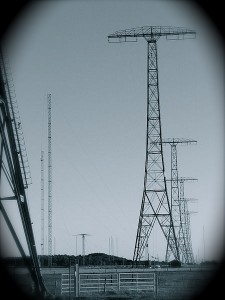
towersMore mentions of numbers stations in the popular press, thanks to the new movie, The Numbers Station. Hat tip to SWLing Post reader, HK:

(Source: Reelz.com)

[…]If you ever find yourself wishing your life was filled with a little more mystery, a little more excitement, save up thirty dollars and go buy a shortwave radio and start scanning the airwaves. With a little luck and a lot of patience, you might come across a band carrying the monotone voice of a man reciting military call letters (“Echo — Kilo — Charlie”), the robotic voice of a woman counting in Russian, or one broadcasting a continual string of beeps, chirps or hums. If you manage to tune in to one of these stations, you could very well be listening in on a coded message intended for a spy.

Once thought to be useless for communications purposes because of their high frequencies and short wavelengths, shortwave radio bands were, it was discovered in the 1920’s, ideal for sending messages over extremely long distances. Shortwave signals are broadcast into the sky, where they are reflected or refracted off of the electrically-charged ionosphere layer of the upper atmoshpere and sent back down to Earth as far as a continent away. By the start of the Cold War a few decades later, countless shortwave radio stations were found to be broadcasting strange, seemingly coded, messages using this technique. At the time, these so-called “number stations” (or “numbers stations”) were widely believed to be in use by various government intelligence agencies to broadcast secret messages to spies over great distances, but none of the codes — if, indeed, that’s what the signals were — were ever cracked and no governments ever officially acknowledged their use.

Number stations remained a mystery and were all but forgotten by the general public until the discovery in the ’70s of a station that was broadcasting a powerful signal comprised of the synthesized voice of a British woman speaking a sequence of five numbers. The station came to be known as “The Lincolnshire Poacher” because two bars from the English folk song of that name served as interval signals. The signal from the station was traced back to the Royal Air Force base at Akrotiri, on the island of Cyprus, providing number station enthusiasts with the first “proof” that government organizations like the British Secret Intelligence Service were behind some, if not most, of the number stations.[…]

Read the full article at Reelz.com. Keep track of news on numbers stations and our recordings by following the numbers stations category.
Pirate Radio Recordings: Wolverine Radio

Wolverine1

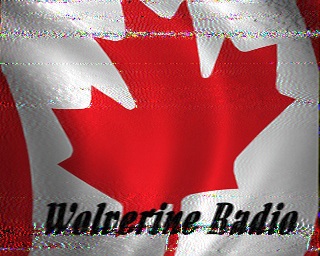
Wolverine Radio eQSL–one of two SSTV images decoded near the end of the broadcast

For your listening pleasure: 2 hours and 46 minutes of pirate radio station, Wolverine Radio–recorded Sunday, February 17, 2013 around 2:40 UTC.

Wolverine was broadcasting on 6.925 MHz in the upper side band. Typical of Wolverine, lots of music variety which spans the decades, and no commentary other than station ID throughout.

I decoded two of the SSTV images Wolverine transmitted; the Canadian flag (see right) and this one. You can easily decode these live, or via the recording below. Per Ragnar’s suggestion, I now use MMSTV to decode SSTV images.

Click here to download the full recording of Wolverine Radio, or simply listen via the embedded player below:

Daniel shares recent QSLs

Daniel (W3DI) writes:

I have been enjoying some shortwave broadcasts recently and received some nice QSL cards. Wanted to share the cards and some station information.

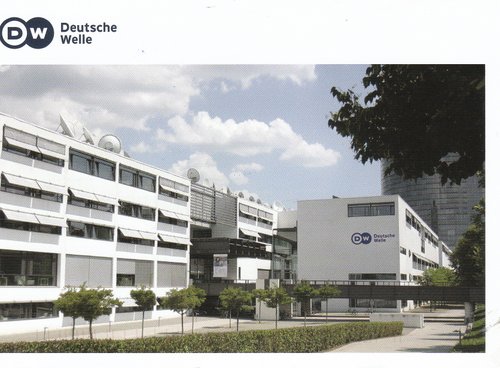
 Deutsche Welle - copied broadcast on 15,275 KHz - Jan 20 , 2013 at 1930 UTC

Deutsche Welle – copied broadcast on 15,275 KHz – Jan 20 , 2013 at 1930 UTC

China Radio International - copied broadcast on 9,580 & 6,020 KHz - Dec 29 & 31 , 2012   at 0130 UTC

China Radio International – copied broadcast on 9,580 & 6,020 KHz – Dec 29 & 31 , 2012 at 0130 UTC

IMG_0002

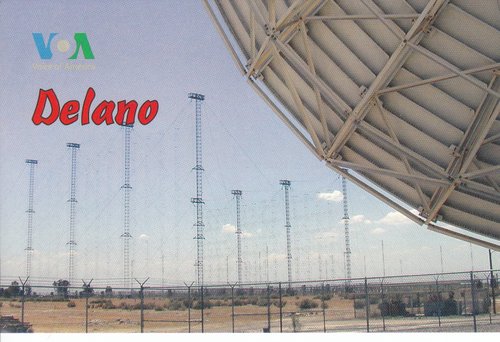
VOA -  Africa service - They sent not only a QSL but a beautiful 2013 calendar.

VOA – Africa service –
They sent not only a QSL but a beautiful 2013 calendar.

Daniel addeded:

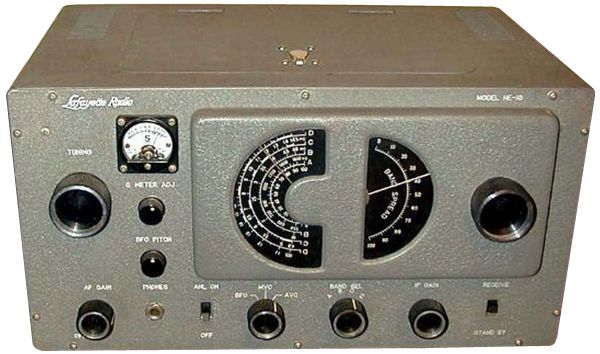
Shortwave listening was my first step to becoming an amateur [radio operator]. First receiver was a Lafayette HE – 10 with a Q mulitplier I built. Now using a WinRadio 313 – things have really changed.

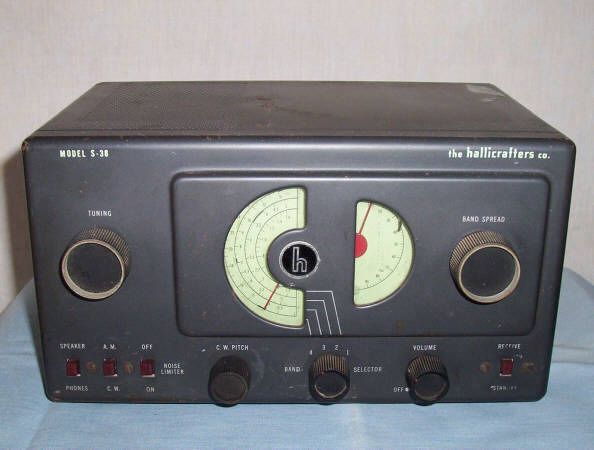
Shortwave listening was also my first step to becoming a ham radio operator. The Lafayette HE-10 is a beautiful little 9 tube radio. I love the split dials on the front–much like the venerable Hallicrafters S-38.

The Lafayette HE - 10 (Photo: RigPix.com)

The Lafayette HE – 10 (Photo: RigPix.com)

Halli-S-38

The Hallicrafters S-38 (Photo: The S-38 Guy)


VOA’s Radiogram adds digital content to AM broadcasts

VOARadiogram

VOA Radiogram is a new Voice of America program experimenting with digital text and images via AM shortwave broadcasting.  One might say this is the crossover point between classic shortwave and current technology.  It’s fun and fascinating stuff, and also has real utility.

If you’ve been an SWLing Post reader for very long, you’ll be familiar with the digital messages, otherwise known as radiograms, included in broadcasts from The Mighty KBC and, earlier, from WBCQ.  We’ve also offered a small primer on decoding.

In the near future, Dr. Kim Elliott’s digital radiograms will be broadcast through VOA via the Edward R. Murrow Transmission Station in Greenville, NC.

The new VOA Radiogram website contains time and frequencies and all of the information you’ll need to decode VOA radiograms.

Incidentally, Kim Elliott and I will be presenting on the topic of VOA Radiograms and digital modes at the 2013 NASWA Winter SWL Fest. If you’re interested, it’s not too late to register!  Meanwhile, stay tuned for more information about radiograms.

Trevor Baylis in the Vintage Vault

RNW-MediaNetworkEarlier this week, I posted an article about wind-up (clockwork) radio inventor, Trevor Baylis.

I recently discovered a 1995 episode of RNW’s Media Network, which featured Baylis–and the clockwork radio–in the context of inventions that would carry us beyond the new millenium:

(Source: Media Network Vintage Vault)

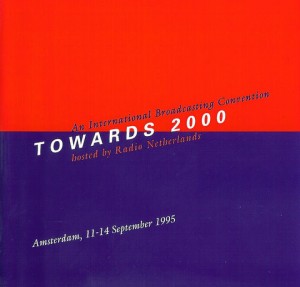
Remember Trevor Baylis and the wind-up radio? I organised a conference for Radio Netherlands at the International Broadcasting Convention IBC between September 11-14th 1995. We decided to celebrate the fact that we were 5 years away from a new Millennium by looking at the technologies that would carry us forward. That included a look at different codings for DAB, a reality check on radio by Sri Lankan broadcaster Victor Goonetilleke and a special performance about the Clockwork Radio from Trevor Baylis, the British inventor who turned up in Amsterdam and charmed the audience with his frank, funny and brilliant introduction to the concept of wind-up radios. A few weeks after the conference we produced a special CD for those who took part. This is a copy for those who missed it. It’s double the length of a normal Media Network, just over an hour.

You can download this archive episode of Media Network on the Vintage Vault website.

By the way, Jonathan Mark’s Media Network Vintage Vault has many, many audio treasures from the radio past. Certainly worth bookmarking!

History of WWV and the NIST Time Stations

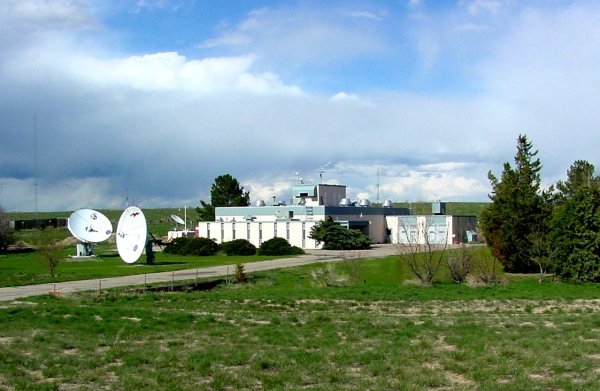
WWV building in Fort Collins, Colorado (photo courtesy: NIST)

WWV building in Fort Collins, Colorado (photo courtesy: NIST)

Many readers know that I’m a bit of a WWV geek, so you can imagine how happy I was when my buddy, Mike, and the Southgate ARC made me aware of this 152 page history of the NIST time station family. At first glance, this looks to be an authoritative and thorough history indeed.

I have already sent this to my Kindle Fire and look forward to reading it (at least, starting it) tonight. Click here to download the NIST time station history as a PDF.

Incidentally, if you have an affinity for the NIST time stations, be sure to check out my previous post on Myke’s audio history of WWV, “At The Tone.”

Zimbabwe: are shortwave radios now illegal?

Analog Radio DialAccording to SW Radio Africa, it appears that shortwave radios could now be considered “illegal communicating devices” in Zimbabwe:

Police have announced a ban on ‘specially designed radios’ that are ‘not compatible with state owned stations’, claiming the devices would be used to communicate hate speech ahead of polls scheduled for this year.

In a move seen as an attempt to silence external radio stations, such as SW Radio Africa and VOA’s Studio 7, broadcasting to Zimbabwe via shortwave and medium wave, police spokesperson Charity Charamba threatened to deal with organizations that helped to distribute portable radios, saying recipients would also be arrested.

She told journalists at a press conference in Harare on Tuesday: “We have information that some people or political parties are engaging in illegal activities, that is to say they are distributing illegal communicating devices to unsuspecting members of the public.

“We strongly believe that the intentions of such people are not holy but meant to create and sow seeds of disharmony within the country, especially now that the country is about to embark on the referendum and harmonised elections.”

The shocking news comes as police upped their onslaught on civil society organization looking for subversive material, gadgets and recordings.

[…]Co-Home Affairs Minister Teresa Makoni revealed [..]that […] receivers only, without ability to transmit, are perfectly legal and that there is no law at present which disallows anyone donating radios to the public.

However the minister said she held lengthy discussions with Police Commissioner General Augustine Chihuri, who said he is concerned that NGOs always intensify distribution just before elections.

Makon[i] said: “I was very clear that airwaves are still restricted to other parties, that is why my party is distributing radios to our poor rural members…in the meantime he will have his engineers verify that the radios are simple receivers.”

Observers say this response ignores the fact that there is likely to be massive intimidation as the average police officer will not know the difference between a receiver and two-way radio communicators.

Click here to read Violet Ganda’s full report on SW Radio Africa.

Thanks, Rich, for bringing this to my attention.