Shortwave listening and everything radio including reviews, broadcasting, ham radio, field operation, DXing, maker kits, travel, emergency gear, events, and more
Video description: Author Matt Zullo is a retired U.S. Navy Master Chief Petty Officer who has more than 35 years’ experience in Radio Intelligence, now more commonly known as Communications Intelligence. He holds a Master’s degree in Strategic Intelligence from the National Intelligence University, where he researched and wrote his master’s thesis on the On-the-Roof Gang, which tells the story of story of the 176 Sailors and Marines who, starting in 1921, learned the Japanese katakana telegraphic code in order to intercept Imperial Japanese Navy communications, setting in motion events that would lead to the birth of the US Navy’s communications intelligence organization. Join Matt in this “AWA Shares” presentation as he discusses the importance of this pioneering effort in signals intelligence.
Radio Waves: Stories Making Waves in the World of Radio
Because I keep my ear to the waves, as well as receive many tips from others who do the same, I find myself privy to radio-related stories that might interest SWLing Post readers. To that end: Welcome to the SWLing Post’sRadio Waves, a collection of links to interesting stories making waves in the world of radio. Enjoy!
Many thanks to SWLing Post contributors Paul, Dennis Dura, Dan Van Hoy, Alokesh Gupta, and the Southgate ARC for the following tips:
A barbed wire telephone call didn’t sound great but could quickly warn others about something such as a wildfire.
Historian J. Evetts Haley wrote that, in its time, the old XIT Ranch up in the Texas Panhandle was “probably the largest fenced range in the world.” He recalled that its barbed wire enclosed over 3 million acres of land. At the north end alone, the fence ran for 162 miles. The unique enclosure helped keep in enormous cattle herds, keep out rustlers, and also gave rise to the creative use of a new technology: the telephone.
I’ll come back to the XIT in a moment, but first, consider these smattering of reports from that era. In 1897, The Electrical Review, reported that “on a ranch in California, telephone communication had been established between the various camps . . . by means of barbed wire fences.” The article says the novel use of the phone was a great success and was being used in Texas as well. That same year, the New England Journal of Agriculture was impressed that two Kansas farmers, living a mile apart, had attached fine telephone instruments to the barbed wire fence that connects their places and established easy communication. From the Butte Intermountain in 1902 we see this notice: “Fort Benton’s latest development is a barbed wire telephone communication.” The article points out that people of the range were not all that happy with barbed wire, which they thought was an “evil” that had arrived with the railroad, but they had decided to look at the practical side of its existence and use it to create a telephone exchange that would connect all the ranches to Fort Benton. [Continue reading…]
Schwab Multimedia has lost an appeal to the Federal Communications Commission in a case involving a planned AM station near Los Angeles for which it had a construction permit.
This is a “tolling” case, one that involves the FCC construction clock. The history is complex — the FCC’s summary is 2,500 words long, not counting many extended footnotes — but the upshot is that KWIF in Culver City was never built and, barring further developments, apparently will not be. Its call sign has now been deleted.
Levine/Schwab Partnership, which does business as Schwab Multimedia, had applied in 2004 to build a new AM station in the Los Angeles area. It eventually secured a CP in 2016 for the station at 1500 kHz. [Continue reading at Radio World…]
Dick Smith, VK2DIK has lived an adventurous and extraordinary life. He is a proud Australian, businessman, adventurer, entrepreneur and he single handedly changed electronics and CB/Amateur Radio in Australia.
Dick has recently released his autobiography titled, Dick Smith: My Adventurous Life and tonight we’re privileged to sit down live with Dick, speaking to him about his adventures, including the first solo helicopter flight around the world, his business ventures and being a pioneer for Amateur and CB radio.
Many thanks to SWLing Post contributor, Rob Gray, who writes:
Happy Holidays Thomas!
As I see those that like to raise awareness of radios in TV and movies, here’s my submission. A Swedish friend of mine sent this to me and it’s a little rough to follow without knowing the language, but there are certainly radios in the episode!
73,
Rob
The radios get going around 3:53 and 4:35, 11:15, etc.
As a side note, I’m happy to see the chess board properly oriented, I’ve frequently seen the board rotated 90 degrees from proper in programs, and even on display in Russian museums!
Many thanks to SWLing Post contributor, Gary DeBock, who shares the following notes and video:
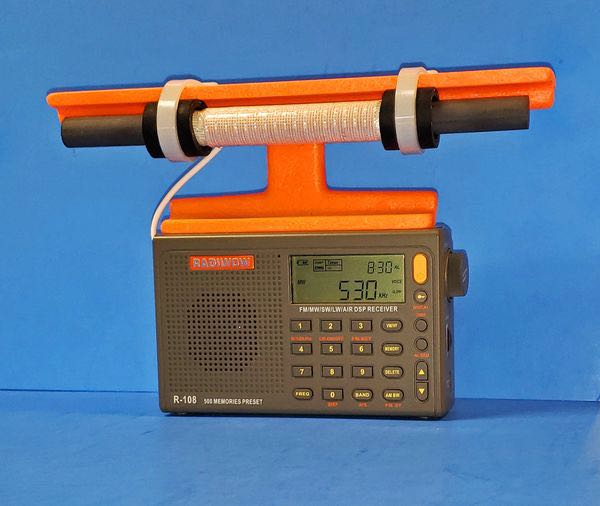
The 7.5 inch (19cm) loopstick Radiwow R-108 model “smokes” the stock R-108 model in this video demonstration of receiving daytime DX fringe station 550-KARI in Blaine, WA (5 kW at 150 miles). The modification uses the same enhanced loopstick as described in the XHDATA D-808 “Supercharging” article, and is reasonably easy to complete (although some experience is recommended)
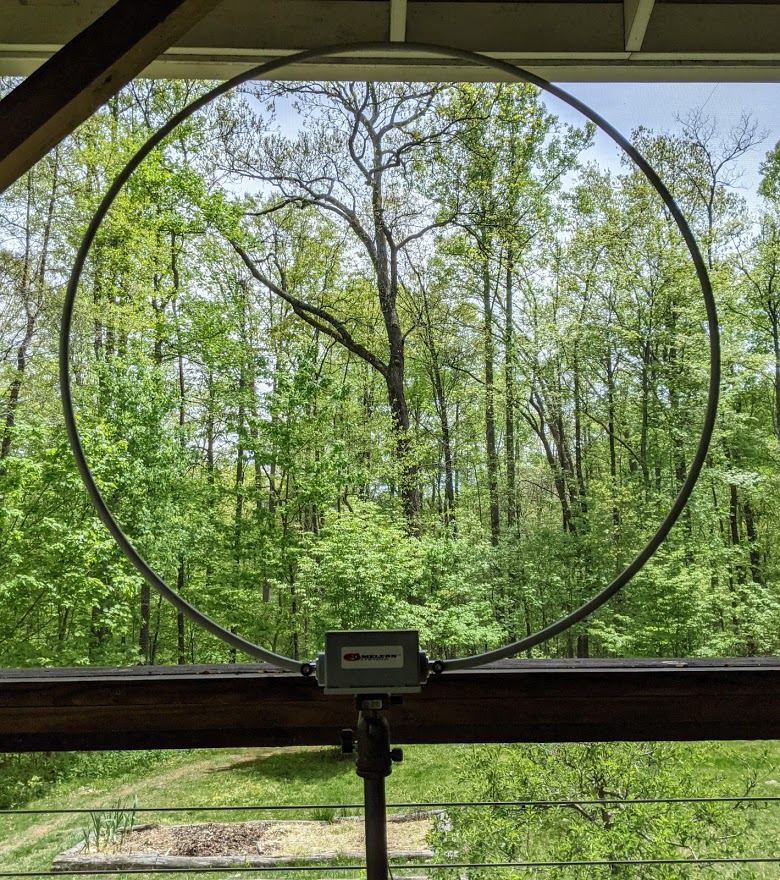
I just checked out the loop at Chameleon and discovered that they’re currently offering a sale on the “two sections” version of the CHA-RXL. Click here to check it out.
Also, if you live in Switzerland or Europe, Lutz Electronics is now a distributor of Chameleon products.
Many thanks to SWLing Post contributor, Tracy Wood, who writes:
While searching the revamped Gibraltar Broadcasting Corporation’s website (gbc.gi) I came across a recent documentary that might be of some interest. It’s titled “GBC: The Move”. The GBC website states it’s a “story about the move from our home of the last 41 years to the ‘new’ Broadcasting House on Rosia Road, a project 4 years in the making. Featuring interviews with staff, the build, history and insight to the huge undertaking that is moving whilst staying ‘”on air’.”
The documentary includes photos of the former 1458kHz top-loaded medium-wave originally located at the Bastion downtown, before it’s relocation to a site above Engineer Road with a much larger “top-hat.” The program covers aspects of both the radio and TV services. (GBC offers three radio services – Radio Gibraltar, Radio Gibraltar Plus FM, Radio Gibraltar Plus AM. The Plus services include two hours of Spanish Monday-Friday and run in parallel except when the AM service covers Gibraltar Parliament sessions.
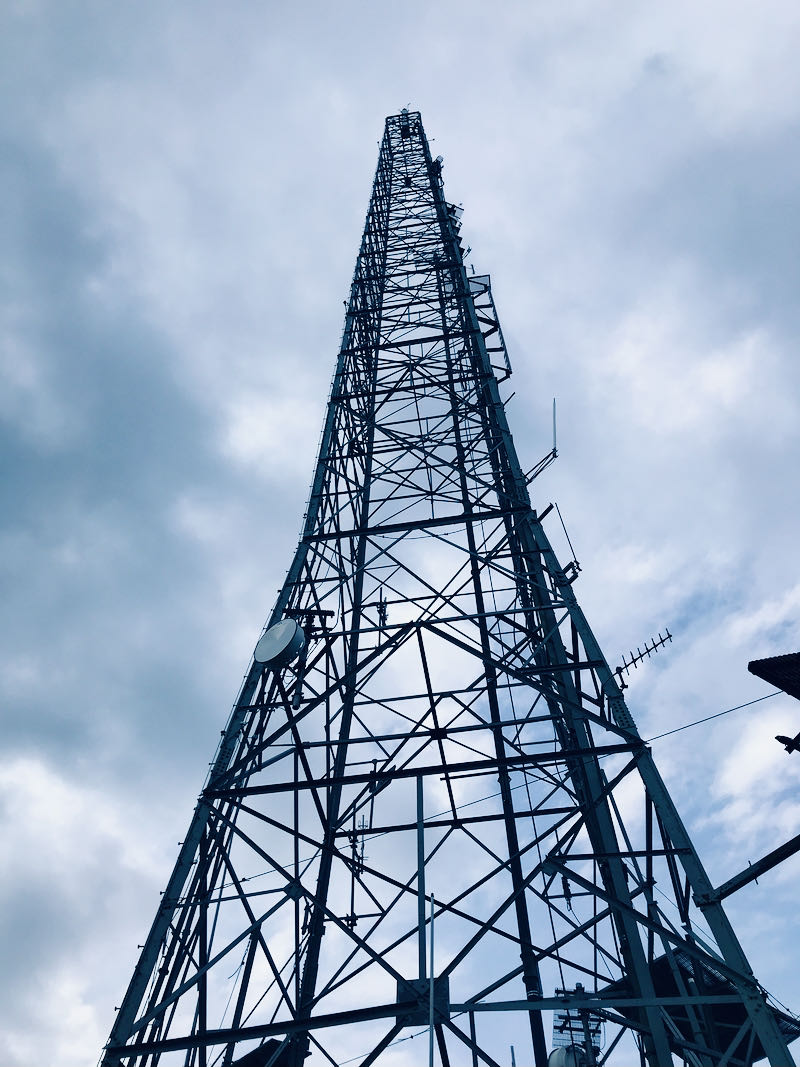
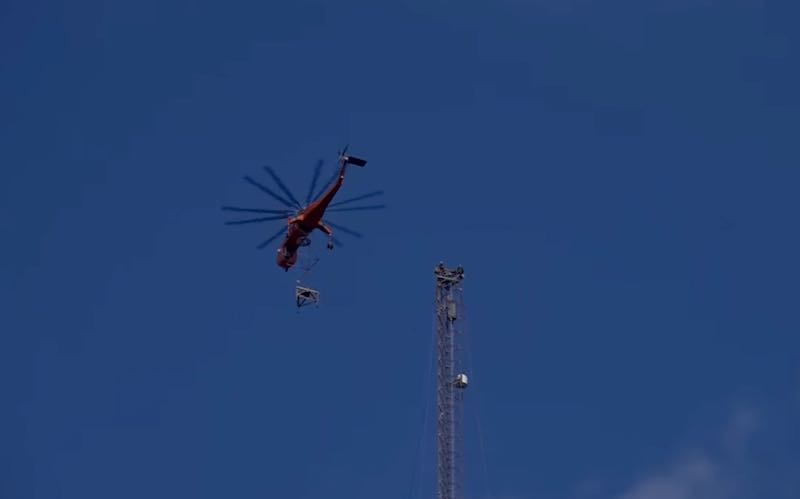
Many thanks to SWLing Post contributor, Jack Dully, who shares the following video of a crew replacing a TV station antenna on top of a 1,500 foot tower.
Fair warning: if you’re afraid of heights this might make you weak in the knees!

 Many thanks to SWLing Post contributor, Mark Erdle, who shares the following: