Many thanks to Sean Gilbert, International Editor at the World Radio TV Handbook, who is kindly sharing some international broadcasting statistics with us again. These statistics were originally posted on the WRTH Facebook group:
Seasonal Language Output Comparison
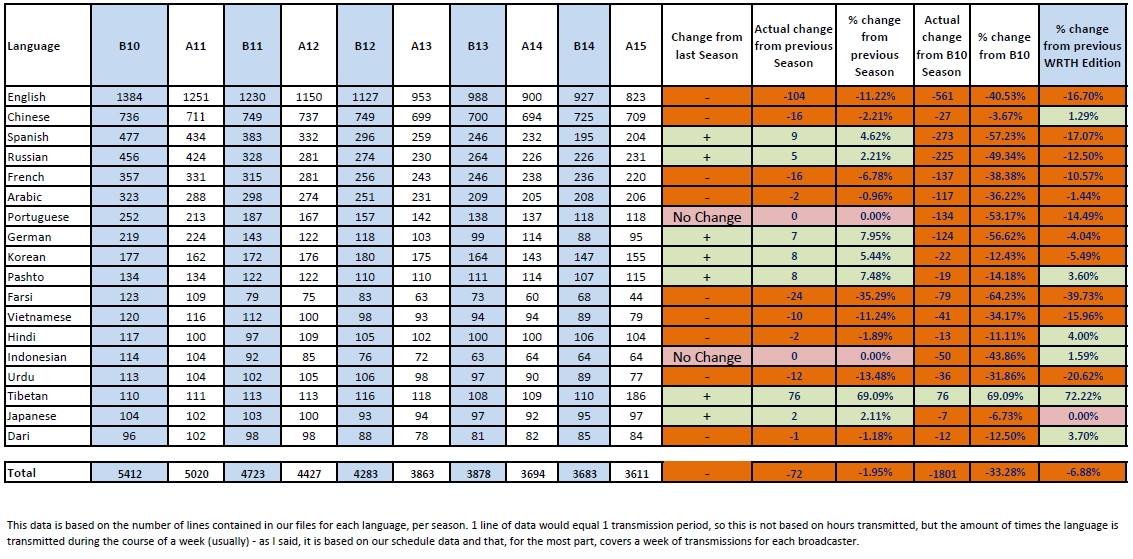
[F]or the top 19 languages used in international (and Domestic SW) broadcasting. There are 10 seasons worth of data to compare. In those 10 seasons, we have seen an overall drop of 33%, the biggest casualties being Farsi, German, Portuguese, Spanish, Russian, English & Indonesian. Tibetan is usually fairly stable with it’s output being pretty constant over the past 9 seasons – this season, however sees a huge increase in output (+69%), mainly due to the USA hiking output of the language this season. In sheer numbers of data lines (which is how this table has always been generated), English is the biggest casualty, dropping 104 transmission periods per week.
Click to enlarge.
A transmission period is based on the following data structure:
Shown below are 2 “transmission periods” for WWCR and 1 for WWRB. 2 in English and 1 in Spanish. These transmission periods cover a weeks worth of output on that frequency at that time for that broadcaster.
WWCR 1630-2100 English wcr 100 NAm,Eu,NAf daily 15825
WWCR 2100-2200 Spanish wcr 100 NAm,Eu,NAf daily 15825
WWRB 0100-0400 English wrb 100 NAm daily 3195
So a transmission period could, in reality, be from 5 minutes on a single day to 24 hours, daily, depending on the broadcaster. There are nearly 5000 of these entries in our database for this season (When I started at WRTH back in 2000, there were over 10000 entries). Of these 5000 entries, over 3600 are taken up by just 19 languages. The other 1400 entries share somewhere in the region of 200 languages/dialects and combinations! Although this doesn’t show how many hours a particular language has decreased by, it does show the ongoing trend in International broadcasting by radio.
 A15 International Broadcasting Season Facts
There are 191 schedules listed in the International Radio and COTB (Clandestine & Other Targeted Broadcasts) section of the WRTH A15 schedules file.
Who uses the most frequencies? CRI, with a whopping 279 frequencies in use. The next largest station, by frequency use is (probably quite surprising to many of you) Voice of the Iranian Republic of Iran (VOIRI) with 140 (that is half the amount of CRI!). Next is VOA with 126; then RFA at 112; BBC at 110 then Sound of Hope Radio International with 84 and All India Radio at 67.
Below is a list of the ‘Top 20’ broadcasters in terms of frequency usage. If you were to do a study of actual transmitted time, the list would look rather different. I will shortly post a table showing the top languages, by use, and what has changed over the past 10 broadcasting seasons.
- CHINA RADIO INTERNATIONAL (CRI): 279 frequencies
- VOICE OF THE ISLAMIC REPUBLIC OF IRAN (VOIRI): 140 frequencies
- BBG – VOICE OF AMERICA (VOA): 126 frequencies
- BBG – RADIO FREE ASIA (RFA): 112 frequencies
- BBC WORLD SERVICE: 110 frequencies
- SOUND OF HOPE RADIO INTERNATIONAL: 84 frequencies
- ALL INDIA RADIO (AIR): 67 frequencies
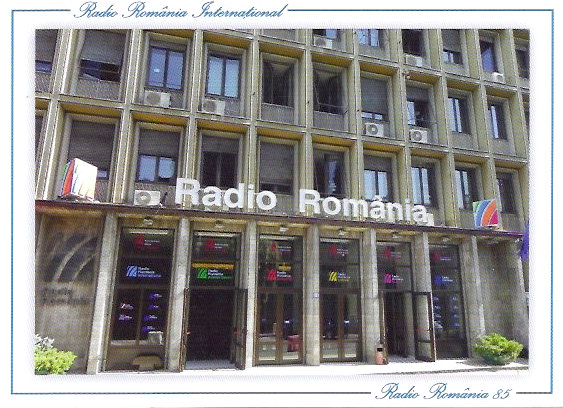
- RADIO ROMANIA INTERNATIONAL (RRI): 56 frequencies
- AWR ASIA/PACIFIC: 52 frequencies
- RADIO JAPAN (NHK WORLD): 49 frequencies
- VOICE OF TURKEY (VOT): 43 frequencies
- RADIO TAIWAN INTERNATIONAL (RTI): 41 frequencies
- BBG – RADIO FREE EUROPE/RADIO LIBERTY (RFE/RL): 33 frequencies
- KBS WORLD RADIO: 32 frequencies
- SAUDI INTERNATIONAL RADIO: 32 frequencies
- AWR AFRICA/EUROPE: 30 frequencies
- VATICAN RADIO: 29 frequencies
- RADIO CAIRO 29: frequencies
- VOICE OF KOREA (VOK): 27 frequencies
- FEBC PHILIPPINES: 26 frequencies
63 broadcasters, or so, use just a single frequency.