
Many thanks to SWLing Post reader, Mike, who notes that the HFCC has just posted the A15 Updated Operational Transmission Schedule. Click here to open the HFCC portal, then click each broadcaster “TX” link to see full schedules.

Many thanks to SWLing Post reader, Mike, who notes that the HFCC has just posted the A15 Updated Operational Transmission Schedule. Click here to open the HFCC portal, then click each broadcaster “TX” link to see full schedules.
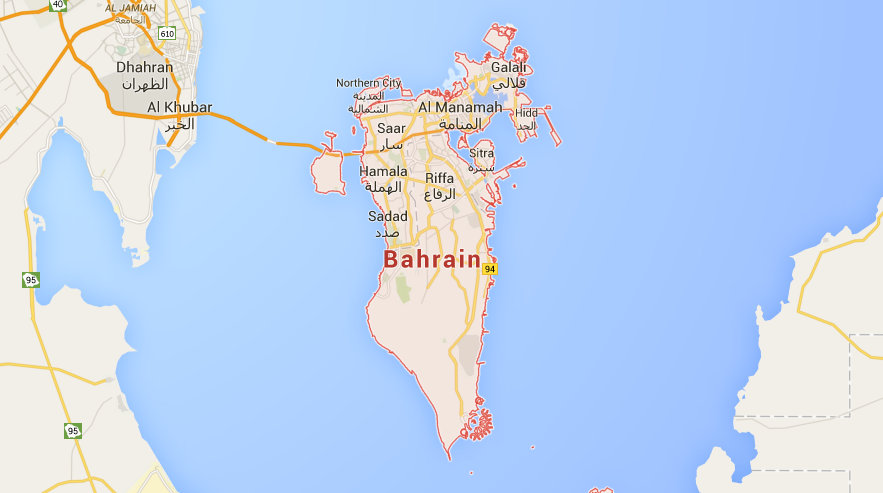
Yesterday, my buddy Dan Robinson posted a tip on the Extreme Shortwave Listening Facebook page that Radio Bahrain was audible in the Eastern USA (note his video below). I quickly tuned to 9745 kHz and, sure enough–though weak–the Radio Bahrain signal could be heard over the noise floor. Radio Bahrain is not the easiest catch in my part of the world–especially with propagation conditions being less than favorable as of late–so I made a recording.
This recording was made on 9745 kHz starting at 23:15 UTC on March 15, 2015. I used my WinRadio Excalibur which was already on and connected to my horizontal delta loop antenna. Click here to download as an MP3, or simply listen via the embedded player below:
Many thanks to Dan Robinson who shares this video of Radio Bahrain reception via his JRC NRD 301A and Watkins Johnson 8718A/MFP with Wellbrook 1530 Imperium:
 Many thanks to SWLing Post reader, Richard Cuff, for sharing this news from The Telegraph:
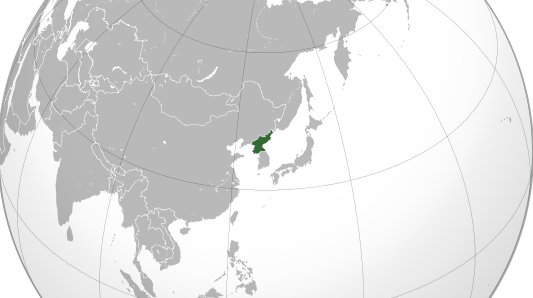
“The BBC is planning a new North Korea service to give the totalitarian state’s 25 million people an alternative to Kim Jong-un’s propaganda.
In a move that could plunge the corporation into confrontation with the North Korean dictator, the World Service is examining how to set up a special news channel that will get around Pyongyang’s ban on foreign media broadcasts.
The plan has echoes of Western broadcasts into the Soviet Union and Warsaw Pact countries during the Cold War, when the BBC, Radio Free Europe and Voice of America all broadcasted to listeners behind the Iron Curtain.
However, it is likely to spark fury from Pyongyang’s volatile leadership, and could lead to the British embassy in Pyongyang being targeted for protests or being shut down altogether.
It could also put Britain in the firing line for North Korean-led cyberattacks, such as the one that targeted Sony Pictures last year over its film “The Interview”, which lampooned Kim Jong-un.”[…]
 Many thanks to SWLing Post reader, Merkouris, who writes:
I’ve just thought that the shortwave schedule of ERT Open, published on the 28th of February, might be of interest to you and the readers of the SWLing Post.
Here is the link in Greek and below is the translation in English [by time, region, frequency, and program]:
0000-1500 UTC, Europe/North America, 9420 kHz, ERA Athens
1500-2400 UTC, Europe/North America, 9415 kHz, ERA Athens
1100-0450 UTC, Europe/Central America, 9935 kHz, ERA Athens
0500-1050 UTC, Central & South Africa, 11645 kHz, ERA Athens
0000-0550 UTC, Russia/Japan, 15630 kHz, ERA Athens
0600-1850 UTC, Europe/Central America, 15630 kHz, ERA Athens
1900-2350 UTC, Middle East – Australia, 15650 kHz, ERA Athens
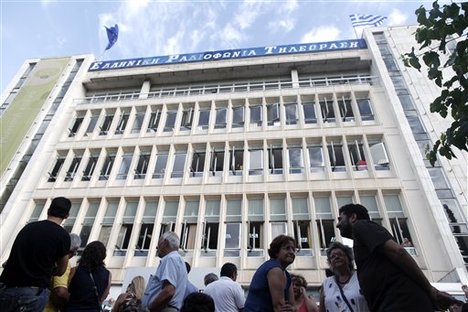
(Photo source: AP / Petros Giannakouris)
Merkouris also included links to the following reports from Greek and English language news sources.
(Source: ANAmpa.gr)
ANA – MPA — A draft bill to reestablish defunct public broadcaster ERT was released to public consultation on Monday afternoon, under the title “Regulations on issues of the state radio and television agency, Hellenic Radio and Television SA, and amendment of article 48 of Law 2190-1920.”
The consultation period will end at 10:00 a.m. on Thursday.
[…]It also said it was reinstating all the ERT staff who had permanent contracts by June 11, 2013 and said a fee of 3 euros would be introduced for ERT on PPC bills and the present name of the public broadcaster (“NERIT S.A.”) be replaced by ERT S.A.
This is an interesting development for the Greek public broadcaster. Of course, even if the bill passes, it is unknown how this could affect shortwave radio relays. I must say that I’m impressed that ERT Open has been broadcasting on shortwave a good 1.5 years after they should have been closed down. (Personally, I hope they never go off the air as I love ERT Open’s weekend music programs!)
Again, many thanks Merkouris for sharing this schedule and breaking news. Please keep us informed!
 Dr. Kim Elliott, has been transmitting VOA Radiograms to a devoted set of global listeners for two years. Indeed, he recently passed a milestone by transmitting the 100th episode of the VOA Radiogram. Most impressive!
SWLing Post reader, Harald (DL1ABJ), recently sent the following message regarding reception of the 100th episode:
Dear Thomas,
Last weekend I decoded VOA Radiogram #100 on 17860 kHz AM (via Greenville, Edward R. Murrow TX station) from 1600 till 1630 UTC here in Germany.
Part of it was a text by Kim Andrew Elliott, KD9XB, telling a bit about his project of broadcasting text and pictures over AM transmitters on shortwave.
I am also attaching one of the pictures sent during VOA Radiogram #100.
Regards
Harald
Click here to view/download Harald’s text file (.RTF).
Many thanks for sharing this, Harald. VOA Radiograms are successfully decoded by listeners across the world. If you’re interested in decoding a VOA Radiogram, or simply following the broadcasts, bookmark VOAradiogram.net.
 (Source: PCJ Radio International)
This year marks the 70th Anniversary of Radio Canada International. On March 16, 2015 from 0100 to 0200UTC PCJ Radio International will present a special tribute program for their 70th Anniversary.
The program will include a recent interview with Eric Koch who was a presenter in the German Section. He will talk about the test transmissions that took place before the CBC International Service was officially inaugurated on February 25, 1945. And a special program produced and presented by Ian McFarland and Bob Cadman for the 40th Anniversary.
All times UTC
Latin America – 2300 to 0000UTC (March 13, 2015)
North America – 0100 to 0200UTC (March 15 from 9 to 10pm EDT)Frequencies for the Americas are:
9955khz –2300 to 000UTC
7570khz – 0100 to 0200UTCThere will also be a special e-QSL issued.
Regards,
Keith Perron
PCJ Radio International
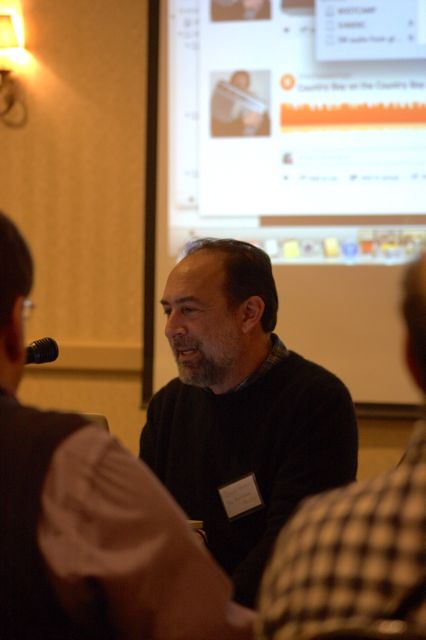
David Goren hosts the annual Shortwave Shindig
As a reminder, the Shortwave Shindig will be rebroadcast today, March 7, 2015 from 10:00-11:00 PM EST (that’s Sunday from 0300-0400 UTC) via WRMI on 7,570 khz.
Shindig host, David Goren, has also informed me that he has had a chance to repair the program since it was off the air for 10 minutes during the original broadcast. He has also included a dedication to the memory of our friend, Martin Peck.
I plan to record this show, but would certainly appreciate other recordings as well to add to the archive. Again, for those of you who submitted off-air recordings of the original show, I will be posting them shortly after my travels.
