Shortwave listening and everything radio including reviews, broadcasting, ham radio, field operation, DXing, maker kits, travel, emergency gear, events, and more
Many thanks to SWLing Post contributor, David Iurescia (LW4DAF), who shares information about a new survey via Radio Romania International:
PERSONALITY OF THE YEAR 2015 ON RRI
2015-11-14 16:21:00
Dear friends, RRI continues its traditional polling of listeners on short wave, the Internet and social media, with a new challenge.
We would like to ask you which person you think left their imprint on the world in a positive way in 2015. We are preparing to designate, based on your options, “The Personality of the Year 2015 on RRI”.
We also want to ask you why you picked that particular person. It could be a politician, a trendsetter, a businessman, an athlete, an artist, a scientist, or even a regular person with a special story. It’s up to you!
You can send your answers, as usual, by commenting on our website, at rri.ro, by e-mail at [email protected], on our Facebook, Google+, Twitter and LinkedIn profiles, by fax at 00.40.21.319.05.62, or by post, at 60-64, General Berthelot street, sector 1, Bucharest, zip code 010165 (PO Box 111), Romania.
The “Personality of the year 2014 on RRI” was the young Pakistani human rights militant Malala Yousafzai, a co-winner of the Nobel Peace Prize.
“The Personality of the year 2015 on RRI” will be announced on January 1st 2016.
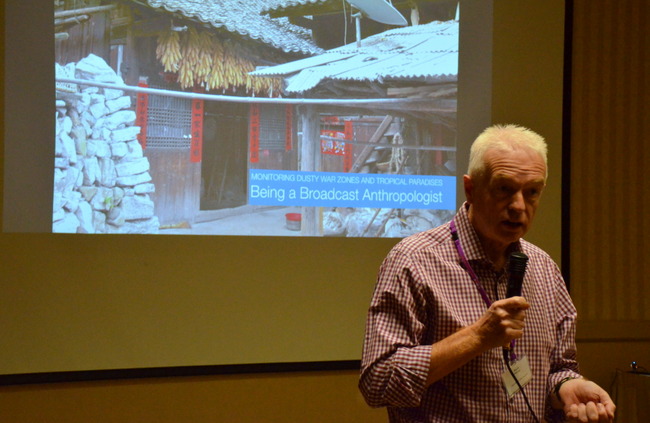
Mark Fahey hosts his forum, “Monitoring Dusty War Zones and Tropical Paradises: On Being a Broadcast Anthropologist” at the 2015 Winter SWL Fest.
Richard Cuff and John Figliozzi have just announced the dates for the 2016 Winter SWL Fest–it will be held on February 19th and 20th, 2016. I encourage you to save these dates and plan to attend!
Many thanks to SWLing Post contributor, Robert AK3Q, who shares the following information:
(Schedule Published on the Cumbre_DX group by Alokesh Gupta)
Special EDXC Broadcast 5-7 December
Rhein-Main-Radio-Club will be broadcasting on shortwave about EDXC – Conference at St.Petersburg.
Special QSL-Card for reception reports to RMRC [email protected] or by post Rhein-Main-Radio- Club e.V. , Postfach 700849, 60558 Frankfurt, Germany.
Via Lithuania:
5 December 0800-0900 on 11690 to Asia (Japan) in English
5 December 0900-1000 on 11690 to Russia in Russian.
Via WRMI, USA:
5 December at 2200-2300 on 11580 may be audible in Europe
6 December at 0100-0200 on 11580 may be audible in Europe
6 December at 2300-0000 on 5850 to North America
6 December at 0500-0600 on 9955 to Caribbean and Latin America
7 December at 2100-2200 on 7570 to North America. This may also be audible in Europe.
7 December at 2100-2200 on 15770 to Europe and North America. (DX-clusive via Lehtinen)
.
*(DX-Window No. 542, Danish Shortwave Club International) *
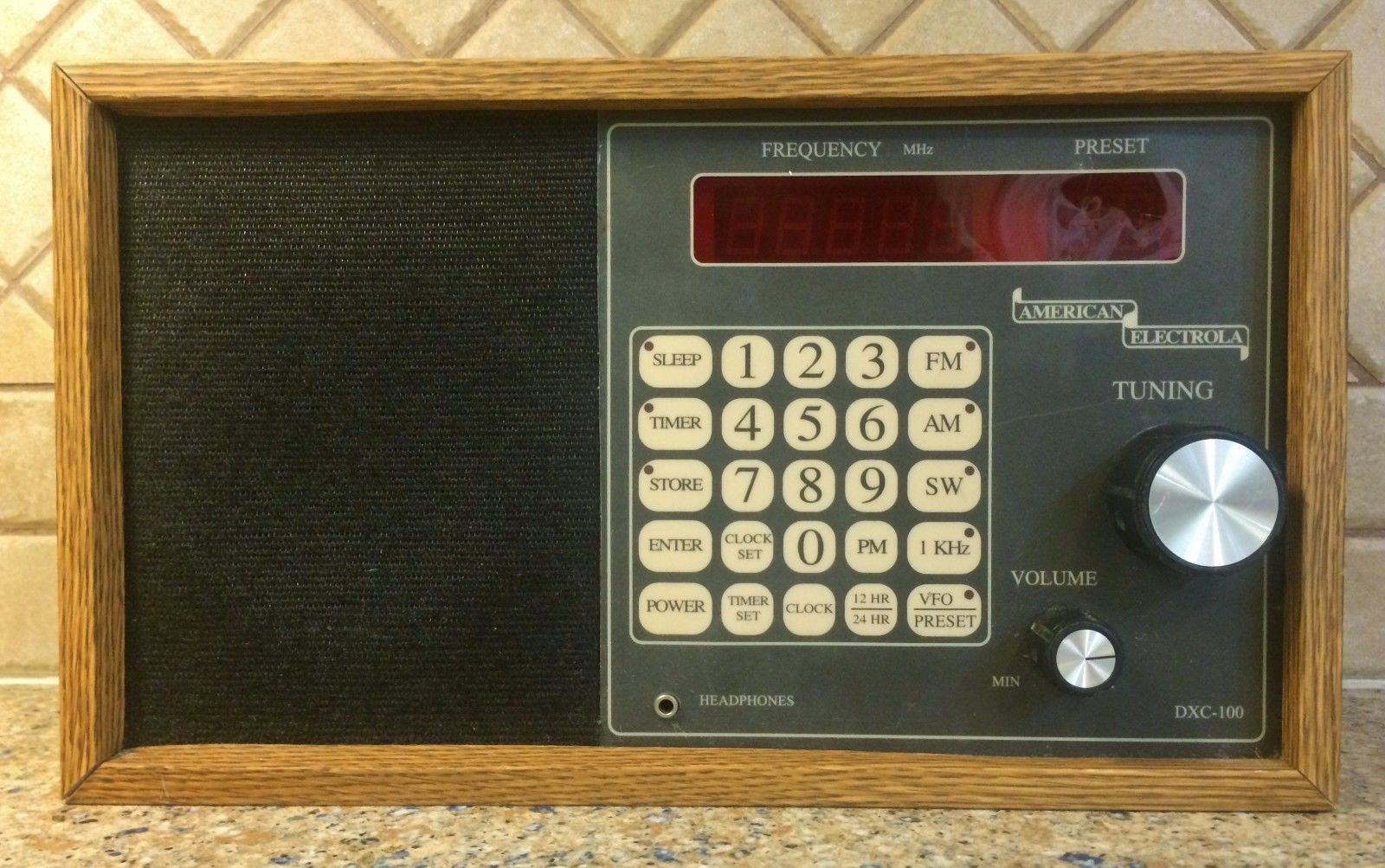
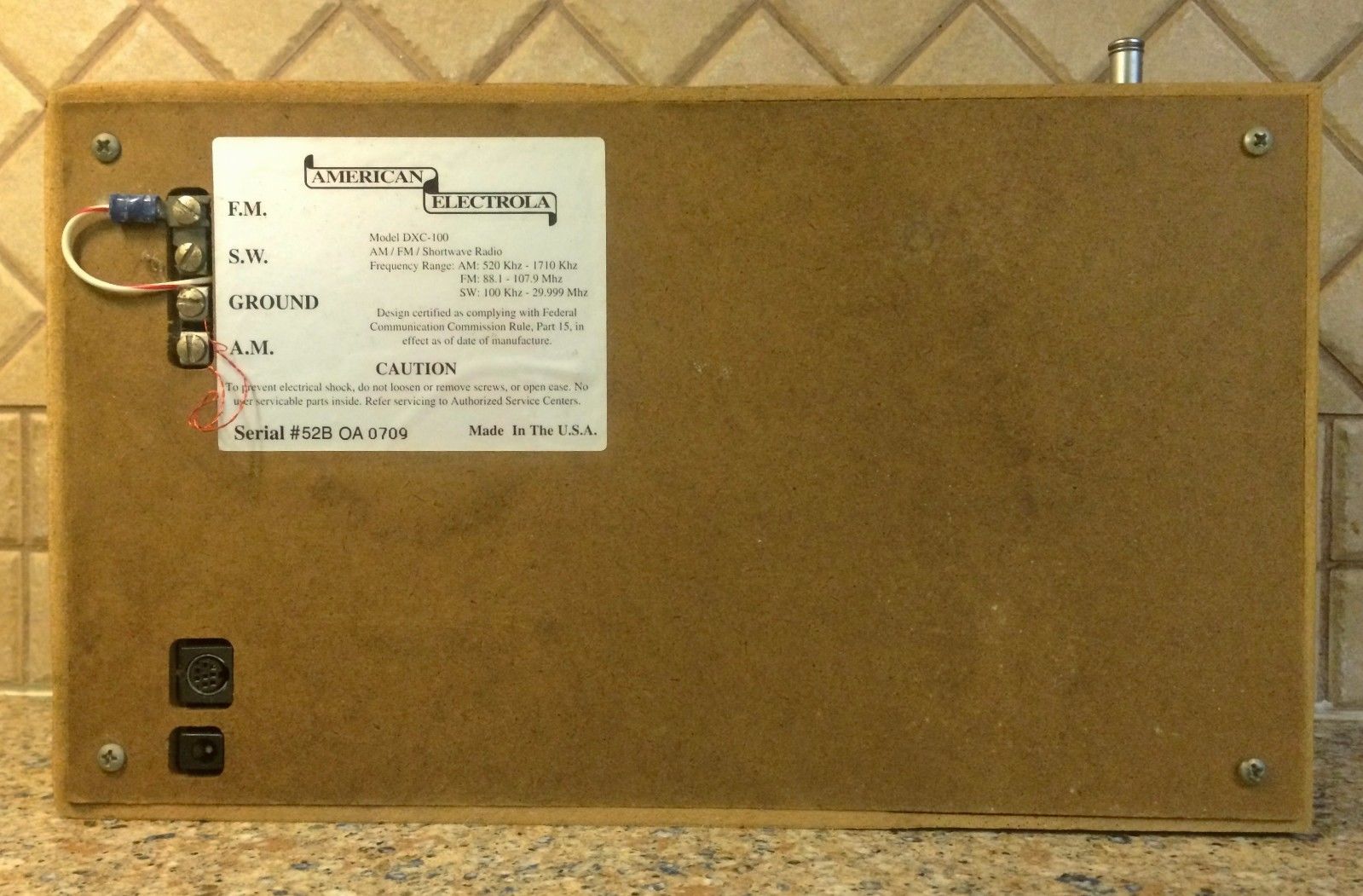
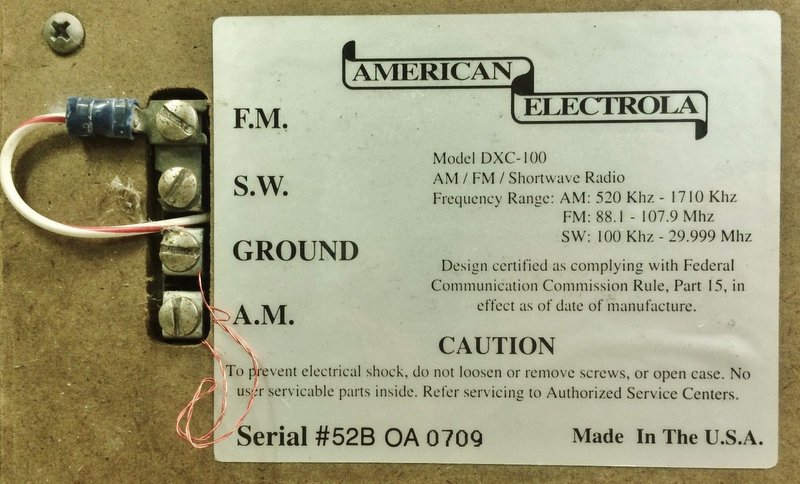
The seller (who has an excellent feedback history) disclosed that the power supply was missing, thus the receiver couldn’t be tested.
As you can see from the photos, it’s in great cosmetic shape.
I’ll admit it: I purchased the DXC-100 in a moment of weakness this morning. I don’t expect it to be much of a performer, but it is a relatively rare 1990s receiver that was built in Pittsburgh, PA. I believe only 2,000 units were produced. I have a weakness for odd-ball receivers.
I’m willing to bet the DXC-100 is functional, though the backup battery may need to be replaced.
Does anyone have a schematic or owner’s manual for the DXC-100? I will have to find or build a suitable 9V power supply but need to determine the proper polarity first.
I’ll do a short review of the DXC-100 if I’m able to get it on the air.
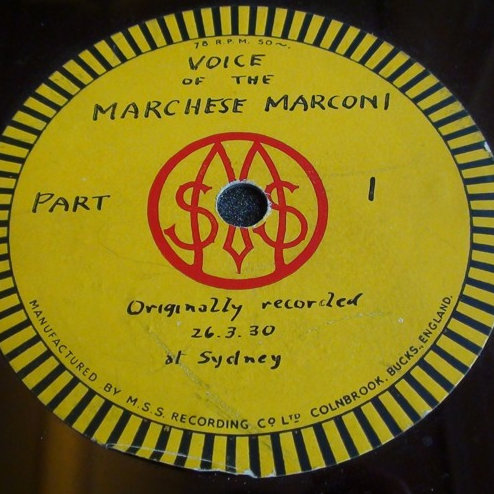
The Essex Record Office has published a recording of a speech made by Guglielmo Marconi in 1935. You can listen to the recording by clicking here or listening via the embedded player below (description follows):
“Second part of a speech made by Guglielmo Marconi on the occasion of the unveiling of the ‘Fisk Memorial’ at Wahroonga, Sydney, New South Wales, Australia on 14 December 1935 (the disc is incorrectly labelled). The ‘Fisk Memorial’ commemorates the first direct wireless message sent from the U.K. to Australia, in 1918.
In the speech, Marconi forecasts the impact that wireless communication will have on ship navigation, but also the world economy generally. Would he be surprised by how accurate he was in his prediction that ‘no country can make much headway’ without such technology?”
Many thanks to SWLing Post contributor, Dan Robinson, who shares a radio comparison he initially posted in the excellent Extreme Shortwave Listening Facebook group. Dan writes:
When the Sangean ATS-909X was first released a few years ago, I decided that I would hold off obtaining one to let whatever bugs there might be in production get worked out.
I have always been impressed by the design of the 909X, but was cautious when it came to the question of overall sensitivity. I once owned the 909, had it modified by Radio Labs, but that seemed not to do much — the 909, in my view, suffered too much from the well-known deafness issue when using the whip antenna.
Over the years, I used and still own many of the classic portables. This includes the SONY 7600GR, Grundig SAT 500/700, 2010, E-1, SONY SW100/SW07, SONY SW-55, and the radio I consider to be at or near the top of the small portable heap, the Pan RF-B65. But a couple of weeks ago, I broke down and bid for a new in box Sangean 909X. It’s the black version, and arrived a couple of days ago.
I remain impressed by the 909X’s design — beautiful radio, wonderful large LCD and backlight, excellent filtering, along with a feature we used to see in the SONY’s — adjustable/variable attenuation. But I wondered how the 909X would stack up against two of my favorites, the SW-07 and RF-B65. I was crossing my fingers — but alas, initial results are not encouraging.
While the radio initially on its own seems to be quite sensitive, I lined it up next to the SW-07 and RF-B65 and did a comparison. Now, first I must note that propagation continues to be in the dumpster and I conducted this test in late afternoon.
All three receivers were tuned to Cuba on 11,760 khz — they were located next to one another on a table in the top level of my home here in Maryland. The results are seen in the video below.
You can hear how much more clearly the SW-07 and especially the RF-B65 handle a signal. With the Panasonic, stations just pop. Same with the SW-07.
Disappointingly, as you can hear, stations on the 909X appear to be buried in noise. It’s quite extraordinary — I was very surprised by this comparison and intend to perform additional side-by-side tests in different areas of my home, which does suffer from high noise levels likely produced by electric lines and a transformer outside (which is why a run a Wellbrook on my main radio stack downstairs). But it is notable that the 909X appears to struggle so, while the old classic portables SW-07 and B65 excel. Interested in the views of others . . .
Dan, this is very similar to my experience with the Sangean ATS-909X.
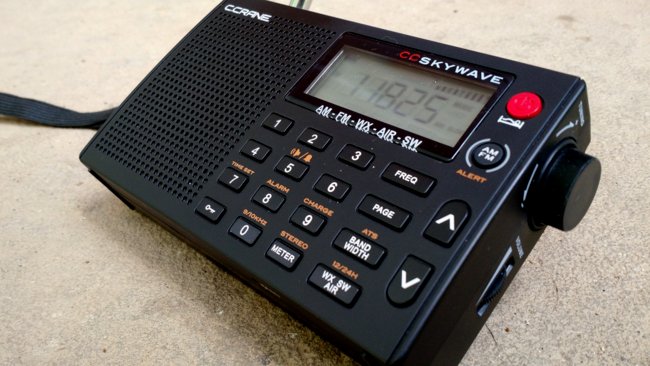
I find that the Skywave is so stable on the air band, I can use it to decode ACARS with the Android App!
Listened to WBCQ, and Arnie Coro’s show last night from Havana along with some Jazz music.
It pulled FM stations out of the air like nothing else, meaning the weaker ones here in my rural Ohio location. And I could pick up three NOAA broadcasts, two very strong, one scratchy…. Since the NOAA system is of course designed to let you pick up one station in whatever particular area of the county you live in, I consider this excellent!
With the AM I pulled in Canadians, Boston , stations in IOWA and KFI. I also note it’s very directional on AM… I could null out WTVN and pick up Texas with no problem. I have owned and do own lots of shortwave radios, and I MUST say, this is one hell of a good set!
It’s going into my Winter zip-up jacket pocket so it will always be handy for the DX Season, and I also notice that the headphones are VERY good, and have a long enough cord so it’s not pulling at my ears like some sort of damned harness… I HATE short earphone cords!
(And while I am on the subject of ear phones, and while I haven’t been zapped in the ear with static this year yet by dry air causing that annoying problem, I wonder how these earphones are going to do in that regard… the Sony’s are unbearable in Winter! Ouch! I wonder if anyone else out there has this problem besides me, and has found a solution?)
First of all, thank you for making me aware of the ACARS app and that you can successfully use it with the CC Skywave. I will add the ACARS app to my growing list of HamRadio/SWL applications and also try it myself!
Your experience with the CC Skywave is very similar to mine. It is a fabulous portable receiver. If it only had SSB and sync detection, it would be the ultimate compact portable. The CC Skywave is an everyday carry (EDC) radio for me–either it, or the Sony ICF-SW100, accompany me everywhere in my Timbuk2 messenger bag.
Regarding static discharge from headphones, I don’t think I’ve ever had this happen to me; sounds annoying, though! I suppose walking in dry winter conditions with a thick winter jacket could increase chances of discharge. Perhaps the in-ear design of the included CC earbuds–with silicon earpieces–will minimize and insulate you from this problem? Let us know!
Thank you for your assessment of the CC Skywave, William!

 Many thanks to SWLing Post contributor, David Iurescia (LW4DAF), who shares information about a new survey via Radio Romania International: