Carlos’ Shortwave Art and recording of NHK (August 8, 2024)

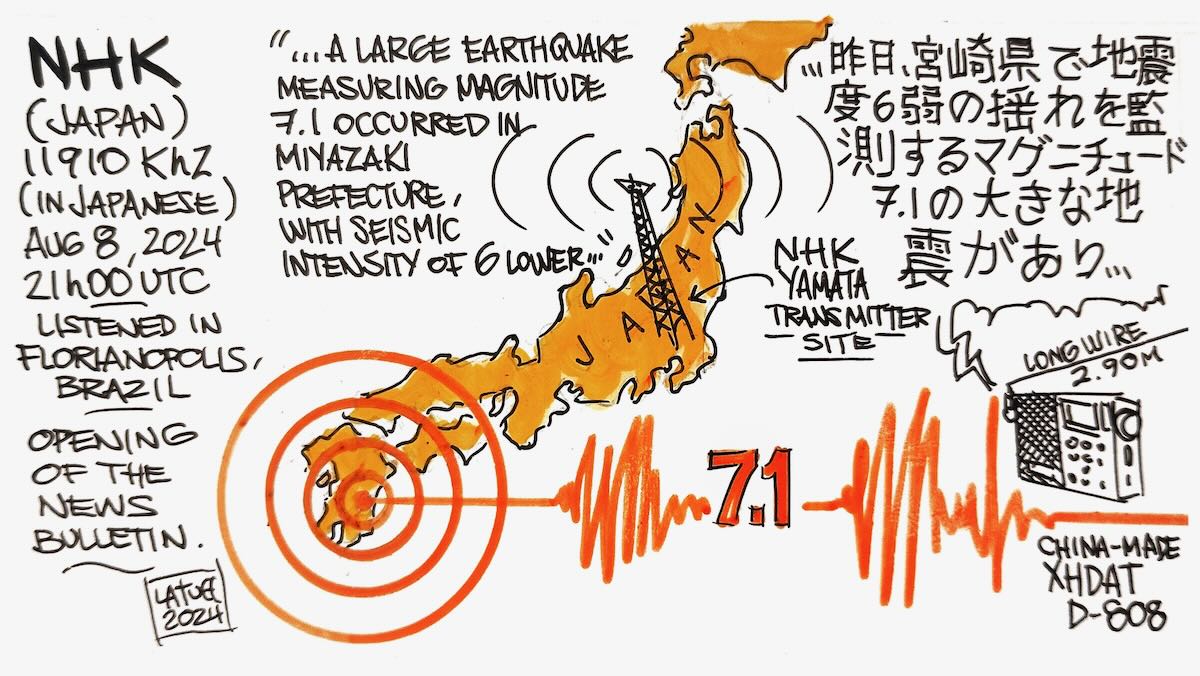
Many thanks to SWLing Post contributor and noted political cartoonist, Carlos Latuff, who shares his radio log art of a recent NHK World broadcast.


Carlos notes:

Part of Thursday’s NHK radio news bulletin about 7.1 earthquake that hit Miyazaki Prefecture, Japan. Listened in Florianopolis, Brazil.

Click here to view on YouTube.

Radio Waves: Radio Apocalypse, SDRs, and Updated StarWaves DRM App

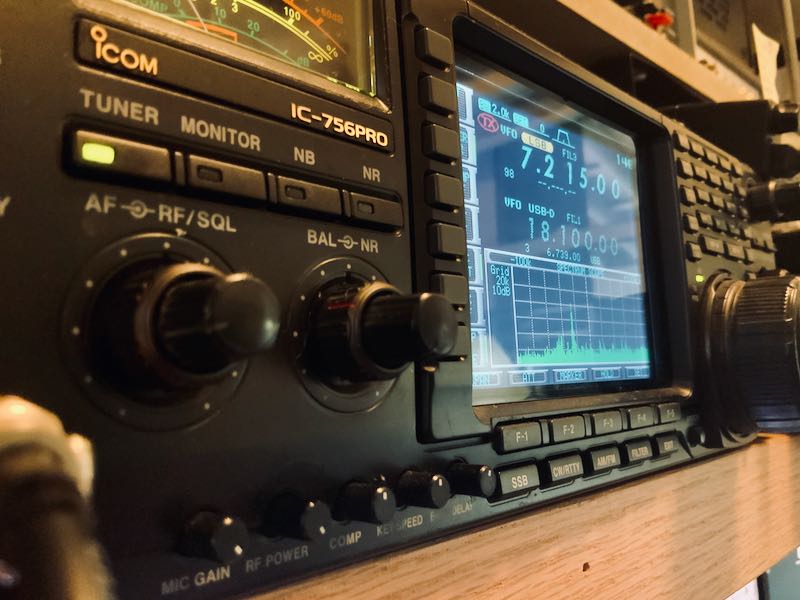
Icom IC-756 Pro Transceiver Dial

Radio Waves:  Stories Making Waves in the World of Radio

Welcome to the SWLing Post’s Radio Waves, a collection of links to interesting stories making waves in the world of radio. Enjoy!

Many thanks to SWLing Post contributors Dennis Dura, and Alan for the following tips:


Radio Apocalypse: HFGCS, The Backup Plan For Doomsday (Hackaday)

To the extent that you have an opinion on something like high-frequency (HF) radio, you probably associate it with amateur radio operators, hunched over their gear late at night as they try to make contact with a random stranger across the globe to talk about the fact that they’re both doing the same thing at the same time. In a world where you can reach out to almost anyone else in an instant using flashy apps on the Internet, HF radio’s reputation as somewhat old and fuddy is well-earned.

Like the general population, modern militaries have largely switched to digital networks and satellite links, using them to coordinate and command their strategic forces on a global level. But while military nets are designed to be resilient to attack, there’s only so much damage they can absorb before becoming degraded to the point of uselessness. A backup plan makes good military sense, and the properties of radio waves between 3 MHz and 30 MHz, especially the ability to bounce off the ionosphere, make HF radio a perfect fit. [Continue reading…]

SDR: The Next Level of Shortwave Radio Listening (Radio World)

Where have these things been all my life?

There is a new breed of RF receivers known as software-defined radios, and they are revolutionizing the way in which people listen to shortwave (SW) radio, or indeed any form of radio broadcast.

SDRs combine plug-in radio receiver dongles/boxes with personal computers, with the computer serving as the user interface. What makes this interface so useful is that the listener’s screen displays a wide swath of the bandwidth being tuned to, with each station’s signal shown as a visual vertical line that moves and grows/shrinks with its signal strength.

In other words, the listener can literally see what is happening across the band in real time, rather than having to turn the dial or push the Up/Down scanning buttons on a conventional shortwave radio, checking one station at a time. [Continue reading…]

New App Update: RTL-SDR V4 and HackRF Support! (StarWaves)

Long Awaited and Finally Released – RTL-SDR V4 Support!

Today the new Release 1.5.1 of STARWAVES DRM SoftRadio App has been released. The following improvements can be expected:

– Added audio output device selector in settings (cog wheel icon) / audio tab,
starting with Android 12:
default, Earpiece, Speaker, Headphones, Bluetooth, HDMI, USB
– Added support for “RTL-SDR Blog V4” Receiver Dongle (all bands)
– Added support for “HackRF” Receiver Dongle (all bands)
– Improved robustness after signal loss or reconfiguration
– Improved sync status display in tuning dialog
– Unknown image formats no longer opened in external web browser window
– Updated decoder modules

Click here for more info.


Do you enjoy the SWLing Post?

Please consider supporting us via Patreon or our Coffee Fund!

Your support makes articles like this one possible. Thank you!

Carlos’ Shortwave Art and Recordings of Furusato No Kaze & Nippon No Kaze il bon ue broadcasts

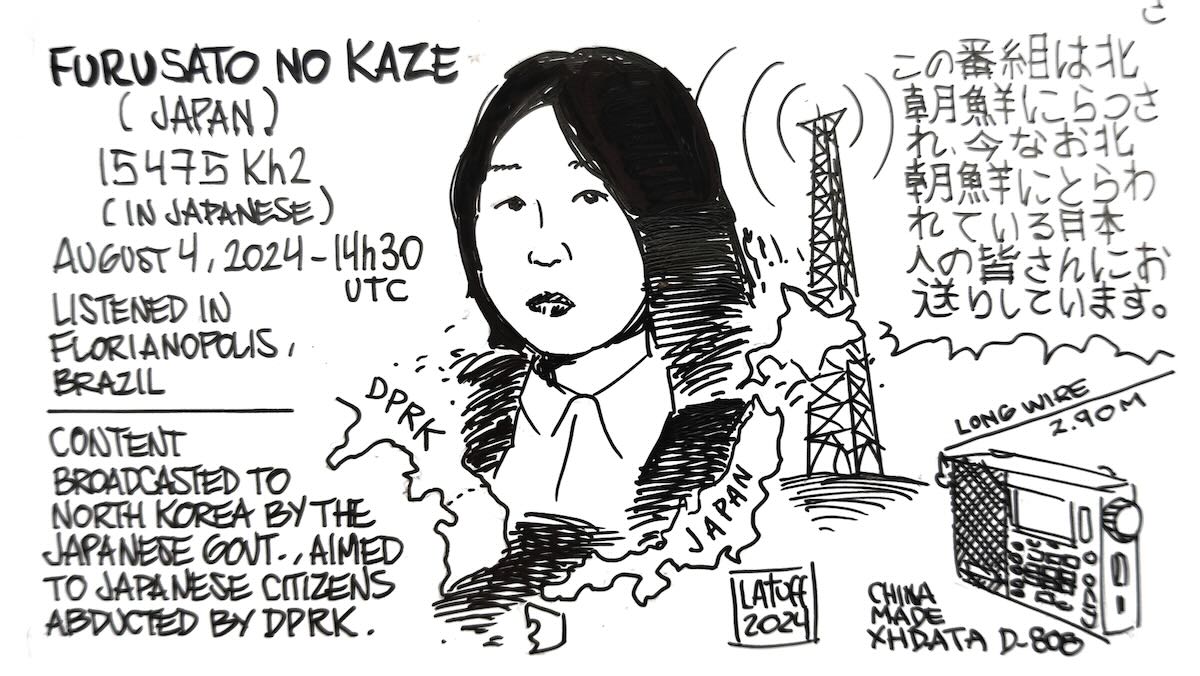
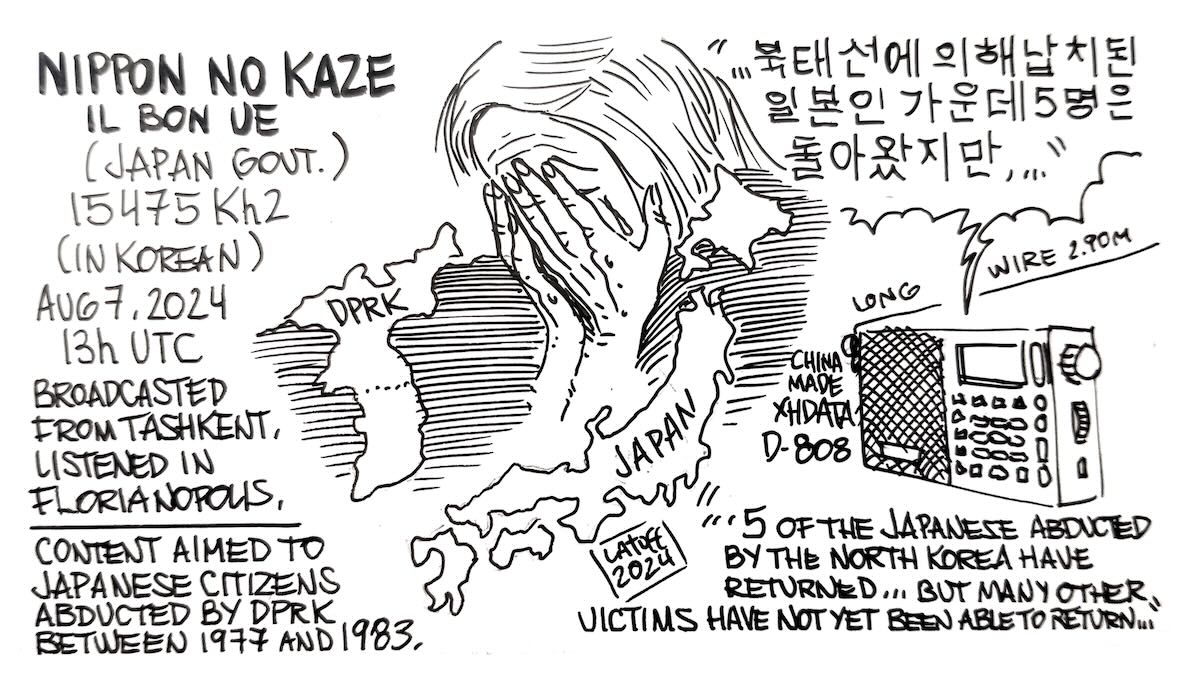
Many thanks to SWLing Post contributor and noted political cartoonist, Carlos Latuff, who shares his radio log art of these Furusato No Kaze and Nippon No Kaze il bon ue broadcasts:

Carlos notes:

Opening of Japanese government shortwave radio programs aimed at Japanese citizens abducted by DPRK between 1977 and 1983: “Furusato No Kaze” (in Japanese) and “Nippon No Kaze il bon ue” (in Korean). Broadcasted from a transmitter in Tashkent, Uzbekistan, and listened in Florianopolis, Brazil.

Furusato No Kaze

Click here to listen on YouTube.

Nippon No Kaze il bon ue

Click here to listen on YouTube.

The COOL keeps on coming on shortwave!

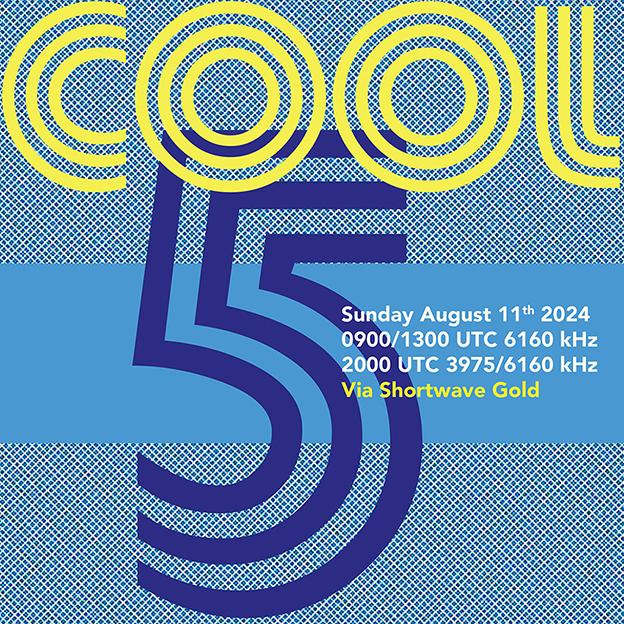
Hi it’s FastRadioBurst 23 here letting you know what Imaginary Stations will be bringing the shortwave community this week. On Sunday 11th August 2024 at 0900/1300 hrs UTC on 6160 kHz and then at 2000 UTC on 6160 kHz and 3975 kHz they have  yet another version of COOL, this time COOL 5 via Shortwave Gold. Like the last COOL shows, it’s summer vibes galore and tunes to listen to whilst on the sun lounger. Towels and suntan lotion at the ready please!

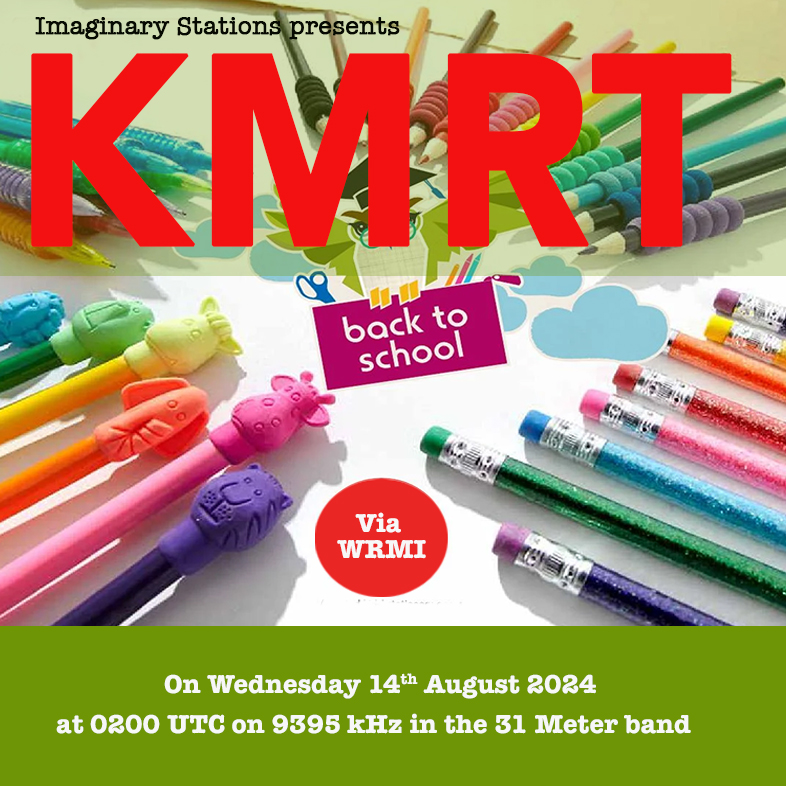
Then via WRMI on Wednesday 14th August 2024 at 0200 UTC on 9395 kHz we’ll be bringing you a back to school special of KMART, your “official supermarket shortwave radio station”. Expect voucher give-aways, extended opening hours and the best blue light specials on the planet (*All subject to availability of course). Tune in and enjoy an alternative to shopping on the shortwave dial.

We now have a Patreon page for our regular listeners here. Monthly memberships are available for exclusive audio and zines.

For more information on all our shows, please send  to [email protected] and check out our old shows at our Mixcloud page here.

Can you help Dan solve this 50 year old radio mystery?

Photo by Sai Harish on UnsplashMany thanks to SWLing Post and Shortwave Radio Audio Archive contributor, Dan Greenall, who writes:

Hi Thomas

From the early 1970’s, where sadly, some of my original logbooks went missing many years ago.

ANTEL, the Administracion Nacional de Telecommunicaciones in Montevideo, Uruguay used to use its telephone time announcement instead of a voice mirror – so they got their name ‘La Senal’ in the 1970’s. Their voice announcements in SSB mode were in Spanish and the station could be found on frequencies all over the shortwave spectrum, including 5772 kHz (CXL20), 8037 kHz (CXL21), 10770 kHz (CXL24), 11660 kHz (CXL25), 14575 kHz (CXL26), 16047.5 kHz (CXL28), and 19525 kHz (CXL33). The accompanying recording was made on January 9, 1971 on about 13550 kHz.

La Senal Uruguay Jan 9 1971 13.55:

In those days, it paid to belong to a good DX club (such as SPEEDX) or I may not have been able to identify this station at all. I was also able to get my hands on a used copy of the Klingenfuss guide to utility stations which had very detailed frequency and callsign information. Unfortunately, I let this valuable resource go a number of years ago.

And now for the mystery……

Around the same time (early 1970’s), I heard and recorded this similar styled transmission, except it was in the French language, and which remains unidentified to this day. I have no exact date/time heard or frequency information for this one.

All recordings made in Ancaster, Ontario, Canada. (40 miles SW of Toronto)

Mystery French Time Station:

Any guesses will be greatly appreciated.

73

Dan Greenall

Readers, if you can help Dan identify this recording, please comment!

Special Update to A Nutty Idea XHDATA D-220 DX Contest

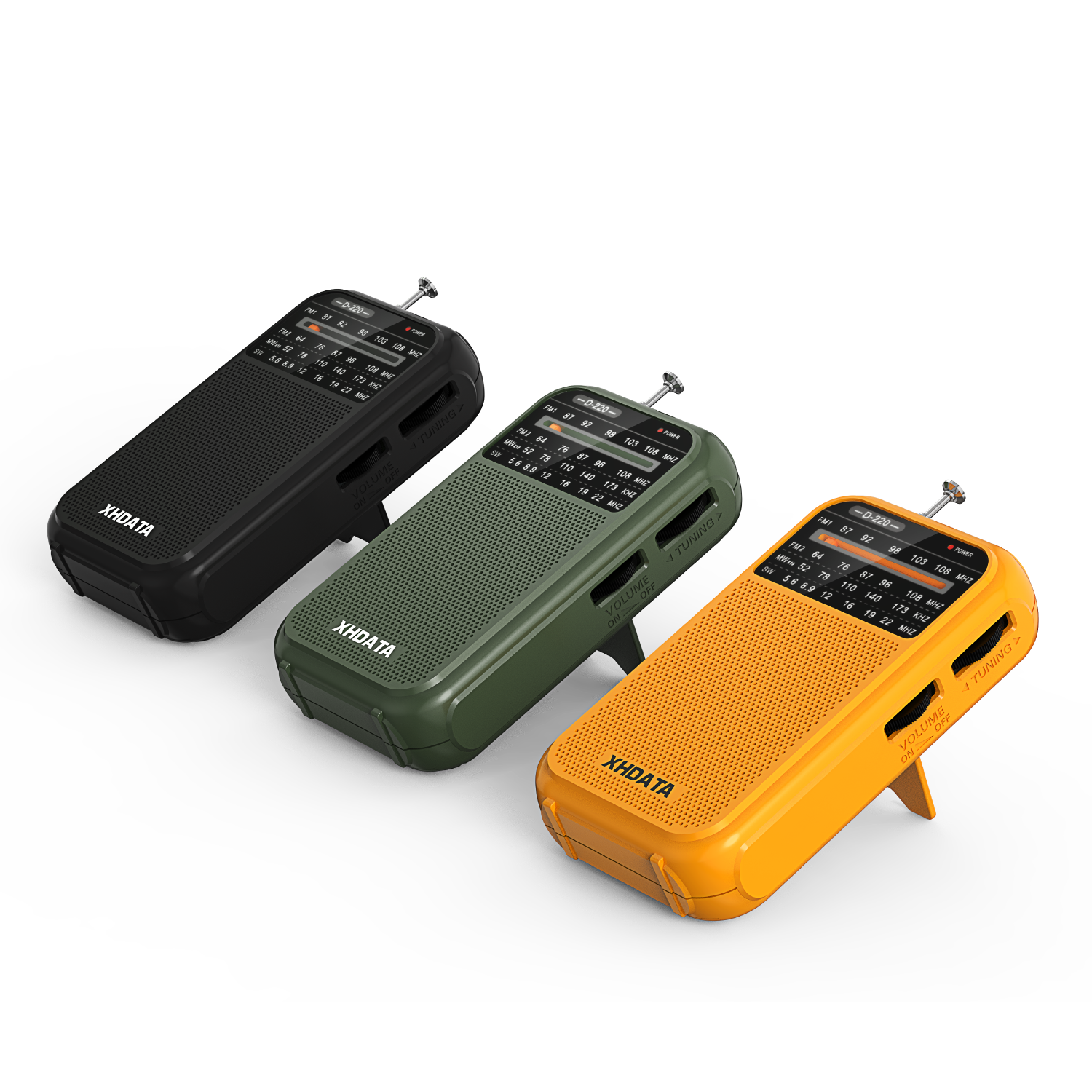
XHDATA D-220 PortableOriginally, the XHDATA D-220 DX Contest was intended to be on shortwave, but prompted by a question from Dennis, K2DCD, I consulted with Thomas (our Maximum Leader) and he said “I say with a radio this basic, simply go for anything and everything logged.”

That makes sense and sounds like pure, unadulterated DXing pleasure.

So here are the new rules:

  • You must use a D-220 with native (built-in) antenna (no hooking it up to your two-mile-long Beverage antenna)
  • No use of other radios or SDRs as “spotter” radios.
  • You must ID off the air.
  • Any band the D-220 receives.
  • Any location.
  • Contest starts 6 pm your local time on Friday, August 16, 2024 and it ends at 6 pm your local time on Sunday, August 18, 2024.
  • Log the time, the estimated frequency, the station ID and what you heard.

There are no prizes, just bragging rights.

Feel free to report in lavish detail on your experience during the contest . . . especially if you had fun!

Carlos’ Shortwave Art and Recordings Explore Extreme Weather

Many thanks to SWLing Post contributor and noted political cartoonist, Carlos Latuff, who shares his radio log art of recent broadcasts from the Voice of Korea, NHK, and KBS.


Voice of Korea

Carlos notes:

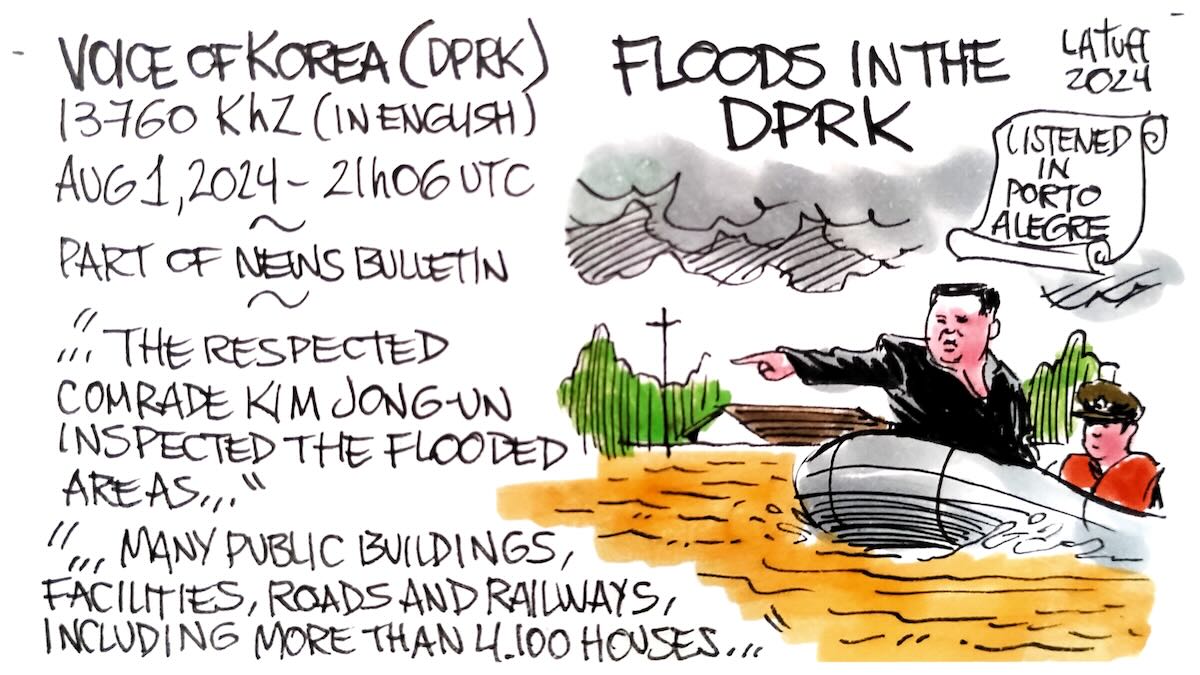
Part of Voice of Korea news bulletin about floods in the DPRK:

“…Shortly ago, floods and heavy rains seriously and consecutively damaged some areas of the country, including North Phyongan and Jagang provinces. In this regard, the 22nd emergency enlarged meeting of the Political Bureau of the Eighth Central Committee of the Workers’ Party of Korea was held in an afflicted area in the city of Sinuiju, North Phyongan Province, from July 29 to 30 to take urgent rehabilitation measures.
Prior to the meeting, the respected Comrade Kim Jong Un inspected the flooded areas, together with the premier of the Cabinet and secretaries of the Central Committee of the WPK.
Many public buildings, facilities, roads and railways, including more than 4,100 houses and nearly 3,000 hectares of farmland, were flooded in the city of Sinuiju and Uiju County located on the lower reaches of the Amnok River…”

Click here to view on YouTube.

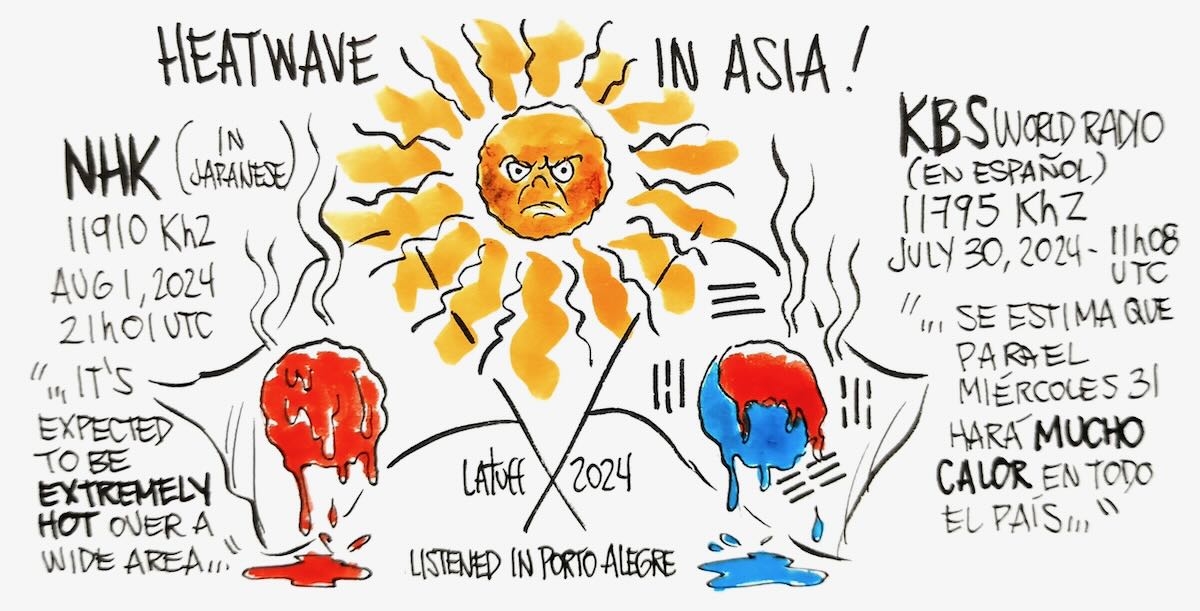
NHK and KBS

Carlos notes:

Excerpts from NHK (Japan) and KBS World Radio (South Korea) news bulletins about heatwaves. Listened in Porto Alegre, Brazil, via shortwave.

Click to view on YouTube.