Shortwave listening and everything radio including reviews, broadcasting, ham radio, field operation, DXing, maker kits, travel, emergency gear, events, and more
They are announcing “Soon a new, more modern Voice of Croatia, with more content” in a Youtube video, in which you can take a look at the inside of the radio:
Radio leads the way as the most trusted media in Australia and is seen as the most credible source of news, according to a new survey by global research firm GfK.
The GfK Radio Insights study found 42% of respondents surveyed consider radio trustworthy, with a wide gap to TV (24%), online (18%) and newspapers/magazines (15%).
GfK’s General Manager Media, Dr Morten Boyer, said the results reflected high levels of trust in radio presenters and the live and human nature of radio, which made it a credible source of information for news, traffic information and emergency updates.
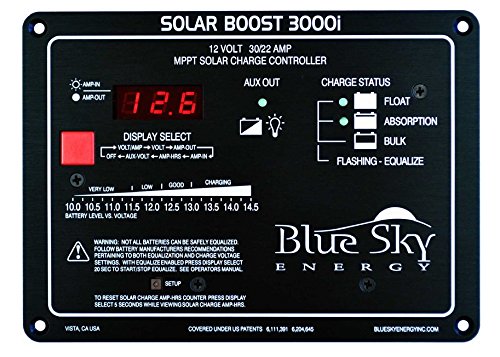
The Solar Boost 3000i solar MPPT charge controller
I’m currently in the process of adding 200-300 watts of 12-volt solar panels to my truck camper.
Solar panels will keep my camper’s 12V deep-cycle battery topped off, thus allowing longer stretches of time for boon-docking or primitive camping, during which an occupied camper is off-grid from shore power.
My truck camper actually came with a simple built-in charge controller which charges the battery via shore power. Thing is…this shore power charger is incredibly noisy when I’m on the radio. The QRM it generates is broadband, and almost entirely wipes out HF and MW radio listening.
Because of this, I’m forced to unplug my power whenever I’m in the camper and want to hop on the air. And since the whole idea of camper living is to enjoy a bit of rest-and-relaxation, in other words, to pursue one’s hobbies in modest comfort, having to unplug the power––or else not play radio––limits my total enjoyment of RV camping.
But. Before I invest in a new solar charge controller, which would essentially charge the battery any time the sun is out, I need to be absolutely certain it doesn’t create RFI, too. Yet I’m finding it difficult to confirm whether a charge controller is RF-quiet prior to purchasing…
What’s more, I suspect I’m not the only radio listener or ham radio operator with an RV who has encountered the noise dilemma.
What’s a radio geek with an RV to do––?
A ham radio buddy who is an avid RVer recommended the Solar Boost 3000i (see top photo above). While it might be overkill for my application, I’m willing to invest, knowing it may charge without creating RFI.
But before I do, I’m curious if any SWLing Post readers have any experience with solar charge controllers, and/or can confirm models that create little to no RFI? I’d even appreciate knowing which models do pollute the spectrum––models to avoid, in other words, if radio listening or ham radio operations are your goal.
My hope is that SWLing Post reader recommendations may not only help me with this problem, but might help other RVer/off-grid radio enthusiasts, as well.
One thread that’s had a surprisingly long run here on the SWLing Post deals with sticky radios.
A number of portable radios manufactured in the past decade were coated in a rubberized, tactile material that was quite functional when the products were new. With time, however, the coating breaks down and becomes incredibly sticky to the touch. We’ve published a number of articles about how to clean sticky radios–click here to read our archived posts.
Many thanks to SWLing Post contributor, Lee Reynolds, who writes with his suggestion:
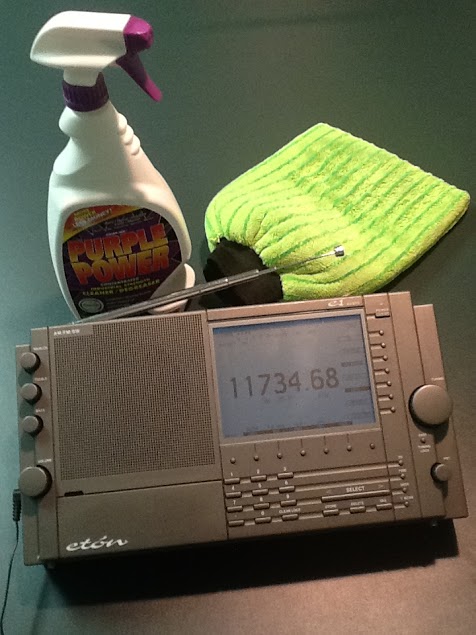
Gunk on radios – I was the lucky winner of an E1 at one of the ‘fests.
Of course, the coating went bad and it would up looking like the flypaper/Wino of radios.
I made a desultory attempt at cleaning it (using that Purple Power stuff) but it was a nasty, dirty job that I didn’t complete. A disheartening mess.
Fast forward three or four years after that. I had some time on my hands, I took another look at the radio.
I found that the gunk continues to mutate – it had actually lost most of its ability to adhere to the radio’s casing. Now it would rub off with a paper towel and nothing else.
A couple of rolls of paper towels and some Pledge left it something you no longer needed to put gloves on in order to feel comfortable touching.
So – another fix for the gunk – time and patience. No cleaners needed.
Thanks for sharing, Lee. Worth noting: if you gave up on your sticky radio some time ago, perhaps you should pull it back out of storage and see if the coating has deteriorated to the point it might simply rub off? Time might have made the job much easier.
Many thanks to SWLing Post contributor, Troy Riedel, who writes:
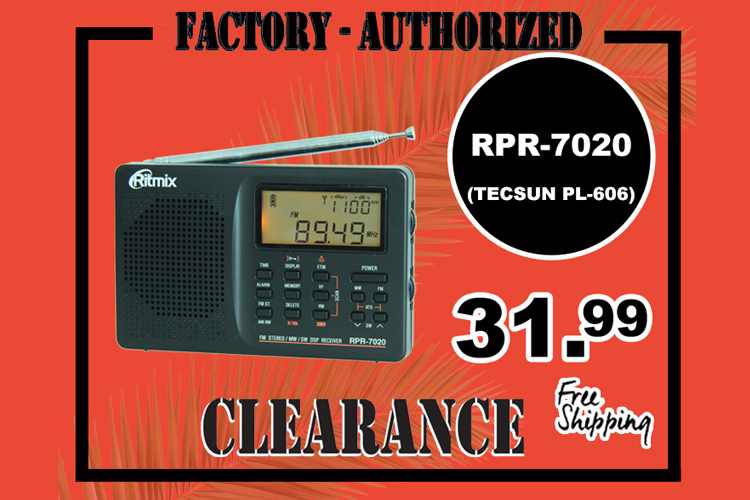
Anon-Co is offering a Tecsun PL-606 Clone for $31.99 shipped. It’s badged as a: “Ritmix RPR-7020”. I’ve never heard of that badging/brand, maybe you have?
Kaito (via Amazon) currently prices the PL-606 at $41.80, Amazon’s price is $46.50.
Thank you for the tip, Troy! That is a great price for the PL-606 and Anon-Co is a retailer I certainly trust. I’ve never heard of the Ritmix name either.
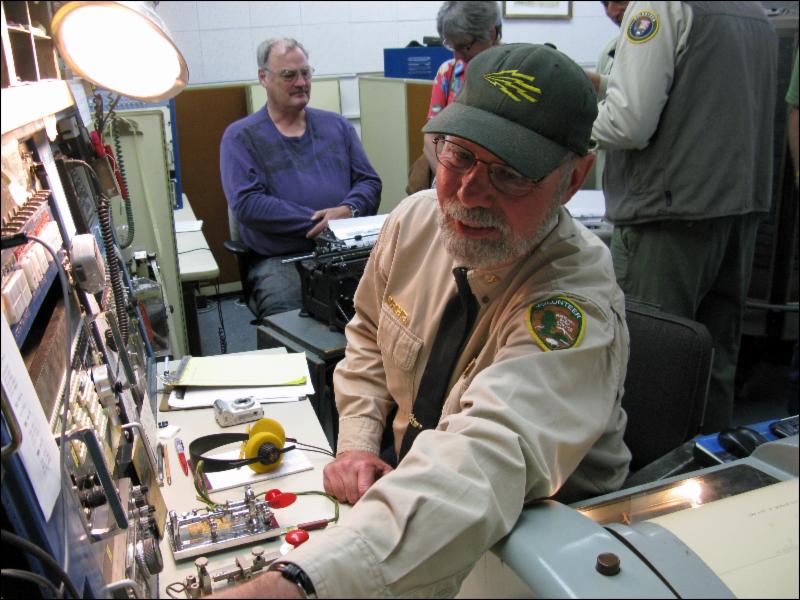
Chief Operator Richard Dillman at Position 1 (Source: Maritime Radio Historical Society)
Many thanks to SWLing Post contributor, Brian Smith (W9IND), who shares the following guest post:
“Night of Nights” 2017
by Brian D. Smith, W9IND
“Night of Nights XVIII” – radio’s answer to “Night of the Living Dead” – will again unfold on July 12 (July 13 UTC) with the return of maritime Morse code transmissions that were thought to have died in 1999, but now haunt the shortwave and medium wave bands one night a year. The announced 2017 lineup brings both good and bad news, with venerable Coast Guard station NMN joining the active list while ship-to-shore heavyweight WLO stays on the sidelines.
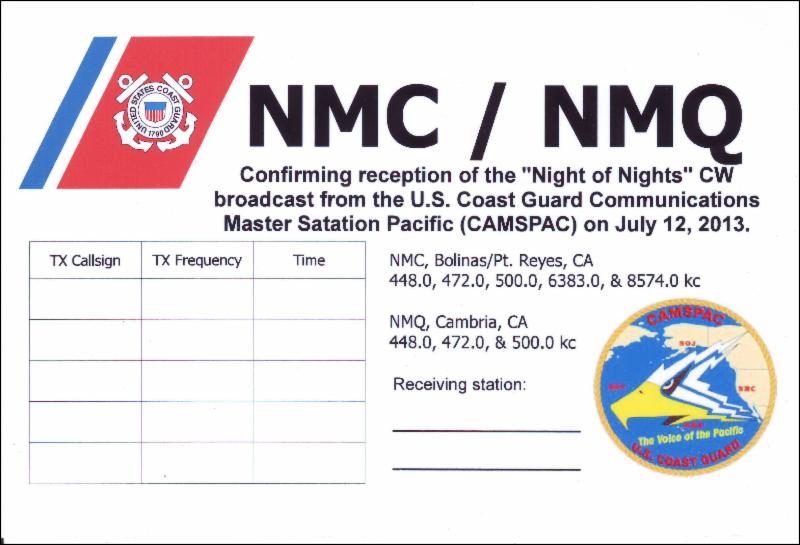
For CW aficionados, the event offers not only an audio nostalgia trip, but a chance to obtain QSL cards and – for those in the San Francisco area – witness the event in person at the former KPH facility, located at Point Reyes National Seashore near San Francisco.
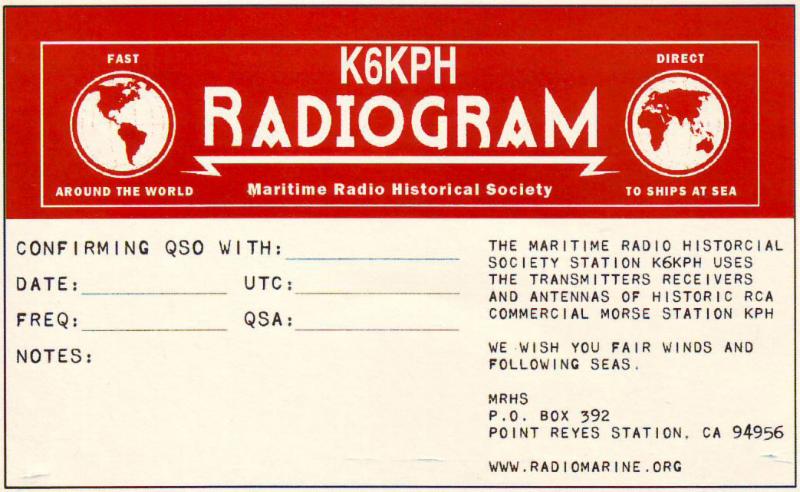
Amateur radio operators can get in on the fun by working the Maritime Radio Historical Society club station, K6KPH (via CW, of course) – and even operating it if they’re close enough to visit. The event organizers endorse amateur radio licenses with special stamps and “the Great MRHS Seal,” says Chief Operator Richard Dillman.
“Night of Nights” takes place annually on July 12 to mark the date in 1999 when commercial Morse code operations ceased in the United States. The six participating stations will take to the airwaves on multiple frequencies at 8:01 p.m. Eastern time on July 12 (0001 UTC July 13) and continue for several hours. Two MRHS stations, KPH and KFS, will beam signals from the original KPH transmitter site in nearby Bolinas, California, with a quartet of Coast Guard stations checking in from both coasts – NMC (California), NMN (Virginia), NMQ (California) and NMW (Oregon). The latter two will operate on medium wave frequencies only.
For the backstory on the KPH comeback and the tireless volunteer efforts that went into it, read “Who We Are” on the MRHS home page: http://www.radiomarine.org
Many thanks to SWLing Post contributor, Alan Roe, who writes:
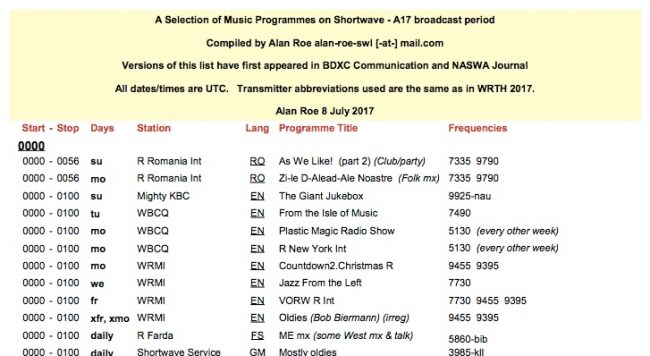
I have attached my latest Music on Shortwave List Update (A-17 v2)[.]
1) Updated frequencies for RNZI (0300-0500)
2) Corrected/expanded entries for RAE
3) Additional SP program added for RRI
4) Added additional entries for V of Hope Africa (1700-1930)
5) Corrected station name of Countdown2.Christmas R (0000)
I hope that you find the list of use. Corrections and suggestions are always welcomed.