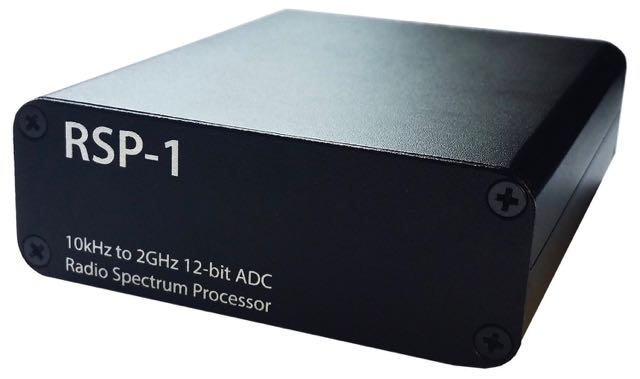
SDRplay RSP-1 OEM Metal Case

Many thanks to SWLing Post contributor, Rafman, who writes:

The SDRplay RSP-1 OEM Metal case is ready for order and shipment Worldwide

Includes:

  • 1x Black aluminum metal enclosure with two labeled side panels, 1x Broadcast FM band-stop filter plus SMA Male to SMA Male barrel adapter,
  • 1x Black semi-hardshell carry case,
  • 1x Thermal pad to keep the RSP-1 cool and mechanically stable inside the enclosure and
  • 1x Accessory set including enclosure screws, GND lug bolt set and 3M anti-slip rubber feet.
    Can be used to upgrade the SDRplay RSP-1 ONLY to a metal enclosure. Helps block RF interference.

Note that owners of the very first RSP-1’s with F-Type connectors may require an additional F-Type pigtail adapter, or a MMCX to SMA pigtail to be able to use the BCFM filter internally. The BCFM filter can still be used externally.

Click here to view the RSP-1 metal case at Amazon.com (availability expected March 27).

Thank you, Rafman! I have the first generation RSP-1, so appreciate the note about using the filter internally via an adapter. That’s a nice enclosure.
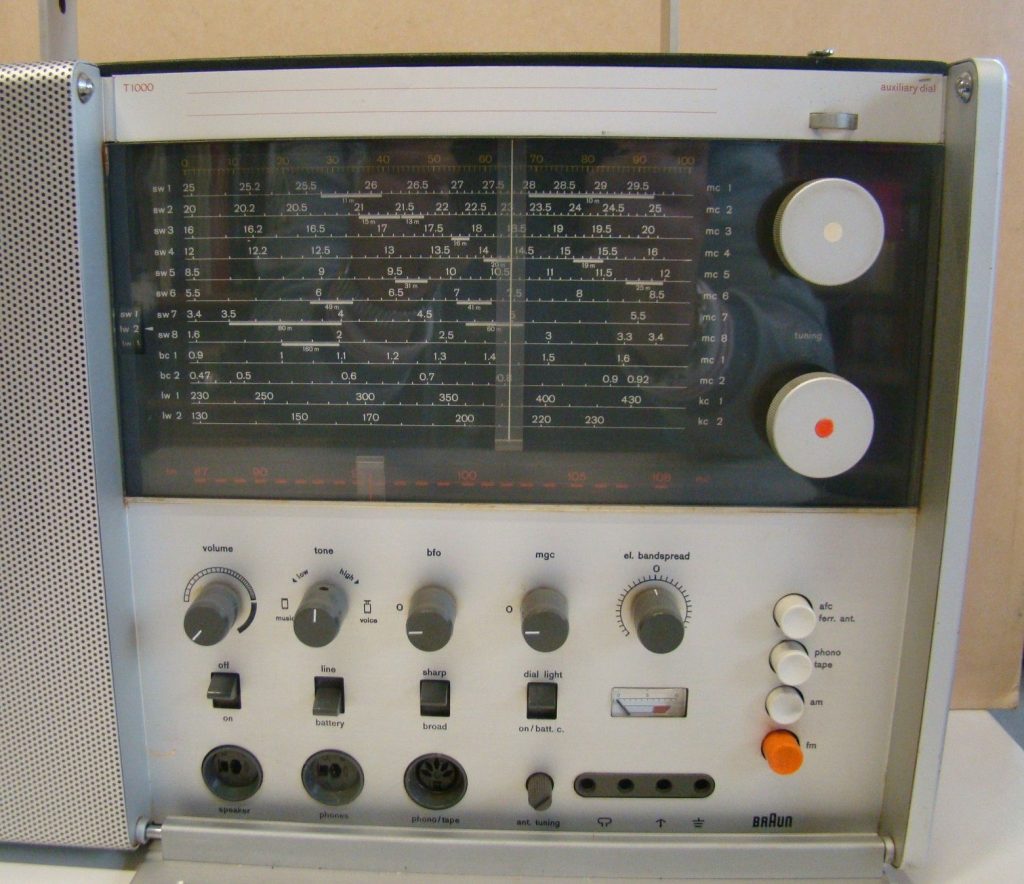
eBay find: The Braun T-1000

Many thanks to SWLing Post contributor, David Korchin (K2WNW), for sharing a link to this Braun T-1000 on eBay.

With two days left on the auction and already 73 bids, I believe David is correct in assuming this radio might fetch upward of 900 Euro. Braun models certainly tend to fetch premium prices. The T-1000 is possibly my favorite Braun portable and I certainly wish I had one. I love Dieter Rams’ designs.

Note that shipping seems very modest at 6 Euro worldwide via DHL.  I would check on that pricing prior to bidding if outside of Europe. This seller has a 100% rating with over 400 transactions on eBay. Again, thanks for the tip, David!

Click here to view on eBay.

Any lucky SWLing Post readers own a T-1000? I’d love a review!

The first maritime radio distress call

(Source: The Telegraph via Mike Barraclough on Facebook)

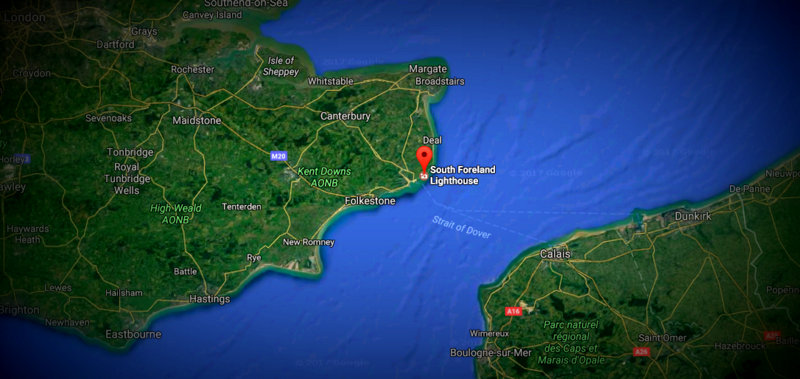
On 17 March 1899, the East Goodwin Sands Lightship, operating under a licence from the General Post Office, BT’s predecessor, sent a signal on behalf of the merchant vessel Elbe, which had run aground on the treacherous Goodwin Sands off the coast of Kent.

The message was received by the radio operator on duty at the South Foreland Lighthouse, who was able to summon the aid of the Ramsgate lifeboat.

Goodwin Sands featured again a few weeks later when, on 30 April 1899, the East Goodwin Sands Lightship sent a distress message on her own account when she was rammed by the SS R F Matthews.

Rather than the now-famous signals of “SOS” or “Mayday”, the recognised call sign for ships in distress at the time was “CQD”. Devised in 1904 by the British Marconi Society, it was popularly mistaken to mean “Come Quick – Danger” or, more bleakly, “Come Quickly – Drowning!”. However, its actual official meaning came from the land telegraph signal CQ – “sécu” from the French word sécurité – followed by D for Distress.

The “SOS” Morse code signal – three-dots/three-dashes/three-dots – was established as an International Distress Signal, agreed at the Berlin Radio Conference on 3 October 1906 – though the signal wasn’t formally introduced until 1 July 1908.

Continue reading the full story at The Telegraph online.

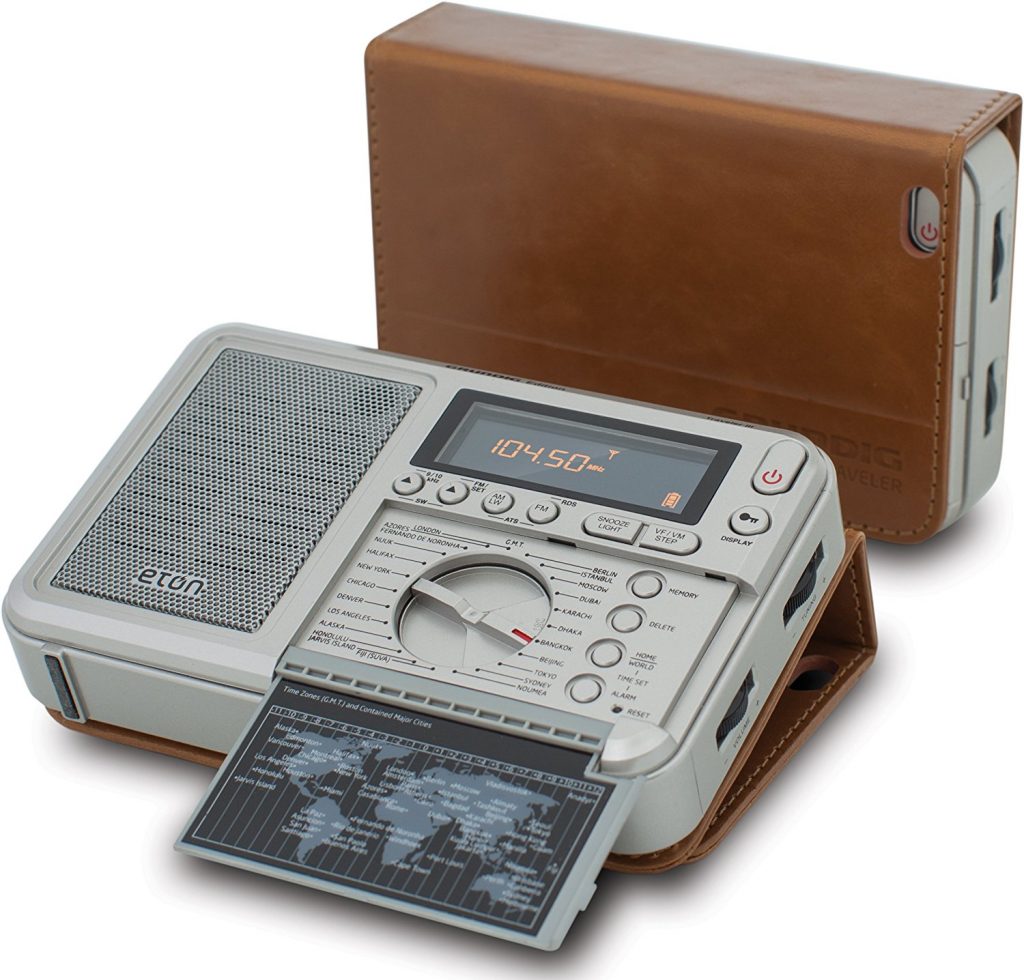
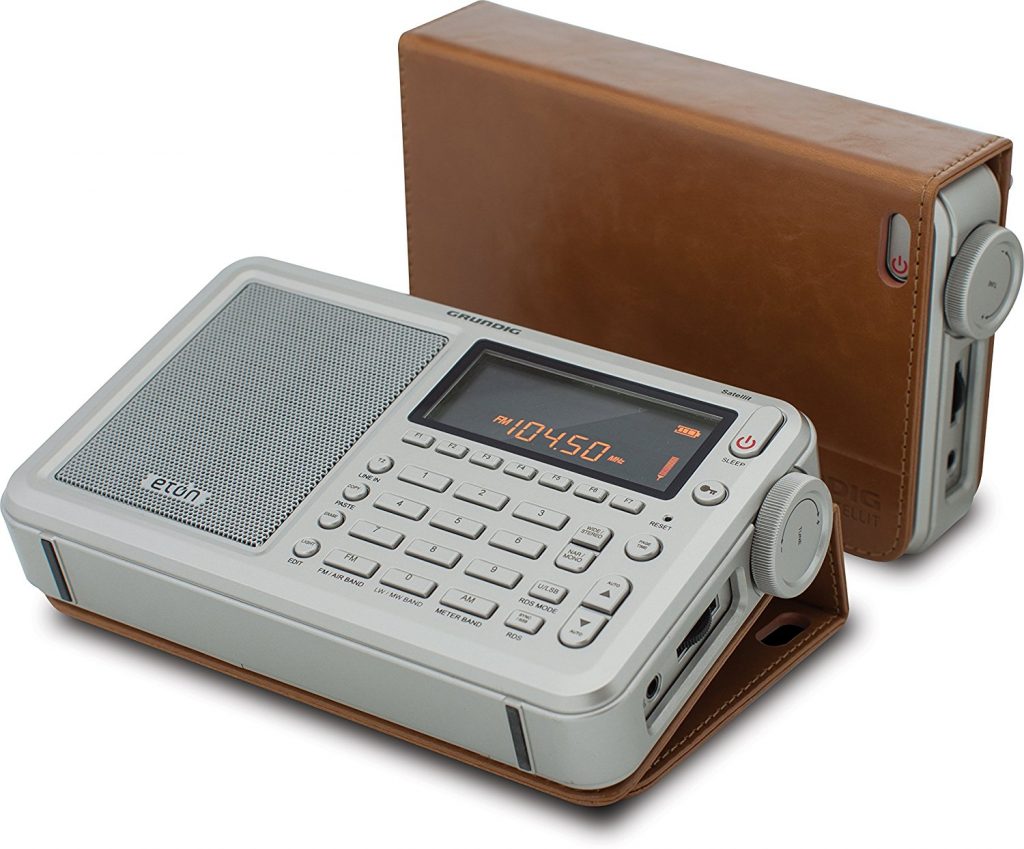
On Sale: Executive Editions of Satellit and Traveler III

Many thanks to SWLing Post reader, Troy Riedel, who writes:

“This [Executive series] sale has been going on since 18 March (and Amazon now lists that it will end in “5 days”):”

Many thanks for the tip, Troy!

Those are both great prices: the Traveler for $47.04 and the Satellit for $156.69 shipped.

Timing is great as I’ve had a number of readers ask about purchasing the Satellit lately.

Click here to view the Eton Traveler III Executive on Amazon.

Click here to view the Eton Satellit on Amazon.

ABC News: Portrait of a devoted shortwave radio listener

(Source: ABC News)

Saying goodbye to Radio Australia on the shortwave after 37 years

Kevin De Reus has lived in the same 24-kilometre-radius his whole life.

Born and raised in Iowa in the US, Kevin now calls his grandfather’s farm — just 12 kilometres from where he grew up in central Des Moines — home.

He is married, has five children and has worked at the same company for 20 years.

And while he admits he has not travelled much in his 52 years, it hasn’t stopped Kevin from listening to the news from Australia since 1980 — with the help of a shortwave radio.

Listening from the other side of the world

Even half a world away, he says the broadcast was one of the clearest of the stations he listened to.

“Radio Australia always held a special place in my heart just because it was in the South Pacific and I didn’t know much about that area — and the signal was always good from that part of the world,” he says.
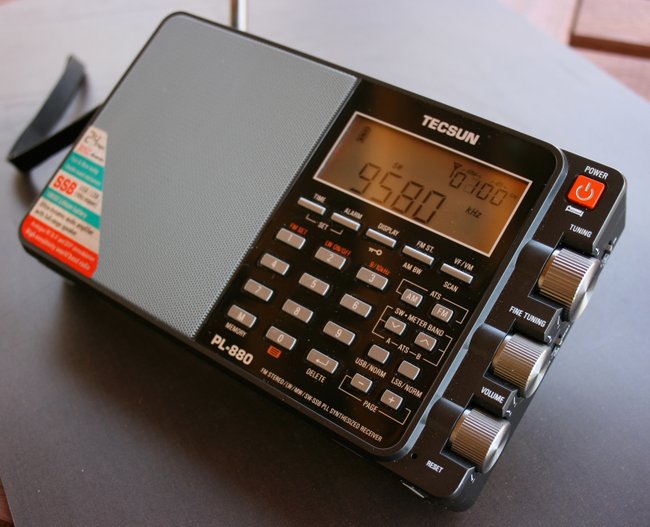
“Most recently, over the last two to three years as I was listening in the morning hours here on 9.580, the signal was so good. It really was about the only English broadcaster at that time of the day that had news and information.

“Most mornings I would get up and turn on the shortwave radio at 7:00am (local time) and listen to the news from Australia and then I would drive to work.

“So many of the stations just aren’t on the air anymore. BBC doesn’t broadcast to North America anymore. I can’t even hardly hear the Voice of America in English anymore to tell you the truth. So Australia had the strongest signal.

“That’s why it was hard for me to hear [Radio Australia] was going to go off the air.”[…]

Click here to continue reading the full article on ABC News.

I believe Kevin De Reus did a fine job explaining the appeal of being a shortwave radio listener.

Though I gather a lot of international news these days with a WiFi radio (especially since Radio Australia left the shortwaves), I still prefer listening to shortwave.

It’s just how I’m wired.

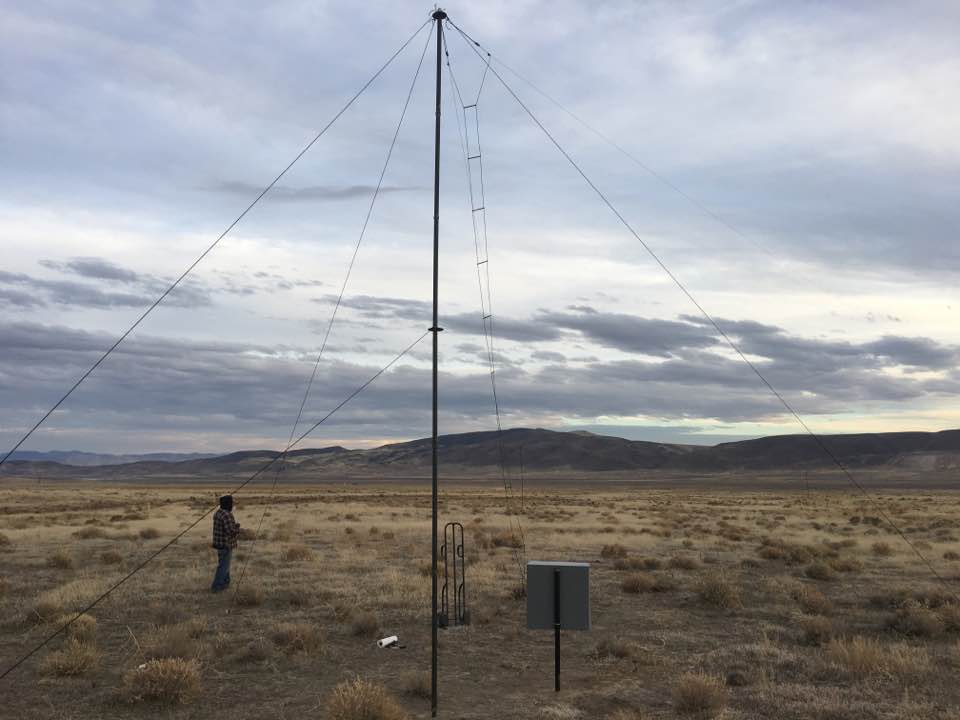
More info about KIMF

KIMF transmitter site (Source: James Planck via Facebook)

KIMF transmitter building (Source: James Planck via Facebook)

Many thanks to SWLing Post contributor, Mike Barraclough, who writes:

Photos of the site were posted in December. Mauno Ritola posted in the WRTH Facebook group January 26 that “James Planck informs, that KIMF Battle Mountain NV, USA plans to start operation around 1st April on shortwave. Time will tell, if the plan is realistic.”

Click here to view photos on Facebook.

Many thanks, Mike, for sharing this info. Note that these Facebook photos are listed as public, so a Facebook account is not needed for viewing.

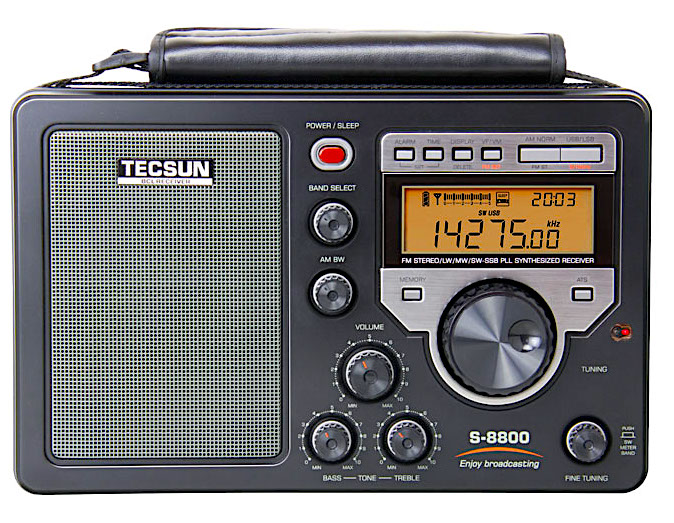
Tecsun S-8800 – The Birdie Problem

[UPDATE: This issue has now been solved. Click here to read our full review.]

Recently, Tecsun announced and released onto the market the new S-8800 receiver. Thomas Witherspoon has indicated that sensitivity, selectivity and audio fidelity are very good for this new unit.

BUT…..in his post on February 12, 2017, entitled Tecsun S-8800 Update, Thomas discovered that his new S-8800 has a serious fault, one that could potentially drive radio enthusiasts mad! In tuning around the dial, he found the radio has many “birdies”. In the same post, he notes that Bertrand Stehle F6GYY also found birdies on 4 spots in the mediumwave band and 63 frequencies across the entire shortwave spectrum. Not good!

In reading the comments that followed Thomas’ post, I noted that a few writers seemed a little confused about what a birdie is and how it differs from radio frequency interference. Hopefully, the following explanation will shed some light.

The term “birdie” is, I guess, derived from the type of sounds that are emitted from a receiver having this problem. It can take on a variety of forms, like a squealing or whistling sound, or perhaps a warbling sound, or a hash noise, or indeed, even a silent carrier. In a particular radio, a birdie could appear on one or many frequencies across longwave, shortwave, mediumwave or into the VHF spectrum. And it will usually be permanently there on the same frequencies every time.

Occasionally, you will find birdies smack bang on the very frequencies where you might want to do some listening. But, unfortunately you can’t really do anything to get rid of these nuisances because the design faults are in the the receiver itself. You can test to see if what you are listening to is a birdie by simply disconnecting the antenna. If the squealing/whistling/warbling/hash/silent carrier is still there without any antenna, then it’s a birdie – an internally generated carrier by the receiver’s own circuitry.

Click here to continue reading the full story.

Rob Wagner, VK3BVW, is the author of this post and a regular contributor to the SWLing Post. He also blogs at the Mount Evelyn DX Report.