Shortwave listening and everything radio including reviews, broadcasting, ham radio, field operation, DXing, maker kits, travel, emergency gear, events, and more
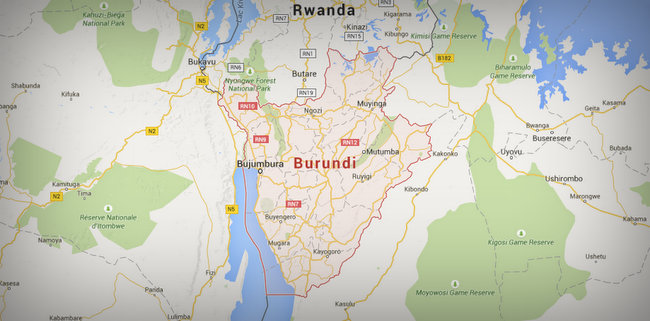
Nairobi, Kenya | AFP | Burundi’s press regulator on Friday said it was suspending broadcasts by the BBC and Voice of America (VOA) by local radio stations ahead of a constitutional referendum on May 17.
The head of Burundi’s National Communications Council told journalists in the capital Bujumbura that a six-month ban would come into force on Monday.
Karenga Ramadhani accused the BBC and VOA of “breaches of the law governing the press and ethics”.
The BBC, he said, “damaged the reputation” of President Pierre Nkurunziza during a discussion programme and had “ignored” previous warnings.
Burundi’s government earlier this week urged the regulator to “take action” against the BBC which it accused of spreading “incendiary statements… hatred and subversion”.
VOA is accused of spreading “very tendentious” information and hiring a journalist “sought by Burundian justice”.
French broadcaster RFI also received a warning for disseminating “tendentious and misleading” information.[…]
I get just as excited as my kids when I receive any communications from the International Space Station. This past week, we fit an ARISS contact fit into our hectic schedule during lunch break. I gave both of my kids a handheld radio and we all listened together as the ISS passed overhead.
Right on schedule, we heard NA1SS, but it sounded like they were struggling to make contact with KD2IFR at the Central Islip Union Free School District in Central Islip, NY.
I made a short video about one minute into the scheduled contact. I believe both parties were forced to move to their backup channel because we never heard an exchange–only NA1SS calling KD2IFR:
Still…we heard an astronaut live, so mission accomplished!
SWLing Post contributor, Mark Hirst, had much better luck last week monitoring an ARISS contact with King’s High School in Warwick, UK. Check out his excellent video:
Thanks for posting that video, Mark. By the way, I love your FT-817ND setup!
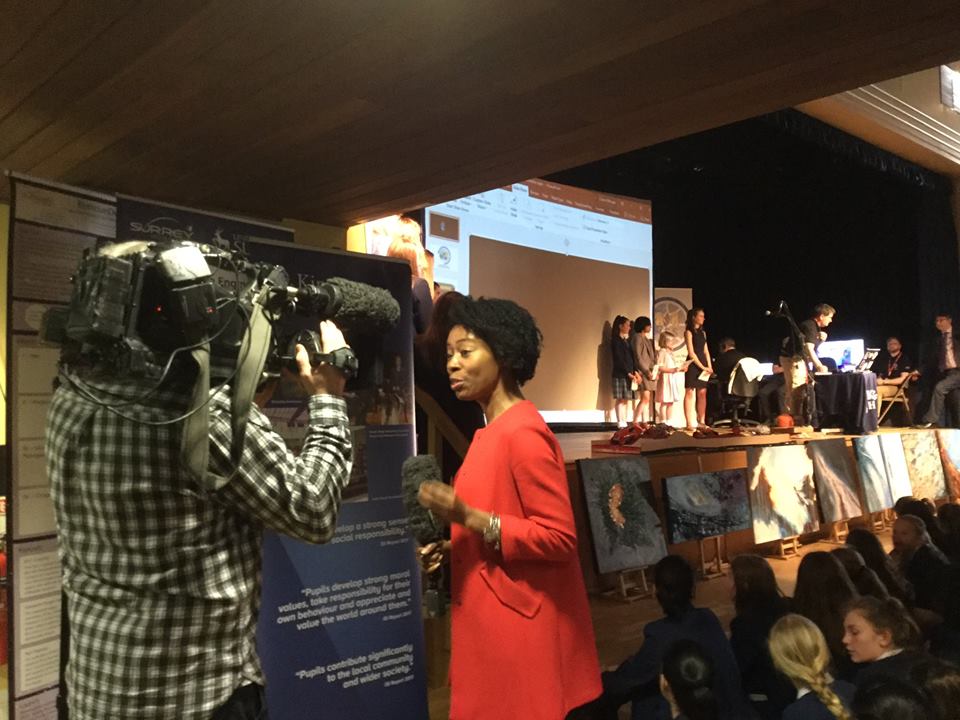
In fact, the King’s High School ARISS contact snagged some excellent publicity via the BBC. Here’s an article via the Southgate ARC:
King’s High School ARISS contact on BBC TV
On April 19 student Eleanor Griffin led the live question and answer session between King’s High School (GB4KHS) and astronaut Ricky Arnold KE5DAU on the International Space Station (OR4ISS)
King’s High School strongly encourage their girls to develop their interests both inside and outside the classroom. This culture of empowerment led one of their girls to apply to ARISS Europe (Amateur Radio on the International Space Station) for a highly prestigious link-up to the International Space Station.
Nicola Beckford reporting on the contact for the BBC – credit KHS
When Eleanor Griffin was selected to hold a space conversation with an astronaut, she was inspired to set up the Warwick Mars Project, for students across the Warwick Independent Schools Foundation, to further interest in Space Science. Eleanor says: “The moon landings belong to the generation of our grandparents, and the International Space Station to our parents. What will happen in our generation? Will Mankind travel to another planet?”
When asked what the incredible experience of the ISS contact had taught her Eleanor replied “Just do it! No one is going to stop you, if you just go and pursue your dreams, you really can do anything.”
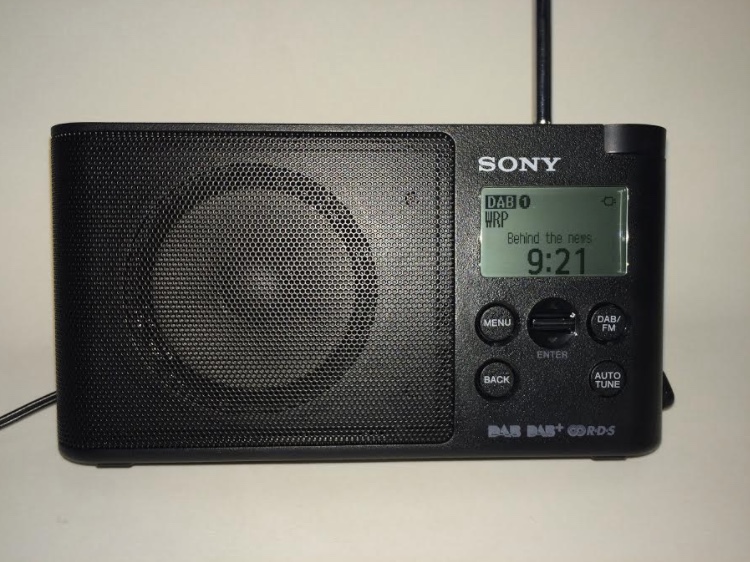
For years fans of wireless radios have campaigned to stop the apparently inevitable march of progress as Britain prepares to switch off its crackling analogue signal and become totally digital.
But now, the BBC will announce that it has shelved plans to force listeners to replace their analogue radios with DAB sets.
In a move that will also be welcomed by the two million motorists with analogue car radios, the corporation will admit for the first time that FM broadcasts must continue to keep audiences on side as music streaming and podcasts threaten its traditional strongholds.[…]
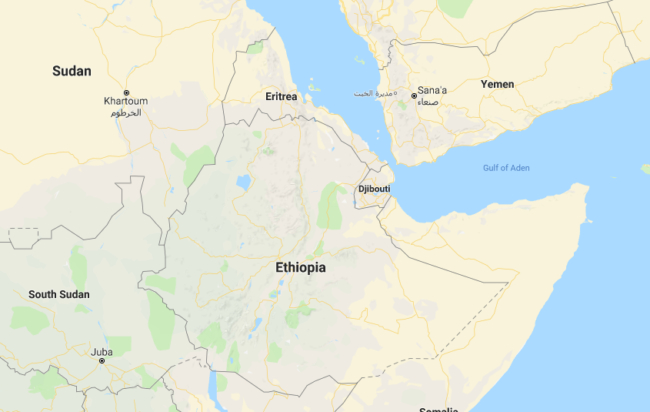
The BBC is launching new daily radio services which will be aired Monday to Friday in Amharic, Afaan Oromo and Tigrinya. The new language services have been available online since September 2017 when they launched websites and Facebook pages in all three languages.
The new radio services will provide impartial news, current affairs, features and analysis for Ethiopia and Eritrea, as well as regional and international news. There will be a strong focus on culture, health and original journalism from the region. These services are part of the largest investment in the BBC World Service since the 1940s and are funded by the UK government.
The programme will be broadcast on shortwave, satellite – and streamed directly onto each service’s Facebook page.
In addition content produced by BBC Learning English, part of the BBC World Service which teaches English to global audiences will feature prominently across the schedules for all three languages, with daily content as follows:
· Essential English – Beginners (airs on Monday, repeated on Wednesday)
A functional five-minute audio course presented by an English speaker and a local presenter, which aims to help beginners to learn English. Learners will be introduced to essential chunks of functional language, which will allow them to start having simple conversations in English immediately.
English Expressions – Intermediate (airs Tuesday, repeated on Thursday)
This five-minute audio course focusses on common expressions used in everyday English. An English speaking presenter and a local language presenter discuss the meaning and use a different expression each week.
English Together Advanced (airs Friday only)
This is a bilingual five-minute audio with three presenters (2 English and one local language) discussing a current (safe i.e. non news) topic and examining the language used in the story allowing the user the practise their listening skills and equip them with the grammar and vocabulary needed to discuss the story.
The programmes are broadcast Monday-Friday at the following times:
17:30 – 17.45: Amharic news
17.45 – 17:50: Amharic Learning English
17:50 – 18:05: Afaan Oromo News
18.05 – 18.10: Afaan Oromo Learning English
18:10 – 18:25: Tigrinya News
18:25 – 18:30: Tigrinya Learning English
Programmes will also be streamed via the respective BBC websites and Facebook pages (see links below).
Notes to Editors The Initial shortwave broadcast to go out at 17:30 GMT/ 20:30 EAT on three transmitters providing coverage across Ethiopia and Eritrea:
7.595MHz
11.720MHz
12.065MHz
Repeat to follow at 18:30 GMT /21:30 EAT
9.855MHz
15.490MHz
Satellite Radio content will go out on the following channels:
Arabsat (BADR4) – 11.966GHz, Horizontal
Nilesat 201 -11.843GHz, Horizontal
Hotbird 13D – 12.597GHz, Vertical
Evening satellite broadcast to go out at 17:30 GMT and will be repeated until 21:30 GMT.
The BBC World Service reaches a global audience of 269 million weekly, on radio, TV, and digital.
BBC World Service received further funding of £291m until 2019/20 from the UK Government to launch twelve new language services: Afaan Oromo, Amharic, Gujarati, Igbo, Korean, Marathi, Pidgin, Punjabi, Serbian, Telugu, Tigrinya, and Yoruba. This additional funding is not part of the licence fee.