Many thanks to Jonathan Marks, who shares this short video about the history of the Skelton HF Transmitting Station:

Many thanks to Jonathan Marks, who shares this short video about the history of the Skelton HF Transmitting Station:
It’s often insightful to look to the past to fully appreciate the current technology we take for granted.
When we tap a favorite contact’s name in our mobile phone–even for someone on the other side of the world–we can be talking to them within seconds, with clarity that’s often the equal of visiting face-to-face. Perhaps Skype or FaceTime is more your style? Yawn… just another two-way, real-time video session. The fact that the other person is thousands of miles away no longer makes you pause at the wonder of it all. Continue reading
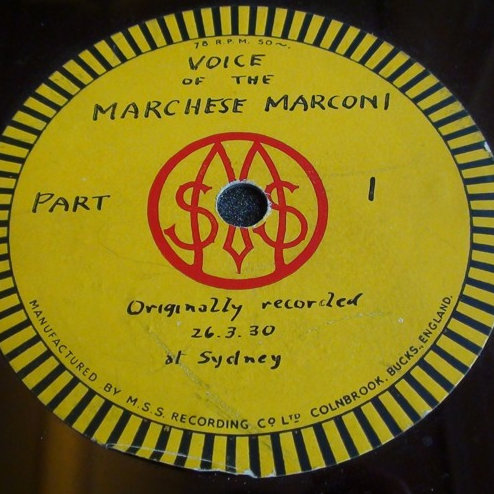
The Essex Record Office has published a recording of a speech made by Guglielmo Marconi in 1935. You can listen to the recording by clicking here or listening via the embedded player below (description follows):
(Source:Essex Record Office via Southgate ARC)
“Second part of a speech made by Guglielmo Marconi on the occasion of the unveiling of the ‘Fisk Memorial’ at Wahroonga, Sydney, New South Wales, Australia on 14 December 1935 (the disc is incorrectly labelled). The ‘Fisk Memorial’ commemorates the first direct wireless message sent from the U.K. to Australia, in 1918.
In the speech, Marconi forecasts the impact that wireless communication will have on ship navigation, but also the world economy generally. Would he be surprised by how accurate he was in his prediction that ‘no country can make much headway’ without such technology?”
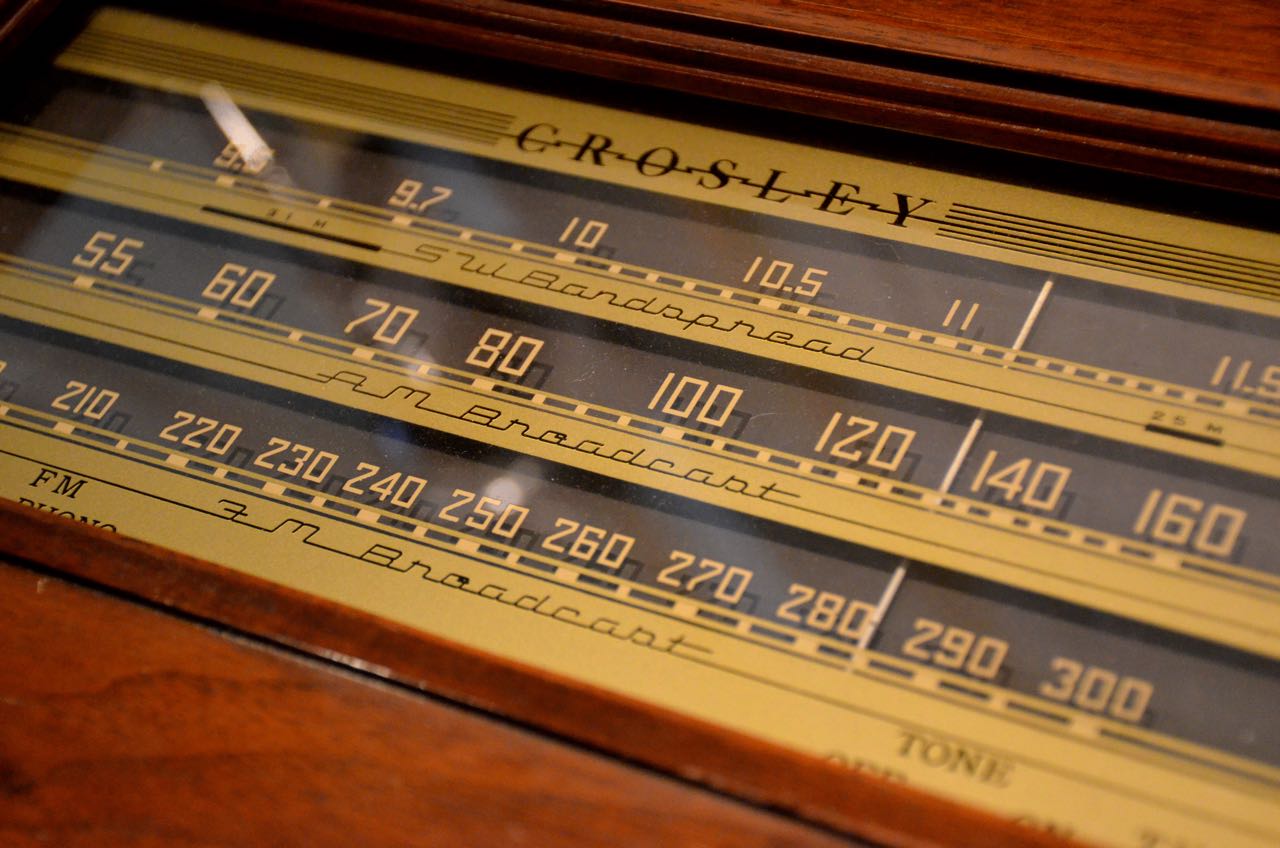
Many thanks to SWLing Post reader, Daniel, who shares a link to this article on the BT website:
From Marconi and the transistor radio to DAB: the history of radio in the UK
93 years ago this week, the BBC made its first radio broadcast. We look back at some of the most significant events in radio’s history.
On November 14, 1922 the British Broadcasting Company began its first radio broadcast. Since then the radio landscape has changed dramatically.
Radio is still an incredibly popular medium. According to Ofcom’s 2015 Communications Market Report, nine in ten UK adults listen to the radio each week. We listen for an average of 21.4 hours a week, but the way we do this has changed.
Families had to huddle around the radio in the 1930s, but now we can listen to the radio anywhere, anytime using our smartphones. We look at some of the most significant milestones of British radio over the last 93 years[…]
Click here to read through the entire article and timeline at BT.com.
Many thanks to SWLing Post contributor, Richard Langley, who writes:
Yesterday, 4 October, was the anniversary of the Soviet Union’s launch of Sputnik I, the first artificial Earth satellite. The launch heralded the beginning of the space age. Sputnik I’s Doppler-shifted radio transmissions on 20.005 and 40.002 MHz led to the development of the U.S. Navy Navigation Satellite System (Transit) and the equivalent Soviet system (Tsikada) and, eventually, to GPS and GLONASS and the other modern global navigation satellite systems.
The Sputnik I radio signals were picked up by many shortwave listeners. The 20 MHz signal was close to that of WWV and so was easy to find. And, apparently, WWV turned off its 20 MHz transmitter during some of Sputnik I’s passes over the U.S. so as not to interfere with reception.
There are several good sites on the Web with information about Sputnik I and its radio signals including:

(Click to enlarge)
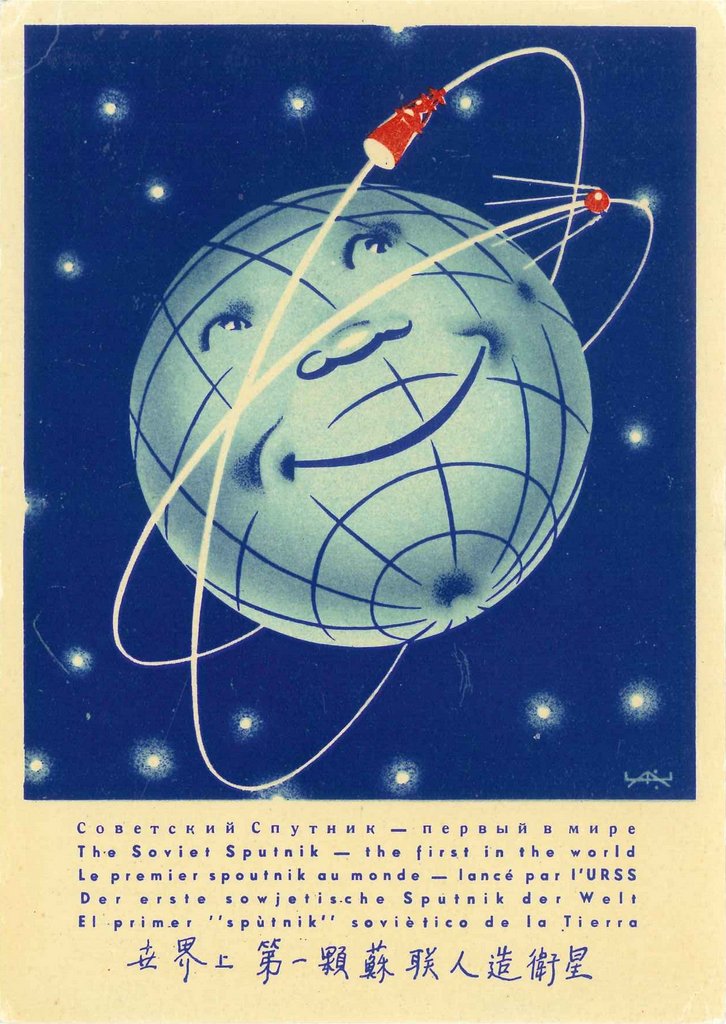
Sometime in high school, I received a card from Radio Moscow celebrating the launch of Sputnik I [see above]. Perhaps it was issued in 1967 for the 10th anniversary of the launch.
Richard: You never cease to amaze me! Thank you so much for sharing all of this Sputnik I information and resources! That gorgeous QSL Card is perhaps my favorite design from Radio Moscow.
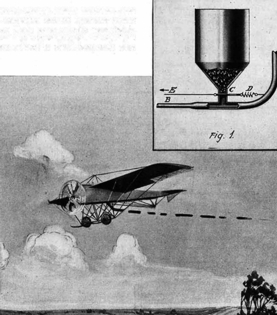
A French communication system for use by airplane pilots in 1915: black powder could be puffed out into a Morse code message.
(Image: Scientific American, September 25, 1915)
Many thanks to SWLing Post reader, Robert Gulley, who notes the following on his blog:
I found this interesting post from Scientific American concerning the lack of reliable wireless communication in aircraft in 1915 – just one of those fascinating historical tidbits.
You can read the full post on Robert’s website or Scientific American.
It is fascinating to see “old school” innovations that made long distance communications possible in 1915; before wireless technology became as practical and accessible as it was even only a decade later.
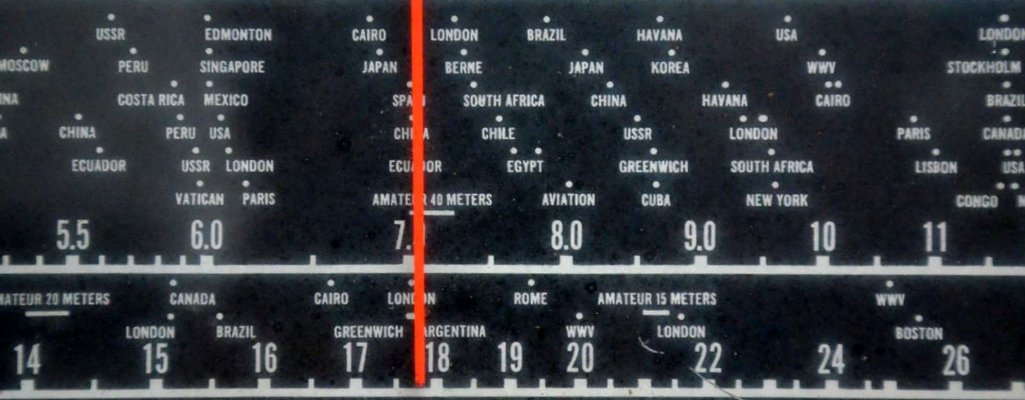
Many thanks to SRAA contributor, Tom Laskowski, who shares the following recording and notes:
A few snippets from my old shortwave tapes that were too short to upload individually. These were made using a GE portable multi band that had poor selectivity, hence the annoying ute during the BBC clip.
Times of individual clips are:
- 00:00 – 01:59: 1979, July 19 – RCI, frequency announcements in English and french.
- 01:59 – 09:51: 1979, July 20 – BBC, newscast, bothered by an annoying utility station.
- 09:51 – 11:38: 1981, August 28 – VOA, science news item about Voyager 2
- 11:38 – 14:52: 1981, August 29 – VOA, science news item about Voyager 2
Click here to download the recording as an MP3, or simply listen via the embedded player below: