Shortwave listening and everything radio including reviews, broadcasting, ham radio, field operation, DXing, maker kits, travel, emergency gear, events, and more
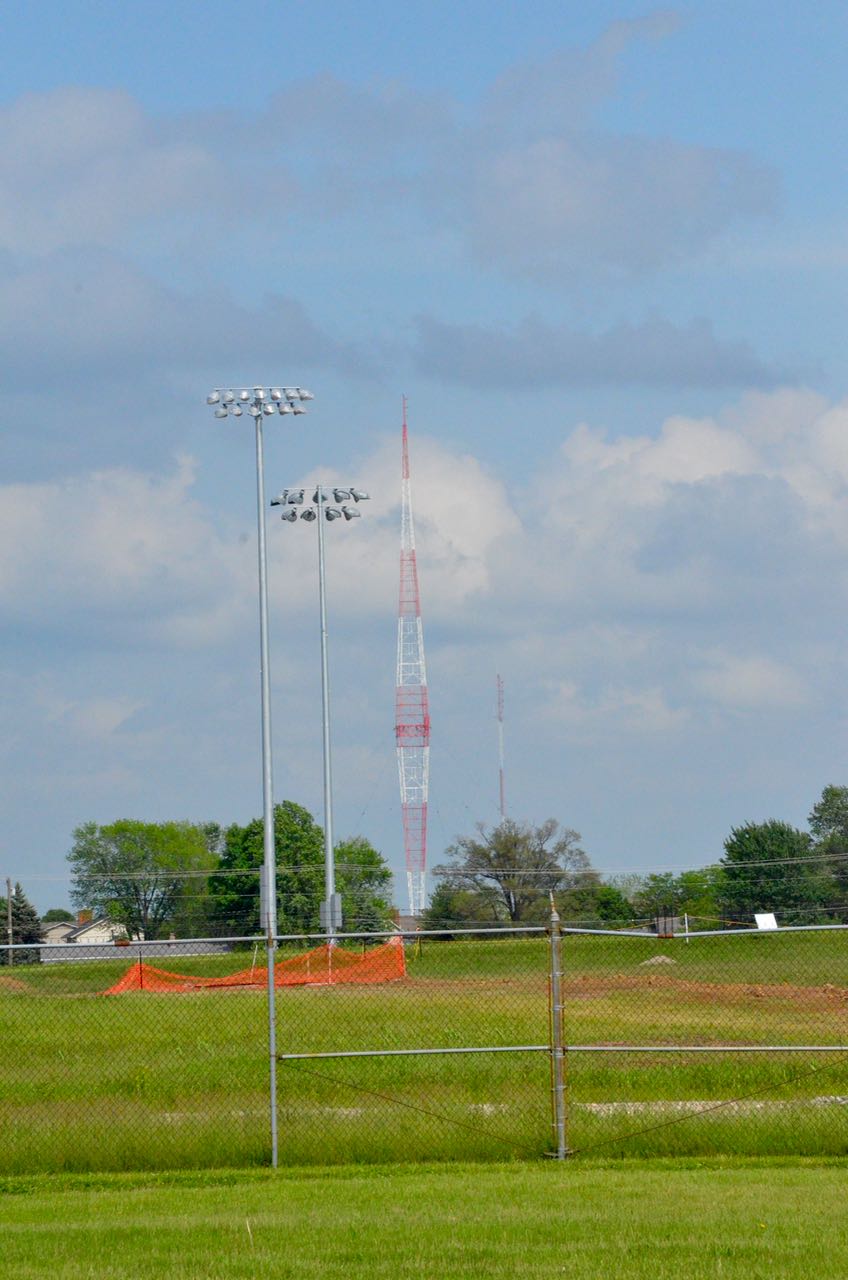
Behind the scenes pictures from the efforts of Powel Crosley, Jr. creating the famous WLW Radio Station, including the largest USA AM broadcast transmitter at 500,000 watts.
Radio Waves: Stories Making Waves in the World of Radio
Because I keep my ear to the waves, as well as receive many tips from others who do the same, I find myself privy to radio-related stories that might interest SWLing Post readers. To that end: Welcome to the SWLing Post’sRadio Waves, a collection of links to interesting stories making waves in the world of radio. Enjoy!
Many thanks to SWLing Post contributors Trevor, Dennis Dura, and Markku Koskinen for the following tips:
Its broadcasting territory is restricted and unlikely to grow significantly, and for good reason. Since 1982, Radio Atlantique has been broadcasting in the heart of the French overseas territory of Saint-Pierre-et-Miquelon, a 252 square kilometers, self-governing Atlantic clump of islands just off the south coast of the Canadian province of Newfoundland. The radio station has cultivated its uniqueness, becoming a key partner in the local life and cohesion of the 6,000 or so Miquelonnais. However, this state of mind has not prevented the project from going through difficult times and bringing uncertainties to its future.
Broadcasting in the territory of Saint-Pierre-et-Miquelon is an extraordinary adventure every day. For example, coverage of the entire archipelago was only concluded in 2010 with effective broadcasting in Miquelon, only 18 nautical miles away from the main island. This challenge for the station has only reinforced its unique place within the islands’ society. The population on the islands is highly mixed, and the vast majority of the inhabitants have French and Basque origins. [Continue reading…]
Within seconds, the Toronto pop singer’s silky voice wafts from the speakers of the ELS Studio audio system of my Acura MDX. Ten speakers in the cabin pump out trilling highs and chest-thumping bass, transforming my vehicle into a soothing audio studio on wheels. Bored, I flip over to SiriusXM for a little Hip-Hop Nation.
Modern car audio systems are so highly evolved, so seamless and so intuitive, it’s easy to forget that it wasn’t always this way. But it’s been 90 years since the first mass-produced car radio appeared, and the road to audio perfection has been a bumpy one indeed.
Michael Lamm remembers. At 84, the California-based auto historian’s car-ownership experience spans back to the early 1950s, when staticky car radios were powered by primitive vacuum tubes.
When he was growing up in Texas, he says he “didn’t really care that much about radio,” in part because programming was so limited. “I didn’t listen to the preachers who were constantly haranguing everybody.” [Continue reading…]
Radio Waves: Stories Making Waves in the World of Radio
Because I keep my ear to the waves, as well as receive many tips from others who do the same, I find myself privy to radio-related stories that might interest SWLing Post readers. To that end: Welcome to the SWLing Post’sRadio Waves, a collection of links to interesting stories making waves in the world of radio. Enjoy!
Many thanks to SWLing Post contributors Paul, Dennis Dura, Dan Van Hoy, Alokesh Gupta, and the Southgate ARC for the following tips:
A barbed wire telephone call didn’t sound great but could quickly warn others about something such as a wildfire.
Historian J. Evetts Haley wrote that, in its time, the old XIT Ranch up in the Texas Panhandle was “probably the largest fenced range in the world.” He recalled that its barbed wire enclosed over 3 million acres of land. At the north end alone, the fence ran for 162 miles. The unique enclosure helped keep in enormous cattle herds, keep out rustlers, and also gave rise to the creative use of a new technology: the telephone.
I’ll come back to the XIT in a moment, but first, consider these smattering of reports from that era. In 1897, The Electrical Review, reported that “on a ranch in California, telephone communication had been established between the various camps . . . by means of barbed wire fences.” The article says the novel use of the phone was a great success and was being used in Texas as well. That same year, the New England Journal of Agriculture was impressed that two Kansas farmers, living a mile apart, had attached fine telephone instruments to the barbed wire fence that connects their places and established easy communication. From the Butte Intermountain in 1902 we see this notice: “Fort Benton’s latest development is a barbed wire telephone communication.” The article points out that people of the range were not all that happy with barbed wire, which they thought was an “evil” that had arrived with the railroad, but they had decided to look at the practical side of its existence and use it to create a telephone exchange that would connect all the ranches to Fort Benton. [Continue reading…]
Schwab Multimedia has lost an appeal to the Federal Communications Commission in a case involving a planned AM station near Los Angeles for which it had a construction permit.
This is a “tolling” case, one that involves the FCC construction clock. The history is complex — the FCC’s summary is 2,500 words long, not counting many extended footnotes — but the upshot is that KWIF in Culver City was never built and, barring further developments, apparently will not be. Its call sign has now been deleted.
Levine/Schwab Partnership, which does business as Schwab Multimedia, had applied in 2004 to build a new AM station in the Los Angeles area. It eventually secured a CP in 2016 for the station at 1500 kHz. [Continue reading at Radio World…]
Dick Smith, VK2DIK has lived an adventurous and extraordinary life. He is a proud Australian, businessman, adventurer, entrepreneur and he single handedly changed electronics and CB/Amateur Radio in Australia.
Dick has recently released his autobiography titled, Dick Smith: My Adventurous Life and tonight we’re privileged to sit down live with Dick, speaking to him about his adventures, including the first solo helicopter flight around the world, his business ventures and being a pioneer for Amateur and CB radio.
Experimental Station will Recreate 1906 Fessenden Transmissions
Experimental station WI2XLQ will be on the air on 486 kHz AM for the Reginald Fessenden commemorative transmission. Brian Justin, WA1ZMS, is the licensee. He will transmit for 24 hours starting at 2000 UTC on December 24, with a repeat transmission starting at 2000 UTC on December 31. Justin will use a homebrew 1921-era MOPA exciter with Heising modulation, followed by a modern 500-W linear. The transmission will be the same as in past years — two violin pieces that Fessenden claims to have played as one of the very first voice transmissions from his Brant Rock, Massachusetts, radio lab site. “While doubt remains that such a transmission ever took place, Fessenden did perform some crude voice transmissions over a few miles distance in early December near Washington, DC, as a demonstration for the US Navy,” Justin said. “So, perhaps some credit is due Fessenden for his efforts to transmit the human voice in an era of spark transmissions.”
Many thanks to SWLing Post contributors, Doug and Kris, who both share a link to BBC Newshour which was broadcast yesterday (Dec 12, 2021).
The final segment of the show focuses on the birth of international shortwave radio and the first Transatlantic tests. You can listen to this report over the next month via the BBC Sounds website. This is the final piece in Newshour and starts at the 45:05 mark. Very much worth your time!
Radio Waves: Stories Making Waves in the World of Radio
Because I keep my ear to the waves, as well as receive many tips from others who do the same, I find myself privy to radio-related stories that might interest SWLing Post readers. To that end: Welcome to the SWLing Post’sRadio Waves, a collection of links to interesting stories making waves in the world of radio. Enjoy!
There was a global eruption on the sun today. It started with a powerful X1-class solar flare from sunspot AR2887.
The blast created a massive tsunami of plasma in the sun’s atmosphere, which rippled across the entire solar disk. A CME is probably heading for Earth, raising the possibility of a geomagnetic storm on Halloween. More information and updates @ Spaceweather.com.
Solar Flare Alerts: Sign up for Space Weather Alerts and get instant text notifications when solar flares are underway.
In this video Mike Ritz W7VO looks at the history of amateur radio call signs in the United States
Every legal amateur radio operator in the world has a unique callsign assigned to them by their government, and many of us are better known by our callsign than our given name. But what world event was it that caused these monikers to be? Why are they constructed the way they are? Continue reading →