Tag Archives: Radio Waves

Radio Waves: Radio Six on Shortwave Again, ATN Refrains from Politics, NPR Ratings Drop in C-19, and Grand Central’s Role in Standard Time

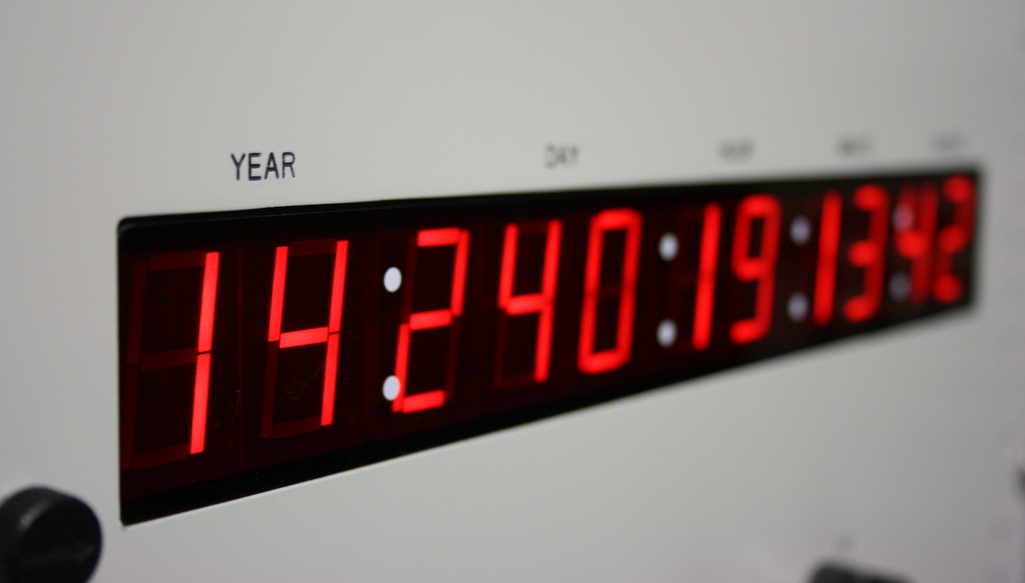
A WWV Time Code Generator

Radio Waves:  Stories Making Waves in the World of Radio

Because I keep my ear to the waves, as well as receive many tips from others who do the same, I find myself privy to radio-related stories that might interest SWLing Post readers.  To that end: Welcome to the SWLing Post’s Radio Waves, a collection of links to interesting stories making waves in the world of radio. Enjoy!

Many thanks to SWLing Post contributors Michael Bird,  John Figliozzi, and Jack Dully for the following tips:


Radio Six Pops Up Again on Shortwave (Radio World)

Radio Six International has not been a full-time shortwave broadcaster for some time. But after two recent live broadcasts on 6070 kHz prompted by the pandemic, it says it will continue monthly broadcasts at least for now.

Radio World visited electronically with Tony Currie.[]

WLW’s America’s Truckin’ Network To Refrain From Political Talk (Radio Insight)

iHeartMedia News/Talk 700 WLW Cincinnati has eliminated political talk from its overnight “America’s Truckin’ Network” show hosted by Steve Sommers.

The Cincinnati Enquirer reports that Sommers told listeners of the change on Monday morning’s show after multiple unspecified complaints.

In the on-air statement, Sommers blamed the change on a group of individuals who took offense with comments made by a caller a few weeks ago.[]

NPR Radio Ratings Collapse As Pandemic Ends Listeners’ Commutes (NPR)

Broadcast ratings for nearly all of NPR’s radio shows took a steep dive in major markets this spring, as the coronavirus pandemic kept many Americans from commuting to work and school. The network’s shows lost roughly a quarter of their audience between the second quarter of 2019 and the same months in 2020.

People who listened to NPR shows on the radio at home before the pandemic by and large still do. But many of those who listened on their commute have not rejoined from home. And that threatens to alter the terrain for NPR for years to come, said Lori Kaplan, the network’s senior director of audience insights.

“We anticipated these changes,” Kaplan said. “This kind of change was going to take place over the next decade. But the pandemic has shown us what our future is now.”

Commercial radio is experiencing, if anything, worse declines. But audience research commissioned by Kaplan indicates that NPR’s audience is disproportionately made up of professionals who are able to work from home and who are interested in doing so even after the pandemic subsides.[]

The Day That New York Had Two Noons, a Century After Losing 11 Days (Untapped New York)

New York’s history has included everything from transit strikes to riots over Shakespeare to immigration from nearly every country in the world. Yet, for much of this history, people didn’t always know the “correct” time or date. Until 1883, virtually every place in the country set local time according to the sun. According to Sam Roberts in his book Grand Central: How a Train Station Transformed America, “Typically, noon would be regularly signaled so people could synchronize their clocks and watches.” From dropping a ball down a flagpole in Manhattan to ringing a gong, settlements all across the country would alert people of noon. But as railroads spread throughout the country, it was nearly impossible to standardize the time.

“A passenger traveling from Portland, Maine, to Buffalo could arrive in Buffalo at 12:15 according to his own watch set by Portland time,” Roberts writes. “He might be met by a friend at the station whose watch indicated 11:40 Buffalo time. The Central clock said noon. The Lake Shore clock said it was only 11:25. At Pennsylvania Station in Jersey City, New Jersey, one clock displayed Philadelphia time and another New York time. When it was 12:12 in New York, it was 12:24 in Boston, 12:07 in Philadelphia, and 11:17 in Chicago.”[]


Do you enjoy the SWLing Post?

Please consider supporting us via Patreon or our Coffee Fund!

Your support makes articles like this one possible. Thank you!

Radio Waves: DXE Virtual Hamfest, USAGM Shake-Up, Ham Radio Breaking the C-19 Doldrums, and FCC Fines FM Pirates

Radio Waves:  Stories Making Waves in the World of Radio

Because I keep my ear to the waves, as well as receive many tips from others who do the same, I find myself privy to radio-related stories that might interest SWLing Post readers.  To that end: Welcome to the SWLing Post’s Radio Waves, a collection of links to interesting stories making waves in the world of radio. Enjoy!

Many thanks to SWLing Post contributors Bill, Paul, Mike Terry and the Southgate ARC  for the following tips:


DXE Virtual Hamfest and DX Academy on July 25 (DX Engineering)

Join the Elmers at DX Engineering and a host of Ham Radio luminaries on Saturday, July 25, 2020, for the first DXE Virtual Hamfest and DX Academy—two online events combined into a full day of fun, learning, and drawings for DX Engineering gift cards (must be registered and present on Zoom during the drawings to qualify).

Both events are free and open to all—click here to register. Once signed up, you will receive a link to access the events in real-time on the Zoom webinar platform, or you can watch live on the DX Engineering YouTube channel.[]

US global media agency seeks to kick out international journalists (Southgate ARC)

CNN Business reports: Efforts to clean house at the US Agency for Global Media continued this week as leadership indicated that international journalists who work for Voice of America (VOA) will not have their visas extended and a widely respected top editor at Radio Free Asia was fired, explained three sources familiar with the decisions.

Under the new leadership of Michael Pack, who took the job as USAGM’s CEO last month, the organization which oversees US-funded broadcasters VOA and RFA among others has been thrust into a wide-ranging shakeup which appears to be politically motivated.

With indications that Pack is not going to allow visas to be extended for international VOA journalists in the US, there are dozens of journalists who could face retaliation if they are forced to return to their home countries.

Read the full CNN news story
https://edition.cnn.com/2020/07/10/media/usagm-voice-of-america-visas/index.html

In Colorado Springs and beyond, ‘magic’ of ham radio breaks doldrums of COVID-19 (The Gazette)

On the windswept prairie east of Colorado Springs, in a ramshackle trailer plastered with maps and codes associated with every sector of the world, strange sounds are coming from a radio.

Static mixes with R2-D2-like beeps and bops. Don DuBon has a microphone in one hand while the other twirls a dial, searching.

“Alpha, foxtrot, zero, sierra,” he says, speaking into the void. “Alpha, foxtrot, zero, sierra…”

That’s the call sign for the Pikes Peak Radio Amateur Association, the group of enthusiasts who make this trailer their base.

Hams, as they’re also called, take special pride in their contact with each other across the globe. They keep log sheets. One here by DuBon shows contact made with a Chuck (call sign KI6HK) in California; a Jake (K4BOM) in England; a Brooks (K2CNN) in Alabama; and others in Uruguay, Brazil and New York.

DuBon, N6JRL, is looking for others.

“Spain,” he says, recognizing the call sign heard through the clutter. “That’s a station in Spain. … He’s got a bunch of people calling him.”

“It’s called a pile-up,” says Jim Bishop, KD0KQL, fellow club member and retiree. The two are now gray but engaged in something that makes them feel young, still boys with their radios.

The Pikes Peak Radio Amateur Association (PPRAA), counting a little more than 100 members mostly from generations past, is among an underground but bustling faction of American culture. Active call signs given by the Federal Communications Commission represent 0.25% of the U.S. population. In El Paso County, the ranks number about 3,500.[]

FCC Continues to Prosecute Pirate Radio Operators – Two Settlements with Identified Violators (Lexology.com)

Pirate radio operators continue to be a problem – particularly in major metropolitan areas. The week before last, the FCC resolved two long-pending cases against pirate operators through negotiated settlements. In one case, the FCC last year initially proposed a fine of $151,005 for the illegal operation. After examining the operator’s finances, the Bureau agreed to a $4,000 fine now, with a penalty of $75,000 should the operator violate the law again (see this decision against an operator called Radio Concorde). In the second case, the FCC had proposed a $453,015 fine last year, but agreed to take $5,000 now, with penalty of $225,000 if the operator violates the terms of the consent decree (see the decision dealing with operator Radio TeleBoston). Last year, we wrote here about the much larger fines initially proposed for these two operators.

In both cases, the FCC seemingly recognized reality in taking the small upfront payments now rather than trying to collect huge fines that likely were beyond the ability of the operators to pay. The FCC also required the surrender of the operator’s equipment and a commitment to stay away from pirate radio for 20 years or face much larger fines. The big fines initially imposed in these cases were set even before Congress enacted the PIRATE Act early this year. The new law allows for fines on illegal operators of $100,000 per day, up to a maximum total fine of $2,000,000. Even without the full effect of the PIRATE Act, these cases show the deterrent effect of these large fines.[]


Do you enjoy the SWLing Post?

Please consider supporting us via Patreon or our Coffee Fund!

Your support makes articles like this one possible. Thank you!
Radio Waves: Maritime Mobile Net Assists, Voice of Ambiguity, Promising Solar Cycle 25 Prediction, and the Future of Ham Radio

Radio Waves:  Stories Making Waves in the World of Radio

Because I keep my ear to the waves, as well as receive many tips from others who do the same, I find myself privy to radio-related stories that might interest SWLing Post readers.  To that end: Welcome to the SWLing Post’s Radio Waves, a collection of links to interesting stories making waves in the world of radio. Enjoy!

Many thanks to SWLing Post contributors Rich Smith, Kim Elliott, and Pete Eaton for the following tips:


Maritime Mobile Service Network Comes to the Aid of Vessel in Distress (ARRL News)

The Maritime Mobile Service Net (MMSN) on 14.300 MHz came to the assistance of a sailing vessel on June 25. MMSN control operator Steven Carpenter, K9UA, took a call on 20 meters from Ian Cummings, KB4SG, the skipper of the Mystic Lady, then some 40 miles east of Florida. Cummings reported that his engine had failed as he was attempting to return to his home port of Stuart, Florida. He not only had insufficient wind, but a strong current was carrying the vessel out to sea.

Cummings had been unable to reach any station via his VHF marine radio, since he was too far from the coast. Assisting in the call was Robert Wynhoff, K5HUT, also an MMSN net control operator. Cummings said his vessel, with one passenger on board, was drifting northwest toward the South Carolina coast.

“A major concern was that the vessel was heading directly towards a lee shore,” the MMSN reported. “Lee shores are shallow, dangerous areas which are a hazard to watercraft. Vessels could be pushed into the shallow area by the wind, possibly running aground and breaking up.”

Carpenter contacted Cummings’ family, who had already called the Sea Tow marine towing service. Sea Tow advised Carpenter to tell the captain to head closer to shore by sailing west, if possible. Carpenter told Cummings that if he was unable to get nearer to shore, he would notify the US Coast Guard, which was already monitoring the situation.

As the MMSN reported, “The Mystic Lady was able to make some headway, but it was very slow. Members of the MMSN made additional calls via landline to the captain’s family as to the ongoing status of those on board. The family was concerned but relieved that communication was established and that all were well.”

Several hours later, the captain advised that the wind had picked up, allowing him to head close enough to shore for Sea Tow to reach the vessel and take it back to port.

The Pacific Seafarers’ Net, which monitors 14.300 MHz from the West Coast after the MMSN secures at 0200 UTC, kept in touch with the Mystic Lady into the night while it was under tow.

The tired, grateful captain later messaged the net, “A million thanks to everyone last night who helped rescue us on 14.300. Everyone chipped in as we drifted north in the Gulf Stream 60 miles headed to a lee shore. The MMSN net control and several others stayed with us for hours, phoned people, and were immensely helpful. The situation on board was dangerous. We are now safely under tow home. You folks are amazing!”

In operation since 1968, the MMSN monitors 14.300 MHz 70 hours a week to assist vessels and others in need of assistance. — Thanks to MMSN Net Manager Jeff Savasta, KB4JKL[]

VOA: Voice of ambiguity (The Hill)

From 1985 to 2017, I was an audience research analyst at the Voice of America. During that time I was preoccupied by the fact that the BBC World Service had a larger audience than VOA. VOA had a larger budget, so money was not the issue.

In audience surveys, I inserted a question asking those who listened to BBC more often than VOA: “why?” The answer provided most often was trustworthiness of the news.

I asked a listener from Burma (now known as Myanmar) why he thought BBC is considered more trustworthy than VOA. He replied that VOA is more closely connected to the U.S. government than BBC is to the U.K. government. I asked how he knows this. He responded that it’s because VOA says so every day.

He was referring to the “disclaimer” at the beginning of the editorials that, by the 1980s, were heard daily on VOA’s English broadcasts: “Next, an editorial reflecting the views of the United States government.”

The daily editorial was a requirement handed down by VOA’s parent U.S. Information Agency. The editorials are drafted by the VOA’s policy staff, sent to the State Department for approval and finally broadcast after a sometimes lengthy back and forth.

Michael Pack, the new CEO of the U.S. Agency for Global Media, VOA’s present parent agency, is restoring the editorials to their previous prominence on VOA. In recent years, with diminished radio output, editorials were relegated to VOA’s little-viewed satellite television service and to a website separate from the main voanews.com. The revival of the editorials is a step in the repoliticization of VOA.[]

Newer Solar Cycle 25 Forecast Runs Counter to Consensus (ARRL Newsletter)

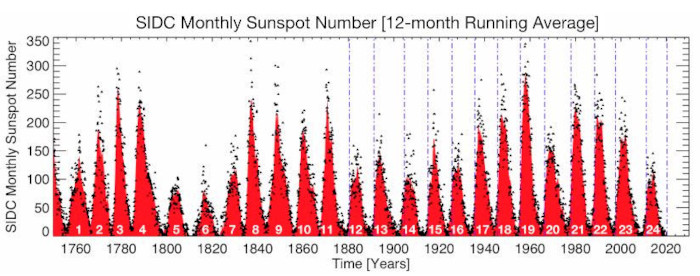
Scientists associated with the National Center for Atmospheric Research, the University of Maryland, NASA Goddard Space Flight Center, and other institutions are offering a “bold prediction” on how Solar Cycle 25 will play out. In a paper, “Overlapping Magnetic Activity Cycles and the Sunspot Number: Forecasting Sunspot Cycle 25 Amplitude,” they assert that the next sunspot cycle will be of major proportions. The forecast stands in stark contrast to the consensus of forecasters who predict that the magnitude of the nascent Cycle 25 may not be much different from the current unremarkable solar cycle, which appears to have reach its low point.

“From the dawn of modern observational astronomy, sunspots have presented a challenge to understanding — their quasi-periodic variation in number, first noted 160 years ago, stimulates community-wide interest to this day,” the abstract points out. “A large number of techniques are able to explain the temporal landmarks, (geometric) shape, and amplitude of sunspot ‘cycles,’ however, forecasting these features accurately in advance remains elusive.”

Monthly sunspot numbers since 1749. The data values are represented by dots, and the 12-month running average values are illustrated as a red shaded area. Vertical blue dashed lines signify the magnetic activity cycle termination times that trigger the rapid growth of sunspot activity.

The paper notes that recent studies have illustrated a relationship between the sun’s 22-year Hale magnetic cycle and the production of sunspot cycle landmarks and patterns, but not the amplitude of the cycle.

“Using discrete Hilbert transforms on 270 years of monthly sunspot numbers to robustly identify the so-called ‘termination’ events — landmarks marking the start and end of sunspot and magnetic activity cycles — we extract a relationship between the temporal spacing of terminators and the magnitude of sunspot cycles,” the abstract explains. “Given this relationship and our prediction of a terminator event in 2020, we deduce that Sunspot Cycle 25 will have a magnitude that rivals the top few since records began. This outcome would be in stark contrast to the community consensus estimate of Sunspot Cycle 25 magnitude.”[]

The Uncertain Future of Ham Radio (IEEE Spectrum)

Software-defined radio and cheap hardware are shaking up a hobby long associated with engineering

Will the amateur airwaves fall silent? Since the dawn of radio, amateur operators—hams—have transmitted on tenaciously guarded slices of spectrum. Electronic engineering has benefited tremendously from their activity, from the level of the individual engineer to the entire field. But the rise of the Internet in the 1990s, with its ability to easily connect billions of people, captured the attention of many potential hams. Now, with time taking its toll on the ranks of operators, new technologies offer opportunities to revitalize amateur radio, even if in a form that previous generations might not recognize.

The number of U.S. amateur licenses has held at an anemic 1 percent annual growth for the past few years, with about 7,000 new licensees added every year for a total of 755,430 in 2018. The U.S. Federal Communications Commission doesn’t track demographic data of operators, but anecdotally, white men in their 60s and 70s make up much of the population. As these baby boomers age out, the fear is that there are too few young people to sustain the hobby.

“It’s the $60,000 question: How do we get the kids involved?” says Howard Michel, former CEO of the American Radio Relay League (ARRL). (Since speaking with IEEE Spectrum, Michel has left the ARRL. A permanent replacement has not yet been appointed.)

This question of how to attract younger operators also reveals deep divides in the ham community about the future of amateur radio. Like any large population, ham enthusiasts are no monolith; their opinions and outlooks on the decades to come vary widely. And emerging digital technologies are exacerbating these divides: Some hams see them as the future of amateur radio, while others grouse that they are eviscerating some of the best things about it.[]


Do you enjoy the SWLing Post?

Please consider supporting us via Patreon or our Coffee Fund!

Your support makes articles like this one possible. Thank you!
Radio Waves: Sealand’s Caretakers, BitCoin & Ham Radio, CW Training, and 50 Years Ago Casey Kasem Started AT 40

Radio Waves:  Stories Making Waves in the World of Radio

Because I keep my ear to the waves, as well as receive many tips from others who do the same, I find myself privy to radio-related stories that might interest SWLing Post readers.  To that end: Welcome to the SWLing Post’s Radio Waves, a collection of links to interesting stories making waves in the world of radio. Enjoy!

Many thanks to SWLing Post contributors Tony, Mike Terry,  and the Southgate ARC for the following tips:


Sealand’s caretakers (Boing Boing)

Sealand is an unrecognized micronation off the coast of England, established in the 1960s and issuer of stamps, passports and occasional offshore business shenanigans (“BECOME A LORD“). But Sealand is also a rotting sea fortress in need of constant maintenance. Atlas Obscura met the two caretakers who spend two weeks at a time doing what they can to keep the statelet running smoothly. Dylan Taylor-Lehman’s feature article is a great introduction to the place, if you’re not familiar with it or its wild history.[]

How Bitcoin Is Like Ham Radio (Coindesk.com)

Understanding bitcoin is difficult. And so we cast around for the perfect metaphor. Bitcoin is email. Digital gold. eCash.

Here’s a new one. Bitcoin is ham radio.

Bitcoin is old-fangled. It takes days to download the Bitcoin blockchain, just like it took forever to download software back in 1994. In an age of instant email and real-time Zelle payments, a bitcoin transfer takes 60 minutes to safely settle. It’s more volatile than gold, a relic of our previous monetary system. Thousands of computers are constantly replicating each others’ work, making it vastly inefficient. And lastly, there’s no privacy. Like a medieval marketplace, everyone can see everybody’s holdings.

All of these features are anachronistic. But they do sum up to something unique. What exactly is that thing?

A ham radio allows its operator, otherwise known as an amateur radio operator, to use certain bands in the radio spectrum to communicate by voice or code. This is an old technology. Italian inventor Guglielmo Marconi became the first ham radio operator in 1897 when he transmitted Morse code across Salisbury Plain in England.

It seems odd that something as archaic as ham radio continues to exist in a world with email, Snapchat, iPhone and Facebook. A ham transmission can only be used over a couple of kilometers. No emojis. No video. No gifs. Forget about privacy! Anyone can listen into your radio conversation.

Yet, ham radio is a very active niche. Associations all over the world keep the hobby going. According to the American Radio Relay League, there are some 764,000 ham radio operators in the U.S. Japan has more than a million. The International Amateur Radio Union pegs the global number of amateur radio licensees at 3 million.

Like ham radio, Bitcoin is for hobbyists. I’m not talking here about all of the frenetic speculators who keep their coins at Coinbase. I’m talking about users who can run a full node, use Lightning, securely store their own coins and make frequent transactions with the stuff. This pool of bitcoiners is tiny. It’s probably smaller than the number of active licensed ham radio operators.[]

CW Training Program (Southgate ARC)

In this video Howard WB2UZE and John K2NY of the Long Island CW Club talk to David W0DHG about their CW training program

The club started in 2017 offers over 45 hours of CW classes EACH week, and has grown to over 600 members from all 50 states and 15 countries all over the world.

HRN423 Long Island CW Club

50 Years Ago, Casey Kasem Began Counting Down The Hits On American Top 40 (NPR)

On July 4, 1970, the countdown started. Originally hosted by Casey Kasem, American Top 40 played “the best selling and most-played songs from the Atlantic to the Pacific, from Canada to Mexico,” as he stated on the first program broadcast 50 years ago as of tomorrow.

On any given week, American Top 40 could feature a ballad, next to a country song, next to a funk song, next to a rock song. The show became a national obsession but 50 years ago, it was considered a risky idea.

“You remember, at the end of the ’60s, Top 40 was not the most popular format,” Casey Kasem told NPR in 1982. “And here we were coming along with a show called American Top 40, and people said, ‘You must be nuts!’ “[]


Do you enjoy the SWLing Post?

Please consider supporting us via Patreon or our Coffee Fund!

Your support makes articles like this one possible. Thank you!
Radio Waves: Pack Thanks Interim Leaders, KE4ZXW Moves to Virginia Tech, WWV and WWVH Still Matter, and A New WebSDR in Iceland

Radio Waves:  Stories Making Waves in the World of Radio

Because I keep my ear to the waves, as well as receive many tips from others who do the same, I find myself privy to radio-related stories that might interest SWLing Post readers.  To that end: Welcome to the SWLing Post’s Radio Waves, a collection of links to interesting stories making waves in the world of radio. Enjoy!

Many thanks to SWLing Post contributors Tony, Dan Robinson, Michael Bird for the following tips:


USAGM CEO Michael Pack thanks interim heads of agency’s five broadcasting networks (USAGM)

Today, U.S. Agency for Global Media (USAGM) Chief Executive Officer Michael Pack thanked officials who will serve in an interim capacity as the heads of the agency’s two federal organizations and its three public service grantee broadcasting networks.

  • Elez Biberaj, who has led Voice of America (VOA)’s Eurasia Division since 2006, will serve as VOA’s Acting Director.
  • Jeffrey Scott Shapiro, previously Senior Advisor at Office of Cuba Broadcasting (OCB), will serve as OCB’s Acting Director and Principal Deputy Director.
  • Parameswaran Ponnudurai, who has been Vice President of Programming at Radio Free Asia (RFA) since 2014, will serve as RFA’s Acting President.
  • Kelley Sullivan, who has been a Vice President at Middle East Broadcasting Networks (MBN) since 2006, will serve as MBN’s Acting President.
  • Daisy Sindelar, who has been with RadioFreeEurope/RadioLiberty (RFE/RL) for nearly two decades, will serve as RFE/RL’s Acting President.

CEO Pack sent, in part, the following message to staff:

“The experience of these talented men and women, their knowledge of the networks, and their commitment to the standards of journalism will allow us to launch into the next exciting chapter of our agency. Dr. Biberaj, Mr. Shapiro, Mr. Ponnudurai, Ms. Sullivan, and Ms. Sindelar will serve critical roles in allowing our networks to become higher performing and to more effectively serve our audiences. For their willingness to step up and help lead this effort, I am deeply appreciative. I am excited to serve alongside them as well as with all of you.”

Virginia Air & Space Center Ends Relationship with Ham Radio (ARRL News)

Virginia Air & Space Center (VASC) Executive Director and CEO Robert Griesmer has advised that the Center’s amateur radio station exhibit will be discontinued, effective July 1, when the Center, in Hampton, Virginia, reopens. VASC is the official visitor center for NASA’s Langley, Virginia, facility. The KE4ZXW display station was shut down on March 13. It was to be out of the VASC by June 30. A main feature of the exhibit was the ability to communicate with amateur radio satellites and with the International Space Station.

Randy Grigg, WB4KZI, of the VASC Amateur Radio Group said the station’s equipment would be relocated. “Thanks to all who have supported KE4ZXW during the last 25 years, especially the volunteer operators who manned the station during that time,” Grigg said. “To the many visitors we have met and school groups that have stopped by and talked with us about ham radio, communications, satellites, and STEM Program related subjects, thank you!”

On June 30, it was announced that the Virginia Tech Amateur Radio Association (K4KDJ) in Blacksburg will be the new host for the KE4ZXW Amateur Radio Demonstration. — Thanks to Randy Grigg, WB4KZI, and Ed Gibbs, KW4GF[]

Why WWV and WWVH Still Matter (Radio World)

Last year was one of both celebration and uncertainty for WWV, the station adjacent to Fort Collins, Colo., that transmits automated time broadcasts on the shortwave bands.

On the plus side, it marked the 100th year of WWV’s call letters, making the site, operated by the National Institute of Standards and Technology, one of the world’s oldest continually operating radio stations.

On the negative side, WWV and its sister time station WWVH in Hawaii nearly missed this centennial. That’s because NIST’s original 2019 budget called for shutting down the pair, along with WWVB, the longwave code station co-located next to WWV, as a cost-saving move.

Fortunately, these cuts never happened, and WWV, WWVH and WWVB seem likely to keep broadcasting the most accurate time from NIST’s atomic clocks, at least for the immediate future. (No further cuts have been threatened.)[]

Another Shortwave WebSDR operational in Iceland (Southgate ARC)

On June 27, a new KiwiSDR web software defined radio became operational in Iceland

A translation of the IRA post reads:

The new receiver is located in Bláfjöll at an altitude of 690 meters. It has for the first time used, a horizontal dipole for 80 and 40 meters.

The KiwiSDR receiver operates from 10 kHz up to 30 MHz. You can listen to AM, FM, SSB and CW transmissions and select a bandwidth suitable for each formulation. Up to eight users can be logged into the recipient at the same time.

Ari Þórólfur Jóhannesson TF1A was responsible for the installation of the device today, which is owned by Georg Kulp, TF3GZ.
Bláfjöll: http://blafjoll.utvarp.com/

The other two receivers that are active are located at Bjargtångar in Vesturbyggð, Iceland’s westernmost plains and the outermost point of Látrabjarg and at Raufarhöfn. Listen at:
Bjargtångar: http://bjarg.utvarp.com/
Raufarhöfn: http://raufarhofn.utvarp.com/

The IRA Board thanks Ara and Georg for their valuable contributions. This is an important addition for radio amateurs who are experimenting in these frequency bands, as well as listeners and anyone interested in the spread of radio waves.

Source IRA https://tinyurl.com/IcelandIRA

KiwiSDR Network
http://kiwisdr.com/public/


Do you enjoy the SWLing Post?

Please consider supporting us via Patreon or our Coffee Fund!

Your support makes articles like this one possible. Thank you!
Radio Waves: Tallest Structure in Italy, Suggestion to Save AM, Online Radio Exams in Australia, and a Letter From Friends of ABC

Radio Waves:  Stories Making Waves in the World of Radio

Because I keep my ear to the waves, as well as receive many tips from others who do the same, I find myself privy to radio-related stories that might interest SWLing Post readers.  To that end: Welcome to the SWLing Post’s Radio Waves, a collection of links to interesting stories making waves in the world of radio. Enjoy!

Many thanks to SWLing Post contributors Paul Evans, Mike Terry, and Michael Bird for the following tips:


The tallest structure in Italy is a remote radio transmitter in Sicily. (Atlas Obscura)

WHEN TALKING ABOUT THE TALLEST structures in the world, one often thinks of skyscrapers above modern cities, but radio transmitters in remote locations also reach dizzying heights.

Italy is famous for its many architectural marvels built over the millennia, but its tallest building (a sleek, modern structure in Milan) is only 758 feet tall. The title of the tallest overall structure goes to a radio transmitter on the Sant’Anna hill near the town of Caltanissetta, in Sicily. (In between the two are a number of transmitters and power plant chimneys.) This antenna has a height of 938 feet, and was built by the national public broadcasting company, RAI, between 1949 and 1951. At the time it was also the tallest structure in all of Europe, until 1965 when a transmitting station in the United Kingdom was inaugurated.[]

Here’s a suggestion for how to save AM radio (Los Angeles Daily News)

Last week, I wrote a little about streaming audio and how, with the use of smart speakers, smartphones, and plain old computer streaming, the possibility of internet radio essentially replacing traditional broadcast radio.

This week I want to travel to both the past and one of broadcast radio’s possible futures, spurred on by the ideas presented last week, my absolutely illogical love of AM radio, and a letter to the editor that I read online at radioworld.com.

AM radio broadcasting is almost a century old in the United States – numerous stations in Los Angeles, including KHJ (930 AM), KFI (640 AM) and KNX (1070 AM) will celebrate 100 years of broadcasting in two years. That’s an impressive feat, especially considering the technology is essentially the same as it was in 1922.

As I mentioned last week, digital HD Radio, considered for a time as the savior of both AM — due to higher fidelity — and FM — due to potential higher fidelity and extra stations — just hasn’t made the impact many had hoped. For various reasons, many AM stations have turned off the HD signal, even while FMs continue to use it, and consumers don’t seem all that interested in either. But as I said last week, with smart speakers, what’s the point? And a related question comes up: is broadcast AM radio just a dead technology?

Christopher Boone thinks he has the answers. No, AM is not dead. But if you really want to improve it, bring back a technology that already “failed” … AM stereo.[]

Online remote exam sessions in Australia (Southgate ARC)

VEA (Volunteer Examiners Australia) is pleased to advise we are currently able to perform online remote exam sessions for both AMC and ARRL VE Examinations.

VEA has AMC Level 3 examiners that can conduct remote online examinations.

Also, the ARRL VEC has entrusted us by extension the FCC, to be examiners for FCC-issued license via remote online examinations, a volunteer examiner, must ensure the exam conducted fairly and that there is the same level of integrity as there would be for an in-person examination.

Candidates need to be aware there are conditions and eligibility in registering to do an ARRL online remote examination, e.g. living in a remote location, or the candidate is physically impaired to attend an exam session.

VEA does run bi-monthly AMC and ARRL VE exam sessions during the year,
so if you are interested, visit our website www.vea.org.au complete the online registration form.

VEA currently have AMC and ARRL VE examiners in Queensland, New South Wales, Victoria, South Australia, and Western Australia.

VEA looks forward in supporting the ham radio community in providing this valuable service to both AMC and ARRL VEC.

73 from Peter VK3FN

Wireless Institute of Australia[]

An open letter to the Prime Minister from ABC Friends and supporters (ABC Friends)

Posted in Latest news from ABC Friends on 28 June 2020

ABC Friends have written an open letter to the Prime Minister in the wake of the recent staff and funding cuts.

Dear Mr Morrison,

I write on behalf of many angry Australians who want to know why your government continues to undermine Australian public broadcasting with ongoing funding cutbacks at the same time as the commercial media sector is favoured.

Your recent statement that “there have been no cuts to the ABC” sadly reminds us of Tony Abbott’s similar bold election promise in 2013, yet this was followed by major cutbacks in his first Budget as Prime Minister. Clearly in our current media environment there are facts and ‘alternative’ facts, it all depends on the presenter and the audience.

Many of us are more inclined to rely on information from your ABC Board Chair, Ita Buttrose, who said in her 2019 Forward to the Annual Report – “our task has been made harder by the imposition of the three year indexation freeze which comes on top of a $50 million a year cut now embedded in our base.”

We see the recently announced Five Year Plan as a brave attempt by the Managing Director, David Anderson, to live within your governments funding allocation, but obviously further staff cuts and downgrading of ABC services and programs is an inevitable outcome of reduced funding.

We all appreciate that governments rely on a degree of political spin to make their decisions seem more palatable, but do you seriously expect the community to believe that an ABC Managing Director would deliberately retrench so many staff and downgrade services and programmes if the ABC Budget was adequate?

We expected more of your leadership because you have a responsibility to act on our behalf, as ABC shareholders to enable the ABC to fulfil parliamentary approved obligations under its Charter. The Federal Government acts as caretaker of all our national institutions and in this regard the ABC ranks highly with the Parliament and the High Court in protecting the interests of all Australians.

Chair of the ABC Board, Ita Buttrose has consistently tried to work with you and your Communications Minister, Paul Fletcher, to get a realistic re-assessment of the ABC Budget to meet the demands of a changing media environment and national emergencies. Yet these genuine efforts by both Board and Management have been repeatedly ignored. Furthermore, there has been a quite calculated misrepresentation of budgetary analysis since 2014 assuming that official promotion of fake news will provide an effective distraction from the reality of past and current government decision making, which has resulted in an ongoing 10% budget reduction.

Over the past six years the ABC has been the target of funding cuts, various enquiries, political attack and even a police raid. You can not be surprised that Australians are outraged about the latest announcement this week which will culminate in further job losses, valued services and Australian content. You regularly advocate protection of jobs and your COVID-19 employment protection initiatives are admirable. Yet successive Coalition administrations have caused the loss of 1250 ABC professional staff.

Can you explain to us why you are so determined to downgrade the ABC, which is a valued national treasure supported by over 80% of Australians? We understand that you are regularly lobbied by the Murdoch American News Empire and other commercial media interests, which are ideologically opposed to public broadcasting. Furthermore, we know that some members of your cabinet are members of the Institute of Public Affairs, which advocates privatisation of the ABC. However, ABC Friends would respectfully remind you that, as Prime Minister, your first loyalty is to the Australian people and our public institutions.

As a national organisation we have been overwhelmed by expressions of public concern about the way the ABC is being treated. So many comments express ongoing frustration that many of our elected representatives seem incapable of recognising the ABC as an essential public service on which Australians depend. We have received hundreds of letters and comments which we will be collating for public release, but here is just one example to offer you some insight into how Australians feel about the continued assault on the ABC.

“I am shocked, then saddened, then disgusted, then outraged by the governments attack on the ABC. The Federal Government should be creating jobs instead of destroying high quality ‘clever country’ jobs. Prime Minister Morrison led a government that was unique in bringing together differing interests across Australia to benefit the nation and lead us out of disaster. But now? The attack on the ABC is a fundamental attack by the Morrison Government on its claim to govern in the national interest.”

We urge you to reconsider your government’s responsibilities to the ABC by conducting immediate meaningful negotiations with the Ms Buttrose and Mr Anderson to plan a way forward to restore ABC funding. This discussion should include a commitment in the October Budget to recognise ABC staff and services as essential in post COVID-19 planning .

We look forward to a fresh approach to public broadcasting policy and can assure you such commitment will be very much welcomed by the Australian public.

Yours sincerely,

Margaret Reynolds
National President
ABC Friends

P.O.Box 3620
Manuka ACT 2603[]


Do you enjoy the SWLing Post?

Please consider supporting us via Patreon or our Coffee Fund!

Your support makes articles like this one possible. Thank you!
Radio Waves: Deep ABC Cuts, Ham Radio Saves a Life, SDR Academy Updates, and a new free e-magazine from RASA

Radio Waves:  Stories Making Waves in the World of Radio

Because I keep my ear to the waves, as well as receive many tips from others who do the same, I find myself privy to radio-related stories that might interest SWLing Post readers.  To that end: Welcome to the SWLing Post’s Radio Waves, a collection of links to interesting stories making waves in the world of radio. Enjoy!

Many thanks to SWLing Post contributors Michael Bird, Alexander von Obert, and the Southgate ARC for the following tips:


Up to 250 ABC jobs to go, ABC Life brand scrapped, flagship radio news bulletin dumped to tackle $84 million budget cut (ABC News)

The ABC will axe up to 250 jobs and cut programming as it deals with budget cuts of $84 million.

Managing director David Anderson said a flagship radio news bulletin would go, the ABC Life lifestyle portal would be rebranded, and programs would be reviewed as part of a major overhaul of the national broadcaster.

There will also be cuts to travel and to spending on television productions, as the organisation moves to become more relevant to more Australians and better reflect community diversity, he said.

Mr Anderson said the redundancies and savings would affect every division across the ABC.

“We anticipate we may farewell as many as 250 colleagues through this process,” he told staff in a briefing.

The News division is set to lose about 70 staff, the Entertainment and Specialist division 53 staff and the Regional and Local division 19.

Mr Anderson said there would be changes to executive staffing, but did not offer any details.

And he said the organisation would aim to have 75 per cent of its content-makers based outside its Sydney headquarters by 2025.

The ABC had already flagged that it would shed about 250 jobs due to a three-year funding indexation pause announced by the Federal Government in 2018.

Mr Anderson said the flagship 7:45am radio news bulletins would end, and be replaced by a five-minute bulletin at 8:00am. A 10-minute bulletin at 7:00am will remain.

The changes include:

  • ABC Life will become ABC Local and have a “broader editorial direction”
  • The travel budget will be cut by 25 per cent
  • Spending on external and independent television productions will be cut by $5 million a year
  • The ABC Comedy television channel will be rebranded to cater for a broader array of programs and content
  • Leasing of space at the ABC’s Sydney headquarters will be explored
  • TV and radio broadcast channels will remain, but transmission cuts have been flagged for future years[]

Ham Radio Saving A Life Locally! (Western Massachusetts ARRL)

On Tuesday, June 15, Alden Sumner Jones IV, KC1JWR, was hiking on the southern part of the Appalachian trail in Vermont (it’s also been reported as being on the Long Trail) with his cousins at around 12:30 PM. Alden started feeling light headed, his pulse was racing and the next thing he remembers is waking up with an EMT named Dave, from AMR out of Springfield, MA, who was hiking and saw Alden go down. Alden had suffered seizures. It was later determined that this was caused by low blood sugar. Dave attempted to call 911 on his cell phone. He could connect, but the 911 operator couldn’t understand him. At this point, Alden pulled out his HT ham radio, a BaoFeng.

He made contact through the K1FFK repeater. This repeater is located on Mt. Greylock on 146.91. The repeater is owned and maintained by the Northern Berkshire Amateur Radio Club. The initial call went out just before the Cycle 1 of the Western Massachusetts Traffic Net. Ron Wonderlick, AG1W, took the call. Alden initially asked if the 911 call went through. Ron began an eight hour process of acting as a relay between Alden, the emergency crews and various others.

The Traffic Net was truncated and the frequency was cleared by Peter Mattice, KD2JKV, who also stood by as a backup for Ron. KC1JPU, Matthew Sacco, was also monitoring and after a short consultation with Ron & Peter, proceeded to head to the staging area where the Fire and EMS crews were going to come from.[]

Software Defined Radio Academy 2020 Update (Markus Heller)

Dear ARRL recipients,

this year’s Software Defined Radio Academy is going to take place during the next weekend on June 27 / 28. We have now finalized the programme.

Since we decided very early in March that we’d organize an online strategy, we were not grounded by Corona. Using YouTube and our video conferencing system, we were able to organize a rich SDRA conference with speakers from all over the world.

Since this year’s European GNURadio Days conference in Besancon, France, could not take place either, we were asked to give their speakers a stage. This is the reason why we have a specially strong GNURadio focus.

With such a rich programme, we decided to span the talks over two days and start in the European afternoon, so that we could give our overseas audience a chance to participate live.

The mode is this: Even though all the talks are pre-recorded, the speakers will attend in the video conferencing system and respond to questions that come in through the YouTube channel. This way we can maintain a certain degree of interaction, which is important for any kind of scientific conference.

Here is the programme:
https://2020.sdra.io/pages/programme.html
and here is our YouTube stream URL:
https://youtube.sdra.io

We will start on Saturday 27 at 12:30 UTC+2
and on Sunday June 28 at 13:00 UTC+2.

For those of you who understand German, please note that this year’s HAMRADIO conference will also go online. We have worked hard in the past two months to record 65 hours of talks and discussions. Here is the HAMRADIO programme, which the SDRA is part of:

https://www.darc.de/fileadmin/filemounts/gs/oeffentlichskeitsarbeit/Veranstaltungen/HAMRADIOnline/HAMOnline_Sendeplan.pdf

QTC e-magazine (RASA via the Southgate ARC)

RASA is pleased to announce the release of a new E-magazine for Amateur Radio in Australia.  The magazine, QTC, named after the Q-code “I have a message for you” will be published every two months.

We’ll be renaming our regular email bulletins QTC-Lite and they’ll be aligned with the release of our fortnightly Podcast.

In this first issue of QTC, we have news and updates about regulations, and information on our 60m submission in response to the ACMA’s Consultation paper.  There’s a “Getting started” regular column, with this issue covering HF DX-ing.  There’s also a regular column on how you can deal with QRM and RFI in your shack.  This month we have a feature technical article on 3-Phase Power Converters.

Click here to download the first issue of QTC.


Do you enjoy the SWLing Post?

Please consider supporting us via Patreon or our Coffee Fund!

Your support makes articles like this one possible. Thank you!