Tag Archives: Shortwave Radio

SWLing Post DXpedition at PARI is all systems go!

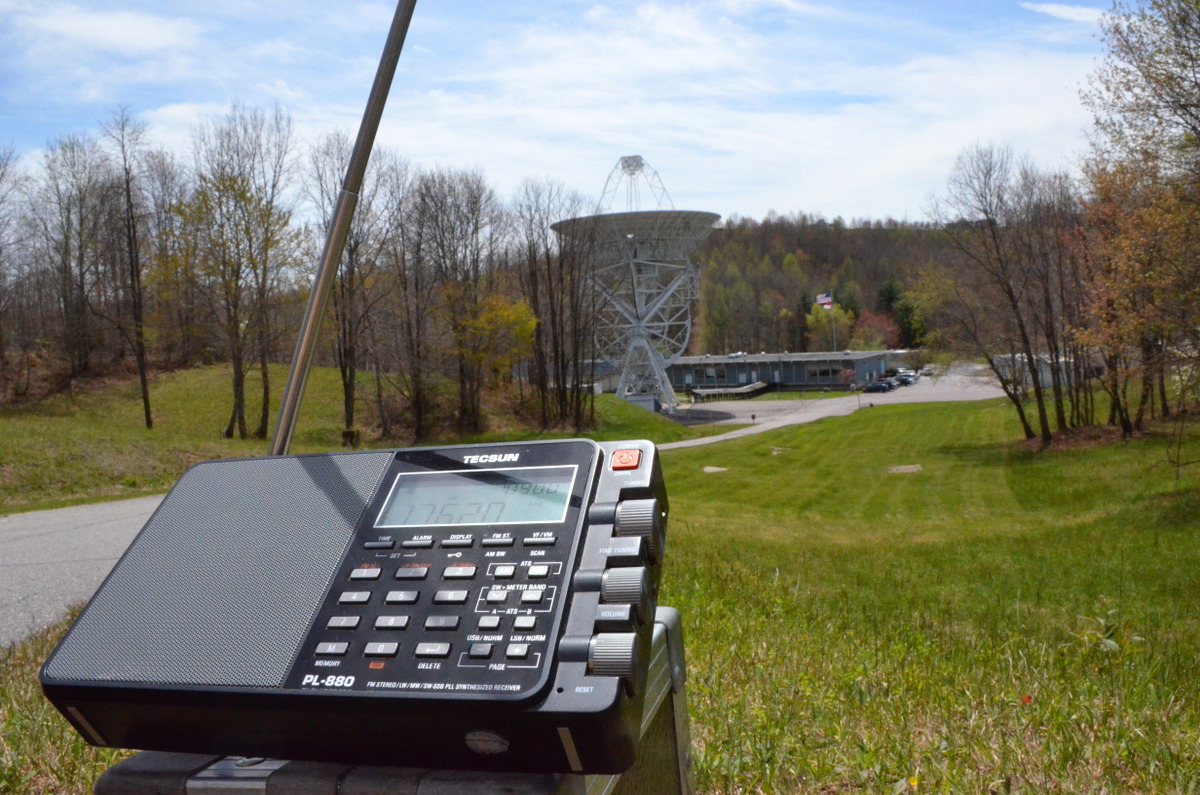
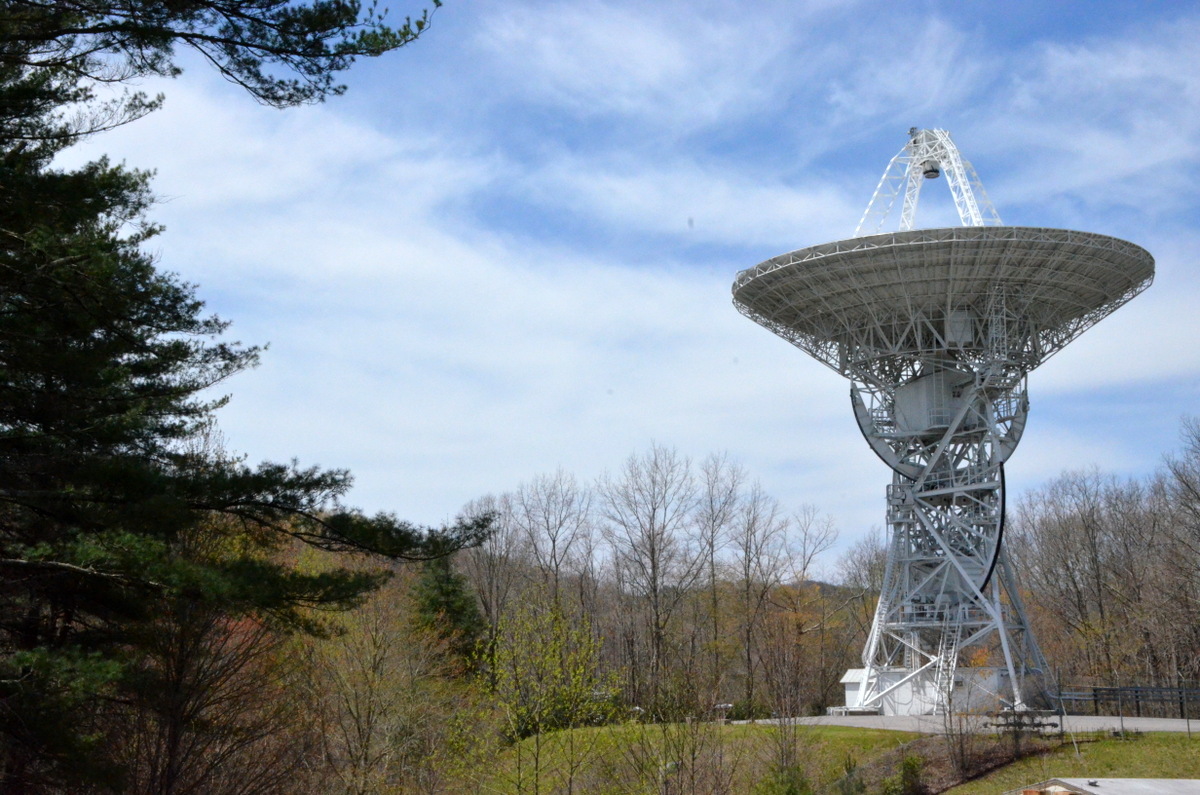
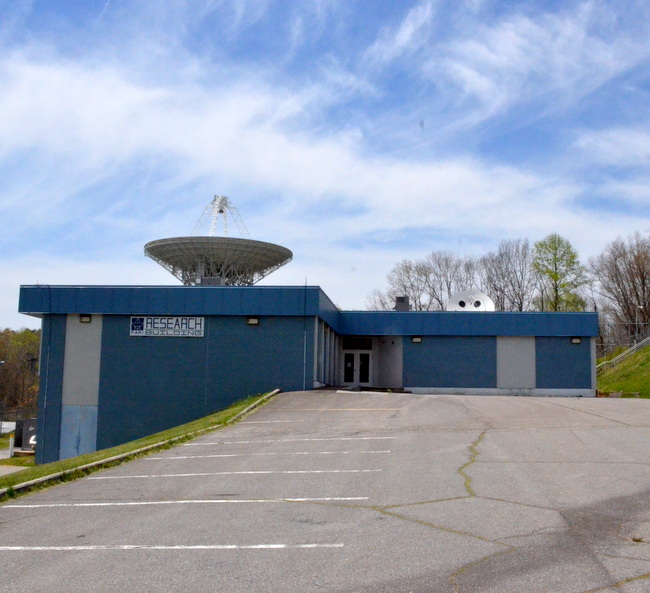
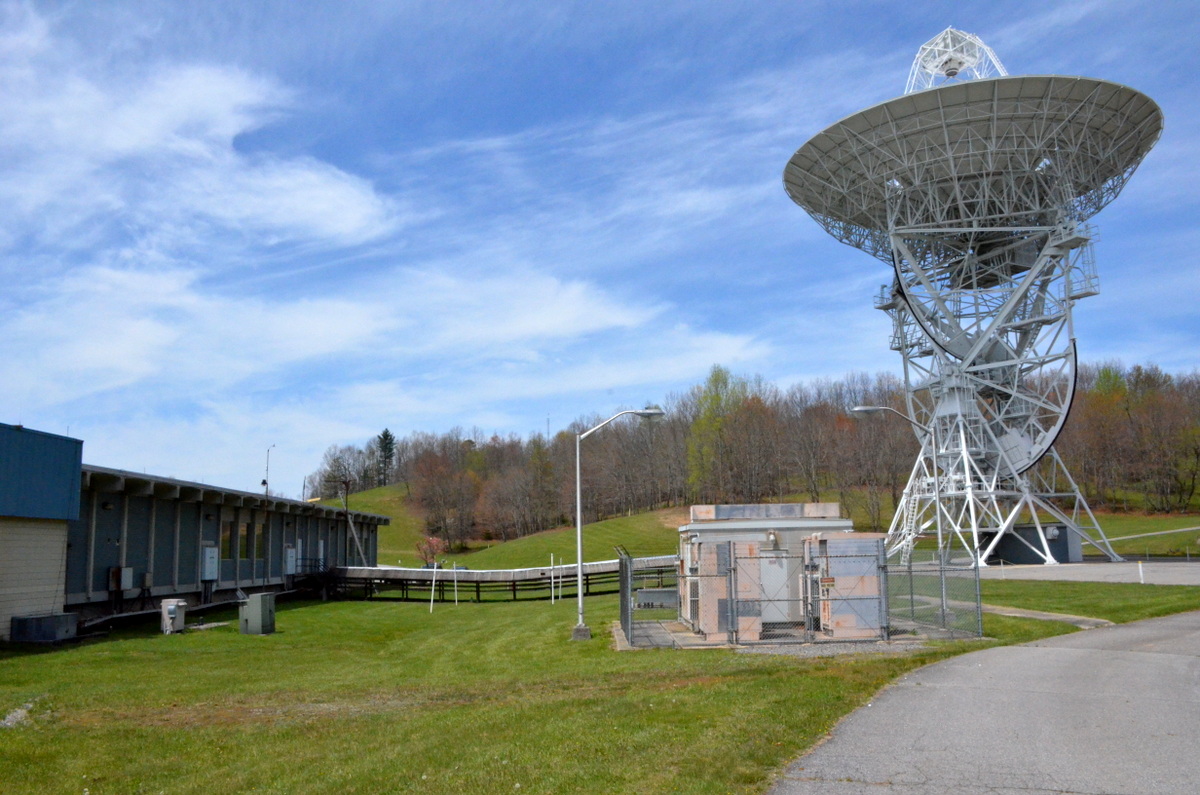
DSC_0884Some of you may recall a post I published last year regarding a shortwave and medium wave DXpedition at the Pisgah Astronomical Research Institute (PARI), a 200-acre radio astronomy observatory and former NASA tracking station located deep in the mountains of western North Carolina.

Since this is the first event of its kind, we’ve been working closely with PARI staff to put the DXpedition together.  And come together, it has.

I’m pleased to announce that we’ve now received the official go-ahead: we’re clear to launch the (first-ever!) 2015 SWLing Post DXpedition, which will take place Friday, October 9, through Sunday, October 11.  Come join us!

PARI will soon post the official registration form on their website; of course, I’ll post an update when this form is ready.

Meanwhile, those of you who may be interested in attending, keep reading…and do join our dedicated email discussion group (more info below).

A few DXpedition details…
DSC_0916

As I mentioned last year, PARI has agreed to handle all of the event’s arrangements, and will even provide a limited number of basic shared dormitory rooms to the first registrants who request them. An event fee will pay for facilities and PARI staff (see below); modest profits, should there be any, will benefit PARI’s worthy science education mission.

We are fortunate to be sharing the beautiful PARI campus with with a larger party of amateur astronomers, aka, a “star party,” taking place the same weekend; the DXpedition will benefit from this in terms of expanded facilities access. An additional benefit is that we can share our passion for radio with members of the star party, while learning a little about astronomy from their members.  And for those of us who enjoy both, all the better.

Costs

The costs associated with the event are as follows:

Registration fee: $100

Lodging: On campus, the fee is $50 per night, per person, in a shared dormitory room; or $20 per night, per tent or travel trailer (no hook ups, though electricity is available). Want to come along, but not interested in roughing it? You’ll find numerous comfortable hotels and inns within a 30-40 minute drive of PARI’s mountain campus.

Meals: Catered meals will be provided for a modest charge to be determined (PARI is working with local food services to arrange our meals currently). Of course, you can always bring your own food and prepare it on-site, as well.  The campus has a lunchroom with a microwave.

The PARI campus and accommodation

DSC_0934

PARI was formerly a NASA tracking station, and following that, a Department of Defense monitoring facility.  Because of the remote nature of the campus, basic on-site dormitories were built; scientists use these throughout the year as they conduct their research, and the shared rooms are available upon request.
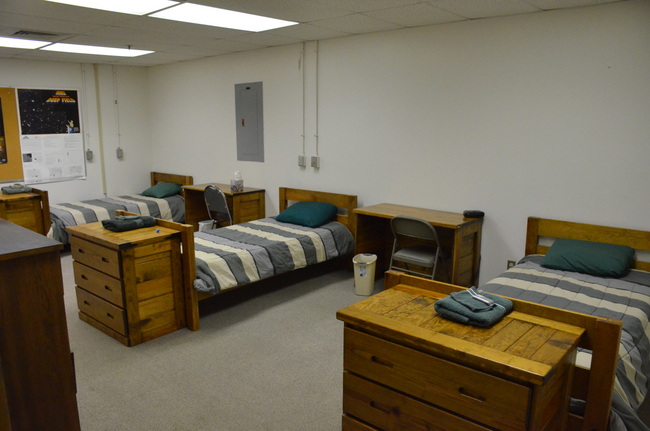
Typical PARI dorm room (click to enlarge)

Typical PARI dorm room (click to enlarge)

The dormitories are conveniently located in the heart of the 200-acre campus, and sleep about four to each room.  These are simple facilities, and no private rooms are offered. Bathrooms (with showers) are shared, and separate buildings house men and women; thus the dormitories may not be the best option if you plan to bring a spouse, a large family, or young children.

Of course, if you enjoy camping and/or star-gazing, you can pitch a tent (just $20/night), or park your travel trailer on campus (also just $20/night). Note that this is not a travel park, thus hook-ups for travel trailers are not supplied, although power is available.

For those who prefer not to camp or stay in a shared room, the nearby mountain town of Brevard, NC (approximately 35 minutes from PARI by car) is a charming small town offering numerous hotels, bed-and-breakfasts, and other comfortable private accommodations. PARI often recommends the Hampton Inn in Brevard, NC. Hotels.com and AirBnB offer alternatives.

Receivers, antennas, and other radio equipment
DSC_0904DXpedition participants should bring their own receivers, antennas, and accessories. If you wish to bring an SDR or tabletop receiver, there are quite a few places on campus where you’ll have access to power. At least one main listening post will be set up under cover, as well, for our participants.

Feel free to bring any type of receiver you like. A few potential participants have noted that they plan to bring a portable receiver only, and that’s absolutely fine–this is your DXpedition, your chance to sit back and listen to your radio without distraction, so any radio you choose to bring is the right one.

Of course, a few SDRs, tabletops, and portable receivers will be available for participants to try out, so if you can’t bring your own receiver, please let me know in advance; I’ll try to reserve a time slot for you to use one of the available rigs.

SWLing Post DXpedition email group
DSC_0838

We have created an email discussion group for the DXpedition. If you are seriously considering joining the DXpedition, click here to become a member of the group as this is the place where we’ll organize and make further plans.

Since this is the first time the SWLing Post and PARI have sponsored a DXpedition, we’re certainly trail-blazing here. My sincere hope is that this event will lead to future DXpeditions…not to mention, real friendships among our readers and fellow SWLers.

Looking forward to the DXpedition–we’ll see you at PARI in October!
Lewis Bush seeks London radio listening posts

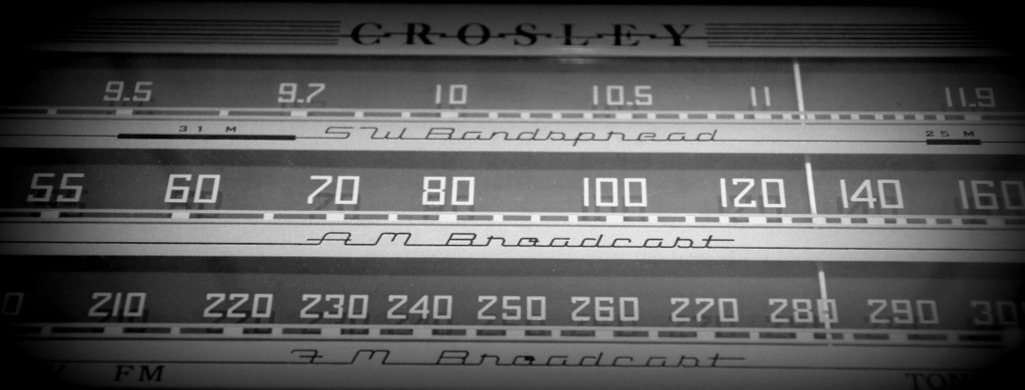
Crosley-Dial-BlackAndWhitePhotographer, Lewis Bush, is seeking ham radio stations and shortwave listening posts in the London, England area. Lewis writes to the SWLing Post:

I’m working on a project which involves trying to locate and map possible broadcast sites for numbers stations (confirmed, suspected, and some highly unlikely) for an eventual book on the subject. These satellite maps (22 in total) are going to be displayed alongside spectrograms of an assortment of shortwave broadcasts and noise, but the final element of the project which I’d really like to include are photographs of ham shacks and shortwave radios themselves.

These photographs would be without people in them and could be as anonymised as the owners like. It’s also not important to me whether the owners are themselves interested in numbers stations. The main thing I’m interested in is really the equipment and the spaces that people listen from.

You can read a little more about the project and see some sample images here: http://www.lewisbush.com/category/numbers-in-the-dark/

If you’re willing to help Lewis, please contact him via email:  [email protected]

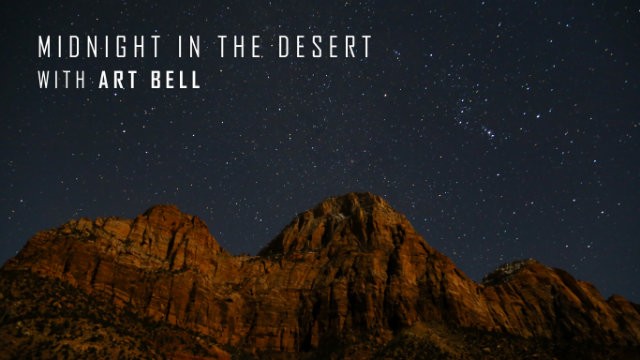
Art Bell’s “Midnight In The Desert” to be broadcast on shortwave via WTWW and WBCQ

MidnightInTHeDesert

Many thanks to SWLing Post reader, Mike, who informs us that Art Bell is returning to the airwaves with a new radio show called Midnight in the Desert. Like Coast to Coast AM, (which Bell retired from several years ago) Midnight in the Desert will also focus on paranormal activity.

Mike also points out that Bell has also announced Midnight in the Desert will be broadcast on WTWW (5,085 kHz).  WTWW will start airing the show July 20, 2015 from 9:00 pm – Midnight Pacific time.

Indeed, after looking at the list of radio stations rebroadcasting Midnight in the Desert, I noted that WBCQ, in Maine, will also carry the show on 7,490 and 9,330 kHz.

For more information and updates, check out Art Bell’s website.

Thanks for the shout out, Click!

BBC_ClickSome of you may recall this recent post about listening to the BBC World Service program, Click, via shortwave radio.

SWLing Post contributor, Richard Langley, discovered that Click hosts Gareth Mitchell and Bill Thompson mentioned his shortwave research at the conclusion of the show’s most recent episode.

The podcast of this episode, which focuses on the Nepal Quake Project, is available online and well worth hearing.

Richard also kindly provided us with this brief audio excerpt from Click during which the hosts discuss shortwave radio:

When held captive, radio provides escape

Analog Radio DialMany thanks to Any Sennitt who shares a link to this article by Telegraph journalist, 

(Source: The Telegraph via Andy Sennitt)

Along with the glaciers of the Arctic and the sand dunes of the Sahara, northern Somalia is one of the loneliest, most godforsaken places I’ve ever visited as a foreign correspondent. You can wander its Arizona-like landscape for days without seeing another soul, and when I was held hostage there in 2008, I could see why so many British troops posted to Somalia after the Second World War committed suicide through loneliness.

That I did not succumb to the same urge is thanks to many factors – one being the good cheer of the photographer held captive alongside me, another being the Telegraph’s heroic efforts in securing our release.

But during the six weeks we spent held at gunpoint in a cave, one thing that stemmed the despair was the tiny, battery-operated radio that our kidnappers sometimes lent us. On the short wave channel we could get a faint BBC World Service signal, and while it was often fuzzy as it bounced round the cave’s walls, it was better than yet another game on our chess set made from cigarette foil.

So I’m pleased to hear that this lifeline is now being extended to inmates of another, much larger prison – the 25 million citizens of North Korea, who are denied access to any outside media by their leader, Kim Jong-un. As the Telegraph disclosed on Thursday, the World Service is to plan a new North Korea channel, giving the country’s brain-washed citizens a much-needed alternative to the relentless propaganda of the world’s last Stalinist regime.

[Continue reading at The Telegraph…]

Channel 292: Amateur Radio group broadcasts on former DW frequency

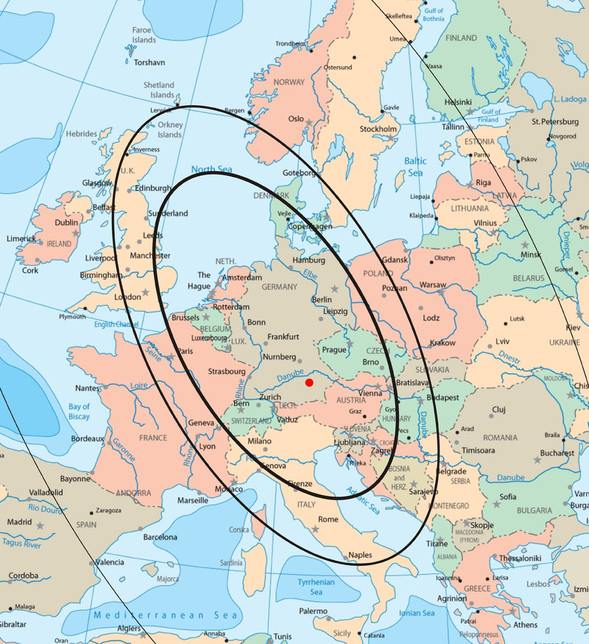
Channel 292 propagation map (Source: Southgate ARC)

Channel 292 propagation map (Source: Southgate ARC)

Many thanks to SWLing Post reader, Harald Kuhl (DL1ABJ) for sharing this article from the Southgate ARC:

“When the ‘Deutsche Welle’ decided to close down one of their 500 KW short wave broadcast transmitters near Munich at the end of 2012, a group containing some German radio amateurs applied for and were allocated the then available short wave frequency of 6070 KHz in 2013.

This group now have an operational 10KW station on the frequency, using the driver stages from the old Deutsche Welle transmitter. The rest of the transmitter was built by and is run by Rainer DB8QC . The [license] allow transmission 24/7 but at present most transmissions are on a weekend during daylight hours.

Content is mainly provided by existing Internet Radio stations wanting to get their material “on-the-air” this includes several soceities that remember the days of the Pirate Radio pop music stations in the North sea between England and Holland and a lot of their music content is from the 60’s and 70’s.

Additional content is being sought and at only 15 Euros an hour, this is not a corporate big business rather a facility where smaller groups can afford to buy time to transmit their content. One such group is the Deutsche Amateur Radio Club, the National Amateur Radio Society in Germany, who hope to have a weekly 2 hour slot on the station from mid-March to send a DX orientated program, probably from 6pm local time on Sundays.

The DARC DX magazine will be in the German language and targeted towards German speaking listeners. Amateur radio is an international medium however so there are thoughts of also producing an international / English hour in addition, to reach out across Europe not only to radio amateurs but also to short wave listeners and the general public.”

Continue reading on the Southgate ARC website…

Thanks again, Harald! Even though Channel 292 isn’t a blow-torch station, at 15 Euros per hour, nearly any group could afford to broadcast on shortwave. Now to put Channel 292 in the logs!

For more information, click here to view the Channel 242 website.

23 January 2015: A Friday morning 31 meter band scan

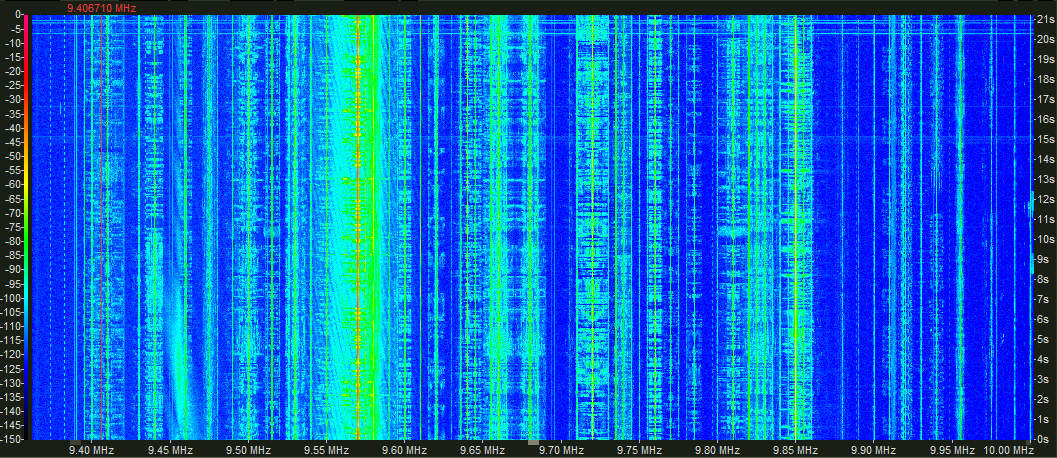
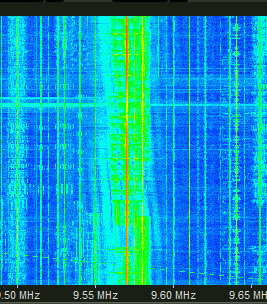
31-Meter-Waterfall-SpectrumThis morning, I tuned around the 31 meter band and was surprised with favorable propagation out of Asia (see spectrum waterfall above–click to enlarge).

I started logging a few stations, but the effort quickly turned into a full band scan/survey.  I logged everything I could easily hear between the 9,390-10,000 kHz portion of the 31 meter band.

I logged 52 stations and omitted eight that I considered too weak for good copy.

I used my WinRadio Excalibur SDR connected to a large horizontal delta loop wire antenna.

The number of broadcasts originating in or targeting China is pretty phenomenal: the 31 band is your oyster, if you speak Chinese.

31 Meter Band 1200 – 1300 UTC, all frequencies in kHz

  • 9390 Radio Thailand Malaysian (1200Z) then English (1230Z)
  • 9410 China National Radio 5 Chinese
  • 9430 FEBC Radio Chinese
  • 9440 China Radio International Cambodian
  • 9460 China Radio International English
  • 9475 Radio Australia English
  • 9490 Voice Of America Korean
  • 9500 China National Radio 1 Chinese
  • 9515 China National Radio 2 Chinese
  • 9530 Voice Of America Chinese
  • 9540 China Radio International Chinese
  • 9550 China Radio International Vietnamese (covered by CRI Cantonese distortion)

    Note the CRI signal on 9,570 kHz which is blanketing the surrounding spectrum with noise.

    Note the blowtorch CRI signal on 9,570 kHz which was blanketing the surrounding spectrum with noise.

  • 9570 China Radio International Cantonese (transmitter spewing distortion 50 kHz wide)
  • 9580 Radio Australia English (covered by CRI Cantonese distortion)
  • 9590 China Radio International Russian (covered by CRI Cantonese distortion)
  • 9600 China Radio International English
  • 9620 China National Radio 6 Chinese
  • 9635 Voice of Vietnam 1 Vietnamese (slightly below freq)
  • 9640 Radio Havana Cuba Spanish
  • 9645 China Radio International English
  • 9655 China Radio International Chinese
  • 9660 Radio Taiwan International Chinese
  • 9680 Radio Taiwan International Chinese
  • 9700 Lower Sideband communication (UNID)
  • 9710 China National Radio 1 Chinese
  • 9720 China Radio International Filipino
  • 9730 China Radio International English
  • 9735 Radio Taiwan International Indonesian
  • 9740 BBC English
  • 9745 Guanghua zhi Sheng Chinese
  • 9750 Radio Kuwait Arabic
  • 9730 China Radio International English
  • 9770 KBS World Radio Chinese
  • 9775 China National Radio 2 Chinese (vy weak)
  • 9785 China Radio International Laotian
  • 9790 Voice Of Islamic Republic of Iran Pashto
  • 9810 China National Radio 2 Chinese and All India Radio Telugu
  • 9820 Radio Havana Cuba Spanish
  • 9825 Voice Of America Chinese
  • 9830 China National Radio 1 Chinese
  • 9840 Voice of Vietnam English
  • 9850 Radio Habana Cuba Spanish
  • 9855 China Radio International Chinese
  • 9860 China National Radio 1 Chinese (vy weak)
  • 9880 KSDA-AWR Guam Korean (vy weak)
  • 9900 Radio France International Chinese
  • 9920 FEBC Radio Bahnar (w/Jamming)
  • 9940 Reach Beyond Australia (HCJB) Indonesian
  • 9955 Radio Slovakia International English (via WRMI/WRN)
  • 9975 KTWR Guam Chinese
  • 9990 Radio Farda Persian
  • 10000 WWV Fort Collins English

I recorded two broadcasts during the scan–both at 12:30 UTC: Radio Thailand (9,390 kHz) and Radio Slovakia (9,955 kHz). I will post them soon.