Author Archives: Thomas

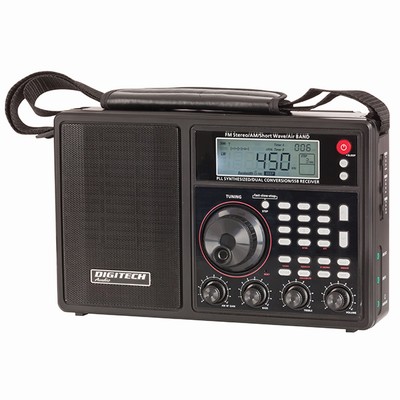
Phil identifies mystery radio as the Digitech Audio AR1945

The Digitech AR1945 portable radio

The Digitech AR1945 portable radio (Click to enlarge)

SWLing Post reader, Phil, noticed the unidentified radio from this post as the Digitech Audio AR1945.

He comments:

This radio has been released in Australia via the Jaycar Electronics Stores as the Digitech Audio AR 1945. It has all the hallmarks of Redsun radios.

I bought one and overall the performance is very good on MW and SW, FM is ok and AIR band isn’t too bad. The big drawback is the SSB. It is dreadful, by far the worst SSB demodulation I have ever come across in a radio. This needs to be addressed and once done so, will be a good receiver.

Pity it doesn’t have Synchronous detection as, if you look at the display carefully, provision has been made for this feature. I wonder how it can be activated? I would appreciate any comments on a fix for the SSB

Phil, thanks so much for the mini review. Here’s a link to the AR1945 on Jaycar’s website: http://www.jaycar.com.au/productView.asp?ID=AR1945

Has anyone found a mod to activate a potentially dormant sync detector or to improve SSB demodulation? Please comment.

I’ve posted various views of the Digitech AR1945 below, along with this full description from Jaycar’s website:

The Digitech AR1945 portable radio“Ideal for a novice ham radio licensor, keen fisherman or even just the outdoors type, this radio has everything you will ever need in a radio with the added function of single-sideband modulation (SSB). SSB is used to obtain current weather reports, so it is perfect to take to sea to avoid changing weather conditions. However with great FM and AM coverage and battery operation it is also perfect for camping, BBQs and thanks to its world/local time selection clock and alarm, it can even be used as an alarm clock! Additional features include auto tuning saving, 500 memories and keypad direct entry. This is certainly a radio of many uses! Power options are 6 x AA (not included) used with supplied 6 x D size battery adaptors, 6 x D batteries (not included) or the supplied 9V PSU. Supplied with a carry strap.”
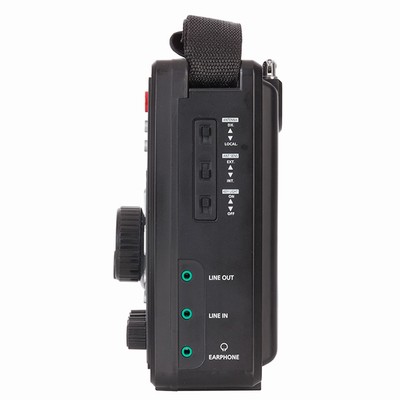
AR1945side• FM: 87.5-108.0MHz
• MW(AM): 522-1620kHz (9kHz); 530-1710kHz (10kHz)
• AIR: 118-137MHz
• SW: 1,711-29,999kHz
• LW: 144-450 kHz

Features:
• Large back lit LCD 
• RF gain control 
• Bass & treble controls
• Key lock
• IF output 
• Line in and out 
• Earphone socket
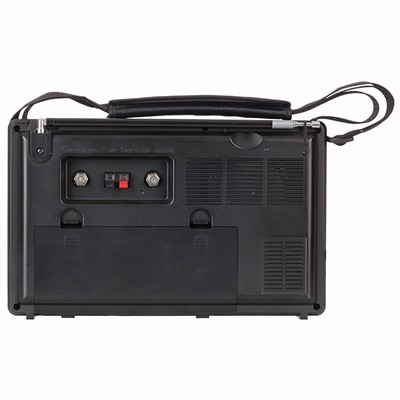
AR1945back• Speaker 5W/4 ohms
• Local/DX antenna switch
• External antenna connection 
• Internal full range speaker 
• Mains or battery operated 
• Dimensions: 310(W) x 195(H) x 100(D)mm


Of course, this radio is most likely available in other parts of the world under different brand names. Let us know if you’ve seen it.

Dave Porter’s video tour of the BBC Woofferton transmitting site

Check out this brilliant video tour of the BBC Woofferton Transmitting Station, presented by Senior Transmitter Engineer Dave Porter (G40YX). The video is divided in seven parts, thus I’ve created a playlist that will automatically load each video in order.

Click here to start the playlist on YouTube, or simply watch the tour through the embedded video player below. Enjoy:

Many thanks to Dave Porter for hosting this video tour and to Mike Barraclough for the tip!

If you would like to read a detailed history of Woofferton, be sure to check out our post:
Shortwave Radio History: 50 years of transmitting at BBC Woofferton

DRM Test Transmission from PCJ International

drmlogoOn October 13, 2013 PCJ Radio International will conduct a two hour DRM test transmission.

Date: October 13, 2013

Time: 10:30 to 12:30 UTC

Frequency: 15,645 khz

Beam: South East & East Asia

Send your reception reports for this transmission to [email protected]

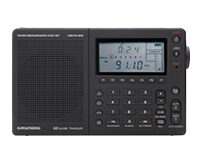
Grundig G3 discontinued, Tecsun PL-880 on the way

The Grundig G3 shortwave radio.

The Grundig G3 shortwave radio.

Not really a surprise, but I’ve confirmed that the Grundig G3 has been discontinued. They are still available, for the moment, from Universal Radio and online sources like Amazon.com. I would not advise buying from Amazon as I’ve received numerous complaints that they’ve shipped faulty units. Universal Radio, on the other hand, is testing each an every G3 leaving their shop.

With the exit of the G3, this leaves Grundig with the following selection of shortwave portables:

TecsunPL-880Box

Tecsun PL-880

Tecsun, meanwhile, is adding to their extensive line of shortwave portables. Indeed, this morning, W4ASZ comments:

“I found this link courtesy of the manly men at Herculodge :

http://tecsunradio.com/2013/09/14/new-arrival-tecsun-pl880-fm-radio-dsp-stereo-speaker-coming-soon/9030

Looking pretty good !”

I agree and I do feel cautiously optimistic about the Tecsun PL-880. Could it be my new travel radio? Though I still happily travel with the Grundig G3, Sony ICF-SW7600GR and Tecsun PL-380, a guy can’t have too many radios to choose from!

I’ll plan to review the PL-880 once it’s available. I’m particularly interested in seeing how it stacks up against the venerable Tecsun PL-660.

Stay tuned!

The Voice of Greece Avlis shortwave transmitter site may be scrapped

GREECE-ECONOMY-MEDIAAccording to TheGreekRadio.com, 39 shortwave antennas located at the Voice of Greece Avlis transmitter site may soon be sold as scrap metal. It seems this information is based on a statement by ERT employees from Monday (September 16, 2013):

“in the shortwave broadcasting center of Avlis, a representative of a company that sells metal showed up and started taking photos of the site. After we, ERT people, asked him, we got informed that he had been mandated by the Ministry of Finance to give an offer for the dismantling of 39 masts and purchasing the metal as scrap.”

[…]The name of [the] company and the registration plate of the car are available. The union body of ERT notes that this is an area of 1160 acres, featuring 39 metal masts, with a height between 30 and 70 meters each, that function as the shortwave aerials that transmit the “Voice of Greece”, the ERA-pénte, across the world.

“Greek shortwave started operating in 1938 and later was also used sent information to the Greek soldiers fighting Fascists in Albania. The only ones who dared to turn it off were the Nazis during the occupation. Since the liberation, it never stopped to link the country with Greek seafarers and the Diaspora. The Voice of Greece broadcasts information, entertainment, culture and tradition from Greece with programs in 12 languages, all over the globe”.

You can read the full article by clicking here. Many thanks to Andrea Borgnino for the tip.

I’ve predicted that the Voice of Greece may not be on the air even by the end of 2013.  I certainly hope I’m wrong, but I simply can’t imagine there will be enough money in the reincarnated ERT budget to pay for the Voice of Greece Avlis shortwave transmitter site.

Follow the tag “ERT Cuts” for the latest developments.

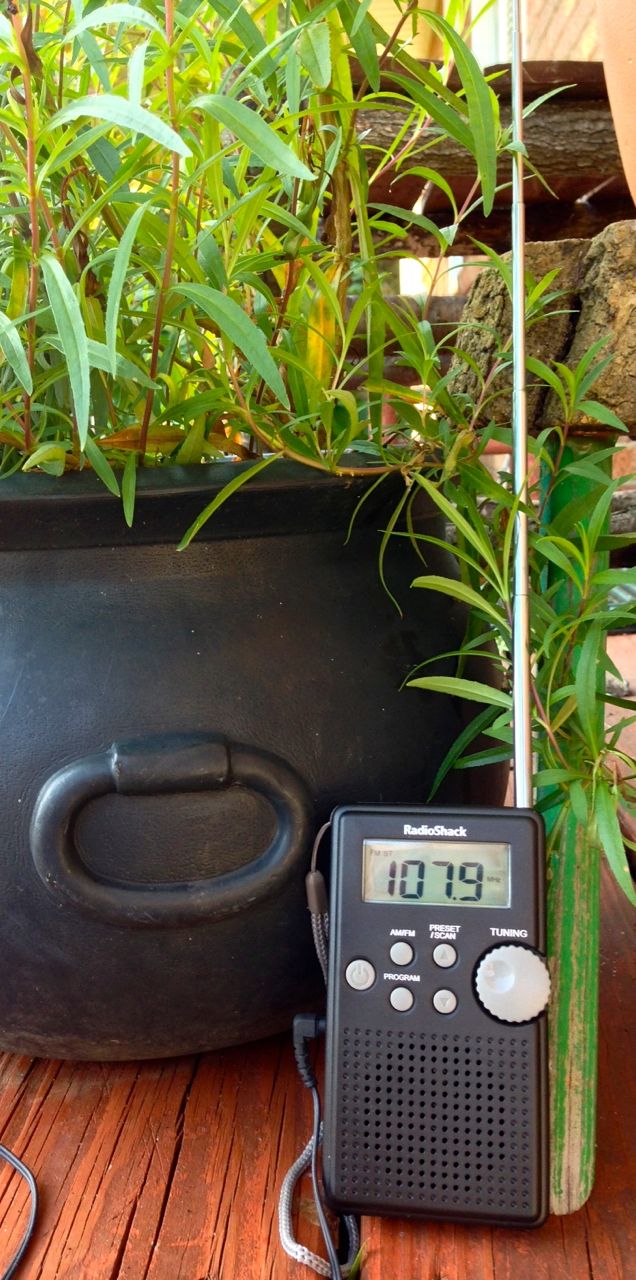
Review of the RadioShack AM/FM portable digital radio, Model 12-587

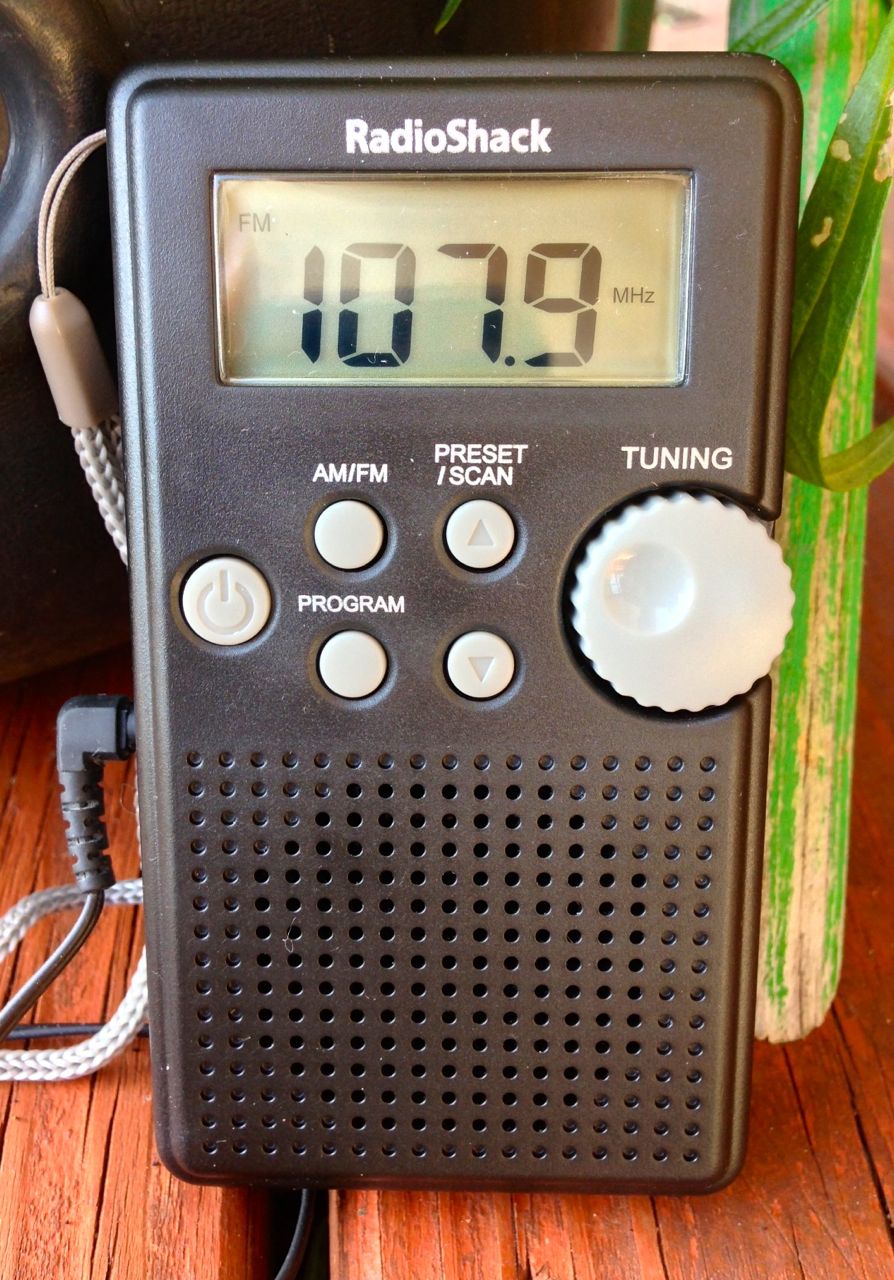
The RadioShack Model 12-587 AM/FM Radio

The RadioShack Model 12-587 AM/FM Radio

Three days a week, my father––now in his seventies––takes a three mile walk through his home town, revisiting the neighborhoods of his youth. He began the walks upon retirement, and in my opinion, the routine has helped keep him in great shape. When he first started walking I learned he was carrying around a heavy AM/FM radio with him.  I bought him a bargain one-off Coby AM/FM portable that is not only lightweight but sports a handy neck strap. Dad’s loved it. Indeed––much to my surprise––it’s lasted about ten years, and is still playing, although starting to show signs of wear…

So I decided it was time to test drive a suitable replacement. After searching, I found the RadioShack Model 12-587 AM/FM radio. At a clearance price of $14.99 (US), there will be no loss of sleep if Dad misplaces it or drops it on the pavement.

Still, I couldn’t resist giving it the once-over, and thought I might share the mini review that resulted. As I always say for radios in this price range, my expectations were low.

Here’s a summary of this little AM/FM radio’s pros and cons:

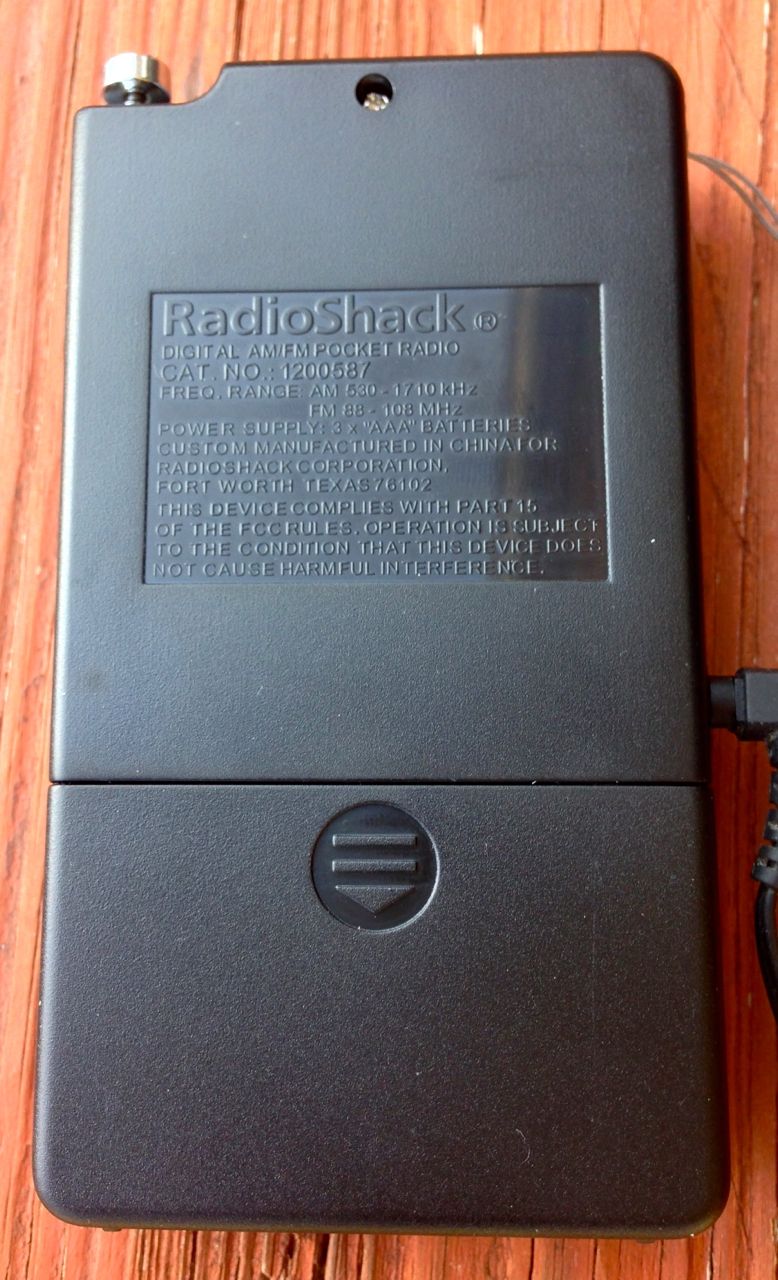
Back of model RadioShack 12-587

Back of model RadioShack 12-587

Pros:

  • Very good FM selectivity and sensitivity
  • Excellent FM stereo lock
  • Scan function both useful and quick
  • 10 AM and 10 FM memories (see con)
  • Large, amber back-lit LCD display
  • Simple control lock switch on right side
  • AM (medium wave) sensitivity adequate
  • AM nulling above average
  • Plastic “blister” packaging very easy to open!

Cons:

  • Tinny sounding audio via built-in speaker
  • Headphone audio lacks high/low; mid-range only
  • Memory allocations supposedly volatile (when batteries are replaced)
  • AM frequency steps fixed at 10 kHz (cannot adapt to 9 kHz steps used in rest of the world)
  • AM (medium wave) sensitivity mediocre at best
  • Complete mute while tuning; not capable of band-scanning
  • Dimple on tuning knob not useful
  • Very sensitive to noise (QRM) on the AM band, resulting in static popping/crackling in audio

Obviously, this is not a radio for the radio hobbyist or world traveler, as it lacks any real medium wave sensitivity and cannot tune in 9 kHz steps. FM tuning is also locked on odd frequencies, thus will not work throughout parts of the world with even spacing. And though the radio is touted as having “extended bass,” the audio is tinny, even via headphones.

RadioShack-Model12-587-AMFMRadio-2BUT.  This is a perfect example of a situation in which, though cons outweigh pros, the RS Model 12-587 is a great match for its intended purpose: my father’s morning walks. Why? It’s a simple-to-operate radio with a large, back-lit display (Dad won’t need to put on his glasses to read it). It receives local AM and FM stations very well. The mid-range audio––while lacking ample fidelity for music––are perfect for the talk shows he listens to while walking. The radio is durable, lightweight, easy to tune, and has a lock feature. It is also remarkably easy to program memories: simply press the program button until preset flashes in the LCD display, use the scan up/down buttons to choose a memory number then press program again.  It’s also very affordable, so no problem to replace as necessary.

In conclusion, the RS Model 12-587 is not a performance radio––and I wouldn’t generally recommend it––but it suits my father’s needs very well.  Like to walk or run? Maybe it’s just what you’re looking for, too.

Shortwave Radio Recordings: BBC World Service Hausa

BBC-HausaFor your listening pleasure: the BBC World Service Hausa language service recorded on 17,885 kHz on September 16, 2013, starting at 19:30 UTC. This BBC WS broadcast originated from a 250 kW transmitter located on Ascension Island in the south Atlantic ocean.

Click here to download the recording as an MP3, or simply listen via the embedded player below: