Author Archives: Thomas

Bob Zanotti’s presentation to the Fairlawn Amateur Radio Club (Part 2)

Many thanks to SWLing Post contributor, Bob Zanotti (HB9ASQ), who has, at my request, shared a video recording of a presentation he gave to the Fairlawn ARC last year.

This is part two. If you missed part one, you can view it by clicking here. Thank you, Bob! Enjoy:

Radio Waves: The DLARC, NASA Citizen Science, PopShopRadio DRM to Europe, Hackers Disrupt Russian Radio, and Afghan Radio Closures

Radio Waves:  Stories Making Waves in the World of Radio

Welcome to the SWLing Post’s Radio Waves, a collection of links to interesting stories making waves in the world of radio. Enjoy!

Many thanks to SWLing Post contributors Trevor Robbins and Dennis Dura for the following tips:


Digital Library Of Amateur Radio And Communications Is A Treasure Trove (Hackaday)

Having a big bookshelf of ham radio books and magazines used to be a point of bragging right for hams. These days, you are more likely to just browse the internet for information. But you can still have, virtually, that big shelf of old ham books, thanks to the DLARC — the digital library of Amateur Radio and Communications.

A grant from a private foundation has enable the Internet Archive to scan and index a trove of ham radio publications, including the old Callbooks, 73 Magazine, several ham radio group’s newsletters from around the globe, Radio Craft, and manuals from Icom, Kenwood, Yaesu, and others.

There are some old QST magazines and the index to newer ones. You can find catalogs and military documents. We miss a lot of these old magazines and newsletters. For example, RCA’s “Ham Tips” is something you won’t find anything like anymore. Most of the material is in English, but there are some other languages represented. For example, the Dutch version of Popular Electronics is available. There’s also material in Afrikaans, Japanese, German, and Spanish. [Continue reading at Hackaday…]

Ham Radio Operators, We Need Your Help During Solar Eclipses! (NASA)

Ham Radio operators, we’re calling you! Members of the Ham Radio Science Citizen Investigation (HamSCI) will be making radio contacts during the 2023 and 2024 North American eclipses, probing the Earth’s ionosphere. It will be a fun, friendly event with a competitive element—and you’re invited to participate.

Both amateur and professional broadcasters have been sending and receiving radio signals around the Earth for over a century. Such communication is possible due to interactions between our Sun and the ionosphere, the ionized region of the Earth’s atmosphere located roughly 80 to 1000 km overhead. The upcoming eclipses (October 14, 2023, and April 8, 2024) provide unique opportunities to study these interactions. As you and other HamSCI members transmit, receive, and record signals across the radio spectrum during the eclipse, you will create valuable data to test computer models of the ionosphere.

For more information, go to https://hamsci.org/festivals-eclipse-ionospheric-science

DRM to Europe (DRM Consortium Newsletter)

The Canadian pop music station PopShopRadio in British Columbia has just announced that they will use the DRM standard to broadcast their best pop music towards Europe on the 5th March 2023 at 2000-2100 CET (GMT+1) on 5875 kHz (85kW) from Wooferton in the UK.

This radio station is specialised in transmissions of well-known pop music from the 60s and 70s or even before that. They are collecting the best tunes from various countries and offer them to the world using shortwave. This time round they wish to also use the DRM standard in SW to be able to reach distant parts of the globe in much better sound quality.

For more details please click here and here.

Hackers Disrupt Russian Radio (Radio World)

Air raid sirens broadcast in a dozen cities

Radio stations in several Russian cities were disrupted on Feb. 22 by the sound of air raid sirens and a warning of imminent missile strikes.

The broadcasts were reportedly heard in Belgorod, Chelyabinsk, Kazan, Magnitogorsk, Nizhny Novgorod, Novouralsk, Pyatigorsk, Stary Oskol, Syktyvkar, Tyumen, Ufa, and Voronezh, among other cities. Recordings of the broadcast were shared on the social media network Telegram and reported on by Meduza.

Meduza, an independent news agency now based in Latvia, was forced to move its operations out of Russia during the media crackdown that followed Russia’s February 2022 invasion of Ukraine. [Continue reading at Radio World…]

Radio Closures Hit Afghanistan Hard (Radio World)

Only 223 stations remain on air 18 months after Taliban regained control of the country

In the 18 months since the Taliban retook full control of Afghanistan, 177 radio stations have gone off the air in the country, displacing about 1,900 journalists and other employees.

In a statement released on World Radio Day 2023, the Afghan Independent Journalists Association noted that during the Islamic Republic period from 2004–2021, there were as many as 401 radio stations operating in Afghanistan. As the Taliban Insurgency increased its control of the country, about 56 stations went off the air before the Taliban took control and reinstated the Islamic Emirate of Afghanistan in August 2021.

Since then, around 120 stations have ceased broadcasting due to economic pressures. The AIJA stated that only 223 stations currently operate in the country.

With these stations going dark, more than 1,900 journalists and media workers are now unemployed in the country, include 1,075 women. [Continue reading at Radio World…]


Do you enjoy the SWLing Post?

Please consider supporting us via Patreon or our Coffee Fund!

Your support makes articles like this one possible. Thank you!

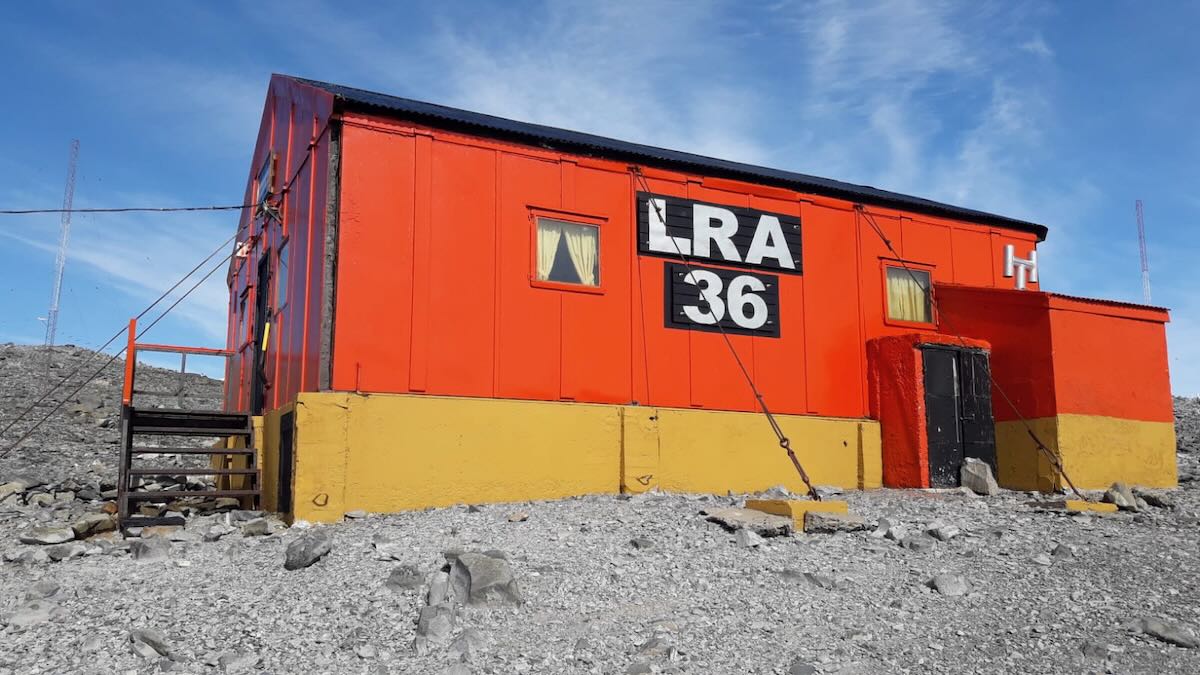
LRA 36 (Arcangel San Gabriel, Antarctica) Test Broadcast Today at 20:00 UTC

Many thanks to SWLing Post contributor, Adrian Korol, who shares the following tip and schedule for the LRA 36 broadcast today:

LRA36 Radio Nacional Arcangel San Gabriel from Base Antartica Esperanza:

Saturday, 25 February 2023
From 20:00 to 24:00 UTC
On 15476 kHz (USB)

Thanks for the tip, Adrian!

Carlos’ Shortwave Art and recording of Radio Nacional Arcángel San Gabriel, LRA 36 (February 18, 2023)

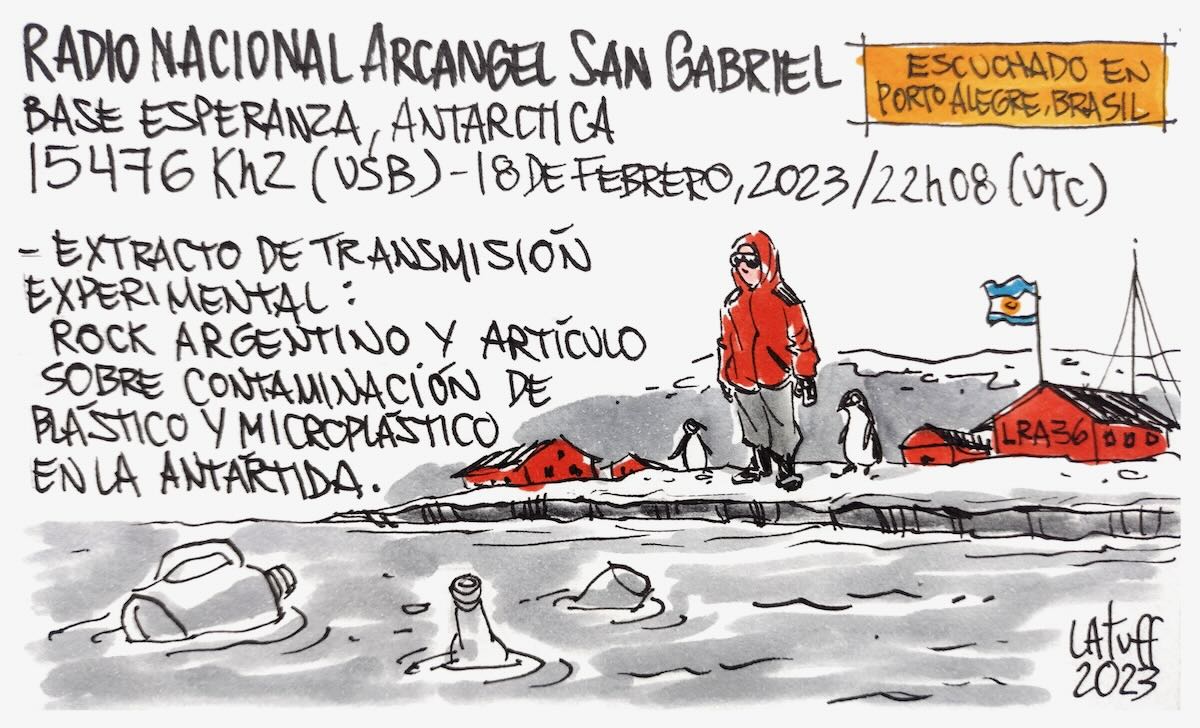
Many thanks to SWLing Post contributor and noted political cartoonist, Carlos Latuff, who shares his radio log art of a recent Radio Nacional Arcángel San Gabriell (LRA 36) test transmission.


Carlos notes:

Part of experimental shortwave transmission of Radio Nacional Arcangel San Gabriel, Base Esperanza, Antartica: Argentine rock and article on plastic/microplastic contamination in Antartica.

Click here to view on YouTube.

Radio Waves: ?Radio Gibraltar marks 65 years, Radio Balloons, More Balloons, and “Messages” by Joerg Dankert

Europa Point, Gibraltar (Photo by Petr Slová?ek)

Radio Waves:  Stories Making Waves in the World of Radio

Welcome to the SWLing Post’s Radio Waves, a collection of links to interesting stories making waves in the world of radio. Enjoy!

Many thanks to SWLing Post contributors Tracy Wood, Eric McFadden, and Dennis Dura for the following tips:


?Radio Gibraltar marks 65 years on the air (GBC)

Radio Gibraltar is today celebrating 65 years. Hitting the airwaves for the first time on the 16th February 1958, the station continues to inform and entertain the community.

One of its stalwart presenters George Du Boulay is himself celebrating a milestone this year, 50 years on air.

Our reporter Michael Beltran looks back at Radio Gibraltar’s history and speaks to George about his memories.

Check out this article at GBC.

Tracy notes: GBC runs two radio services (and a breakaway third for local Parliament when in session) as well as one TV channel. www.gbc.gi Spanish can be heard 1400-1600 local Gibraltar time Mon-Fri on Radio Gibraltar Plus. Remaining hours are in English. GBC transmits on AM, FM, and DAB.

Did an F-22 shoot down an Illinois hobby group’s small radio balloon? (NPR)

Did a superpower showdown provoke the U.S. into using a fighter jet to shoot down a hobbyist group’s research balloon in Canada? That’s the question the public — and the FBI — wants to answer, after the U.S. military shot down several unidentified airborne objects last weekend.

A military spokesperson tells NPR it’s their understanding that the FBI has spoken to the hobbyist group in question — the Northern Illinois Bottlecap Balloon Brigade, based just north of Chicago — in an apparent attempt to determine whether their small balloon might have inadvertently caused a big ruckus.

But the hobbyist club’s members are warning that while their balloon, whose radio callsign is K9YO-15, is missing in action, it’s too soon to say whether it was shot down by a warplane. They also say their balloon launches follow all federal regulations. [Continue reading full article…]

The USAF (Almost) Declares War on Illinois Radio Amateurs (Hackaday)

Every week the Hackaday editors gather online to discuss the tech stories of the moment, and among the topics this week was the balloons shot down over North America that are thought to be Chinese spying devices. Among the banter came the amusing thought that enterprising trolls on the Pacific rim could launch balloons to keep the fearless defenders of American skies firing off missiles into the beyond.

But humor may have overshadowed by events, because it seems one of the craft they shot down was just that. It wasn’t a troll though, the evidence points to an amateur radio pico balloon — a helium-filled Mylar party balloon with a tiny solar-powered WSPR transmitter as its payload. [Continue reading at Hackaday…]

Messages by Joerg Dankert (BandCamp)

Many thanks to SWLing Post contributor, Dennis Dura, who recently discovered the album “Messages” by Joerg Dankert. The album is heavily influenced by Dankert’s recent rediscovery of the shortwaves.

Click here to listen to and read about this album on BandCamp.


Do you enjoy the SWLing Post?

Please consider supporting us via Patreon or our Coffee Fund!

Your support makes articles like this one possible. Thank you!

Paolo’s review of the Eton Elite Satellit

Many thanks to SWLing Post contributor, Paolo Viappiani, who shares the following guest post:


ETON Elite Satellit: an expensive flop 

by Paolo Viappiani, Italy 

Introduction 

After various and sometimes conflicting announcements that have created strong expectations in radio listening enthusiasts, ETON has recently launched on the extra-European market (basically in the United States) what should have been its “top of the range” portable, the Elite Satellit model . Aesthetically (and also functionally) inspired by the previous E1 model, the new portable radio should have been free from the defects of its predecessor, in particular as regards the “sticky” coating of the plastic case but also with respect to other technical drawbacks repeatedly reported by users (display contrast and shading, etc.).

The new Elite Satellit was announced to look practically identical to the E1 model and to use the same cabinet, but with various additions and improvements: RDS, FM-HD reception, Air Band, etc. A frequency resolution of 10 Hz in the shortwave bands, a PBT (Pass-Band Tuning) facility, a large LCD display with the possibility of changing its background color were also provided.

It is therefore obvious that its release was highly anticipated, and the resulting expectation gave rise to numerous pre-orders of the radio in the United States, where the main distributor was (and still is) the well-known Universal Radio company owned by Fred Osterman [1].

Unfortunately, the initial boom in sales of the ETON Elite Satellit was followed by many return requests due to the poor performances of the radio and the numerous defects encountered by users, also reported in a lot of videos and negative reviews on the Internet [2].

Fred Osterman himself, disappointed by the performance of a radio that he should have sold as an excellent portable, began to test the individual devices in his own laboratory and to return to ETON all the units that did not meet the declared specs (basically the vast majority of those received for sale) [3]. All this caused great confusion at ETON, which was forced to somehow remedy its errors (mainly due both to a very approximate alignment of the circuits and to an almost non-existent final quality control).

Unfortunately, despite the precautions adopted “hastily” by ETON, most of the “overhauled” devices that were returned to Universal Radio continued not to comply with the specifications, so that Fred Osterman, who is a good technician and a very honest dealer, decided to cancel most of the orders received and to sell the very few radios found to be in good working order within the United States only, (see again note [3]). I myself placed an order from Universal Radio for an ETON Elite Satellit on August 8, 2022 (Order ID: #8992932, retail price $599.99 plus shipping and import customs duties), but Fred was forced to “drastically cut” the orders received and to cancel mine too, due to the impossibility of satisfying the many customers on this side of the pond. However, my desire to have an example of the ETON Elite Satellit in my hands, in order to be able to see, test and judge the new radio it was really great, and great was also the wish to realize if the many negative impressions circulating on the web were or were not justified and true.

So I decided to look for other ways to buy the “latest cry” of ETON. The opportunity presented itself to me, almost unexpectedly, by visiting the American site of Amazon [4].

The purchase and the arrival of the radio; my first impressions 

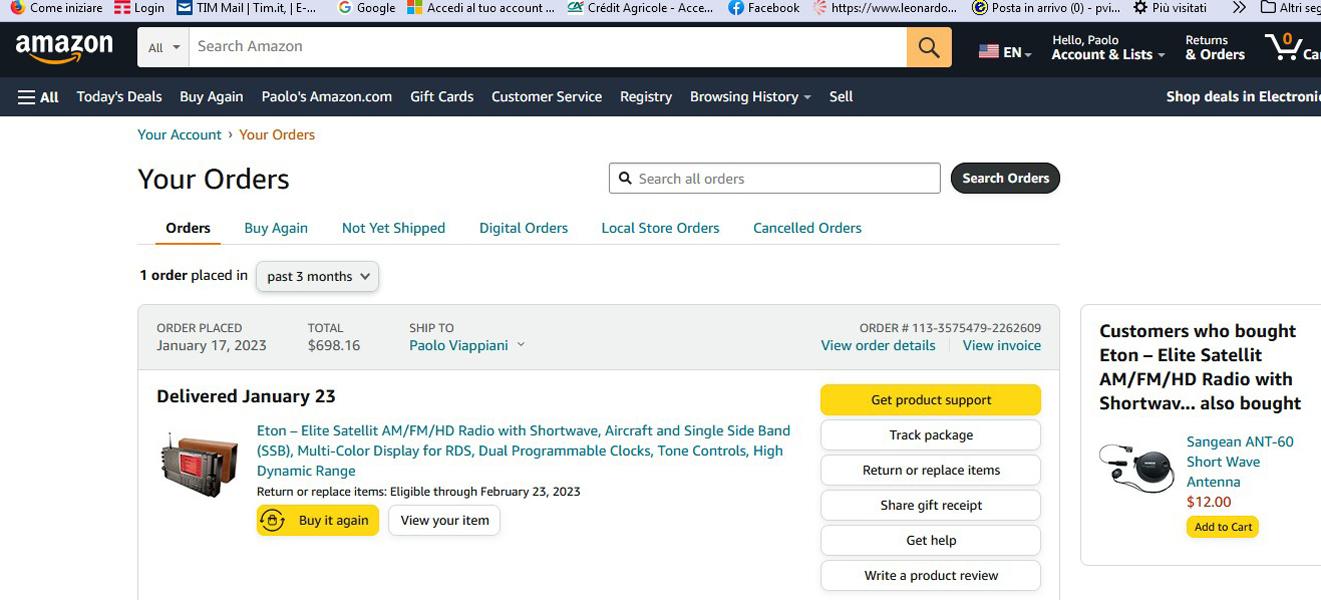
I therefore ordered an ETON Elite Satellit portable radio on the Amazon.com website on January 17, 2023 at the price of $698.16 (including shipping and customs duties). I report in Figure 1 the screenshot concerning my order #113-3575479-2262609 which, as it appears, was delivered to me on January 23, 2023, after only five days; this demonstrates the truthfulness of my statements.

Figure 1: A Screenshot of my Amazon.com order dated January 17, 2023.

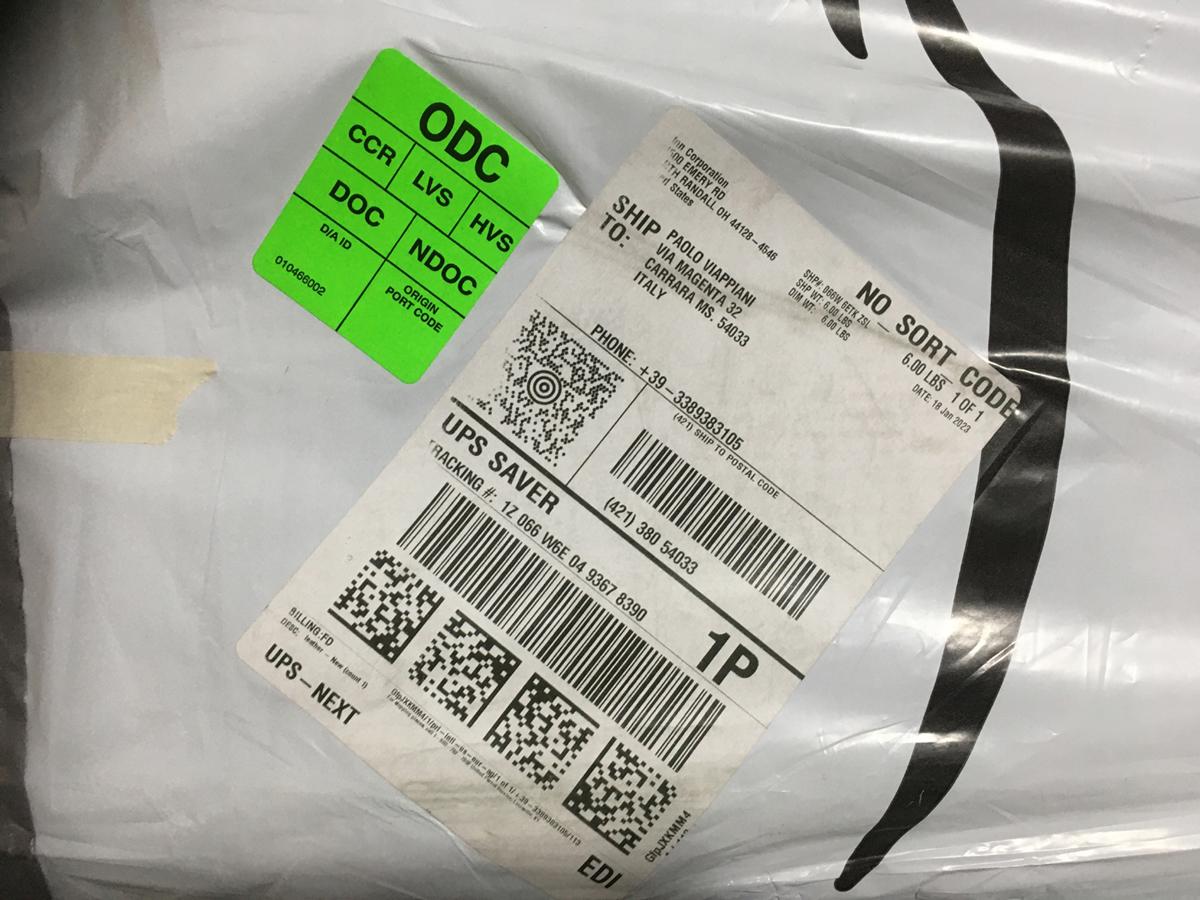
The shipment was delivered to me by UPS courier in the usual Amazon packaging in a plastic bag (Figure 2).

Figure 2: The UPS label and the Amazon plastic bag.

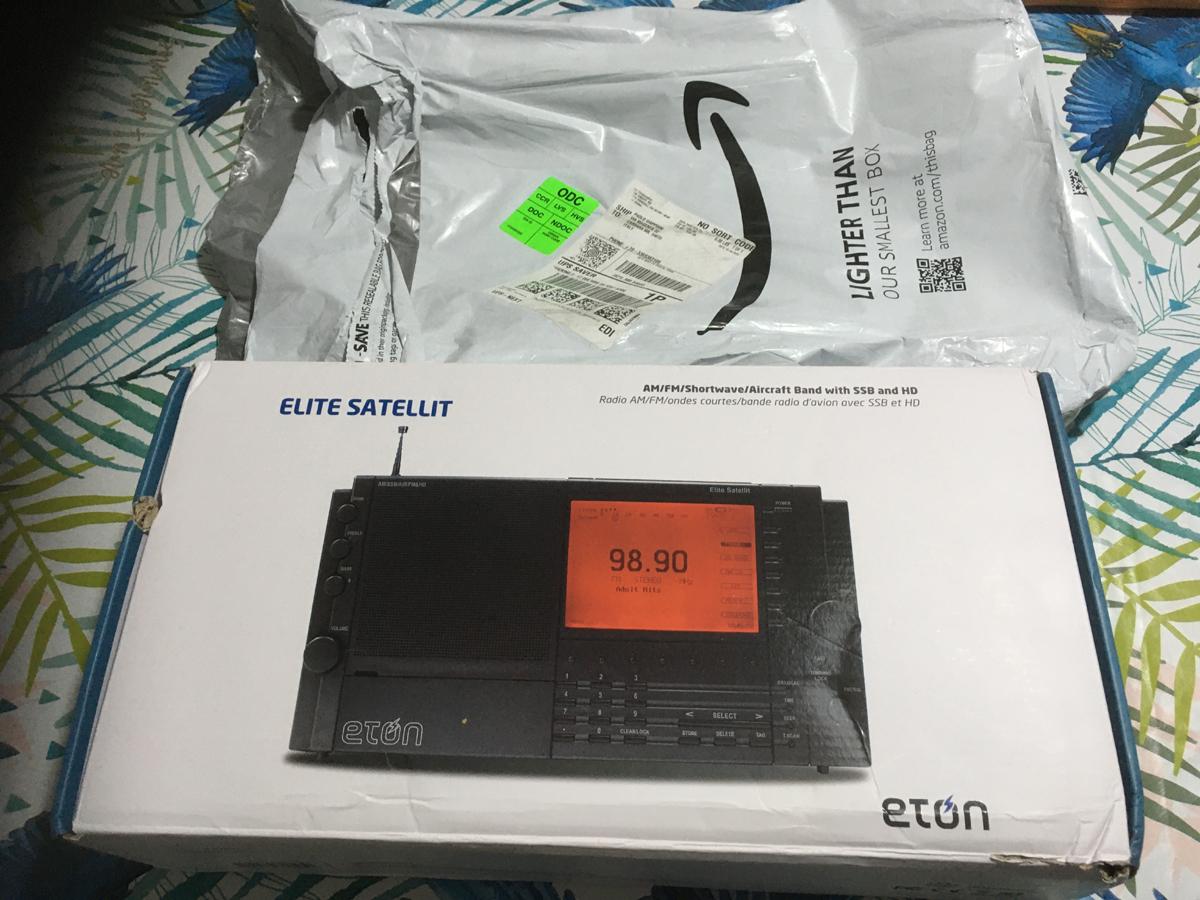
Inside the envelope was a cardboard box containing the radio, in understandably less than perfect conditions (Figure 3).

Figure 3: The cardboard box of the ETON Elite Satellit.

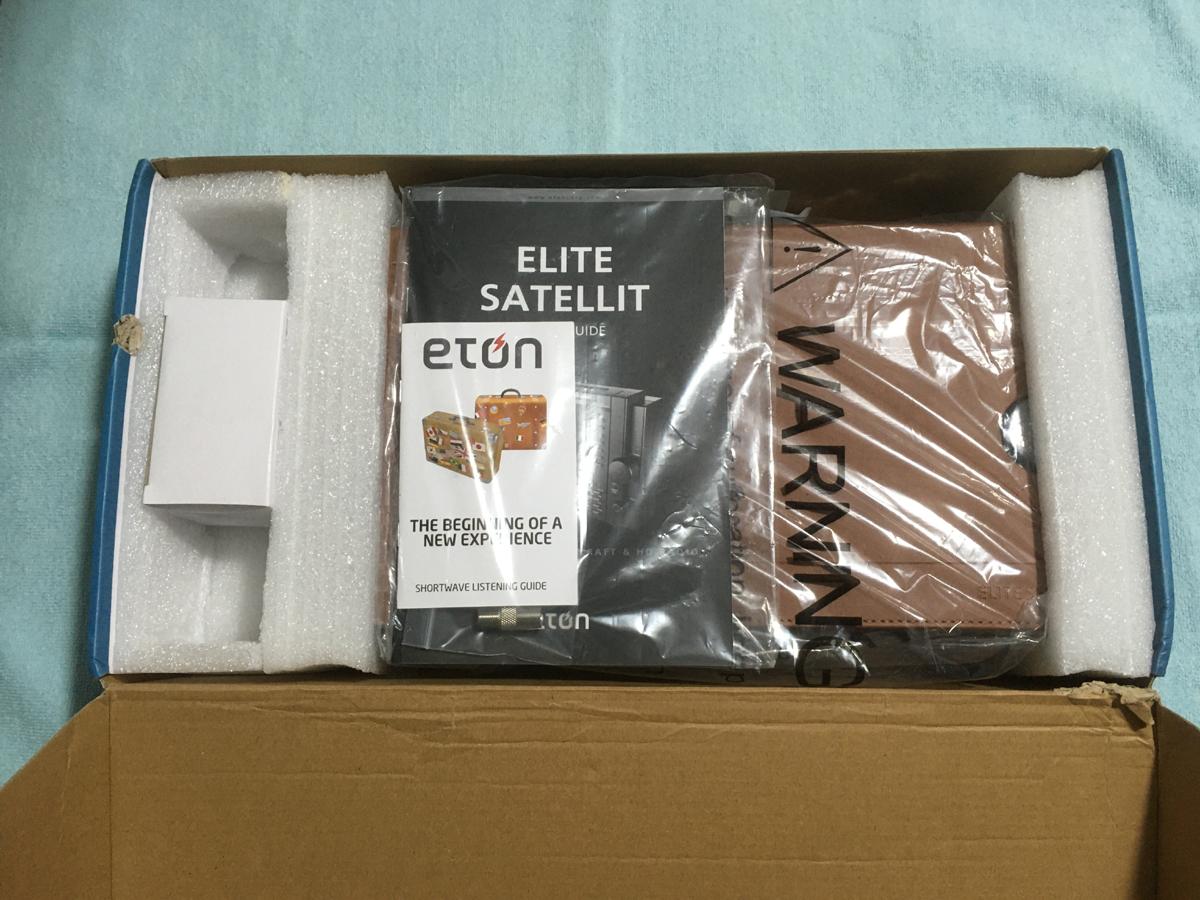
Figure 4: The contents of the radio box.

Once the package was opened, the contents of the box looked like in Figure 4: two shock-absorbing spacers held the device in position (inserted in a plastic bag) and its AC power supply (into a white box, and obviously with a 117V input voltage). There was also the “User Guide” in a paper version and a “mini-guide” to listening to short waves; completely absent was the CD that used to be enclosed in the box of the previous E1 version of the radio.

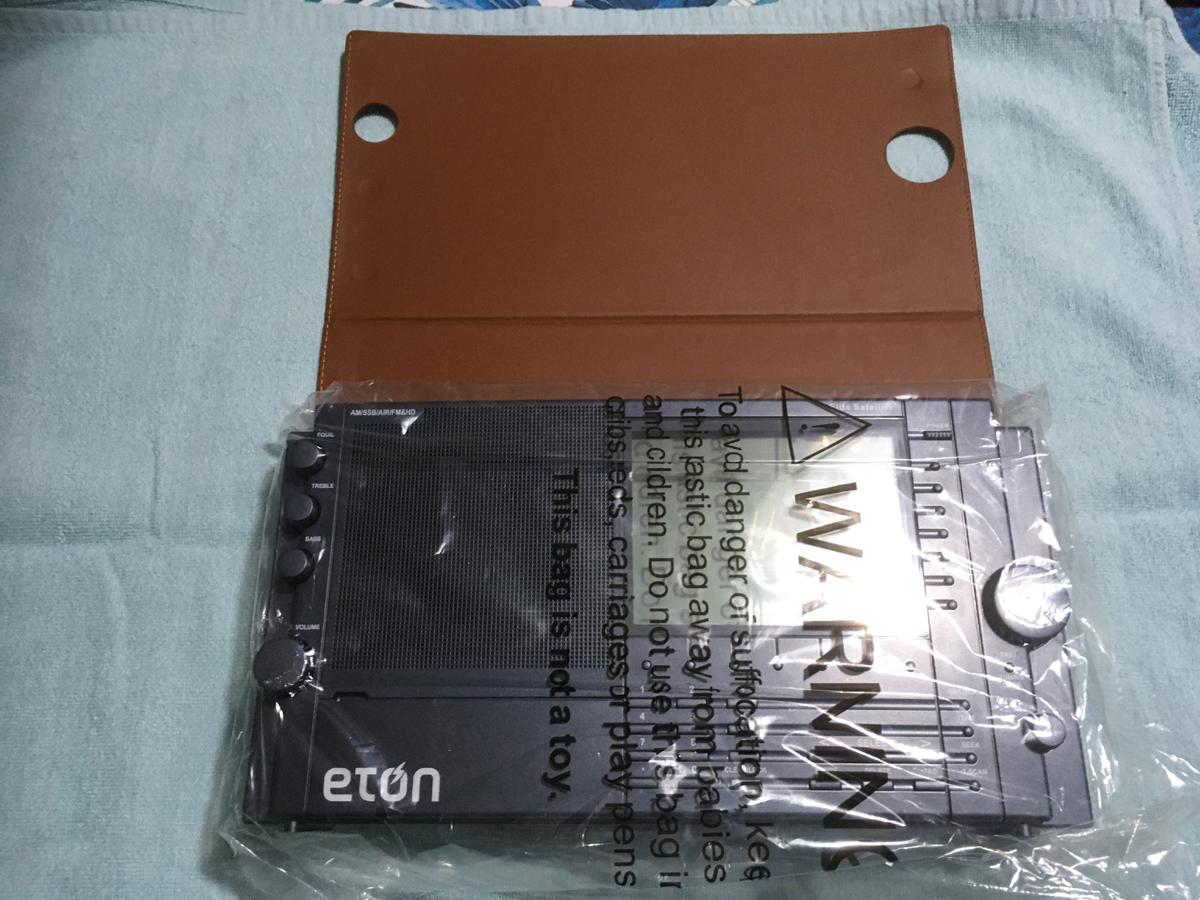
Continuing with the operations, I came across a sort of brown plastic cover intended for the protection of three sides of the radio (front, top and back) which can be held in position by some magnets and is provided with two circular holes in correspondence with the tuning knobs and volume of the radio (Figure 5).

Figure 5: The ETON Elite Satellit radio and its “case” (?)

I omit to make comments on this “protection”; I only say that in my opinion it is useless (and ugly too) and I believe that the gentlemen of ETON could have wasted their energies otherwise; but maybe someone likes it too…

Figures 6 and 7 show the front and back of the portable radio as soon as it has been removed from the protective plastic bag. Note the almost identical appearance of the cases of the Elite Satellit and of the previous E1 model.

Continue reading

Loop-On-Ground Antenna Part 3: Tom’s low-noise, low-profile, portable antenna evolves

Loop on Ground Antenna Part 3

(using multiconductor wire)

by TomL

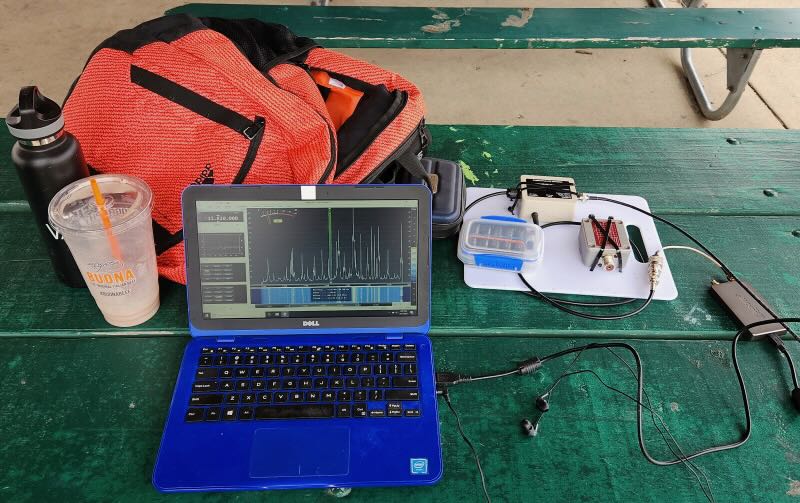
It dawned on me recently, perhaps due to sloppy thinking or unintended distractions, that I never wrote about my modified Loop on Ground (LoG) receive antenna that I use at parks and such.  For over a year now, I have been using 3-conductor rotor wire bought cheap at the local hardware store and have wired the conductors in series.  Grayhat (Andrew) was the inspiration when he decided to create a folded dipole along the side of his house.

The usual construction of a LoG antenna for shortwave is a single wire of about 60 feet in circumference in order to not go above one wavelength for 20 meter band usage.  If you recall, going above one wavelength will start creating weird lobes in the reception pattern.  See – Loop-On-Ground Antenna Part 2.

However, I did not like this 19 foot diameter wire on the ground in public parks just waiting to be tripped over.  Like, the time when a horse got loose from its owners and almost tripped over my 60 foot wire.  I don’t think I would have liked the resulting lawsuit!

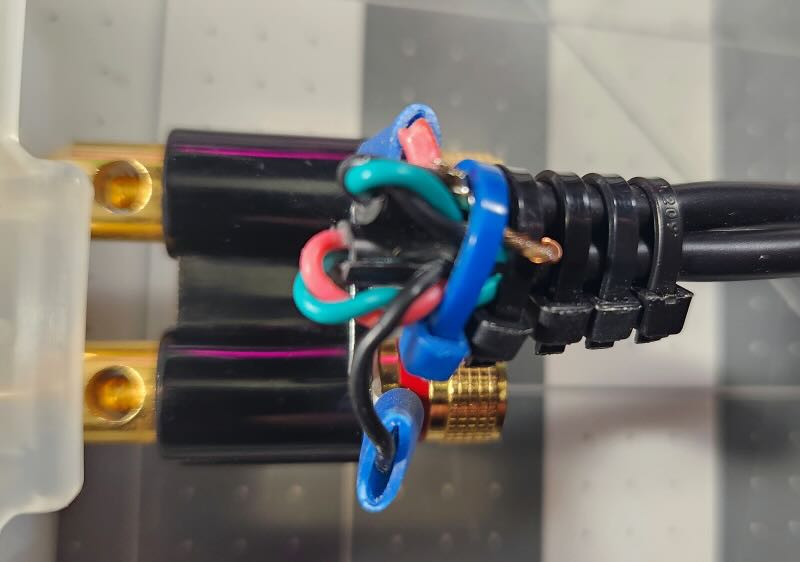
So out of fearful necessity I took some leftover RCA 3-conductor rotor wire, about 29 feet of it, and wired a loop with the conductors in series.  This gives about 81 feet of total conductive length.  But since it is folded onto itself, there is an undetermined loss of resonant length.  Callum (M0MCX) of DXCommander fame has experimented and found folded dipoles need three times more length in the folded section to reach resonance, so my loop is probably around 69 feet (electrically).  See – Fold the end of a Dipole Back – What’s Happening?.

In the picture below, the black wire with Ring Terminal at the bottom goes all the way around to the other side, soldered to the green wire, which goes around and is soldered to the red wire, which goes around to the Ring Terminal at the top, plus tie-wraps to hold the wires together.

The next picture is how the Wellbrook Medium Aperture preamplifier is connected to the loop with BNC cable that goes to the 12V power injector.  I have had this Wellbrook unit for maybe 6+years with no signs of problems.  WARNING – do NOT use the Wellbrook preamplifier in the presence of high powered RF energy like your Amateur Radio antenna pumped with 1000 watts from a  linear amplifier; the Wellbrook premap might just overload and get damaged!  I did use this loop and preamplifier at last year’s 2022 ARRL Field Day and was able to get away with it because we were only using 100 watts per station.  Listening to the 9pm 3916-net trivia group was fun but I still needed to keep it away from the transmitting antennas. Continue reading