Author Archives: Thomas

WRTH 2022: Two very important announcements…

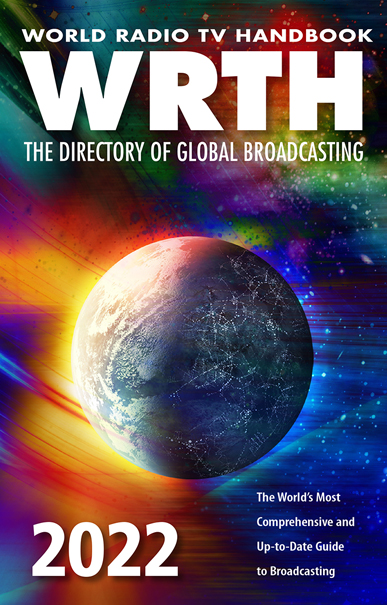
If you’ve been reading the SWLing Post for long, you’ll know that I’m a huge fan of the annual World Radio TV Handbook (WRTH). If you’re a fan of WRTH as well, I’ve got some good news and some…well…less than good news.

Good News: WRTH 2022 is Shipping!

The new 2022 edition of the WRTH has been printed and is shipping.

Purchase your copy of WRTH 2022 directly from WRTH’s publishers, or from a distributor like Universal Radio (US) , Amazon.com (US),  or the Book Depository (international).

Bad News: WRTH 2022 will be the final edition by WRTH Publications

WRTH’s publisher, Nicholas Hardyman, shared the following announcement today:

Having produced this book for the past 24 years we are very sorry to announce that WRTH 2022 will be the final edition of World Radio TV Handbook produced and published by WRTH Publications. This was a hard decision to make and one we only made after a lot of discussion. We know that many people rely on WRTH and greatly enjoy getting the new edition every year. We realise that this news will be disappointing for many people.

We want to thank you all for your loyal support over the years.

I know this must have been a very difficult decision for the WRTH team. While it is disappointing news, I wish everyone at WRTH the very best. I’ve gotten to know this team, especially Nicholas, over the years and it’s been an honor to work with them and even write a few of their reviews.

What now?

I believe WRTH will maintain an online presence for years to come. I would encourage you to keep their website bookmarked. Of course, we’ll announce any changes or updates to the WRTH site.

My advice? Don’t hesitate to buy the 2022 Edition!

Seriously. I can’t tell you how many readers over the years have told me they regretted not purchasing the final edition of Passport to Worldband Radio when it was new. Many didn’t realize that particular year would be the final edition and missed the opportunity.
In this case, we now know the 2022 edition of the WRTH will be the last. We have to assume the company printed roughly the same amount of books that they did last year since the decision was made after the book had gone to print.

In other words, the supply will be similar to last year, but I predict demand will be much higher with readers knowing in advance that this is the final edition.

My advice would be that if you want the 2022 edition, I would bite the bullet now instead of waiting.

Purchase your copy of WRTH 2022 directly from WRTH’s publishers, or from a distributor like Universal Radio (US) , Amazon.com (US),  or the Book Depository (international).

Again, here’s wishing everyone at WRTH Publishing the very best! Thank you for so many years of bringing our amazing international radio world into print.

Guest Post: Pavel’s Homebrew “Monster” Drain Pipe FSL Antenna


Many thanks to SWLing Post contributor, Pavel Kraus, for the following guest post:


Building a Drain Pipe FSL Antenna

by Pavel Kraus

Hi, I greet all DX fans and the entire SWLing Post community! I enjoy reading reading this blog and the diversity of contributions from our authors and contributors; many thanks from me for so much useful information.

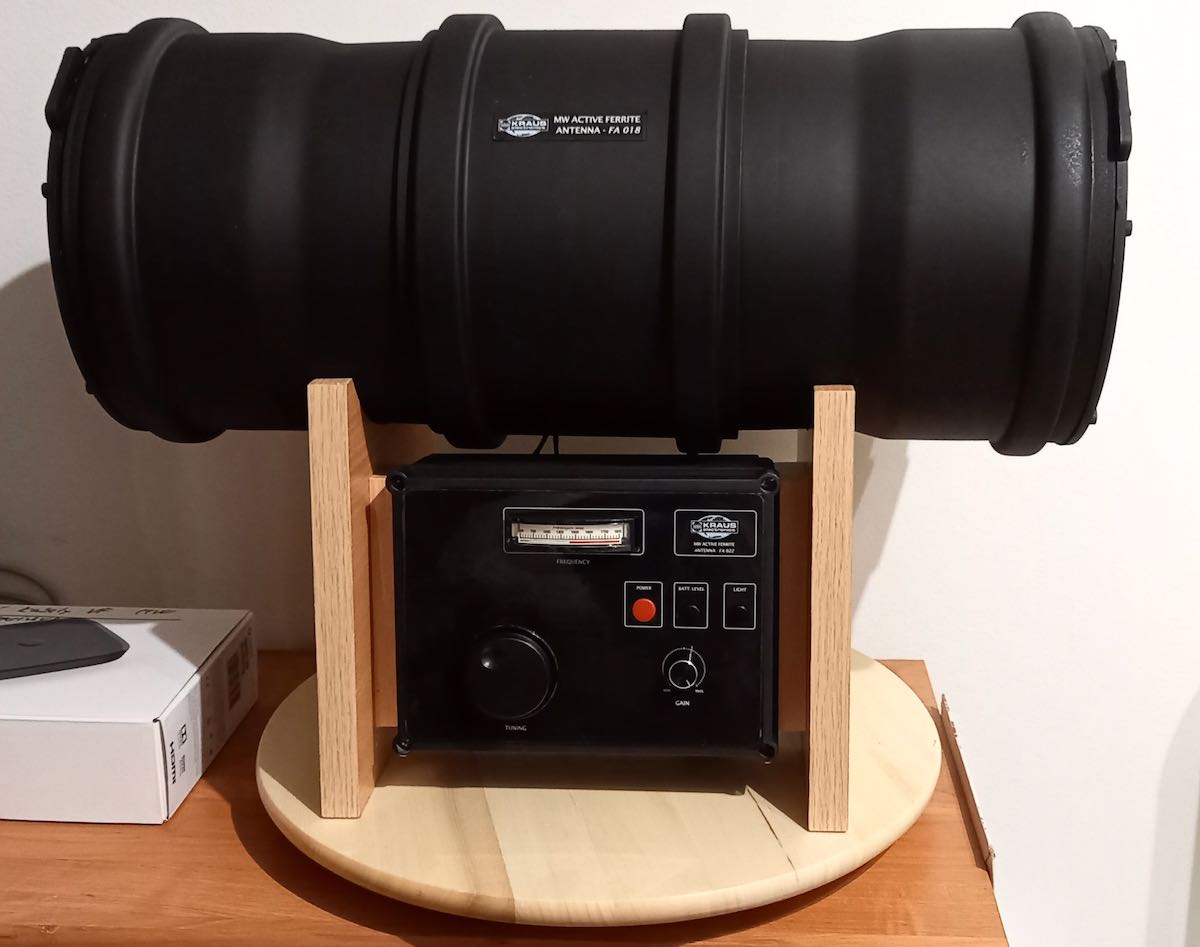
The following are the construction notes of my FSL antenna, which I designed thanks to the suggestions of GaryDeBock, and other FSL designers.

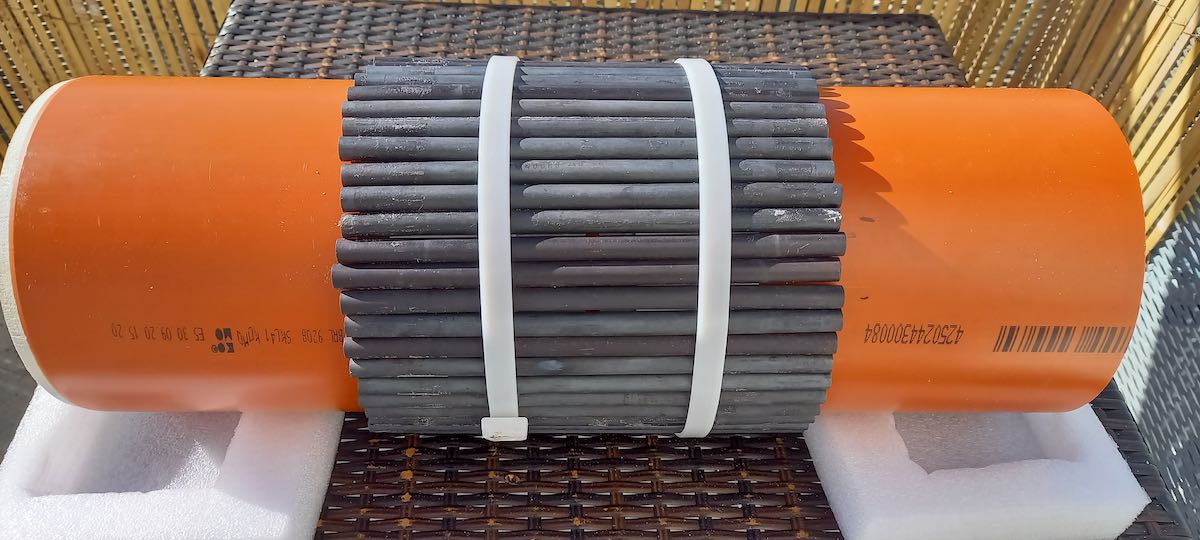
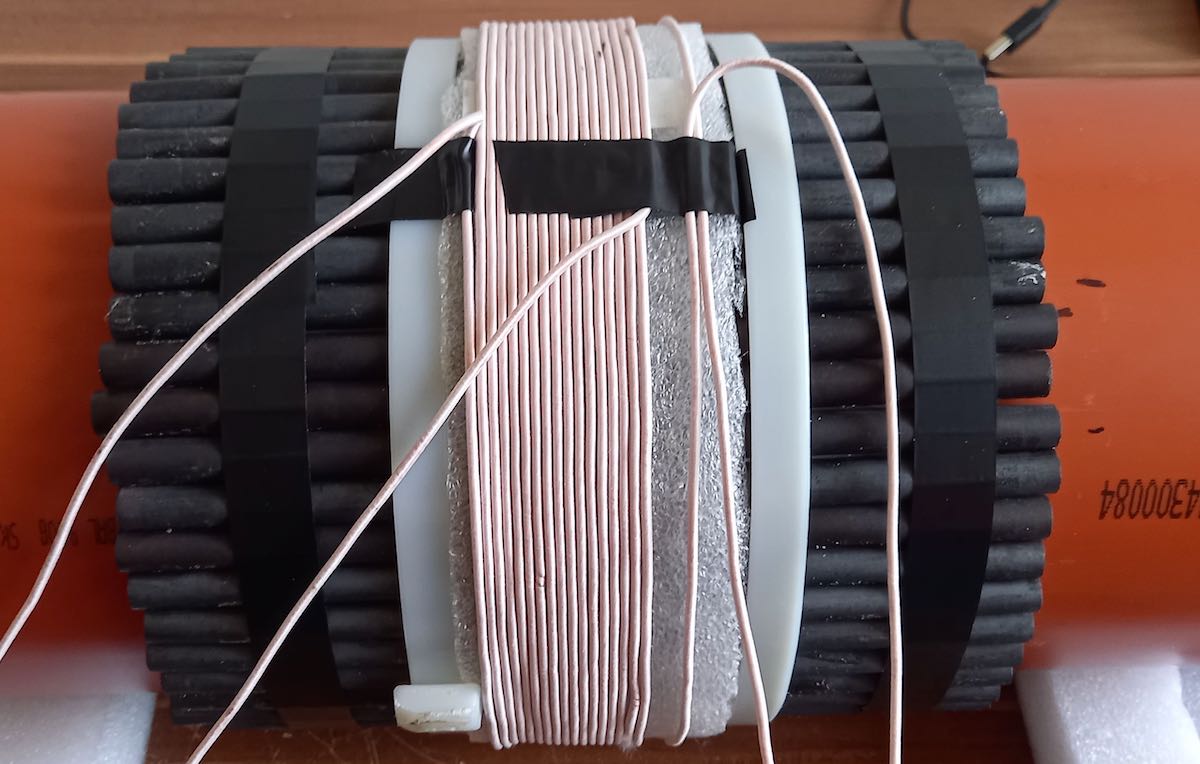
The antenna is a classic design featuring 60 ferrite rods 200x 10 mm, which are placed on a plastic sewage pipe.

Pict 3: Pipe with ferrite rods and windings

Pict 4: Pipe with ferrite rods and windings

In addition, sewer pipe sections are used for the entire antenna cover. I assume that this material can be obtained in other countries as well. Continue reading

Alan Roe’s B21 season guide to music on shortwave (version 2 update)

Many thanks to SWLing Post contributor, Alan Roe, who shares his B-21 (version 2) season guide to music on shortwave.

Click here to download Music on Shortwave B-21 v2 (PDF)

Thank you for sharing your excellent guide, Alan!

Note that this dedicated page will always have the latest version of Alan’s guide available for download.

Carlos’ Shortwave Art and Recording of Radio Oromiya

Many thanks to SWLing Post contributor and noted political cartoonist, Carlos Latuff, who shares another example of his radio log art, this time for Radio Oromiya.

Carlos notes:

Radio Oromiya, 6030 kHz, broadcasting in Oromo language from Adis Abeba, Ethiopia. Presenter accuses Western media of spreading fake news about the war in #Ethiopia.

Signal listened in Arraial do Cabo, Brazil, December 6, 2021, 20h10 (UTC).
Thank you Mr. Hamza Oromo for the translation.

Click here to listen on YouTube.

Dan compares the Chameleon CHA RXL to the Wellbrook and W6LVP Loops

Many thanks to SWLing Post contributor, Dan Robinson, for the following guest post and review:


Chameleon CHA-RXL:  Is This Pro-level Loop A Worthy Competitor To Wellbrook and W6LVP?

by Dan Robinson

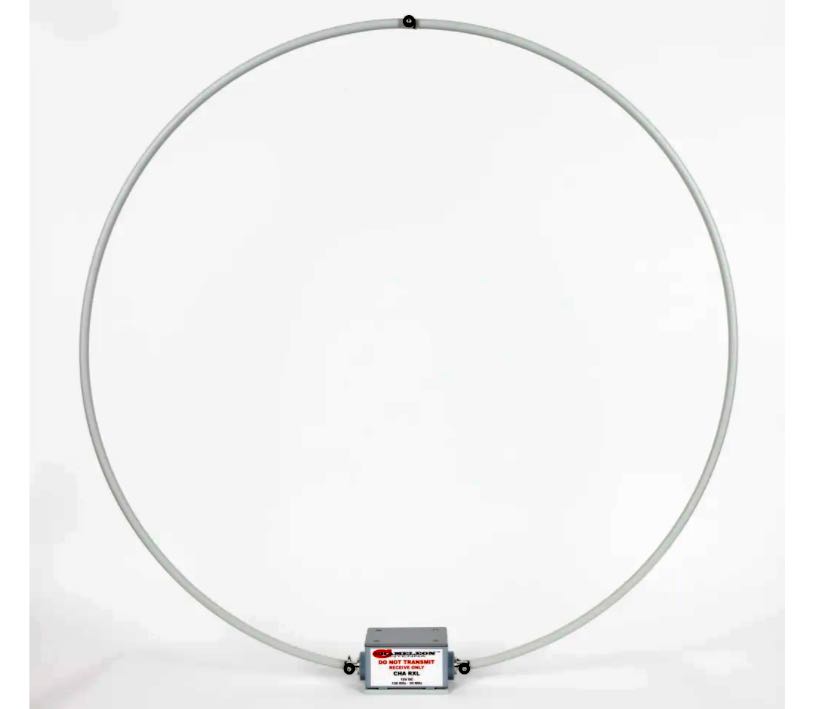
At the end of summer 2021, I took up an offer from Chameleon to test and review their CHA – RXL loop antenna.  The company describes this as a “new design high-performance” LF, MF, and HF receive-only loop perfect for mobile RV and apartment situations and with low noise characteristics.

This is not a cheap antenna, like the Chinese-made MLA-30, but a heavy duty professionally-built unit designed to, as the old TIMEX watch commercial said, “take a licking and keep on ticking”.

Price for the CHA RXL is around $500, though the company dropped the price at to $382 – but only for the two section loop rather than the single piece antenna advertised on its site.

You can see the Chameleon on the company’s website here, but it’s also sold by Gigaparts, DX Engineering and other radio suppliers.  Chameleon lists features as:

Highly directional, balanced input preamplifier to eliminate environmental noise and ground loops, receives on new 2200m and 630m ham bands, flexible mounting and power options, and a stealthy [36 inch] Navy gray loop [that] fades into the background sky.

The built-in preamplifier, says Chameleon, “will enable clearer reception than many large horizontal wire or vertical antennas.”  Weight of the amplifier is given as 7 lbs.  The large pre-amp box is made of heavy metal, with a rubber gasket seal. Continue reading

Radio Preservation Task Force announces partnership with the Shortwave Radio Audio Archive and Radio Spectrum Archive

I’m honored to announce that the Shortwave Radio Audio Archive and the Radio Spectrum Archive are now partners of the Radio Preservation Task Force.

Click here to read the official press release.

To say that I’m enthused would be an understatement:  the Radio Preservation Task Force has, as of today, officially partnered with the Shortwave Radio Audio Archive and Radio Spectrum Archive.   

When I learned that the Library of Congress’s National Recording Preservation Board created the Radio Preservation Task Force (RPTF) in 2014, I became an enthusiastic contributor early on, having started a modest preservation project myself only a few years prior.  Then, a partnership like the one created today would have been one of dreams.

As many of you here know, I’m not only passionate about technologic innovations in our radio space, but also preserving our past.

Shortwave Radio Audio Archive

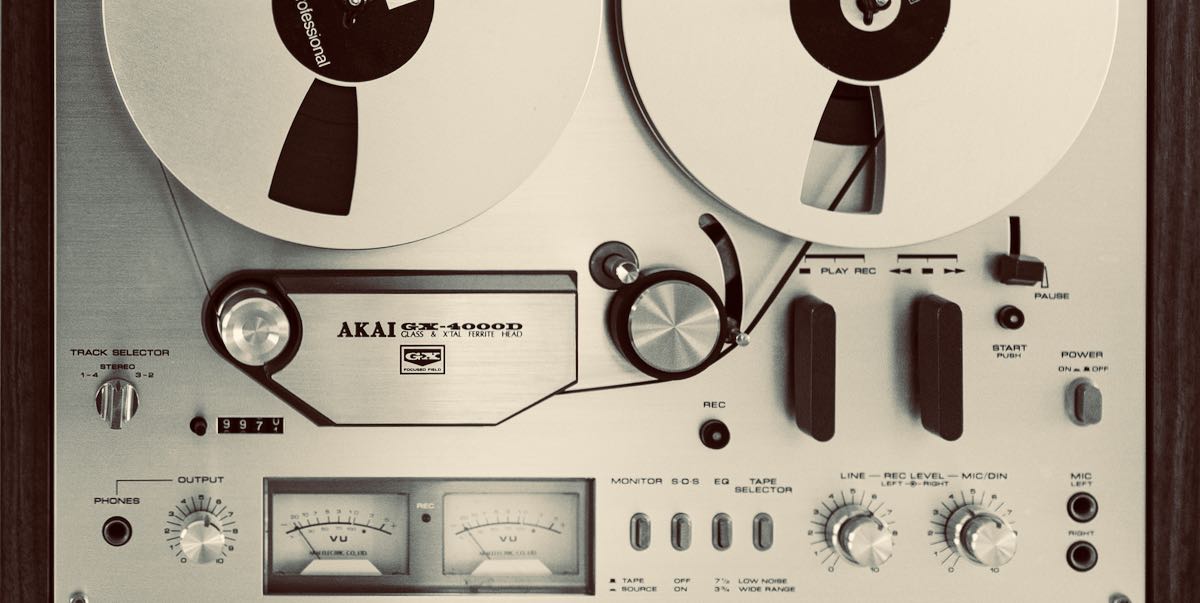
It was in 2012, in response to a round-table discussion at the Winter SWL Fest, that I created the Shortwave Radio Audio Archive (SRAA). Many of us in the radio community were concerned about the number of original, made-from-home, off-air shortwave radio recordings (airchecks) that we knew were in existence, yet were simply disappearing with the passage of time. We were well aware of members of our community who had either passed away or downsized, and many of their recordings––some of pivotal world events––were being tossed out by well-meaning loved ones or friends who simply didn’t understand their relevance. In addition, many of these recordings were captured on magnetic tape, which becomes brittle with time; we knew these recordings were literally turning to dust.  I felt I had to do something.  The SRAA was that something.

Fortunately for me, the SRAA’s mission has really resonated within our radio community. Today, we have thousands of off-air recordings, all freely available to everyone. The recordings can be downloaded directly from the archive, but many listeners simply subscribe to the SRAA Podcast and receive each recording automatically, as it is published.

Turns out, the archive also attracts the interest of individuals outside of our radio world including historians, musicians, and filmmakers. Indeed, the archive has even been reviewed in The Wire Magazine by a music critic as an audio resource for electronic musicians. At time of posting, the SRAA is the inspiration for artists in the latest Cities and Memory project Shortwave Transmissions.

The archive is not, nor has ever been, monetized; it has no commercial sponsorship, and is completely funded by its contributors. It is free and open to everyone.

I’m exceedingly grateful to our many contributors who continue to unearth absolutely amazing off-air recordings. Our SRAA contributors are true champions of preserving our radio heritage in a space that will long outlast us.  We’ve taken measures to ensure that multiple archivists have full access to the site, so its existence isn’t dependent on any one individual. We also actively seek organizations and educational institutions who can house redundant copies of the Archive.

And still it grows.

Radio Spectrum Archive

Compared with the SRAA, the Radio Spectrum Archive (RSA) is still in its infancy.  But it, too, is growing, and the reason for this steady and growth is the existence of its contributors and other supporters.

Of course, while audio recordings––like those in the SRAA––are relatively small (often between 2 – 120 MB), spectrum recordings are larger by orders of magnitude.

As you might imagine–even in 2021/2022–it is not a simple task to digitally archive and share/move 20GB to 2 TB collections. We are incredibly fortunate in that the Internet Archive supports the RSA and gives us valuable real estate on their servers to preserve and share recordings.

With time, this collection will grow and become a resource for everyone. Our hope is that we may even be able to built a web interface (much like those used by Web SDRs) to play back recordings without having to physically download them.

My wholehearted thanks…

Of course, none of this would have been possible without the many contributors from within our radio community. Thank you all so much for being a part of a movement that archives our amazing, and amazingly diverse, radio history. You have made this possible.

Finally, I’m so grateful to the Radio Preservation Task Force––not just for this empowering partnership and what it means to us today, but for the future potential it represents.  It’s clear that we’ve only just begun.

Thank you––thank you––thank you, all.

Thomas Witherspoon

17th Edition of the Global Radio Guide (Winter 2021-22) Now Available

(Source: Teak Publishing Press Release)

17th Edition of the Global Radio Guide (Winter 2021-22) Now Available

On any given day, the People’s Republic of China (PRC) fueled by a meteoric rise in the country’s economics, politics, the covid pandemic, cyber security and human rights issues, Beijing Winter 2022 Olympics, and a strident expansion of the country’s military forces dominates global news headlines and news cycles. These headlines include China’s recent tensions with Taiwan, which are said to be the worst in forty years, and its other neighbors in the South China Sea region.

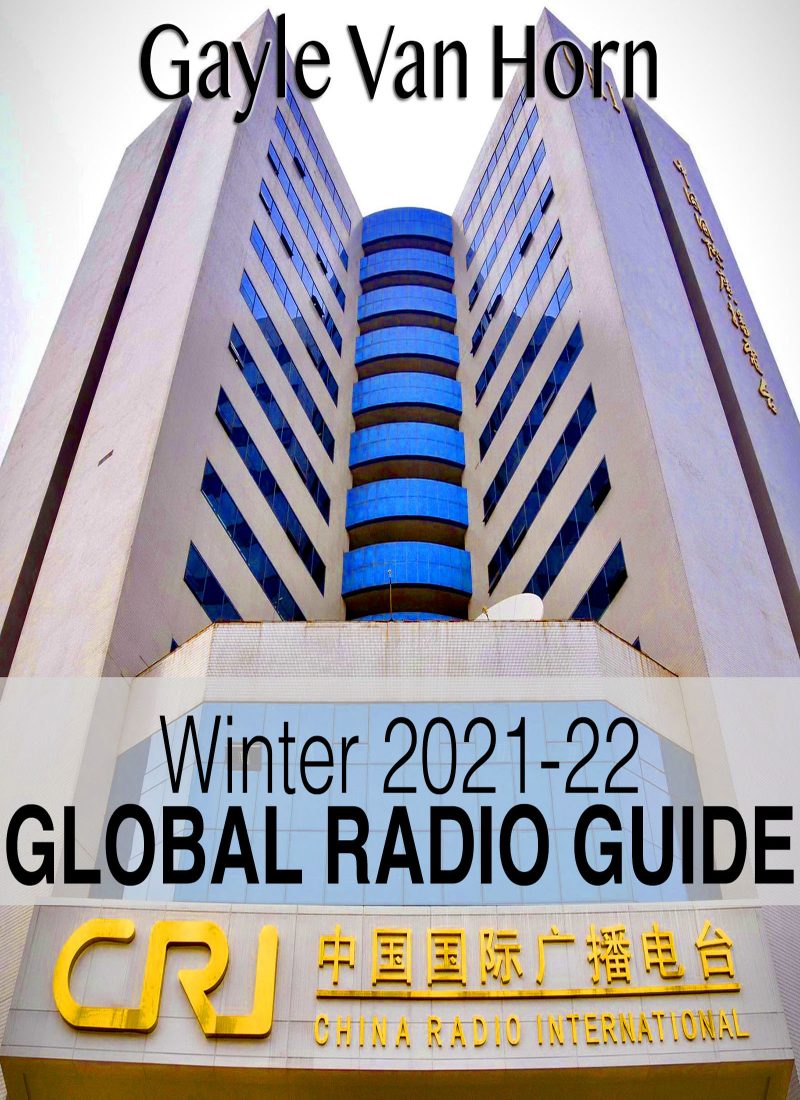
As China’s influence continues to expand worldwide, so have the country’s huge radio broadcast services. Local, regional, and international mediumwave and shortwave networks carry news and programming to audiences around the world. Since these services are government-sponsored you are hearing China’s Communist Party’s (CCP) perspective of worldwide events as they unfold. Topping the list of the country’s media outlets is China Radio International (CRI) the largest and most widely heard station in China.

For those who want to follow all the ongoing storylines originating from the PRC, Gayle Van Horn’s 17th Edition of her Amazon bestselling Global Radio Guide (Winter 2021-22) has all the details you need to monitor all the radio services from the Land of the Red Dragon.

Her feature is one of the most comprehensive articles ever written on the Chinese radio broadcast system. Complete schedules for all China radio services, a section of how to ID national stations broadcasting in Chinese, and links to videos with CRI IDs in 45 languages on the author’s YouTube channel that are just some of the materials you will find in this all-important cover story in the GRG. This is an indispensable guide to for the radio listener to hear China as tensions in the region continue to heat up.

China’s broadcasters are not the only focus of this completely updated edition of the GRG, though. Worldwide, tensions are continuing to escalate, and – in another case of what is old becoming new – people around the world are once again turning to shortwave radio to place themselves on the front lines.

With the help of the GRG, you can tune in to shortwave broadcast stations from other hotspots such as Cuba, India, Iran, North/South Korea, Taiwan, Hong Kong, and many other counties. If you have a shortwave radio receiver, SDR or Internet connection, pair it with this unique radio resource to know when and where to listen to the world.

This newest edition of the GRG carries on the tradition of those before it with an in-depth, 24-hour station/frequency guide with schedules for selected AM band, longwave, and shortwave radio stations. This unique resource is the only radio publication that lists by-hour schedules that include all language services, frequencies, and world target areas for over 500 stations worldwide. The schedules included in this edition of the GRG are valid from 31 October 2021 until 26 March 2022, the B21 broadcast schedule period.

The GRG includes listings of DX radio programs and Internet website addresses for many of the stations in the book. There are also entries for time and frequency stations as well as some of the more “intriguing” transmissions one can find on the shortwave radio bands.

Gayle has also updated her now-famous SDR Buyer’s Guide, a must-have compendium that helps you navigate through the revolutionary world of software-defined radios (SDRs), the new digital frontier of the radio hobby.

Also new in this 17th edition, James Careless, in an article that originally appeared in Radio World, looks at the current state of shortwave receiver technology. Dr. Adrian Peterson of AWR looks back at the early days of Philippine broadcasting. David Harris has written a review of the bhi NES10-2MK4 Noise Cancelling Speaker. Spectrum Monitor columnist Fred Waterer will take you on a guided tour of shortwave music programs from around the world.

There are updated columns including the latest radio news in Bits & Bytes, current radio QSL information and addresses, the Best of the Best DX shortwave program listings, and a listing of radio station Internet websites.

This edition also has introductory articles for beginners on Traveling the World via Shortwave Radio Broadcasts, Monitoring the Shortwave Action Bands, and Teak’s latest greatly expanded frequency list of HF non-broadcast radio stations worldwide.

Global Radio listeners are routinely entertained with unique perspectives to events, music, culture, history, and news from other countries that you will not see or hear on your local or national broadcast channels. Global Radio broadcasts are not restricted by country borders or oceans and can travel thousands of miles, reaching millions of listeners worldwide, now in over 300 different languages and dialects.

Whether you monitor shortwave radio broadcasts, amateur radio operators, or aeronautical, maritime, government, or military communications in the HF radio spectrum, this book has the frequencies to help you to hear it all. Teak Publishing’s Global Radio Guide “brings the world to you.”

You can find this edition of the Global Radio Guide, along with all of Teak Publishing e-book titles currently available for purchase, on the Teak Publishing Web site at www.teakpublishing.com. This includes all previous editions of the Global Radio Guide available at reduced sale prices.

The 17th edition of the Global Radio Guide e-Book (electronic book only, “no print edition available”) is available worldwide from Amazon and their various international websites at

https://amzn.to/3py5JPd (SWLing Post affiliate link)

The price for this latest edition is US$8.99 for over 1000 pages of radio hobby content and frequencies. Since this book is being released internationally, Amazon customers in the United Kingdom, Germany, France Spain, Italy, Japan, India, Canada, Brazil, Mexico, and Australia can order this e-Book from Amazon websites directly servicing these countries. Customers in all other countries can use the regular Amazon.com website to purchase this e-Book.

You can read any Kindle e-Book with Amazon’s ‘free’ reading apps on literally any electronic media platform. You do not have to own a Kindle reader from Amazon to read this e-book. There are Kindle apps available for iOS, Android, Mac, and PC platforms. You can find additional details on these apps by checking out this link to the Amazon website at www.amazon.com/gp/feature.html?ie=UTF8&docId=1000493771.