Author Archives: Thomas

Installing the Belka-DX DSP speaker option

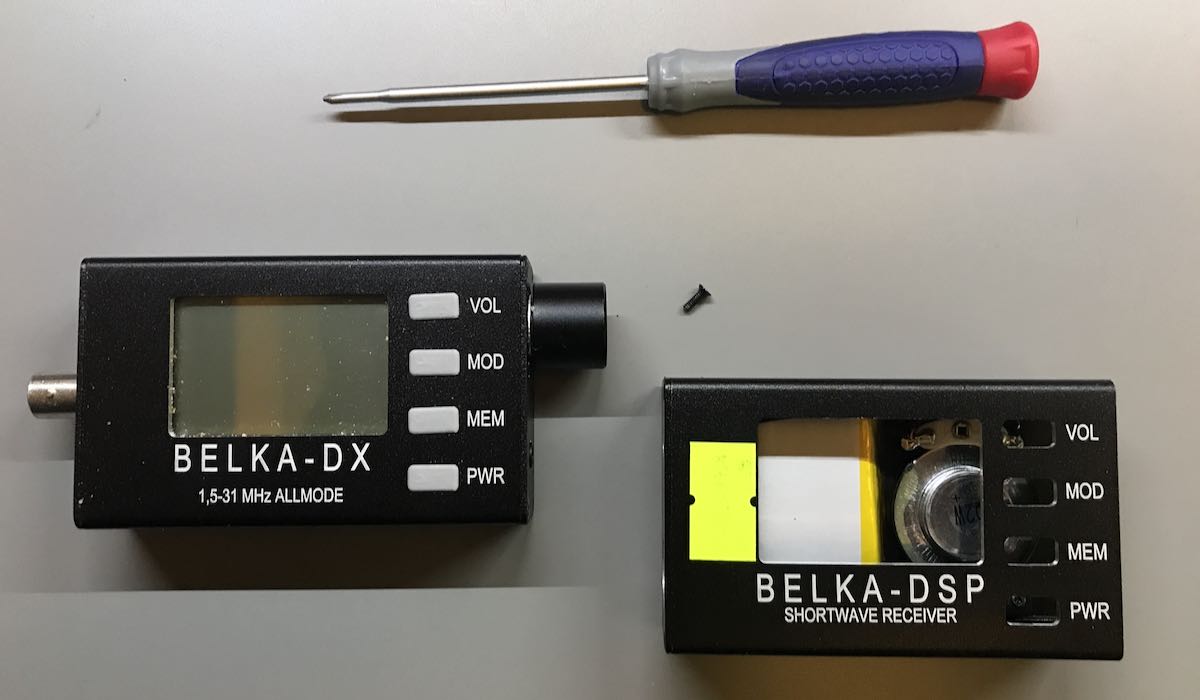
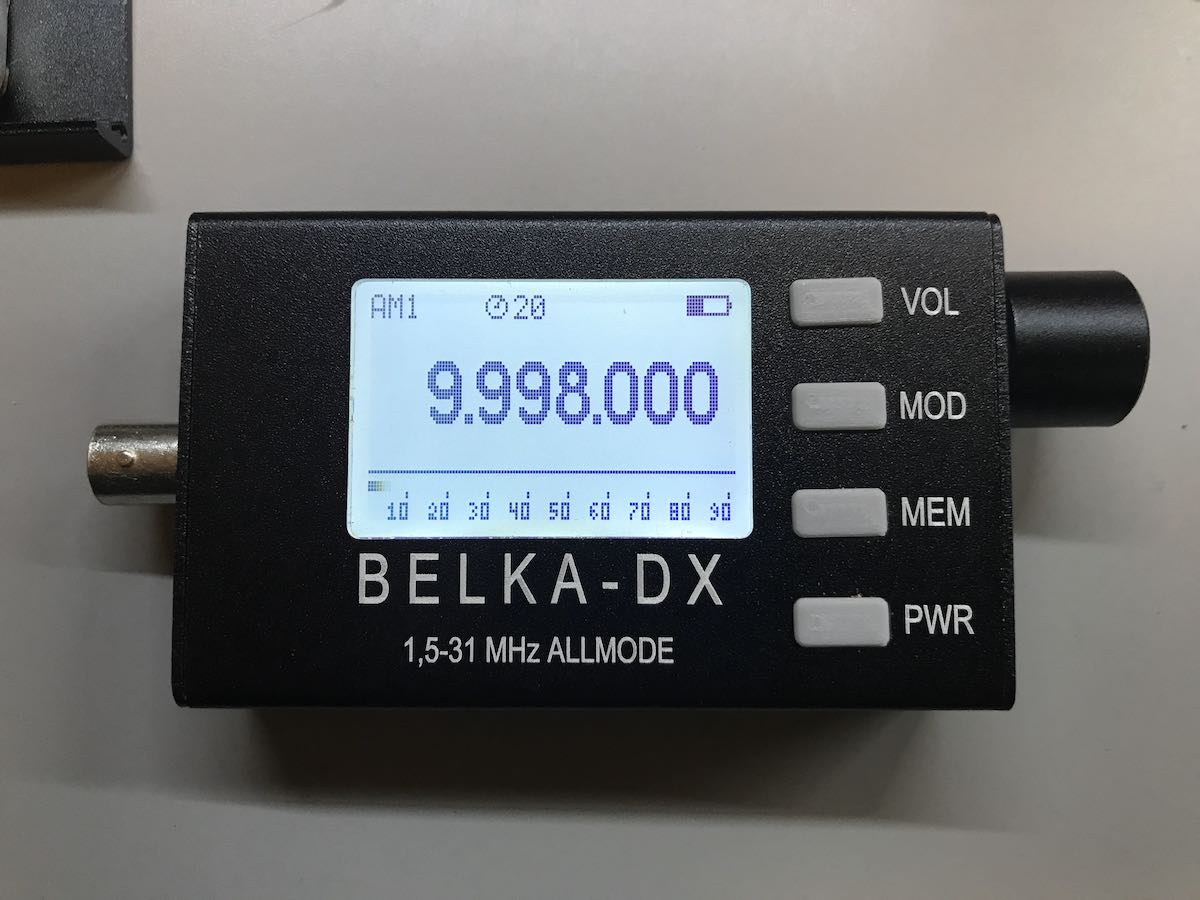
This month, I received my Belka DX speaker option in the post and recently did this very simple install. All it really requires is a small Phillips-Head screwdriver and maybe 10 minutes of time.

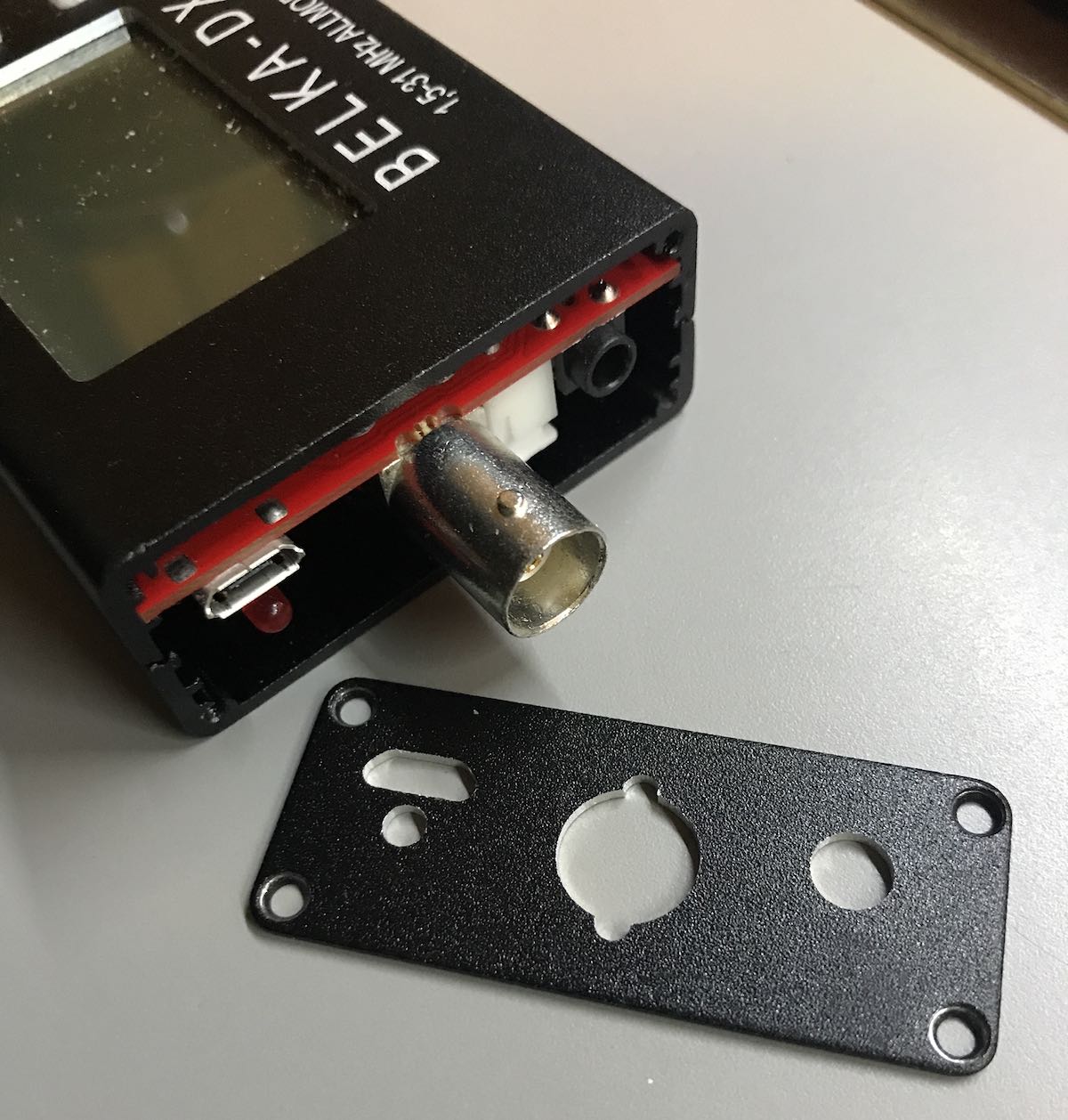
You start by removing the four screws holding on the left side panel. The side panel easily slides off over the BNC connector.

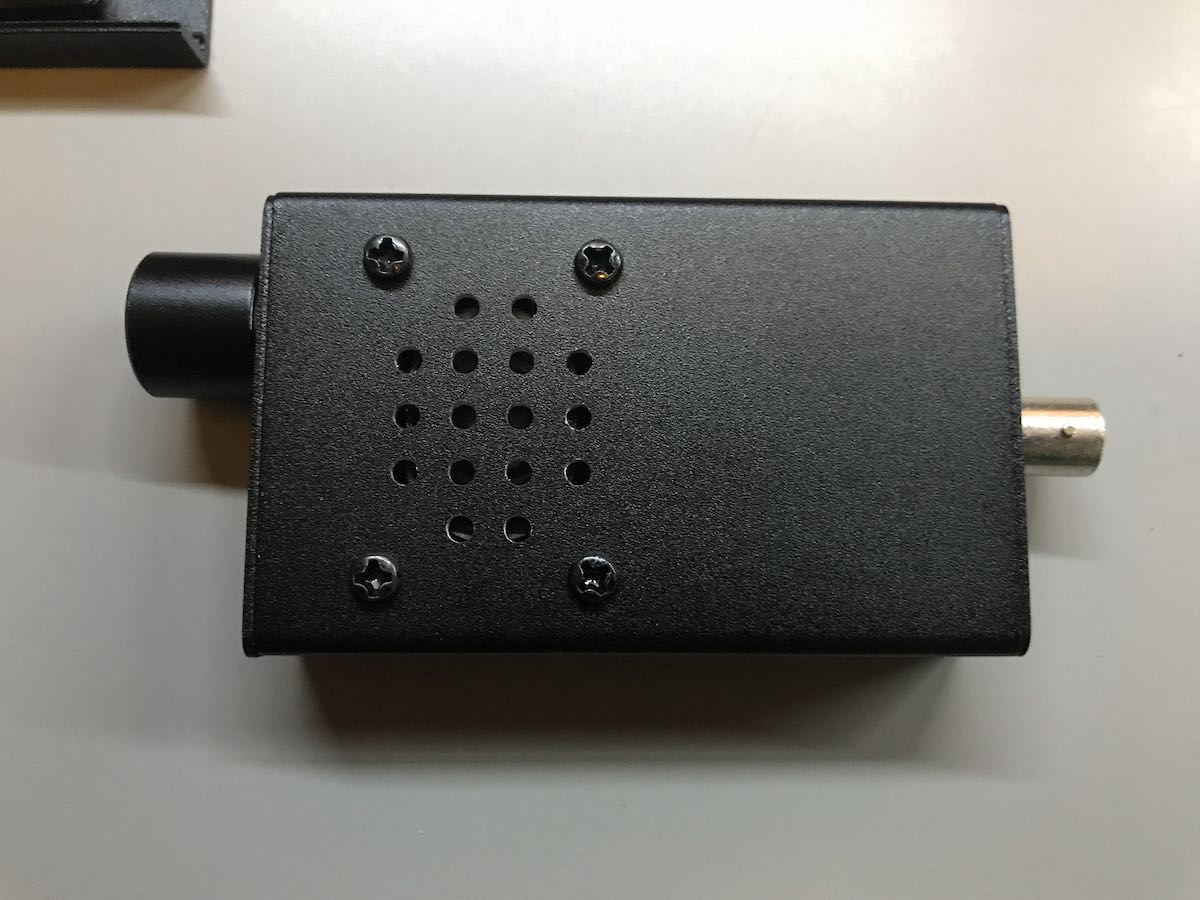
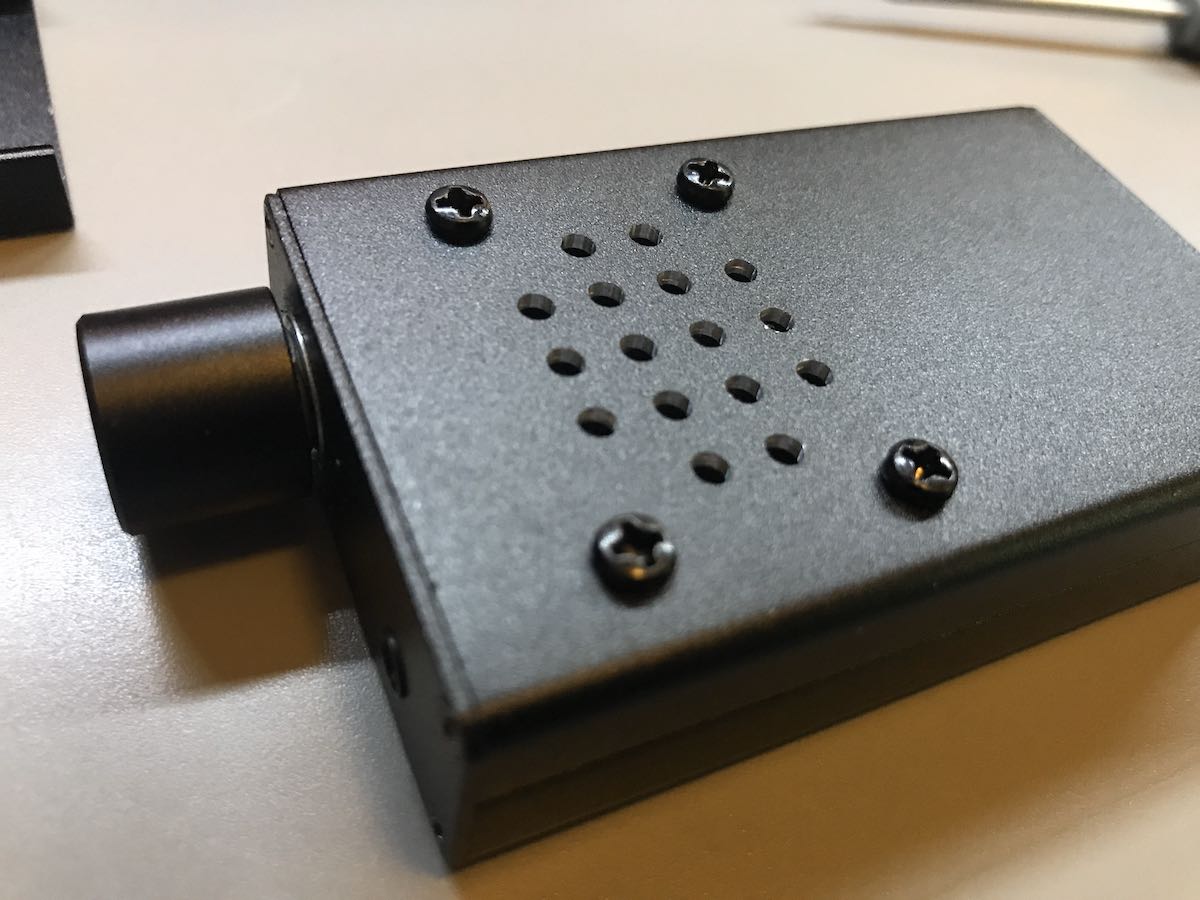
You then remove the bottom two screws of the right side panel. There’s no need to remove the top two screws as you will not remove this panel or the encoder knob. After removing the bottom two screws, carefully pull the bottom panel off.

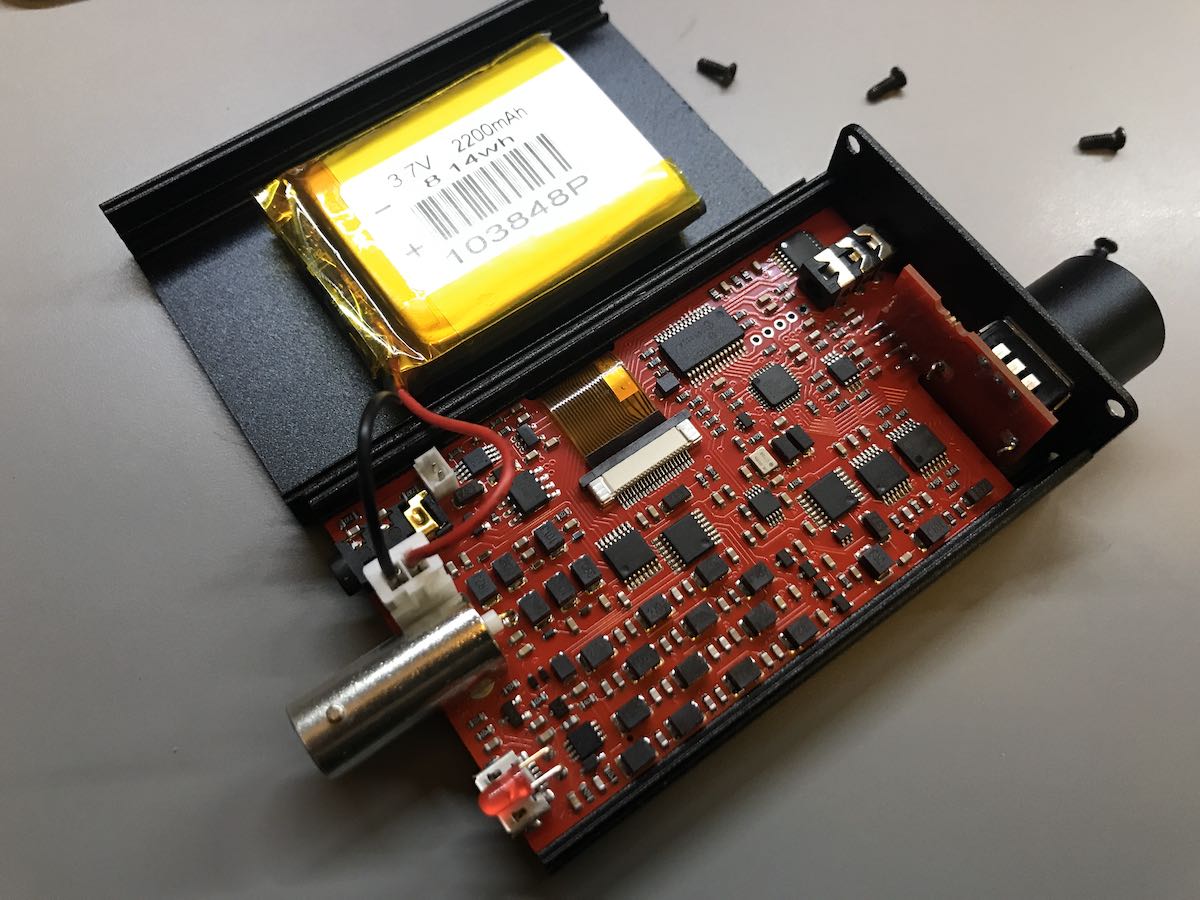
The battery is connected to the Belka-DX DSP board with an end that’s easy to unplug.

Simply unplug the battery, and plug in the new (smaller) battery of the speaker panel in the same position.

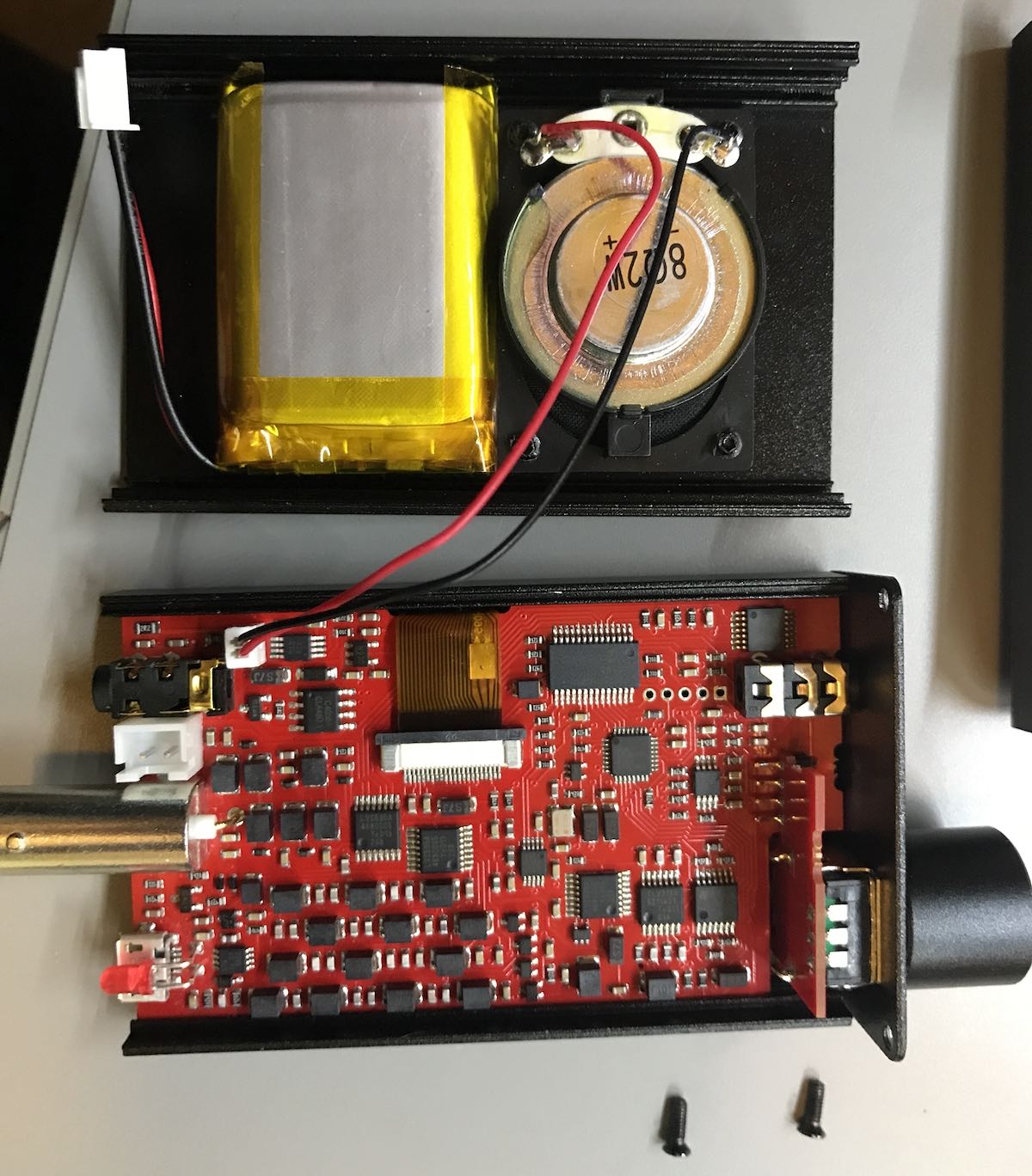
The speaker on the new panel needs to be connected, of course. In the photo above, you can see where it attaches to the Belka DX board (next to the headphone port).

Once you’ve plugged in the new battery and speaker, attach the new bottom panel to the radio, making sure the speaker and battery wires fold in properly. After you’ve put the two right panel screws in, reattached the left panel with four screws and the installation is complete!

The speaker is quite small, of course, but very functional. I love the fact that I no longer need a set of earphones or external amplified speaker to listen to the Belka DX.

I was concerned that the speaker would be too small to be functional and that the smaller battery in combination would dramatically decrease listening time per charge.

Not the case.

Although I haven’t done a continuos battery longevity test with the volume at a constant moderate level, it will power the radio for extended listening sessions. Of course this teeny internal speaker isn’t going to deliver room-filling audio, but has exceeded my expectations and certainly does the trick!

If you own a  Belka-DX DSP receiver, this is a worthy, affordable upgrade. The great thing is, you can always swap out the covers easily if you need the larger battery capacity during travels or DXpeditions.

Click here to purchase the Belka DX speaker option on Alex’s site. 

The Tecsun PL-368 is now on eBay

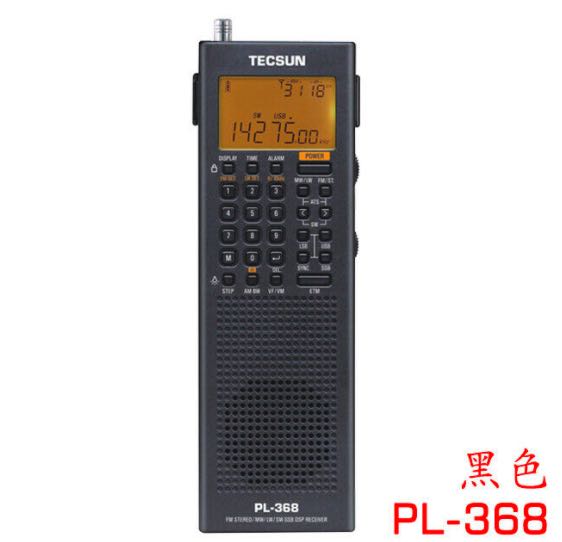
Many thanks to SWLing Post contributors, Tom, Markku, Dave Zantow, and Dan Robinson who note that the Tecsun PL-368 is now available via sellers on eBay.

Fans of the Tecsun PL-360 and PL-365 will be happy that among other things, the PL-368 has sync detection. The price is $88 US plus $3 shipping from China.

Click here to view on eBay.

The BBC World Service would like your feedback

Abdalla S, a Strategy Analyst with the BBC World Service, is asking for your feedback via email. He posted the following message today on his Twitter feed:

Are you able to hear BBC programmes in English on shortwave radio clearly? If not, was it because of interference from another signal or mechanical noise? Please write to us at [email protected] and let us know!

Let’s follow up with his request and offer him useful feedback via email.

Many thanks!

Radio Waves: RCI Staff cut in half, DRM Newsletter Notes, and VOA in the Press

Radio Waves:  Stories Making Waves in the World of Radio

Because I keep my ear to the waves, as well as receive many tips from others who do the same, I find myself privy to radio-related stories that might interest SWLing Post readers.  To that end: Welcome to the SWLing Post’s Radio Waves, a collection of links to interesting stories making waves in the world of radio. Enjoy!

Many thanks to SWLing Post contributors William Lee, Kris Partridge, Kim Elliott, and Jason Hauser for the following tips:


CBC’s plan for Radio Canada International sees its staff cut in half (CARTT.ca)

By Steve Faguy MONTREAL — This week, the CRTC began a two-week hearing into the renewal of CBC/Radio-Canada’s licences, a process which began more than a year ago. There will be days of questioning, dozens of intervenors appearing, and discussions of everything from children’s programming to the fees for CBC News Network to diversity, local news, online distribution and official minority communities. But one thing that probably won’t be discussed is a service the public broadcaster is specifically required by legislation to provide, relatively few know about, but that the company has seemingly treated like a forgotten stepchild: Radio Canada… [Note this article fades into a Paywall, but William recommends reading more at Fagstein.com]

Digital Radio Mondial Newsletter includes a number of announcements

Successful DRM for FM Simulcast Demonstration in Russia

The Russian company Digiton Systems, supported by DRM Consortium members, carried out a high-power field trial of the DRM standard in the FM band using the simulcast mode.  The trial report in St Petersburg covers the trial that took place from June – December 2019. The trial continues to be on air and its main findings will be collected in a more detailed ITU report.  Read more

The Indian Public Broadcaster Updates on 2021 Plans including digitisation

On the website of the Ministry of Information and Broadcasting, Prasar Bharati (the radio and TV Indian public broadcaster) has today clarified that no AIR station is being closed anywhere in any Indian state, some “fake news” widely circulated recently in the press.

All India Radio (AIR) stressed the importance attached to localism and the news projects included in its 2021-2022 plan. In its press release of January 13th.  Prasar Bharati mentions that it is also moving ahead with its plans to introduce Digital Terrestrial Radio in India. Select AIR channels are already available through Digital DRM technology to the listeners in many cities/regions on an experimental basis. Listeners in these cities/regions can experience the power of Digital Radio through a choice of multiple radio channels available on a single radio frequency in digital mode. Specialised Digital Radio Services available on DRM transmitters include AIR News 24×7 dedicated to news and current affairs, AIR Raagam 24×7 dedicated to classical music as well as local/regional radio services and Live Sports.

AIR Announces Tender for DRM Receivers

All India Radio announced a tender for the supply of DRM receivers.  More here

DRM FOR EDUCATION DURING COVID-19 AND BEYOND

DRM offers a solution for tackling the global disruption in education at a local level. DRM not only provides audio but also multimedia services consisting of Journaline text services, slides, graphics, and images simultaneously.  In this article published by Broadcast Cable & Satellite, a much-respected Indian publication, Yogendra Pal (Hon Chair, DRM India Platform) and Ruxandra Obreja (DRM Consortium Chair), set out the benefits of DRM technology in facilitating distance learning for all.  Read more 

DRM Providing Distance Learning Without the Internet

In the Fourth Quarter Broadcast Technology publication published by the IEEE, Thimmaiah Kuppanda and Alexander Zink, Fraunhofer IIs, explain how DRM and Journline technologies rise to the challenge of providing distance learning solutions where there is no internet availability.  Read more

Article published reproduced with permission from IEEE

How DRM Contributes to UN Sustainability Goals

In the latest edition of the ETSI magazine, Lindsay Cornell (BBC & Chair of the DRM Technical Committee), sets out how DRM (the only open digital radio standard) delivers substantial energy savings and gives access to remote communities.  Read more

Dxers Diary New Programme Launched on KTWR

Arun Kumar Narasimhan from Chennai in India has been producing and presenting a new short programme called “DXERS DIARY”.  From Sunday January 3rd he was on air presenting a 5-minute weekly DX programme in KTWR’s DRM broadcast (13800 Khz at 10.26 UTC) every Sunday. The programme is designed to make it easy for listeners to contribute to the advancement of the DX hobby.  The programme will include listeners’ logs, band scans from across the world and news and information on frequency changes by various radio stations. Listeners can send logs, bandscans and reception reports about DXERS DIARY to our email to [email protected].

Women in Broadcast Technology

The DRM Chair, Ruxandra Obreja is featured in a profile in IEEE focusing on “Women in Technology”.  Read more 

DRM SW Recordings Brazil, China and India

DRM shortwave recordings to Brazil broadcast by Radio Romania, China National Radio and recording received on the road in India.

Voice Of America White House Reporter Reassigned After Questioning Pompeo (NPR)

Voice of America White House reporter Patsy Widakuswara was reassigned Monday evening just hours after pressing Secretary of State Mike Pompeo on whether he regretted saying there would be a second Trump administration after President-elect Joe Biden’s victory was apparent.

Pompeo had appeared at the U.S. government-owned international broadcaster’s headquarters in Washington on Monday to make an address. He did not address last week’s assault on Congress by a mob filled with President Trump’s avowed supporters in his remarks, nor was he asked about it in a congenial question-and-answer session by VOA’s new director, Robert R. Reilly. To date, Pompeo, a steadfast Trump ally, has not substantively addressed the attack on the U.S. Capitol at all.

As Pompeo walked out of the VOA building, giving a thumbs up to a man with whom he exchanged remarks in the crowded foyer, Widakuswara lobbed several questions. She asked what he was doing to repair the reputation of the U.S. around the world. She finally asked: “Mr. Secretary, do you regret saying there will be a second Trump administration?” Pompeo did not acknowledge the questions.

She tweeted out videotaped footage of that exchange, which showed a throng of people around. Contemporaneous audio obtained by NPR shows she then turned to press Reilly: “Mr. Director, why did you not ask any of the questions that we wanted to know about?”

He asked who she was, and Widakuswara identified herself as a Voice of America White House reporter. An irate Reilly can be heard saying, “You obviously don’t know how to behave,” adding, she wasn’t “authorized” to be there to ask questions.

Widakuswara: “I know, but I am a journalist, and I am paid to ask questions.”[]

Voice of America journalists demand resignation of top officials, protest sidelining of two staffers (NBC News)

“It is not out of order for VOA journalists to ask questions of U.S. government officials. It is our job,” the journalists wrote in a letter.

WASHINGTON — A group of Voice of America journalists has signed a letter demanding the resignation of the director of VOA and his deputy, accusing them of using the network “to stage a propaganda event” for Secretary of State Mike Pompeo and for the “sudden and unexplained” reassignments of the chief news editor and White House correspondent.

The journalists said the actions of VOA Director Robert Reilly and Deputy Director Elizabeth Robbins violated the network’s decades-old charter, which states that the U.S.-funded outlet does not speak for the U.S. government, according to the letter obtained by NBC News.

Reilly and Robbins were recently installed by President Donald Trump’s appointee, Michael Pack, who runs the parent agency that oversees VOA, the U.S. Agency for Global Media.

The letter was sent to Pack, Reilly and Robbins and has so far been signed by two dozen journalists from the VOA’s staff of about 1,000.

At the network’s headquarters in Washington on Monday, Pompeo delivered a speech carried live on VOA, extolling the virtues of America’s free press and accusing the service of having overly negative coverage of the U.S. in the past. The broadcasters’ reporters were barred from asking questions and outside media were not allowed to attend, according to the letter and journalists who spoke to NBC News.

Pompeo “used this opportunity to attempt to direct VOA journalists to cease critical coverage of the United States,” and Reilly, who was on stage with the secretary of state, “did not challenge him — a disservice to our international audience,” the letter said.[]


Do you enjoy the SWLing Post?

Please consider supporting us via Patreon or our Coffee Fund!

Your support makes articles like this one possible. Thank you!

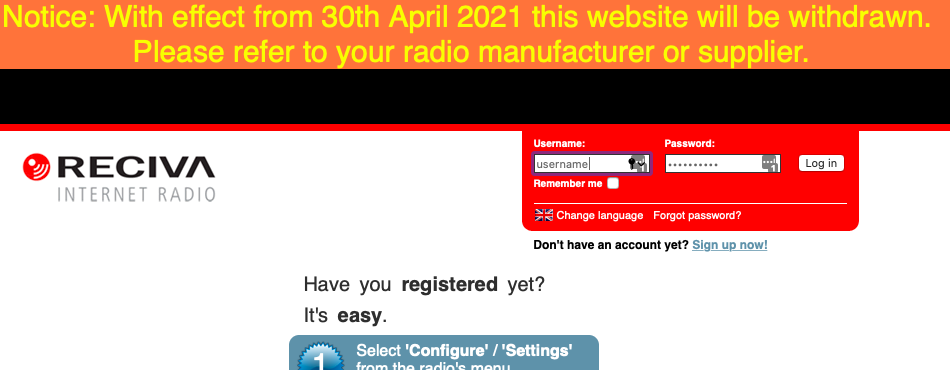
Reciva pushes out closing date to April 30, 2021

UPDATE: Click here to read about a procedure to extend the life of your Reciva WiFi radio presets before Reciva closes on April 30, 2021.

If you own a WiFi radio that relies on the Reciva aggregator, the company has given you an additional eleven weeks to enjoy your device before it effectively loses its ability to search an index of thousands of radio stations or possibly even recall your station memories. Indeed, if your radio relies on Reciva to gather stream info each time it’s turned on and tuned to a station, your radio may not function at all after Reciva has shut down.

We first posted a notice that Reciva would be closing down on November 2, 2020. That post received over 90 comments, mostly from readers who are incredibly frustrated.

Reciva has now changed the announcement at the top of their website stating that they will close on April 30, 2021.

In the meantime–and I suppose it goes without saying–do not buy a new or used WiFi radio that relies on Reciva as it will not function properly without the Reciva aggregator service. I’m sure there are a number for sale. Research the aggregator a WiFi radio uses before making a purchase.

Many thanks to SWLing Post contributor, Karl, for the tip!

Post readers: If you’ve found a Reciva work-around for your WiFi radio, please share details with us in the comments section.

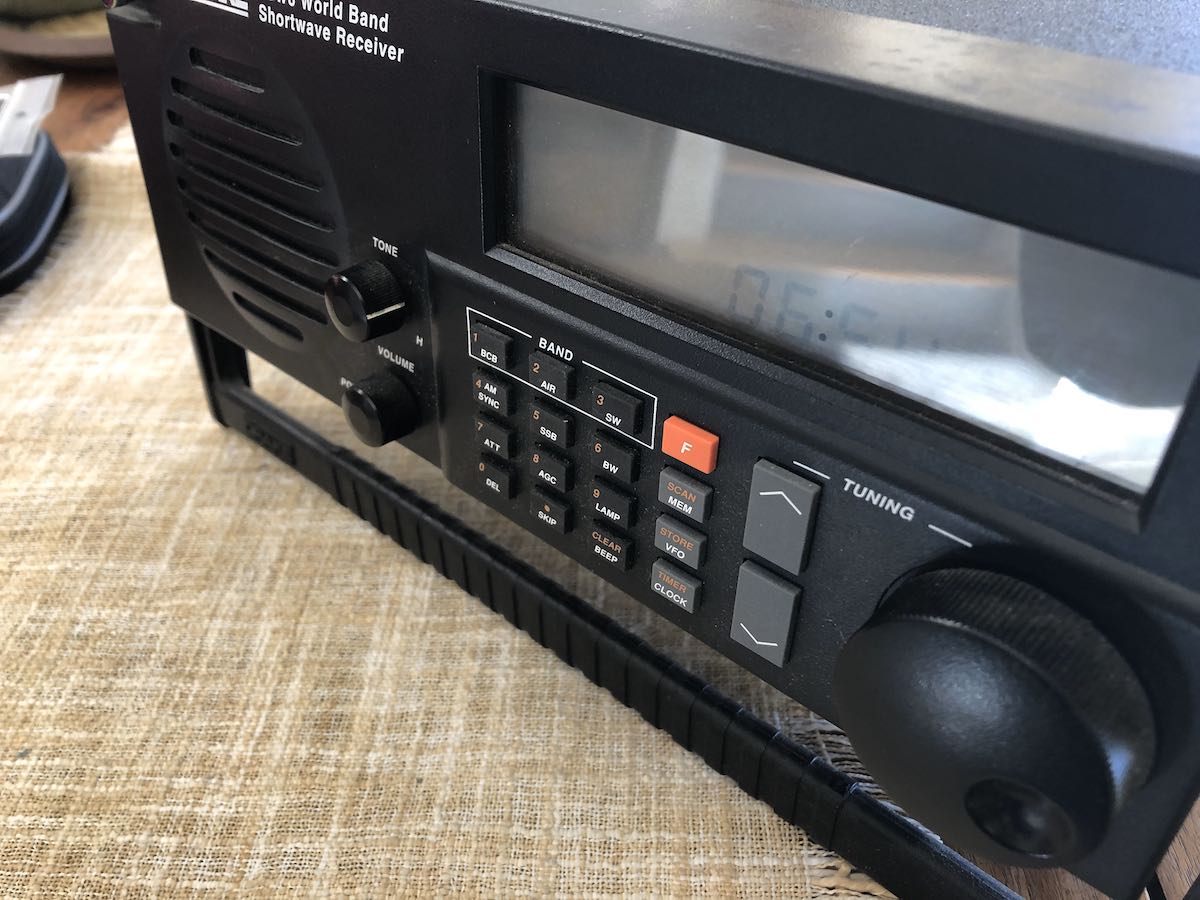
Replacing the keypad on my Drake SW8

In 2019, I made an impulse purchase: a Drake SW8 tabletop receiver. As I mentioned previously, I’d always wanted an SW8. My buddy, David Goren, recommended this receiver ages ago, Each time I’ve stayed at his home in Flat Bush, he magically made an SW8 available as my bedside radio in the guest room. (That’s hospitality!)

After receiving my SW8 and putting it on the air, I realized it suffered from a common problem found in Drake receivers: a flaky keypad. Several of the buttons didn’t work reliably, or they made multiple contacts on each push, or they didn’t work at all.

What happens is, over time, the black carbon dot on the back of each pad on the rubber membrane simply wears out and no longer makes reliable contact. I believe a number of Drake receivers of the era used the same keypad style (though configured differently).

The seller didn’t realize this when he sold it to me and, frankly, I felt I got a pretty good deal regardless, so never bothered him about it.

A couple months later, I found out that Universal Radio uncovered a box of new old stock SW8 replacement keyboards, so I ordered one.
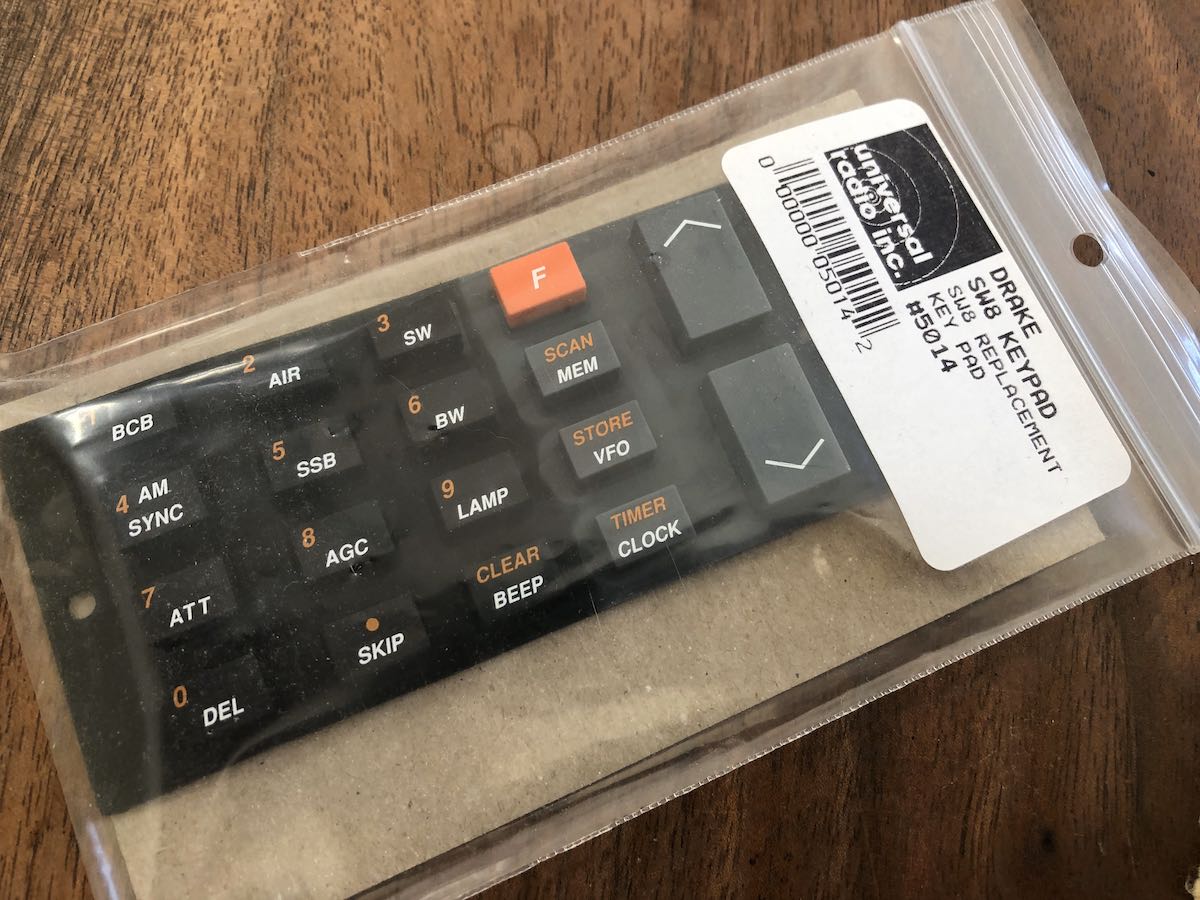
2020 got a little out of hand and I put off making the repair. I didn’t want to trouble my buddy, Vlado, who could have done this in his sleep. I knew I could handle a parts replacement as long as I didn’t need to de-solder the keypad from a circuit board (as one does with the SW2, I understand).

Tuesday, I cleaned off one of my radio shelves and found the replacement keypad. I looked at the SW8 and knew it was time to get’er done!
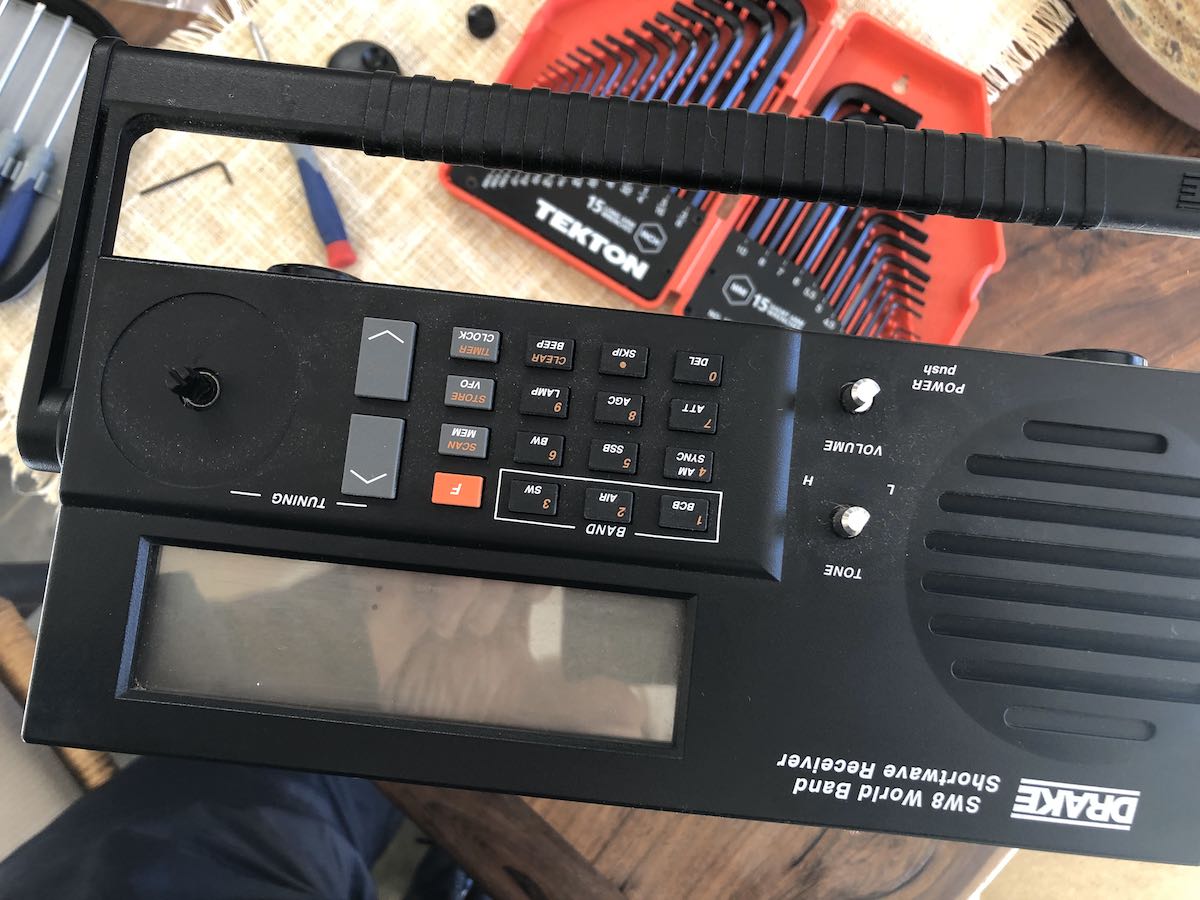
I first removed the encoder, volume, and tone knobs.
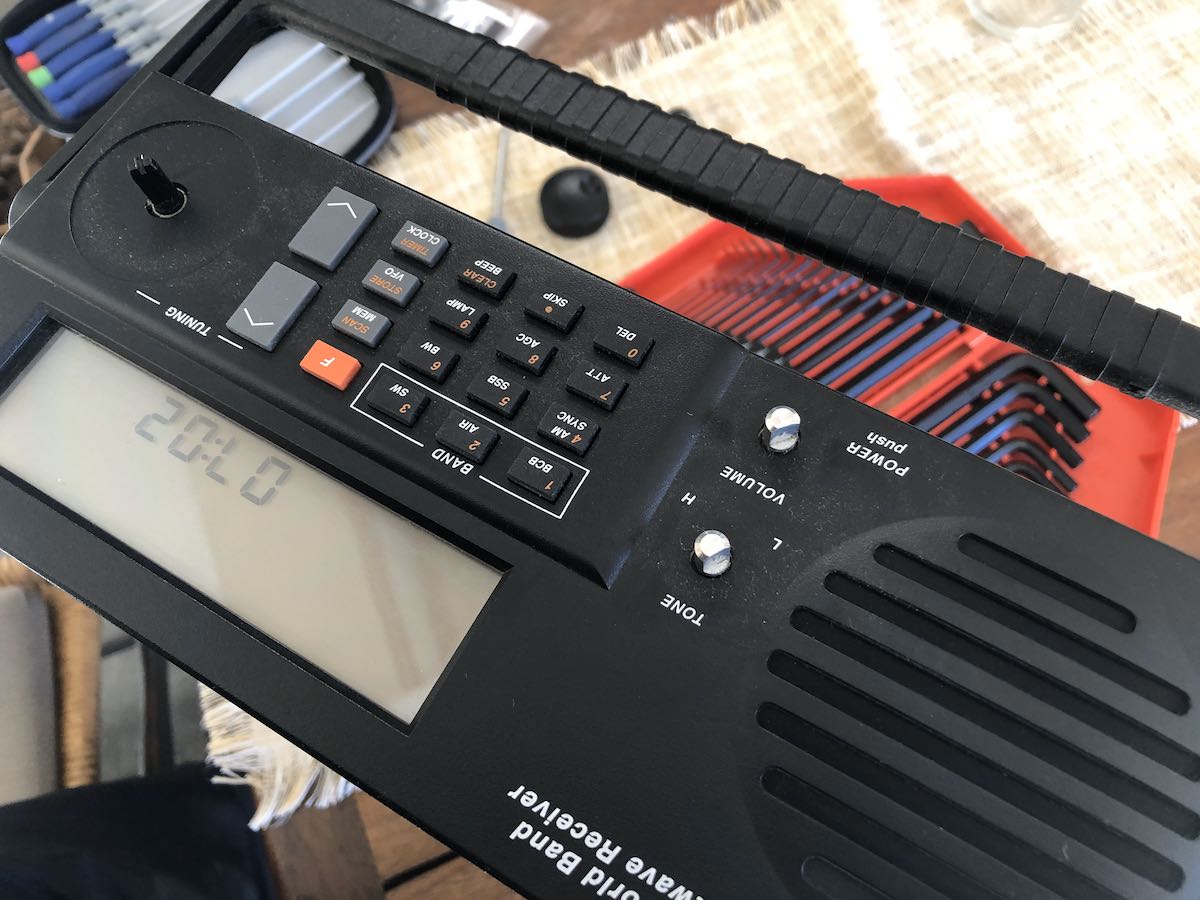
Next, I removed the top cover which is attached with five screws.
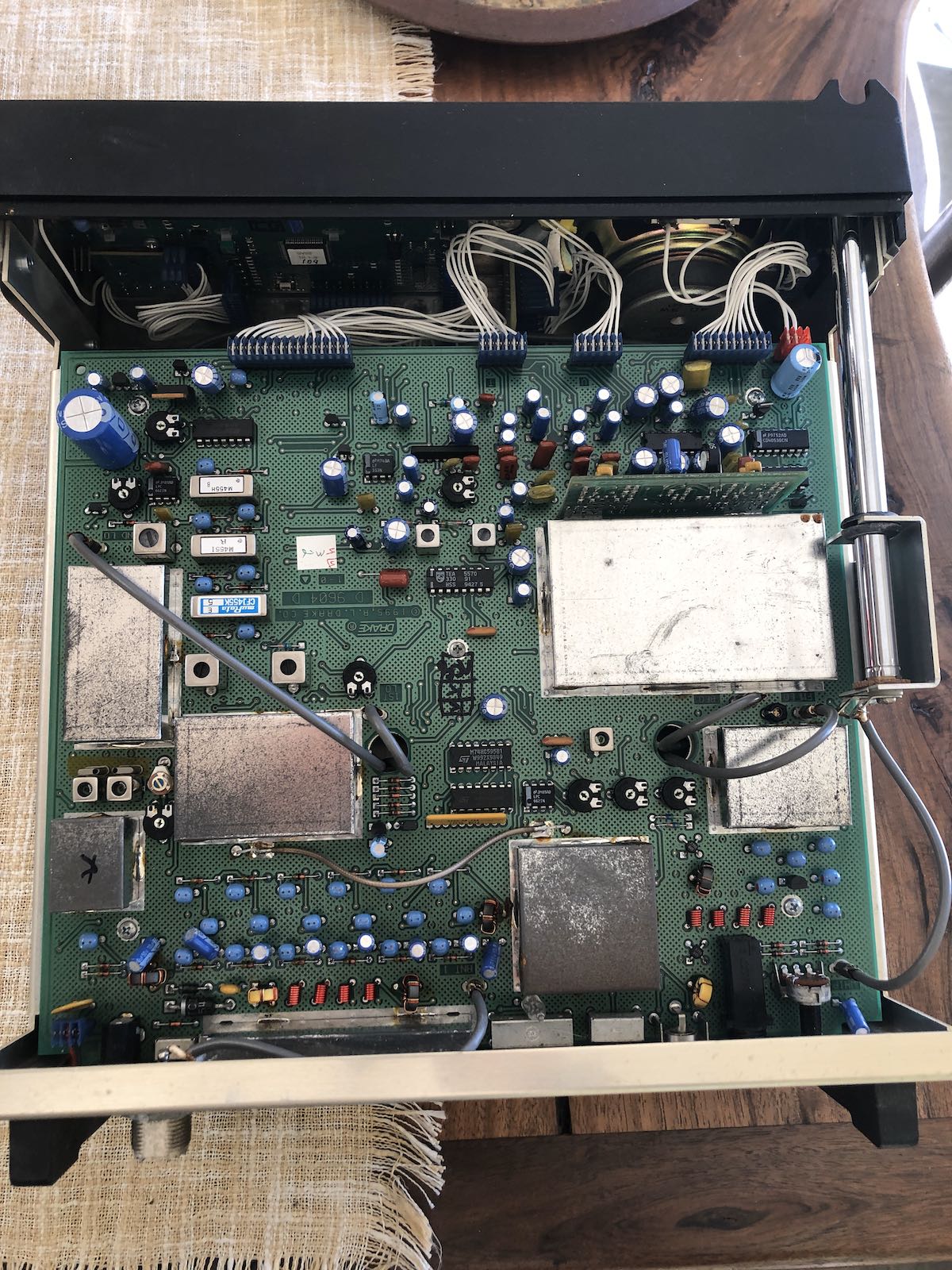
There are a number of multi-pin plugs that attach the front faceplate section to the main body of the radio.
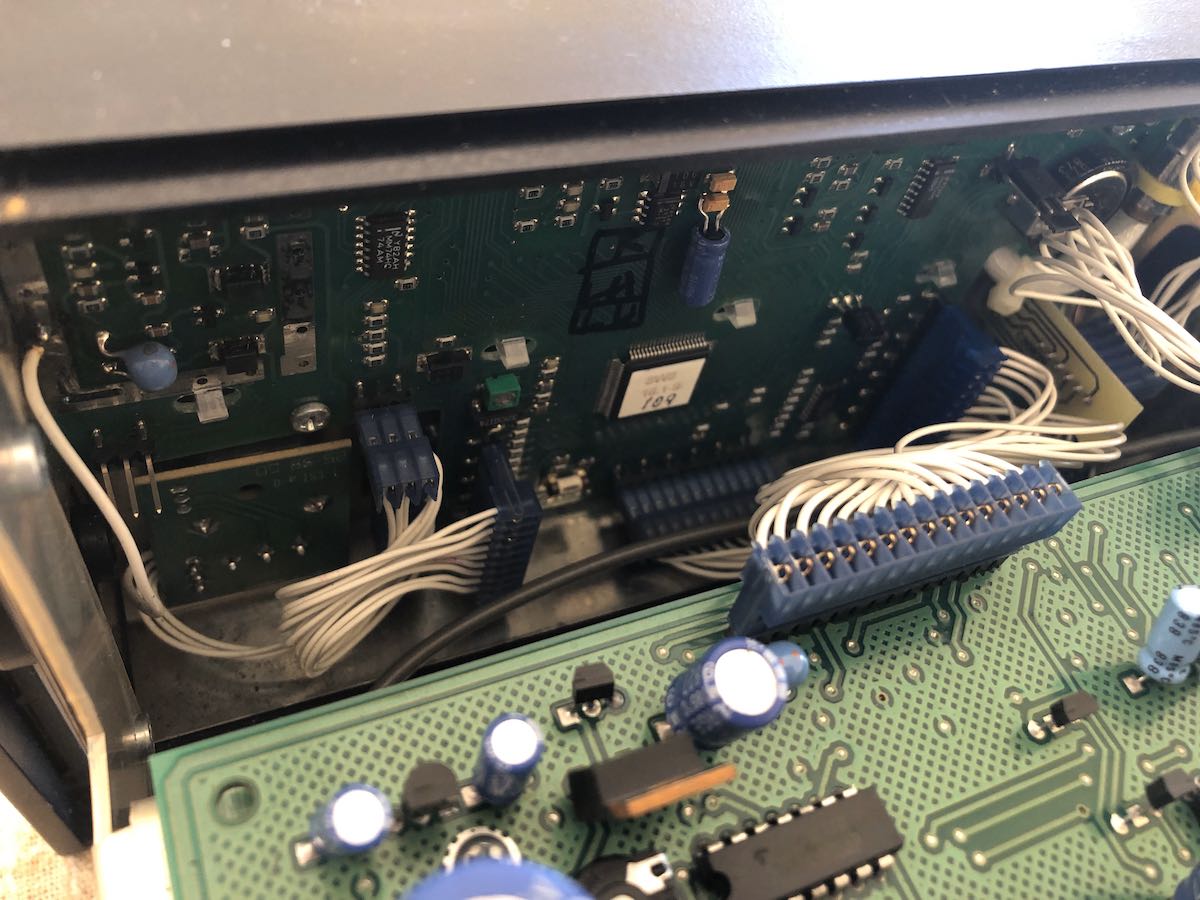
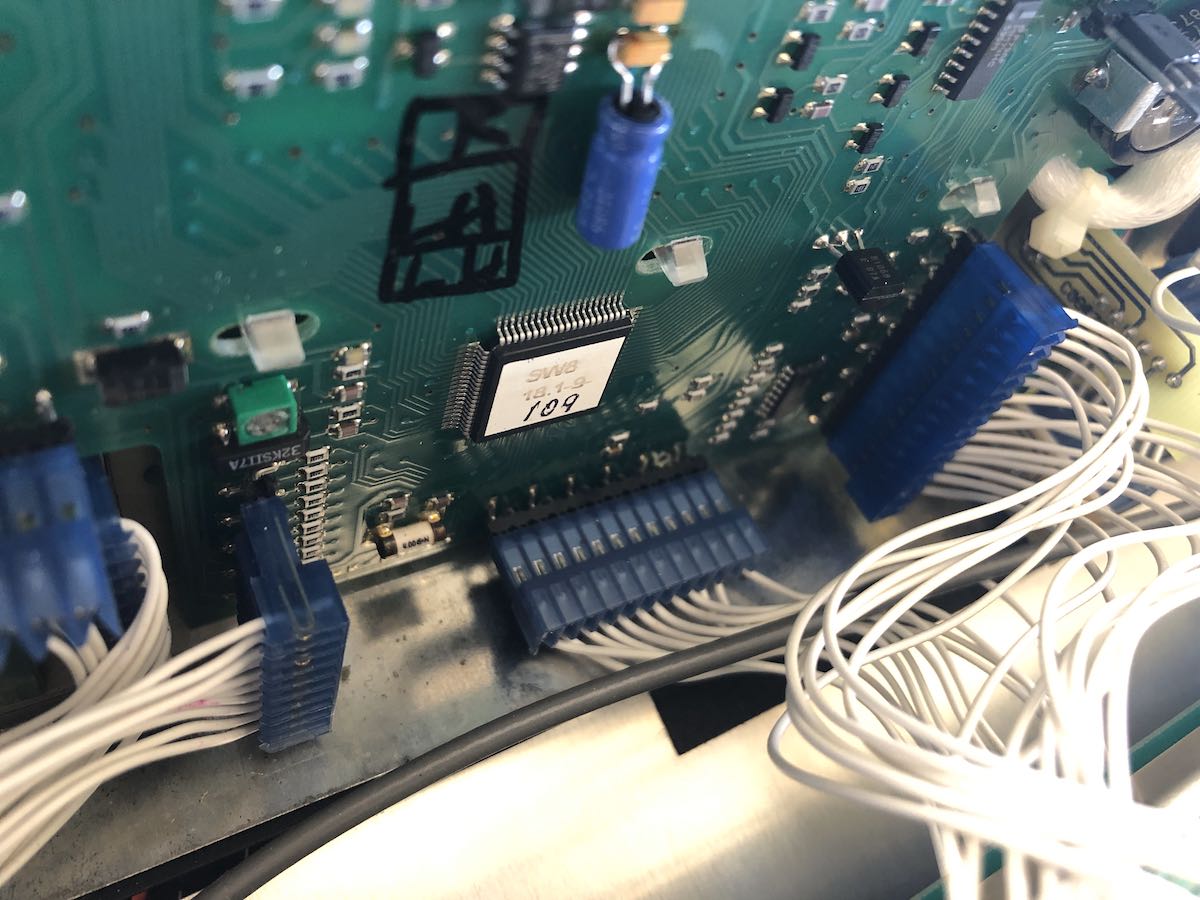
I carefully removed all of them and noted their positions (taking photos at each stage really helps).
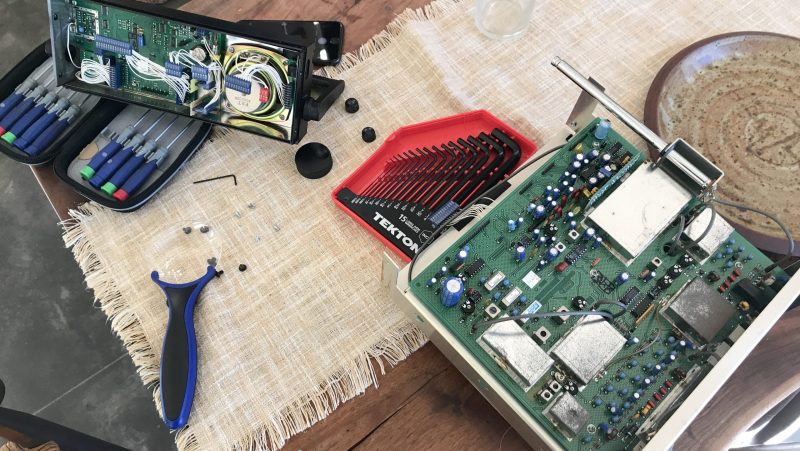
I quickly discovered that the keypad was under at least two more board layers.
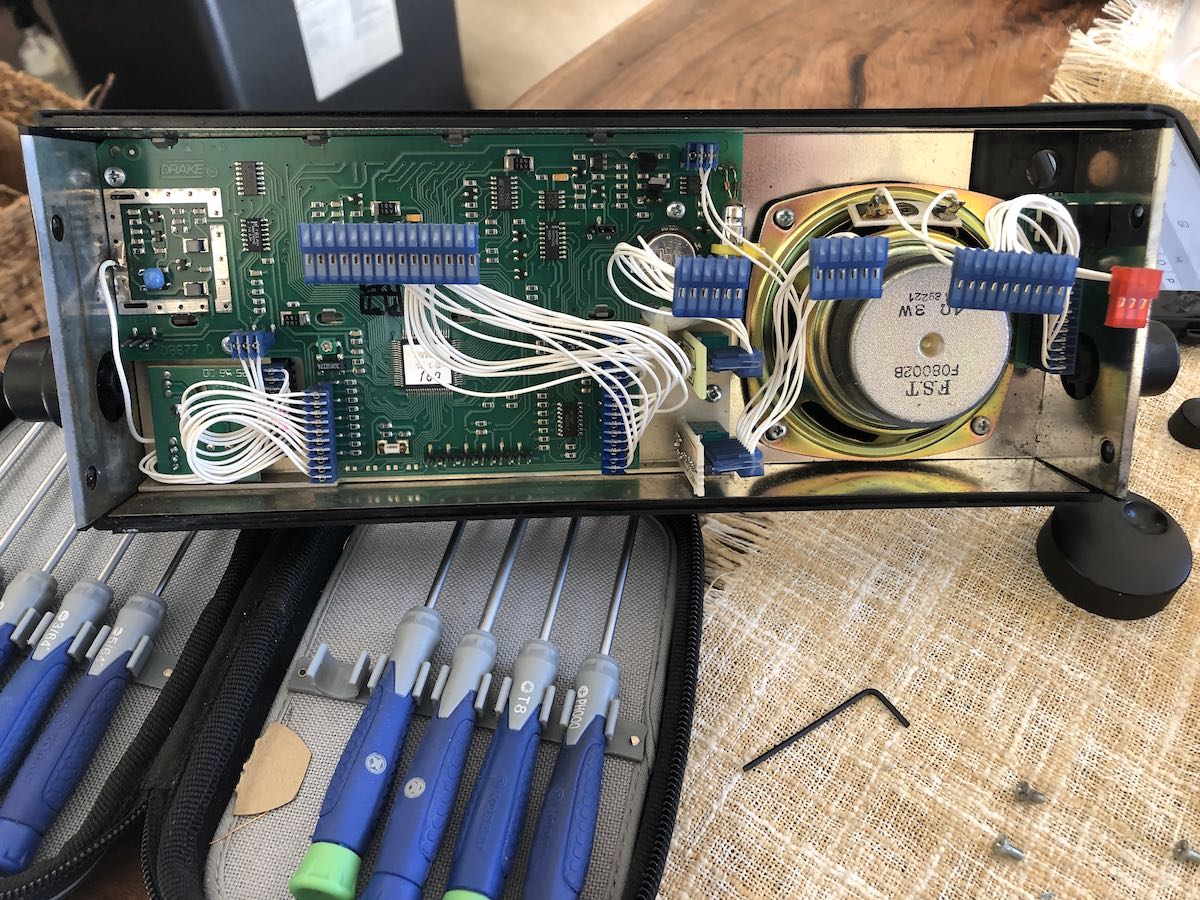
I removed the main board which is held in place with three screws, then the board underneath which is also held in place with three screws.
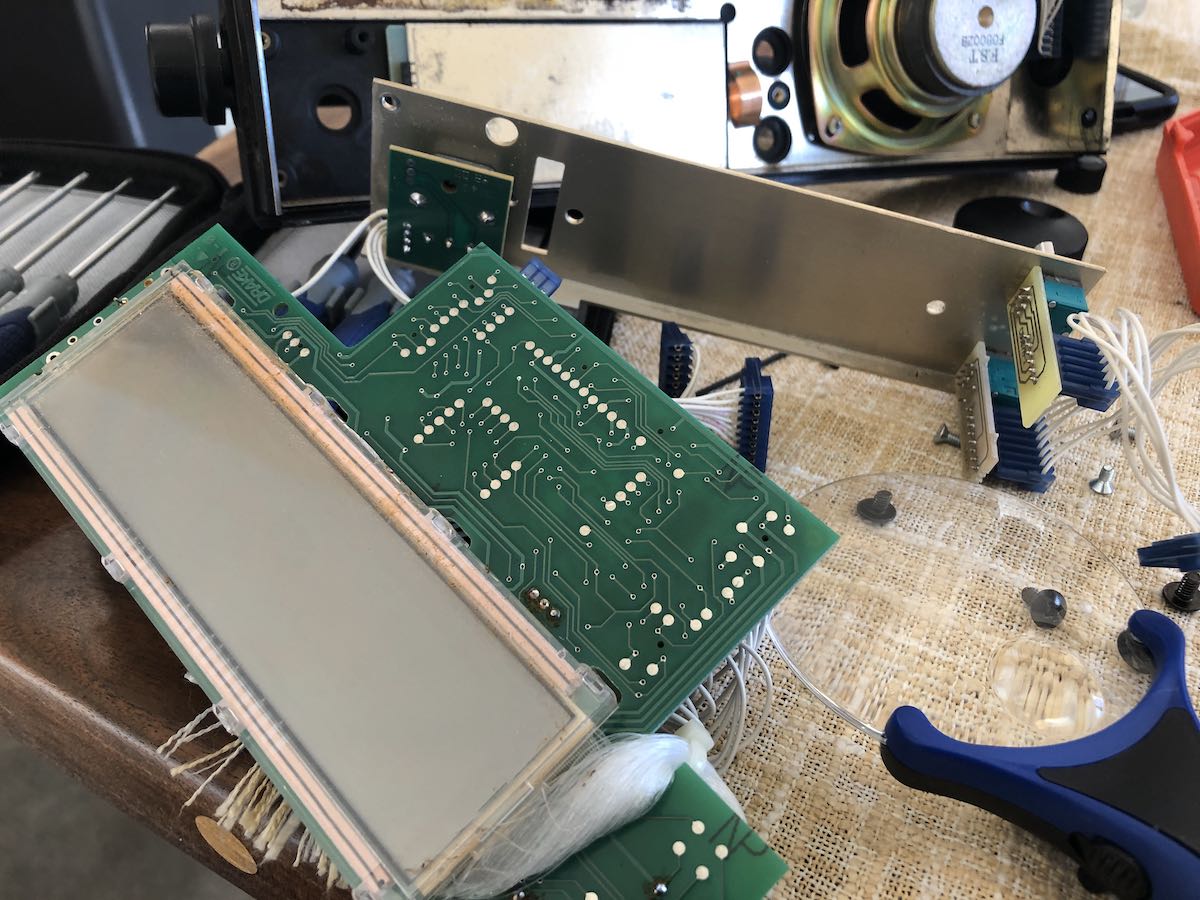
To my surprise, the keypad, circuit board and two metal plates (in that order) are held in place with compression from the last board layer.
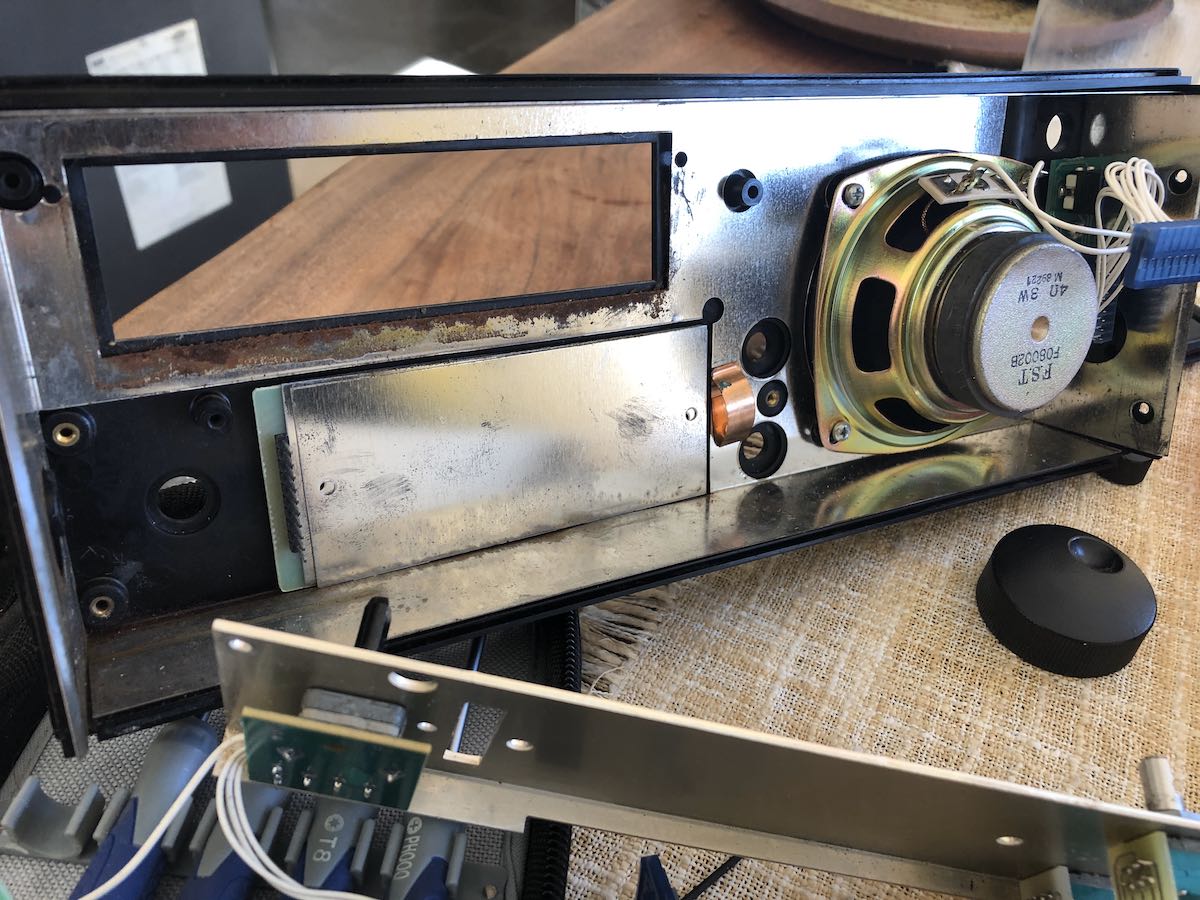
The keypad, circuit board and metal plates fell out quite easily.
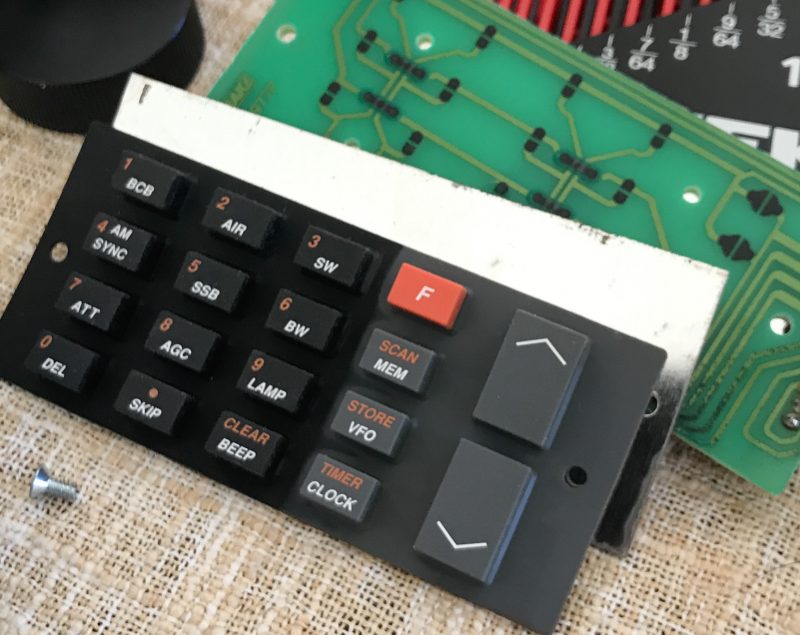
While I had everything apart, I cleaned the inside. At some point, a wee bit of moisture must have accumulated near the bottom of the keypad. I’m guessing this was condensation, because it was so minimal and so localized.

I replaced out the old keypad with the new one. Should you ever do this procedure, take note that the keypad has holes that line up with dimples on the back of the SW8 face place–the keypad circuit board also has holes that line up with dimples on the back of the rubber keypad. Lining these up will insure a correct fit.

I then re-assembled the faceplate boards and reconnected it to the body of the radio. Unfortunately, one can’t really test to see if the replacement works until all of the boards have been re-connected and re-assembled–a good 10-15 minute process.
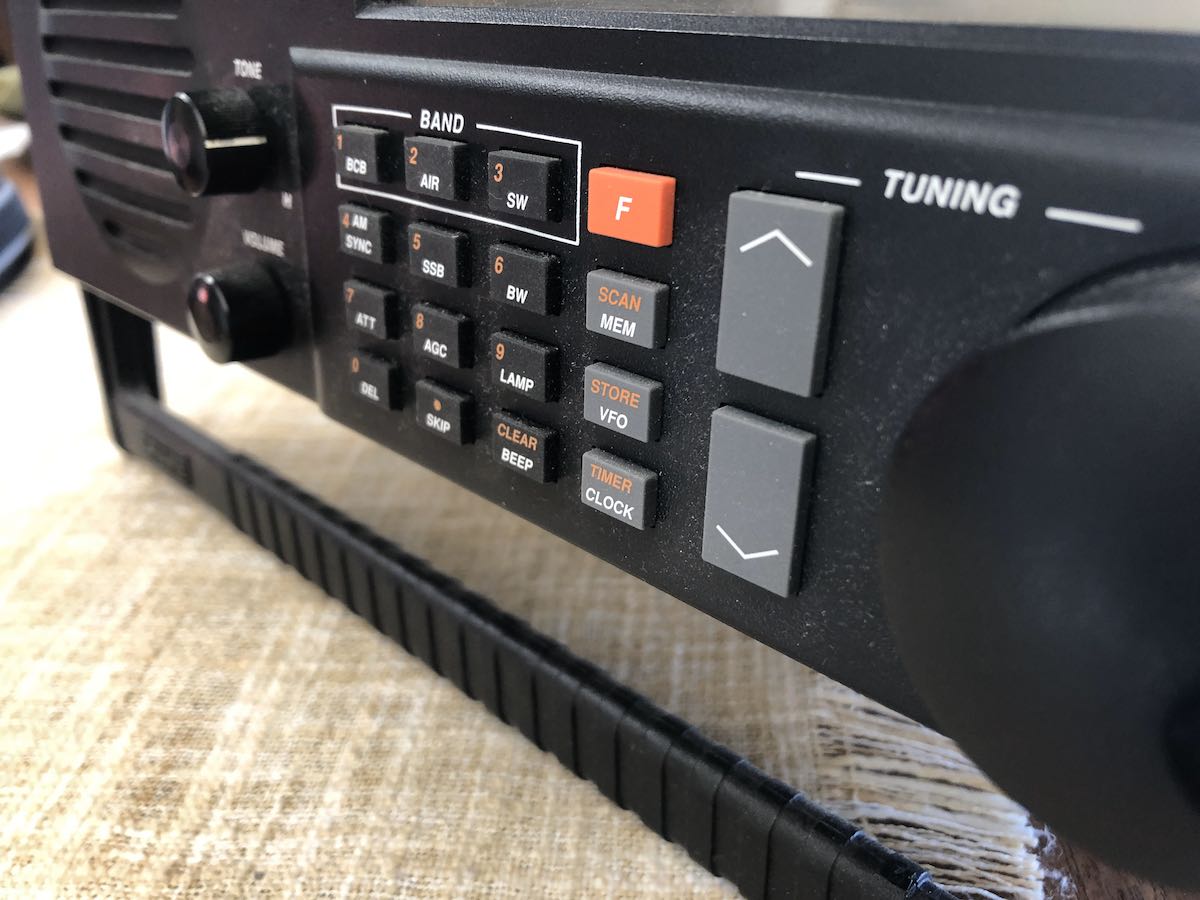
I tested the keypad and quickly discovered that number 9 and the bottom row of buttons were still a little flaky. After a little head scratching, it then dawned on me (after pulling the radio apart and reassembling it twice more!) that maybe part of the problem was left-over carbon/dust on the keypad circuit board.

I disassembled the radio again and carefully cleaned the keypad circuit board with some DeOxit (a radio enthusiast’s best friend).
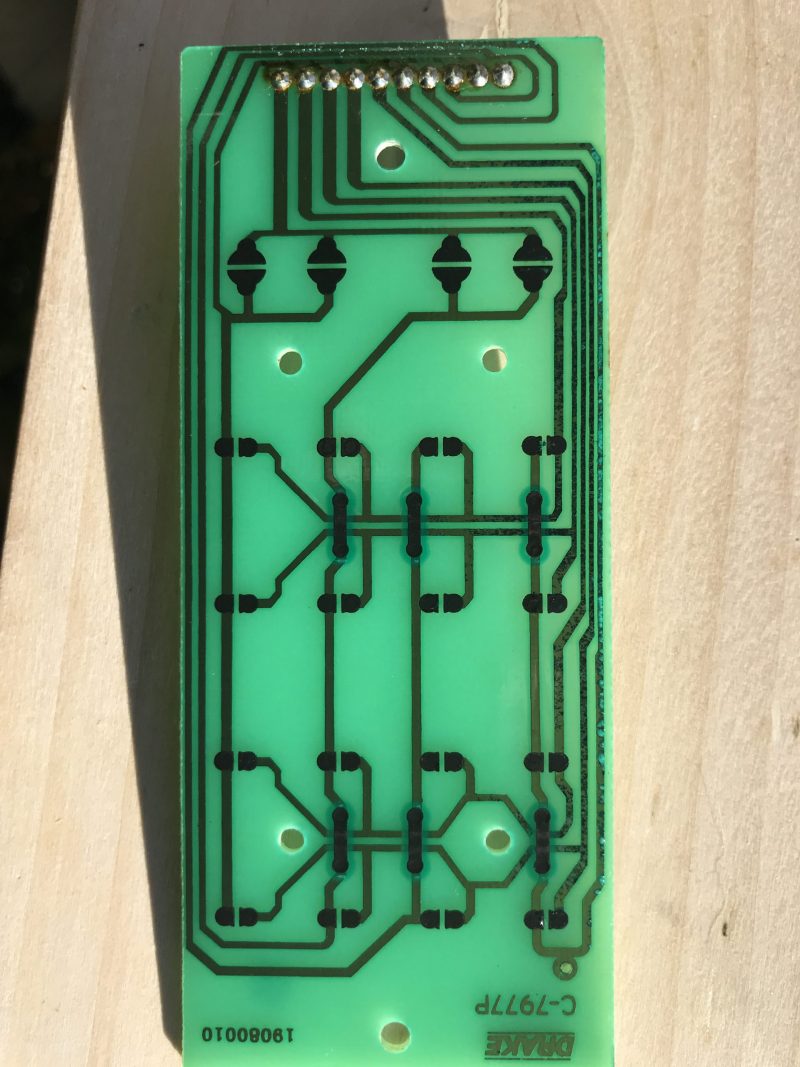
Through a closer inspection of the board, I could see that some of the traces on the bottom of the board had corrosion. That really worried me because I’m not entirely sure how I could mend traces. I tested continuity, however, and they all passed.

I reassembled the SW8 for the fourth or fifth time, tested it, and the keypad performed perfectly!  Woo hoo!
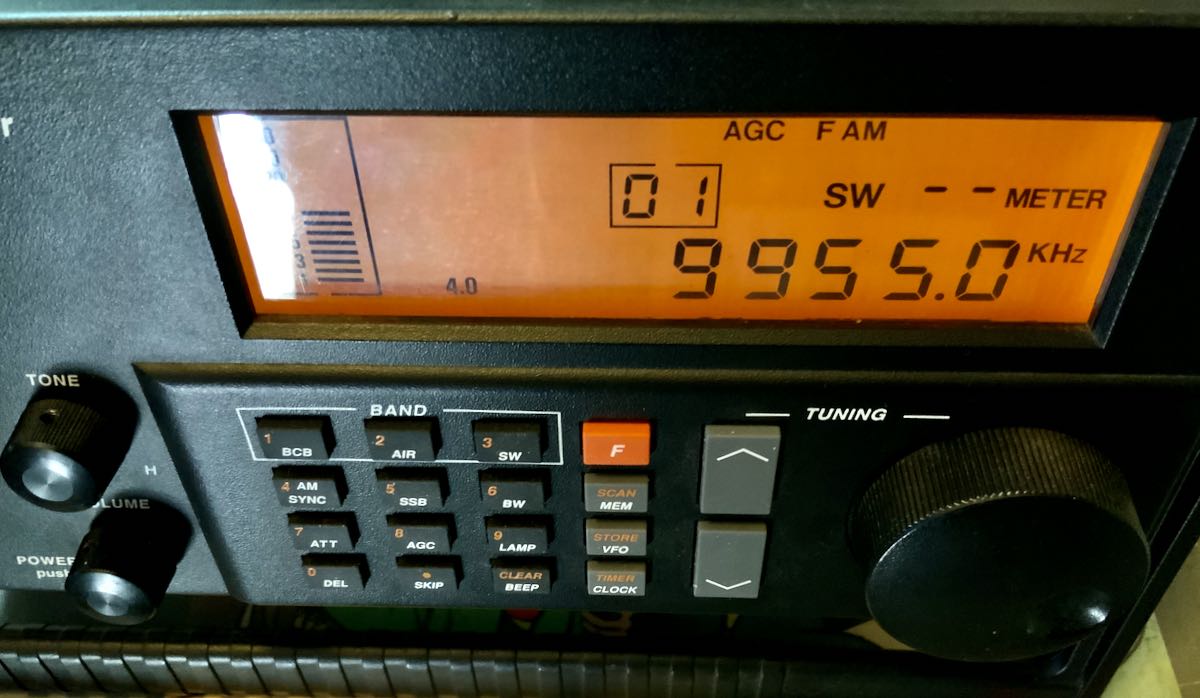
Not only am I incredibly pleased that I was able to sort this out on my own, but now I can dissemblable and reassemble the SW8 with the speed of an Indy pit crew.
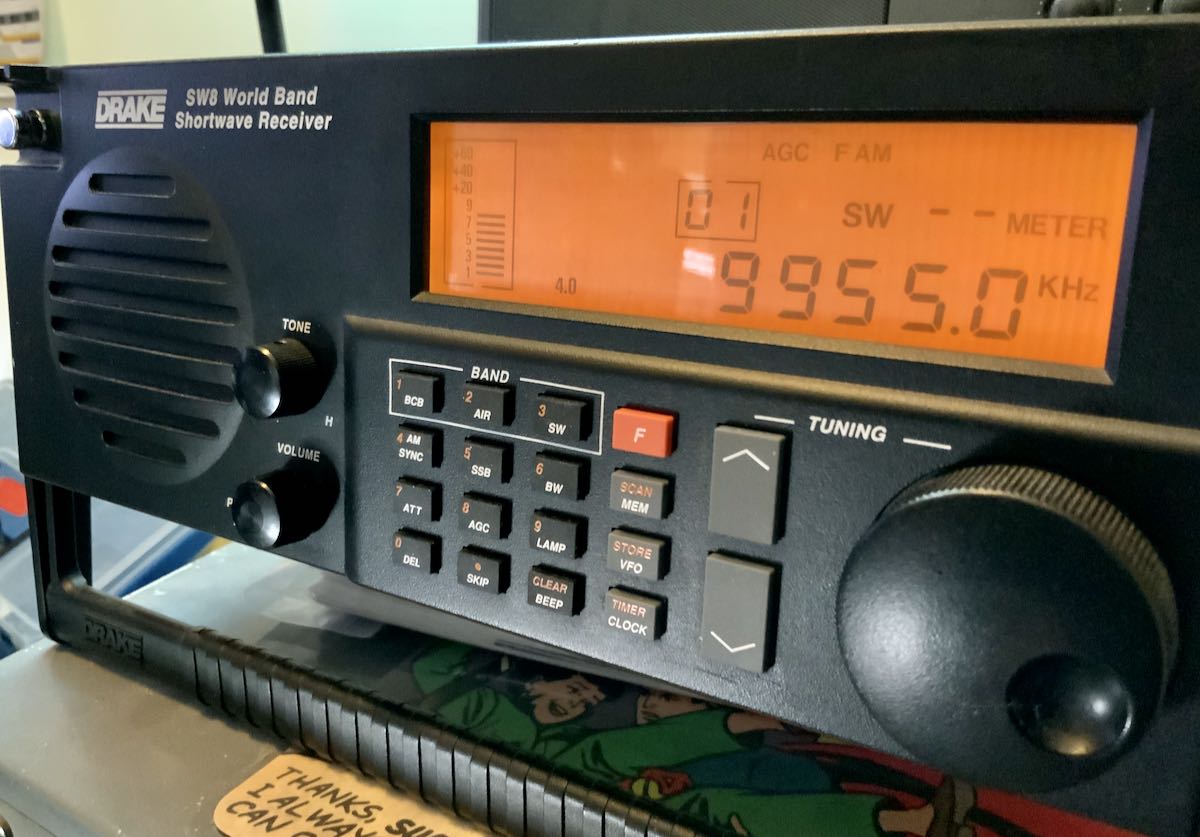
I’m still a little concerned about those traces on the keypad circuit board and the new keypad’s overall longevity, but at least I’ve got the SW8 back in tip-top shape and on the air for now. I’ll explore a work-around if these parts ever fail again.

I do love this receiver and now have it set up in the shack where I can do some proper armchair SWLing.

Do you have an SW8?
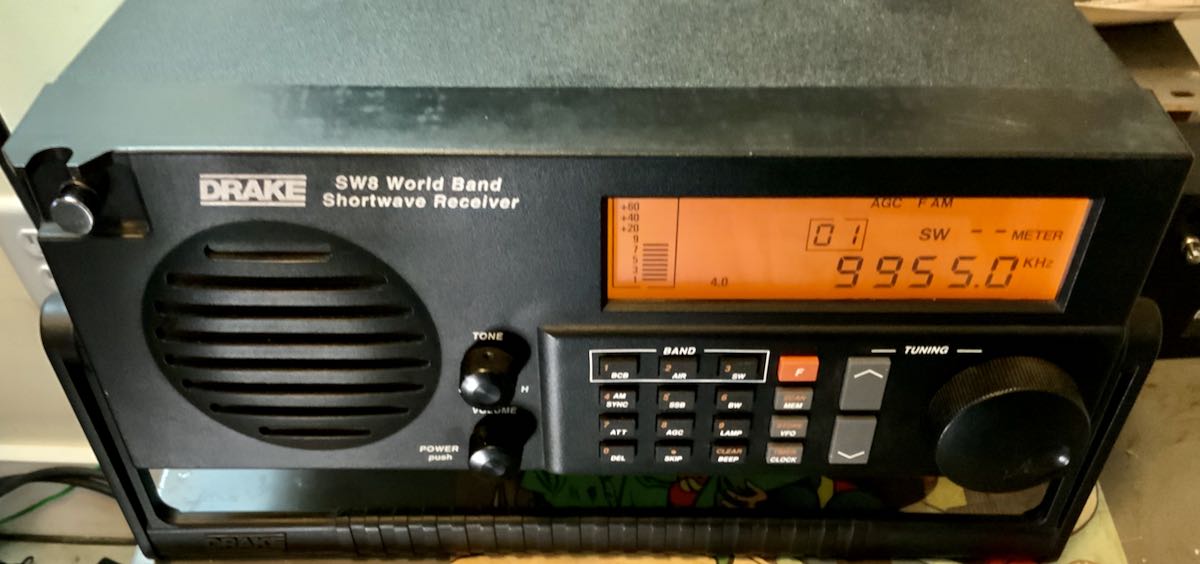
I’m curious if any SWLing Post readers have an SW8 and especially if you’ve had to replace your keypad.  Please comment!

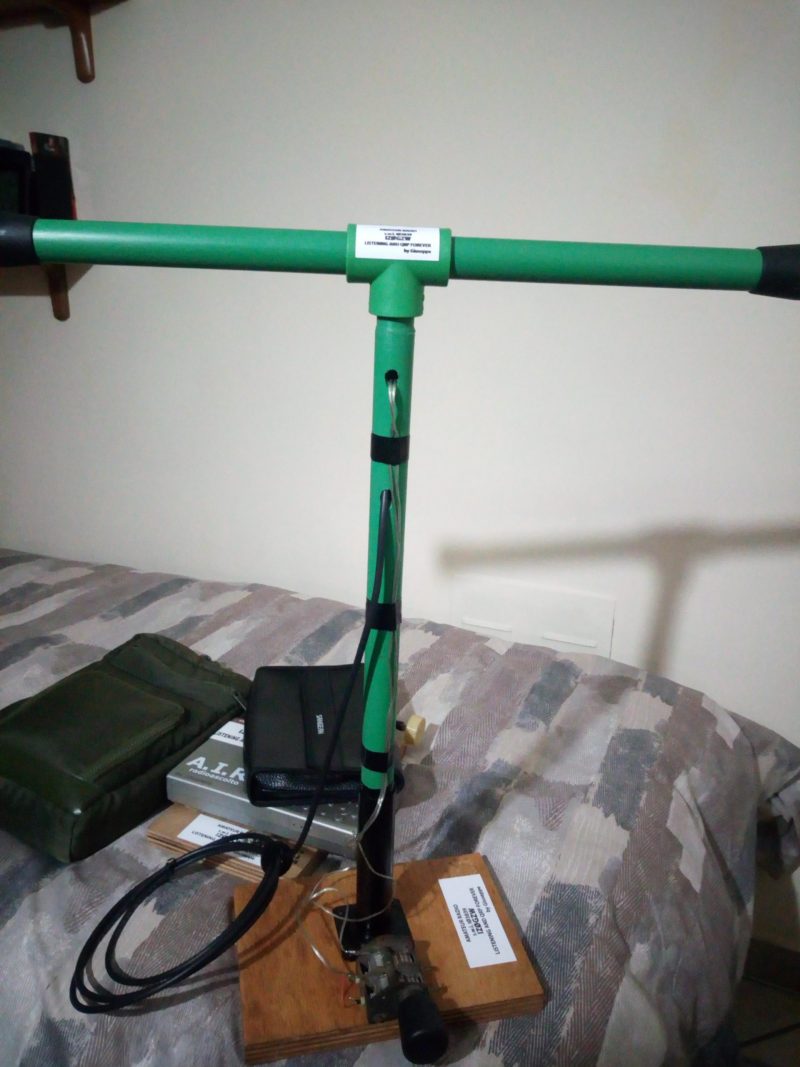
Giuseppe discovers his homebrew rotating ferrite antenna works amazingly indoors and nulls RFI

Many thanks to SWLing Post contributor, Giuseppe Morlè, who writes:

Dear Thomas,

This is Giuseppe Morlè again. First of all, Happy New Year to you and to the whole SWLing Post community! I’ve been continuing the tests on my “T Ferrite” antenna for medium wave and the 160 meters ham meter band.

I tried the antenna inside my shack listening to Rai Radio 1 from Milan Siziano, about 800 km from me, on 900 kHz in the early morning after sunrise. The antenna, despite being inside, proved to be perfect for the cancellation of the electrical noise that I had around me.

Disconnecting the antenna from the receiver–a Sangean ATS-909–the noise occupied everything without being able to listen to anything. Putting the antenna back, the noise disappeared completely making the modulation re-emerge, with a weak signal, it was already day, but with good understandability.

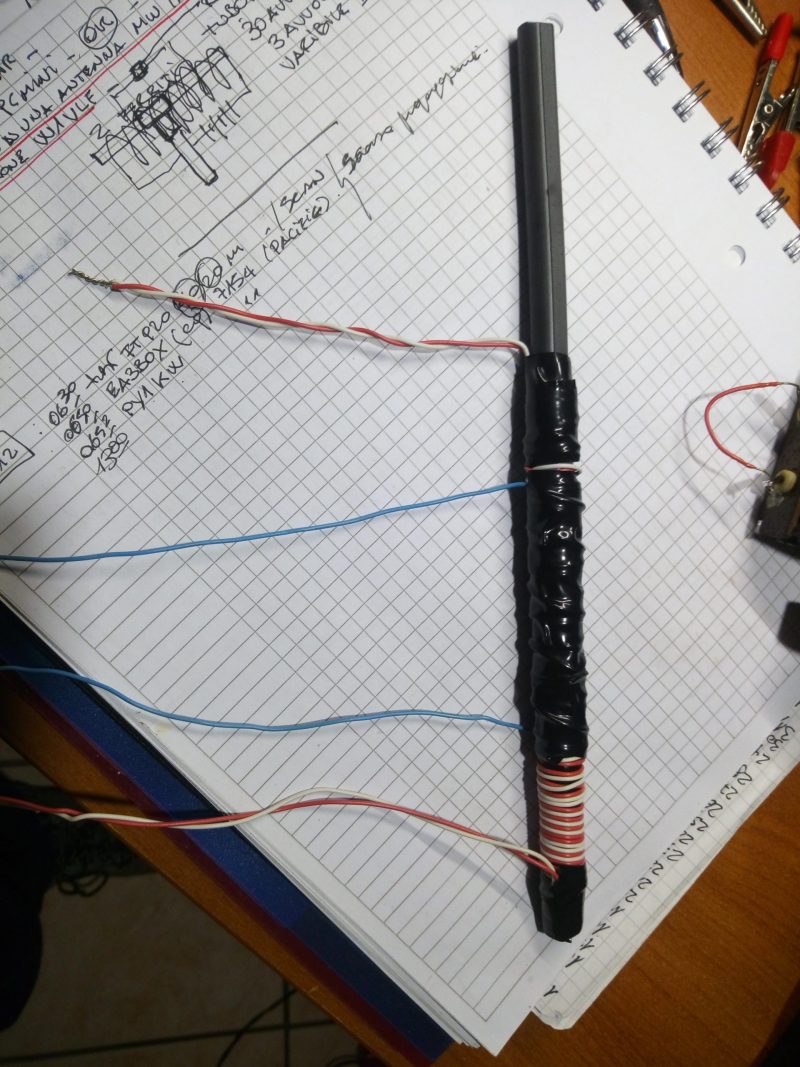
The antenna, as I described in another article, is composed of 2 ferrites 12 cm long each, bought at ham fests, tied together with insulating tape.

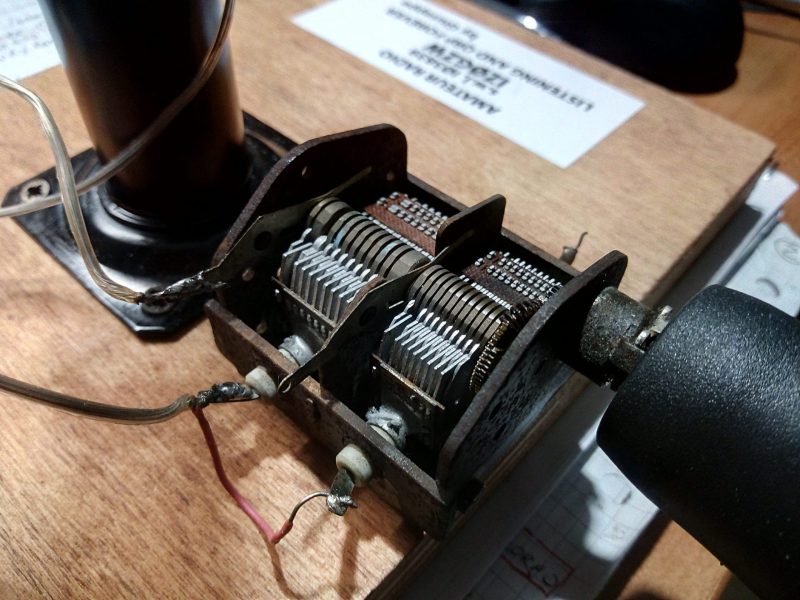
For the two windings, I used a small section of cable used for telephone systems that is rigid enough to model perfectly on the ferrites–43 turns for the primary and 3 turns for the coupling link to the receiver. The variable capacitor is 850 pf.

I should mention that the magnificent W1VLF channel was my original source of inspiration for this antenna.

Check out the following video:

Click here to watch on YouTube.

That is amazing, Giuseppe! We often think of magnetic loops as the only choice for coping with urban noise and RFI, but ferrite bars–especially configured like yours–are a brilliant tool for indoor low-band listening. Thank you for sharing! We love your experiments.