Shortwave listening and everything radio including reviews, broadcasting, ham radio, field operation, DXing, maker kits, travel, emergency gear, events, and more
Many thanks to SWLing Post contributor, Alan Roe, who writes:
I have been collating a list of programming on shortwave over the forthcoming holiday period. The programmes listed are predominantly, but not necessarily, seasonal. Here is the first edition of this compilation, which will be updated and redistributed if and when more information becomes available.
Regular weekly music programming, where no special advance programme information has been provided, are not included in this list, but please refer to my Music on Shortwave list also uploaded to the files section.
Many thanks to SWLing Post contributor, Joe Patti (KD2QBK), who writes:
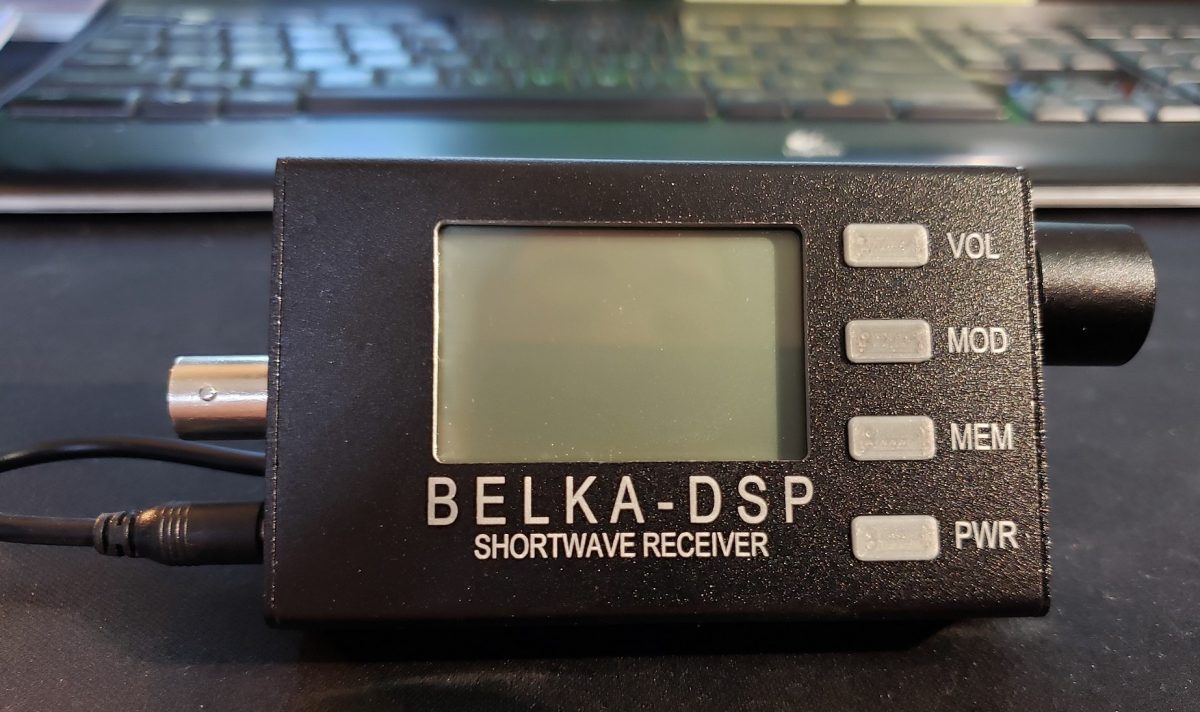
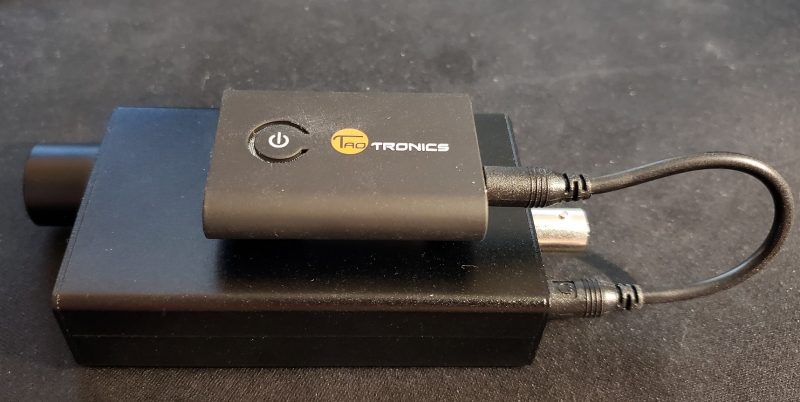
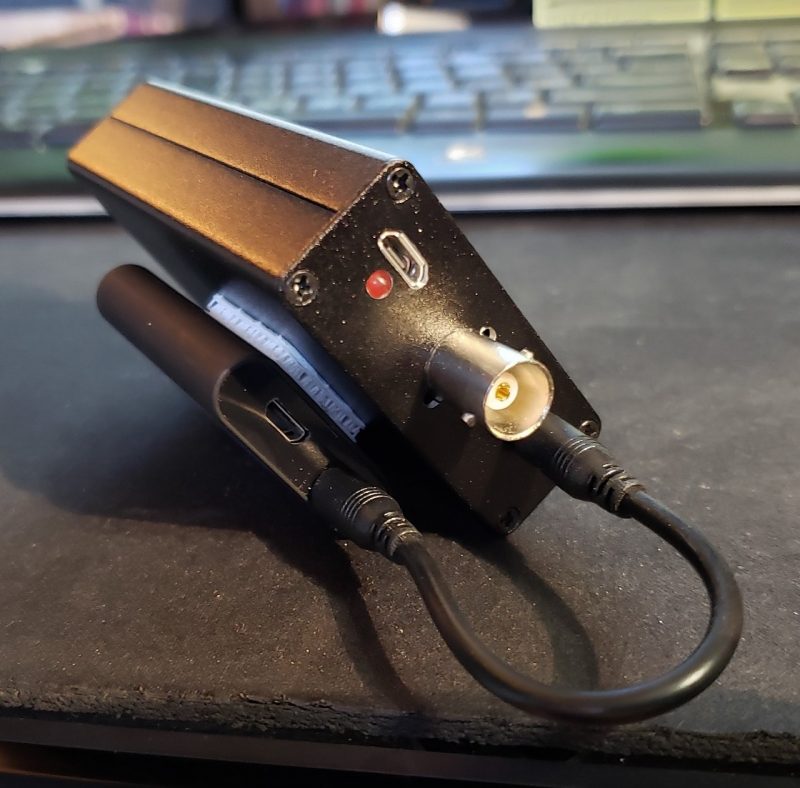
Not sure anyone would be interested, but in using a Bluetooth adapter with my Belka I inadvertently came up with a little stand for it.
I attached the adapter to the back of the radio with a piece of plastic 3M Command picture hanger strip. It props up the little radio at exactly the right angle.
Love the blog!
Thank you, Joe! Looks like this is the Bluetooth adapter you’re using. What a clever way to have your Bluetooth adapter do double duty! Also, I’m so glad you enjoy the Post! Thanks for sharing your tip!
Arecibo Observatory’s 305-meter telescope in November 2020 (Credit: University of Central Florida)
Many thanks to SWLing Post contributor, TomL, who shares the following:
I came across this youtube video about a physicist who worked there in his early years and gives this tribute to his time there. Maybe some others would like to see it too:
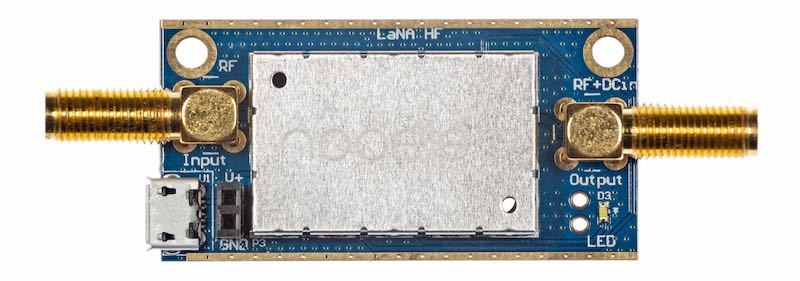
Thanks for the tip, Chris! Yes, it’s a bit of a surprise it’s made in North America. I must admit that these Nooelec amps all look the same to me, so I’m guessing this model is simply the latest iteration?
Post readers: have you used this particular LNA? Please comment!
Many thanks to SWLing Post contributor, TomL, who shares the following guest post:
My First Loop-On-Ground antenna
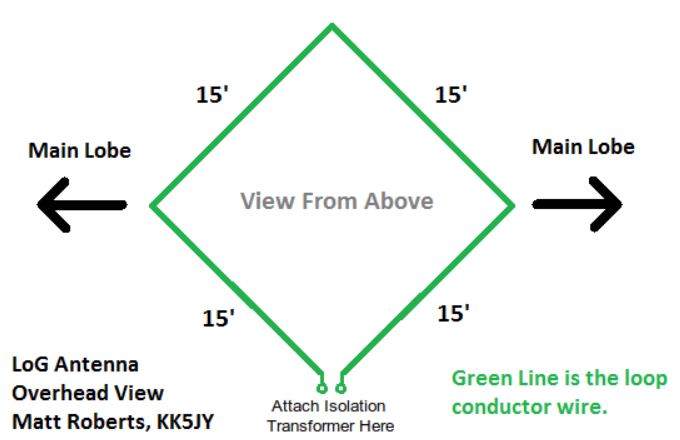
A number of people have mentioned the Loop On Ground (LOG) antenna in the past as a good receive-only antenna. I did some research but could only find a few examples by amateur radio operators.
Matt Roberts (KK5JY) has a good article including some antenna theory and measurements, you can find it here:
I also read somewhere that for transmitting, a LOG antenna is useless as it radiates much of the energy right into the ground! But I didn’t care about that. I needed something for receive I can deploy easily without supports and take down just as easily. As you may recall, my home condo is literally saturated with noise and I cannot null it out. So a wire looped on the ground is supposed to work? You bet it does!
Of course, there are some conditions to meet. There has to be enough flat ground away from people or pets (or lawn mowers!) who would get tangled in the wire on the ground. The wire should be as close to the ground as possible (although I had good results laying the wire on top of cut grass). The loop of wire can vary in circumference from about 20 feet to 150 feet (the shorter length will stay in an omnidirectional pattern higher in frequency but lower in signal pickup and vice-versa for the longer length). The wire needs to be insulated. That’s about it!
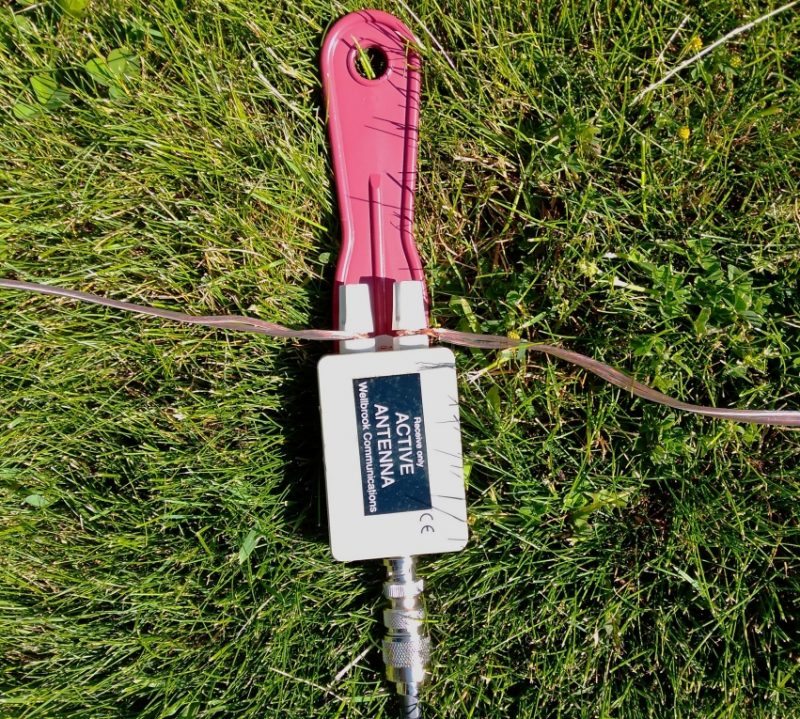
So, off to the hardware store to buy a cheap spool of 100 foot 18 gauge speaker wire. But, the articles mention using a balun and they all made their own. I did not feel like doing that (I am not that good at making things from scratch) and I did not want to spend money ordering one. More reading somewhere informed me that my existing Wellbrook Medium Aperture loop amplifier has a built-in balun at the antenna side of the device. Hallelujah!
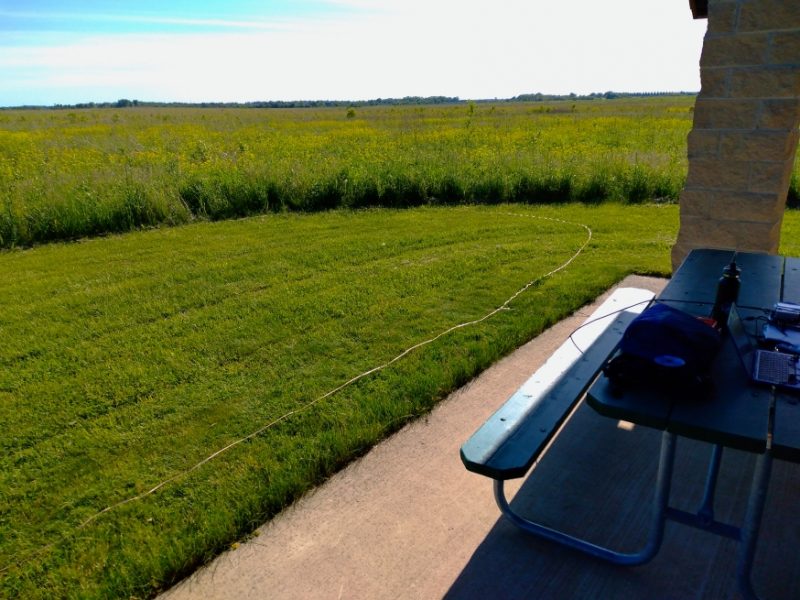
I bundled together the wire, Wellbrook parts and battery supply, small laptop and Airspy HF+ to my favorite Lake Nelson Forest Preserve. The shelter there is little used and is adjacent to the prairie with cut grass. It did take a good 15 minutes to lay out the 100 feet of wire on the ground while trying to keep it as flat as possible. And I did not have enough space for a circle, so I ended up with an oblong shape. The long sides are facing directly north-south, so in theory (I think) this gives me an oblong shaped reception pattern east-west. The photo shows half of the wire laying on the grass.
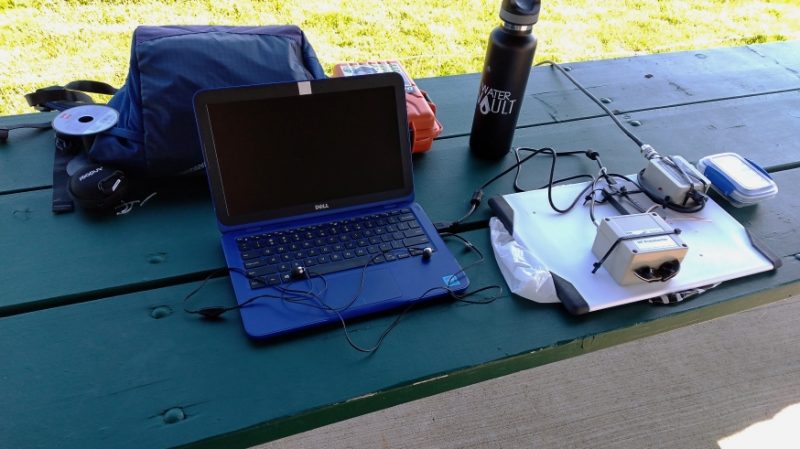
I ended up with this setup on a picnic table at the rear end of the shelter. The coax wire goes from the Wellbrook amp into its power module, then to a Cross Country Wireless preselector, then to the Apirspy HF+ and laptop.
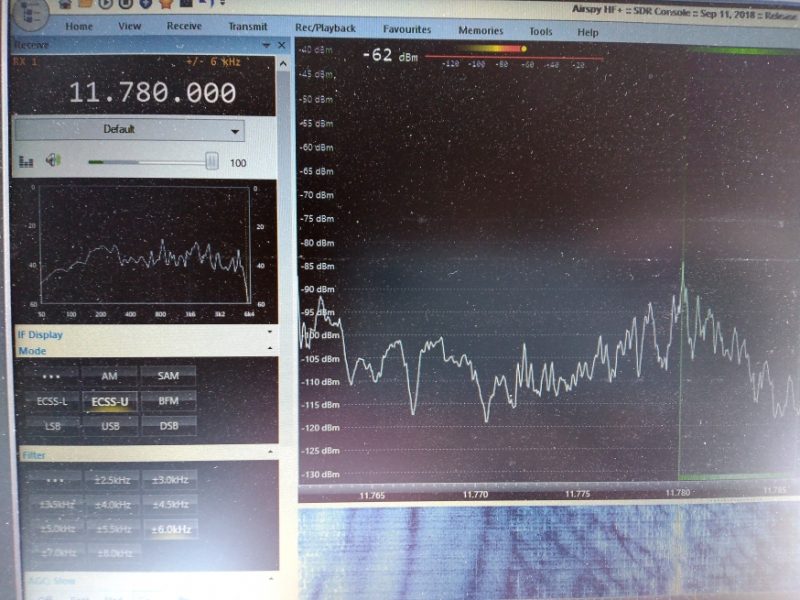
I was really impressed by the signal strength of the usual suspects like Radio Nacional da Amazonia. I could see that the Wellbrook amp was boosting signals across the board with only a little extra noise.
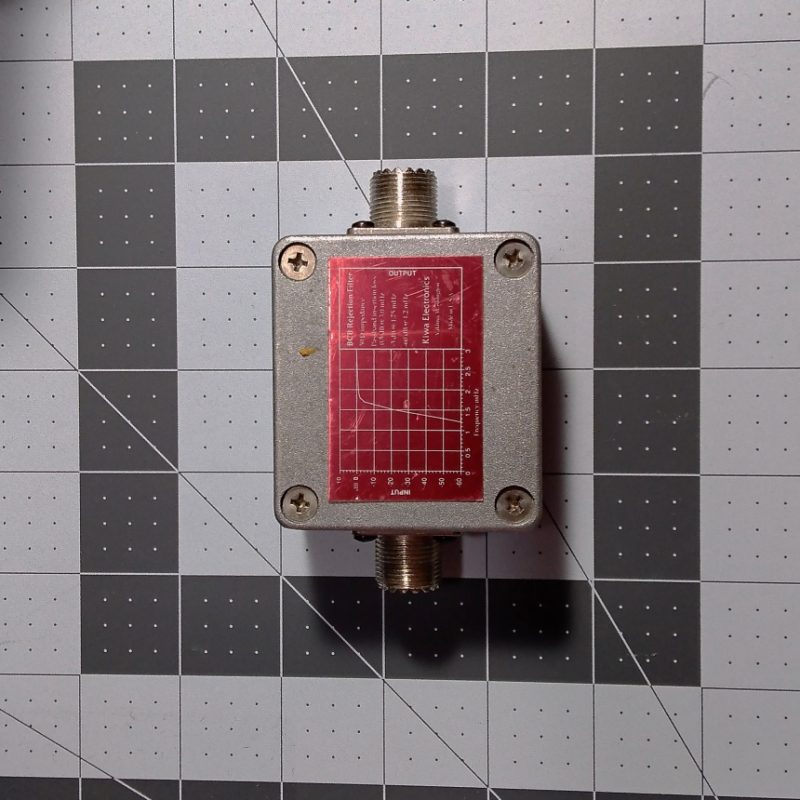
I use the preselector to try to keep the Airspy radio from overloading, especially mediumwave broadcast signals which can sound like a small amount of extra “hash” type noise in the background. I have since added into the accessory chain an old Kiwa Electronics BCB filter that does a great job of knocking down the frequencies below 2 MHz.
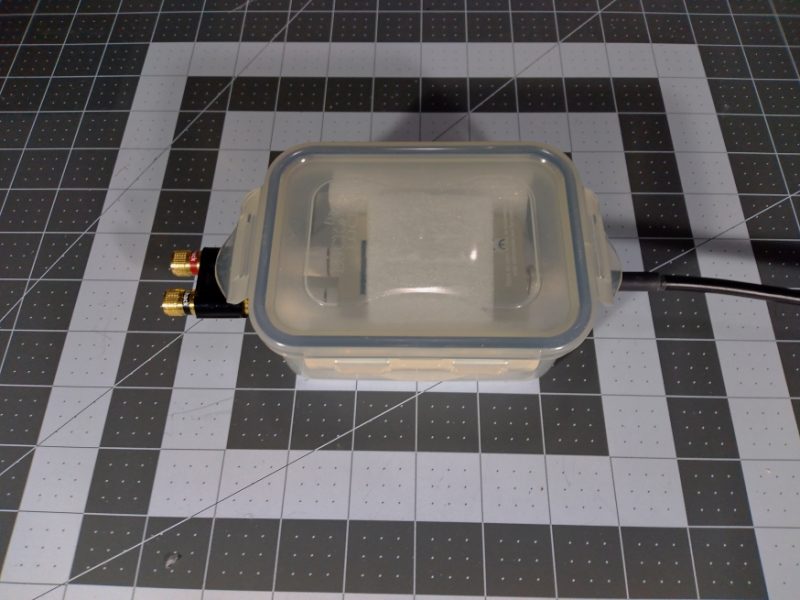
I have also since added a water resistant box to enclose the Wellbrook amp to keep it safe from getting stepped on or too wet.
Also, a couple of weeks later I was able to go to a campgound and try out 60 feet of wire but the result was noisier since I was surrounded by RV vehicles in a crowded campsite. It was not horrible and I was able to listen to some good radio stations but location can matter with any antenna.
I hope you like the recordings below. Because of some serious health issues this summer, these May 31 2020 recordings & report are just being published now (I am recovering slowly but surely!). My small laptop is under-powered, so I was only able to record MP3 files one at a time. It kept me busy as I went from one frequency to the next and kept recording anything I heard. I was able to hear a couple of stations I never heard before and that is a success in my book.
It remains to be seen if this antenna is as good as my 19 foot vertical antenna attached to the top of the car roof, especially low-angle DX signals. Maybe you will have the chance to experiment as well and share your experience, too. Now, will a small loop-on-ground antenna around my car parked late at night at a far corner of the grocery store work OK??? I will have to try it!
Recordings (crank up the volume if it is too weak):
22:00 UTC, Radio Saudi (Arabic) 11915 kHz
22:04 UTC, KDSA Adventist Radio (Indonesian) 11955 kHz
22:14 UTC, KDSA Adventist Radio (English) 12040 kHz
22:20 UTC, Voice of Korea (Japanese) 11865 kHz
22:23 UTC, Yemen Radio (heavily jammed) 11860 kHz
22:35 UTC, Radio Brazil Central (Portuguese) 11815 kHz
22:50 UTC, WWV booming in 10000 kHz
23:11 UTC, UnKnown (might be FEBC) 9795 kHz
23:15 UTC, China Radio Int’l (Spanish teaching Chinese, from Kashi) 9800 kHz
23:17 UTC, China Radio Int’l Business Radio (from Xianyang) 9820 kHz
23:19 UTC, China Radio Int’l (Chinese from Urumqi) 9865 kHz
23:21 UTC, Voice of Korea (Korean) 9875 kHz
23:23 UTC, Maybe Radio Taiwan without jamming from CNR 9900 kHz
23:34 UTC, China Radio Int’l (Chinese from Bamako Mali) 7295 kHz
23:43 UTC, Radio Nacional da Amazonia 6180 kHz (& 11780 kHz around 40 seconds)
23:50 UTC, MAYBE China PBS from Xinjiang in Kazakh (nothing else listed on schedules) 6015 kHz
23:56 UTC, Radio Mali (French announcer humming to music and acting crazy) 5995 kHz
00:30 UTC, XEPPM Radio Educacion (Spanish Mexico City) 6185 kHz
This is brilliant Tom! Thank you for sharing.
Our antenna guru contributor, Grayhat, has been encouraging me (understatement!) to build a Loop-On-Ground antenna but I haven’t done this yet because, at home, our driveway would interfere with its deployment. That and I have no RFI to speak of in my rural/remote home so my skyloop antenna is tough to beat. But having one available for portable use would make a lot of sense. I’m going to put this on my 2021 project list!
Post Readers: Do you use a LoG antenna at home or in the field? Please comment!
Many thanks to SWLing Post contributor, Bill Hemphill (WD9EQD), who shares the following announcement he originally discovered via reddit user fastradioburst23:
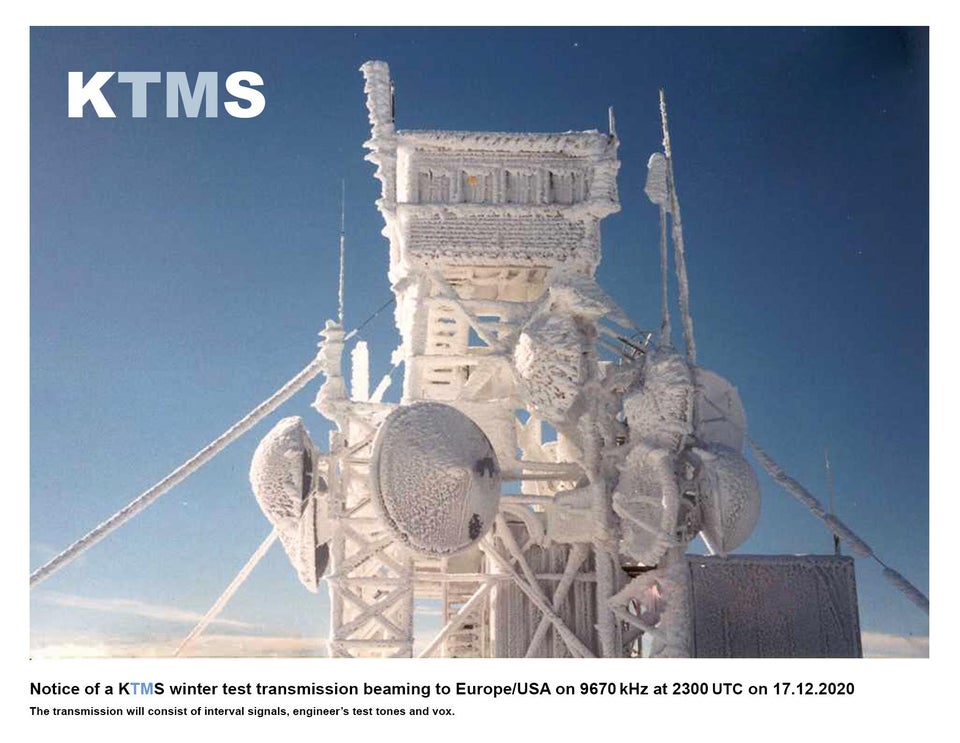
Notice of a KTMS winter test transmission beaming to Europe/USA on 9670 kHz at 2300 UTC on 17.12.2020. This transmission will consist of interval jingles, engineer test signals, rare re-media mixes of cult radio favorites, strange tones, and vox. Thank you for your continued attention as the KTMS crew continue working to bring the SWL community unique transmissions.

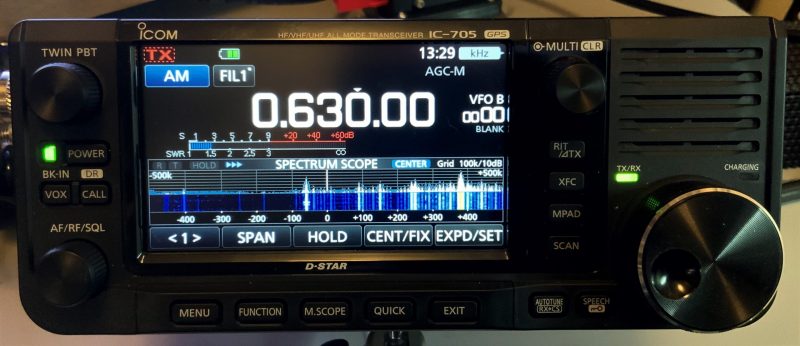 After posting recordings of 630 AM WAIZ’s “Wacky Wake-Up Crew” recently, a few readers asked for yet another recording, so here you go!