Shortwave listening and everything radio including reviews, broadcasting, ham radio, field operation, DXing, maker kits, travel, emergency gear, events, and more
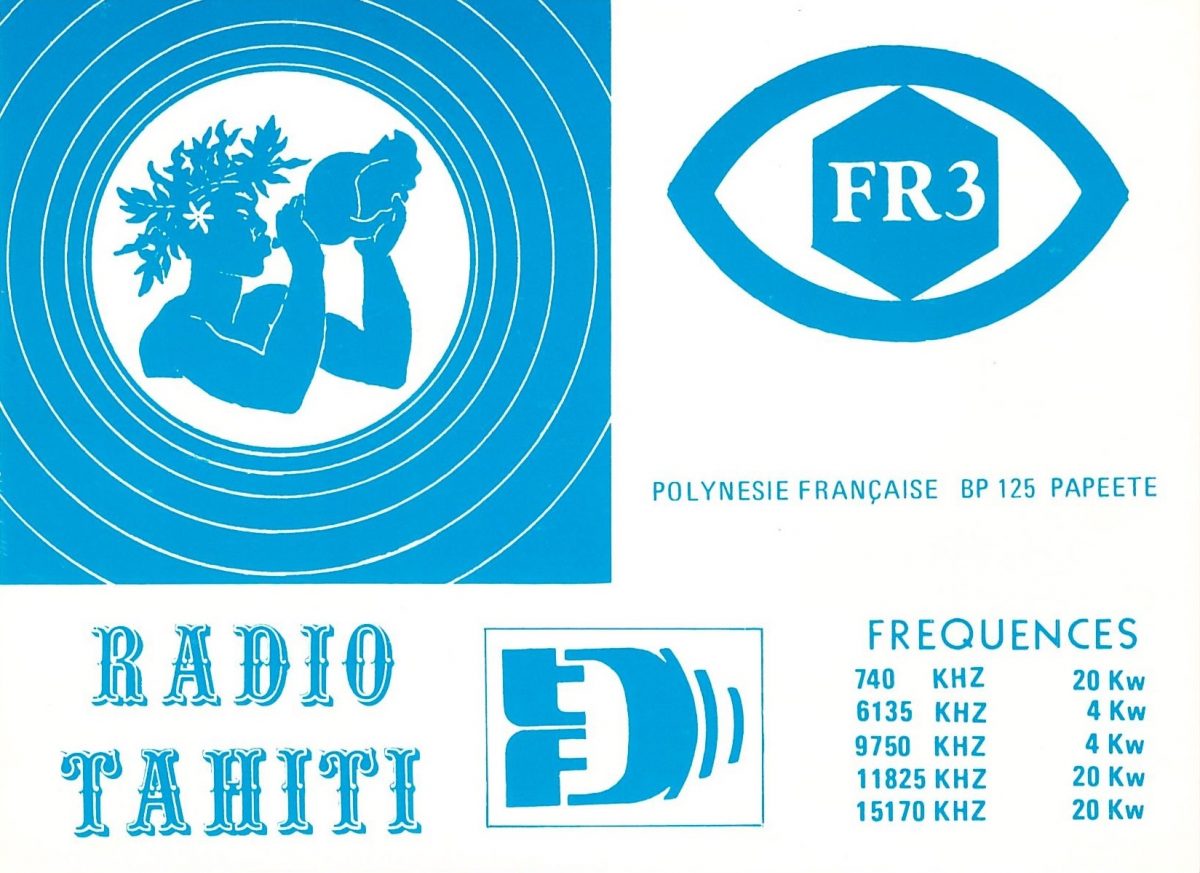
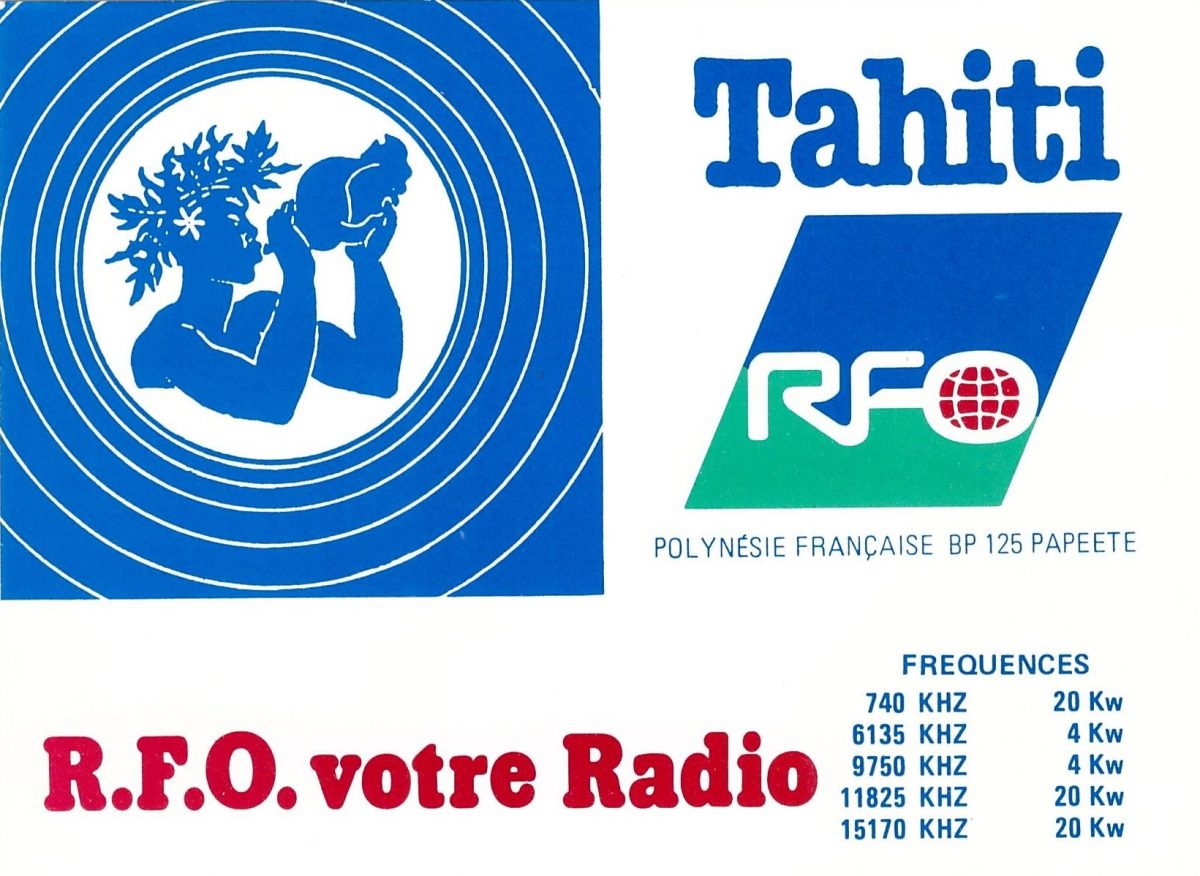
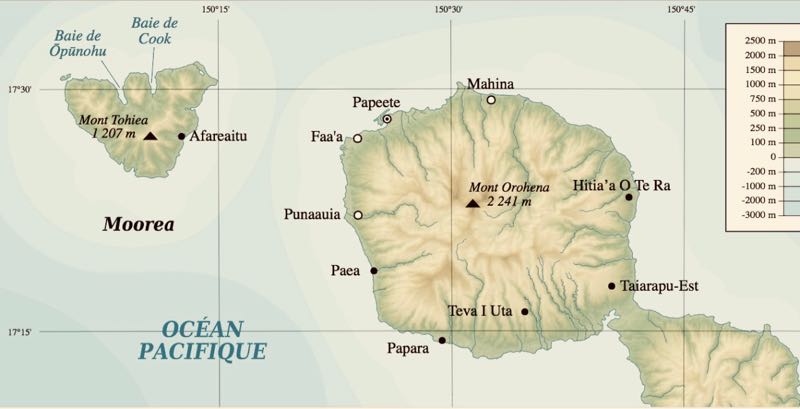
In 1982 I visited Tahiti with my family during a holiday from Malaysia, where I was working at that time, and could listen to Radio Tahiti locally. Back in Malaysia I managed to catch Radio Tahiti on 15170 kHz with my DR-28 and got the reception report verified with a nice QSL card.
When I moved back to Sweden a few years later I also managed to catch Radio Tahiti on 15170 kHz and got the reception report verified with another nice QSL card.
I saw that a QSL card from Radio Tahiti 1981 recently was sold on E-bay for $66.50!! so you better keep these old rarities.
Many thanks for sharing, Lennart! You’re right…some of these QSL cards are worth quite a bit of money on eBay. Take good care of them!
Many thanks to SWLing Post contributor, Mark Pettifor, who writes:
One of the great things about DXing and SWLing is the variety of music one can hear. One of my favorite stations to listen to on shortwave for “exotic music” was Radio Tahiti, Papeete, French Polynesia, when they were still on shortwave.
If my memory serves me correctly, I believe something happened to the transmitter, and they never got back on SW. They were on mediumwave through December of 2016 (738 kHz); now they are on FM only. (Maybe us hobbyists should start a funding website to put them back on shortwave!)
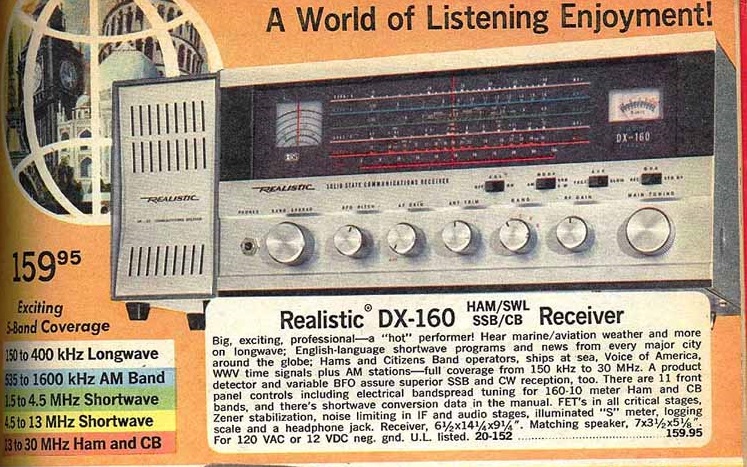
Many a Saturday night I would turn on the DX-160 (my first SW rig) and let it warm up for a while, before tuning in 15170 to see how band conditions were. If the band was good, I’d get ready to record through the air. Once I started recording, I’d often leave the room and shut the door, because having three brothers around meant the possibilities were high for having “extraneous interference” on my recordings.
Saturday evenings were a good time to tune in, because of a music program that aired with a good selection of island music. The program had an announcer who spoke in the island vernacular (Tahitian?), and when that program ended they switched to French.
Here is a 30-min recording of Radio Tahiti on 15170 kHz from a while ago, most likely around one of the solar maxima of either 1980 or 1991. I’m leaning toward the 1980 cycle. My apologies for not being able to be more specific than that. I kept terrible records of my recordings. This would be recorded either with the DX-160 or a DX-302. Apologies too for the jump in volume at around the 2:37 mark.
So close your eyes, imagine you are lying in a hammock on a beach somewhere in the South Pacific, with a warm breeze off the ocean and your favorite cooled beverage nearby, listening to some of the best island music anywhere.
Daring spies who broadcast from behind enemy lines
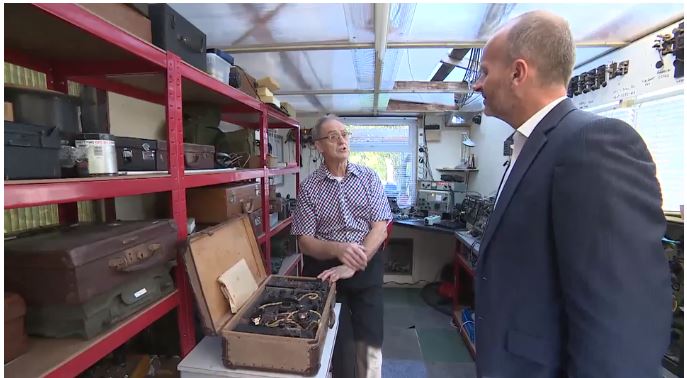
An ITV News report says: Owning just one of them in World War Two carried the death penalty, but Ian Keyser, G3ROO has more than a dozen – ensuring a piece of secret history is brought out into the open. So what are they?
They are, of course, spy radios – used to send messages back to base from behind enemy lines. And decades later, much of the collection is still in use. Tony Green has this special report.
Many thanks to SWLing Post contributors Rich Cuff and Mike Hansgen who share the following Op Ed piece from the Sydney Morning Herald:
Warning: put down any power tools and ensure you’re not operating heavy machinery before you read the next sentence. We’ve been outflanked!
Of course, unless you’re completely benighted or under some sort of strange, personal news blackout that prevents you even glancing at the front pages of newspapers, you’ll probably have already realised that China is extending and developing its relations with our close Pacific neighbours. This was, after all, only to be expected. Beijing and Taipei have long recognised the value of these countries’ votes in the United Nations; it’s not much of a step from there to glance at the map and recognise the islands’ have other significance as well. As China began expanding its international reach it was only natural it would similarly strengthen other relationships, including defence links.
[…]Nature abhors a vacuum and so, as we’ve been demonstrating less and less interest in this region, others have occupied the space.
The clearest example of this has been the strategically idiotic, fiscally-driven and wilfully blind destruction of Canberra’s lone voice in the region, the (once vital) ABC shortwave service, Radio Australia.
Sure, the internet’s better than a crackly radio signal. But simply to access the net requires computers and bandwidth, neither of which are readily available to the audiences in the South Pacific. And even if someone can manage to obtain a connection, the next problem is finding services, particularly news and information ones, that are relevant to your situation.
Someone in Apia (Samoa) is unlikely to be transfixed by events in Adelaide (South Australia) unless, of course, it’s their Seven’s team playing at the oval. Similarly a person in Buka (Bougainville) is likely to be bored by reports from Belgrade or Bulgaria, although not information about BHP Billiton. RA provided an independent, reliable news service specifically dedicated to the needs of its audience. Critically, it offered a vital, secure and trusted way of connecting islanders to their capitals and, through that, to the world.
The big advantage of shortwave services was that they could be heard; were relevant; and formed a starting point for a community. But as far as the ABC was concerned the broadcasts were nothing more than a big bag of money to raid in order to boost its domestic budget.[…]
The Amateur owned and run AM Short-wave broadcast station CHANNEL292 will be starting testing on their new 41 metre broadcast band frequency of 7440 kHz from this weekend onwards.
Rainer Ebeling DB8QC who owns and operates the station from near Ingolstadt in the state of Bavaria in southern Germany would appreciate all signal reports which can be sent simply via the form on the channel292.de website at http://www.channel292.de/deutsch/kontakt/ or http://tinyurl.com/y78etubo in Google translated English.
Don’t forget the existing frequency of 6070 kHz in the 49m broadcast band will still carry Channel292’s existing programs. The planned programs for both frequencies are available on the Channel292.de website.
Many thanks to SWLing Post contributor, Tracy Wood (K7UO), who
I just listened to REE’s 30-minute English broadcast for this Friday with Alison Hughes and Justin Coe…! (REE is relayed on Hispasat so audio quality is superb.)
Big news! Engliish is coming back to shortwave starting 29 October along with the other foreign languages..
Neither of us had ever attended this particular club, although we both knew a number of the members.
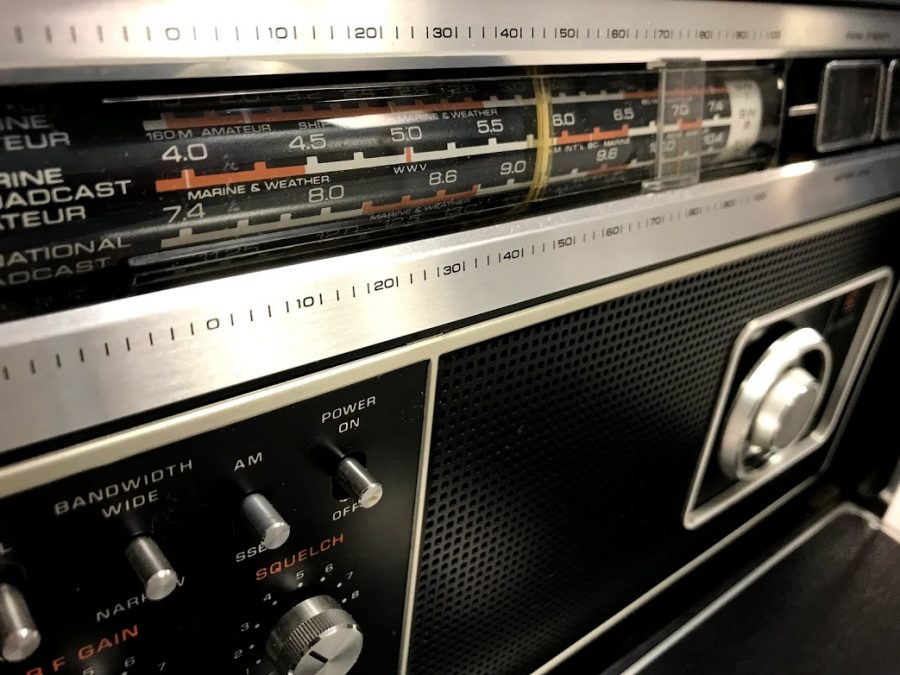
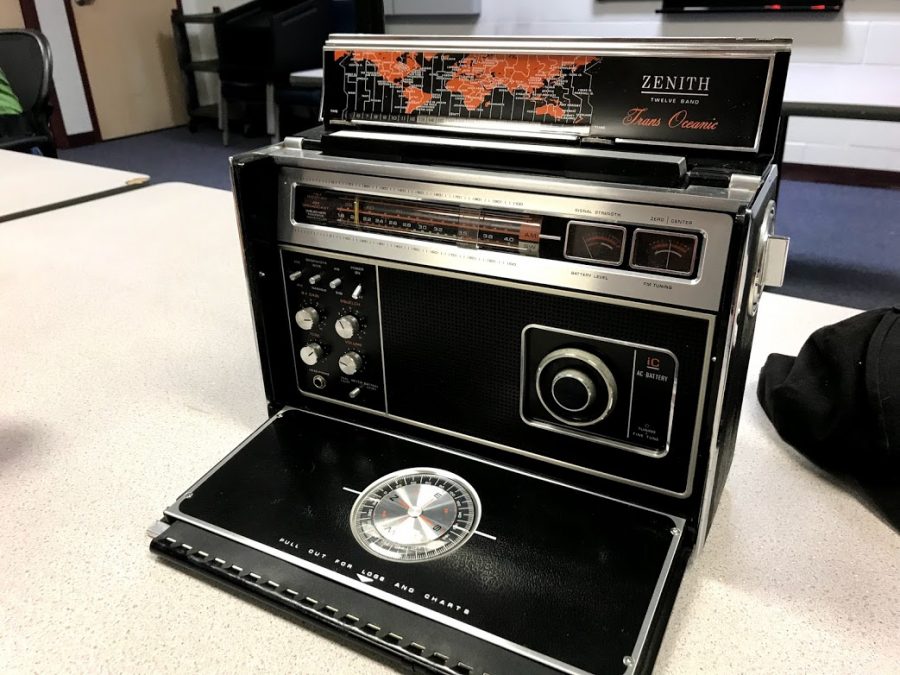
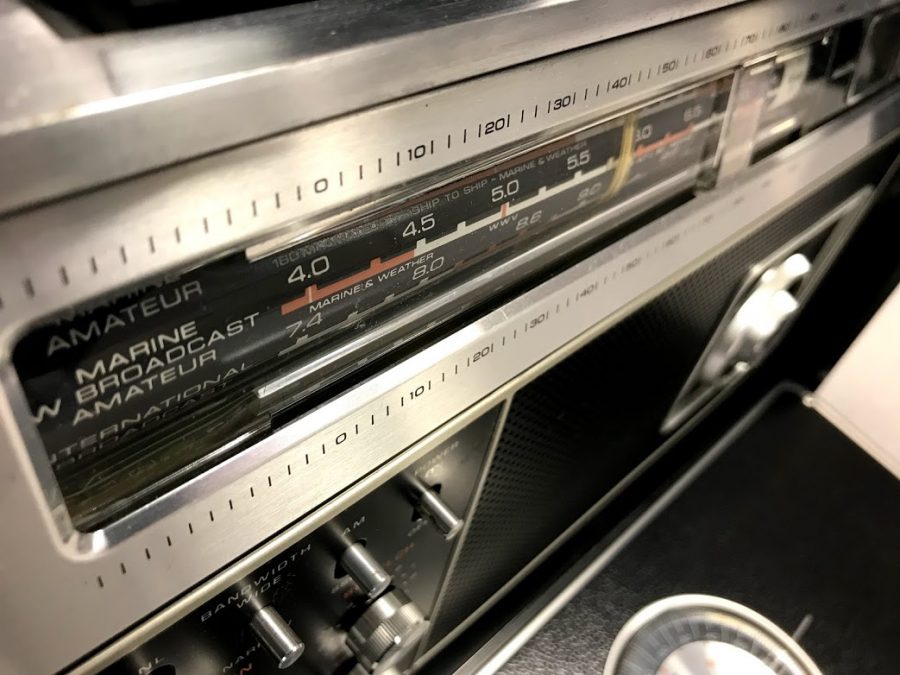
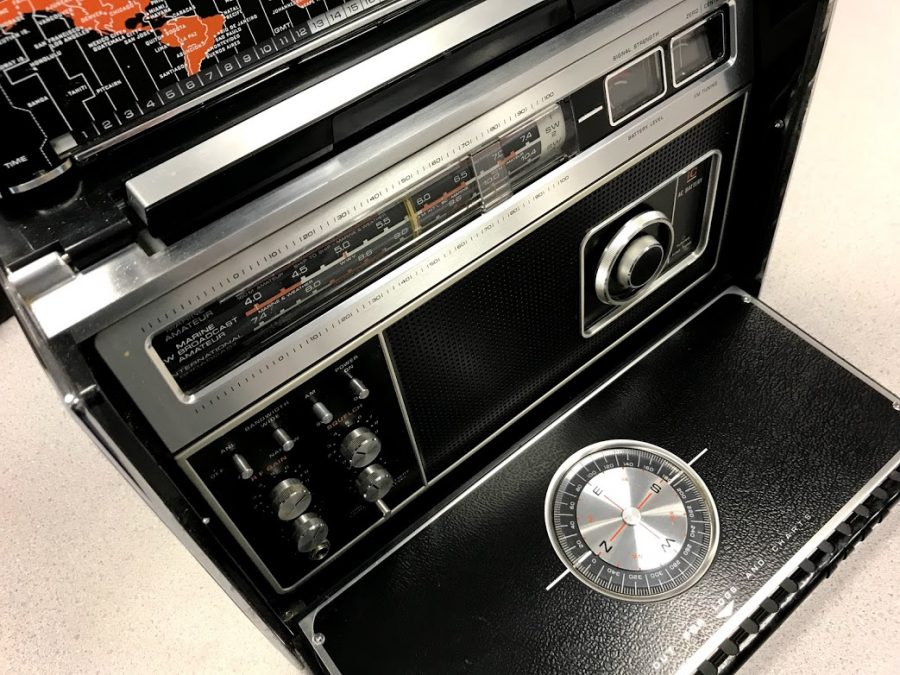
What was the first thing I spotted when I entered the meeting room? A pristine Zenith Model R-7000-2 Trans-Oceanic! Talk about a good omen!
Turns out there are no less than two Trans-Oceanic collectors in this group of about two dozen ham radio operators. The owner of this Model R-7000-2 told me that he has every Trans-Oceanic including the coveted Clipper and Bomber models.
I’m not sure I had ever seen the Model R-7000-2 in person. It’s a striking radio and the last in the line of the Trans-Oceanic sets–this model was produced in 1981.
Of course, I had to snap a few photos of this beauty.
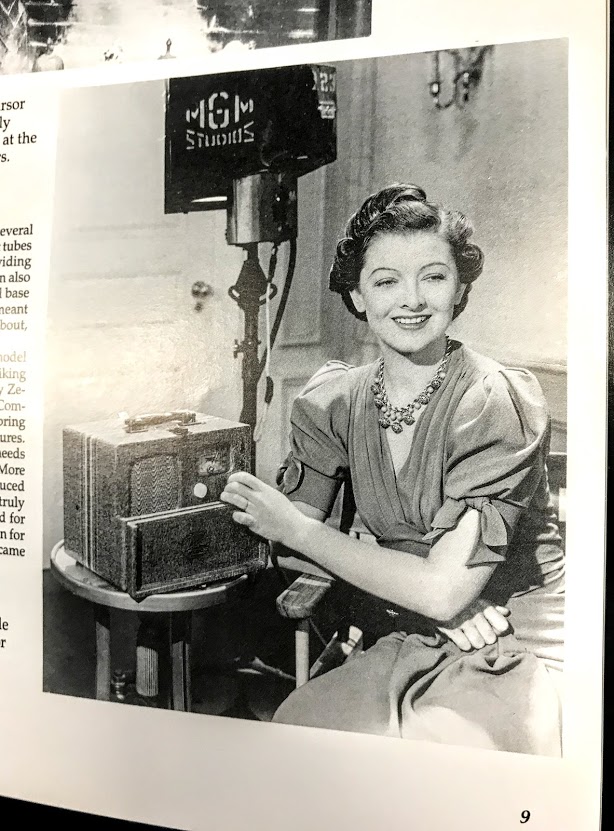
Speaking of beauties, this Zenith enthusiast also brought his copy of the John H. Bryant and Harold N. Cones seminal volume: The Zenith Trans-Oceanic, the Royalty of Radios. (A book I highly recommend.) On one of the pages I rediscovered an image of my favorite 1930s/40s actress, Myrna Loy:
I first fell in love with Myrna Loy watching the classic film series: The Thin Man. I’m a massive fan of Loy/Powell films. Here’s the trailer from the first of the Thin Man series:
Any Post readers own the Trans-Oceanic Model R-7000-2? Any one else in love with Myrna Loy? Please comment!