Author Archives: Thomas

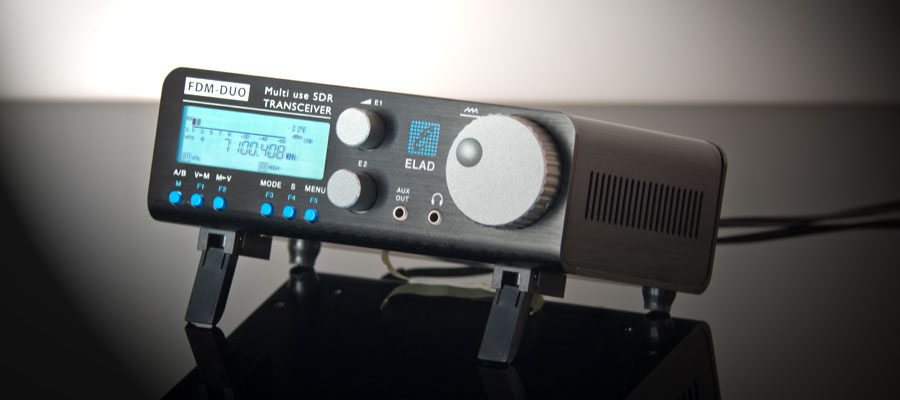
FDM-DUO SDR to ship May 2014

FDM-DUO-opening

I’ve just learned from the Europe-based retailer, WoodBoxRadio, that the new FDM-DUO software defined radio will begin shipping end of May 2014.

If you are interested in pre-ordering the FDM-DUO transceiver, you’ll need to submit a 30% deposit (315 Euro) based on the full price (1,159 Euro). The pre-order price is 1,049 Euro.

Go to WoodBoxRadio for more details.

CommRadio introduces the CR-1a

CommRadioCR1a

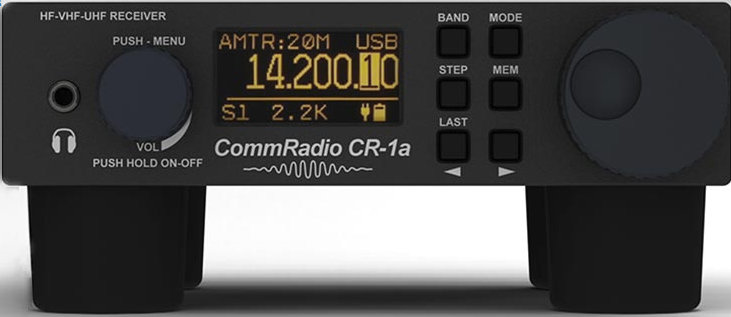
Many thanks to Dave Zantow (N9EWO) for apprising me of an update to the CommRadio line: the new CommRadio CR-1a.

Based on information published by CommRadio, it appears that the main difference is a change to the USB hardware which has been improved to provide:

  • Digital I-Q (for third-party SDR developers), and
  • One-step user programming (versus two-step with the CR-1).

Other differences are minor, and primarily cosmetic: for example, the CR-1a OLED display is now amber instead of green. Also, the CR-1a lacks the 1/8” HF antenna jack found on the CR-1 (CommRadio notes that the HF-BNC jack is superior).

Software updates and RF-analog DSP architecture are identical to the original CommRadio CR-1.

To me, the USB update is significant in that it results in the CR-1a’s ability to export IQ data via a USB cable.

This could make the CR-1a a very versatile and portable stand-alone or computer-linked SDR. Better yet, it can even be battery powered: the only SDR I know of with this feature.

For more details, check out CommRadio’s website.

Just arrived: the Tecsun PL-310ET

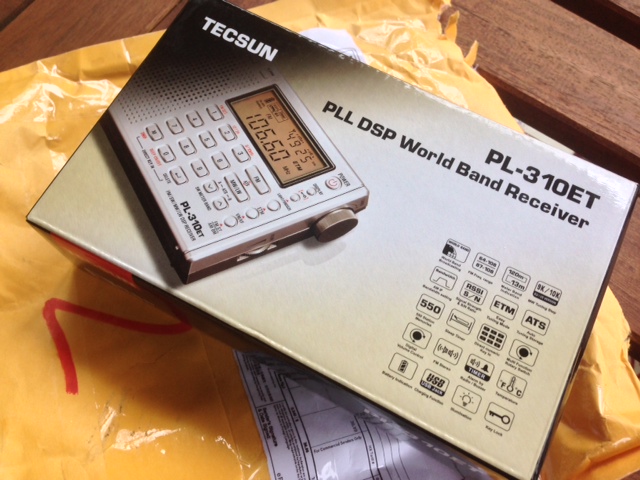
The Tecsun PL-310 as it arrived in the post.

I confess, I have well over twenty portable shortwave radios at the moment…So why am I still so enthusiastic when a new one arrives in the mailbox?

My Tecun PL-310ET just arrived, purchased from my favorite eBay seller, Anon-Co. And I just can’t wait to compare the PL-310ET with my PL-380.

Perhaps this will become another opportunity for a blind radio comparison by you, our community of listener-readers.  Dare I say, a community equally enthusiastic?

By the way, I plan to publish the results of our recent weak-signal comparison on Tuesday of next week. I’m still impressed by your responses. But there’s still time to submit your vote.  Stay tuned…!

SABA conference to feature special DRM broadcast from Ascension Island

SABA

(Source: DRM Consortium via Alokesh Gupta)

The DRM Consortium is a Sector Partner at The Southern African Broadcasting Association (SABA), Digital Radio Broadcasting Summit in Cape Town from 22nd – 24th April. The event will include a presentation by the DRM Chair, Ruxandra Obreja, on April 22nd at 11.50am and a dedicated DRM workshop on the 23rd April, from 4.00pm to 5.30pm under the title “The DRM Platform: A detailed and practical look at its superior functionalities and flexibility”.

The workshop will offer a live demonstration of DRM30 with a two-hour BBC broadcast, from Ascension Island – a site managed by DRM member, Babcock – to Southern Africa carrying BBC World Service English from 13:30 to 15:30GMT/UTC (114 degrees) 21735 kHz.

During and after the workshop DRM representatives and South African DRM supporters will be available to meet you and explain the features and to answer any questions.

The DRM Consortium has already been present at SABA events in Johannesburg and in Arusha (Tanzania) last year. The DRM standard is the only global standard which can be used in all radio frequency bands and is ideal for the large countries of Southern Africa. From national networks and regional stations to smaller commercial and community stations, all are able to broadcast their digital radio programmes with enhanced content and in excellent sound quality to everyone in their respective countries, regardless of whether people live in large cities, in small towns or villages.

Numbers Stations in the news

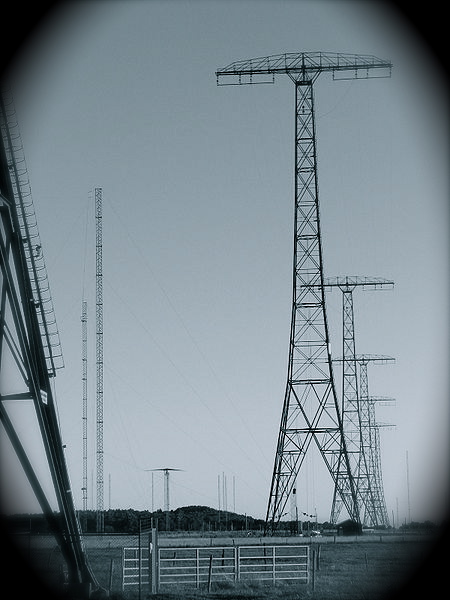
towersThere have been a lot of numbers in the news lately.

Earlier this week, David Goren’s numbers station radio documentary was featured on the ABC Radio National show, Sounds Like Radio.

Click here to listen.

This morning, I also noticed this excellent BBC News Magazine piece on numbers stations, which includes an interview with Akin Fernandez, the creator of the Conet Project.

Here’s an excerpt from The spooky world of the ‘numbers stations’:

“This is the era of hyper-tech espionage, encrypted emails and mindboggling cryptography. But you can hear a very old-fashioned form of espionage on shortwave radio.

It is 13:03 on a Tuesday in a little crammed room of the BBC Monitoring building in Caversham and what is suddenly heard on a shortwave receiving station is a 10-minute message in Morse code.

There is a small community of aficionados who believe messages like this are a throwback to the era of Cold War espionage. They are the mysterious “numbers stations”.

At the apex of the Cold War, radio lovers across the globe started to notice bizarre broadcasts on the airwaves. Starting with a weird melody or the sound of several beeps, these transmissions might be followed by the unnerving sound of a strange woman’s voice counting in German or the creepy voice of a child reciting letters in English.

[…]Times have changed and technology has evolved, but there’s evidence that this old-fashioned seeming method of communication might still be used. Shortwave numbers stations might seem low-tech but they probably remain the best option for transmitting information to agents in the field, some espionage experts suggest.

“Nobody has found a more convenient and expedient way of communicating with an agent,” says Rupert Allason, an author specialising in espionage issues and writing under the pen name Nigel West.

“Their sole purpose is for intelligence agencies to communicate with their agents in denied areas – a territory where it is difficult to use a consensual form of communications,” Allason says.

A former GCHQ officer, who does not wish to be named, whose duty was to intercept signals towards the UK and search for these numbers stations in the 1980s is also adamant that these were broadcasts to agents in the field or in residencies or directed to embassies.

It was “one-way traffic” – the transmitters broadcast numbers to the recipient. The recipient did not reply.”

[…]”This system is completely secure because the messages can’t be tracked, the recipient could be anywhere,” says Akin Fernandez, the creator of the Conet Project – a comprehensive archive of the phenomenon of numbers stations. “It is easy. You just send the spies to a country and get them to buy a radio. They know where to tune and when,” he says.

Continue reading on the BBC Magazine website…

If you would like to know more about numbers stations, click here to read other numbers posts.

Click here to go to David’s website, Shortwaveology.net.

STF Radio: 1 Hour Million Watt Special, April 20

STF Radio sent the following announcement for their “1-hour Million-Watt Special”:

    ___________ ____  ____  __   ___  _  ___    
   / ___/_   __| ___||    \|  \ |   \(_)/ _ \   
   \___ \ | | | __|  | |) /| \ \| |) | | (_) |  
   \____/ |_| |_|    |_|\_\|_|\_\___/|_|\___/   
 
            I N T E R N A T I O N A L
 
               ***ANNOUNCEMENT***
 
            STF Radio International
                       
          1-hour Million-Watt Special 
                       
            April 20, 2014 0400 UTC
 
               –Frequency List–
                   
  5050 (The Americas)         Saturday Night
  5110 (N+C. America)                “
  7490 (N+C. America)                “
  7570 (N. America)                  “
  7730 (Mex/C. America)              “
  9925 (N. America)                  “
  9955 (Caribbean)                   “
  6025 (EU)                   Sunday Morning
 17630* DRM (EU, alternate program)  “
 17760 (Asia)                Sunday Afternoon
 21490 (Pacific Aus/NZ)              “
   
                   Music
                   Voice
          Digital Mode Text+Images
            Internet Hyperlinks
                   ….and more!

New feature on 2014 Tecsun PL-660

Tecsun-PL660Many thanks to my buddy, David Korchin (K2WNW), who noticed that Anon-Co is selling a new 2014 production run of the Tecsun PL-660, which includes an Auto Sorting Memory feature.

AMBWbuttonPL660Anon-Co states that Auto Sorting Memory organizes all stored station memories automatically, removes duplicate stations and “sorts the sequence of stored stations.”

The new feature is enabled via the AM BW button.

Click here to view the new 2014 Tecsun PL-660 at Anon-Co.

UPDATE: Tom Stiles noted that his PL-660, purchased in September 2013, has this feature as well.  I just confirmed my PL-660 (purchased around the same time and pictured above) has it too.