Category Archives: Articles

Include in the CIA’s Survival Kit: the Sony ICF-SW100

CIAEscapeandSurvivalBag

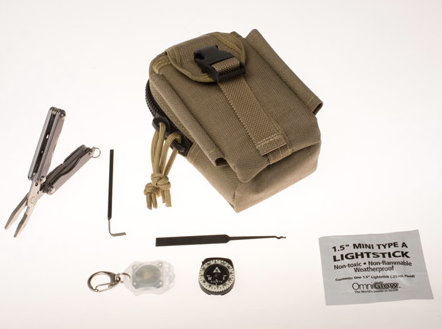
I recently discovered an article on the excellent blog, LifeHacker, which describes the contents of the CIA’s Escape and Evasion Survival Kit.

The kit’s contents currently include:

Lifehacker believes the small bag used is the Maxpedition M-2 Waistpack. I like Maxpedition packs: they’re very durable, typically military grade, and reasonably affordable. But the M-2 is small–quite small.

This led me to thinking about über-portable shortwave radios I would carry in such a small pack for survival purposes. If I were a foreign operative, ideally, I’d want a shortwave radio that has SSB mode, in case my home country’s numbers station broadcast in SSB.

In reality, there are very few good radios that are so compact they could fit in the M-2 Waistpack.

A few that came to mind were the Tecsun PL-310ET or Tecsun PL-380, but the fit would be very tight, if at all; both radios are slightly wider and taller than the M2’s main pocket, which measures 5 x 3 x 1.5 inches. I then remembered the Kaito KA1102 that I owned a few years ago–a very portable radio, but it, too, would be too large at 143 x 88 x 28.50 mm.

But then, it hit me: there is one radio, which, though no longer on the market, would fit the bill (and the pocket)…

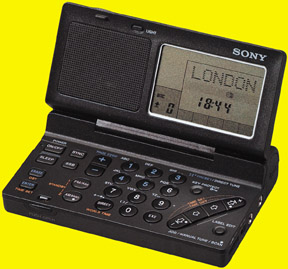
The Holy Grail of über-portable receivers: The Sony ICF-SW100
Sony-ICF-SW100

I have never owned an ICF-SW100, but I’d love to. Occasionally they show up on eBay, but prices range from $300-$800 depending on condition. That’s simply too pricey for my budget. Universal Radio has acquired used units in the past on rare occasions; these have sold between $200-400.

Then there are the lucky few, like my radio-listener buddy, The Professor. Remarkably, he tracked down (and knows I’ll never forgive him for it) an ICF-SW100 on Craig’s List for about $50! That was a steal.

Performance is superb for a radio this size. Not only does it have SSB mode, but selectable sideband sync detection.

One note of caution, should you be lucky enough to acquire one: the ribbon cable that connects the lower portion of the radio with the display (especially in the mark 1 production units) is known to fail. Fortunately, there are a number of videos (like this one) which walk you through replacement.

Click here to search eBay for a used Sony ICF-SW100.

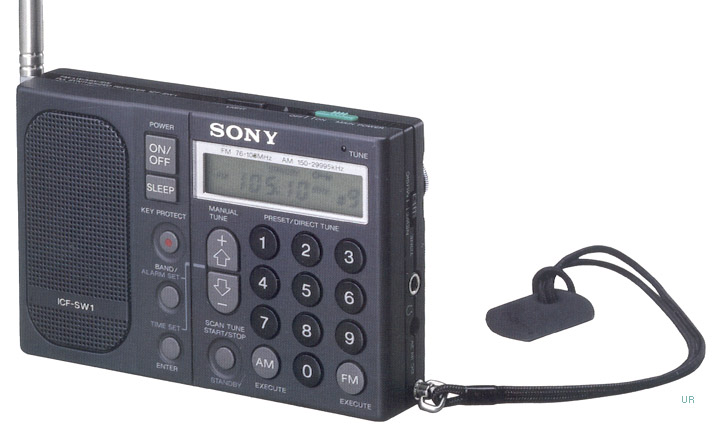
Honorable mention: the Sony ICF-SW1S
icfsw1cs

The ICF-SW100 predecessor, the ICF-SW1S (above), would easily fit in the M-2 Waistpack–it measures a mere 4.75 x 2.785 x 1 inches. Like its younger brother, it is highly sought after on the used radio market, and usually fetches $300+. The ICF-SW1S does not have a sync detector and lacks SSB mode. Still, as a broadcast receiver, it is truly superb for its size.

If you purchase a used ICF-SW1S, do ask the seller if all 6 original electrolytic capacitors have been replaced. If not, you may have to replace them in short order as the originals were known to fail. While not a repair for the faint of heart (as parts are quite small), there are several instructional sites and videos to help you.  Alternatively, you can send your ICF-SW1S to Kiwa to be professionally re-capped.

Click here to search eBay for a used Sony ICF-SW1S.

Any others–?

Do you know of any other high-quality shortwave portables out there compact enough to fit in the M-2 Waistpack?  Let us know!

The hunt is on…!
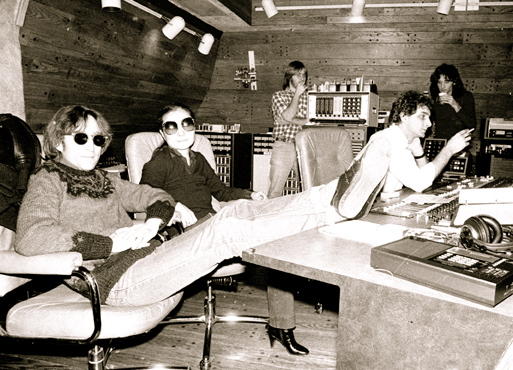
John Lennon and the Sony ICF-2001

icf2001l

Many thanks to SWLing Post reader, Robert Yowell, who writes:

“I happen to be a huge Beatles fan, and especially a fan of John Lennon’s solo music as well. The last album he recorded was “Double Fantasy” which was made in New York City during the summer of 1980.

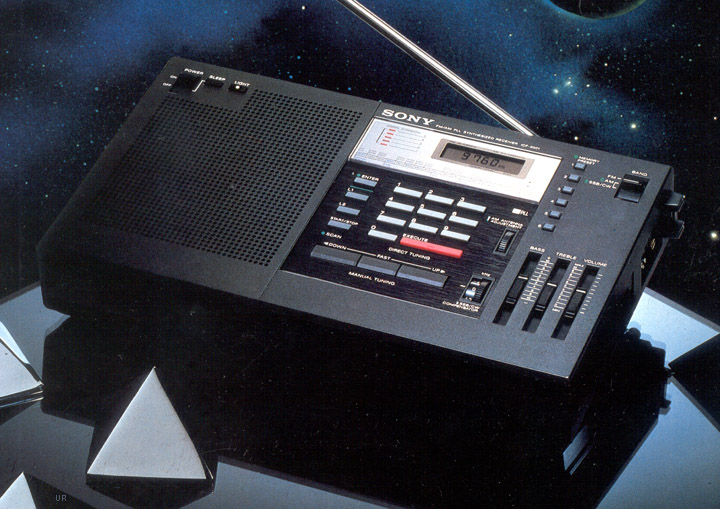
As you probably know, Sony introduced that same year the revolutionary ICF-2001 PLL synthesized receiver. John was known to have been a great fan of home electronics, especially those produced by Sony and other Japanese manufacturers. He also was a great fan of radio – as his appearances on the local WNEW-FM rock music station in NYC in the 70’s attest to.”

Photo credit: Bob Gruen, a photographer who photographed John many times during the latter part of his life in New York City.

Photo credit: Bob Gruen who photographed John Lennon many times during the latter part of his life in New York City.

“The attached photo was taken at the NYC studio called “The Record Plant” during the making of the album “Double Fantasy” in 1980.While I cannot be 100% sure that the ICF-2001 sitting on the table belonged to John – I think it is extremely likely. He still stayed in regular contact with his native England, and at this pre-Internet time, the only easy way for him to listen to the BBC was through this radio.

Another possibility is John enjoyed experimenting with new sounds in his music. During the Beatles, he even plugged in a radio into the sound mixing board when the song “I Am the Walrus” was recorded. You can hear at the end of the song a heterodyne whistle of tuning in a station as it settles on the BBC during a reading of Shakespeare’s King Lear. Perhaps John was intending to do something similar in the studio the day this photo was taken?”

I imagine that was a good possibility, Robert. Again, many thanks for this bit of Lennon history.

For those of you who have never heard “I am the Walrus,” you can listen below courtesy of YouTube:

Geoff Hanley and the Radio Security Service

Geoff Hanley (Photo source: Express and Star)

Geoff Hanley (Photo source: Express and Star)

Many thanks to my friend, Phillip, for sharing this brilliant article from the Express and Star:

Researchers discover Wolverhampton man’s secret past

He was a happily married insurance agent with a secret that he took to the grave. 

Geoff Hanley was known to be a keen radio ham but nobody realised exactly what he was doing once he donned a pair of special issue headphones in his garden shed.

He would leave his family night after night to operate from the ‘radio shack’ that was specially blacked out for fear of air raids and in which he kept a sten gun, Lee Enfield 303 rifle and hand grenades.

When the siren sounded he ensured his wife, two children and dog were safe in the shelter he had dug in the garden of their Wolverhampton home but he would not join them. He stayed above ground at his post in the shed continuing to secretly monitor German military radio signals.

The operation was so hush-hush that even he may not have been entirely sure how the information he gathered was being used. But he was certain of two things – it was important and he could not speak about it to anybody outside those he worked with.

Continue reading…

Numbers stations featured in Highbrow Magazine

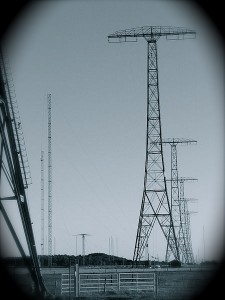
towersMany thanks to SWLing Post reader, Richard Cuff, who shares this link to a numbers station piece in Highbrow Magazine; one of the more comprehensive numbers station articles I’ve read in a while.
Here’s an excerpt:

“Many nights, Spooks turn on their shortwave radios and drift through the frequencies. On any given night, one can hear amateur radio stations broadcasting church sermons, utility traffic for aircrafts – with the right equipment, you can hear/contact the International Space Station. Yet one of the most eerie, mysterious uses of shortwave is that of the numbers stations: stations that feature ominous – sometimes robotic – voices saying seemingly random number patterns.

Shortwave radio boomed in the 1920s: For decades, it was the only way to receive transmissions from far way. Numbers stations, as they are called now, have been around since World War I, though many of the most famous transmissions took place during the Cold War. These mysterious stations are all, to date, unlicensed. Some feature automated voices, others have what sound like children’s voices, another with a sultry woman announcing numbers. One station – a Moscow-based broadcast during a Communist party coup – featured only the number five repeated for hours.

Numbers stations and use of shortwave have declined after the Cold War, but there are still transmissions heard every day – the shortwave decline has not been as pronounced as one would expect. Part of the reason for this is that it is a secure means of one-way communication. Since the airwaves are being released out into the ether – the intended recipient is completely untrackable. Presumably, spies would carry a one-time pad, which would have the encryption code to be used (ideally) for just one broadcast (hence one-time). This makes decryption from pedestrians and enemies nearly impossible unless that one-time pad is misused or corrupted.

Almost all of the information we have on these numbers stations is due to hobbyists listening, sourcing, and sometimes attempting to decode the stations with their own radios. The communities of hobbyists are vast – and their logging can be prolific. There is the Spooks Spy Numbers Station Mailing List, the Conet Project (which compiles recordings of shortwave), the Spy Numbers Station Database, and many others. They keep track of the frequency, the time, the numbers, and sometimes record audio each time spooks hear a Numbers broadcast. These shortwave enthusiasts sometimes spend hours trying to locate the source of these broadcasts – sometimes, to no avail.”

Continue reading “Numbers Stations, Shortwave Radio, and Their Role in the Intelligence Community”…

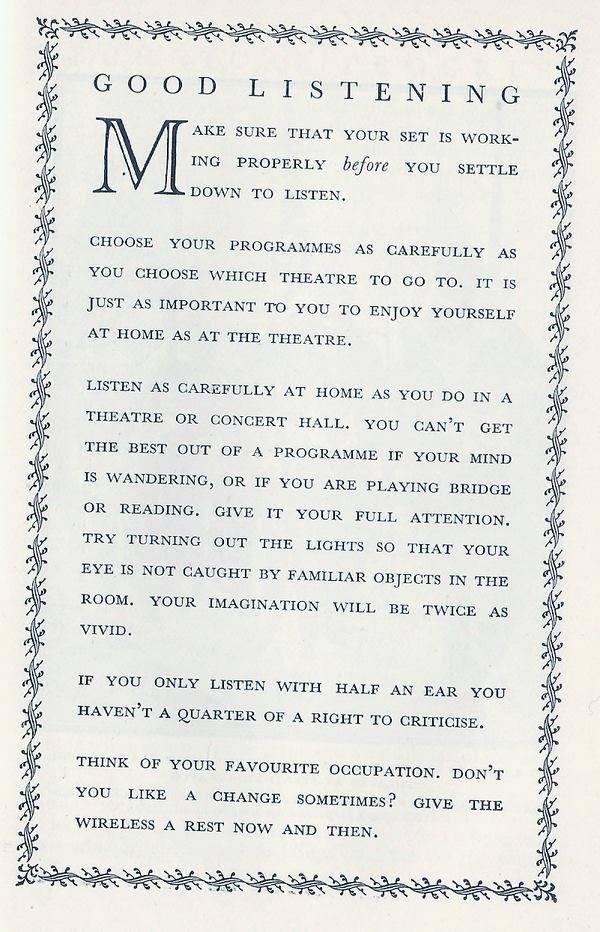
How to listen: A 1930 BBC radio manual

BBC-Radio-Manual

Many thanks to David Goren for sharing this article from Open Culture:

A comparison between the invention of radio and that of the Internet need not be a strained or superfical exercise. Parallels abound. The communication tool that first drew the world together with news, drama, and music took shape in a small but crowded field of amateur enthusiasts, engineers and physicists, military strategists, and competing corporate interests. In 1920, the technology emerged fully into the consumer sector with the first commercial broadcast by Westinghouse’s KDKA station in Pittsburgh on November 2, Election Day. By 1924, the U.S. had 600 commercial stations around the country, and in 1927, the model spread across the Atlantic when the British Broadcasting Corporation (the BBC) succeeded the British Broadcasting Company, formerly an extension of the Post Office.

Unlike the Wild West frontier of U.S. radio, since its 1922 inception the BBC operated under a centralized command structure that, paradoxically, fostered some very egalitarian attitudes to broadcasting—in certain respects. In others, however, the BBC, led by “conscientious founder” Lord John Reith, took on the task of providing its listeners with “elevating and educative” material, particularly avant garde music like the work of Arnold Schoenberg and the Second Viennese School. The BBC, writes David Stubbs in Fear of Music, “were prepared to be quite bold in their broadcasting policy, making a point of including ‘futurist’ or ‘art music,’ as they termed it.” As you might imagine, “listeners proved a little recalcitrant in the face of this highbrow policy.”

Continue reading…


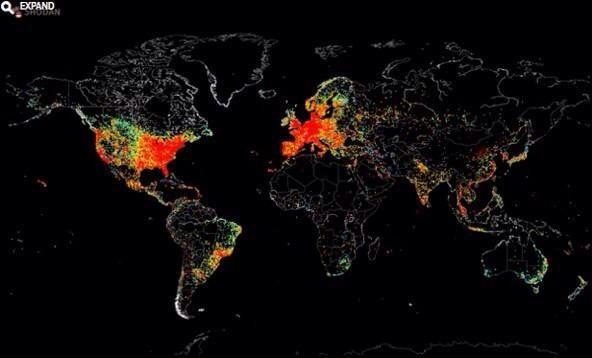
A map of every device connected to the Internet

(Source: John Matherly, via Gizmodo)

(Source: John Matherly, via Gizmodo)

SWLing Post reader, Mehmet Burk, shares this tweet from Sherry Rehman:

Many thanks, Mehmet!

Though this map may not be completely accurate since IP addresses in IPv4 can have thousands of devices behind a single IP, I believe it is a solid reflection on where the Internet is(n’t). Note that Africa is still very much in the information dark; shortwave and FM radio fills this void 24/7 in many rural communities.

PL-880 Hidden Feature: Adjusting FM muting threshold

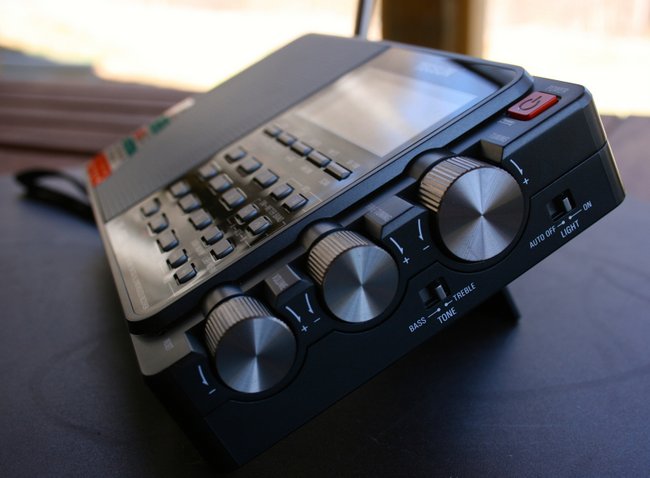
PL-880-RightSideMany thanks to SWLing Post reader, Hector (AD4C) for discovering and sharing this hidden feature of the Tecsun PL-880. Hector writes:


“I have been using the Tecsun PL-600 for some time but never was satisfied with its performance in SSB, you can read my review on eham.

Last night I received the PL-880 I purchased trough amazon.com and I am really impressed with its performance, its a day and night difference compared with the PL-600, especially for SSB–the addition of narrow filters for LSB and USB made a huge improvement to the performance, also the availability of choosing different BW either on SSB or AM also improved a lot the reception.

I have to congratulate you for the well designed webpage you did to show all the hidden menu in this great radio but I have to tell you also that when performing all the menu by your links, I found by accident another one you did not mention. I’ll explain with details:

  1. Turn the radio ON, select FM, and go to freq that be in between two stations–an empty frequency–in my radio it will sound like complete silence because the squelch circuit is acting properly and majority of users will prefer to leave it like that to avoid the squelch noise BUT that decreases receiver sensitivity a few microvolts on FM, so because I am a dxer in any band, I reset the squelch threshold to have permanent noise or “open squelch” condition.
  2. Now press and hold the key #9  for more than 2 seconds to display the squelch value
  3. Use the tuning wheel to adjust the squelch value. Mine was at 3 but when I moved it down to zero using the tuning knob the noise appeared in all frequencies between used ones and I could detect weak stations more than 100 miles away. This is good to know when propagation by sporadic E is open and an indicator for the 2 and 6 M dx chasers.”

Many thanks, Hector! I’ve added this to the Tecsun PL-880 hidden feature list. The ability to lower squelch is, as you say, essential for FM DXing.

Note that I tried this hidden feature on my Tecsun PL-880 and it didn’t work. My FM muting threshold must be set to 0, however, because I can hear static between stations. Tecsun must have made this addition after my radio was produced (mine came from one of the first ‘880 shipments in November 2013).

Have any other SWLing Post readers tried to adjust the FM muting threshold on their PL-880?