Category Archives: Broadcasters

Radio Waves: Switzerland’s Move to Digital, Guyana Rejects USAGM’s Request, Ham Records China/US Encounter, and Farm Radio International Endorsement

Radio Waves:  Stories Making Waves in the World of Radio

Because I keep my ear to the waves, as well as receive many tips from others who do the same, I find myself privy to radio-related stories that might interest SWLing Post readers.  To that end: Welcome to the SWLing Post’s Radio Waves, a collection of links to interesting stories making waves in the world of radio. Enjoy!

Many thanks to SWLing Post contributors Mike Terry, Dan Robinson, Ulis Fleming, and William Lee for the following tips:


Switzerland Inches Closer to FM Switch-Off (Radio World)

GENEVA — Switzerland is embarking on the next phase of its digital radio switchover strategy. In May René Wehrlin, media specialist at Switzerland’s Federal Office of Communications (Ofcom) announced the country’s next steps toward the country’s total transition to DAB+.

Ofcom officially confirmed in 2019 that the nation would say “adios” to all FM radio programs by the end of 2024 at the latest. At the time, the “Digital Migration” (DigiMig) working group, set up by the Swiss private and public radio sectors and Ofcom in 2013, stated that 68% of radio listening was digital, 37% of which was via DAB+ and 15% exclusively via FM.[]

Guyana refuses US’ request to facilitate radio broadcasts to Venezuela (Demerara Waves)

Guyana’s President David Granger late Friday said his administration rejected a request by the United States (US) to use the medium wave radio frequencies of this South American nation to broadcast Voice of America programmes to Venezuela.

Mr. Granger said Guyana turned down the request because of security, health and political risks that Guyana could expose itself to with Venezuela which is claiming the Essequibo Region that makes up about two-thirds of this former British colony.

“Given the length of an unpoliced western border, the influx of refugees, the unsettled territorial question and the public health risks, it would not be in our national interest to do anything to contribute to destabilising relations at this time,” the President said.

A US Embassy spokeswoman said the American government was no longer interested in the project. ” The U.S Agency for Global Media is not actively considering this anymore. It is important that the people of Venezuela have access to uncensored news from credible Venezuelan and international journalistic news sources. Guyana has shown leadership in the past, in defense of representative government by joining other Lima Group members from the Americas to strive for a democratic resolution to the crisis in Venezuela,” she said.[]

Close encounter between US-China militaries captured by radio amateur (South China Morning Post)

The Chinese navy has warned off a US military plane that briefly flew close to the southern coast of China, north of the Taiwan Strait, according to a Beijing-based think tank.

In a 34-second scratchy radio recording released by the South China Sea Strategic Situation Probing Initiative (SCSPI), a think tank based in Beijing, a man – purported to be a Chinese naval official – can be heard saying in English: “This is China Naval Air Force on guard, you are approaching Chinese air domain, change your course immediately or you will be intercepted.”
He then repeated the warning in Mandarin Chinese.

The institute said on its Twitter account that the recording was captured on Thursday morning by a radio amateur. It remains unclear which aircraft was involved, or if there was any face-off in the air.[]

Charity Intelligence recommends Farm Radio International (Charity Intelligence)

Charity Intelligence is recommending donors support Farm Radio International for the coronavirus pandemic. Farm Radio has a network of over 1,000 radio programs reaching more than 250 million people in 41 countries across Africa.

To donate to Farm Radio’s covid-response

Communication is critical in the early stages of a disease outbreak to give people information. Rumours swirl that Africans cannot get coronavirus. Tanzania’s president, Magufuli, said churches should stay open because the coronavirus is “satanic” and “cannot survive in the body of Christ.” As all have witnessed, fake news has harmful consequences with the quick coronavirus.

Farm Radio International is a Canadian, medium-sized charity with donations of $3.9m in 2018. Typically, a charity of this size would not be front of mind in a global response. Yet Farm Radio has the existing platform and local operations to play an effective role reaching millions quickly in a coronavirus response. Early communication is an urgent need. []


Do you enjoy the SWLing Post?

Please consider supporting us via Patreon or our Coffee Fund!

Your support makes articles like this one possible. Thank you!

Joint RAE and LRA36 Radio Nacional Arcangel San Gabriel test transmission today July 25, 2020

Many thanks to SWLing Post contributor, Adrian Korol, who shares the following announcement:

RAE Argentina to the World, broadcasting from Antarctica

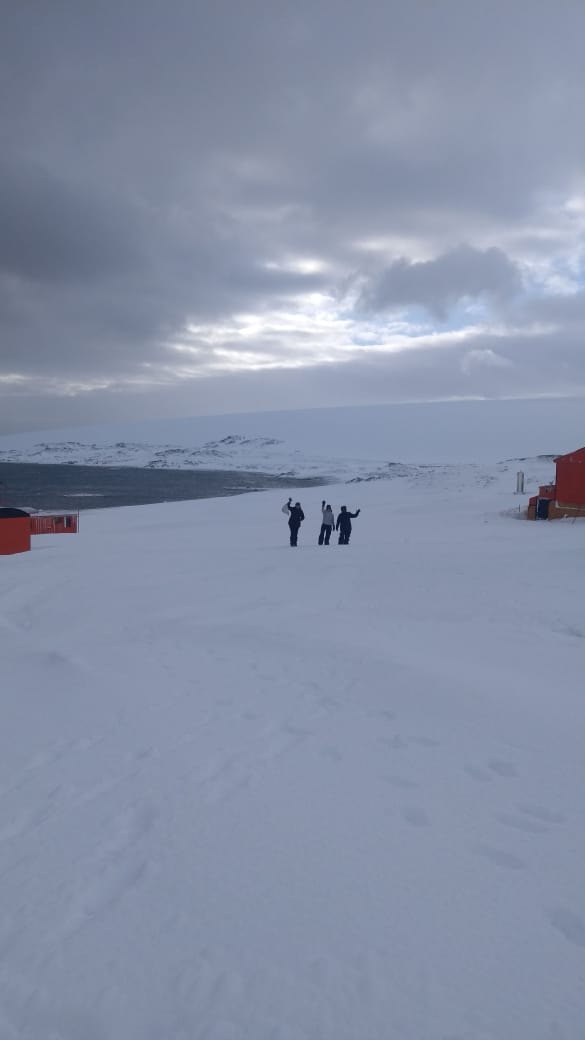
RAE will join a trial transmission by LRA36 Radio Nacional Arcangel San Gabriel, broadcasting from Base Esperanza, in the Argentine zone of Antarctica.

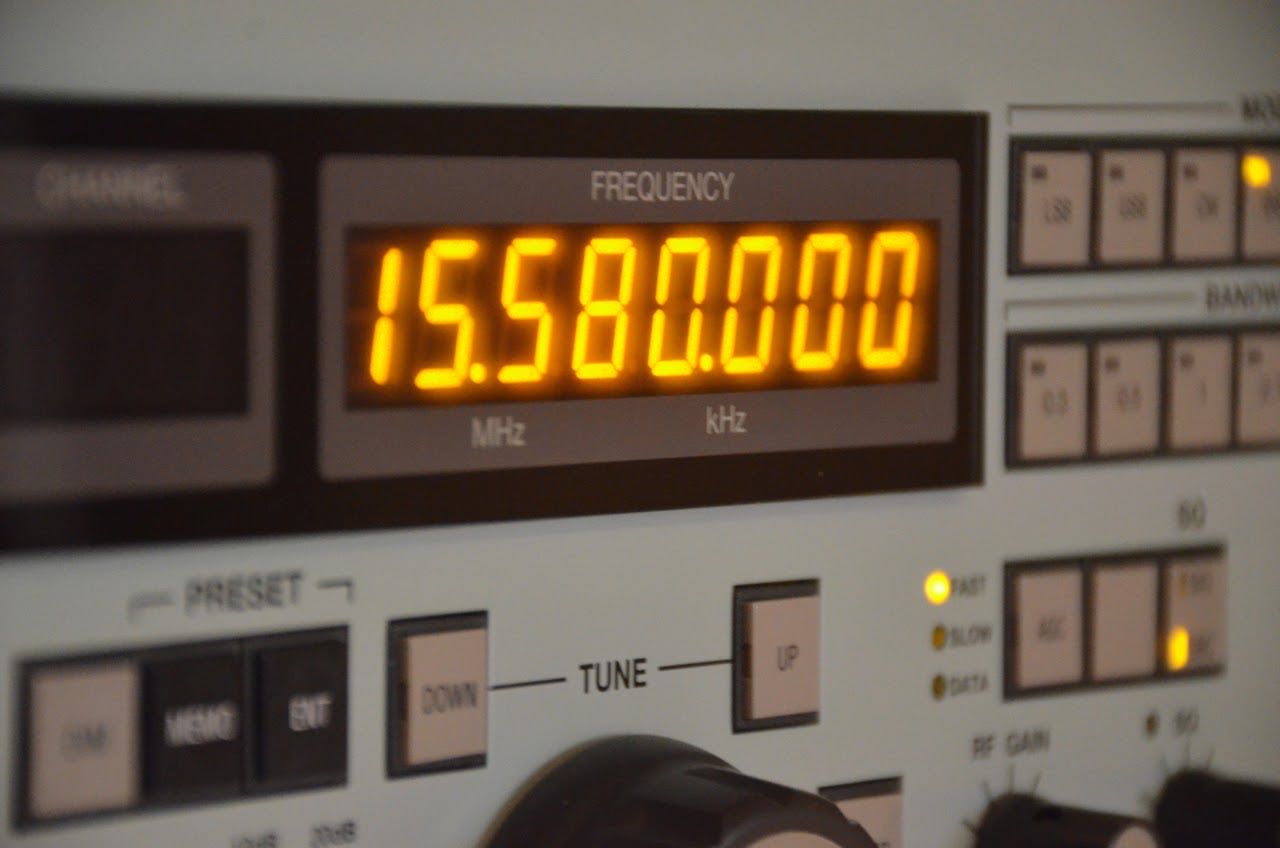
This Saturday, July 25, between 17:00 and 21:00 UTC, the Antarctic station will perform a series of tests on the 15476 kHz frequency (19-meter band), Upper Side Band, via a Collins HF80 transmitter and a rhombic antenna.

RAE Argentina al Mundo will put on the air two 30-minute programs, one in Spanish and the other in English, hosted by Fernando Farias, focusing on the history of RAE and LRA36 with historical files and information that listeners, DXers and radio amateurs alike will appreciate. On the Spanish-language show, Fernando is joined by RAE’s director Adrián Korol.

Let’s recall that last Saturday, July 18th, the first test USB transmissions were carried out with excellent results amid optimal broadcast conditions .

Damian Tranamil, LRA36 operator and technician, answered afterwards more than a hundred reception reports from all over the World.

Many listeners said they had the chance to pick up a station from Antarctica for the first time, while others said they were thrilled to be able to receive Arcángel San Gabriel’s signal for the first time in 20 years.

Accurate reception reports will be verified with an electronic QSL card (eQSL). They are to be sent to : [email protected]

We also appreciate listeners sending clips of them receiving our broadcast, or tagging us when they post on social media.

China Radio International: Jim seeks help understanding language schedule and transmitter locations

Many thanks to SWLing Post contributor, Jim Meirose, who asks:

Each day in NJ I am hearing China Radio International in German on 9.570 MHz. It “fades in” up out of the noise about 2 pm EDT, and strengthens until the broadcast signs off just before 3 pm (1800 UTC).

Two things: first, I have found on a couple of websites that a broadcast from CRI on 9.570 does run daily and signs off just before 1800 UCT, but–the listings say it is in English. What I am hearing is in German.

I would like to find someone who can explain the discrepancy in languages between the listings and what I hear.

Second, I would like to know for sure where the transmitter for this broadcast is located. I know CRI broadcasts not only from Beijing but from Albania, Cuba, and possibly others. Can someone tell me the answer?

Thanks very much.

Per your request, Jim, I’ll toss your question out here to the experts in the SWLing Post community. Please comment if you can help Jim with his inquiry!

Radio Waves: Radio Six on Shortwave Again, ATN Refrains from Politics, NPR Ratings Drop in C-19, and Grand Central’s Role in Standard Time

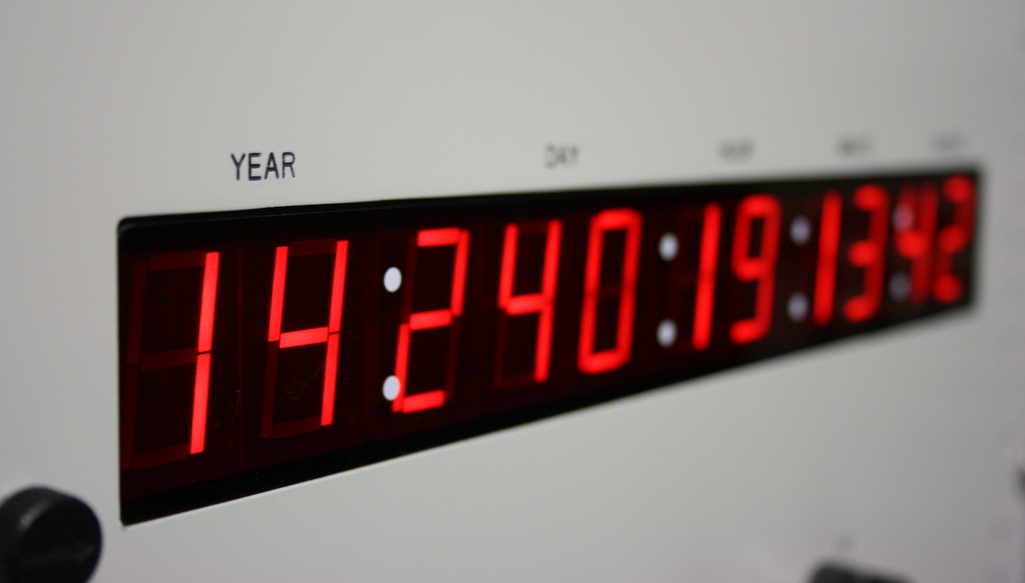
A WWV Time Code Generator

Radio Waves:  Stories Making Waves in the World of Radio

Because I keep my ear to the waves, as well as receive many tips from others who do the same, I find myself privy to radio-related stories that might interest SWLing Post readers.  To that end: Welcome to the SWLing Post’s Radio Waves, a collection of links to interesting stories making waves in the world of radio. Enjoy!

Many thanks to SWLing Post contributors Michael Bird,  John Figliozzi, and Jack Dully for the following tips:


Radio Six Pops Up Again on Shortwave (Radio World)

Radio Six International has not been a full-time shortwave broadcaster for some time. But after two recent live broadcasts on 6070 kHz prompted by the pandemic, it says it will continue monthly broadcasts at least for now.

Radio World visited electronically with Tony Currie.[]

WLW’s America’s Truckin’ Network To Refrain From Political Talk (Radio Insight)

iHeartMedia News/Talk 700 WLW Cincinnati has eliminated political talk from its overnight “America’s Truckin’ Network” show hosted by Steve Sommers.

The Cincinnati Enquirer reports that Sommers told listeners of the change on Monday morning’s show after multiple unspecified complaints.

In the on-air statement, Sommers blamed the change on a group of individuals who took offense with comments made by a caller a few weeks ago.[]

NPR Radio Ratings Collapse As Pandemic Ends Listeners’ Commutes (NPR)

Broadcast ratings for nearly all of NPR’s radio shows took a steep dive in major markets this spring, as the coronavirus pandemic kept many Americans from commuting to work and school. The network’s shows lost roughly a quarter of their audience between the second quarter of 2019 and the same months in 2020.

People who listened to NPR shows on the radio at home before the pandemic by and large still do. But many of those who listened on their commute have not rejoined from home. And that threatens to alter the terrain for NPR for years to come, said Lori Kaplan, the network’s senior director of audience insights.

“We anticipated these changes,” Kaplan said. “This kind of change was going to take place over the next decade. But the pandemic has shown us what our future is now.”

Commercial radio is experiencing, if anything, worse declines. But audience research commissioned by Kaplan indicates that NPR’s audience is disproportionately made up of professionals who are able to work from home and who are interested in doing so even after the pandemic subsides.[]

The Day That New York Had Two Noons, a Century After Losing 11 Days (Untapped New York)

New York’s history has included everything from transit strikes to riots over Shakespeare to immigration from nearly every country in the world. Yet, for much of this history, people didn’t always know the “correct” time or date. Until 1883, virtually every place in the country set local time according to the sun. According to Sam Roberts in his book Grand Central: How a Train Station Transformed America, “Typically, noon would be regularly signaled so people could synchronize their clocks and watches.” From dropping a ball down a flagpole in Manhattan to ringing a gong, settlements all across the country would alert people of noon. But as railroads spread throughout the country, it was nearly impossible to standardize the time.

“A passenger traveling from Portland, Maine, to Buffalo could arrive in Buffalo at 12:15 according to his own watch set by Portland time,” Roberts writes. “He might be met by a friend at the station whose watch indicated 11:40 Buffalo time. The Central clock said noon. The Lake Shore clock said it was only 11:25. At Pennsylvania Station in Jersey City, New Jersey, one clock displayed Philadelphia time and another New York time. When it was 12:12 in New York, it was 12:24 in Boston, 12:07 in Philadelphia, and 11:17 in Chicago.”[]


Do you enjoy the SWLing Post?

Please consider supporting us via Patreon or our Coffee Fund!

Your support makes articles like this one possible. Thank you!
Radio Waves: Narco-Antennas, Pirate Radio Beginnings, Arqiva Restructure and Redundancies, and the Ghostly Buzzer

Radio Waves:  Stories Making Waves in the World of Radio

Because I keep my ear to the waves, as well as receive many tips from others who do the same, I find myself privy to radio-related stories that might interest SWLing Post readers.  To that end: Welcome to the SWLing Post’s Radio Waves, a collection of links to interesting stories making waves in the world of radio. Enjoy!

Many thanks to SWLing Post contributors Skip Arey,  David Goren, Paul Evans, Kanwar Sandhu and Dave Porter for the following tips:


Special Report: Drug cartel ‘narco-antennas’ make life dangerous for Mexico’s cell tower repairmen (Reuters)

MEXICO CITY (Reuters) – The young technician shut off the electricity at a cellular tower in rural Mexico to begin some routine maintenance.

Within 10 minutes, he had company: three armed men dressed in fatigues emblazoned with the logo of a major drug cartel.

The traffickers had a particular interest in that tower, owned by Boston-based American Tower Corp (AMT.N), which rents space to carriers on its thousands of cellular sites in Mexico. The cartel had installed its own antennas on the structure to support their two-way radios, but the contractor had unwittingly blacked out the shadowy network.

The visitors let him off with a warning.

“I was so nervous… Seeing them armed in front of you, you don’t know how to react,” the worker told Reuters, recalling the 2018 encounter. “Little by little, you learn how to coexist with them, how to address them, how to make them see that you don’t represent a threat.”

The contractor had disrupted a small link in a vast criminal network that spans much of Mexico. In addition to high-end encrypted cell phones and popular messaging apps, traffickers still rely heavily on two-way radios like the ones police and firefighters use to coordinate their teams on the ground, six law enforcement experts on both sides of the border told Reuters.[]

How Pirate Radio Rocked the 1960s Airwaves and Still Exists Today (HowStuffWorks)

If you’ve been binge-watching movies lately, you may have come across “Pirate Radio.” Director Richard Curtis’ 2009 comedy-drama stars the late Philip Seymour Hoffman as The Count, a disc jockey for an unlicensed rock radio station that broadcast from a rusty, decrepit ship off the British coast in the mid-1960s, defying government authorities to spin the rock records that weren’t allowed on the BBC at the time. The plot is based loosely on the saga of an actual former pirate station, Radio Caroline, that was founded by an offbeat Irish entrepreneur named Ronan O’Rahilly, the inspiration for the character portrayed by Bill Nighy.

“Pirate Radio” is a period piece, set in a time when the Rolling Stones’ “Let’s Spend the Night Together” and the Who’s “My Generation” were still scandalous and controversial rather than nostalgic anthems for today’s aging baby boomers. So you couldn’t be blamed for assuming that it depicts a long-vanished phenomenon, like Nehru jackets with iridescent scarves and psychedelic-patterned paper mini dresses.

To the contrary, though, more than a half-century later, pirate radio is still a thing. In fact, it’s possibly more widespread than it was in the 1960s, even in an age when streaming internet services such as Spotify and Pandora put the equivalent of a jukebox in the pocket of everyone with a smartphone. And as a bonus, Radio Caroline still exists — though, ironically, it’s gone legal.[]

Arqiva confirms restructure and redundancies (IBC.org)

[Note: Arqiva is the UK domestic broadcast transmission provider.]

Arqiva is working on a restructure of its business that could result in a third of its staff being made redundant.

According to a report in the Telegraph, the media infrastructure business is preparing to cut around 500 staff, which is approximately a third of its workforce.

An Arqiva spokesperson confirmed to IBC365 that some job losses will occur.

They said: “The sale of our telecoms business makes Arqiva a smaller organisation, changes our revenue profile and reduces our available profit pool.

”We are therefore conducting a review of the costs and systems we need to run our business over the next three years.

”Regrettably, we will need to reduce the size of our workforce, but it’s much too early to speculate about numbers.”

The Telegraph report cites the shift to streaming and a drop in income for broadcasters as reasons for the potential cuts.[]

The ghostly radio station that no one claims to run (BBC Future)

In the middle of a Russian swampland, not far from the city of St Petersburg, is a rectangular iron gate. Beyond its rusted bars is a collection of radio towers, abandoned buildings and power lines bordered by a dry-stone wall. This sinister location is the focus of a mystery which stretches back to the height of the Cold War.

It is thought to be the headquarters of a radio station, “MDZhB”, that no-one has ever claimed to run. Twenty-four hours a day, seven days a week, for the last three-and-a-half decades, it’s been broadcasting a dull, monotonous tone. Every few seconds it’s joined by a second sound, like some ghostly ship sounding its foghorn. Then the drone continues.

Once or twice a week, a man or woman will read out some words in Russian, such as “dinghy” or “farming specialist”. And that’s it. Anyone, anywhere in the world can listen in, simply by tuning a radio to the frequency 4625 kHz.

It’s so enigmatic, it’s as if it was designed with conspiracy theorists in mind. Today the station has an online following numbering in the tens of thousands, who know it affectionately as “the Buzzer”. It joins two similar mystery stations, “the Pip” and the “Squeaky Wheel”. As their fans readily admit themselves, they have absolutely no idea what they are listening to.[…]


Do you enjoy the SWLing Post?

Please consider supporting us via Patreon or our Coffee Fund!

Your support makes articles like this one possible. Thank you!
High-Frequency Parties asks FCC to question proposed Chicago DRM broadcaster’s true mission

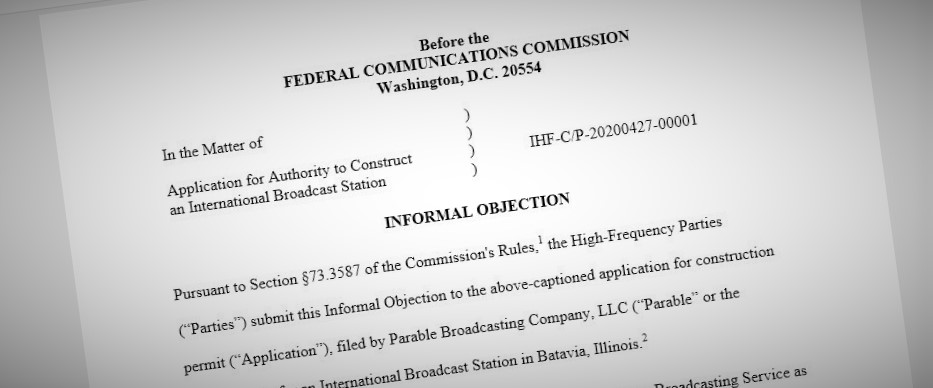
Many thanks to SWLing Post contributor, Bennett Kobb, who shares an FCC Informal Objection he drafted and filed together with Kim Elliott and Christopher Rumbaugh.

Click here to download the Informal Objection. (PDF)

Radio World published a great summary of the filing today:

There’s a plan in the works to build a new international shortwave radio station in Illinois, one that would use the Digital Radio Mondiale modulation system. But now several prominent members of the U.S. shortwave community are asking the Federal Communications Commission to take a closer look first.

Parable Broadcasting Co. in April asked the FCC to allow it to build the station in Batavia, Ill., west of Chicago, using the call sign WPBC. It wants to offer “broadcasting and data services.”

Specifically, Parable wrote that the station would “serve the areas of Europe that may be authorized by the commission. The planned broadcast content includes religious and educational programming, as well as data content provided by third parties.” It added that it wants to “take advantage of the recent push by the National Association of Shortwave Broadcasters to develop and provide content for the growing DRM market.”

Now three individuals, collectively called the High-Frequency Parties, filed an informal objection. It’s that wording about data content that concerns them.

Bennett Z. Kobb, Kim Andrew Elliott and Christopher D. Rumbaugh said international broadcast stations in the U.S. are intended “to be received directly by the general public in foreign countries.”

Now they told the FCC that it is impossible to tell from the Parable application whether all of the data services and data provided by third parties will qualify. [Continue reading at Radio World…]

Bennett clarified with me:

The [FCC] rules require these [broadcasters] to be 100% broadcast stations, not a cover for some other kind of service.

Because there is no established radio service for international shortwave trading, some have used the workaround of calling them “experiments”. Quite a few such “experimental” stations have been licensed, some at rather high power levels.

See for example this article.

But legally, the Experimental Radio Service is supposed to be for temporary scientific purposes, not ongoing for-profit operations. We don’t know what those stations are really up to because the FCC has kept the details secret. All we know is some technical data such as callsigns, frequencies, QTH.

Instead of experimental stations, others wanting to get into the data business — including the Turms Tech station in New Jersey, and this Parable station in Batavia IL — seem to be using the work-around of the International Broadcast service. That is, proposing an audio programming station that uses the DRM data channel for trading messages.

We are not in the 1970s or 80s. There’s not enough money today in broadcasting audio to other countries, to justify the millions spent on real estate, engineering, antennas and transmitter plant. Most SW broadcasting around the world is not commercial. So it is very peculiar for new entrants to drop major bucks in this field.

The new guys are probably not getting in to spread the gospel. That is a surface paint. There are already several U.S. HF stations with religious content, as you know, including WTWW, WWCR, WRMI, WRNO, WINB, WWRB, WHRI, WBCQ, WJHR etc. and most would welcome new customers for airtime.

No need to construct new stations.

So what is this new station really? Get it out in the open and ask them how they intend to comply with the existing rules. If they are in the business of carrying secure messages for traders, that does not qualify and will need some special FCC action to allow it. Let the public see the reasoning.

The rules that exist are very old. We think FCC needs to do a top-to-bottom review of the HF broadcast rules and scrap a lot of it. FCC should permit stations to be built for U.S. domestic audiences, and they should reduce the minimum AM power (50 kW) to lower this barrier to
entry.

And they should perhaps consider how data communications could be formally authorized. Maybe it wouldn’t be just a broadcast service any more, it could be a HF Communications Service with the old restrictions on languages and advertising discarded and more opportunities for people to try out creative ideas.

So we’re pressing the issue that this needs to be examined. Thanks for reading.

Thank you for sharing this, Bennett! We hope your filing gets its due attention. I also agree on one of your final points, that the FCC lower its 50 kw AM power requirement of a shortwave station as it places a huge barrier in front of would-be shortwave broadcasters.

Radio Waves: Sealand’s Caretakers, BitCoin & Ham Radio, CW Training, and 50 Years Ago Casey Kasem Started AT 40

Radio Waves:  Stories Making Waves in the World of Radio

Because I keep my ear to the waves, as well as receive many tips from others who do the same, I find myself privy to radio-related stories that might interest SWLing Post readers.  To that end: Welcome to the SWLing Post’s Radio Waves, a collection of links to interesting stories making waves in the world of radio. Enjoy!

Many thanks to SWLing Post contributors Tony, Mike Terry,  and the Southgate ARC for the following tips:


Sealand’s caretakers (Boing Boing)

Sealand is an unrecognized micronation off the coast of England, established in the 1960s and issuer of stamps, passports and occasional offshore business shenanigans (“BECOME A LORD“). But Sealand is also a rotting sea fortress in need of constant maintenance. Atlas Obscura met the two caretakers who spend two weeks at a time doing what they can to keep the statelet running smoothly. Dylan Taylor-Lehman’s feature article is a great introduction to the place, if you’re not familiar with it or its wild history.[]

How Bitcoin Is Like Ham Radio (Coindesk.com)

Understanding bitcoin is difficult. And so we cast around for the perfect metaphor. Bitcoin is email. Digital gold. eCash.

Here’s a new one. Bitcoin is ham radio.

Bitcoin is old-fangled. It takes days to download the Bitcoin blockchain, just like it took forever to download software back in 1994. In an age of instant email and real-time Zelle payments, a bitcoin transfer takes 60 minutes to safely settle. It’s more volatile than gold, a relic of our previous monetary system. Thousands of computers are constantly replicating each others’ work, making it vastly inefficient. And lastly, there’s no privacy. Like a medieval marketplace, everyone can see everybody’s holdings.

All of these features are anachronistic. But they do sum up to something unique. What exactly is that thing?

A ham radio allows its operator, otherwise known as an amateur radio operator, to use certain bands in the radio spectrum to communicate by voice or code. This is an old technology. Italian inventor Guglielmo Marconi became the first ham radio operator in 1897 when he transmitted Morse code across Salisbury Plain in England.

It seems odd that something as archaic as ham radio continues to exist in a world with email, Snapchat, iPhone and Facebook. A ham transmission can only be used over a couple of kilometers. No emojis. No video. No gifs. Forget about privacy! Anyone can listen into your radio conversation.

Yet, ham radio is a very active niche. Associations all over the world keep the hobby going. According to the American Radio Relay League, there are some 764,000 ham radio operators in the U.S. Japan has more than a million. The International Amateur Radio Union pegs the global number of amateur radio licensees at 3 million.

Like ham radio, Bitcoin is for hobbyists. I’m not talking here about all of the frenetic speculators who keep their coins at Coinbase. I’m talking about users who can run a full node, use Lightning, securely store their own coins and make frequent transactions with the stuff. This pool of bitcoiners is tiny. It’s probably smaller than the number of active licensed ham radio operators.[]

CW Training Program (Southgate ARC)

In this video Howard WB2UZE and John K2NY of the Long Island CW Club talk to David W0DHG about their CW training program

The club started in 2017 offers over 45 hours of CW classes EACH week, and has grown to over 600 members from all 50 states and 15 countries all over the world.

HRN423 Long Island CW Club

50 Years Ago, Casey Kasem Began Counting Down The Hits On American Top 40 (NPR)

On July 4, 1970, the countdown started. Originally hosted by Casey Kasem, American Top 40 played “the best selling and most-played songs from the Atlantic to the Pacific, from Canada to Mexico,” as he stated on the first program broadcast 50 years ago as of tomorrow.

On any given week, American Top 40 could feature a ballad, next to a country song, next to a funk song, next to a rock song. The show became a national obsession but 50 years ago, it was considered a risky idea.

“You remember, at the end of the ’60s, Top 40 was not the most popular format,” Casey Kasem told NPR in 1982. “And here we were coming along with a show called American Top 40, and people said, ‘You must be nuts!’ “[]


Do you enjoy the SWLing Post?

Please consider supporting us via Patreon or our Coffee Fund!

Your support makes articles like this one possible. Thank you!