Category Archives: FM

Radio Waves: Old Goats Are Going Away, Pack Accused of Fraud, Post-Brexit Radio Imports, and a TV Drama About Murder of G0HFQ

Radio Waves:  Stories Making Waves in the World of Radio

Because I keep my ear to the waves, as well as receive many tips from others who do the same, I find myself privy to radio-related stories that might interest SWLing Post readers.  To that end: Welcome to the SWLing Post’s Radio Waves, a collection of links to interesting stories making waves in the world of radio. Enjoy!

Many thanks to SWLing Post contributors Dennis Dura, Ronald Kenyon, Michael Guerin, and the Southgate ARC for the following tips:


Commentary: “The Old Goats Are Going Away” (Radio World)

Broadcasters need to act to refill our ranks before the dial goes quiet

I see trouble ahead in our business in the shortage of qualified broadcast engineers.

I am not speaking of IT people. I am speaking of the guy in a T-shirt and jeans who gets to the transmitter, looks for the problem, reads the schematic, crawls inside the box and replaces R-16, R-17, C-232 and Q-4, and the music again blares forth.

We are losing those guys every day, and they are being replaced by the guy who walks into the site, looks at the box, grabs his cell phone, calls BE or Nautel to find which board to pull, and ships it back while waiting for a loaner to get the rig going.

I never thought of myself as an old-timer. Starting in the business in 1963, old-timers were the guys I learned from, mostly World War II graduates. They knew everything about audio and RF. I wished I knew a tenth as much as they did.

My first real bit of engineering was converting a 50 kW FM station to stereo in 1963. No one listened to FM then, I think there were 10 FM radios in the city and five were in Cadillacs owned by mob hit men.

I remember putting the stereo generator in an eight-foot rack. It took up four feet of the rack and had enough 12AU7s in it to heat the building. It had two outputs, one L+R that went into the phase modulator of the serrasoid exciter and the L–R output that went into the exciter about 200 multipliers later (the crystal frequency was multiplied 864 times).

It was a technical nightmare compared to mono FM. Getting two matched phased phone lines from the studio to the transmitter over three exchanges was another task. But we were stereo most of the time.

The FCC had a rule that if you weren’t transmitting stereophonic program material for more than a certain length of time, you had to shut the stereo pilot off so as not to mislead the 10 listeners by illuminating their stereo beacon. So the pilot on/off was wired into the old Rust remote control so the studio could turn it off when a monophonic recording of a symphony played.

Times changed; we wound up with RF STLs, stereo generators on a single chip, CD players, computers and lots of stuff made in foreign countries that wasn’t worth fixing or whose parts were not available, so when they broke they wound up on a shelf at the transmitter site.[]

Voice of America CEO Accused Of Fraud, Misuse Of Office All In One Week (NPR)

Fresh crises and fresh challenges confront the Trump-appointed CEO of the parent of Voice of America, even with less than two weeks left of the Trump presidency.

To start, the Attorney General of the District of Columbia this week accused U.S. Agency for Global Media CEO Michael Pack of illegally funneling more than $4 million to his private documentary company through a not-for-profit that he also controls.

Then, five recent chiefs of Radio Free Europe/Radio Liberty – appointed under Democratic and Republican administrations – jointly warned President-elect Joe Biden that Pack poses “a long-term threat to the credibility and professionalism of the five networks” he oversees.

And now Pack is now being accused of trying to propagandize the Voice of America by a group of whistleblowers. They take exception to a planned appearance by Secretary of State Mike Pompeo at VOA’s Washington headquarters on Monday, just nine days before the Biden administration begins.

Pompeo will soon be out of his job. And it’s expected Pack will be replaced promptly as well. But he has sought to outlast his time in office by burrowing himself and conservative allies into boards that will steer Radio Free Europe/Radio Liberty, Radio Free Asia, and the Middle East Broadcasting Networks. The not-for-profit broadcasters are all funded by the federal government through USAGM.

Those networks, along with VOA and the Office of Cuba Broadcasting, collectively reach more than 350 million people across the world each week. They historically have demonstrated American pluralism by providing balanced coverage of news events and robust political debate, regardless of how it reflects on current government officials. The broadcasters are also intended to serve the citizens of nations which do not allow journalists to operate freely.[]

Radio imports (Southgate ARC)

Now that the United Kingdom has left the European Union, we will see major changes in importing radio equipment.

Definitive information is scarce but imports from the UK can have VAT paid on purchase or depending on the retailer, VAT may have to be paid before delivery. If it comes via An Post, any charges will have to paid before the item is sent out for delivery.

The Post Office employees will not be collecting money at the door. Whether duty is also collected is not very clear, but some sources say that anything originating outside the European Union will attract duty as well as VAT. There may also be a handling charge.

John EI7GL has compiled a list of radio and electronic dealers based in the European Union on his blog page and would welcome any updates you can supply.[]

TV drama about murder of radio ham G0HFQ (Southgate ARC)

On Monday, January 11, ITV will be broadcasting the first of a three part TV drama about the murder in June 1989 of Oxfordshire radio amateur Peter Dixon G0HFQ and Gwenda Dixon who were on holiday in Pembrokeshire

In the November 1989 Radio Communication magazine the RSGB asked:

Did you work GW0HFQ/M ?

As we’ve reported in previous editions of RadCom, Peter Dixon, G0HFQ. and his wife Gwenda were brutally murdered whilst on holiday in South Wales last June. Dyfed-Powys Police have asked us to say that they are still anxious to talk to anyone who had a contact with Peter whilst he was operating in Pembrokeshire as GW0HFO/M on 7 or 14MHz SSB. 28MHz FM/SSB or 144MHz FM. The dates between which they’d like you to check your logbooks are 19-29 June 1989.

Dyfed-Powys Police believe that Peter Dixon had a contact with another mobile station in the area on 28MHz FM on the morning of Wednesday 28 June.

The drama will be shown on ITV at 9pm on Monday, January 11, details at
https://www.itv.com/presscentre/ep1week2/
pembrokeshire-murders

A description of the murder is at
https://www.nickdavies.net/1992/06/27/the-tantalising-mystery-of-a-murder-in-pembrokeshire/

The October 1989 issue of 73 magazine carried a report, see page 13
https://worldradiohistory.com/Archive-DX/73-magazine/73-magazine-1989/73-magazine-10-october-1989.pdf


Do you enjoy the SWLing Post?

Please consider supporting us via Patreon or our Coffee Fund!

Your support makes articles like this one possible. Thank you!

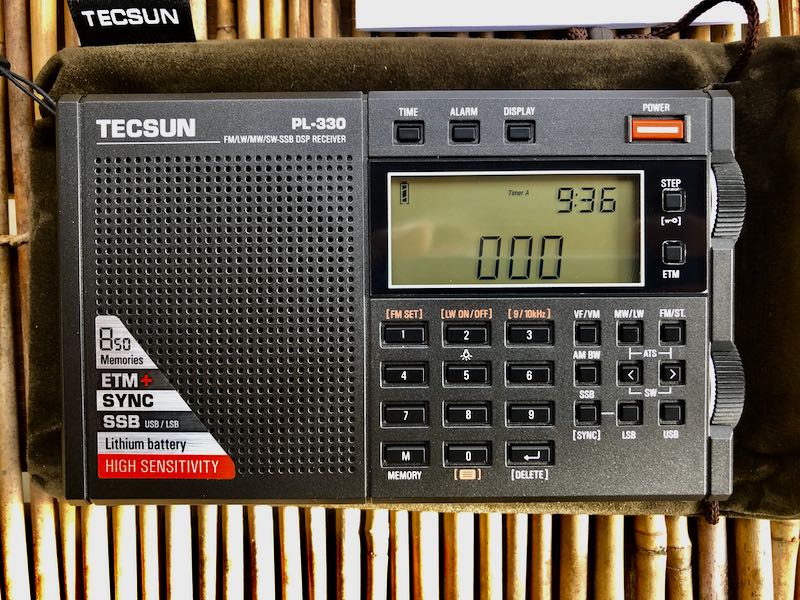
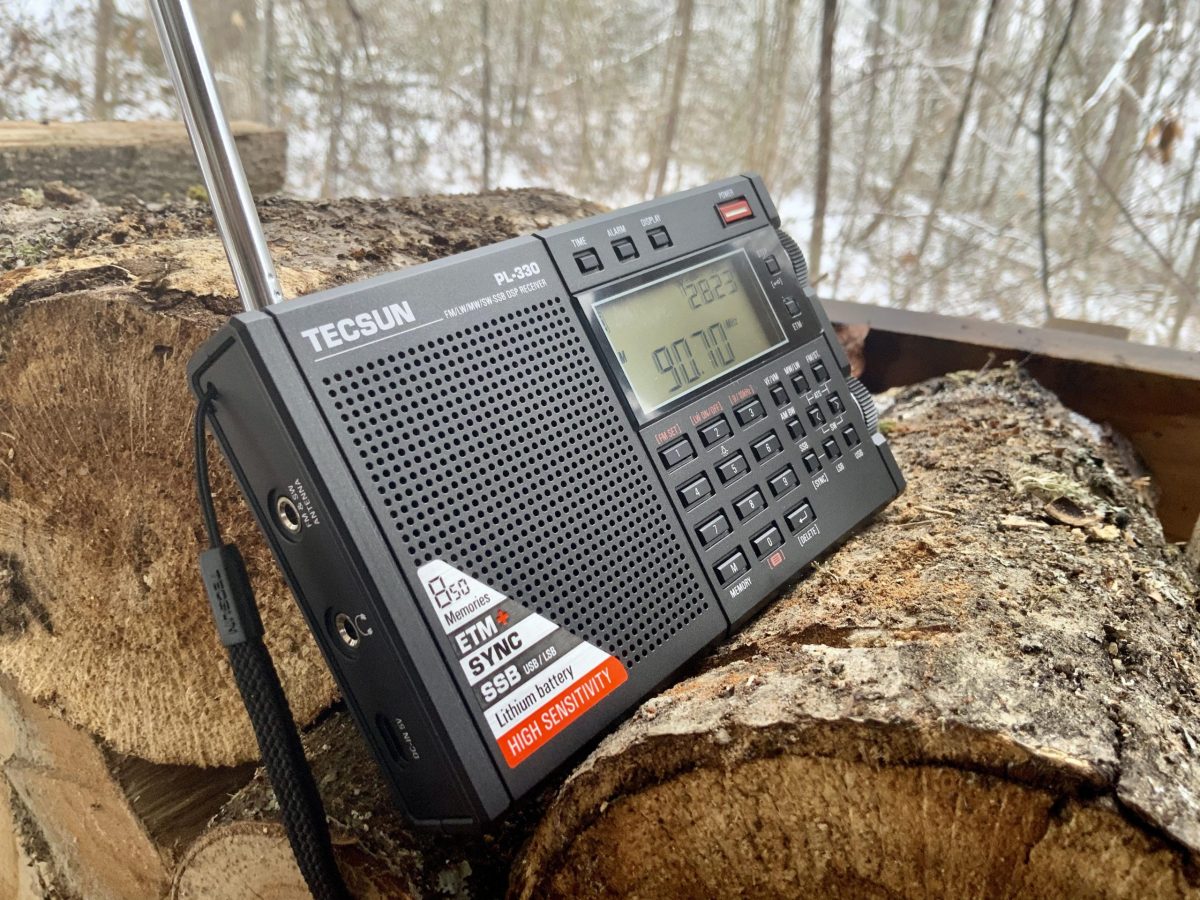
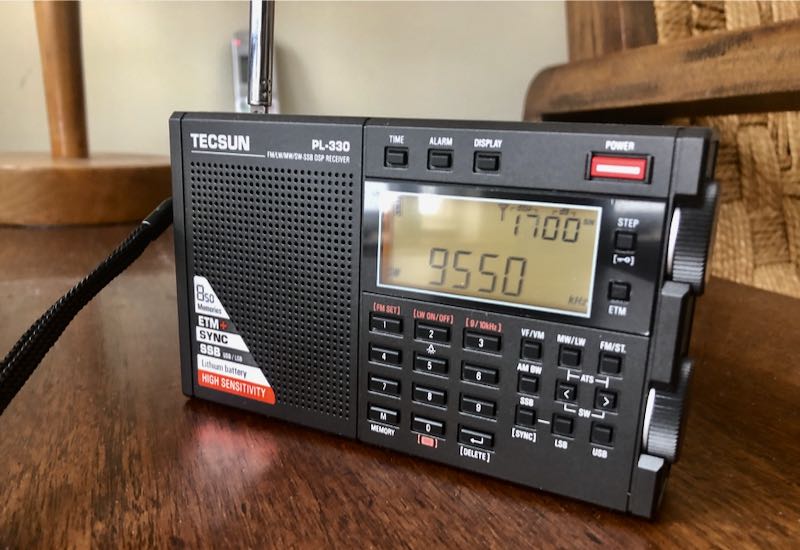
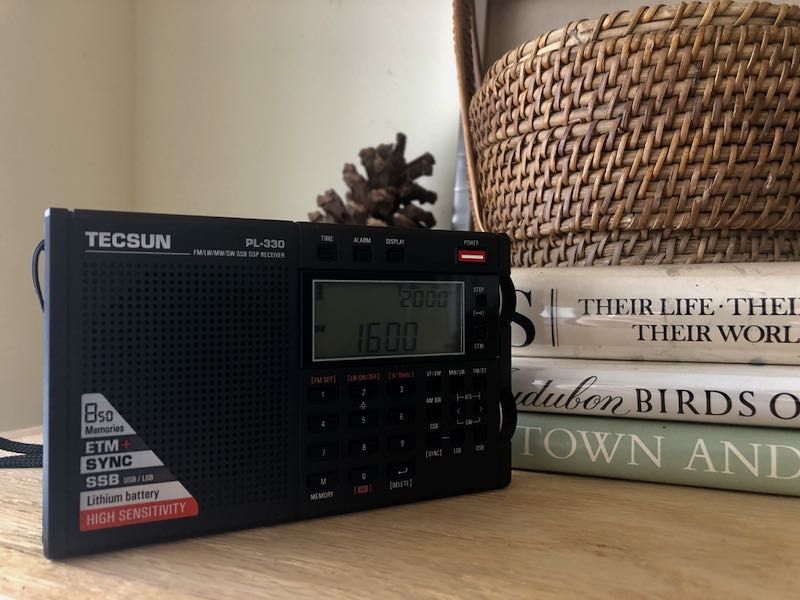
The export version of the Tecsun PL-330 has landed

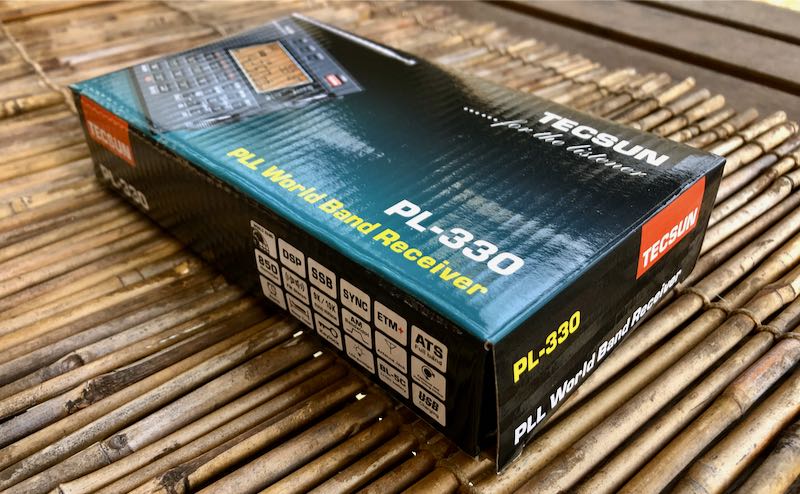
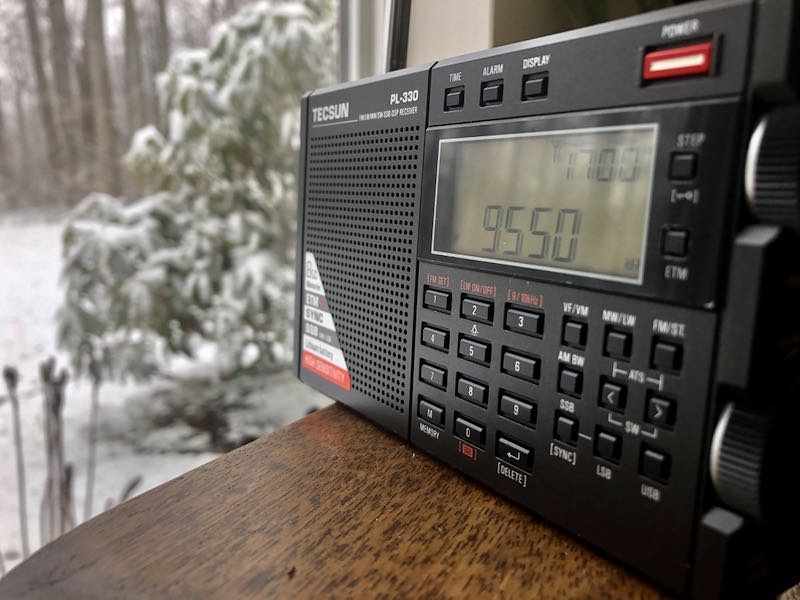
Tuesday evening, I picked up a package from Anon-Co with the new export version of the Tecsun PL-330 inside. Anon-Co sent this unit to me for evaluation at no charge to me. Anon-Co will start shipping the PL-330 next week and the price will be $59.99.

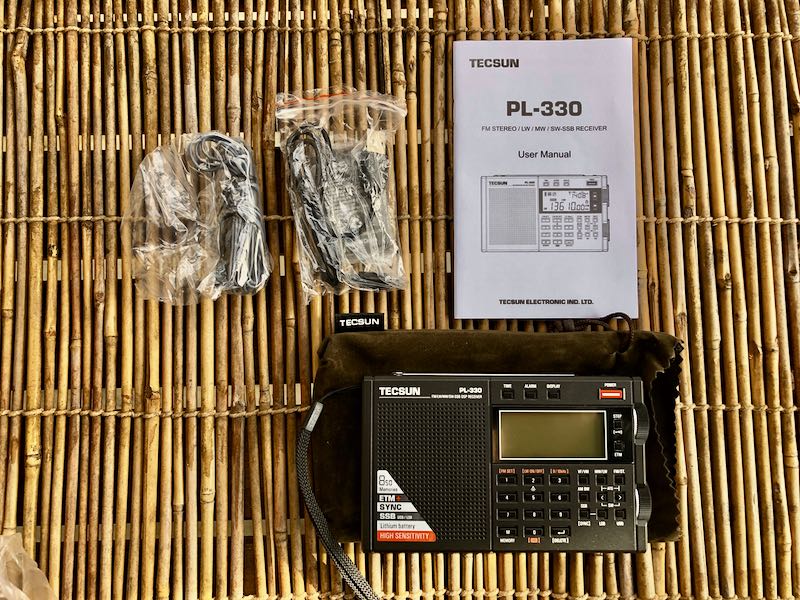
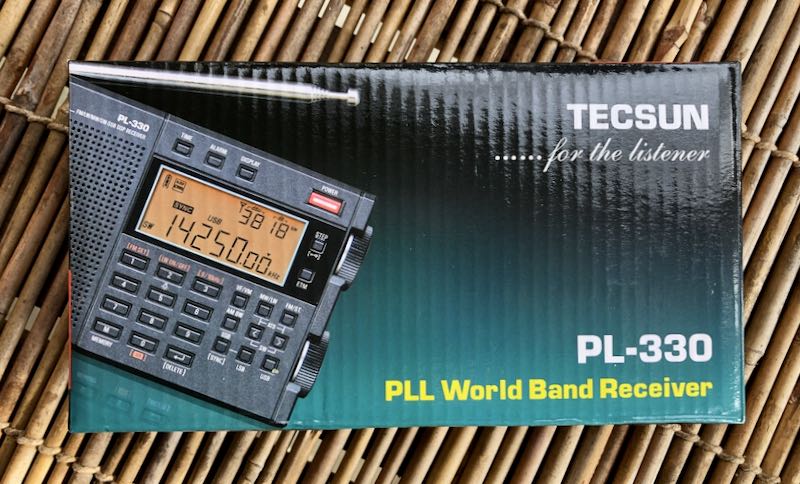
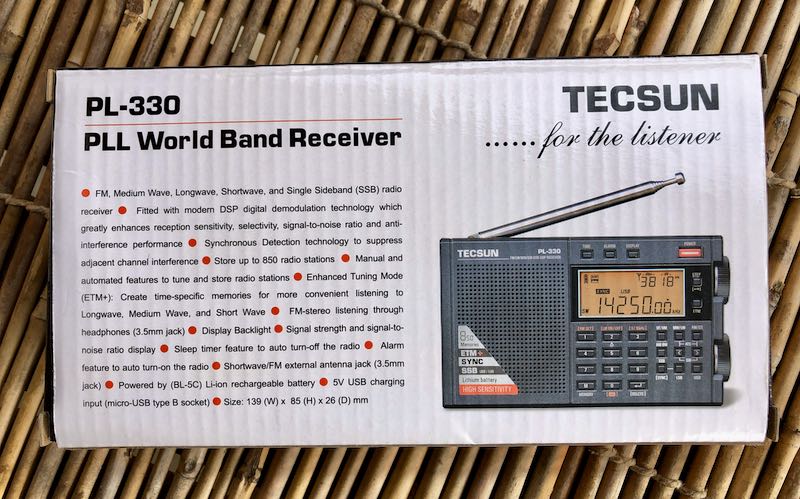
By request, I took a few photos of the PL-330 as I unpacked it. This should give you an idea about how the radio is packed and what is included in the Anon-Co package:

The Anon-Co PL-330 package includes:

  • Tecsun PL-330 receiver
  • an English owner’s manual
  • a brown synthetic velveteen carry pouch
  • MicroUSB charging cable
  • earphones

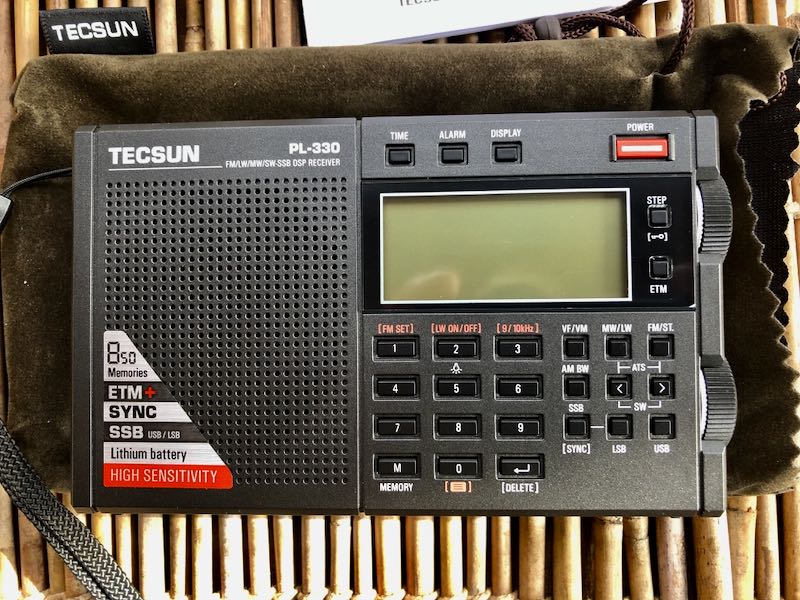
My first thought? It looks like a mini PL-990!

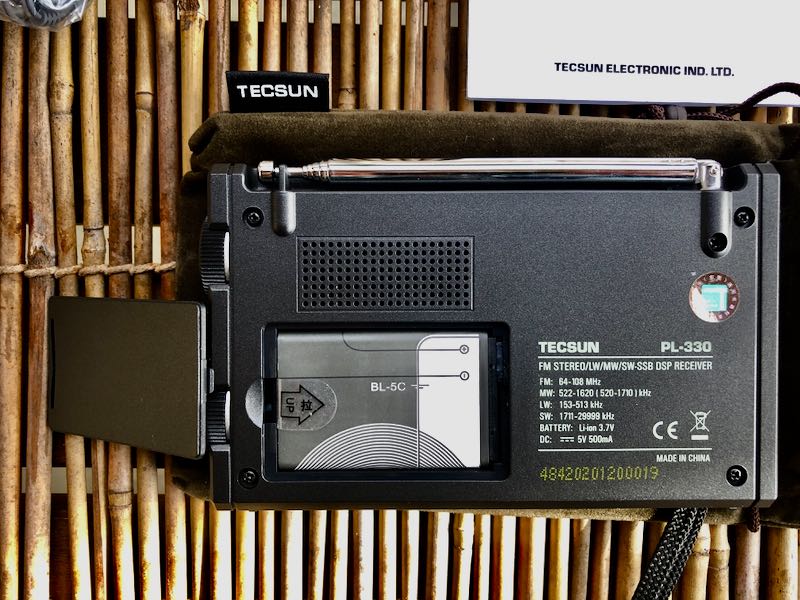
The PL-330 is powered by one BL-5C battery pack. To meet shipping regulations, the BL-5C is not pre-installed–you’ll need to do that yourself.

Note that the PL-330 lacks a fold-out back stand. That is unfortunate

On the air

Unfortunately, I’ve had no proper time to evaluate the PL-330 (comparisons) yet as this is an incredibly busy week for me.

I did, however, listen to the PL-330 as I worked outside all day Wednesday. Sadly, there was a lot of news to follow here in the States that day.

I was able to receive all of my benchmark local and regional AM and FM stations with no problem. For day-to-day broadcast listening, it seems to be a solid portable.

It’s still early days, but I think the PL-330 may be one of the best portables for FM I’ve tested in a while. On Wednesday, I tuned to WFAE in Charlotte a number of times throughout the day and the PL-330’s lock on the station was rock-solid. WFAE’s transmitter is just over one hundred miles from my home, so this is typically a tough catch if I’m inside my home or my car, etc.

The real test? I can also receive WFAE with the PL-330 in my kitchen window. Again, only a small number of portables can reliably grab WFAE’s signal from that spot. Indeed, the PL-330 almost receives WFAE as if were a local station.

While this is far from a laboratory test, it is certainly a real-world test for this radio enthusiast.

I’ve yet to dive into the shortwaves, although I’m incredibly curious how well the sync lock might work. I’m keeping expectations low–after all, this is a $60 radio. The price point is quite good for sporting upper and lower sideband reception, let alone synchronous detection.

For more information about the PL-330, I’d encourage you to check out the following posts:

Radio Waves: Solar Radios Help Kenyan Children, Synchronous AM’s History, FM Radio on Jupiter, and New WSJT mode Q65

Radio Waves:  Stories Making Waves in the World of Radio

Because I keep my ear to the waves, as well as receive many tips from others who do the same, I find myself privy to radio-related stories that might interest SWLing Post readers.  To that end: Welcome to the SWLing Post’s Radio Waves, a collection of links to interesting stories making waves in the world of radio. Enjoy!

Many thanks to SWLing Post contributors Tracy Wood, Richard Langley, and the Southgate ARC for the following tips:


With schools shut by pandemic, solar radios keep Kenyan children learning (Thomson Reuters Foundation)

Solar-powered radios have been distributed to the poorest homes that lack electricity access, with lessons broadcast daily during the COVID-19 crisis – and perhaps beyond

TANA RIVER, Kenya, Dec 23 (Thomson Reuters Foundation) – Deep in Tana River County, in southeastern Kenya, a group of pupils formed a circle around their teacher, jotting down notes as they listened to a Swahili diction lesson coming from the solar-powered radio sitting in their teacher’s lap.

The radio the children from Dida Ade primary school gathered around was one of hundreds distributed for free to the most vulnerable households in the semi-arid region east of Kenya’s capital, Nairobi.

The radios allow children without internet access or electricity at home to continue studying while schools are closed to slow the spread of COVID-19, in a project that could also help children stay in education after the pandemic.

Funded by the Zizi Afrique Foundation, a Kenyan non-governmental organisation that produces research to drive education policy, the solar-powered radios also come with bulbs for household lighting and slots for phone-charging.

When schools across Kenya shut in March to slow the spread of COVID-19, Zizi Afrique did a survey in Tana Delta sub-county and found that just over one-fifth of households owned a radio and only 18% had access to electricity.[]

Synchronous AM’s Long and Tortuous History (Radio World)

AM boosters repeatedly have been proven effective, but the FCC consistently has declined to allow their wide use

With AM improvement on the radars of broadcasters and the FCC, there has been renewed talk in recent years about the subject of AM “boosters,” the carrier frequency synchronization of multiple transmitters. The commission opened a comment period on AM boosters in 2017.

It wasn’t the first time the FCC has explored this topic and failed to act on it. In fact, AM boosters have been proposed and tested dozens of times since the early days of radio. But even though the technology has repeatedly been proven effective, the commission consistently has declined to allow the operation of AM boosters on anything more than an experimental basis, for a variety of reasons.

Let’s take a moment to look back at the history of this beleaguered technology.

BOSTON REPEATER
In 1930, crystal control of transmitter frequencies was still an emerging technology, and the allowable frequency tolerance of a broadcast transmitter was +/- 500 Hz. Two stations operating on the same channel, even if widely geographically separated, could generate a heterodyne beat note of up to 1 kHz, a disconcerting annoyance to listeners.

Consequently, only a few stations were allowed to operate nationwide evenings on any one channel at the same time. Further, there were 40 clear-channel stations, each one having exclusive nationwide use of its frequency. As most of these clear-channel stations were network affiliates, many channels were wastefully duplicating the same programs.

In 1929, the respected radio engineer Frederick Terman proposed that, if all stations of the two networks (NBC and CBS) could synchronize their carrier frequencies within +/- 0.1 Hz to eliminate the heterodyne beat notes, they could all coexist on a single channel per network, freeing up dozens of channels for new stations.

Synchronization was first proved successful by the Westinghouse station WBZ in Springfield, Mass. Broadcasting from the roof of the Westinghouse factory, WBZ failed to cover Boston, so WBZA was opened as a Boston repeater. The two stations were synchronized on the same frequency beginning in 1926, using a tuning fork as a frequency reference.[]

FM Radio on Jupiter, Brought to You by Ganymede (EOS)

Another first from NASA’s Juno spacecraft: the detection of radio emissions from the Moon Ganymede, over a range of about 250 kilometers in the polar region of Jupiter.

Louis et al. [2020] present exciting new observations of radio emissions on Jupiter from the NASA Juno spacecraft – the first direct detection of decametric radio emissions originating from its Moon Ganymede. These observations were made as Juno crossed a polar region of the Giant Planet where the magnetic field lines are connected to Ganymede.

The radio emissions were produced by electrons at relativistic energy (a few thousand electron volts) in a region where the electron’s oscillation frequency (“plasma frequency”) is much lower than its gyration frequency (“cyclotron frequency”). Such electrons can amplify radio waves very close to the electron cyclotron frequency very rapidly, via a physical process called electron cyclotron maser instability (CMI). They can as well produce aurora in the far-ultraviolet – which was also observed by the camera on Juno.

Juno was traveling at a speed of approximately 50 kilometers per second, and it spent at least about 5 seconds crossing the source region of the emission, which was therefore at least about 250 kilometers in size.

The observed decametric radiation on Jupiter is clearly the “shorter cousin” (in wavelength) of the auroral kilometric radiation on both Earth and Saturn: the CMI being responsible for their production on the three planets.

Citation: Louis, C. K., Louarn, P., Allegrini, F., Kurth, W. S., & Szalay, J. R. [2020]. Ganymede?induced decametric radio emission: In situ observations and measurements by Juno. Geophysical Research Letters, 47, e2020GL090021. https://doi.org/10.1029/2020GL090021

Andrew Yau, Editor, Geophysical Research Letters[]

New WSJT mode Q65 (Southgate ARC)

WSJT-X 2.4.0 will introduce Q65, a digital protocol designed for minimal two-way QSOs over especially difficult propagation paths

On paths with Doppler spread more than a few Hz, the weak-signal performance of Q65 is the best among all WSJT-X modes.  Q65 is particularly effective for tropospheric scatter, ionospheric scatter, and EME on VHF and higher bands, as well as other types of fast-fading signals.

Q65 uses 65-tone frequency-shift keying and builds on the demonstrated weak-signal strengths of QRA64, a mode introduced to WSJT-X in 2016.  Q65 differs from QRA64 in the following important ways:
•A new low-rate Q-ary Repeat Accumulate code for forward error correction
•User messages and sequencing identical to those in FT4, FT8, FST4, and MSK144
•A unique tone for time and frequency synchronization.  As with JT65, this “sync tone” is readilyvisible on the waterfall spectral display.  Unlike JT65, synchronization and decoding are effective even when meteor pings or other short signal enhancements are present.
•Optional submodes with T/R sequence lengths 15, 30, 60, 120, and 300 s.
•A new, highly reliable list-decoding technique for messages that contain previously copied message fragments.

Read the new Q65 Quick Start Guide at
https://physics.princeton.edu/pulsar/k1jt/Q65_Quick_Start.pdf


Do you enjoy the SWLing Post?

Please consider supporting us via Patreon or our Coffee Fund!

Your support makes articles like this one possible. Thank you!
Any off-air recordings of “The Famous Computer Cafe”–?

Many thanks to SWLing Post contributor, Devin, who writes:

I am a game historian conducting research on early computer games. There is one radio program of particular historical significance called The Famous Computer Cafe that interviewed all the early movers and shakers of early computing, including Philip Estridge, Bill Gates, Bill Atkinson, Gene Rodenberry, and Stewart Brand. The show ran from 1983-1986 primarily in the Los Angeles area, but was distributed nationally over NPR starting in 1985. Only one recording is known to exist, along with a few transcripts, as the original tapes were lost years ago.

Here are more details on the show:

“There were several versions of the show, which aired on several radio stations, primarily in California. A live, daily half-hour version allowed phone calls from listeners. Taped versions (running a half-hour and up to two hours) also aired daily. The show started in 1983 on two stations in the Los Angeles area: KFOX 93.5 FM and KIEV 870 AM. In 1985 it began airing in the California Bay Area: on KXLR 1260 AM in San Francisco and KCSM 91.1 FM in San Matro, and KSDO 1130 AM in San Diego. [Note: KIEV ran 3:30-4pm M-F and KFOX 7:30am-8:00am and 6:00pm-6:30pm. I do not have information on the times for the 1 hour show.]

Also in 1985 a nationally syndicated, half-hour non-commercial version of The Famous Computer Cafe was available via satellite to National Public Radio stations around the United States, though it’s not clear today which stations ran it.”

https://ataripodcast.libsyn.com/antic-interview-402-the-famous-computer-cafe

I was hoping the Spectrum Archive might have some recordings within some of your files, particularly from the LA area. What additional information would I need to provide you in order to better locate some recordings?

Thank you for your help,

Devin

Thank you for your inquiry, Devin. I’m a huge fan of early personal computing and game broadcasts, but never heard the The Famous Computer Cafe. Unfortunately–as I mentioned via email–the Spectrum Archive nor the Shortwave Radio Audio Archive have any recordings of the program.

I’m willing to bet an SWLing Post reader may be familiar with the show, however.

Post Readers: If you have any information that could help Devin, please comment on this post. It would be brilliant if someone actually made an off-air recording of the show back int he day.

Radio Waves: Media Network Returns, Pack Seeks Lasting Control, Airtime on ex-DW relay station, and KCRW Berlin Signs Off

Radio Waves:  Stories Making Waves in the World of Radio

Because I keep my ear to the waves, as well as receive many tips from others who do the same, I find myself privy to radio-related stories that might interest SWLing Post readers.  To that end: Welcome to the SWLing Post’s Radio Waves, a collection of links to interesting stories making waves in the world of radio. Enjoy!

Many thanks to SWLing Post contributors Jonathan Marks, Kim Elliott, and Dennis Dura for the following tips:


Media Network Returns Jan 1st, 2021 (Critical Distance via Vimeo)

Media Network returns for a second series. Premieres here on Vimeo Friday January 1st 2021. In the meantime, how many faces do you recognise?

Trump Appointee Seeks Lasting Control Over Radio Free Europe, Radio Free Asia (NPR)

Michael Pack’s stormy tenure over the federal agency that oversees government-funded broadcasters abroad – including the Voice of America – appears to be coming to a close. Yet President Trump’s appointee has sparked an internal outcry by taking bold steps to try to cement his control over at least two of the networks and to shape the course of their journalism well into the Biden administration.

Pack, the CEO of the U.S. Agency for Global Media, also serves as chairman of the boards of Radio Free Europe/Radio Liberty and Radio Free Asia. Pack and the members of the boards have now added binding contractual agreements intended to ensure that they cannot be removed for the next two years. Pack stocked those boards with conservative activists and Trump administration officials, despite a tradition of bipartisanship.

In other words, although President-elect Joe Biden has already signaled he intends to replace Pack as CEO of the parent agency soon after taking office next month, Pack would maintain a significant degree of control over the networks. Pack and USAGM declined requests for comment.

NPR has reviewed the language of the contracts, which have yet to be signed by the new presidents of the two networks – both of whom were appointed by Pack this month. The Radio Free Europe/Radio Liberty contract was slated to be approved on Wednesday but appears to have been withdrawn from consideration after internal objections and inquiries from Congressional aides, NPR and other media. It is unclear what the future holds for the initiative from Pack.[]

Click here to download the RFE/RFA protest letter.

Sri Lanka to sell airtime on ex-DW relay station to Encompass Digital Media (Economynext)

ECONOMYNEXT – Sri Lanka has agreed to sell airtime on a former Deutsche Welle relay station in Trincomalee in the North East of the island to UK based Encompass Digital Media Services, London.

Germany’s DW built the relay station in Sri Lanka in 1980 for mainly for international shortwave (HF) broadcasting. It also has a medium wave transmitter for South Asia.

The station was given to state-run Sri Lanka Broadcasting Corporation in 2012.

The rise of television and the internet had made international broadcasts more accessible, though SW retains audiences in many countries.

London based Encompass Media has proposed to transmit shortwave and mediumwave programs from the station. It has offered to pay 49,000 dollars and 16,000 dollars a month for the airtime.

The Cabinet of Ministers had approved the proposal in November 2020. (Colombo/Dec29/2020)[]

America’s voice goes silent in Berlin as last US radio station closes (Politico)

BERLIN — American radio is a Berliner no more.

The postwar American presence on Berlin’s airways that began in the summer of 1945 when the city was still digging itself out of the rubble of World War II ended this month as the last U.S. radio station in the German capital ceased operation. For years, the station, known in its final iteration as KCRW Berlin, offered listeners a daily helping of local English-language news and eclectic music.

The idea behind the station was to deliver Berliners a dose of unfiltered Americana and to serve as a transatlantic bridge. Even in an era of podcasts, the offering found a loyal if small audience, from daily commuters to American expats.

“It’s a sad moment embodying the end of a tradition,” Anna Kuchenbecker, a member of KRCW Berlin’s board, said, blaming the shutdown on the pandemic. KCRW Berlin was operated in partnership with a California public radio affiliate with the same call sign. The economic fallout of the coronavirus forced the U.S. station to make steep cuts, including layoffs.

The closure comes at a time of deepening estrangement between the U.S. and Germany following years of Donald Trump’s attacks on Berlin. The longtime allies have recently been at odds across a range of issues, from climate policy and trade to foreign policy.

KCRW Berlin wasn’t eligible to receive any of the billions in broadcast fees the German government collects in order to finance domestic public television and radio. Former station officials say it would have been up to KCRW in California and NPR, which is partly funded by the U.S. government, to save the Berlin operation.

“The pain that we are feeling with KCRW Berlin going away is something that is not necessarily felt in the U.S.,” the station’s program director Soraya Sarhaddi Nelson said.

But even in its home city, the station’s death received little attention; Berlin media barely took notice of KCRW’s shuttering or what it signified, noting the move only in passing.[]


Do you enjoy the SWLing Post?

Please consider supporting us via Patreon or our Coffee Fund!

Your support makes articles like this one possible. Thank you!
Radio Waves: Hammarlund Legacy, FM Radio Using Arduino, VOA Report on Bias, ARISS SSTV Event, and Geminids

Radio Waves:  Stories Making Waves in the World of Radio

Because I keep my ear to the waves, as well as receive many tips from others who do the same, I find myself privy to radio-related stories that might interest SWLing Post readers.  To that end: Welcome to the SWLing Post’s Radio Waves, a collection of links to interesting stories making waves in the world of radio. Enjoy!

Many thanks to SWLing Post contributors Trevor, Dan Robinson, and the Southgate ARC for the following tips:


Ham radio operators honor legacy of Mars Hill company (Citizen Times)

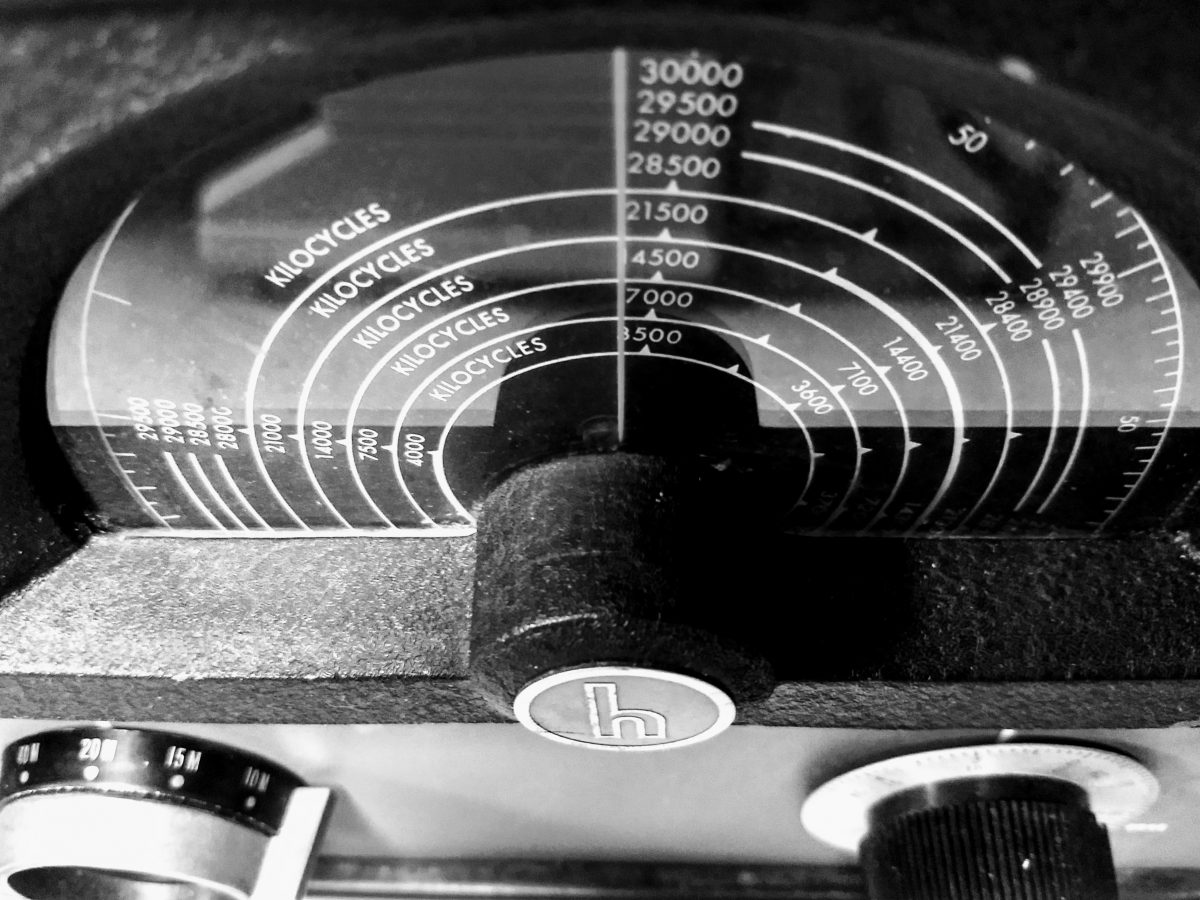
During the 1950’s and ’60’s, when the Hammarlund Manufacturing Company had a factory just west of Mars Hill College, the town could have been considered a world center of advanced electronic technology. With a company motto of “Quality Without Compromise,” almost 90% of American WWII wartime military electronic equipment employed Hammarlund capacitors. They also built U.S. Navy search radar installed on aircraft carriers, battleships and cruisers.

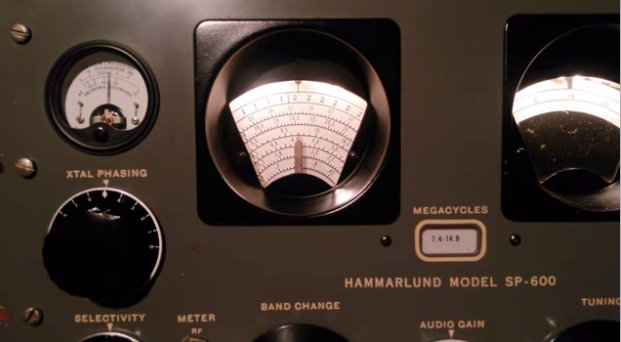
Hammarlund was one of the three leading brands of radio communications equipment at the time, along with Hallicrafters and Collins Radio. These three companies dominated in providing state of the art electronics equipment to the U.S. military, large and small corporations, and to private individuals who had the means and taste to own the very best.

Hammarlund Radio initially operated out of New York City starting in 1910, in the early days of radio. They began consolidating all of their operations in Mars Hill in 1951, in a newly constructed facility that spread out to over 100,000 square foot on Hammarlund Drive — now named Hickory Drive. The site employed hundreds from around the area and their work lives on today. []

FM Radio From Scratch Using An Arduino (Hackaday)

Building radio receivers from scratch is still a popular project since it can be done largely with off-the-shelf discrete components and a wire long enough for the bands that the radio will receive. That’s good enough for AM radio, anyway, but you’ll need to try this DIY FM receiver if you want to listen to something more culturally relevant.

Receiving frequency-modulated radio waves is typically more difficult than their amplitude-modulated cousins because the circuitry necessary to demodulate an FM signal needs a frequency-to-voltage conversion that isn’t necessary with AM. For this build, [hesam.moshiri] uses a TEA5767 FM chip because of its ability to communicate over I2C. He also integrated a 3W amplifier into this build, and everything is controlled by an Arduino including a small LCD screen which displays the current tuned frequency. With the addition of a small 5V power supply, it’s a tidy and compact build as well.[]

2016 Report Confirmed Problem of Political Bias At Voice of America (USAGM Watch)

by Dan Robinson

Trump USAGM CEO Michael Pack Was Attacked For Attempts to Focus on Problem

It was May of 2016 and Amanda Bennett was only a few weeks into what would become a nearly four year stint as director of the Voice of America, among the “plum” jobs in Washington, D.C.

Bennett was just getting her feet wet, and at the time was dependent on a group of longtime embedded VOA managers that she would at one point describe as a “fantastic leadership team.”

She had received fair warning, from former VOA employees and extensive reporting by the independent watchdog website BBG and USAGM Watch, of disturbing issues at VOA, located in what has long been one of the most dysfunctional of federal agencies.

Some VOA journalists were using their taxpayer-funded positions to engage in self-promotion and campaign for political causes, a fact little known to most Americans. VOA’s website and digital operations were plagued by failures in breaking news coverage, and inaccuracies in content.

Both VOA and what was then called the Broadcasting Board of Governors (BBG) were increasingly seen by U.S. lawmakers as moribund. A Republican-led and eventually bipartisan effort in Congress proposed major restructuring – there was little patience left on Capitol Hill where the agency was increasingly considered to be “broken,” “rudderless,” and “worthless.” President Obama signed the reform legislation in December 2016 to create a powerful agency CEO position and to make the BBG Board purely advisory.[]

ARISS Slow Scan TV event (Southgate ARC)

An ARISS Slow Scan TV (SSTV) event is scheduled from the International Space Station (ISS) for late December. This will be a special SSTV event to celebrate the 20th anniversary of ARISS.

The event is scheduled to begin on December 24 and continue through December 31.

Dates are subject to change due to ISS operational adjustments.

Dave, AA4KN
ARISS PR

The Geminids – a reminder (Southgate ARC)

The Geminids are a prolific meteor shower caused by the object 3200 Phaethon, which is thought to be a Palladian asteroid with a “rock comet” orbit. This would make the Geminids, together with the Quadrantids, the only major meteor showers not originating from a comet.

They are the biggest meteor shower of the year, and normally occur between 4 December – 17 December.

The peak is expected on 14 December.

Expect FM “pings” and hopefully interesting dx opportunities.

Mike


Do you enjoy the SWLing Post?

Please consider supporting us via Patreon or our Coffee Fund!

Your support makes articles like this one possible. Thank you!
Radio Waves: RIP Phil Erwin, Federal Watchdog Targets Pack, Eclipse Festival of Frequency Measurement, and VOA testing DRM

Radio Waves:  Stories Making Waves in the World of Radio

Because I keep my ear to the waves, as well as receive many tips from others who do the same, I find myself privy to radio-related stories that might interest SWLing Post readers.  To that end: Welcome to the SWLing Post’s Radio Waves, a collection of links to interesting stories making waves in the world of radio. Enjoy!

Many thanks to SWLing Post contributors Dave Zantow, Michael Guerin, Eric McFadden, and Dan Robinson for the following tips:


The voice of Phil Irwin will be greatly missed (Rappahannock News)

Where wasn’t the presence of Phil Irwin felt in Rappahannock County?

A constant of virtually all proceedings of the Rappahannock County community and government, cherished innkeeper of Caledonia Farm – 1812, founding member of the Rappahannock League for Environmental Protection, regional director of the Virginia Farm Bureau, committee member for both Rappahannock County Farmland Preservation and the Agricultural Forestal District, Rappahannock tourism advisory member — for 25 years chief of morning broadcasts for Voice of America (VOA) — Irwin was found dead Thursday at his working cattle farm north of Washington.

“What a contribution Phil made to our county over his many years here,” Huntly friend Ralph Bates reacted upon learning of Irwin’s death. “He will live in our memories as we drive and see how well our viewshed and environment has been protected because of his commitment and work.”

Former Washington Mayor John Fox Sullivan recalled “a good man and such a part of the Rappahannock fabric. His love for this county, and commitment to it, was unmatched.”[]

Federal watchdog finds ‘substantial likelihood of wrongdoing’ by Trump appointees overseeing Voice of America (NBC News)

The federal watchdog’s findings mark the latest rebuke of the Trump-appointed CEO of the U.S. Agency for Global Media, Michael Pack.

WASHINGTON — A federal watchdog agency has found “a substantial likelihood of wrongdoing” by Trump administration appointees who oversee the Voice of America and other U.S.-funded media outlets.

The finding from the U.S. Office of Special Counsel, an independent government agency charged with safeguarding federal employees’ rights, marks the latest rebuke of Michael Pack, who President Donald Trump appointed to run the U.S. Agency for Global Media, the parent agency to VOA and other broadcasters.

A federal judge last month ordered Pack to stop interfering in the newsrooms of VOA and other media outlets and found that he had jeopardized the First Amendment rights of journalists that his office had targeted for investigation. Lawmakers from both sides of the aisle and press freedom groups have blasted Pack over his actions since he took over in June, accusing him of undermining the broadcasters’ editorial independence and defying congressional authority.

After reviewing allegations from current and recent employees, the Office of Special Counsel wrote to the whistleblowers Wednesday saying it had demanded Pack and the U.S. Agency for Global Media conduct an investigation into the allegations.[]

The December 2020 Eclipse Festival of Frequency Measurement (HamSCI)

Changes in ionospheric electron density caused by space weather and diurnal solar changes are known to cause Doppler shifts on HF ray paths. For example, see Figure 7 in Boitman et al., 1999. HamSCI’s first attempt at a measurement of these Doppler shifts was during the August 2017 total solar eclipse. We plan a careful measurement during the 2024 eclipse. As part of the WWV centennial, 50 stations collected Doppler shift data for the original Festival of Frequency Measurement, demonstrating the value of volunteer participation in collecting this data. During the June 2020 Eclipse Festival, we enlisted participants around the globe and experimented with different data collection protocols. This winter, we request that all amateur radio stations, shortwave listeners, and others capable of making high-quality HF frequency measurements help us collect frequency data for the December 14 total eclipse.[]

USAGM, VOA Testing Innovative Digital Radio Platform (Inside VOA)

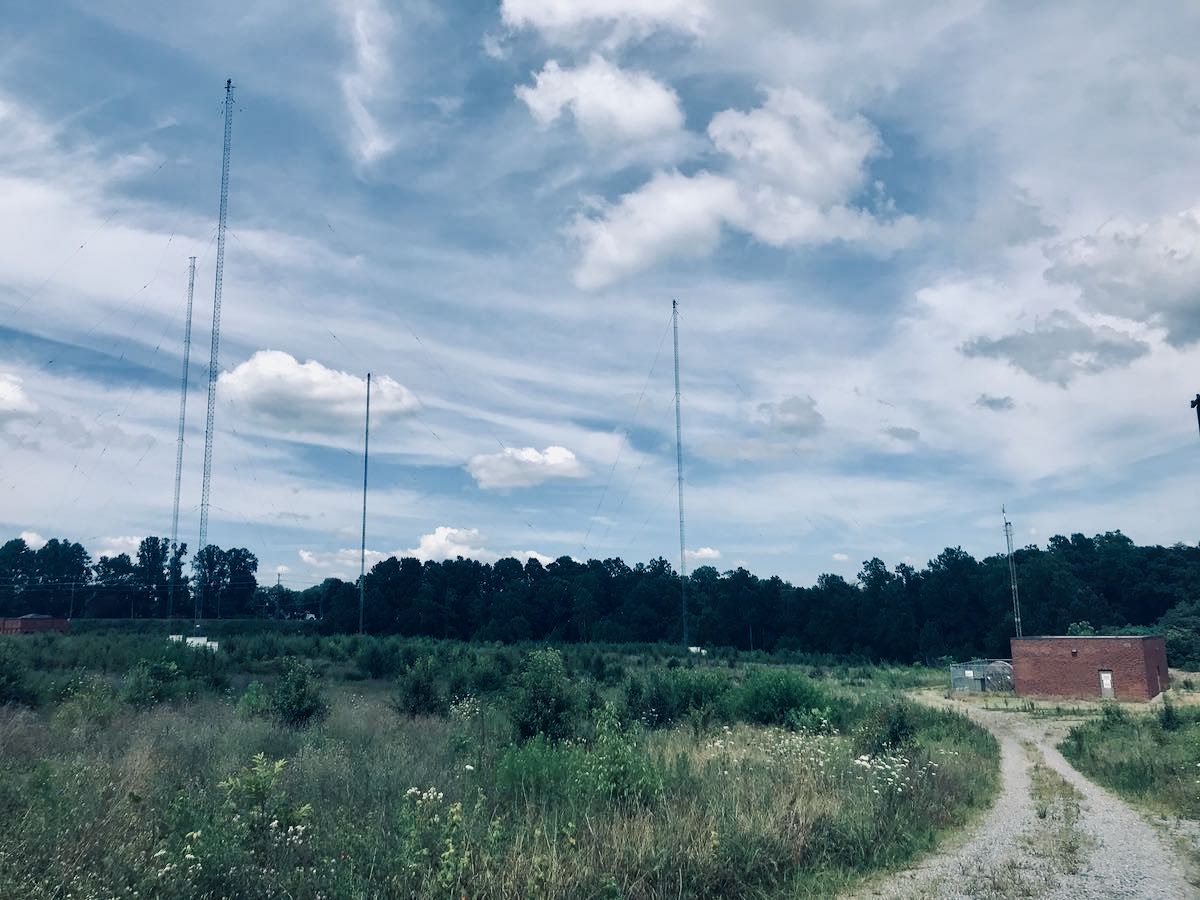
A few weeks before the COVID-19 pandemic shut down much of the world, broadcast engineers in Greenville, North Carolina, launched a test of digital radio signals. The U.S. Agency for Global Media began aiming a digital broadcast at Cuba and Latin America, which included Office of Cuba Broadcasting and Voice of America content.

With this 2020 test, VOA embarked on a new phase of global innovation on a platform called Digital Radio Mondiale (DRM), a versatile digital signal not well known in the U.S., but the only one that can cover the entire spectrum: shortwave, mediumwave and longwave, as well as VHF (FM). As digital radio emerged in the 1990s, VOA was among the first broadcasters testing a signal that promised to even out shortwave radio signals that often faded in and out and were marred by static.

VOA tested the DRM signal in the 1990s at the agency’s Morocco transmitter site, one of five facilities opened in a period of expansion in the previous decade. However, other digital signals became the standard in various markets around the world. The U.S. standard audio digital platform is called HD.

Around the world, as other digital radio platforms were adopted, DRM was held back by the marketplace. Nobody was making commercially available receivers.

By the end of the 1990s, VOA innovation focused more on television, the platform that promised larger audiences, even in some places in the world where shortwave dominated. By the early 2010s, the rallying cry became “Digital First,” as VOA strived to attract readers for its language service websites and began tapping into the growing audiences on new social media sites like Facebook, Twitter, Instagram and YouTube.

By 2020, however, DRM had come full circle.

“You’re no longer limited to just reading the news or playing music,” says Gerhard Straub, supervisory director of the USAGM Broadcast Technologies Division.

Straub, along with Gary Koster, Broadcast Radio Technician and transmitter expert and Macon Dail, Chief Engineer at the Greenville Transmitting Station, set up the test broadcast in February of this year, not long before the COVID-19 pandemic grounded global travel. The trio put up a DRM signal with Radio Marti and VOA audio along with scrolling text messages and rotating images.

Engineers have received reports of a clear signal as far south as Brazil.

The USAGM test, says Straub, is “coasting along” in the pandemic, but additional content will be added when technicians can travel again. Straub says the VOA signal was taken off in the initial test to concentrate on the OCB digital content and to keep the signal robust. Now that there is good reception data, he noted, the digital bit rate can be increased and VOA content added back into the test in 2021.

Because DRM operates at lower power, more radio stations and digital signals can be broadcast on a single transmitter. The platform is starting to grow in countries of interest to Western international broadcasters. DRM signals will soon cover all of China, though its government is expected to attempt to control the stations accessed by its citizens. India built 39 transmitters and, more importantly, 2.5 million vehicles already are equipped with DRM radios. Indonesia, Pakistan, Brazil and North Korea all have nascent DRM operations.

Religious broadcasters, who sometimes target audiences similar to those sought by Western governments, are experimenting with the technology. For example, a missionary group, TWR.org, sent the Bible’s Gospel of Mark from Guam to Cambodia via DRM shortwave.

“You have to stop thinking of it as radio, because it’s not,” says USAGM’s Straub. “We are now broadcasting digital data. Just like we broadcast digital data on the internet, we can broadcast digital data over shortwave without being hampered by an internet firewall that maybe limits what we can send to a particular country.”

Reason enough, Straub believes, for VOA to continue leading innovation in a new-again technology.[]


Do you enjoy the SWLing Post?

Please consider supporting us via Patreon or our Coffee Fund!

Your support makes articles like this one possible. Thank you!