Category Archives: New Products

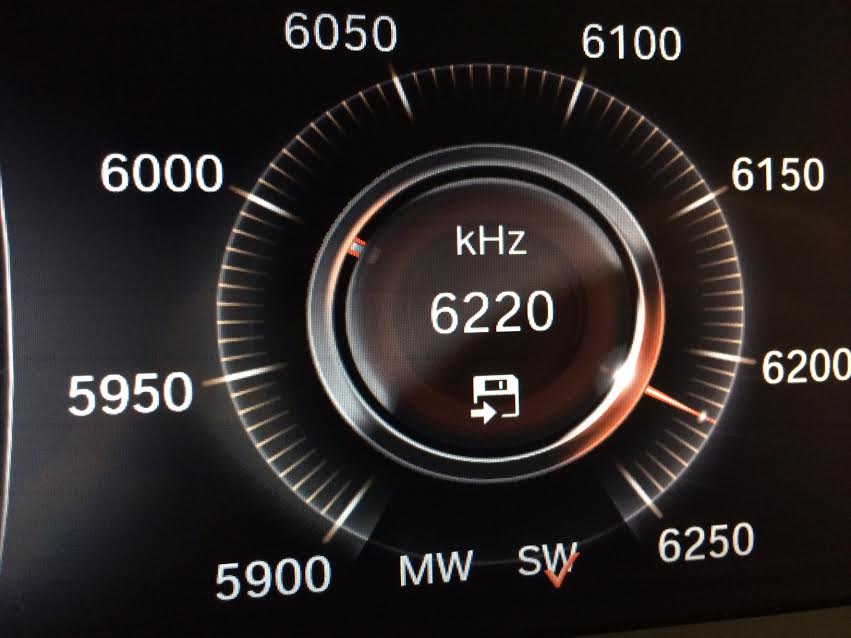
Buying a BMW in South Africa? Shortwave radio is an option!

bwm-swSWLing Post reader, Bob, has a relative who works for BMW in the United States. Recently, Bob learned that some models of BMWs shipped to South Africa have a shortwave radio option.  He followed up with this photo of the radio display [see above].

Wow, what a fab idea! Not only would I love to have a factory-installed shortwave radio in my car, but I must admit that I love the simple design of this digital radio dial: elegant, clean, and just a tad retro and sci-fi, all at once.

Now if I could simply afford the BMW…Sigh!

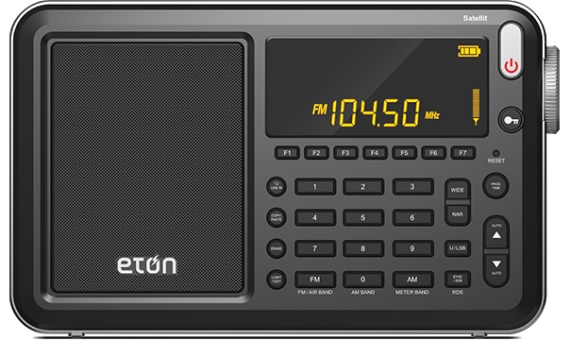
Dates of availability for new Etón shortwave radios…

Eton-Satellit

Several SWLing Post readers have been asking about the availability of the new Etón shortwave radio product line.

I’m pleased to report that I can confirm these availability dates for retailers, suggesting that these Etón units may be ready to ship on these dates:

  • Etón Mini 400: July 14, 2014 ($39 US)
  • Etón Field: July 21, 2014 ($129 US)
  • Etón Traveller III: September 8, 2014 ($59 US)
  • Etón Satellit: September 15, 2014 ($199 US)

Shortwave Radio Recordings: Radio New Zealand International (DRM)

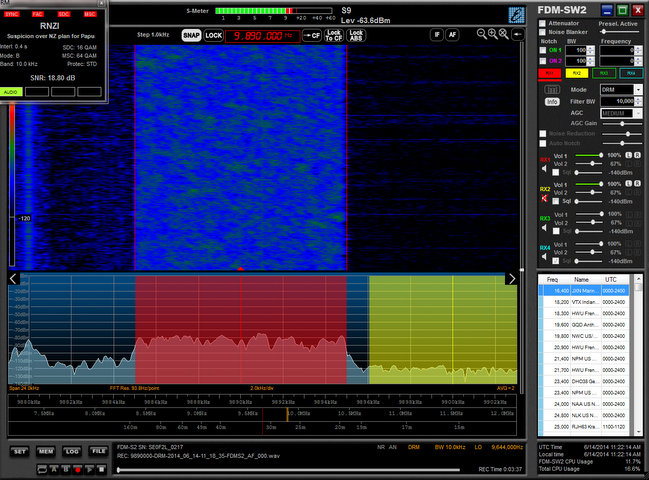
This morning, while scanning the 31 meter band, I noticed a DRM (Digital Radio Mondiale) signal on 9,890 kHz. Normally, I ignore most DRM signals because the amount of signal strength needed to properly decode the mode (here in the US) is simply too low for pleasant, artifact-free copy.

Still, I thought I’d give the new Elad FDM-S2 a try, so I changed mode from AM to DRM.

RNZI-DRM-003To my amazement, the FDM-S2 quickly decoded the signal and produced excellent audio from Radio New Zealand International.

I assumed the decoding lock would not hold, but I was wrong; indeed, I believe there were only one or two significant drops in the 40+ minutes I listened. This may be a very good sign from the FDM-S2, even if propagation was above average.

I’m not a big DRM listener, but that’s mainly because there is so little to hear on the bands. The real test will be All India Radio in DRM–I’ve never managed to get a consistent lock on them from here in eastern North America.

Still, I’m pleased as punch that I can so easily copy RNZI–one of my favorite international broadcasters–in DRM.

Here’s a recording of the broadcast starting at 11:18 UTC on June 14, 2014. Click here to download the the recording as an MP3, or simply listen via the embedded player below:

The Elad FDM-S2 SDR: Unboxing, installing, and a first recording

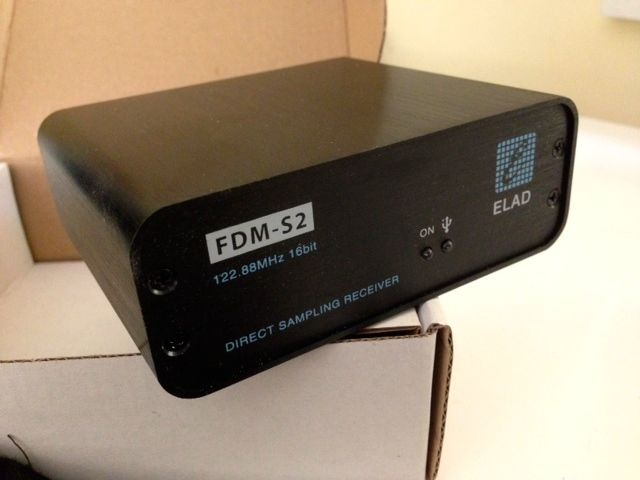
FDM-S2-Front

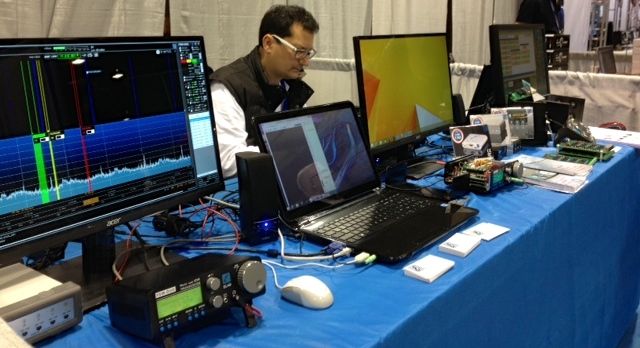
At the Dayton Hamvention last month, I made a point to check out the Italian radio manufacturer, Elad. Though I’ve known about Elad for some time, I hadn’t investigated their offerings yet simply because I was under the impression they only sold and warrantied their equipment within Europe. Fortunately, Elad has begun supporting and shipping their products within the US, via their division Elad-USA.
Elad-Dayton-Hamvention

The Elad USA table at the 2014 Dayton Hamvention
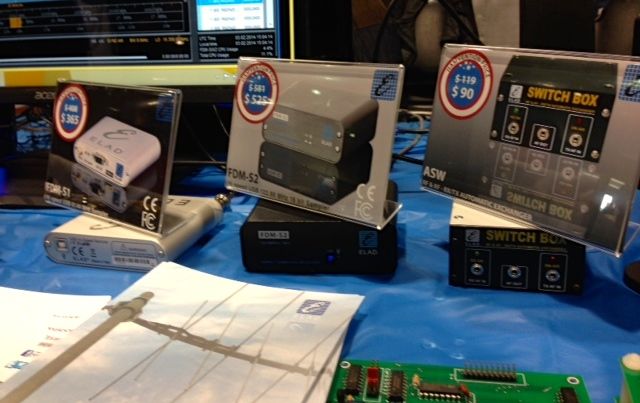
Elad-RadiosElad’s booth was one of the first stops I made at the Hamvention; I met with their representatives there, who answered my many questions. While Elad is soon to release their flagship tabletop SDR transceiver (the FDM-DUO, see below), I was more interested in their flagship receiver, the FDM-S2–which really impressed me during their demo.
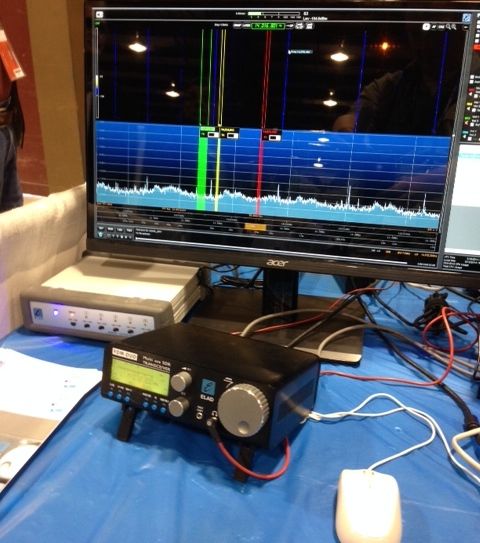
The FDM-DUO attracted a lot of attention at the Elad booth.

The FDM-DUO attracted many visitors at the Elad booth.

Yesterday, I unpacked a loaner FDM-S2 Elad sent for review; this review will be published first in The Spectrum Monitor magazine, and following, here on the SWLing Post.  While it will take some time to piece together a full review for TSM, I thought I would periodically post recordings (and note FDM-S2 features) I discover along the way…

Unboxing the FDM-S2
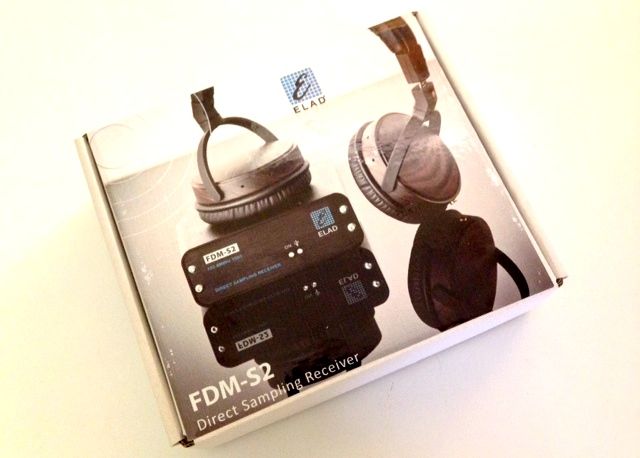
FDM-S2-Box

Being a receiver with a small footprint (a major plus, in my world), the FDM-S2 comes in a small box (measuring only 6.5 x 5.5 x 2 inches).
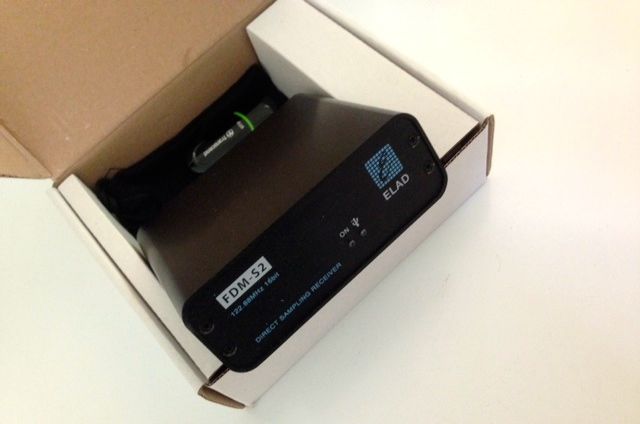
FDM-S2-Box2

Contents of the box are few and simple: the FDM-S2 receiver, a black cloth carrying bag, and a 4GB USB drive with installation software and documentation. A standard USB cable was also included in the shipping box.
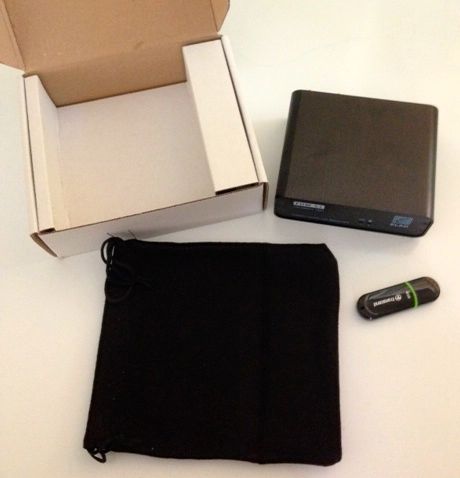
FDM-S2-Box-Contents

The FDM-S2 metal enclosure is beautifully engineered, and feels of excellent quality in my hands.

Installation

I found installation of the Elad FDM-S2 to be fairly straightforward. However, I would encourage you to follow the included guide, since installation is a two-step process:

  1. First, you install a C++ package on your Windows PC which, when complete, triggers the actual Elad software installation: this is a two-part installation that you only initiate once.
  2. Secondly, you install the USB driver for the FDM-S2, found in the installation folder of the supplied software. At time of posting, the USB driver cannot be automatically discovered and installed by your PC; you must initiate the installation via the device manager. However, this is very easy: the guide takes you through the process step-by-step.
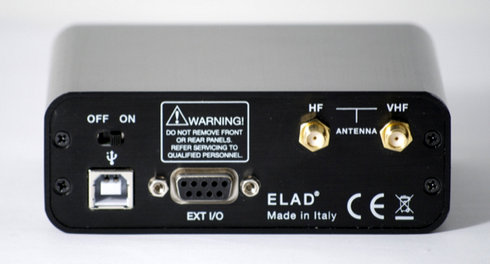
On the back of the FDM-S2 you'll find an HF and VHF SMA antenna ports, a USB port, serial interface, and on/off switch.

On the back of the FDM-S2 you’ll find HF and VHF (SMA) antenna ports, a USB port, serial interface, and on/off switch.

The FDM-S2 derives its power from the same USB cable that is used for data, no separate external power supply required–a huge plus, for those of us who like to travel.

Once I installed the software and driver, I hooked up my antenna to the HF SMA connector on the back, turned on the FDM-S2, and launched the application. The FDM-S2 clicked to life, and the application ran on the first go: very nice!

I spent a good hour or so familiarizing myself with the Elad software yesterday evening. It’s quite a departure from the WinRadio Excalibur and Microtelecom Perseus applications with which I’m most familiar. Nonetheless, while I’m still learning how to adjust the spectrum bandwidth (which can be a full 6 MHz wide!) plus manage the four virtual receivers, I found I was able to do quite a bit of band-scanning.

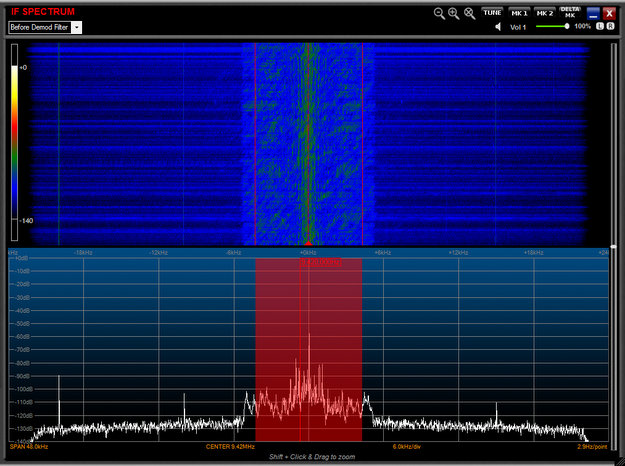
In fact, I noticed some great music on 9,420 kHz, the former Voice of Greece frequency:
FDM-S2-Waterfall

I initiated my very first AF recording on the FDM-S2 (see screen capture above). The process was quite simple and I’m very happy with the level of customization Elad affords in its software; indeed, I can set the file name to automatically note the frequency, time, date and mode.

Click here to listen to that recording in the recent post, The Voice of Greece, one year on.

Day One with the FDM-S2? So far, so good. The Elad application is very customizable, hence has a higher learning curve than SDR applications I’ve used in the past. Thus I’ll need to log quite a few hours on the FDM-S2 before I can say that I’m proficient.

Readers: Have you had experience with the FDM-S2?  Any hints or suggestions?  Please comment–!

Latest version of DXtreme Reception Log now available for download

last_log_entries_window_and_reception_log_windowI just received the following note from SWLing Post sponsor, Bob Raymond (NE1I), at DXtreme software:

“I am pleased to announce that the latest version of our logging software for radio and TV monitoring enthusiasts is now available: DXtreme Reception Log — Advanced Edition, Version 9.0.”

For details, check out the DXtreme Reception Log — Advanced Edition, Version 9.0. full press release (PDF).

schedule_checker_and_reception_log_wndow

And many thanks to DXtreme for supporting the SWLing Post!

Looking forward to the 2014 Dayton Hamvention and FDIM

Each year, I attend the Dayton Hamvention and much of the QRP conference, Four Days in May.  This year, I’ll be working our Ears To Our World table again, along with other volunteers, at booth 411 in the Ball Arena (BA411). Please stop by and introduce yourself!

What I love about the Hamvention (besides the massive outdoor flea market) is that it is a one-stop-shop for innovations appearing in our radio world.

Here are a few of the companies I’ll be following at the Hamvention this year:

Ten-Tec

Ten-Tec-AlphaTen-Tec announced yesterday that it will merge with Alpha Amplifiers under the flag of RF Concepts. I plan to stop by Ten-Tec’s booth Friday and learn more about the merger. Personally, I believe the merger with Alpha Amplifiers is a good move. Both of these companies are known for great customer service and quality US-based design and manufacturing.

I know Ten-Tec is introducing a new open-source product to their line, the Patriot, because I’ve been beta testing one (check QRPer.com for details later this week).

Icom

Icom-ID-5100Icom will showcase their new ID-5100 D-star, dual band, mobile with built-in GPS. While I’m more of an HF guy, this radio does intrigue me. You see, for almost one year now, I’ve been very pleased with my Icom ID-51A, dual-band, D-Star handie talkie (HT).

I find D-Star to be a very flexible digital mode and I’m amazed with how many interesting mom-and-pop companies have produced products for the D-Star mode. I’m surprised neither Yaesu nor Kenwood has adopted the D-Star standard (it’s not proprietary to Icom–indeed, read about the CS7000 below).

The new ID-5100 is a mobile version of my ID-51a. What I love about this radio is that it can store repeater frequencies and dynamically load them based on your geographic location. Perhaps my largest gripe with mobile VHF/UHF rigs is their inability to adapt to the repeater “landscape” when you travel. The ID-5100 may change this and push other manufacturers in the same direction.

Connect Systems

CS700_WEBIn less than a year, Connect Systems has become a household name among ham radio enthusiasts who love VHF/UHF and digital modes.

This Connect Systems is developing an HT–the CS7000–which will be the first non-Icom radio to have the D-Star digital mode. Whatsmore, in addition to D-Star, the CS7000 will also pack DMR.

I don’t think Connect Systems will have a working prototype at the Hamvention (I could be wrong), but there is a possibility that they will be taking early orders.

Elad

FDM-DUO-openingI’ve been intrigued by the Elad line of Software Defined Recievers. This year, they will attend the Dayton Hamvention. I look forward to checking out the new FDM-DUO tabletop SDR. I plan to review some of the Elad product line in the near future.

Palstar

Last year, Palstar showcased a prototype QRP transceiver with touch screen interface. To my knowledge, this would be Palstar’s first transceiver (though they’re well known for antenna tuners and their shortwave radio receiver, the R30A).

Last year, I was told that the new Palstar transceiver would be available this year and would retail between $1,600 – 2,000 US (a rather steep price for a transceiver with 20 watts output). One of the transceiver’s designers assured me that the receiver would “be worth the price.”

Bonito

antennajet_front_hamradio2013I’ll stop by Bonito’s booth to check out their new AntennaJet ASM300.  I’m curious how it works and what the Hamvention price will be.

Though pricing is a little steep, I might bring one home as I often would like to share one antenna with two receivers simultaneously.

Elecraft

PX3The only new product I know of from Elecraft is the PX3 Panadapter for their Kx3 transceiver. Reviews of the larger P3 Panadapter for the Elecraft K3 are excellent, so I imagine this will be a great product. I hope to check out the PX3 at the Elecraft booth–I believe they’ll have a prototype on display.

SDRs

For the past three years, the market for software defined radios has been growing rapidly. I’ll be on the lookout for anything new–especially improvements on current 3rd generation SDRs.

Did I miss something?

Please comment if there’s something you’d like me to check out at the Hamvention–I’ll try to include it!

Again, if you’re attending the Hamvention, please stop by and introduce yourself at our booth: 411 in the Ball Arena (BA411).

A short review of the KX3 helper: a simple, effective non-slip pad

KX3-Helper-WithKX3

I recently purchased the KX3 helper from Steve (W1SFR) and can report that I’ve been very pleased with this uber-simple, affordable, non-slip tilt pad.

KX3-Helper

While I like the built-in tilt legs on the Elecraft KX3, I prefer slightly more angle for operation on my desktop.  The KX3 helper allows you to chose a number of positions and angles for the KX3.

KX3-Helper-Side

What I love most is the fact that it will not slip while you’re tuning or making adjustments to the KX3 (even if inserting Mic or Key plugs).

KX3-Helper-TopView

The little shelf on the back of the KX3 helper is the perfect place to hold your microphone when not in use.

KX3-Helper-FullView


Though Steve produces a number of non-slip wedges (and many other accessories), I find the size of the KX3 helper to be ideal for many of my portable shortwave radios as well. Here’s the Tecsun PL-600 for example:

KX3-Helper-PL-600


KX3-Helper-Tecsun-PL-600

At $13.45 US shipped, I believe the KX3 helper is a true bargain. Plus, you’re buying from a fellow radio hobbyist who does this sort of thing out of his passion for radio.  Check out all of Steve’s radio accessories by clicking here.