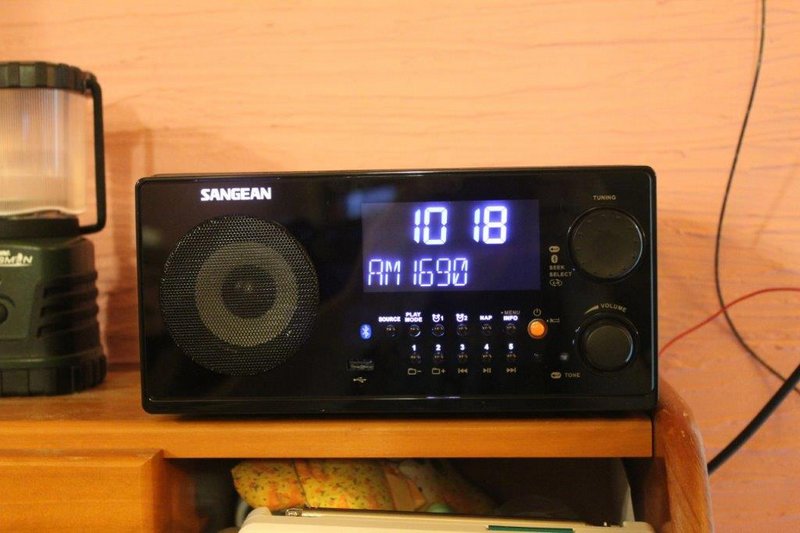
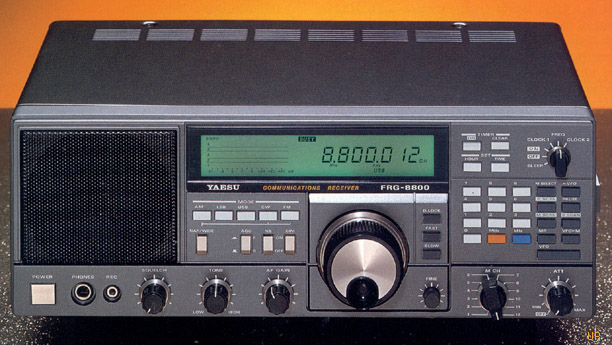
I was interested in the Sangean HDR-18 which showed up on SWLing Post. But I ended up going for the similar-looking WR-22 (here on the Sangean site) because it lookscooler. Well, yes, it also costs a bit less. Also, it trades the HDR-18’s HDRadio capability for Bluetooth streaming. Since I have a phone that canstream, and since there is as yet only one HD radio station, which streams,and which I can also get in my car, I thought the Bluetooth might be a bit more use to me.
I got the WR-22 expressly to use outdoor antennas. I had been using a CCRadio 2E for that purpose. The CCRadio actually worked better hauling it out of the house, out to the picnic table in the back yard, clear of the aluminum siding and the household electronic buzz. It’s nice to be able to use the portable as a portable.
I’d hoped the WR-22 would both stream from my phone and work on AM and FM as well as the CCRadio. It surprised me by working far better. Therein hangs a sad tale of radios and outdoor antennas.
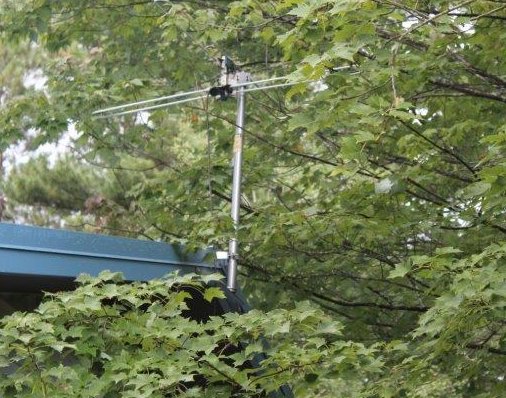
I have a rooftop FM antenna I’d used on an old stereo. The CCRadio doesn’t have an external FM radio jack, so I could never use the FM antenna with the CCRadio.
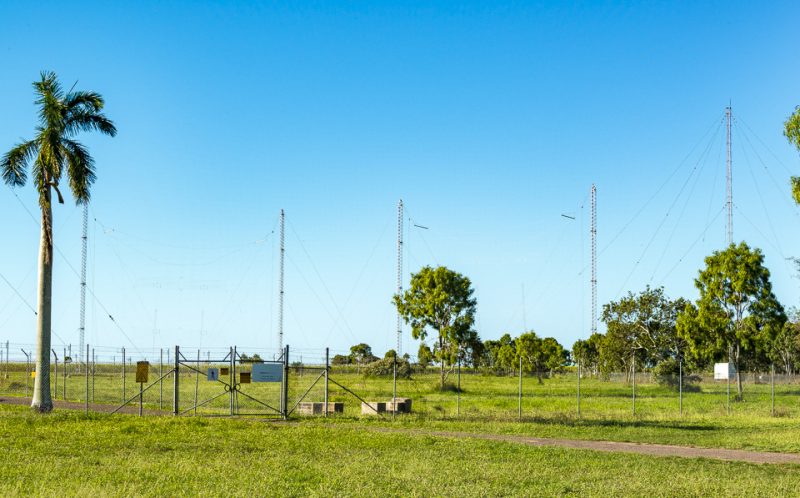
The CCRadio does have screw terminals for an AM outdoor antenna. A few months ago, I put out a temporary one in the back yard. It’s quite modest, within the ability of anyone with a small back yard. A ground rod pounded into the ground outside the drip line of the roof, where the soil will get wet; wet soil makes for a better ground, I’m told. Then a bit less than 50 feet of insulated copper wire, looped across the back yard to a pine tree branch and then to a post we used to have a satellite TV dish on. Nothing too complicated here.
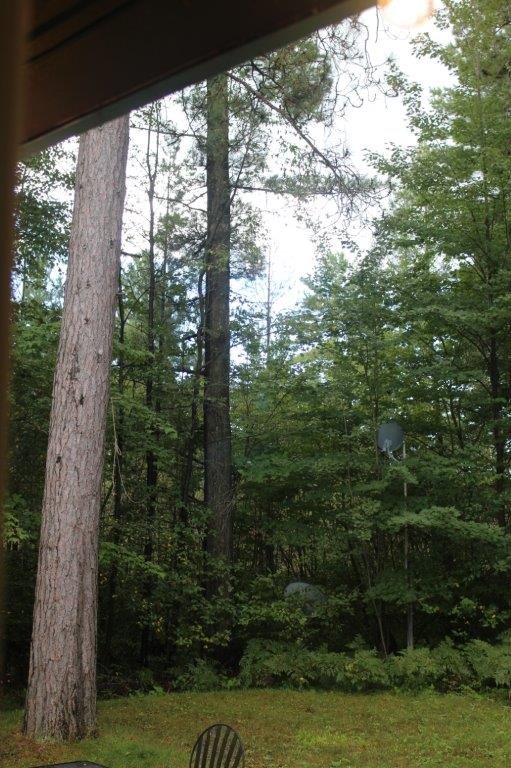
The results were disappointing. I could get signals with this antenna not quite as well as the CCRadio would do on its own on the picnic table. Oh well, maybe nothing better was possible?
Then, after I’d ordered the WR-22 through the mail, I came across a description of a different external AM antenna. I found it on two web sites, but C Crane’s own web site has a description of the thing. Here’s thearticle.
It could use the wire I’d already strung across the back yard and the ground rod I’d already planted, so why not try it? I couldn’t see how an antenna that didn’t connect to the radio directly could be any better than one that did, but hey, it didn’t cost anything to try.
Here’s how to make the antenna: String an outdoor wire somewhere SAFE, well away from anything carrying electric current, both because it can get you fried and because of radio noise. Reserve some of the wire to wind a coil at the end of the wire inside the house, near your radio. Wrap a coil in the wire near where your radio will be. C Crane says a 3 inch coil with 7 turns, another site said a few turns of 6 inches diameter; apparently it’s not too critical.
The wire continues unbroken through the coil, back out of the house again, and to your ground rod outside. It doesn’t connect directly to your radio at all. Of course you could do the wire in several pieces; have a separate coil which attaches to the aerial wire and the ground wire with alligator clips, for example. This would let you replace the different parts, experiment with different sizes, shapes, and orientations of coils, and so on.
As with any inductively coupled antenna, you get this loop to work by moving the coil around the outside of the radio until you find the “sweet spot” where it couples best with the portable radio’s internal ferrite bar.
Good heavens! It worked far better than coupling the wire directly to the CCRadio. I was astonished! I planned to put out a longer antenna- I have the space for it, if I’m careful- and a neater installation, with a neatly wound coil. I planned a program of trying different coils to see what would work best. However, I had the WR-22 on order. Since that was where I wanted to attach outdoor antennas, I decided to wait until it came in before experimenting with any new antennas.
It came in and I set it up.
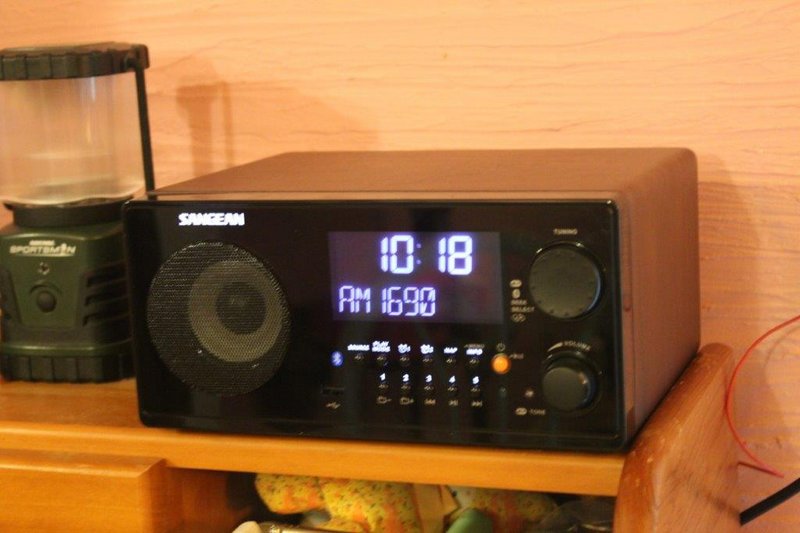
To my disappointment, the coil-type outdoor antenna didn’t seem to send the WR-22 any signal at all. Before getting all antisocial about it, I hooked the external antenna to the WR-22’s AM antenna screw terminals.
My goodness, all over again! Where the CCRadio hadn’t responded to this setup at all well, the WR-22 lit up with all sorts of signals. Now, I’d read on your site that the HDR-18 coupled the external AM antenna via a coil wrapped around its internal ferrite rod. Perhaps this radio already HAS the magic coil that seems to make so much difference built in, from the factory.
It goes to show that your mileage may vary; a little experimentation with your particular setup never hurts!
I have a problem I’m sure a lot of your readers would love to have; there are exactly NO really powerful AM radio signals in my area. Today I set up several radios for a rough comparison to give you an idea of how things work here.
Tecsun PL-880, no external antenna, sitting on the “best” windowsill in the back of the house: 4 AM (Medium wave) stations.
- CCrane CCRadio 2E, no external antenna, same windowsill, 8 AM stations.
- Car radio outdoors, 14 AM stations.
- Sangean WR-22 with the external antenna: 20 AM stations.
This was during the day. At night pretty much anything lights up on most of the AM frequencies; I expect the WR-22 will do well here, although I haven’t tried it yet.
As for FM, with the rooftop antenna, the WR-22 did well enough. I got anything I could reasonably expect to get with it. I had unreasonably hoped to get a certain second public radio network I like to switch over to when the main public radio network here goes to a pledge drive (which is approximately 11.5 months a year, it seems). Didn’t get a peep of it. I had only been able to get it with the CCRadio, twisting the antenna to a 45 degree angle to the vertical in a certain direction.
The rooftop antenna is horizontal. I read somewhere that FM signals are polarized at 45 degrees to the vertical so that they would work on both horizontal TV antennas and vertical car antennas, therefore for maximum discrimination a FM antenna that could also be tilted to 45 degrees would be helpful. I don’t know if that’s true or not. As textbook writers say when they are lazy and don’t want to do their job, building a rotating rooftop FM antenna with variable remote-adjustable tilt is left as an exercise to the reader.
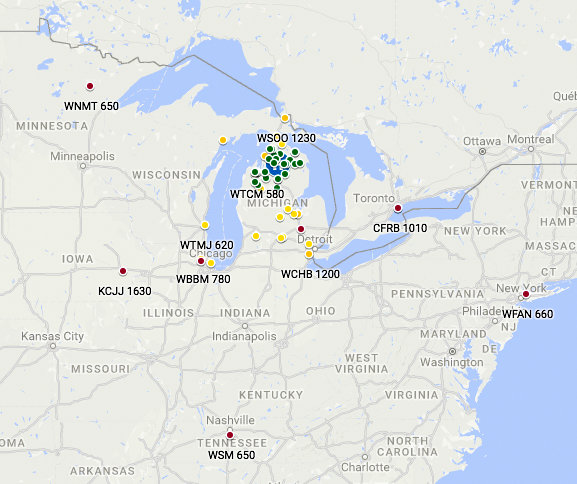
If you’d like to see what I’ve received with this radio so far, click here for my
station log map.
Yellow is AM daytime signals, green is FM, red is AM nighttime signals; only about three of those so far. I just did a quick bandscan to show you so some of the identifications may be a bit shaky, but it gives an idea of the performance I’m getting.
WR-22 performance
What about the radio itself?
I have no way of measuring performance with test instruments, but with the external antennas at least sensitivity and selectivity seem to be perfectly good.
The radio comes packed in good quality materials, very well protected. It is heavy and seems very solid. I like that the remote control actually allows tuning the radio from across the room, not just switching from one memory to another. I think this is the first radio with remote I have had which allowed this.
Sound is very good. As another reviewer said of the HDR-18, the WR-22 has a loudness function to boost bass (and probably treble too). It wasn’t hard to find the setting to turn that off, and I prefer sound without it.
I found no electronic birdies anywhere in either band. Bluetooth pairing was easy and quick to my Samsung smartphone, and the sound when streaming Bluetooth is also very good.
The only thing I don’t like about the radio so far is that in switching source you have to go through all of them: from AM, push the button to go to USB to Aux 3.5 mm plug input to Bluetooth to FM and back to AM again. That’s a pretty minor irk.
I’d expected this radio to have an external power supply. The manual, in fact, says to put the power supply away from the radio in order to prevent AM interference. But my WR-22 doesn’t have an external power supply, just a power cord. Mine is the USA version; the manual describes two different versions. Perhaps the other has an external power supply.
I’m not complaining. I prefer a radio without a wall wart.
I’m happy with this set. I have no idea how it would work without external antennas, but it works beautifully with them.
Thanks, Bill, for sharing your antenna experiments and your review of the Sangean WR-22. As you’ve discovered, often finding the performance “sweet spot” of any given radio requires a little experimentation! The AM performance of the WR-22 is very encouraging!