Category Archives: Nostalgia

Tom’s 1981 off-air recording of RCI’s Shortwave Listener’s Digest hosted by Ian McFarland

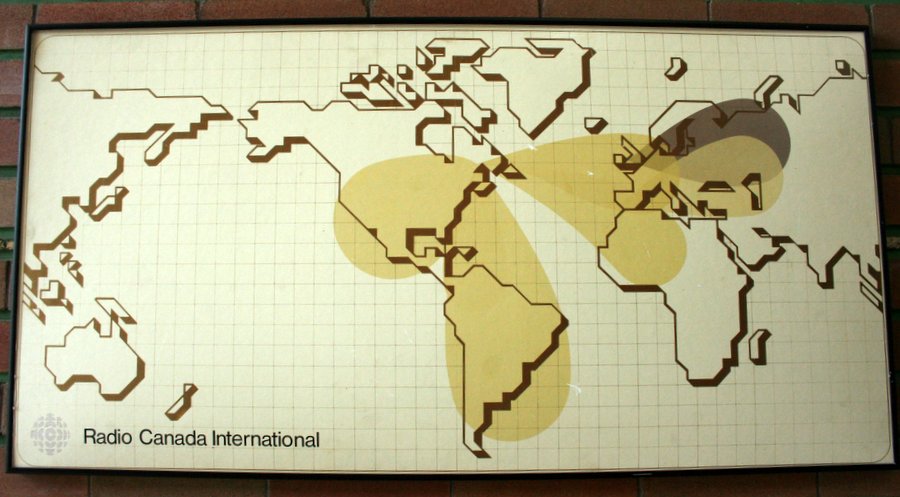
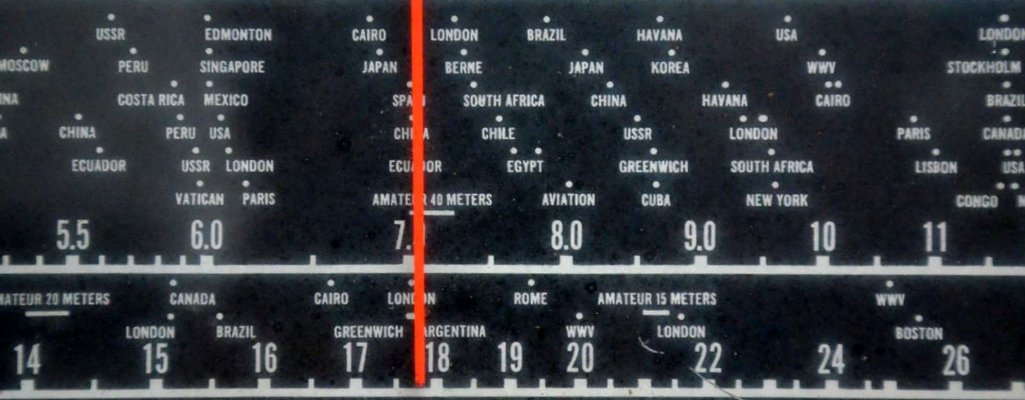
I snapped a photo of this propagation poster in RCI's Sackville, NB transmitter site only months befor ethe site was closed.

A propagation poster in the foyer of RCI’s Sackville, NB, transmitter site only months before the site was closed. (Photo: Thomas Witherspoon) 

Tom Laskowski, has been generously contributing a number of off-air shortwave radio recordings to the Shortwave Radio Audio Archive (SRAA).

Recently, he shared a series I’m sure many of you remember. Tom writes:

My first contribution of many recordings I have of Radio Canada International’s Shortwave Listener’s Digest hosted by Ian McFarland.”

“The first 12 1/2 minutes is Bonsoir Africa. The recording was made using a cheap GE portable. The audio quality isn’t great but it’s still very nostalgic listening to a program I recorded 34 years ago.”

This brings back many memories of one of my favorite shortwave programs–thank you, Tom!

The audio quality actually reminds me of one of my first analog portables, Tom! Nostalgia at its best.

Check out all Tom’s SRAA contributions by clicking here. While you’re at it, bookmark the SRAA!

Anniversary of Sputnik I Launch & Radio Moscow

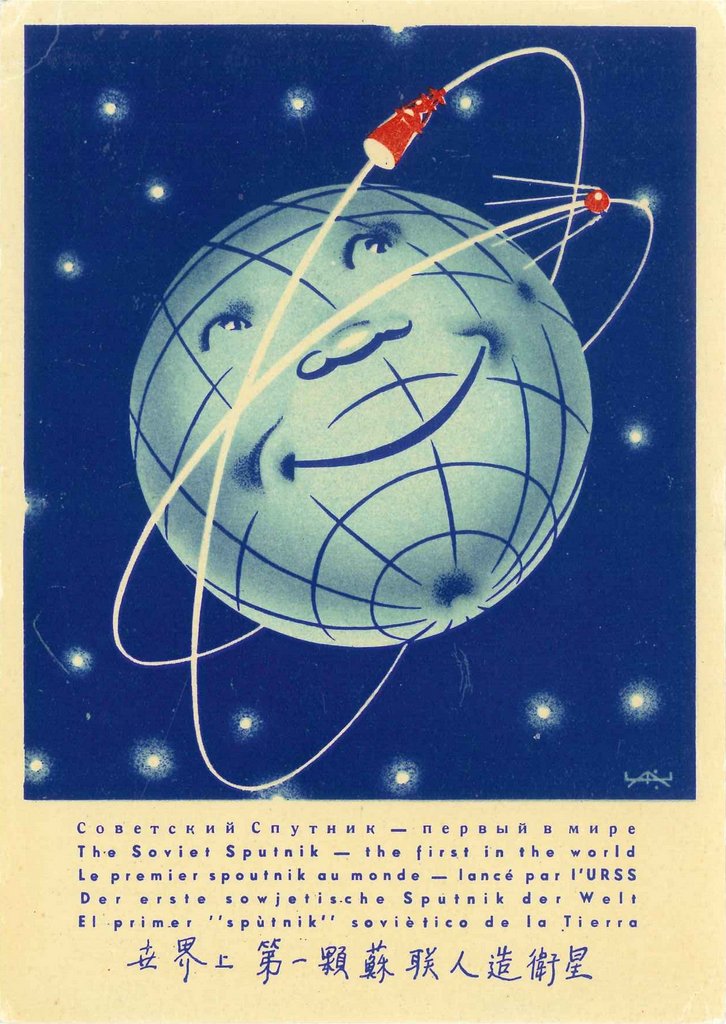
radio_moscow_sputnik_card_side1

Many thanks to SWLing Post contributor, Richard Langley, who writes:

Yesterday, 4 October, was the anniversary of the Soviet Union’s launch of Sputnik I, the first artificial Earth satellite. The launch heralded the beginning of the space age. Sputnik I’s Doppler-shifted radio transmissions on 20.005 and 40.002 MHz led to the development of the U.S. Navy Navigation Satellite System (Transit) and the equivalent Soviet system (Tsikada) and, eventually, to GPS and GLONASS and the other modern global navigation satellite systems.

The Sputnik I radio signals were picked up by many shortwave listeners. The 20 MHz signal was close to that of WWV and so was easy to find. And, apparently, WWV turned off its 20 MHz transmitter during some of Sputnik I’s passes over the U.S. so as not to interfere with reception.

There are several good sites on the Web with information about Sputnik I and its radio signals including:

Richard's Radio Moscow QSL card (Click to enlarge)

(Click to enlarge)

Sometime in high school, I received a card from Radio Moscow celebrating the launch of Sputnik I [see above]. Perhaps it was issued in 1967 for the 10th anniversary of the launch.

Richard: You never cease to amaze me! Thank you so much for sharing all of this Sputnik I information and resources! That gorgeous QSL Card is perhaps my favorite design from Radio Moscow.

Shortwave Radio Recordings: RCI, BBC, VOA circa 1979 & 1981

HalliDial

Many thanks to SRAA contributor, Tom Laskowski, who shares the following recording and notes:

A few snippets from my old shortwave tapes that were too short to upload individually. These were made using a GE portable multi band that had poor selectivity, hence the annoying ute during the BBC clip.

Times of individual clips are:

  • 00:00 – 01:59: 1979, July 19 – RCI, frequency announcements in English and french.
  • 01:59 – 09:51: 1979, July 20 – BBC, newscast, bothered by an annoying utility station.
  • 09:51 – 11:38: 1981, August 28 – VOA, science news item about Voyager 2
  • 11:38 – 14:52: 1981, August 29 – VOA, science news item about Voyager 2

Click here to download the recording as an MP3, or simply listen via the embedded player below:

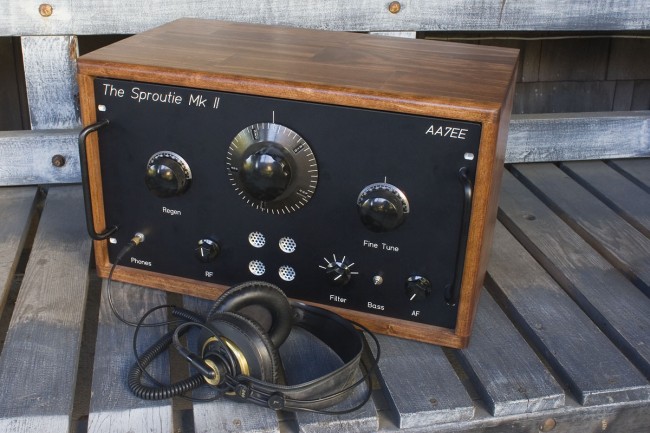
Dave unveils the Sproutie MK II regenerative receiver

SproutieMKII

My talented pal, Dave Richards, has built yet another home-brew regenerative receiver––which he dubs the Sproutie MK II––and wow, it’s a thing of beauty.

Dave tells me has been working on this receiver for many months, and upon viewing the following photos of it, it’s clear to see why he took his sweet time. As in his original Sproutie, a vintage HRO dial has taken pride of place as the centerpiece of his rig; it looks stunning.

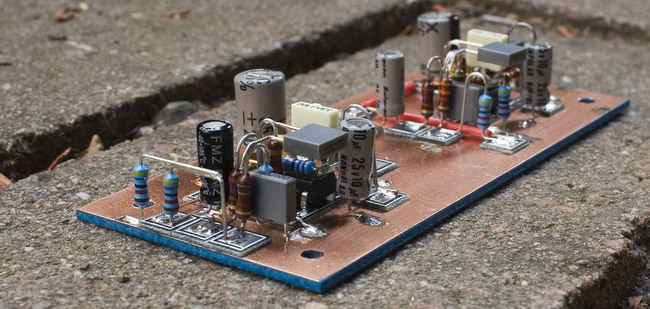
But the Sproutie MK II is not only painstakingly-crafted on the outside; like Shaker furnishings, wrought for the eyes of God both outwardly and within, the interior of Dave’s receiver is equally well-crafted.

Okay, maybe that’s a little over the top…but if you doubt me, just join me in admiration of this board:

SproutieMKII-board

As for performance?  Of course, with such a clean interior, the Sproutie II performs like a champ.  Dave posted a few videos showing how his new receiver commands the airwaves and aptly handles AM, SSB, and CW.

That’s an amazing piece of kit you’ve created there, Dave!  Hats off to your incredible craftsmanship.

Check out Sproutie II on Dave’s blog, where you can read a full account of how he designed and built this gorgeous regen receiver.

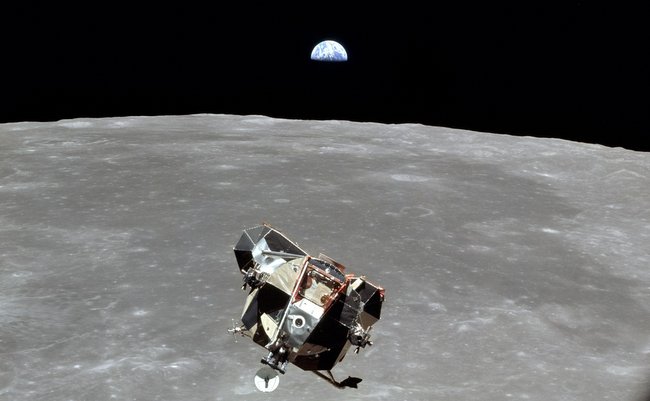
Shortwave Radio Recordings: VOA on the 10th anniversary of Apollo 11 moon landing

Apollo_11_lunar_module-001

Many thanks to SWLing Post and SRAA contributor, Tom Laskowski, who shares this recording of the Voice of America; recorded on July 20, 1979 at 0500 UTC on the 31 meter band. Tom notes:

“The first 4:30 is from a VOA newscast that aired before the main part of the program. The main recording was presented on the 10th anniversary of the Apollo 11 moon landing. I enjoy listening to this every year on the landing anniversary.”

Click here to download the recording as an MP3, or simply listen via the embedded player below:

Note that Tom has been sharing a number of shortwave recordings from the late 1970s. All of his recordings are being published on the Shortwave Radio Audio Archive. Tom: thanks so much for being a part of the shortwave archive community.

If you have recordings you would like to share with the world as well, please contact me.

A photo tour of the 2015 WCARS hamfest

IMG_20150725_083926547 A few weeks ago, on July 25th, I made my way to Waynesville, NC, to the WCARS hamfest. This is a much smaller hamfest than, say, the Shelby Hamfest I recently attended.

In the past, however, I’ve found some real gems among the tables of this small hamfest.

I took a few photos but should note they’re not at all a representation of what was available at the hamfest, rather the things I found of interest (ahem…vintage gear).

IMG_20150725_083919424_TOP

This Hallicrafters SX-100 was on one of the first tables I noticed in the main building. I have an SX-99 and have always thought about “upgrading” to an SX-100. The seller was asking $150.

IMG_20150725_081827868_TOP

My buddy, Mike (K8RAT) believes the Omni D is one of the best CW rigs ever made. He purchased one–in excellent condition–with matching power supply at a hamfest in Ohio for $200. I believe this one, and another OMNI D at the WCARS hamfest were selling for $300+. IMG_20150725_111501657 IMG_20150725_110153073 IMG_20150725_110033935_HDR IMG_20150725_105119120

I would have loved a little radio/TV combo like this when I was in middle school. The two inch black and white CRT screen reminds me of the devices everyone carried to open doors  and communicate on Space 1999.IMG_20150725_104953461 IMG_20150725_104945038

I still find the IC-R70 and IC-R71 appealing. Maybe it’s that classic Icom green.

IMG_20150725_101701021 IMG_20150725_101039828_HDR IMG_20150725_101034509_HDR

This National NC-173 really caught my attention. The seller had kept this radio in excellent cosmetic condition.IMG_20150725_120447122

Indeed, the temptation was too much! I purchased the NC-173 and took it home. After turning it on, though, I felt voltage on the chassis (50V, in fact) and no audio. I contacted the seller, who lives locally, and took it to his home work bench. He happily refunded my money and then began looking for the fault. My life has been so hectic, I haven’t gotten back to him yet, but he was holding it for me should I want to purchase again. I may very well go back and purchase it. Hey, if it’s good enough for Thor Heyerdahl, it’s good enough for me!

IMG_20150725_090024163_HDR

While none in working order necessarily, these ARCs were being sold for about $25 each. I probably should’ve gotten at least one.

IMG_20150725_084257424 IMG_20150725_084301058_TOP

The seller wanted over $700 for this Clansman manpack transceiver and accessories, if memory serves. Someday, I’ll snag one of these.

Phillips Model 46-350 AM radioI did come home with this beautiful 1946 Phillips Model 46-350 with roll-top dial cover. The 46-350 was a very popular model for Phillips after WWII; over 220,000 were produced. Original sales price? $49.95

Phillips-46-350-Dial

The seller–an avid antique radio collector–sold this 46-350 to me for $25. I feel like I got a deal, too: the receiver is amazing and the audio is beautiful. The chassis shows wear, but I like that (gives some chronological context–!). The inside is in great shape for a radio that’s almost 70 years old.

Phillips-46-350-Back

This Model 46-350 has become my bedside radio; one my sweet wife didn’t object to at all. When not listening to a local AM station, or one of the night time clear channel stations, I tune to my (very) locally transmitted 1570 kHz which typically relays the UK 1940s Radio Station.

I also brought the following items home from the WCARS hamfest:

All in all, a good haul! I’ll certainly visit the WCARS hamfest again next year if my schedule allows.

Frank shares 1991 recordings and original notes of station IDs and interval signals

Sony-ICF2010

SWLing Post reader, Frank, writes from Germany:

First let me say that I enjoy your blog a lot.

After a 2005-13 hiatus, I have rediscovered a childhood hobby and your reviews have helped me find my way to the post-Sony portable shortwave radio markets.

First, I obtained my “childhood dream” radio (Sony ICF 2001D), because at the time I made these recordings I was still in school and 1300 DM would have equaled over 1 year of pocket money, so a Supertech SR16HN had to do. I thought I got some fine results with this Sangean-Siemens re-branded receiver then, using a CB half-length antenna, a random wire, and much endurance.

The Supertech SR16HN (photo: Radiomuseum.com)

The Supertech SR16HN (photo: Radiomuseum.com)

I kept regular logs throughout the years, wrote to 50 international and pirate stations for QSL and compiled this cassette.

A few years before I got that trusty SR16HN, however, I recorded a few number stations (such as G3, Four Note Rising Scale etc) with an ordinary radio cassette recorder, and in 1991 I put them onto this tape as well. The other recordings are done with the same radio placed right in front of the SR 16HN.

Feel free to make use of these recordings. Most of it are the well-known international state-owned shortwave stations of the past; plus European pirates; plus number stations; and at the end, a few (off-topic) local Am and FM stations interval signals.

As I said, this collection I made shortly after the Wende/reunification period, when all former-GDR state broadcasters changed their names, sometimes more than once.

Please continue your good work on the blogs! Weather permitting I am often outside cycling and always have the tiny Sony ICF 100 with me (which I call my then-student’s dream radio of the later 90ies).

Cassette Side 1

Click to enlarge.

Frank’s original hand-written notes. Click to enlarge.

Click here to download Side 1, or listen via the embedded player below:

Cassette Side 2

Click to enlage.

Click to enlage.

Click here to download Side 2, or listen via the embedded player below:


Wow! Frank, what a treat to listen to all these station IDs!

I had forgotten how many interval signals have changed over time and how many, of course, have disappeared. This tape represents a flood of nostalgia for me.

I should add, too, that I’ve enjoyed hearing so many IDs in German. It’s funny, but we all get hooked on listening to language programming from our native or second languages. It makes me realize just how many broadcasters used to have German language services.

Again, many thanks, Frank, for taking the time to digitize these recordings and scan your original hand-written notes. This stuff is invaluable, in my book!