Category Archives: Nostalgia

Bob’s Radio Corner: Do You Need a Break from Radio?

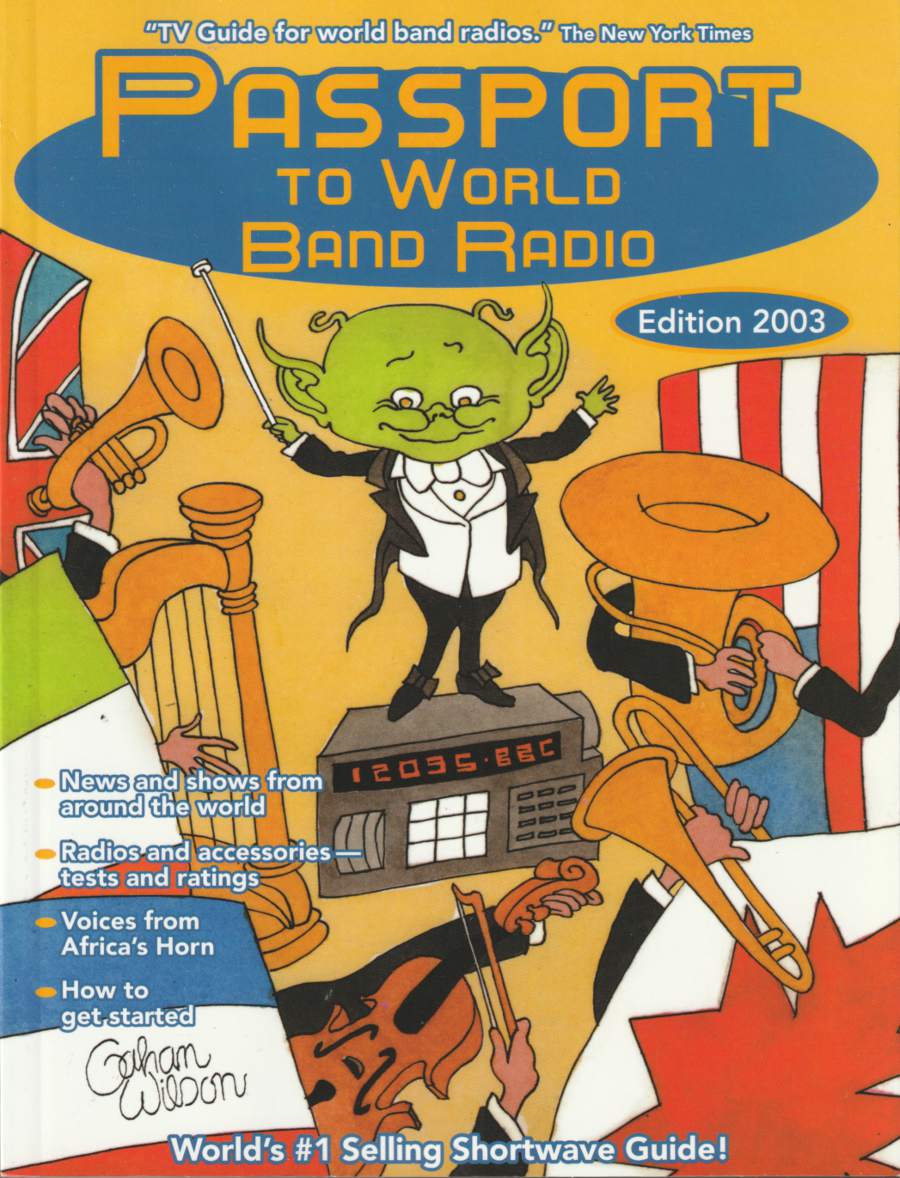
A new resource such as Passport was always an incentive to turn on a radio.

Do You Need a Break from Radio?

by Bob Colegrove

A couple months ago I became one of the last 10 people east of the Mississippi River to acquire a smart phone.  It was a great improvement for someone who had been trying to navigate through modern life for several years using a flip phone.  The transition came at a cost, however.  It required an investment of time learning the basic features and functionality.  Having a long-standing familiarity with computers and tablets, there was a degree of experience I could draw from.  Still, it was different, plus it included new features I found to be amazing and demanding of my attention.

Not long after this I was informed by Microsoft that I would soon be needing a new computer to remain safe and functional.  Having logged on to a mainframe for the first time in September 1976, I had been around the block too many times to be greatly alarmed by such warnings.  Nevertheless, having not purchased a new computer since 2014, I decided to use this information as leverage to do just that and treat myself to a new laptop.  The basic features and functionality remained similar; however, the transition still required time to find where they had been relocated.  An operating system upgrade is kind of like buying a new car and finding the steering wheel in the trunk and the spare tire in the front seat.

These new technological acquisitions demanded my undivided attention for a period of several weeks – time which had to be carved out of life’s normal activities.  Admittedly, being retired helped.  Still activity tends to progressively slow with age.  The transitions were completed relatively painlessly; I would even say with a good level of discovery and enjoyment.

I told you all of that in order to tell you this:   While all this transpired, not a radio functioned for several weeks.  Neither a knob was turned nor a button pressed.  Notwithstanding the newly enhanced forces of 5G and Wi-Fi, the world could have stood still.  Not once, but many times during this period I would look over at the radio table and see them all silently looking back like so many forelorn puppies in want of a scratch behind their ears.  Coldly and cruelly, I would turn my back and set up another email account.

I was on what is simply called a “break.”  Not my first.  I am hard-pressed to say how many breaks I’ve been on over the years; nor can I tell you how long each one lasted.  I am reassured by my fellow radiofiles that I am not alone.  I occasionally read comments or blogs from folks who have returned after a break, sometimes after several years.
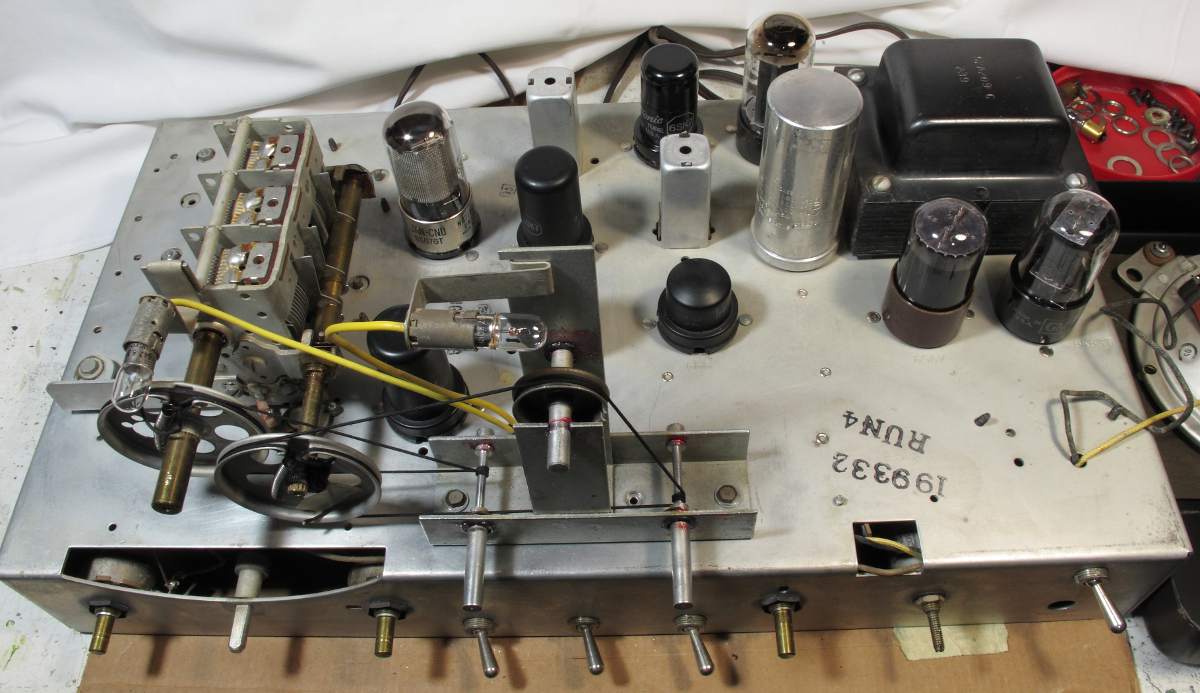
In the old days tinkering could reignite flagging interest.

Breaks may be caused by many things, the increased burdens of life being the most obvious.  Maybe there is illness.  Seasonal changes can initiate a break; it’s just good to be outside when the air is fresh and warm.  It might be an increased level of boredom where one simply neglects to turn the radio on.  In my case, it was an irresistible distraction like a new gadget.  I have never consciously told myself I needed a break and turned the radio off for a planned length of time.  It has never ever become a matter of work to operate a radio.  Perhaps that’s how you know you’ve been irrevocably hooked.

We all come back – eventually.  It’s in our DNA.  Are breaks bad?  No.  Every human endeavor requires a break now and then.  Sportspersons hang up their spikes or sneakers for six months at a time every year.  The idea is they come back refreshed and renewed ready again to conquer the mountain.  While success may be illusive, it is the break that provides the incentive to go on.  So it is with radio.
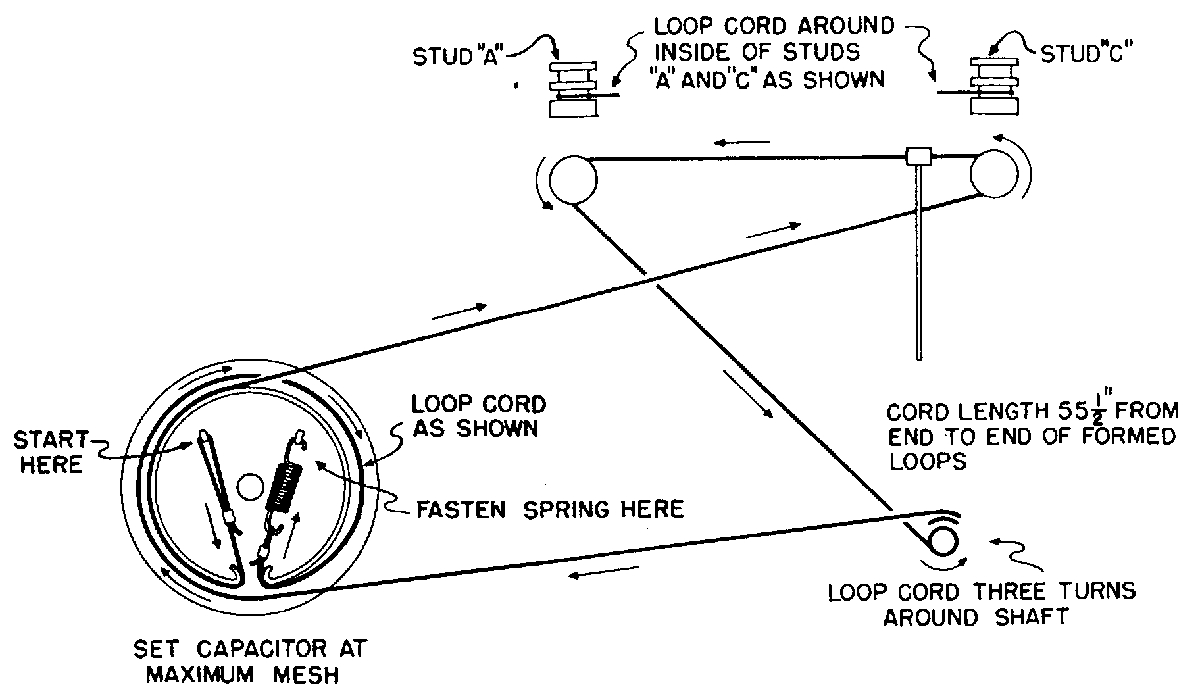
I could spend hours to the point of ignoring meals attentively getting a dial cord to run smoothly.
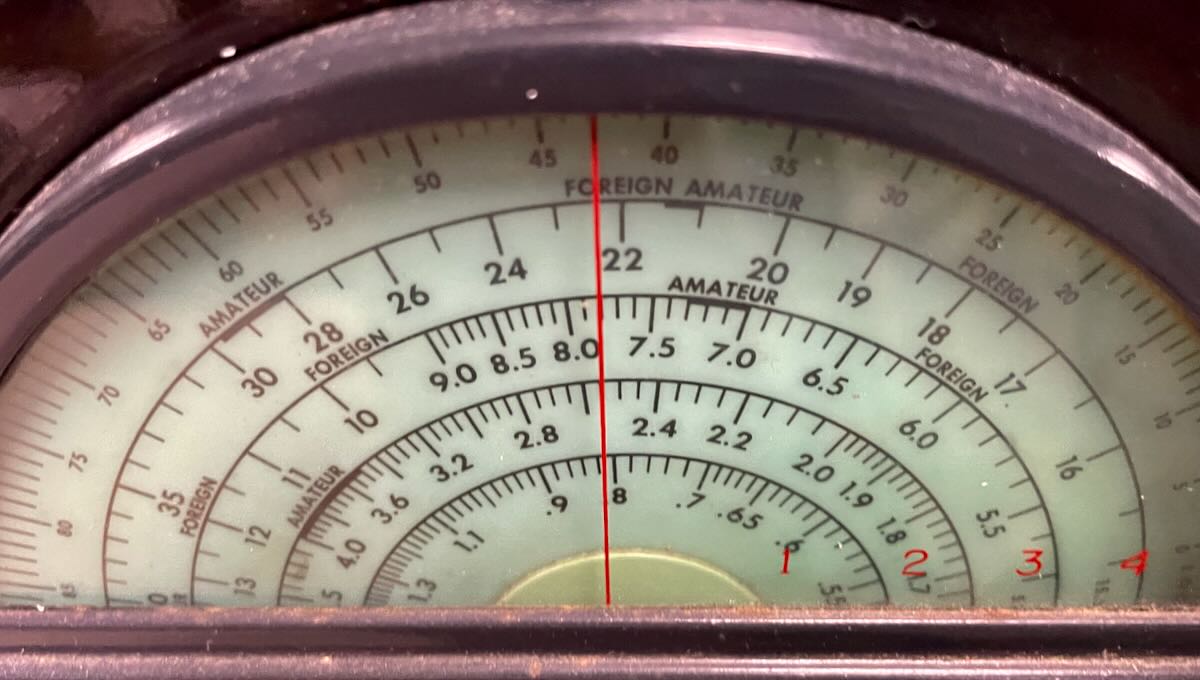
Source : The National NC109 Communications Receiver.

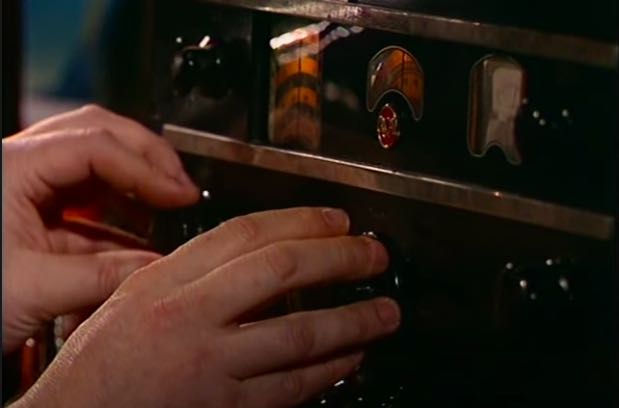
Eventually you turn the radio on with renewed enthusiasm.  Perhaps you recall a previous discovery, an untried band, a different time of day, a new tuning technique, a suggestion of something you read or heard.  Maybe it’s a new radio, or one you haven’t used for a long time.  Maybe it’s just the attraction of the dial and buttons that draws you back.  These are some of the sparks that reignite your interest.

Eventually, the initial flash of enthusiasm for the new phone and computer subsided.  Sound again emanates from the headsets.  What was old is new again.  Regardless of why you went away or how long you’ve been gone; you’ve got that old feeling and you’re back.
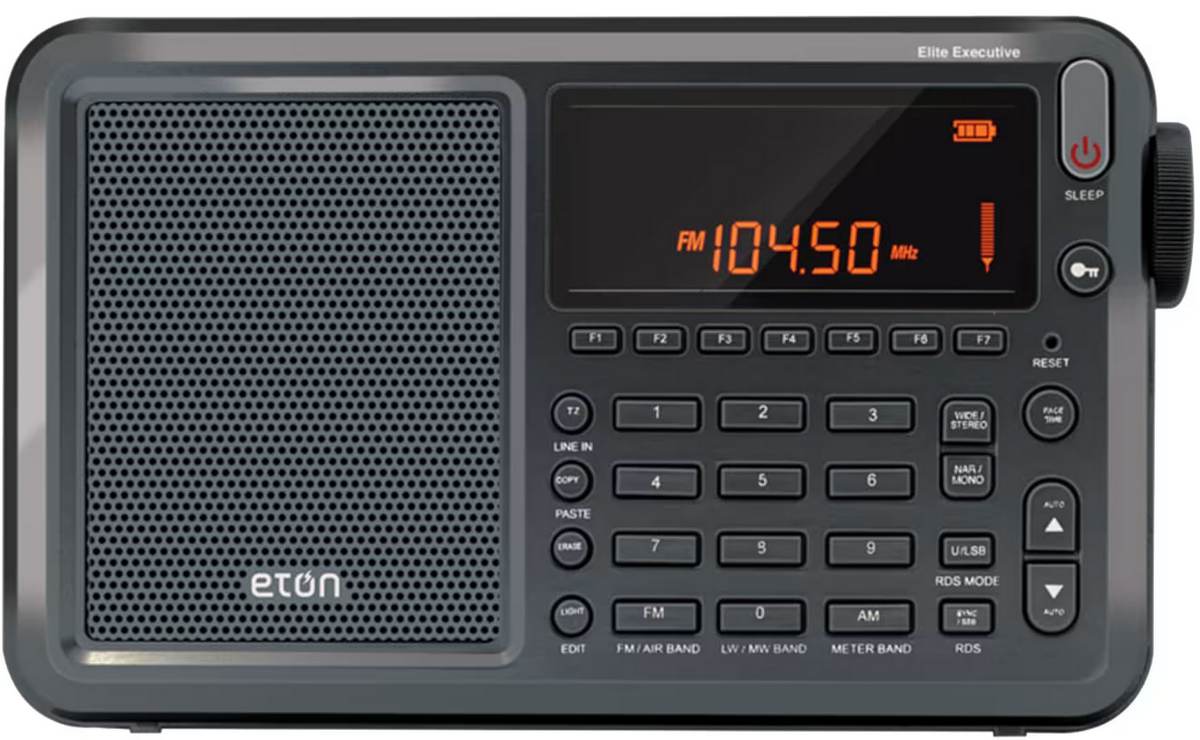
Do radio designers try to attract us with appearance?
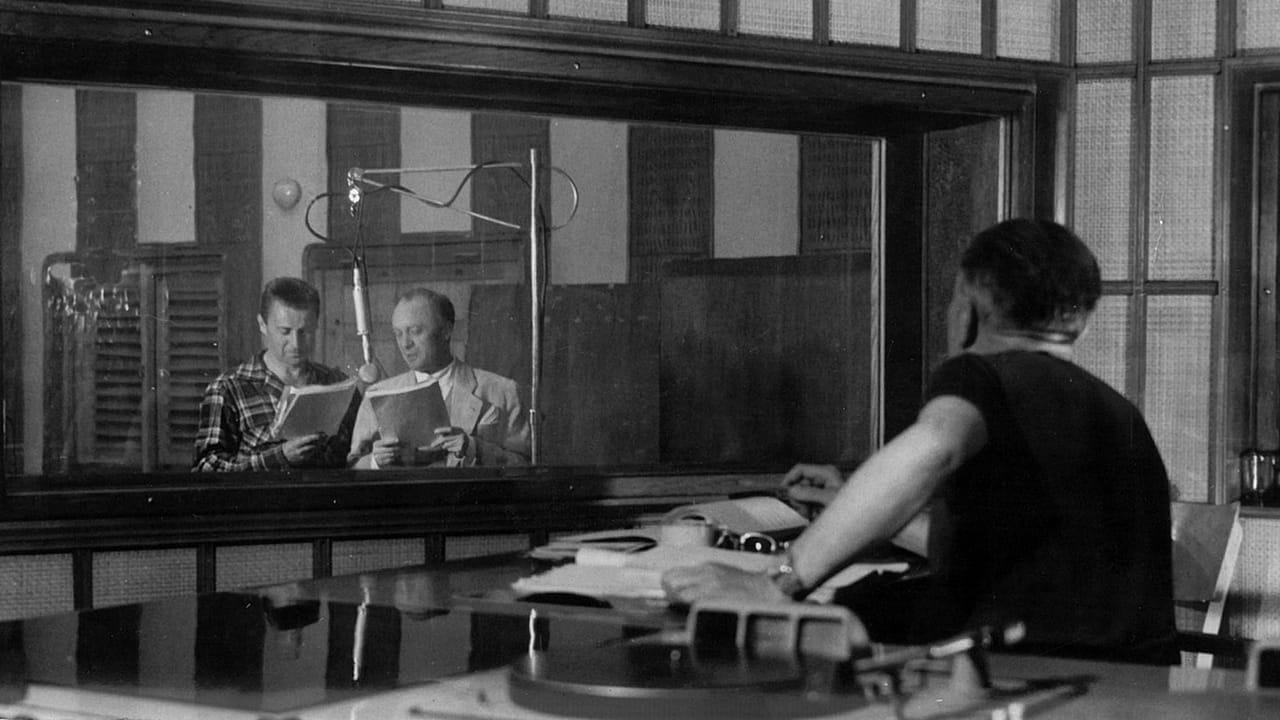
Radio and Resistance: The Legacy of Radio Plzen

Photo of studio via Radio Prague International

Many thanks to SWLing Post contributor David Iurescia for sharing this excellent article from Radio Prague International, which commemorates the 80th anniversary of Radio Plzen’s powerful broadcast urging resistance during World War II: https://english.radio.cz/radio-plzen-voice-changed-history-80-years-ago-8849932

Mark spots two vintage radios in the background of a K-drama

Many thanks to SWLing Post contributor, Mark Hirst, who writes:

Thomas,

K-dramas with Korean subtitles can be a useful form of language immersion, so I recently came across this comedy sitcom on YouTube.

In this clip, we see Winter, Karina, and Giselle of the K-pop girl group Aespa.

Behind them are what appears to be a Beomaster 900M and a Philips
Philetta.

Mark

You’ve got sharp eyes, Mark! Thank you for sharing.

Don Moore’s Photo Album: Guatemala (Part Six) – Huehuetenango

Many thanks to SWLing Post contributor Don Moore–noted author, traveler, and DXer–for the latest installment of his Photo Album guest post series:


default

Don Moore’s Photo Album:
Guatemala (Part Six) – Huehuetenango

by Don Moore

More of Don’s traveling DX stories can be found in his book Tales of a Vagabond DXer [SWLing Post affiliate link]. If you’ve already read his book and enjoyed it, do Don a favor and leave a review on Amazon.

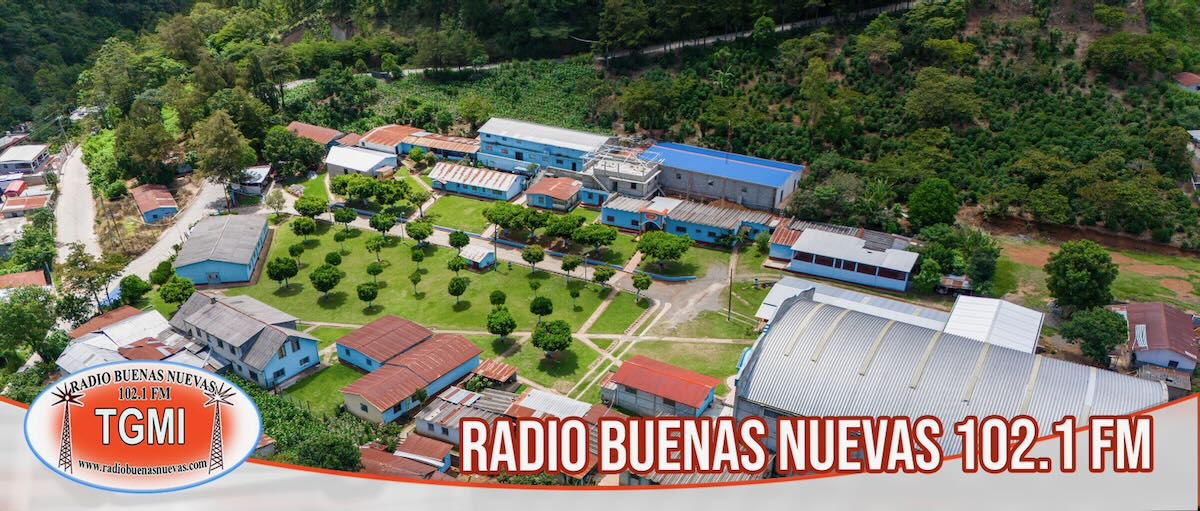
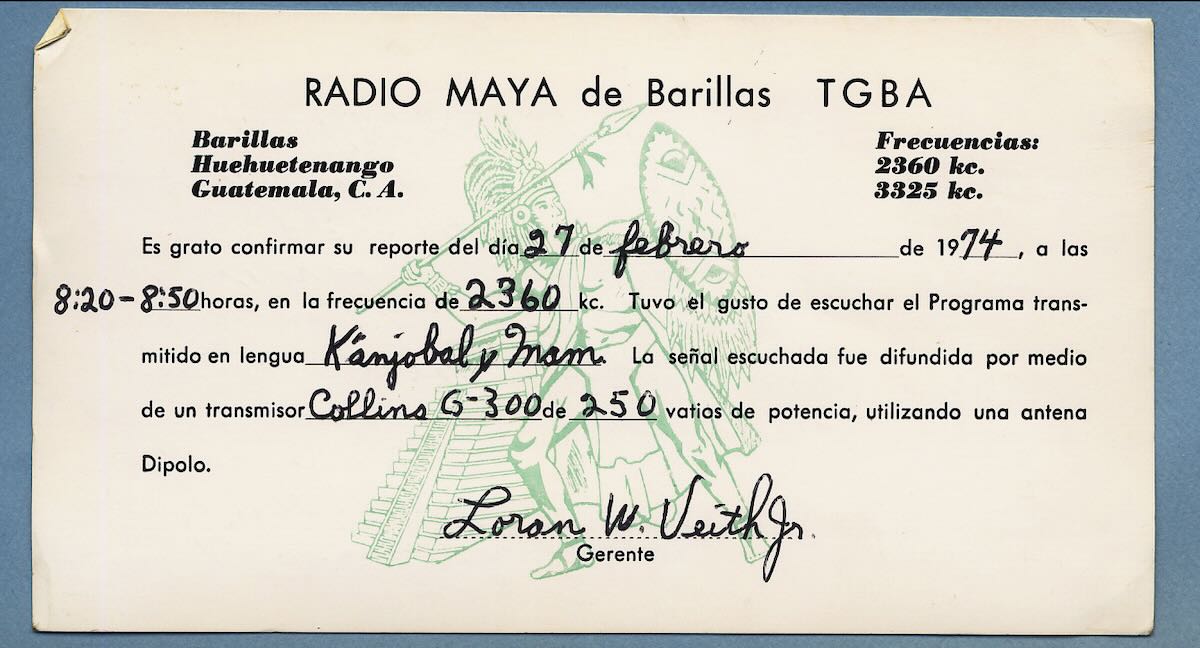
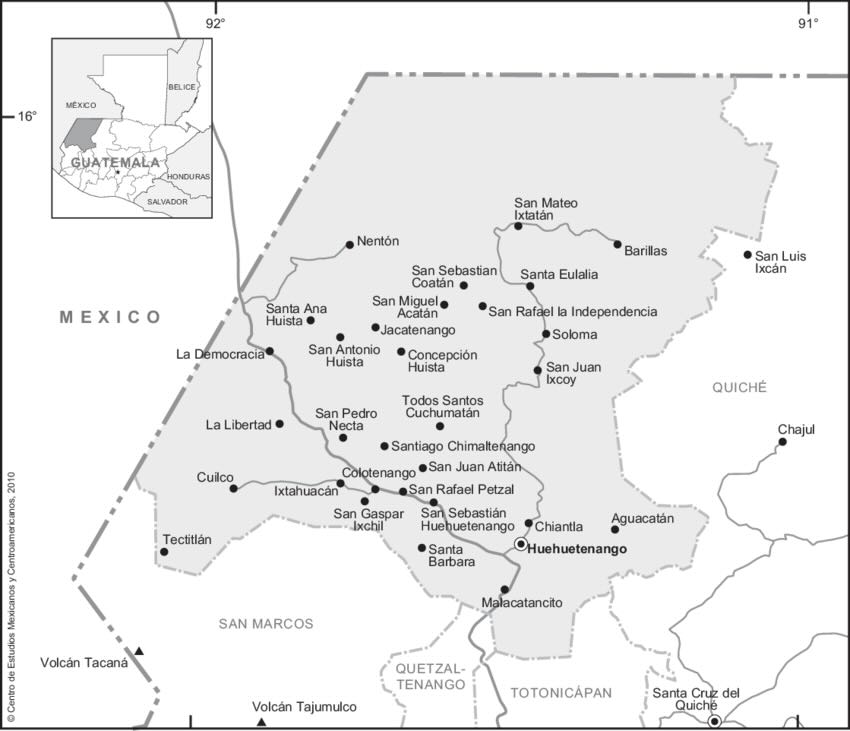
I first heard of Huehuetenango in February 1974. I had gotten my first serious receiver, a Barlow-Wadley XCR-30, a few weeks earlier. Now I could try for stations in the 120-meter band. The first one I heard was Radio Maya de Barillas on 2360 kHz from a place named Barillas in Guatemala. And Santa Cruz de Barillas (the town’s full official name) was in a department named Huehuetenango. The name sounded exotic and magical.

In my mind, Radio Maya de Barillas was the ultimate DX target. The Evangelical Protestant station used a tiny amount of power in 120-meters, the shortwave band that provided the most challenge to DXers. The programs were in Mayan languages with mostly hard-to-pronounce names. And my map showed that Barillas was literally at the end of the road. There was nowhere to go beyond Barillas.

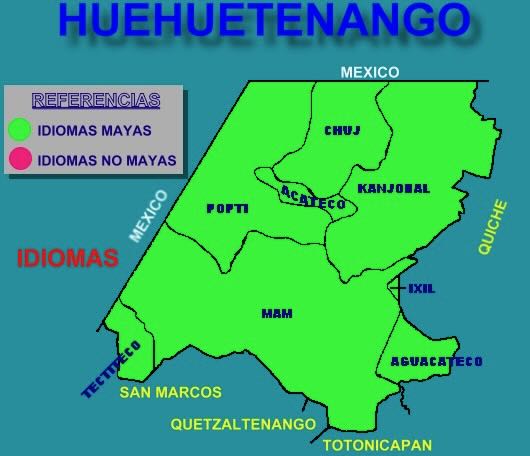
That sense of Huehuetenango being on the edge of civilization was totally correct. The department contains the rugged Cuchumatanes mountains, the highest non-volcanic mountains in Central America. It’s the only place in Central America where it’s too cold to grow corn. Instead, people get by raising sheep and planting potatoes. The mountains explain why eight different Mayan languages (belonging to three different language families) are spoken in this one department. Steep rugged mountains are a barrier to communication. A lack of communication causes a common language to diverge into multiple languages over just a few centuries.

The Mam, numbering about half a million, are the fourth largest Mayan group in Guatemala and their homeland extends into other departments in the south. But the other seven languages are only found in Huehuetenango with maybe a little spillover across the borders. The largest of those is Kanjobal, spoken by about 80,000 people today. The Tectiteco (Tektik) number just a little over two thousand.

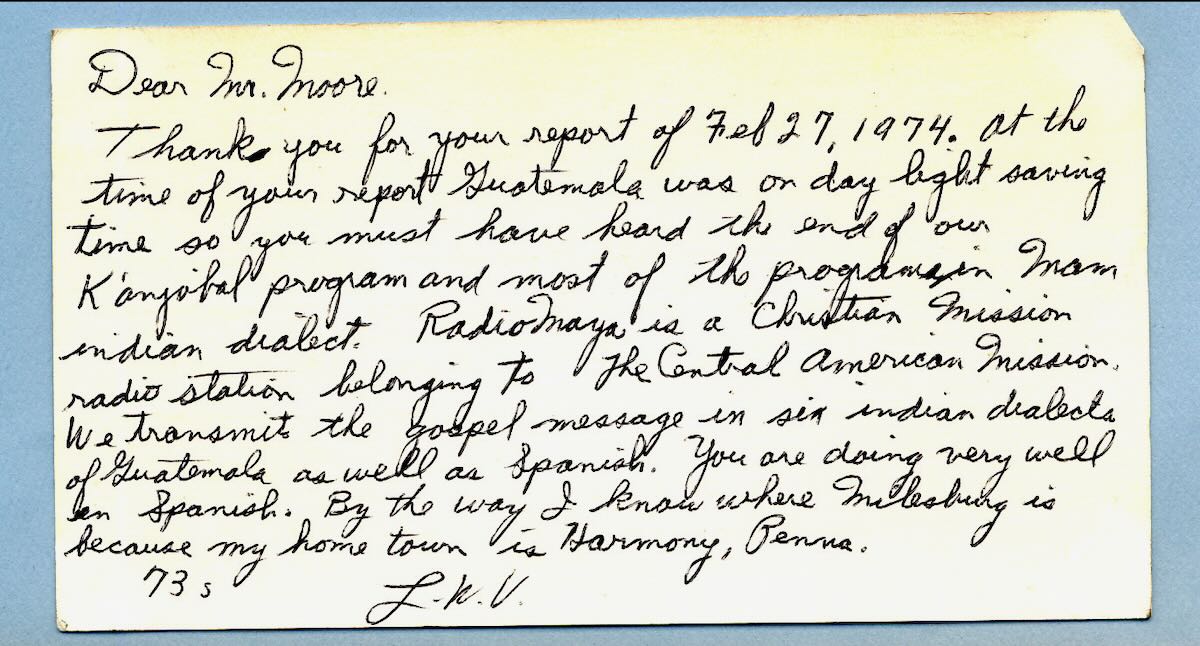
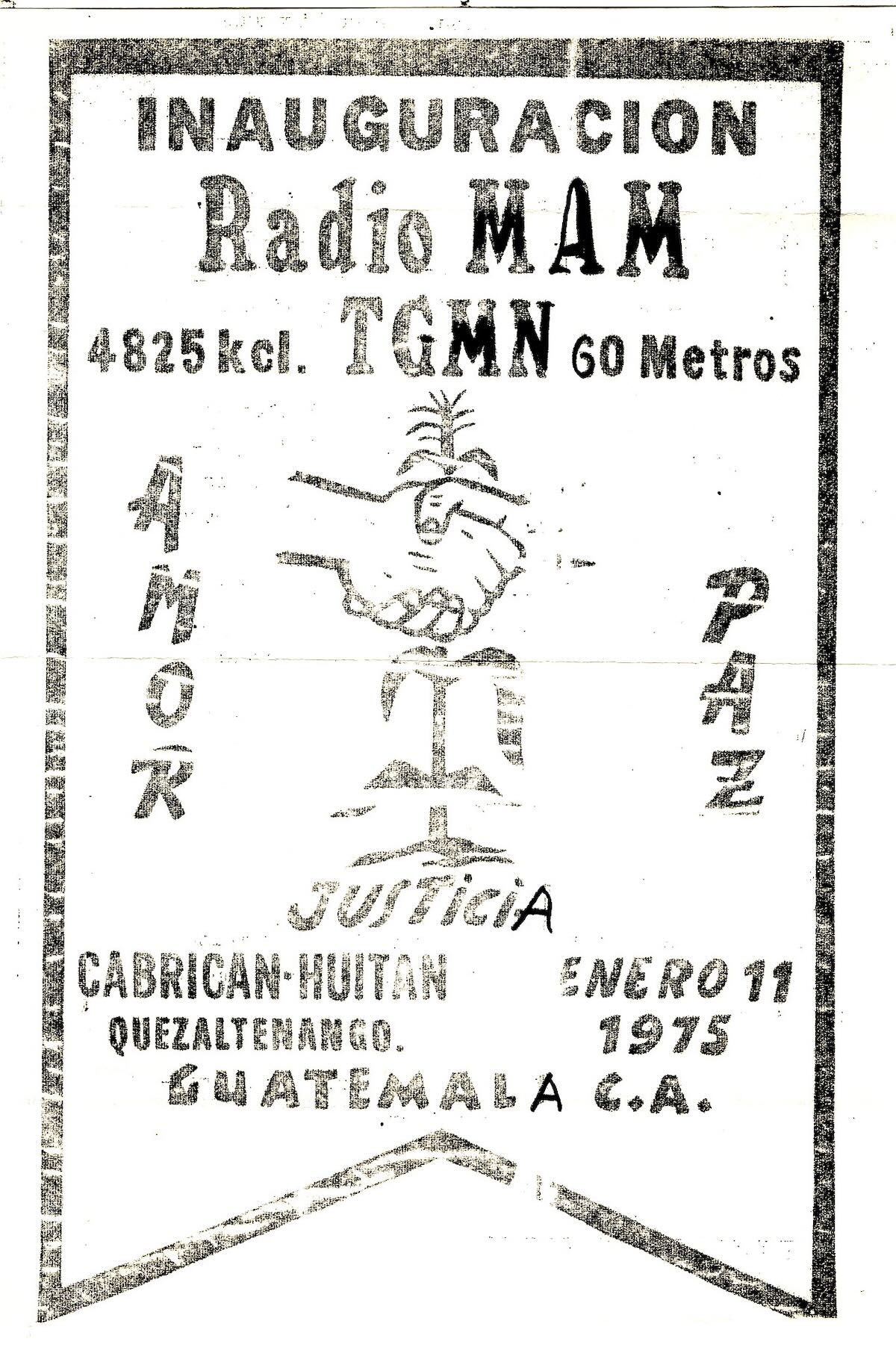
As noted on the back of my QSL from Radio Maya de Barillas, that station broadcast in six of the region’s languages, including Mam and Kanjobal, the language spoken in and around the town of Barillas. For about a decade Radio Maya was the only radio station to broadcast in the region’s languages. Then in 1975 the Roman Catholic church opened an educational station, Radio Mam, in Cabricán to the south in Quetzaltenango department. But Radio Mam only broadcast in the Mam language. (And, unfortunately, I never got to visit the station.)

Visiting Huehuetenango (or not)

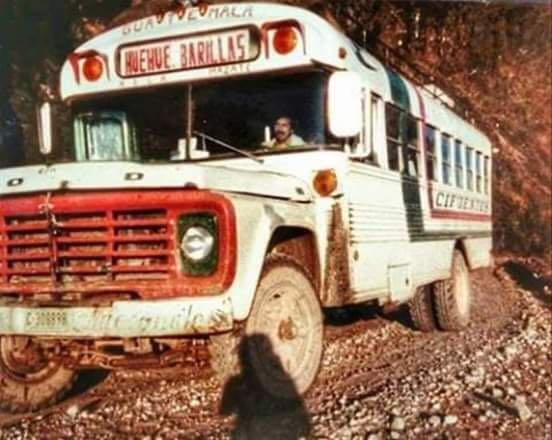
When I was traveling to Guatemala while living in Honduras in the early 1980s, one of my goals was to visit as many Guatemalan shortwave stations as possible. Yet I never once considered going to Barillas. Sure, I knew that the dirt road from the town of Huehuetenango to Barillas was one of the worst in Central America and that the bus ride took twelve hours. That wasn’t going to stop me.

 What stopped me from visiting Radio Maya was that Barillas was right in the middle of the area of the heaviest fighting between the government and the guerrillas. This may surprise you if you’ve read the previous parts of this series, but there really were some things back then that I knew better than to do. Going into the worst part of a war zone was one. The closest I came to Barillas was passing through the southern part of the department on the Pan-American Highway on my way to Mexico in December 1984. That was just a few weeks after a guerilla band had ventured south and blown up four bridges on the road. Continue reading

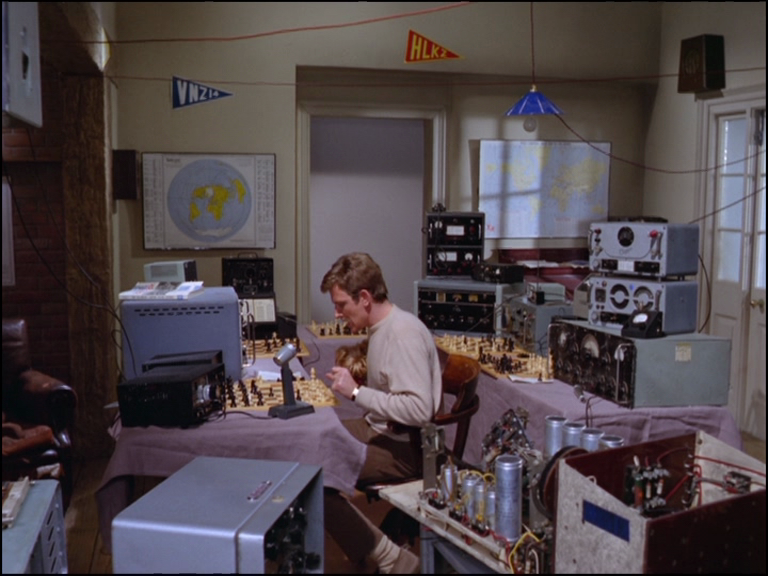
The Avengers: Mark spots a room full of radio gear in Season 5

Many thanks to SWLing Post contributor Mark Hirst, who writes:

Thomas,

I picked up Season 5 of the cult TV show “The Avengers” at a street market last weekend.

In the episode “Never, never say die”, Mrs Emma Peel follows a lead and meets a radio ham playing chess with other radio hams around the world.

With all the little details in the room, I wonder if someone involved in setting up the scene knew something about amateur radio?

Mark

I bet they did, Mark! How many of these fine radios can the SWLing Post community identify? Please comment!

Pure AM Radio Nostalgia: Vintage Aircheck Recordings from the 1970s by Dan Greenall

Many thanks to SWLing Post contributor Dan Greenall for once again sharing a remarkable collection of vintage off-air AM radio recordings. In this post, he shares recordings made from his home and during his travels across North America and the Caribbean.

Dan writes:

Hi Thomas

Judging by the interest on my Internet Archive page, vintage AM radio audio clips from the 1970’s are among the most popular files. In addition to the one posted on the SRAA in September 2023, here are the remaining ones I have to take you back 50 years.

VOA Marathon 1973

The Voice of America station from Marathon Key, Florida is heard signing off on its frequency of 1180 kHz. This recording was made while on vacation in West End, Bahamas in December 1973. Reception of the station in much of North America was tough due to the signal being south beamed to Cuba. However, at least one listener in New Zealand managed reception as evidenced by the attached QSL image from 1972.

ZNS3 Bahamas 1973

ZNS3 radio on 1060 kHz from Freeport, Bahamas is heard with a station identification jingle. The recording was made while on vacation in West End (near Freeport) on Grand Bahama Island in December 1973.

Bermuda AM/FM airchecks 1975

Brief airchecks from 5 local radio stations recorded while visiting Bermuda in March 1975. They are as follows:
ZBM1 1230 kHz
ZBM2 1340 kHz
ZBM-FM 89.1 MHz
ZFB1 960 kHz
ZFB-FM 94.9 MHz

WVMT Burlington VT 1975

Brief aircheck from radio station WVMT in Burlington, Vermont on 620 kHz recorded in March 1975 in Montreal, Quebec. Starts with “Mandy” by Barry Manilow, station ID, then into NBC news.

XERF Ciudad Acuna, Mexico 1971

Short audio recording of radio XERF on 1570 kHz as received in Ancaster, Ontario, Canada in November 1971.
“This is radio station XERF in Ciudad Acuna, Coahuila, Mexico. This is Paul Kallinger, your good neighbor along the way.”
Used a Hallicrafters S-52 communications receiver and a longwire antenna.

KPCR Bowling Green, MO 1973

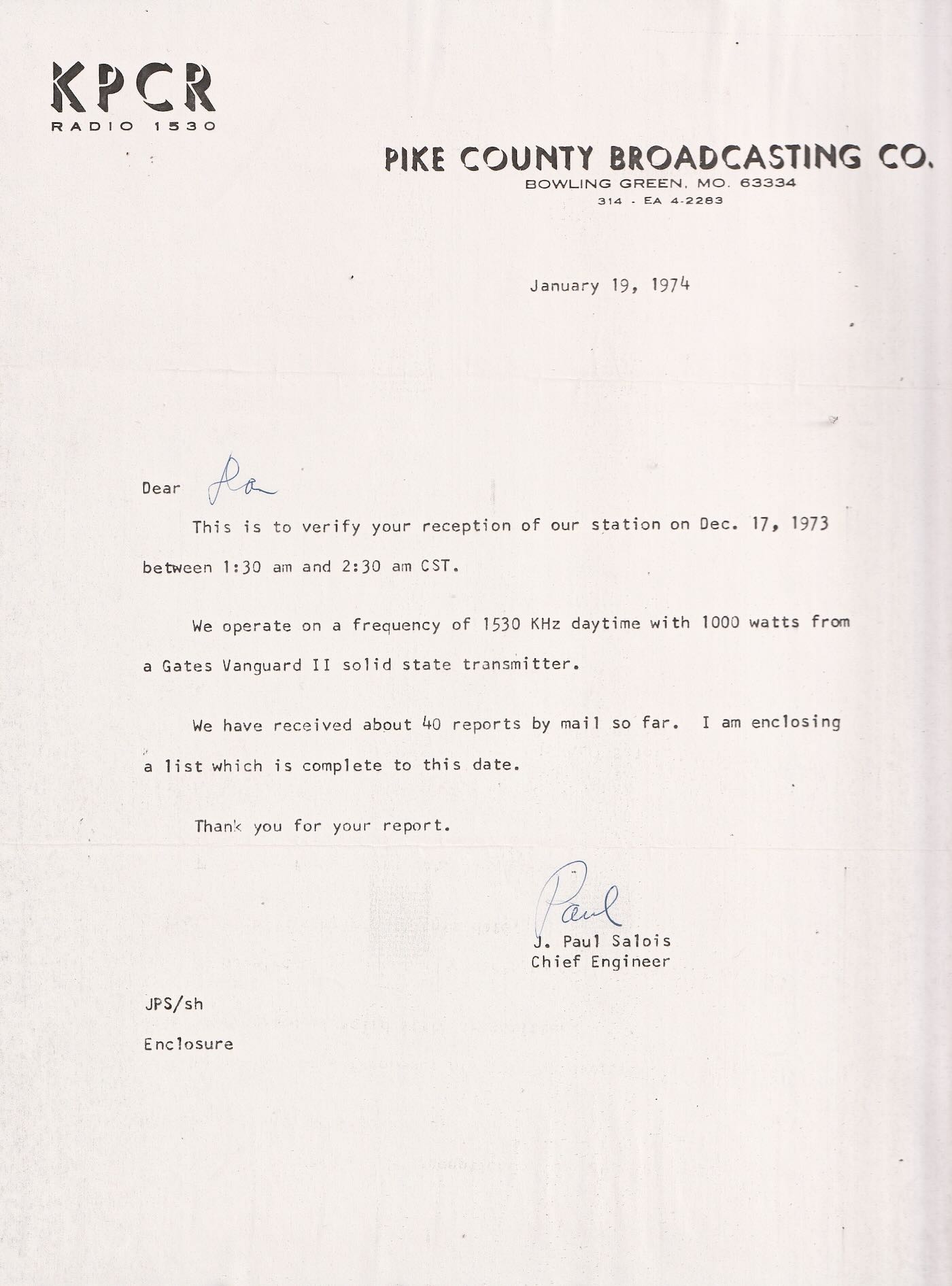
KPCR radio in Bowling Green, Missouri as heard in Ancaster, Ontario, Canada on 1530 kHz during an overnight DX test on December 17, 1973. They only ran 1000 watts, but 50 kw WCKY in Cincinnati was off the air that night. Used a Realistic DX150A receiver and a longwire antenna.

KFDI Wichita, KS 1974

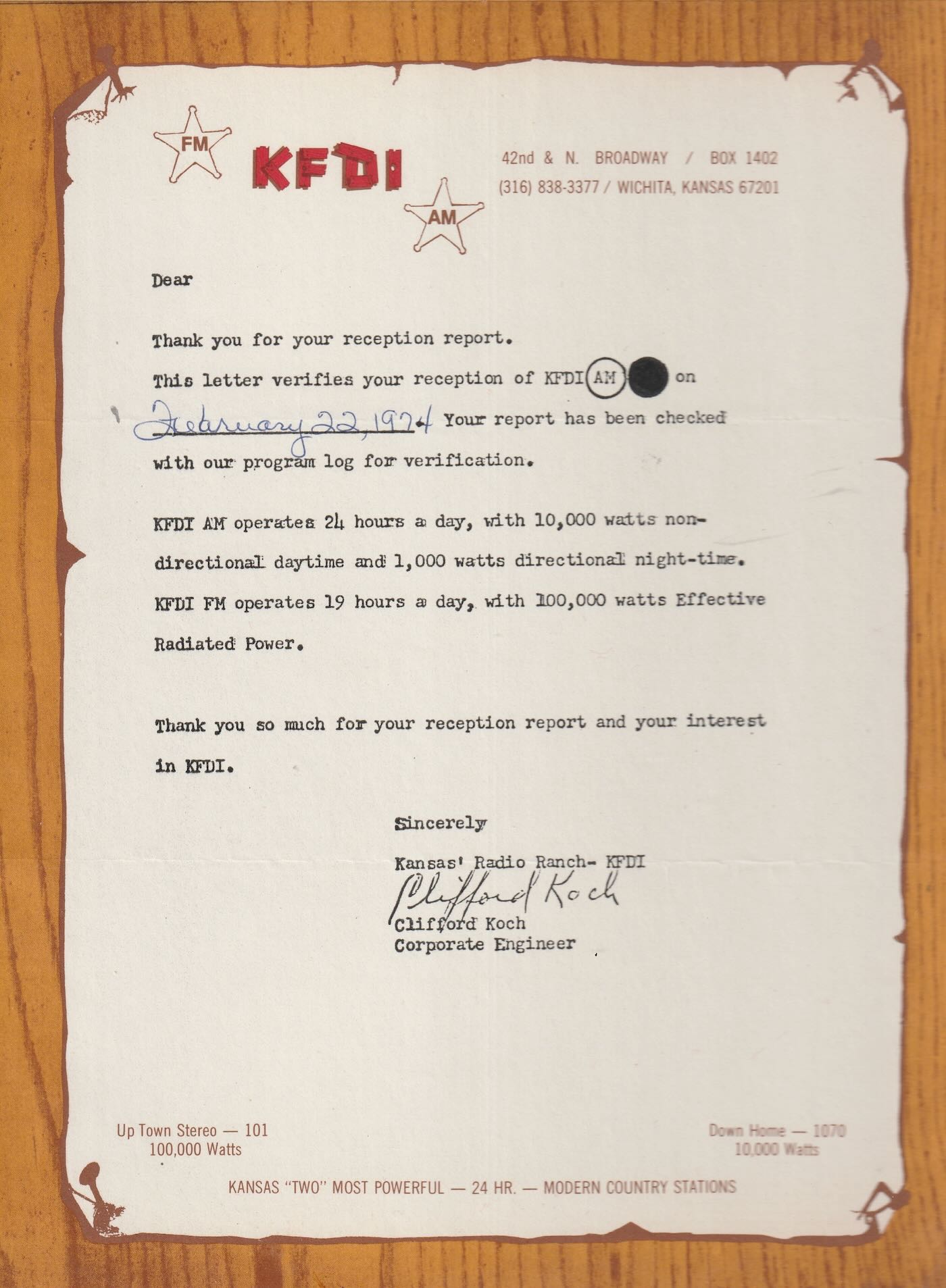
A brief aircheck from KFDI Radio 1070 in Wichita, Kansas as heard in Ancaster, Ontario, Canada on February 22, 1974. Receiving equipment was a Realistic DX150A using a longwire antenna.

WDXR Paducah, KY 1974

WDXR radio in Paducah, Kentucky is heard signing off for their broadcast day. This recording was made circa 1974 while they were operating on 1560 kHz. Receiver location was Ancaster, Ontario, Canada and equipment was a Realistic DX150A and longwire antenna.

WANN Annapolis, MD 1974

A brief aircheck of WANN radio in Annapolis, Maryland heard here signing off for their broadcast day. The recording was made circa 1974 while they were operating on 1190 Khz, A lucky catch for me since WOWO in Fort Wayne, Indiana was usually heard on 1190. Receiver location was Ancaster, Ontario, Canada, (40 miles SW of Toronto) and equipment used was a Realistic DX150A and a longwire antenna.

WCPC Houston, MS circa 1974

One of the easiest ways to log the state of Mississippi on the AM broadcast band in the 1970’s from my location near Hamilton, Ontario, Canada, was WCPC in Houston, MS on 940 kHz around local sunset. Here they are giving a station ID as heard on a Realistic DX-150A receiver and a long wire antenna.

XEMO Tiajuana, Mexico circa 1971

Here is a brief English language aircheck from radio station XEMO in Tiajuana, Mexico as received in Ancaster, Ontario, Canada (a distance of 3392 km or 2108 miles) circa 1971. They were broadcasting on their frequency of 860 kHz. At the very end, there is a quick “X E M O Tiajuana Mexico” in Spanish.

WGR Buffalo, NY 1973

Here is a brief aircheck/jingle from radio station WGR in Buffalo, New York on 550 kHz as recorded in 1973 at Ancaster, Ontario, Canada. That same year, the song “Get Down” by Gilbert O’Sullivan reached number 7 on the Billboard Top 100, and WGR aired it regularly as heard here in the second recording, Most of the time they would just ID as “GR-55”.

Vintage AM radio airchecks 1975 recorded from Bermuda

These brief vintage AM broadcast band airchecks were recorded in March 1975 while vacationing in Warwick, Bermuda at the Belmont Hotel.
1. ZDK, Antigua, West Indies 1100 kHz
2. WKAQ, San Juan, Puerto Rico 580 kHz
3. Radio Paradise, Basse Terre, St. Kitts, West Indies 1265 kHz
4. WHN, New York, NY 1050 kHz
5. WKBR, Manchester, NH 1250 kHz
6. WRKO, Boston, MA 680 kHz
7. CFBC, St. John, NB, Canada 930 kHz

KKJO St. Joseph, MO 1973

In the wee hours of October 28, 1973, this DX recording was made of radio station KKJO in St. Joseph, MO broadcasting on 1550 kHz in the AM broadcast band. My receiving post was some 800 + miles distant in Ancaster, Ontario, Canada. I was using a Realistic DX150A communications receiver hooked up to a long wire antenna. You can hear the station fade gradually in and out a number of times during the recording, but fortunately faded in around the 2:49 mark to catch their station ID and announcement about returning to Central Standard Time. Paul Simon’s “Kodachrome” is heard at first, and Art Garfunkel’s “All I Know” afterward, 2 very popular songs in 1973.

KRLD Dallas, TX 1974

KRLD in Dallas, Texas on 1080 kHz was not heard often at my listening post in Ancaster, Ontario, Canada during the 1970’s. WTIC in Hartford, CT was normally received on this frequency instead. Here is a recording made in early 1974 when KRLD managed to make it through. My receiver was a Realistic DX150A hooked up to a longwire antenna.

Vintage AM radio airchecks 1973 part 2

Here are a few more airchecks from the AM broadcast band recorded in 1973 at Ancaster, Ontario, Canada unless otherwise noted below.

1. WLW Cincinnati, OH 700 kHz
2. WIRK West Palm Beach, FL 1290 (recorded in West End, Bahamas)
3. WINZ Miami, FL 940 (recorded in West End, Bahamas)
4. WSMB New Orleans, LA 1350 (recorded in West End, Bahamas)
5. WDBO Orlando, FL 580 (recorded in West End, Bahamas)
6. WPOM Riviera Beach, FL 1600 (recorded in West End, Bahamas)
7. KFYR, Bismarck, ND 550
8. KWAM Memphis, TN 990
9. WPTR Albany, NY 1540
10. WOKY Milwaukee, WI 920
11. WIBC, Indianapolis, IN 1070
12. WPDX Clarksburg, WVA 750 (special DX test early hours of Feb. 18, 1974)
13. WMAQ Chicago, IL 670
14. WBT Charlotte, NC 1110
15. WNOE New Orleans, LA 1060
16. WSM Nashville, TN 650
17. WJR Detroit, MI 760

73

Dan Greenall, Ontario, Canada

Click here to view all of Dan Greenall’s Archive.org contributions and click here to browse his collections on the Shortwave Radio Audio Archive.