Category Archives: Radio History

Try that with an iPhone!


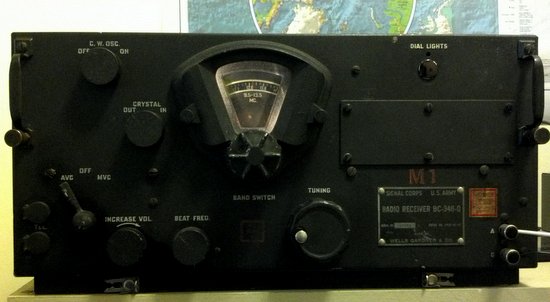
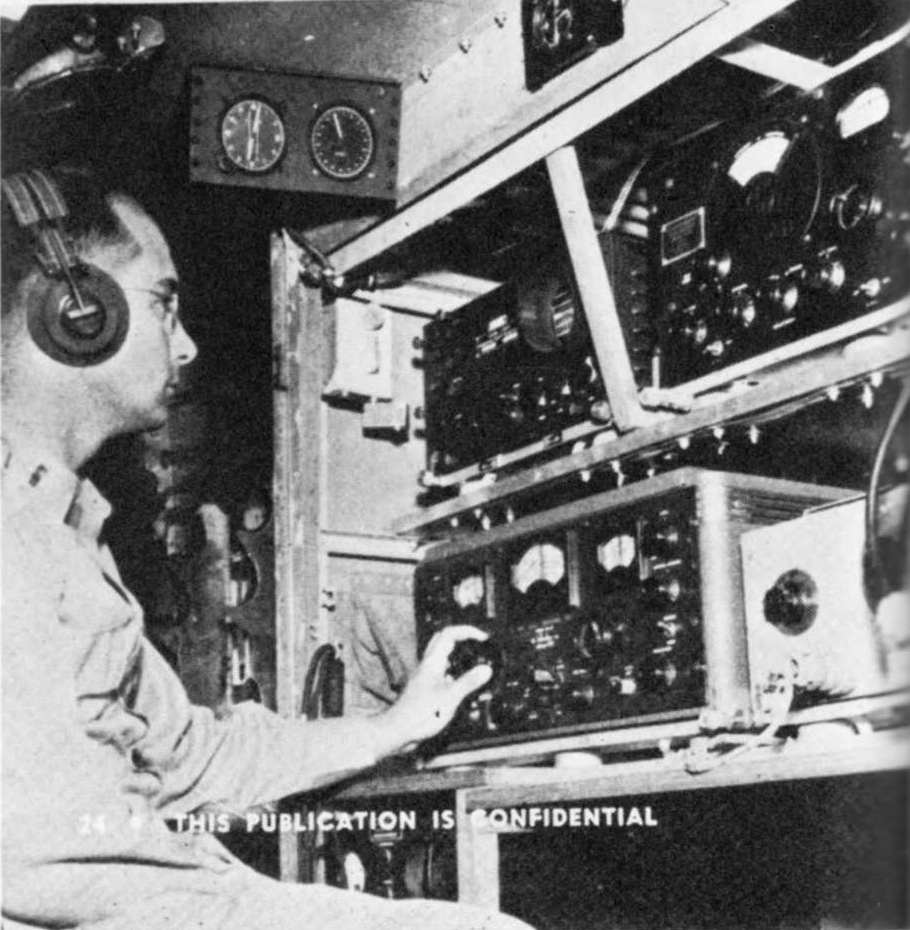
With the help and guidance of my good friend Charlie, we just repaired and aligned this BC-348-Q receiver. BC-348s were built to withstand the extreme temperatures (-60F) and vibrations on board the B-17 and other bombers, where they were used extensively in World War II. I picked this beauty up at the 2012 Dayton Hamvention for $40.

Next year, this radio will be 70 years old.

This morning, I have it tuned to Radio Australia’s Saturday Night Country on 11,660 kHz shortwave. It’s “connecting” to a wireless network over 9,800 miles away and producing beautiful, warm audio.

Try that with an iPhone.

Radio Station SAQ special transmission on United Nations Day, October 24

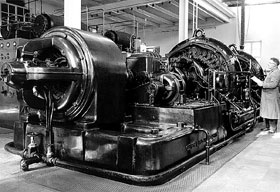
Alexanderson alternator in the SAQ Grimeton VLF transmitter.

(Source: SAQ via Alokesh Gupta)

Transmission on United Nations Day

We have the pleasure to announce that SAQ will be on air on United
Nations Day, Wednesday 24th October. We start the transmitter about
10:10 UTC, and a message will be sent at 10:30 UTC.

The frequency is 17.2 kHz CW.

Reports from the transmission will not be confirmed by QSL card.

The transmission is a part of the celebration of the United Nations Day
in Grimeton, see
http://undayorg.files.wordpress.com/2012/09/unday-english1.pdf

The start procedure will be streamed over Internet, appropriate link
will soon be published here.

BBC celebrates 90 years of radio with a global simulcast, you can contribute

(Source: BBC)

The BBC today announced plans for an unprecedented global simulcast across its radio networks – including every UK station (local, network and national) and many World Service outlets – curated by Damon Albarn to mark 90 years of radio.

The simultaneous broadcast, called Radio Reunited, will take place on November 14 at 17:33 GMT – 90 years since the first broadcast from the British Broadcasting Company in 1922 – to a potential global audience of 120 million people across every inhabited continent.

The three-minute transmission will be based on recorded messages from listeners around the world on the theme of the future. Each of an estimated 60 BBC radio stations will choose one message and many of them will then be mixed together and set to a musical score specially composed by the Blur frontman.

It will form the centrepiece of the on-air celebrations to mark 90 years of BBC Radio, which will also feature a wide range of special programming across BBC stations, full details of which will be announced nearer the time.

[…]Damon Albarn said: “I love the idea of stations across Britain and the World Service coming together, with all of our different lives and circumstances, even if it’s only for a few minutes. It’s a powerful idea.”

Radio Reunited is one of the key broadcasts to mark the anniversary. Two of the other major programming projects launched today to celebrate 90 years of BBC radio are:

– The Listeners’ Archive – on October 11 the BBC begins a major initiative to recover the lost gems of the broadcasting archive by calling an ‘amnesty’ on recorded media.  Listeners are asked to scour their lofts, garages and cupboards for tapes, cassettes and other recordings of BBC radio programmes from 1936 to 2000, and hand them in at BBC Centres around the UK on ‘Amnesty Day’. BBC Radio 2, BBC Radio 4, BBC Radio 5live, BBC Local Radio in England and the BBC Nations are all involved. Central to the project will be a series of shows on Radio 2 and 6 Music around the 90th anniversary, where clips of the recovered content – and possibly whole programmes – will be played, and introduced by the person who originally recorded them. [Continue reading…]

The BBC has full details of how you can participate.  I would hope that there are some readers of the SWLing Post who may have recordings to share for The Listener’s Archive. I believe I have some old recordings of the BBC WS on New Year’s Eve 1999–if I can only find them!

Swiss Short Wave Service archives now online

(Photo: SwissInfo.ch)

(Source: swissinfo.ch)

During the Second World War, Switzerland’s fledgling short wave radio service was essential to its attempts to communicate its policies and actions to an external audience made up of both foreign governments and the Swiss abroad.

The archives of the Short Wave Service (SWS), founded in 1935, have been digitalised and are now available online (See link). SWS was the forerunner to Swiss Radio International (SRI) which later became swissinfo.ch.

The manuscripts of news bulletins from this dark time in Europe reveal Swiss thinking on events both out of its control and right on its doorstep as the country desperately held on to its beloved neutrality.

In Switzerland’s national languages (German, French, Italian) as well as English, Spanish and Portuguese, SWS broadcast news and analysis of military events on both sides.

It also reported on living conditions of Australian, New Zealand, South African and American POWs interned in mountain retreats, and issued sharp rebukes of external criticism of Swiss government policy.

“Switzerland finds herself today in one of the most peculiar situations of her long history. From a certain viewpoint, she is surrounded by one power only. From another viewpoint, she is surrounded, among others, by three defeated powers: Austria, France and Italy. Under these circumstances Switzerland has remained true to her traditional role of guardian of the Alpine passes,” began an English broadcast from Hermann Böschenstein in the wake of the fall of Mussolini in 1943.

The same broadcast went on to discuss dashed hopes that Italy’s fall would see a reopening of transport routes to the sea, praised the Swiss influence of the International Red Cross as “incontestable”, and noted that “all-out” training of Swiss army troops had resulted in “quite a few casualties lately” with the use of flame-throwers being responsible in some cases.

Treasure trove

Lausanne University’s François Vallotton, a specialist in contemporary audio-visual and media history in Switzerland, was unable to resist the lure of such a treasure trove of documents.

Vallotton, whose work focuses in particular on the Swiss Broadcasting Corporation (SBC) – the parent company of swissinfo.ch – convened a seminar to undertake initial research on the SWS archive documents.

The archives, which have been formatted into a database searchable by keyword, are particularly interesting for historians because the historiography of international radio services has not yet been developed, particularly in Switzerland.

Vallotton says analysis of the archives is unlikely to reinvent what is already known about Switzerland during the Second World War, but: “What is interesting is that it is a source that allows us to see the image that Switzerland wanted to present to the outside world.”

“That is something that is really new because before we examined local media which was aimed at the Swiss public.”

Broadcasts by SWS at that time were also notable for the fact that they were the first news bulletins produced by a dedicated radio editorial team; previously news bulletins had been written and read by journalists from the Swiss News Agency, a press organisation.

“The service treated events in a different manner than to the local media,” says Raphaëlle Ruppen Coutaz, who is doing his doctorate on the subject. “For historians, it’s precious because it is the only Swiss media outlet to address those abroad during the war.” [Continue reading…]

I have really enjoyed looking through the archives. Of particular interest are the corrections that were made before reading the news.  They’re all there.

The actual archive database can be found here.

Read the full article at swissinfo.ch.

The connection between Hallicrafters and 1940s electronic warfare

A B24’s Hallicrafters S27 (Photo: AAFRadio.org)

One of my favorite ham radio blogs is that of John (AE5X). Like me, he’s a QRPer–meaning, as amateur radio operators, we love making contacts across this great globe of ours using very low power…typically 5 watts or less. The challenge is fun, the medium is magical.

John’s also a radio historian and shortwave radio listener. Yesterday, he posted a most fascinating look at how the Hallicrafters S27s played an important role during World War II countering very innovative radio guidance techniques by the Third Reich.

You should bookmark John’s blog, as he post many radio related topics that the SWL would find enjoyable, whether it be about numbers stations, QSLs or even his own experience learning Russian via shortwave.

But first, read: Hallicrafters and electronic warfare in 1940 on 10 meters. . .or, an ‘Aspirin’ for the ‘Headache’

Shortwave Radio History: 50 years of transmitting at BBC Woofferton

Click here to download your copy.

Thanks to the efforts of a dedicated radio historian and author, Jeff Cant, you can download and read an excellent history of the first fifty years of the BBC’s Woofferton transmission station. Cant began his history as an internal document to the station; he later finished it in his retirement. I wish every shortwave transmitter station had such a well-documented history providing a perspective on the station’s broadcasting. We owe Mr. Cant a profound debt of gratitude.

To download the PDF, simply click here.

A special thanks to Jonathan Marks for finding and sharing this great bit of radio history.

Should the link to the PDF above ever become inactive, I’ve placed an archive copy available for download on the SWLing Post server.

Jeffrey revives an old friend, his Hallicrafters SX-110

SWLing Post reader, Jeffrey Fritz, sent me the following message and has kindly allowed me to share it with other readers. I’mthoroughly inspired!
Bottoms up! Considering how old this receiver is, the chassis bottom (still with the original power cord) really is clean. This is how the bottom of the chassis looked when I removed the receiver from its metal cabinet.

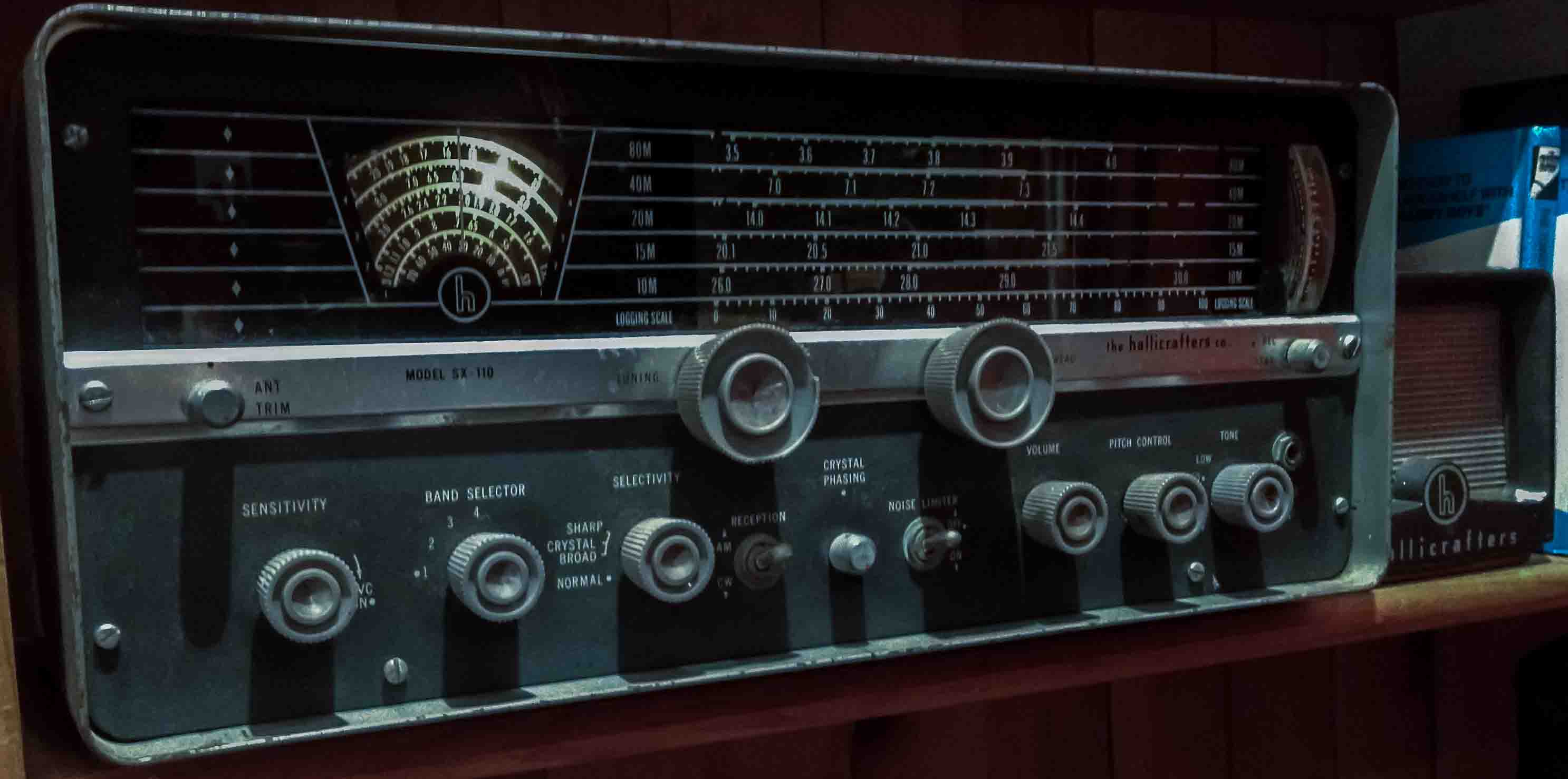
As a teenager in the 1960s I spent a considerable amount of time SWLing on a Hallicrafters SX-110 communications receiver. I collected QSL cards from all over the world and loved being an SWL.

The SX-110 was purchased on 9 September 1961 from Gem Electronics in Farmingdale, Long Island, New York. My parents bought it for me, probably after a great deal of whining and cajoling on my part. Although much of my gear has long since been sent to some landfill by my parents, like my precious Lionel trains, I would not allow them to trash the SX-110.
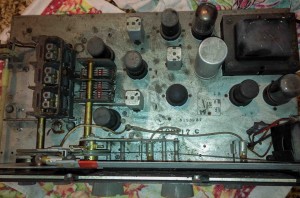
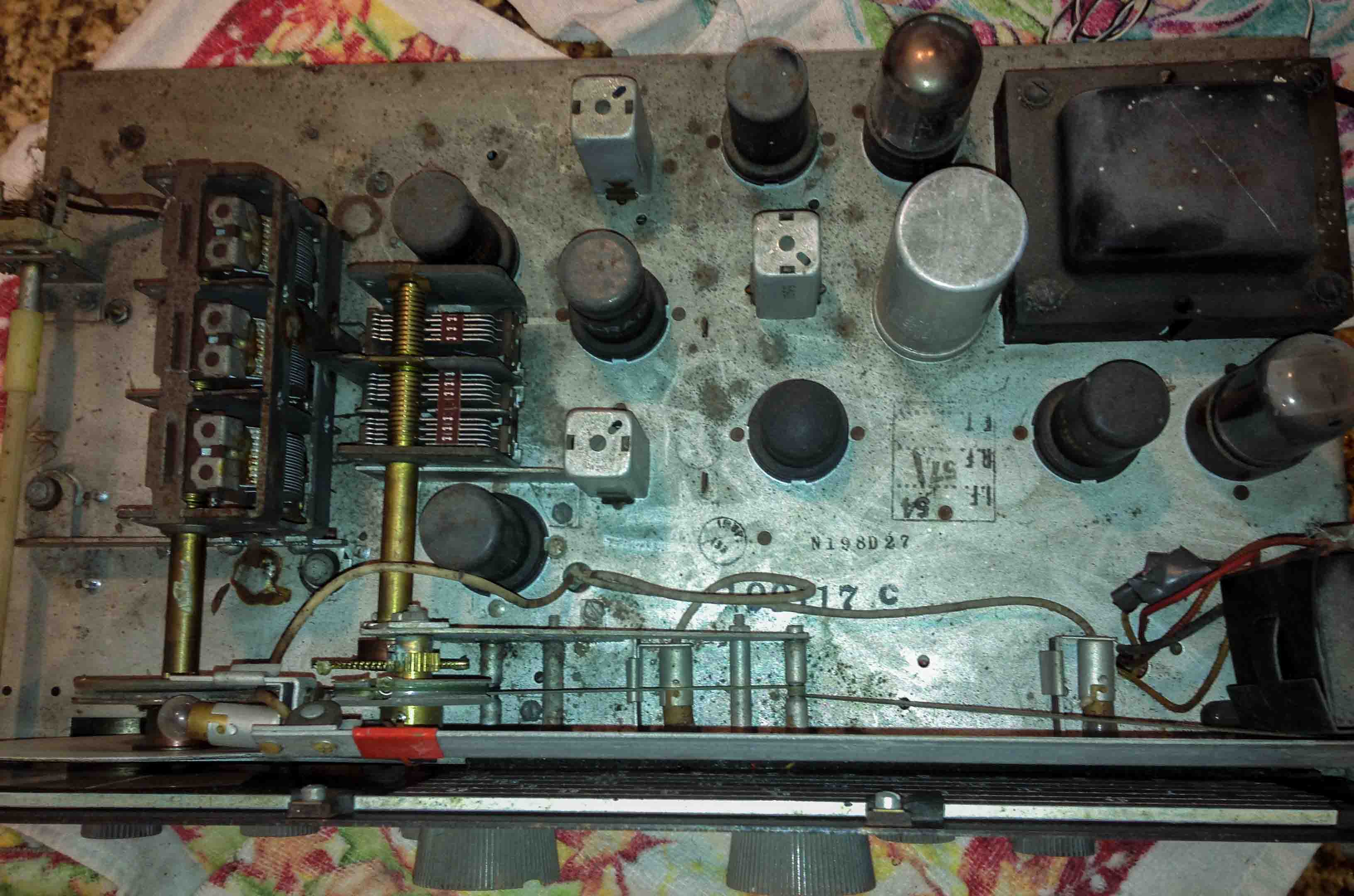
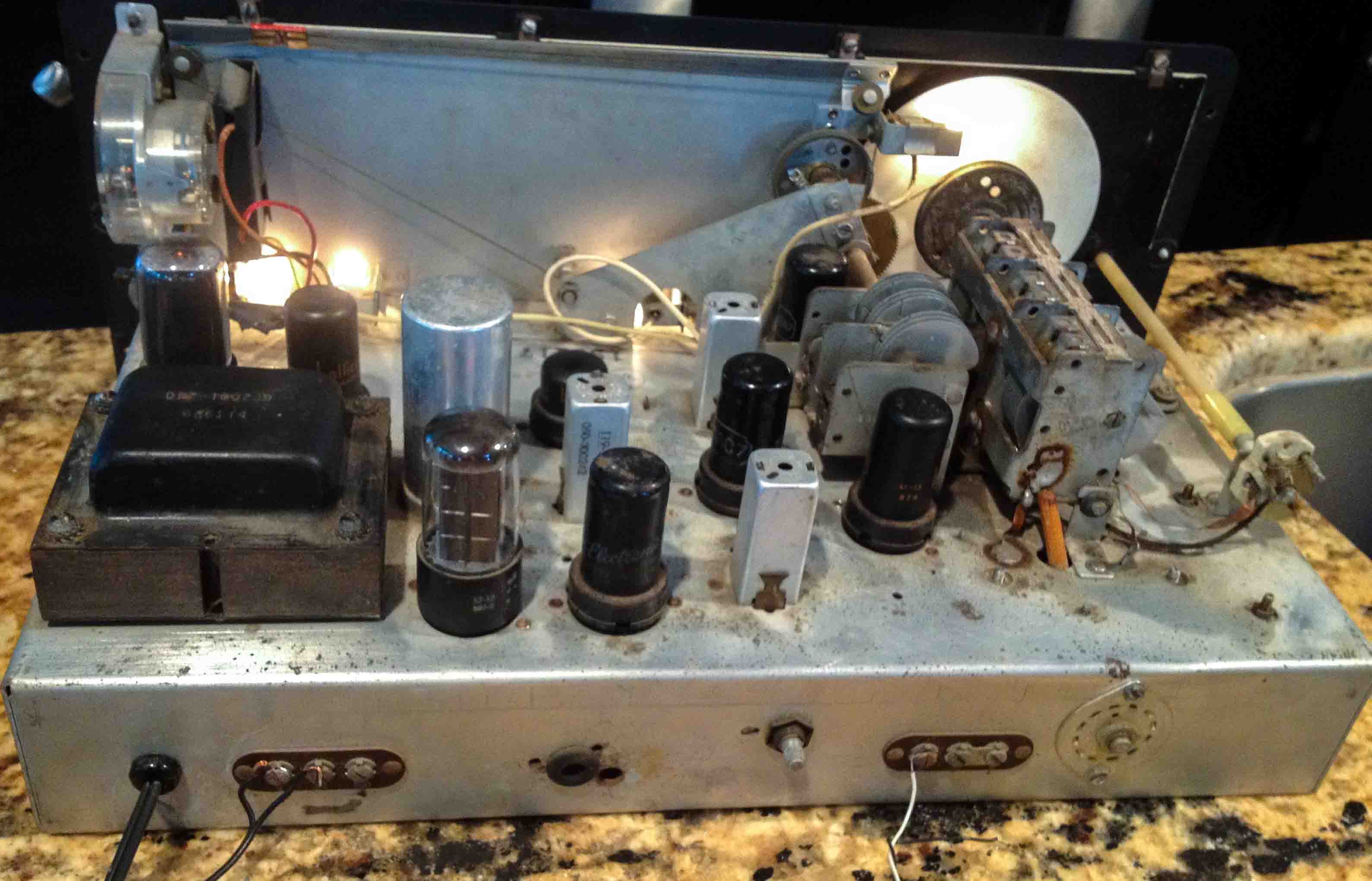
The top of the chassis, however, is not as clean. Some elbow grease will clearly be required.

The radio has been sitting in one basement or another, unused for the better part of 30 years.

Yesterday I decided to try bringing the radio back to life. Restoring this kind old receiver was a labor of love. The receiver was carefully looked over and tested with a VOM for bad components and the top of the chassis cleaned as best I could. The bottom was pristine. I just needed to clean out a few cobwebs and replace the power cord.
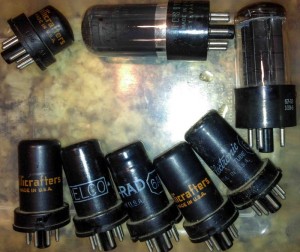
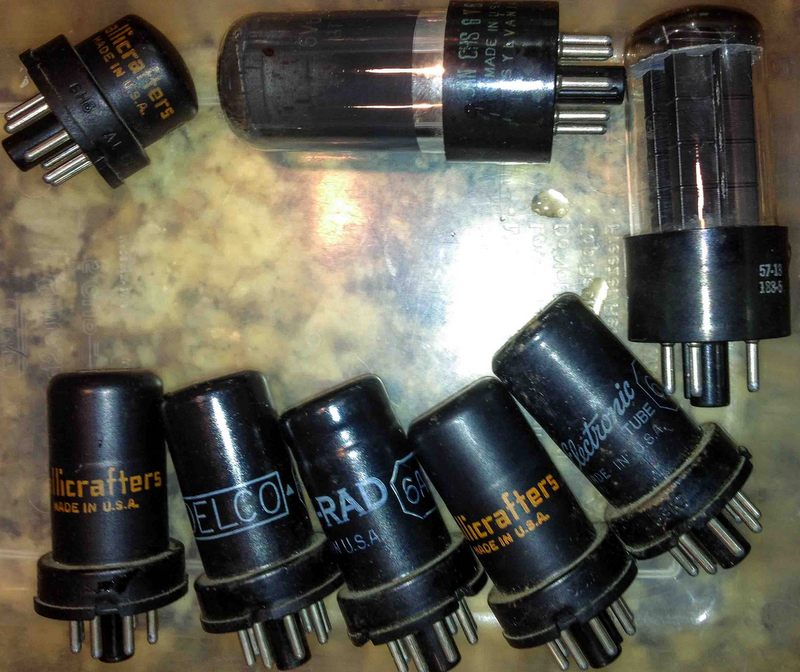
All eight tubes. Note the three original Hallicrafters tubes with the orange labeling.

After being cleaned up and several components tested, the SX-110 was slowly brought back to life on a Variac. I started at 10 volts AC and slowly increased the voltage every ten minutes by another ten volts. When I got to about 90 VAC, I could hear static and distorted audio coming out of the speaker. It was a good sign that the radio would come back to full operation once I reached the normal 110 VAC input–and that is exactly what occurred.

I am happy to report that, with a little patience and love (and a good cleaning) –and with three of the original Hallicrafters tubes still in place, my trusty old Hallicrafters SX-110 shortwave receiver is happily working today. I have it connected to its original Hallicrafters R-47 3.3 ohm speaker.
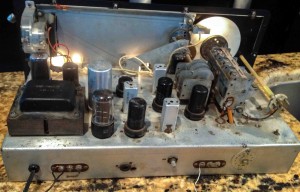
The top chassis is cleaned as much as possible. Not perfect, but a little cleaner than before. We now have about 110 volts applied through the Variac. No smoke but we do have lights!

Yesterday evening I listened to Radio Taiwan, Radio China International, Radio Havana Cuba, The Voice of Turkey and The Voice of Russia. The audio quality was rather decent without a hint of AC hum. The radio is probably due for a good alignment. I am running the radio on the Variac set at 110 volts AC and will probably keep it on the Variac because the AC voltages today in the U.S. are significantly higher than they were in 1961.

Even the XYL thinks that the radio sounds terrific! What better recommendation can there be for this old, vintage receiver?

73, Jeffrey Fritz, WB1AAL
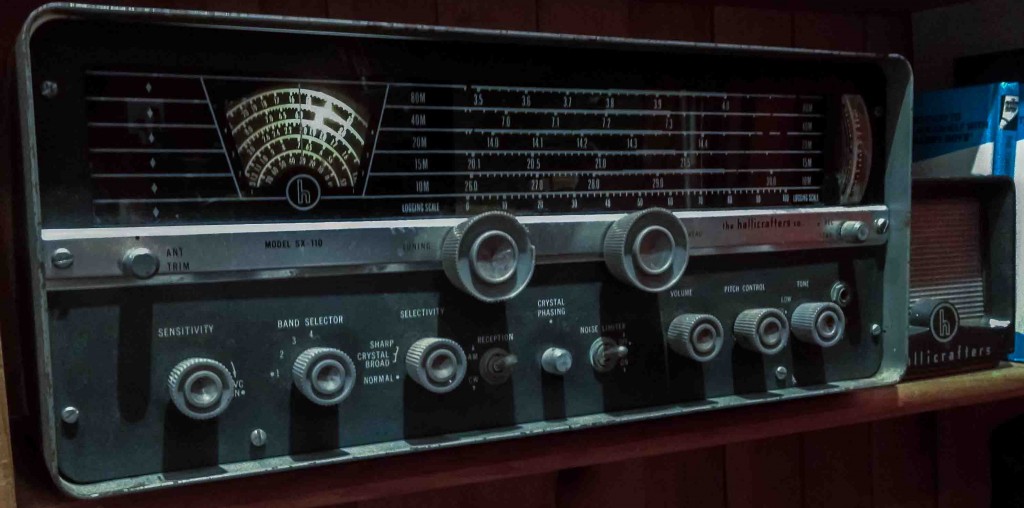
The restored SX-110 sitting on the bookshelf in the shack. No one would mistake this for a new receiver, but it works just fine.

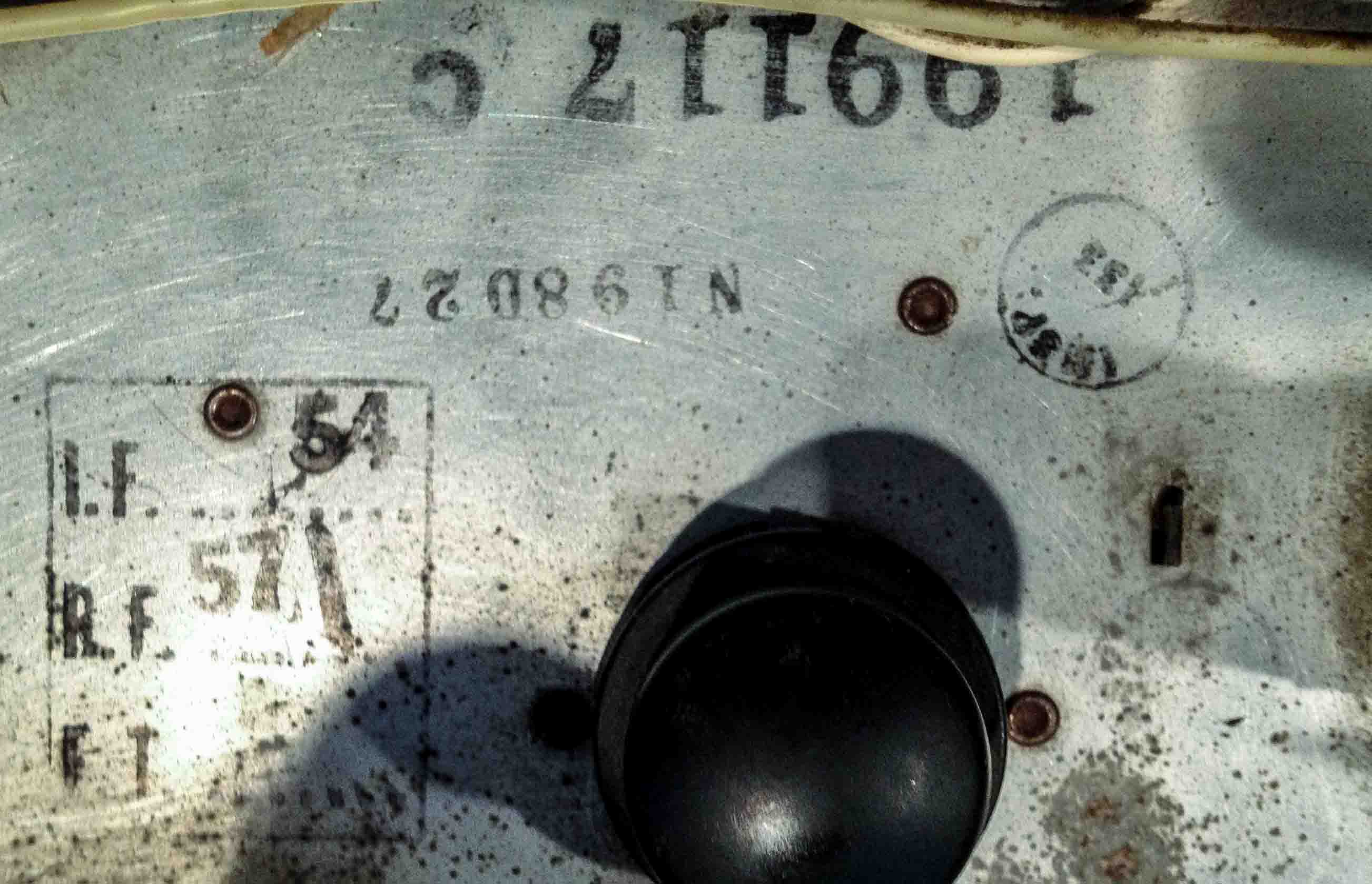
PS–Jeffrey also mentioned to me: “If you look closely at the chassis stamp photo of the SX-110, you can see a stamp that reads ‘199117 C.’ This is the manufacture date of the receiver. The fourth digit is the year, and the fifth and sixth digits are the week of the year. So, 199117 is the 17th week of 1961 or the week of 23 April 1961.”

Very interesting. Now I need to examine a few of my own Hallicrafters receivers…
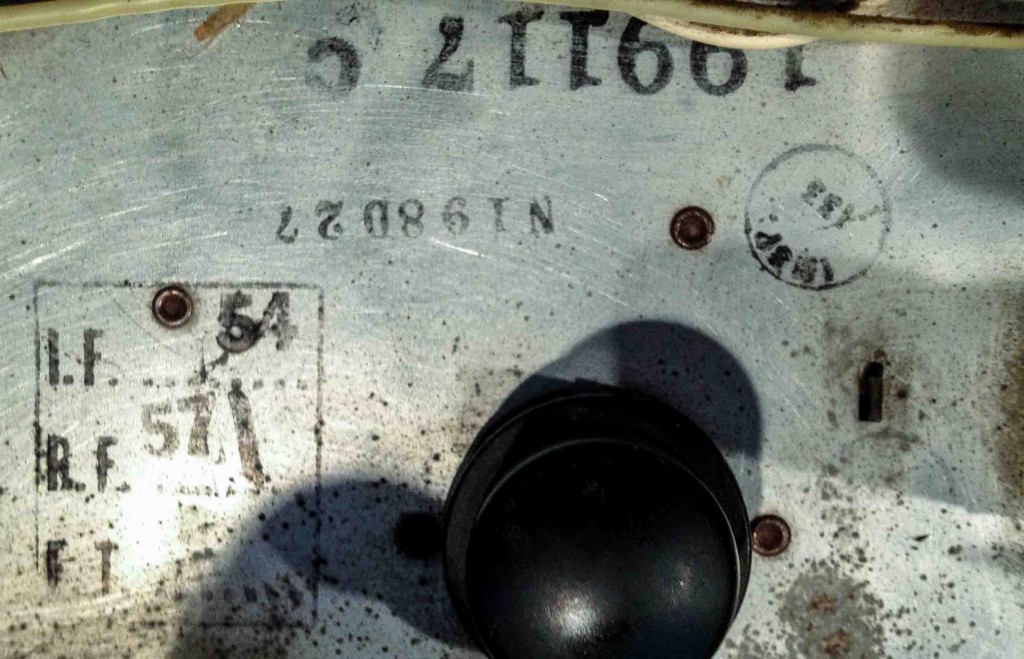
Close up of the inspection stamps. Do modern rig manufacturers take time to do this now?