Category Archives: Radio History

Guest Post: Don targets rare Norwegian stations during Newfoundland DXpedition

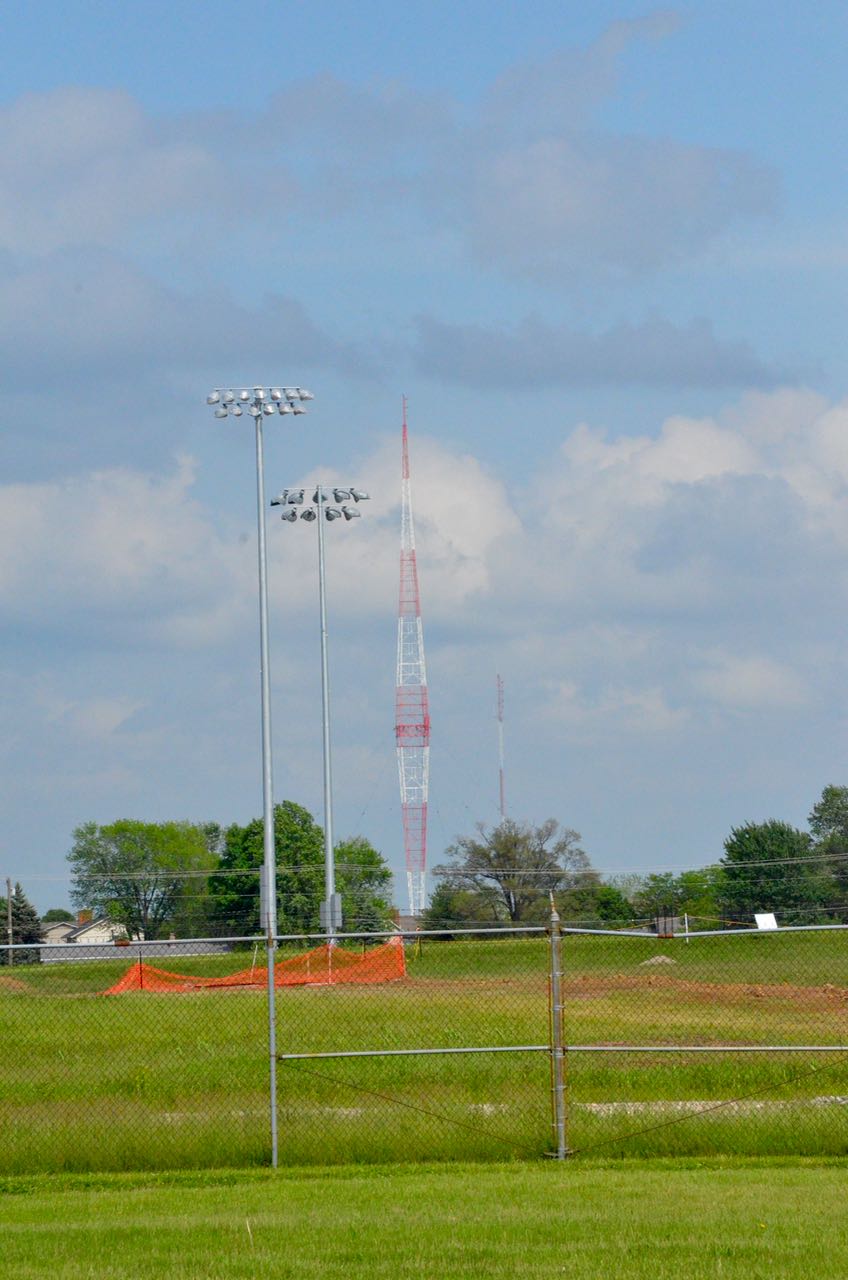
Photo by the Bjørnøya Meteorologiske Stasjon

Many thanks to SWLing Post contributor, Don Moore–author of  Following Ghosts in Northern Peru–for the following guest post:


The Rarest DX?

By Don Moore

In mid-October I received an invitation to attend the annual DXpedition in Cappahayden, Newfoundland with Jean Burnell, John Fisher, and Jim Renfrews. It didn’t take long for me to say yes. Newfoundland is one of the best places in the world to DX from and all kinds of amazing stuff has been heard there. I was excited at the prospect of great medium wave DX and being able to log low-powered European private and pirate shortwave broadcasters.

But something else was at the top of my try-for list. One of my many DX interests has always been logging coastal marine stations in the 1600 to 3000 kHz range. In preparation I started checking online sources to update my spreadsheet of schedules. In going through a recently added section on Marine Broadcasts in the DX Info Centre website I came across listings for twice-daily weather broadcasts from Hopen Island on 1750 kHz and Bjørnøya (Bear Island) on 1757 kHz.

I didn’t remember ever seeing anything about broadcasts from these remote islands in the Norwegian Arctic before. Were these stations actually on the air, I wondered. And if they were, could I hear them in Newfoundland? Continue reading

Radio Waves: First Transatlantic Signal 120 Years Today, 100 Years of German Radio, NASA Laser Communications, and Ham Transmitter on the Moon

Marconi watching associates raising the kite (a “Levitor” by B.F.S. Baden-Powell[47]) used to lift the antenna at St. John’s, Newfoundland, December 1901 (via Wikipedia)

Radio Waves:  Stories Making Waves in the World of Radio

Because I keep my ear to the waves, as well as receive many tips from others who do the same, I find myself privy to radio-related stories that might interest SWLing Post readers.  To that end: Welcome to the SWLing Post’s Radio Waves, a collection of links to interesting stories making waves in the world of radio. Enjoy!

Many thanks to SWLing Post contributors Trevor R, Andrea Bornino, Wilbur Forcier, and the Southgate ARC for the following tips:


First radio transmission sent across the Atlantic Ocean (History.com)

Italian physicist and radio pioneer Guglielmo Marconi succeeds in sending the first radio transmission across the Atlantic Ocean, disproving detractors who told him that the curvature of the earth would limit transmission to 200 miles or less. The message–simply the Morse-code signal for the letter “s”–traveled more than 2,000 miles from Poldhu in Cornwall, England, to Newfoundland, Canada.

Born in Bologna, Italy, in 1874 to an Italian father and an Irish mother, Marconi studied physics and became interested in the transmission of radio waves after learning of the experiments of the German physicist Heinrich Hertz. He began his own experiments in Bologna beginning in 1894 and soon succeeded in sending a radio signal over a distance of 1.5 miles. Receiving little encouragement for his experiments in Italy, he went to England in 1896. He formed a wireless telegraph company and soon was sending transmissions from distances farther than 10 miles. In 1899, he succeeded in sending a transmission across the English Channel. That year, he also equipped two U.S. ships to report to New York newspapers on the progress of the America’s Cup yacht race. That successful endeavor aroused widespread interest in Marconi and his wireless company. Continue reading

Radio Preservation Task Force announces partnership with the Shortwave Radio Audio Archive and Radio Spectrum Archive

I’m honored to announce that the Shortwave Radio Audio Archive and the Radio Spectrum Archive are now partners of the Radio Preservation Task Force.

Click here to read the official press release.

To say that I’m enthused would be an understatement:  the Radio Preservation Task Force has, as of today, officially partnered with the Shortwave Radio Audio Archive and Radio Spectrum Archive.   

When I learned that the Library of Congress’s National Recording Preservation Board created the Radio Preservation Task Force (RPTF) in 2014, I became an enthusiastic contributor early on, having started a modest preservation project myself only a few years prior.  Then, a partnership like the one created today would have been one of dreams.

As many of you here know, I’m not only passionate about technologic innovations in our radio space, but also preserving our past.

Shortwave Radio Audio Archive

It was in 2012, in response to a round-table discussion at the Winter SWL Fest, that I created the Shortwave Radio Audio Archive (SRAA). Many of us in the radio community were concerned about the number of original, made-from-home, off-air shortwave radio recordings (airchecks) that we knew were in existence, yet were simply disappearing with the passage of time. We were well aware of members of our community who had either passed away or downsized, and many of their recordings––some of pivotal world events––were being tossed out by well-meaning loved ones or friends who simply didn’t understand their relevance. In addition, many of these recordings were captured on magnetic tape, which becomes brittle with time; we knew these recordings were literally turning to dust.  I felt I had to do something.  The SRAA was that something.

Fortunately for me, the SRAA’s mission has really resonated within our radio community. Today, we have thousands of off-air recordings, all freely available to everyone. The recordings can be downloaded directly from the archive, but many listeners simply subscribe to the SRAA Podcast and receive each recording automatically, as it is published.

Turns out, the archive also attracts the interest of individuals outside of our radio world including historians, musicians, and filmmakers. Indeed, the archive has even been reviewed in The Wire Magazine by a music critic as an audio resource for electronic musicians. At time of posting, the SRAA is the inspiration for artists in the latest Cities and Memory project Shortwave Transmissions.

The archive is not, nor has ever been, monetized; it has no commercial sponsorship, and is completely funded by its contributors. It is free and open to everyone.

I’m exceedingly grateful to our many contributors who continue to unearth absolutely amazing off-air recordings. Our SRAA contributors are true champions of preserving our radio heritage in a space that will long outlast us.  We’ve taken measures to ensure that multiple archivists have full access to the site, so its existence isn’t dependent on any one individual. We also actively seek organizations and educational institutions who can house redundant copies of the Archive.

And still it grows.

Radio Spectrum Archive

Compared with the SRAA, the Radio Spectrum Archive (RSA) is still in its infancy.  But it, too, is growing, and the reason for this steady and growth is the existence of its contributors and other supporters.

Of course, while audio recordings––like those in the SRAA––are relatively small (often between 2 – 120 MB), spectrum recordings are larger by orders of magnitude.

As you might imagine–even in 2021/2022–it is not a simple task to digitally archive and share/move 20GB to 2 TB collections. We are incredibly fortunate in that the Internet Archive supports the RSA and gives us valuable real estate on their servers to preserve and share recordings.

With time, this collection will grow and become a resource for everyone. Our hope is that we may even be able to built a web interface (much like those used by Web SDRs) to play back recordings without having to physically download them.

My wholehearted thanks…

Of course, none of this would have been possible without the many contributors from within our radio community. Thank you all so much for being a part of a movement that archives our amazing, and amazingly diverse, radio history. You have made this possible.

Finally, I’m so grateful to the Radio Preservation Task Force––not just for this empowering partnership and what it means to us today, but for the future potential it represents.  It’s clear that we’ve only just begun.

Thank you––thank you––thank you, all.

Thomas Witherspoon

Radio Waves: Life-Changing Song on Radio Australia, NZ Voices in the Air, NIST Test Signal on WWV/WWVH, and 1980s NYC Offshore Pirates

Radio Waves:  Stories Making Waves in the World of Radio

Because I keep my ear to the waves, as well as receive many tips from others who do the same, I find myself privy to radio-related stories that might interest SWLing Post readers.  To that end: Welcome to the SWLing Post’s Radio Waves, a collection of links to interesting stories making waves in the world of radio. Enjoy!

Many thanks to SWLing Post contributors Paul, Dave Zantow, Mark Fahey, Jerome van der Linden, and Phil Brennan for the following tips:


A former Chinese soldier turned artist explains how a song on Radio Australia changed his life (ABC)

It was 1979 and Jian Guo was stationed at a military camp in Yunnan, a province in south-western China bordering Vietnam, when he listened to Radio Australia for the first time.

The then-17-year-old was patrolling the base one night when he saw a group of fellow People’s Liberation Army (PLA) soldiers tuning radio equipment on the back of a truck.

He initially thought they were intercepting enemy signals, but, as he got closer, he realised they were listening to a radio broadcast.

It was the ABC’s international broadcasting service, which was considered an “enemy channel” at the time.

“The so-called ‘enemy channels’ included almost every station outside mainland China,” Guo told the ABC.

“The biggest ones were the VOA [Voice of America] from the US, Voice of Free China from Taiwan, and Radio Australia.”

Guo had joined the PLA in 1979 during the peak of the Sino-Vietnamese War but, thanks to his talent in the arts, he was chosen to be a secretary of his company, so he could avoid fighting on the battlefield.

Apart from painting propaganda materials, he also looked after weapons and communication equipment like the radios, which was an extraordinary privilege.

He was not supposed to use the equipment he maintained, and was fearful of breaking the rules, but after seeing his comrades listening to the Australian broadcast the curiosity grew inside him.

One night, alone in his room, he turned on a radio.

It took a while for him to find the right frequency, because of the interference put out by China, but then suddenly he was listening to Radio Australia and the song that would change his life.

“It was broadcasting The Moon Represents My Heart by Teresa Teng,” Guo said.

“That was the first time I knew such music existed in the world.” [Continue reading…]

Voices in the Air: Sarah Johnston on 100 years of radio (RNZ)

Kia ora koutou k?toa. Thank you to RNZ and National Library for organising this celebration of the start of radio in New Zealand, 100 years ago tonight.

Tonight is something of a game of two halves: first I will talk about the first broadcast of voice and music by radio and the start of radio broadcasting in this country – and then I’m also going speak about a research project I am working on, radio recordings made of New Zealand’s forces overseas during World War II.

I have always been a huge fan of radio, ever since childhood listening to the Weekend children’s request sessions, and then as a teenager, eating my breakfast with Morning Report coming out of the family transistor beside me. As a radio journalist I became one of those voices and worked for RNZ and Deutsche Welle in Germany, where I experienced the power of voices coming out of the air from the other side of the world. And as a sound archivist working with the Radio New Zealand archives, I learnt that that power of the voice doesn’t diminish with time – listening to a voice from 80 years ago can transport you not just through space but also time. Sound to me, has a power that in many ways seems different to that of visual images. Continue reading

100th Anniversary of Transatlantic Tests: Special event station using a 1921 replica transmitter

1BCG Transmitter in 1921 (Source: 1BCG.org)

Many thanks to SWLing Post contributor, Mark (AE2EA), who shares the following announcement:

2021 marks the 100th year anniversary of the historic Transatlantic Tests, where radio amateurs using the call sign 1BCG were responsible for the first successful radio communication across the Atlantic Ocean on “short waves.”

On December 11, 2021 the Antique Wireless Association will recreate these historic transmissions on 160 meters from the Vintage Radio and Communications Museum of Connecticut, using a replica transmitter constructed by volunteers at the Antique Wireless Association. This special event is your opportunity to relive a historic moment in amateur radio history.

More information can be found here http://1BCG.org

Here’s a summary:

The 1BCG replica transmitter will be operating as W2AN/1BCG on 1.820 MHz, plus or minus, using CW, from The Vintage Radio and Communications Museum of Connecticut. Transmissions from W2AN/1BCG will be one-way, just like the original transatlantic tests in 1921. You can get a SWL certificate for this Special Event by sending a copy of the transmitted message to [email protected]

Schedule: Transmissions start on December 11, 2021, on 1.820 MHz, +/-, at 1800 EST or 2300 UTC, then every 15 minutes thereafter for a total of five hours thusly; 1815, 1830, 1845, 1900, 1915, 1930, 1945, 2000, 2015, 2030, 2045, 2100, 2115, 2130, 2145, 2200, 2215, 2230 and the last transmission at 2245 EST.

Mark ~ AE2EA
Antique Wireless Association

I will definitely be listening! Thank you so much for sharing this, Mark!

Video: Jonathan Marks and Andy Sennitt on Amsterdam Radio Day in 2011

RNW headquarters in Hilversum, Netherlands (photo courtesy: Former RNW)

Many thanks to SWLing Post contributor, Mike Barraclough, who shares the following:

[Here’s a video] link to Jonathan Marks and Andy Sennitt talking about Media Network at the Amsterdam Radio Day in 2011, a meeting I attended.

Those annual events were mostly panels about offshore radio:

Thank you so much for sharing this, Mike!  I was not attend this gathering, so it’s wonderful to do a little time travel!

Radio Waves: Broadcast v Ham Radio, Marjorie Stetson’s Secret Wartime Work, Czech Republic MW Switch-Off, and PV RFI

Radio Waves:  Stories Making Waves in the World of Radio

Because I keep my ear to the waves, as well as receive many tips from others who do the same, I find myself privy to radio-related stories that might interest SWLing Post readers.  To that end: Welcome to the SWLing Post’s Radio Waves, a collection of links to interesting stories making waves in the world of radio. Enjoy!


Alike, but Not Alike: Broadcast vs. Ham Radio (Radio World)

Experience in amateur radio can be a boon to the radio engineer

Starting in the 1920s and through the ’60s, almost every broadcast engineer was a licensed amateur radio operator. That has changed a bit, but the importance of being a ham has not.

Both environments involve getting an RF signal from Point A to Point B. But it is interesting to note that radio broadcast and amateur radio are similar and yet so different.

For those who don’t know much about ham radio, I’ll tell you that communicating locally or internationally, via licensed amateur radio, can be a fascinating and challenging hobby. There are about 700,000 hams in the U.S. and an equal number worldwide.

Physics

Broadcast and amateur radio operate under the same laws of science. Transmitters, transmission lines, antennas and receivers make up an RF path to convey a message.

Broadcast engineers know that signal propagation on AM and FM bands is dramatically different. It is because our FM band is roughly 100 times the frequency and 1/100th the RF wavelength of that on the AM band. Engineers also know that 950 MHz STL signals are line-of-sight and roughly a 10-times jump in frequency from FM broadcast frequencies. Each band has its own challenges in getting a useable signal through. [Continue reading…]

A Canadian opens up about her secret wartime work — eavesdropping on Japan (CBC)

Retired sergeant remembers what it was like on the ‘front line of the radio war’

At age 97, Marjorie Stetson has never told anyone her secret code number — until now.

That’s the identity code — 225 — that she typed on every page of her highly classified work for the Canadian Armed Forces during the Second World War.

The retired sergeant’s wartime work was so covert, she said, she had to sign 15 separate copies of Canada’s Official Secrets Act.

“Nobody knew where I worked,” Stetson told CBC News from her home in Massachusetts ahead of Remembrance Day. “Nobody knew what we did. Even my parents never knew what I did in the service.”

Her husband, an American sailor she met at a celebration marking the end of the war, passed away a decade ago. She never told him what she really did during the war.

Today, Stetson herself is only now learning about the true scope of her role and the significance of all those sheets of white paper she filled with encrypted messages from Japan. [Continue reading…]

Czech Republic: MW Switch-Off by 2021 (Radio Reporter)

Czech public radio ‘?eský Rozhlas‘ is stepping up its information campaign for listeners receiving mediumwave programmes, ahead of the planned switch-off of transmitters by the end of 2021. Since 1 November, more announcements have been broadcast to warn users and a call centre has been set up to explain the possible listening alternatives (from FM to DAB). In the run-up to Christmas, public radio will launch an intensive advertising campaign in the print media and online magazines on 22 November to promote the purchase of digital DAB receivers to replace analogue radio. [Continue reading…]

The impact of photovoltaics (Southgate ARC)

Seamus Ei8EP reports on the IARU Region 1 website that the 358 page Final Report on the Study on the evaluation of the Electromagnetic Compatibility Directive has now been published.

It is publicly available, free of charge, from the Publications Office of the European Union. The Political Relations Committee of the IARU Region 1 responded recently to a European Commission Roadmap on the environmental impact of photovoltaics.

The radio spectrum is an important finite natural resource which must be protected. While PV technology of itself is to be welcomed, the IARU submission pointed out the inherent problems of non-compliant installations, particularly the installation or retro-fitting of optimisers which can produce significant spectrum pollution for very limited efficiency increase.


Do you enjoy the SWLing Post?

Please consider supporting us via Patreon or our Coffee Fund!

Your support makes articles like this one possible. Thank you!