Shortwave listening and everything radio including reviews, broadcasting, ham radio, field operation, DXing, maker kits, travel, emergency gear, events, and more
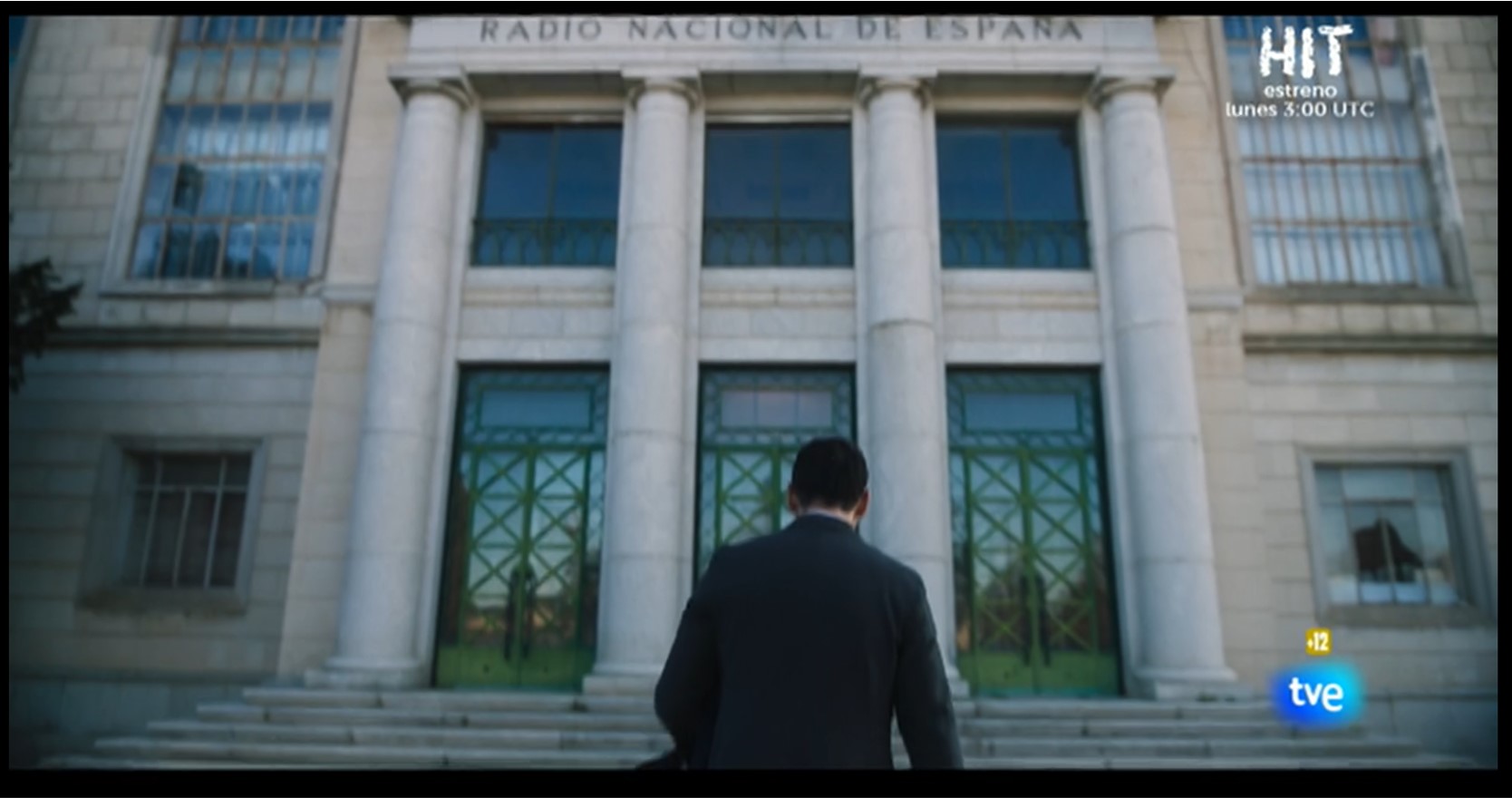
Many thanks for sharing this excellent bit of radio history, Ulis. I was just telling a friend that Radio Exterior de España still has one of the biggest signals out of Europe into North America these days on 9690 kHz.
Radio Waves: Stories Making Waves in the World of Radio
Because I keep my ear to the waves, as well as receive many tips from others who do the same, I find myself privy to radio-related stories that might interest SWLing Post readers. To that end: Welcome to the SWLing Post’sRadio Waves, a collection of links to interesting stories making waves in the world of radio. Enjoy!
Many thanks to SWLing Post contributors John Hoad, Bruce Atchison, and David Korchin for the following tips:
The city of Chelmsford is celebrating its status as ‘the birthplace of radio’ 100 years ago today with a special live stream of a new play about the Marconi Company tests of 1920.
Britain’s first ever radio entertainment broadcast took place on 15 June 1920, and featured two arias by Australian operatic tenor Dame Nellie Melba, one of most famous singers of the late Victoria era. The broadcast from the Marconi Factory was heard all over Europe and picked up as far away as Canada.
To mark the milestone, Chelmsford City Theatre is streaming a radio play The Power Behind the Microphone: The First Live Radio Entertainment Broadcast about the original broadcast, 100 years to the minute at 7.10pm this evening. International opera star Anna Steiger will recreate the concert given by Madame Melba as part of a radio play based on the story of that fateful night and the breakthroughs that made it possible.[…]
Three plaques mark the spot where the “forgotten father of broadcasting” worked.
CHARLES “DOC” HERROLD WAS A pioneer. After founding his College of Engineering and Wireless in 1909 inside the Garden City Bank building at 50 West San Fernando Street in San Jose, California, he launched the world’s first radio broadcasting station, which beamed music, news, and notably, advertising to listeners on a regular basis.
Herrold and his team at Station FN, which included his own wife, the world’s first female disc jockey, epitomized the mantra of many a Silicon Valley startup today: “move fast and break things.” His early transmitting devices burned out one after the other, and Herrold had to use a water-cooled microphone. He stole wattage from San Jose’s street car line to power his innovative “Arc Fone” transmitter, and cut a deal with a local store to play records on a Victrola that he would point at the microphone.[…]
Alfred Vail came up with dots and dashes, but Patent Office gave credit to Samuel Morse, the better known inventor
In 1887, 18 years after his father’s death, Stephen Vail took up metaphorical arms to claim Alfred Vail’s place as a key figure in communications history. Starting a war of words that would last decades and end with a declaration carved into stone, the younger Vail bombarded newspaper editors with letters. Alfred Vail’s son insisted that his dad had invented the dot-and-dash system used in telegraphy and known to all, and most gallingly to the younger man, as “Morse” code.
Before telegraphy, the United States had been more a collection of outposts than a nation—when a treaty ended the War of 1812, word from peace talks in Europe between Britain and the United States took so long to creep across the Atlantic that two weeks after the signatures on the peace treaty had dried British and American troops were fighting the Battle of New Orleans. Until telegraphy arrived for good in 1844, information traveled no faster than horses could gallop, trains could roll, or ships could sail. News from Boston reached San Francisco and vice versa by traveling aboard vessels that had to round South America’s southern tip. Only dreamers spoke of rails crossing North America or a canal traversing the Isthmus of Panama. […]
The overnight purge of top news organization officials at the US Agency for Global Media (USAGM) has raised concern among its federal government employees and reporters that their jobs, immigration status, and editorial independence may soon be at risk following the arrival of new CEO Michael Pack.
Pack, who is a conservative filmmaker and close ally of one-time Trump adviser Steve Bannon, and had just stepped into the job after being confirmed by the Republican-led Senate earlier this month, did not respond to a request by CBS News for comment or explanation.
“Pack uses deep state language. Is Bannon calling the shots?”
A USAGM source said this is the question being pondered by executives and journalists inside the organization now.
Four news division heads were removed from their positions, including Middle East Broadcasting Network chief Alberto Fernandez, who is a former US Ambassador, Radio Free Asia’s Bay Fang, Emilio Vazquez of the office of Cuba Broadcasting, and Radio Liberty’s Jamie Fly. Replacements have yet to be named.
Steve Capus, the former CBS and NBC News executive who had been serving as a senior advisor, was also dismissed. Earlier this week, the top director and deputy director at Voice of America resigned as did the head of the Open Technology Fund Libby Liu, which promotes global internet freedoms.[…]
Radio Waves: Stories Making Waves in the World of Radio
Because I keep my ear to the waves, as well as receive many tips from others who do the same, I find myself privy to radio-related stories that might interest SWLing Post readers. To that end: Welcome to the SWLing Post’sRadio Waves, a collection of links to interesting stories making waves in the world of radio. Enjoy!
Many thanks to SWLing Post contributors Tracy Wood, Dennis Dura, David Goren, and Kim Elliott for the following tips:
Dame Vera Lynn, who has died at the age of 103, was Britain’s wartime Forces’ Sweetheart, and remained one of the country’s most potent symbols of resilience and hope.
With songs such as We’ll Meet Again and The White Cliffs of Dover, she inspired both troops abroad and civilians at home during World War Two.
As Britain’s cities came under attack, her wistful songs, with their messages of yearning and optimism, were heard in millions of British homes.
And 75 years later, the country turned to her once again as it faced another stern test.[…]
THERE ARE NO BBC radio recordings surviving from before 1931, so the job of representing the 1920s falls to this curiosity from the Columbia Graphophone Company. It’s a 12” 78rpm disc made in 1928 in association with the Daily Mail newspaper.
It seems likely that the disc was somehow tied in with a Daily Mail campaign over urban traffic noise. The commentator on both sides of the disc is a man named Commander Daniel and he doesn’t approve of everything he hears in the city streets.
The recordings were made from single, static locations in Leicester Square and Beauchamp Place on Tuesday 11th and Thursday 20th September respectively. Columbia probably used a recording van equipped with a disc-cutter.[…]
When Michael Pack takes over as the first politically-appointed CEO of the U.S. Agency for Global Media, his first task will be to comprehend the bewildering array of international broadcasting entities under the USAGM. This includes two government agencies: Voice of America and Office of Cuba Broadcasting (Radio and TV Martí), and four government funded corporations: Radio Free Europe/Radio Liberty, Radio Free Asia, Middle East Broadcasting Networks (the Arabic-language Alhurra and Radio Sawa) and the anti-censorship Open Technology Fund. Within this structure are broadcasting outlets that straddle two entities, such as the Russian-language Current TV. All told, the entities distribute content in 61 languages.
When past that hurdle, Pack must then decide if he wants to maintain the journalistic independence of USAGM’s entities, or if he wants to move them towards advocacy of the administration’s policies.[…]
High-frequency traders will famously do almost anything to get the latest market data and send their buy and sell orders a few milliseconds ahead of the competition. They blasted through mountains to build the most direct fiber-optic routes possible between exchanges in a competition that transformed global markets and was made famous by Michael Lewis’s book Flash Boys. Soon, pinging light through glass fiber at more than 124,000 miles per second wasn’t fast enough—the glass slows things down—so traders moved on to microwave transmitters that send signals through the air.
But that has problems, too. Microwaves travel only roughly as far as the eye can see before they peter out and need a signal boost. Now two rival market telecommunications companies have signed a pact that they say will give traders more access to experimental wireless signals which can travel across oceans.
To do that, signals need a longer wavelength—known as a shortwave rather than microwave—that bounces between the water and atmosphere. It’s an imperfect solution. The waves can handle only a fraction of the data that fiber can, carrying about a kilobit per second vs. gigabits. And some signals can be lost.
Raft Technologies Inc., a startup based in Tel Aviv, says the trade-offs are worth it. Raft says it can send data over shortwave from Chicago to Frankfurt in 31.4 milliseconds, which it says is about 4.5 milliseconds faster than the best available fiber route. That’s an eternity in an industry that tends to measure improvements by the thousandth of a millisecond. The company says the signal is about 85% reliable, compared with 100% for fiber. Clients can use a fiber line in parallel as a fail-safe measure.[…]
Radio Waves: Stories Making Waves in the World of Radio
Because I keep my ear to the waves, as well as receive many tips from others who do the same, I find myself privy to radio-related stories that might interest SWLing Post readers. To that end: Welcome to the SWLing Post’sRadio Waves, a collection of links to interesting stories making waves in the world of radio. Enjoy!
Many thanks to SWLing Post contributors Heath Hall, Tom Daly, and Alexander (DL4NO) for the following tips:
[Note: this article may require login to read at the NY Times]
Afghans once tuned into Radio Afghanistan twice a day to hear the reading of death notices. But in an age of social media, the voice of the nation has lost much of its sway.
KABUL, Afghanistan — Through decades of coups, invasions and endless war, Afghans tuned their radios to Radio Afghanistan every morning at 7 and every afternoon at 4:05 to hear the names of the newly dead.
One of the voices they often heard reading those death notices belongs to Mohamad Agha Zaki, at the mic for the state broadcaster for more than 42 years now. For much of that stretch, his counterpart at the station has been Ziauddin Aziz, the clerk who rushes to Mr. Zaki with the messages the public brings to the station’s small “Death Advertisements” window.
“Ads today?” Mr. Zaki, half asleep, asked on a recent dawn after opening the door to Mr. Aziz’s knock. Outside, birds chirped and the new day’s soft light covered the peaks of the tall pine trees in the station’s compound in Kabul, the capital.
No, said Mr. Aziz, who had waited behind the door in the kind of deference saved for masters of a different era. They had gone weeks without anyone arriving at the little window — just four ads in 40 days, though certainly many more had died.[…]
The US Postal Service (USPS) has temporarily suspended international mail acceptance for items addressed to certain destinations due to service impacts related to the COVID-19 pandemic. This situation could result in the return or loss of mail, such as QSL cards, addressed to affected parts of the world. The USPS has posted a list of affected countries, which is updated regularly. The Postal Service will, upon request, refund postage and fees on mail bearing a customs stamp that’s returned due to the suspension of service, or the sender may re-mail returned items with existing postage once service has been restored. When re-mailing under this option, customers should cross out the markings “Mail Service Suspended — Return to Sender.”[…]
In this video Shannon Morse KM6FPP visits coastal radio station KPH which provided ship to shore communications using Morse code. Volunteers have preserved it and operate weekends
Watch The Last Active Morse Code Station in the US – KPH Radio Station
More information about the Software Defined Radio Academy (Upper-Bavarian Bulletin)
Hamradio online
The Hamradio normally is the largest ham radio exhibition in Europe. But this year it cannot be held.
At the beginning of April, a team around the project manager Markus Heller, DL8RDS, started the project “Hamradio online”. This was only possible as DARC, the German hamradio society, started to introduce electronic collaboration tools long before Corona.
Within this virtual working environment a concept was developed of presentations, distinctions, and more. The program is being prerecorded and will partly be produced as live as possible. Especially the SDR Academy heavily depends on viewer feedback. There will also be videos from the Hamradio Convention that was held last March im Munich. These videos have not been published before.
The infrastructure is being maintained by the teams of the SDR Academy and “Facination Hamradio”. They produce the videos and streamline the installation so all action on the last weekend of June will happen smoothly. These transmissions will be transmitted through several Youtube cannels.
Obviously, personal meetings would be preferable. The advantage of this new solution are the possibly much more participants on both sides: audience and lecturers. The advantage is especially valid for the SDR Academy as most of it is done in English.
Many thanks to SWLing Post contributor, Bill Hemphill (WD9EQD), who shares the following guest post:
Benefits to Social Distancing
I have discovered that there is a positive side effect of social distancing. With so many organizations using Zoom and other video methods for their meeting, the volume of great videos to watch has drastically increased, with most of it residing on YouTube. Also everyone is sharing video links that they have found with other.
For example, the New Jersey Antique Radio Club (NJARC) has, for some time, posted their monthly meetings on their YouTube channel. They have very enjoyable presentations. Last night was their virtual monthly meeting for June and they had a great talk by Prof. Joe Jesson on “What You Did Not Know About the RCA AR88.”
I am a fairly new member to NJARC and must recommend them to others. They are a very active group and are currently having Zoom conferences weekly between the members. They also host the RADIO TECHNOLOGY MUSEUM at the InfoAge Technology Center.
Last week, I received an email from Mark Erdle (AE2EA) referring to some videos by the Antique Wireless Museum which is hosted by the Antique Wireless Association (AWA). From his email:
The Radios (and Filming) of “Across the Pacific” presented by AWA member Brian Harrison. Brian served as the radio consultant for the 3-hour PBS documentary “Across the Pacific”, which tells the story of the early days of Pan American Airways and of Hugo C. Leuteritz, a RCA radio engineer who helped make Pan Am’s expansion across the oceans possible with radio communication and navigation systems. Brian explains how he worked to insure that this documentary portrayed the pioneering work of Hugo Leuteritz as accurately as possible. Much of the early radio equipment that Pan American used was custom made for Pan Am, and is quite rare today, but Brian hunted it down.
In addition to Brian’s video, you can also see Tom Perera’s updated presentation of “Phil Weingarten’s Fabulous Fakes” which was originally presented at the 2007 AWA conference:
Here are some other videos that people have passed along to me that I have found enjoyable. Most of these are radio-oriented and I have omitted the many cat videos:
Thank you for sharing these links and videos, Bill! I’ve been watching Phil Weingarten’s Fabulous Fakes this morning–what a fascinating bit of history!
Post readers: Have you discovered videos and sites while social distancing (a.k.a. Social DXing)? Please comment and share your links!
Radio Waves: Stories Making Waves in the World of Radio
Because I keep my ear to the waves, as well as receive many tips from others who do the same, I find myself privy to radio-related stories that might interest SWLing Post readers. To that end: Welcome to the SWLing Post’sRadio Waves, a collection of links to interesting stories making waves in the world of radio. Enjoy!
Many thanks to SWLing Post contributors Richard, Michael Bird, for the following tips:
LA MIRADA, CA – Two students attending Southern California Bible College were given the vision to establish the Far East Broadcasting Company, which they incorporated in 1945.
Their initial broadcasting location was in Shanghai in the midst of the Chinese people whom the Lord had laid upon their hearts. The effort was short-lived, however, when China closed its doors to all missionary work in 1948.
Some people would have considered that to be the death of the vision. Not Bob Bowman, John Broger, or their supportive pastor, William Roberts. The vision remained the same, FEBC would have to find a different location.
On June 4, 1948, FEBC regenerated from station KZAS in Manila. By 1949, FEBC was equipped to air broadcasts from the Philippines, across the South China Sea, and into parts of China.
Now celebrating its 72nd year of continuous operations, Far East Broadcasting Company has expanded multiplied times and broadened its ministry to include AM, FM, shortwave, satellite, internet, and other digital technologies.[…]
As theaters across the world have closed because of the coronavirus pandemic, they’ve scrambled to find ways get work to the public.
Some have made archival video of productions available, some have created Zoom plays and some have returned to an old art form — radio drama — but with a digital twist.
In the 1930s, with many people out of work, families huddled around radio receivers to listen to audio plays, like Orson Welles’ famous broadcast, War of the Worlds.
“Orson Welles began his career as a theater actor and director,” says Adam Greenfield, artistic director for New York’s Playwrights Horizons. “And I think he’s able to really utilize the full potential of what audio can do.”
Taking cues from Welles’ success, Greenfield commissioned a new series of audio plays for podcast called Soundstage. He planned to release them this summer, when the theater was dark, but because of the pandemic he hustled them online.
The first podcast released was Prime: A Practical Breviary by songwriter and performer Heather Christian. It’s based on the 6:00 a.m. rite, or breviary, of solo contemplation for nuns and monks.[…]
It is hard to be remembered in the electronics business. Edison gets a lot of credit, as does Westinghouse and Tesla. In the radio era, many people know Marconi and de Forest (although fewer remember them every year), but less know about Armstrong or Maxwell. In the solid-state age, we tend to remember people like Shockley (even though there were others) and maybe Esaki.
If you knew most or all of those names without looking them up, you are up on your electronics history. But do you know the name Rufus Turner?
W3LF
Turner was born on Christmas Day, 1907 in Houston, Texas. At the age of 15, he became fascinated by crystal diodes and published his first article about radio when he was 17. Rufus Turner was–among other things–the first black licensed radio operator (W3LF). He was building and operating radios in Washington D.C., where he was attending Armstrong Tech.
Turner became a licensed professional engineer in California and Massachusetts. You may have even used something that Turner worked on. In the 1940’s, working with Sylvania, he helped to develop the 1N34A germanium diode (you can still buy these if you look around for them).[…]
Register now for Free Foundation Online Training course (Southgate ARC)
The next free amateur radio Foundation Online training course run by volunteers from Essex Ham starts on Sunday, June 21
The Coronavirus outbreak and the RSGB’s introduction of online exams that can be taken at home has led to a surge in demand for free online amateur radio training courses such as that run by Essex Ham.
To cope with the high-demand from people wanting to get their amateur radio licence, the Essex Ham Team have been running an additional online training course each month. The next course starts on June 21.