Shortwave listening and everything radio including reviews, broadcasting, ham radio, field operation, DXing, maker kits, travel, emergency gear, events, and more
Don Moore’s Photo Album:
Guatemala (Part Seven) – Radio Maya de Barillas
by Don Moore
More of Don’s traveling DX stories can be found in his book Tales of a Vagabond DXer[SWLing Post affiliate link]. If you’ve already read his book and enjoyed it, do Don a favor and leave a review on Amazon.
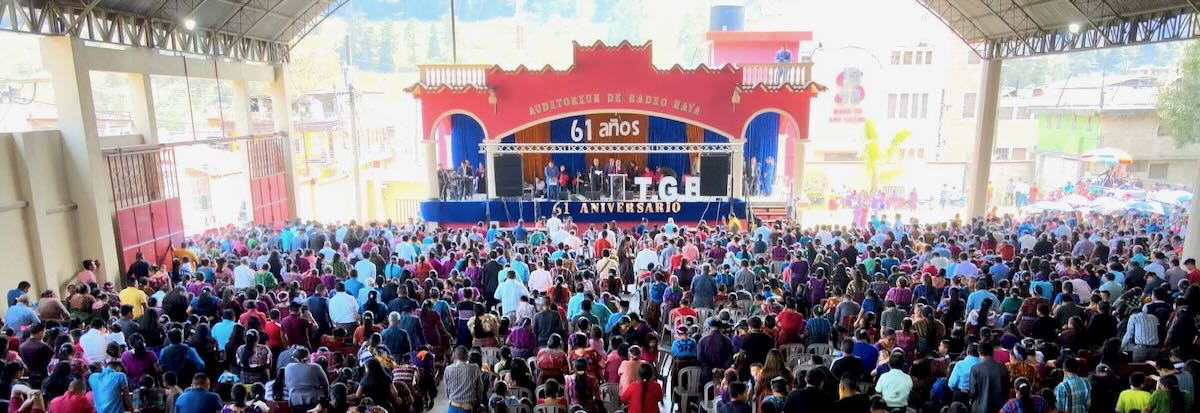
Given the subject of this final part you might assume that I eventually did make it to Barillas and get to visit Radio Maya. I wish it were so, but no. When writing part six of this series I tried to find a few interesting links about Radio Maya to include. I came across a 38-minute video about the history of the station issued on its 50th anniversary in 2012. The video is a series of still photos (most very old) narrated in Kanjobal.
Actually I’m assuming that it’s Kanjobal as that is the Mayan language spoken in Barillas. I don’t speak Kanjobal, but the Mayan languages use Spanish for numbers, dates, and modern ideas such as technical terms. Between the Spanish words and the context provided by the photographs, I was able to somewhat understand the video. Instead of expecting you to watch the 38-minute video, I’ve copied the most interesting pictures below. (I don’t think you want to see pictures of all the people involved over the years.)
Beginnings
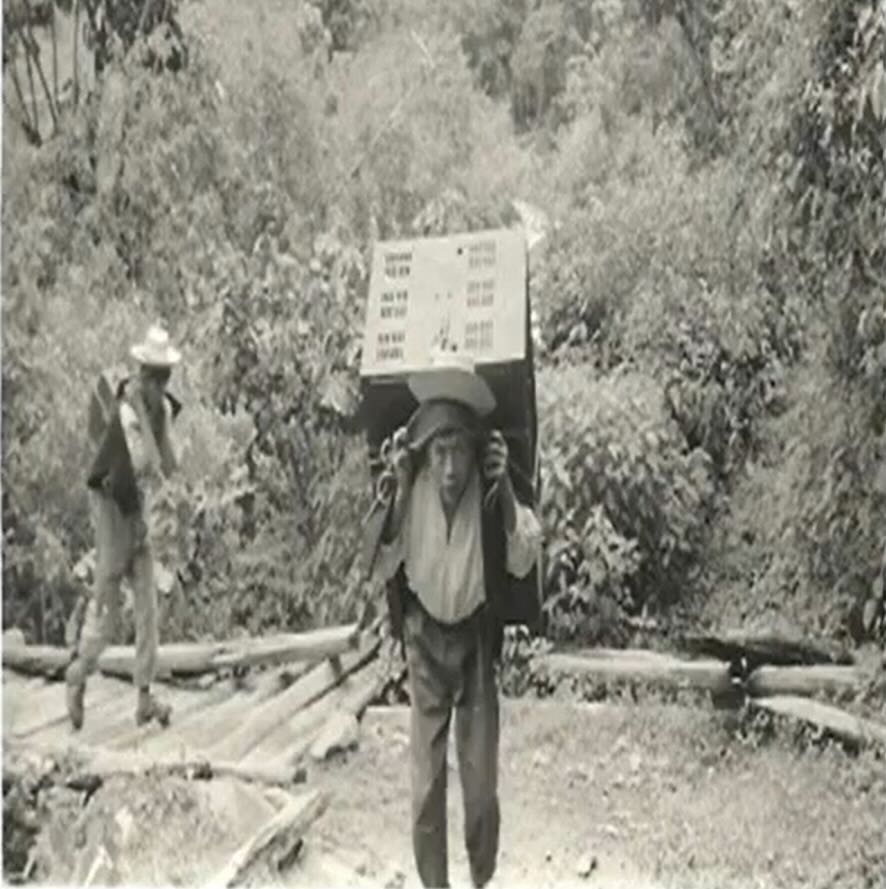
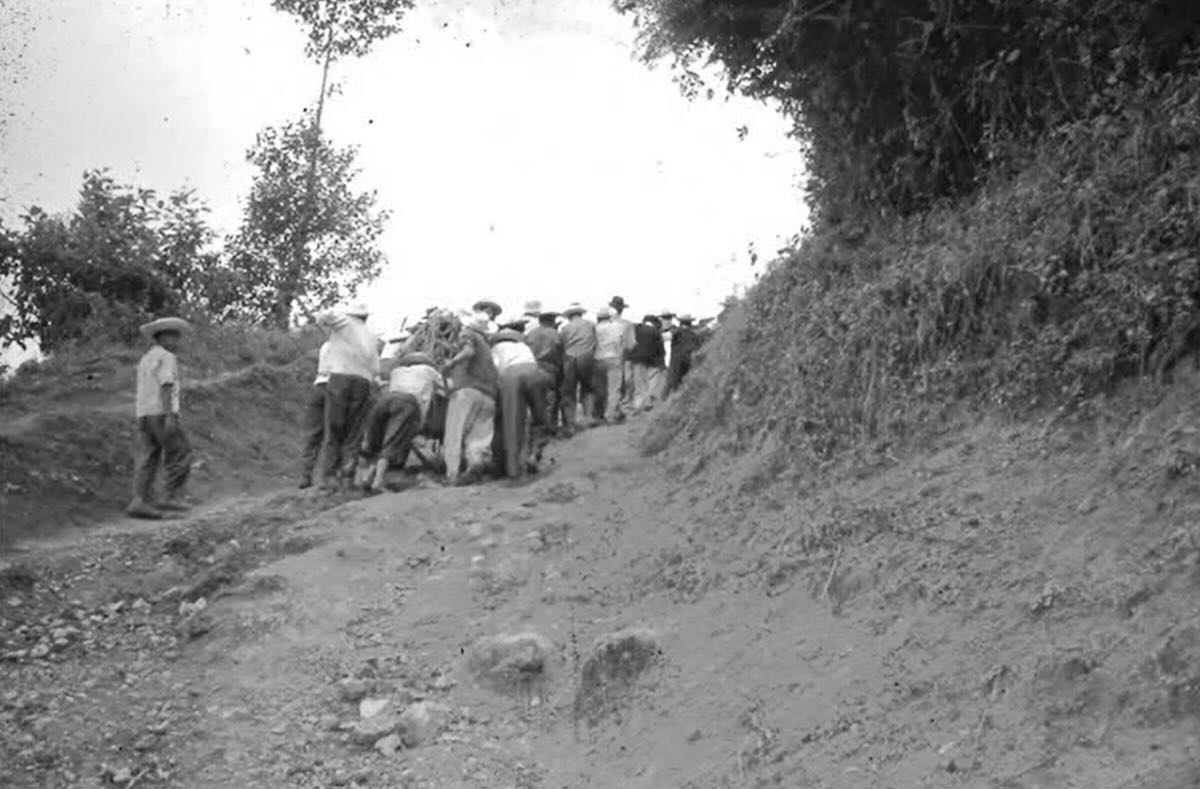
There had been an Evangelical mission in Barillas since the mid-1950s. The name of whoever decided to put a radio station in Barillas is lost to history. But, like Father John Rompa of the Catholic station La Voz de Nahualá, they realized that radio was the best way to reach the Mayan people scattered across remote mountain towns and villages. Also lost to history is why they picked a place as remote as Barillas. Not only was the town at the end of the road, but in the early 1960s the last stretch of road wasn’t even drivable. Hauling in equipment for the new broadcaster was a challenge.
Here a man carries part of the transmitter on his back:
The transmitter eventually arrived in Barillas on an oxcart:
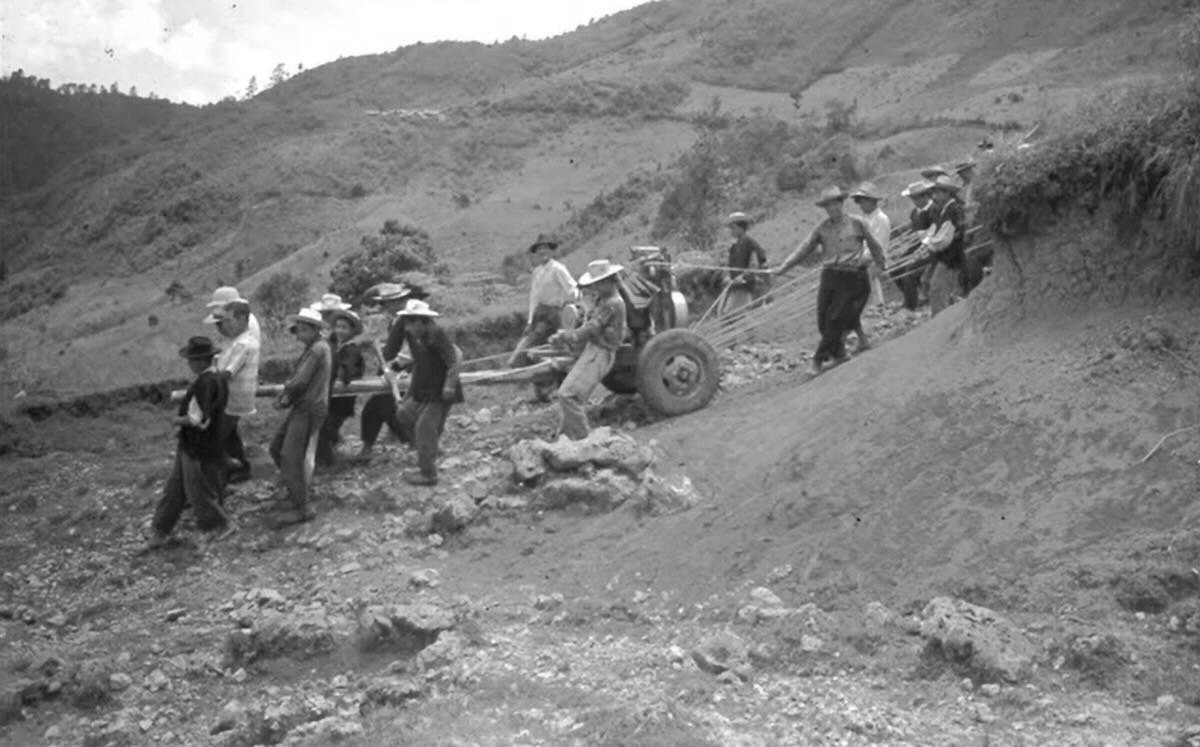
In these next two pictures about two dozen men haul the generator over a rough stretch of road:
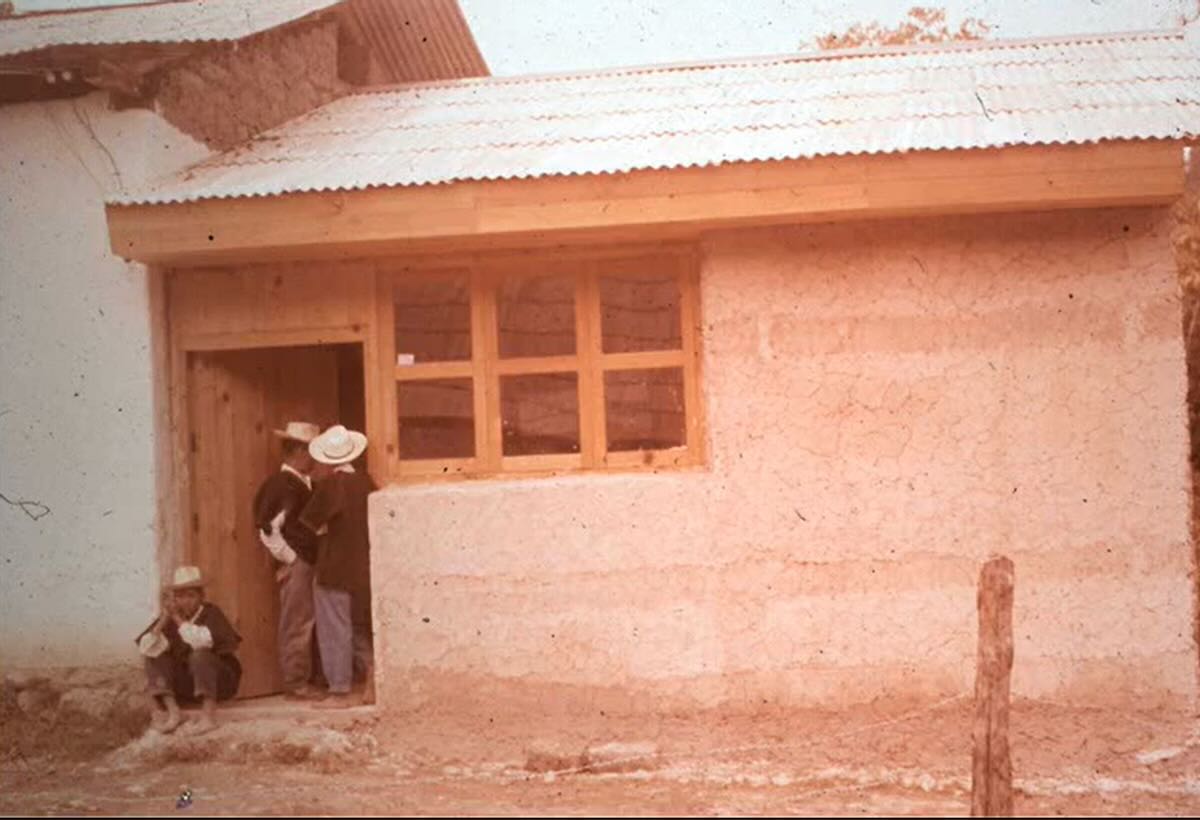
The original building in 1962:
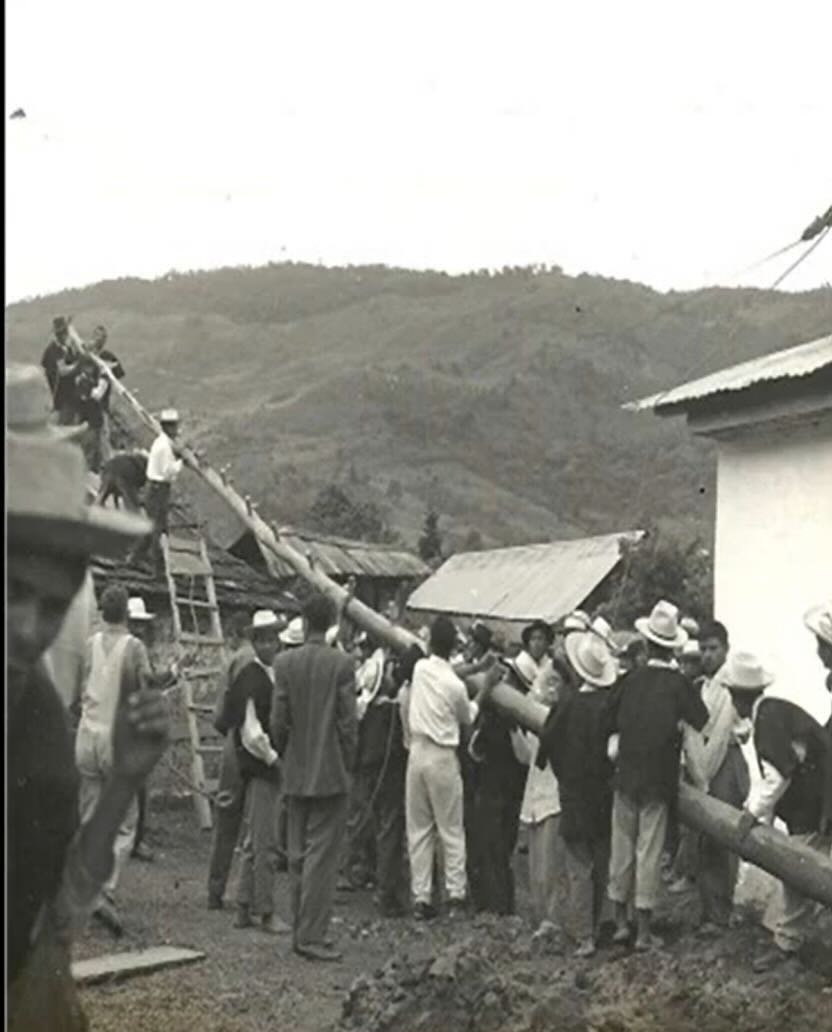
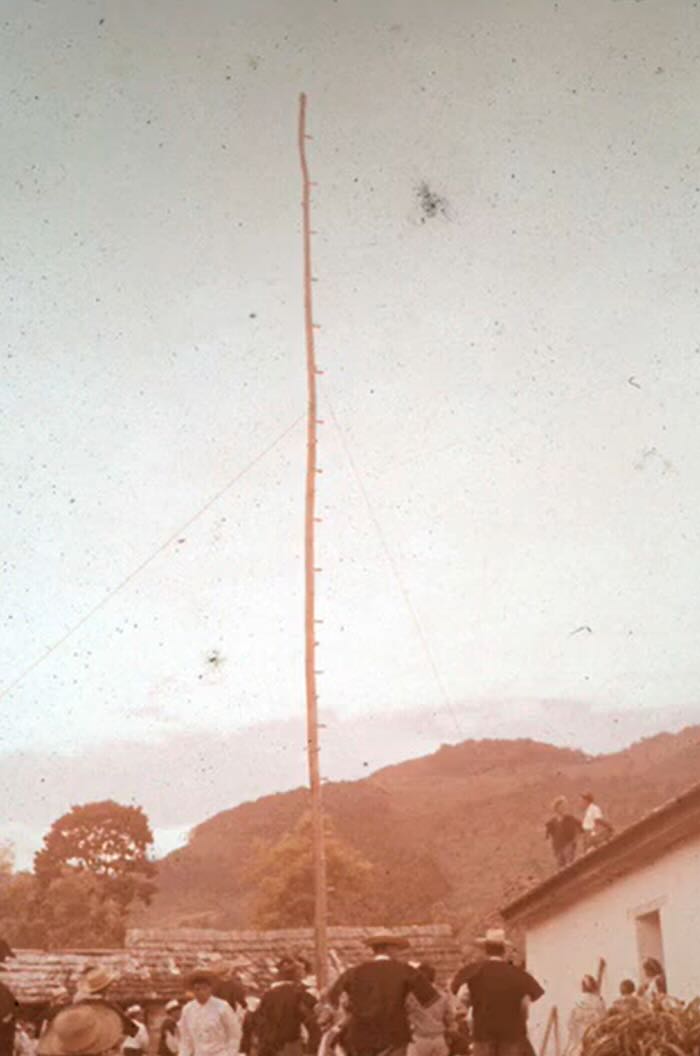
The next step was putting up the antenna. Here villagers prepare to erect a wooden pole as a center support for the antenna wires:
One of two shorter poles to hold up the lower ends of the wire:
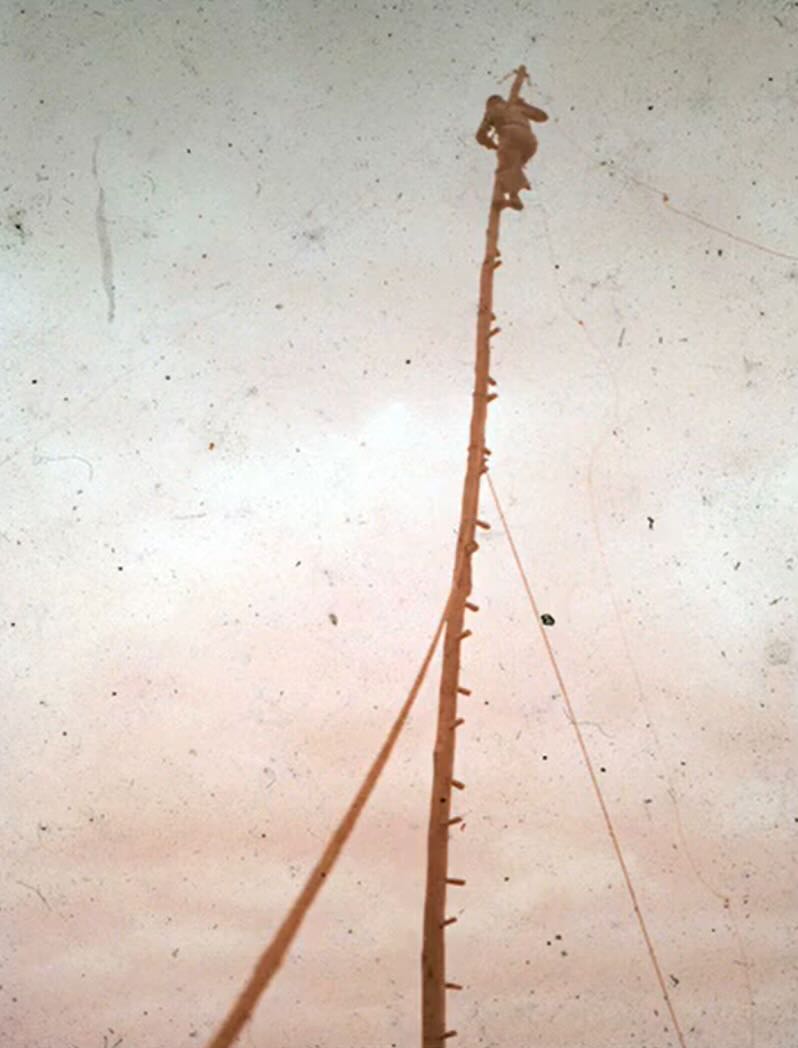
When the pole was in place a very brave (or foolhardy?) man climbed to the top to attach the wires:
The finished tower. The antenna wires, attached at the top, aren’t visible. The lower wires are for support:
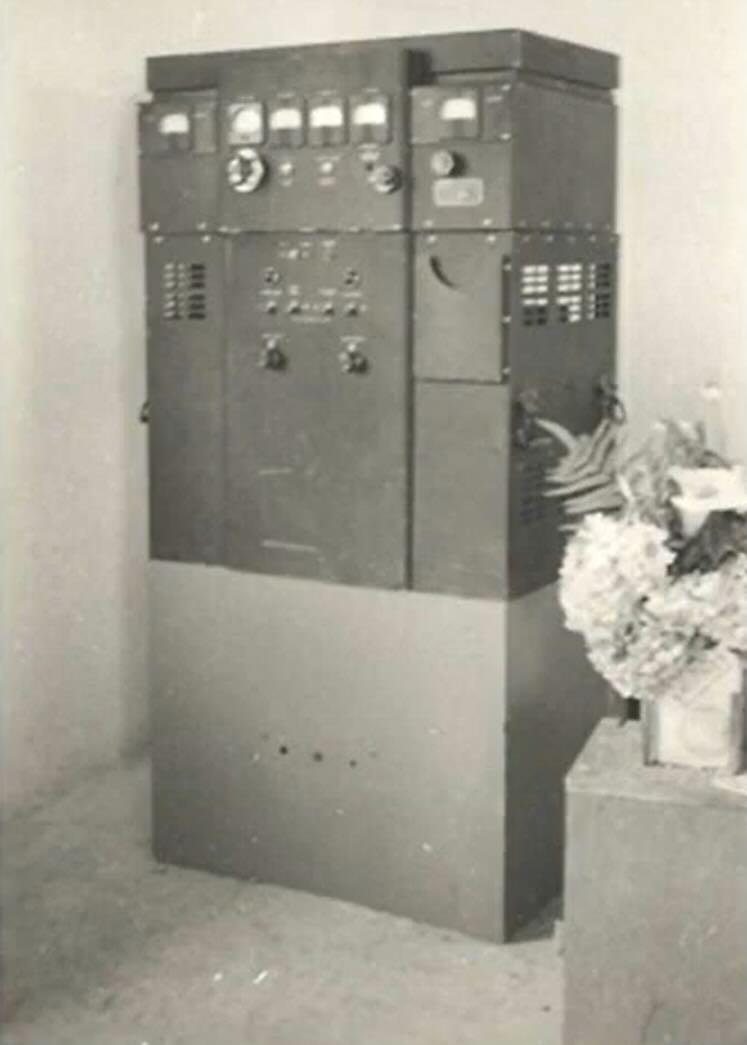
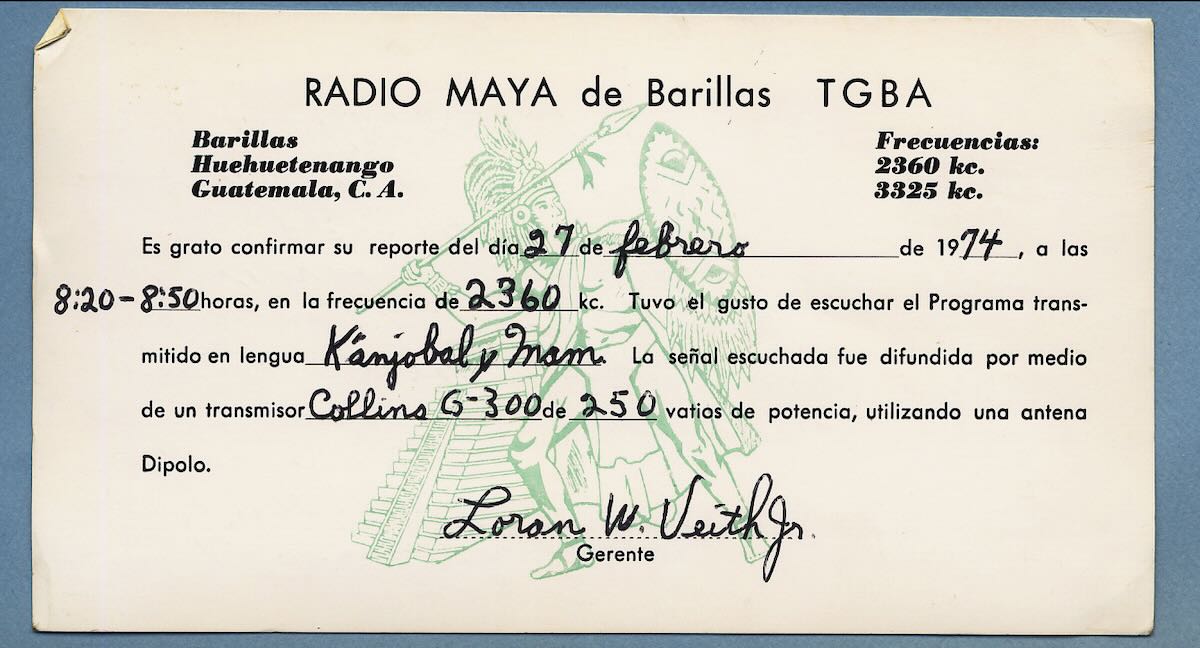
From its beginnings until the late 1970s, Radio Maya de Barillas only broadcast on 2360 kHz with this 250-watt transmitter. Later a one-kilowatt transmitter was added for 3325 kHz.
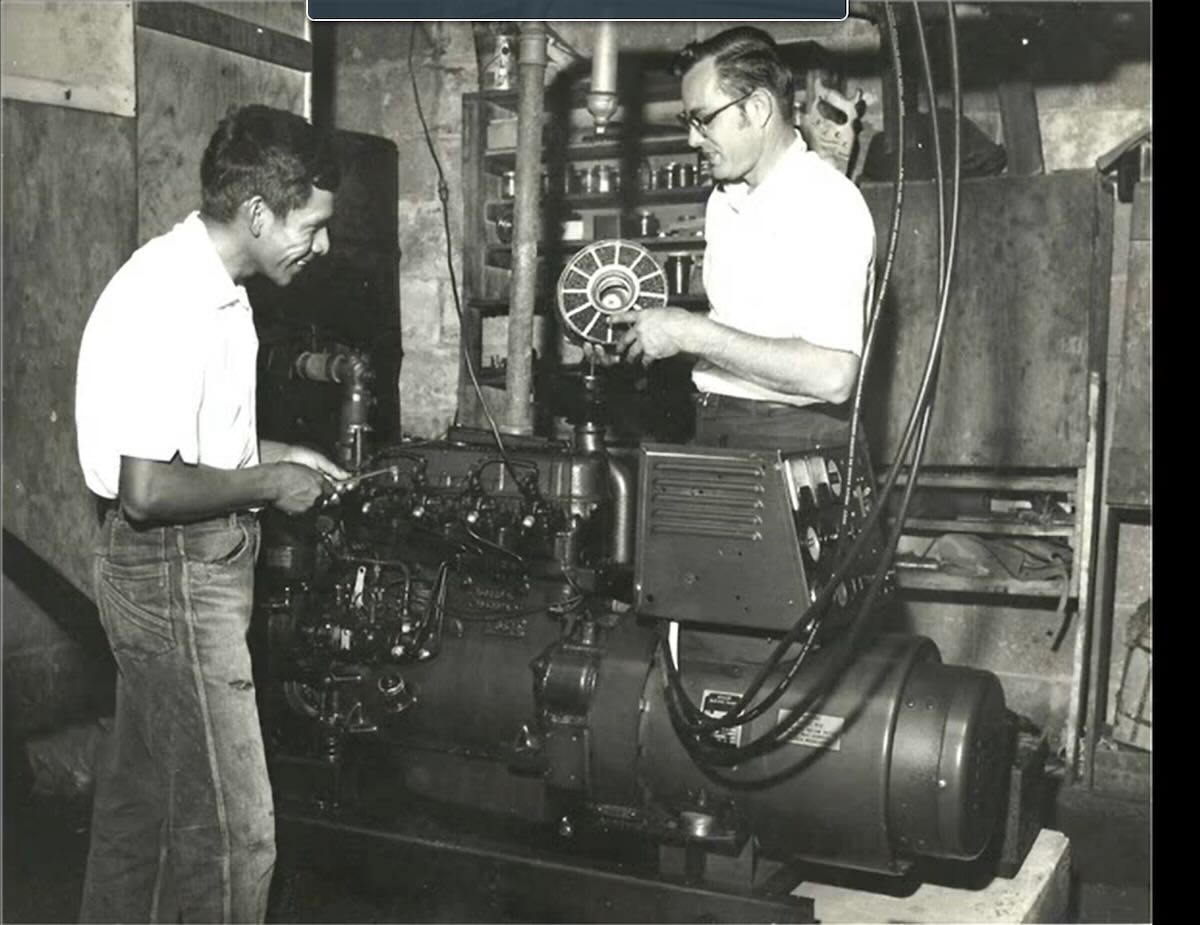
Installing the generator:
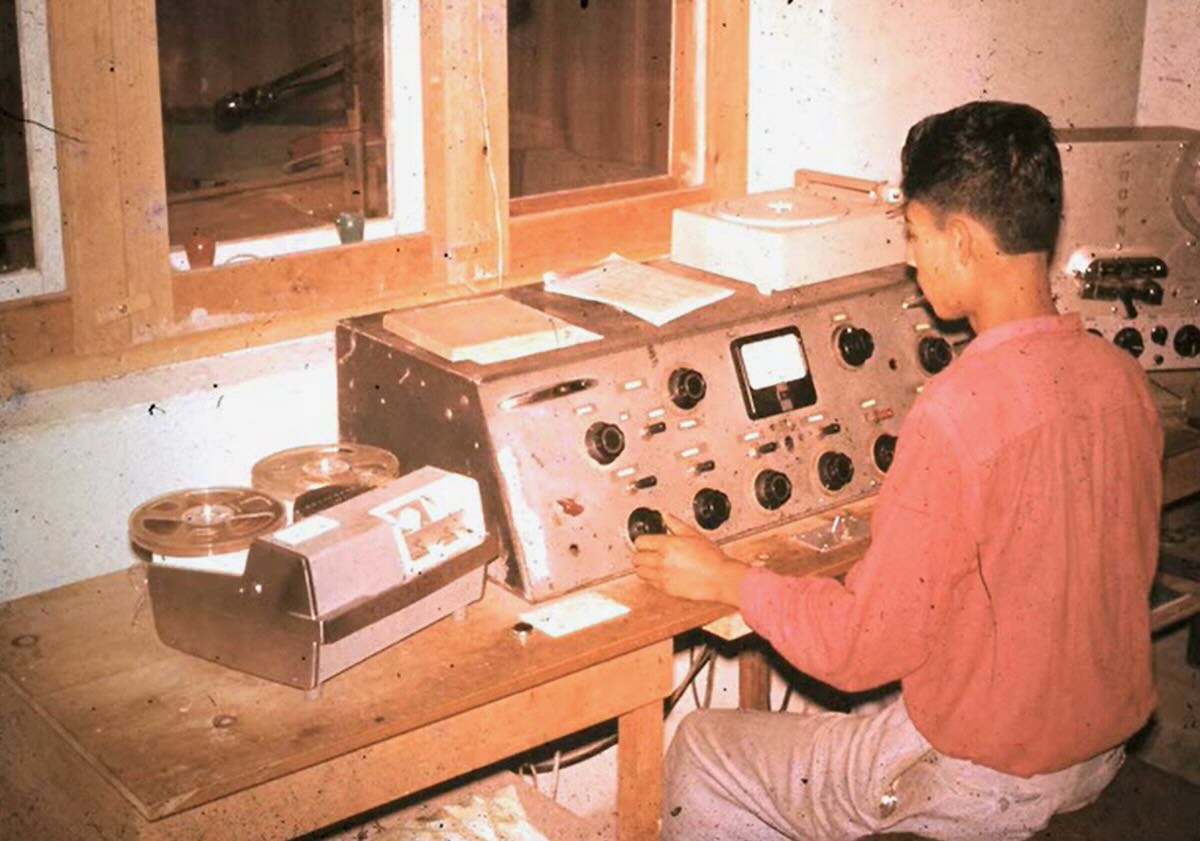
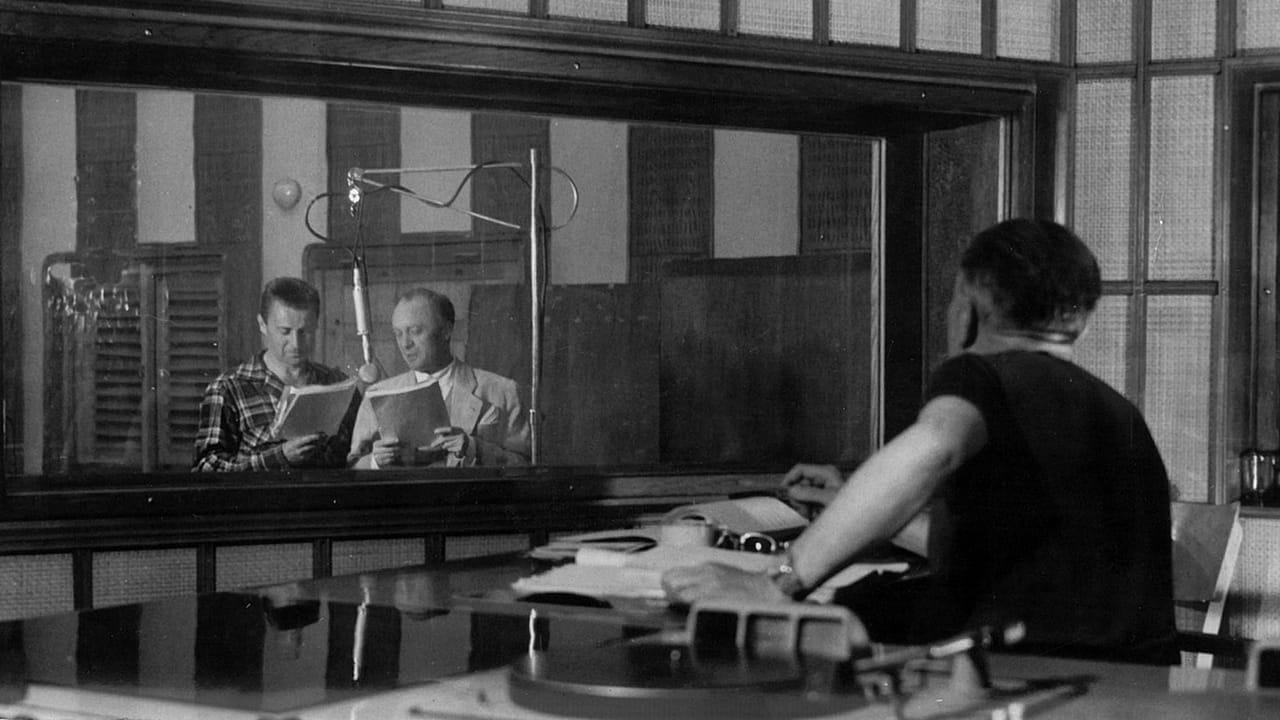
The Radio Maya studio in the 1960s:
Getting Bigger
In 1969 a plot of land was purchased on the edge of town and over the next three years a new building was constructed with help from American missionaries. Continue reading →
Many thanks to SWLing Post contributor David Iurescia for sharing this excellent article from Radio Prague International, which commemorates the 80th anniversary of Radio Plzen’s powerful broadcast urging resistance during World War II: https://english.radio.cz/radio-plzen-voice-changed-history-80-years-ago-8849932
Don Moore’s Photo Album:
Guatemala (Part Six) – Huehuetenango
by Don Moore
More of Don’s traveling DX stories can be found in his book Tales of a Vagabond DXer[SWLing Post affiliate link]. If you’ve already read his book and enjoyed it, do Don a favor and leave a review on Amazon.
I first heard of Huehuetenango in February 1974. I had gotten my first serious receiver, a Barlow-Wadley XCR-30, a few weeks earlier. Now I could try for stations in the 120-meter band. The first one I heard was Radio Maya de Barillas on 2360 kHz from a place named Barillas in Guatemala. And Santa Cruz de Barillas (the town’s full official name) was in a department named Huehuetenango. The name sounded exotic and magical.
In my mind, Radio Maya de Barillas was the ultimate DX target. The Evangelical Protestant station used a tiny amount of power in 120-meters, the shortwave band that provided the most challenge to DXers. The programs were in Mayan languages with mostly hard-to-pronounce names. And my map showed that Barillas was literally at the end of the road. There was nowhere to go beyond Barillas.
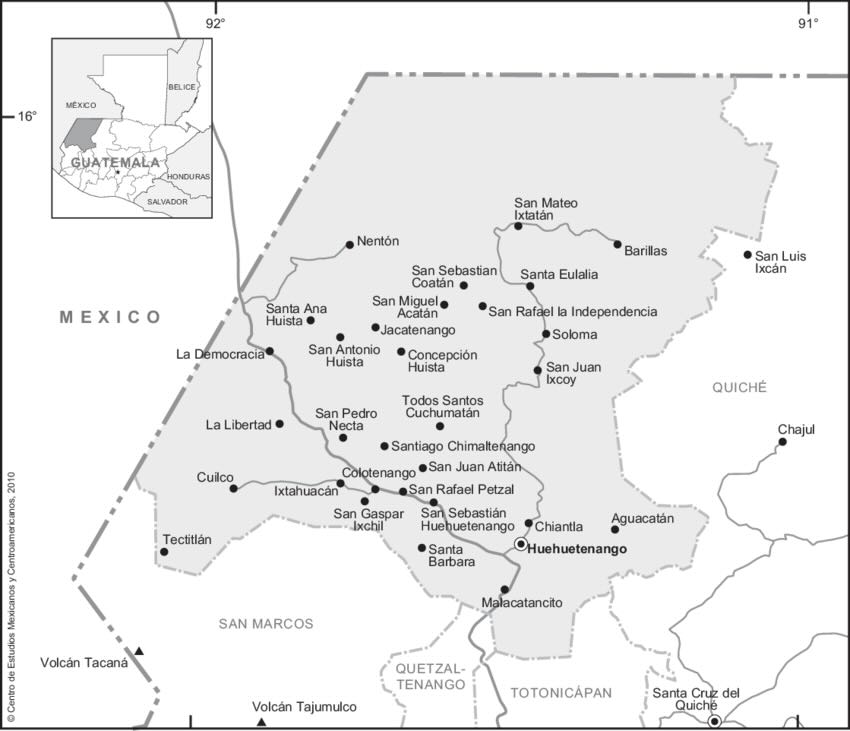
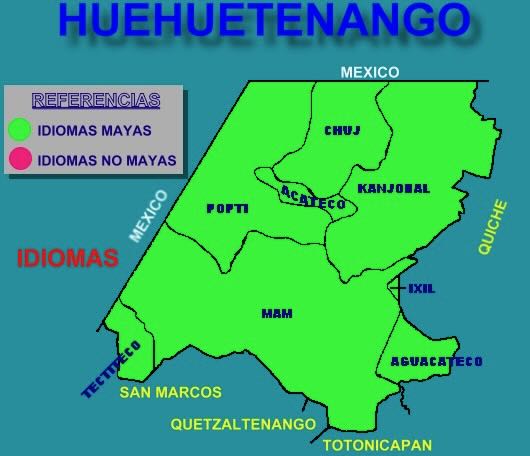
That sense of Huehuetenango being on the edge of civilization was totally correct. The department contains the rugged Cuchumatanes mountains, the highest non-volcanic mountains in Central America. It’s the only place in Central America where it’s too cold to grow corn. Instead, people get by raising sheep and planting potatoes. The mountains explain why eight different Mayan languages (belonging to three different language families) are spoken in this one department. Steep rugged mountains are a barrier to communication. A lack of communication causes a common language to diverge into multiple languages over just a few centuries.
The Mam, numbering about half a million, are the fourth largest Mayan group in Guatemala and their homeland extends into other departments in the south. But the other seven languages are only found in Huehuetenango with maybe a little spillover across the borders. The largest of those is Kanjobal, spoken by about 80,000 people today. The Tectiteco (Tektik) number just a little over two thousand.
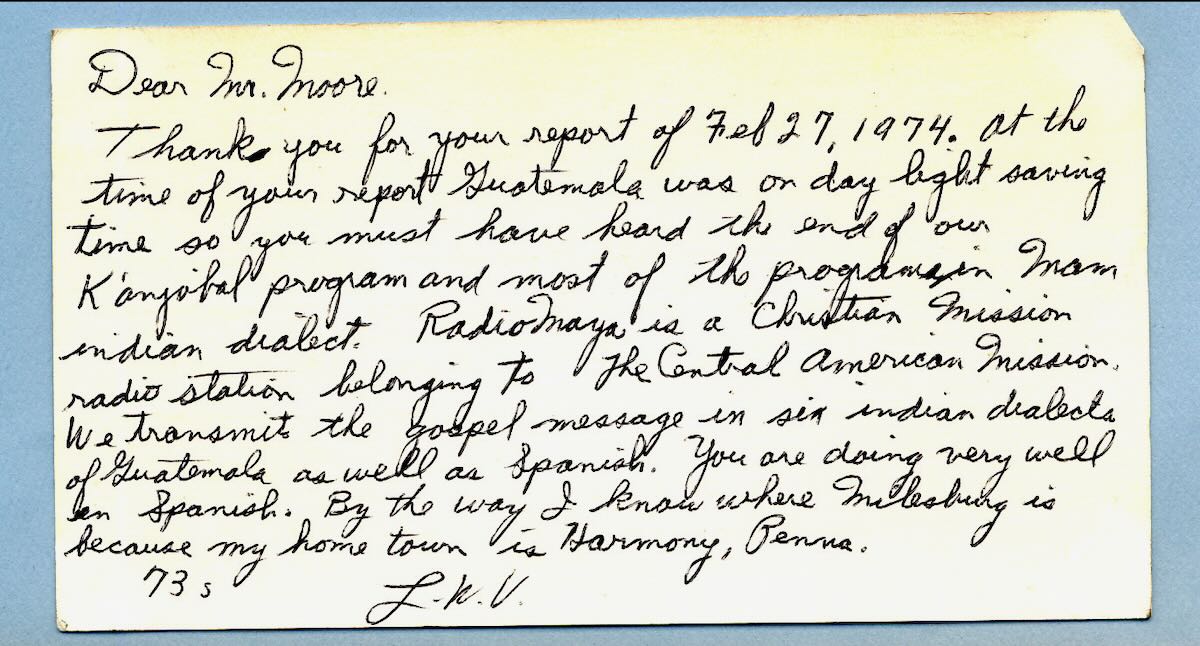
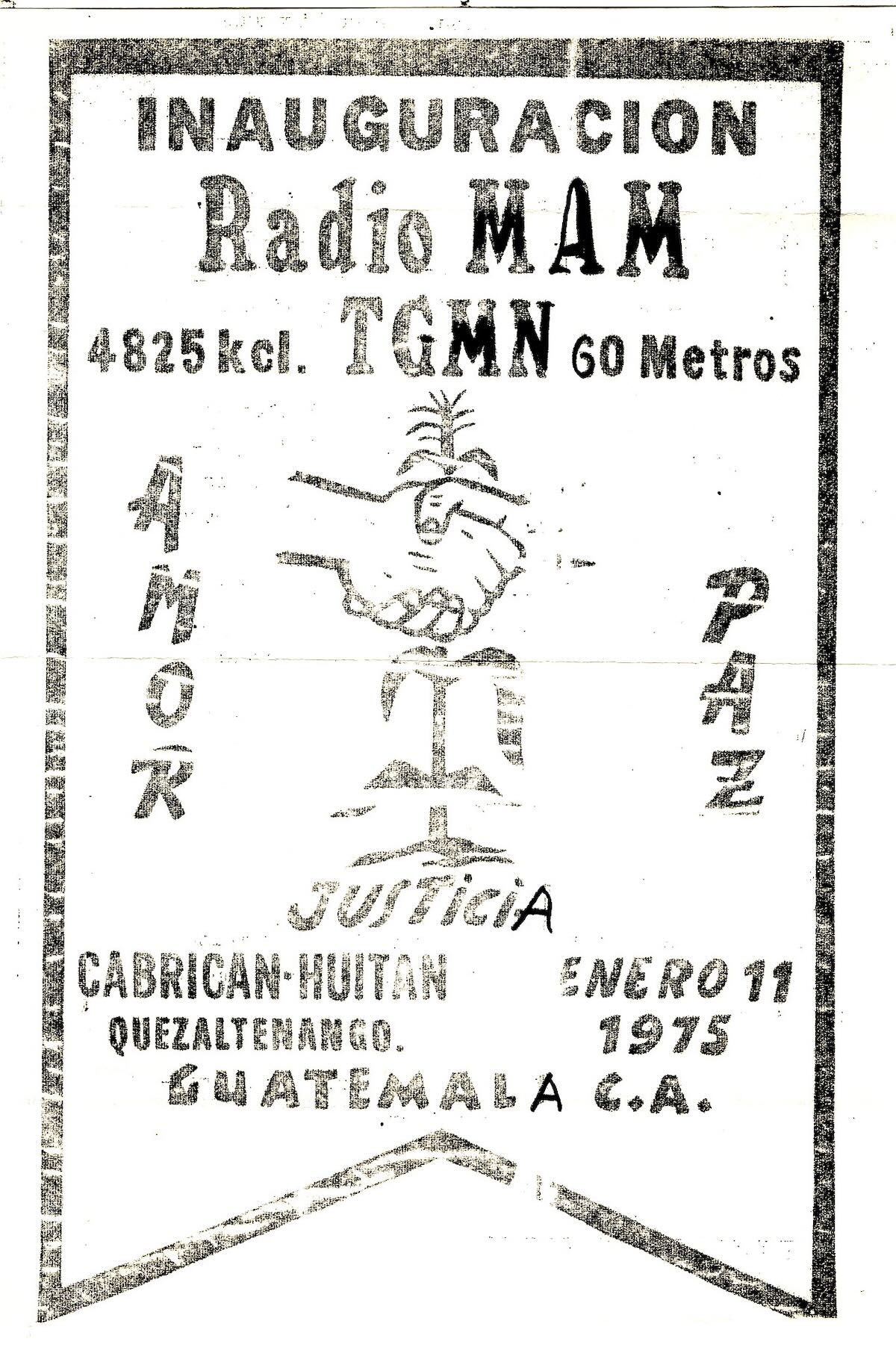
As noted on the back of my QSL from Radio Maya de Barillas, that station broadcast in six of the region’s languages, including Mam and Kanjobal, the language spoken in and around the town of Barillas. For about a decade Radio Maya was the only radio station to broadcast in the region’s languages. Then in 1975 the Roman Catholic church opened an educational station, Radio Mam, in Cabricán to the south in Quetzaltenango department. But Radio Mam only broadcast in the Mam language. (And, unfortunately, I never got to visit the station.)
Visiting Huehuetenango (or not)
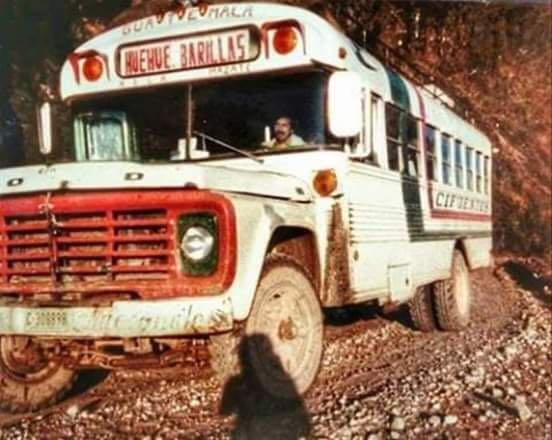
When I was traveling to Guatemala while living in Honduras in the early 1980s, one of my goals was to visit as many Guatemalan shortwave stations as possible. Yet I never once considered going to Barillas. Sure, I knew that the dirt road from the town of Huehuetenango to Barillas was one of the worst in Central America and that the bus ride took twelve hours. That wasn’t going to stop me.
What stopped me from visiting Radio Maya was that Barillas was right in the middle of the area of the heaviest fighting between the government and the guerrillas. This may surprise you if you’ve read the previous parts of this series, but there really were some things back then that I knew better than to do. Going into the worst part of a war zone was one. The closest I came to Barillas was passing through the southern part of the department on the Pan-American Highway on my way to Mexico in December 1984. That was just a few weeks after a guerilla band had ventured south and blown up four bridges on the road. Continue reading →
Many thanks to SWLing Post contributor Dan Greenall for once again sharing a remarkable collection of vintage off-air AM radio recordings. In this post, he shares recordings made from his home and during his travels across North America and the Caribbean.
Dan writes:
Hi Thomas
Judging by the interest on my Internet Archive page, vintage AM radio audio clips from the 1970’s are among the most popular files. In addition to the one posted on the SRAA in September 2023, here are the remaining ones I have to take you back 50 years.
VOA Marathon 1973
The Voice of America station from Marathon Key, Florida is heard signing off on its frequency of 1180 kHz. This recording was made while on vacation in West End, Bahamas in December 1973. Reception of the station in much of North America was tough due to the signal being south beamed to Cuba. However, at least one listener in New Zealand managed reception as evidenced by the attached QSL image from 1972.
ZNS3 Bahamas 1973
ZNS3 radio on 1060 kHz from Freeport, Bahamas is heard with a station identification jingle. The recording was made while on vacation in West End (near Freeport) on Grand Bahama Island in December 1973.
Bermuda AM/FM airchecks 1975
Brief airchecks from 5 local radio stations recorded while visiting Bermuda in March 1975. They are as follows:
ZBM1 1230 kHz
ZBM2 1340 kHz
ZBM-FM 89.1 MHz
ZFB1 960 kHz
ZFB-FM 94.9 MHz
WVMT Burlington VT 1975
Brief aircheck from radio station WVMT in Burlington, Vermont on 620 kHz recorded in March 1975 in Montreal, Quebec. Starts with “Mandy” by Barry Manilow, station ID, then into NBC news.
XERF Ciudad Acuna, Mexico 1971
Short audio recording of radio XERF on 1570 kHz as received in Ancaster, Ontario, Canada in November 1971.
“This is radio station XERF in Ciudad Acuna, Coahuila, Mexico. This is Paul Kallinger, your good neighbor along the way.”
Used a Hallicrafters S-52 communications receiver and a longwire antenna.
KPCR Bowling Green, MO 1973
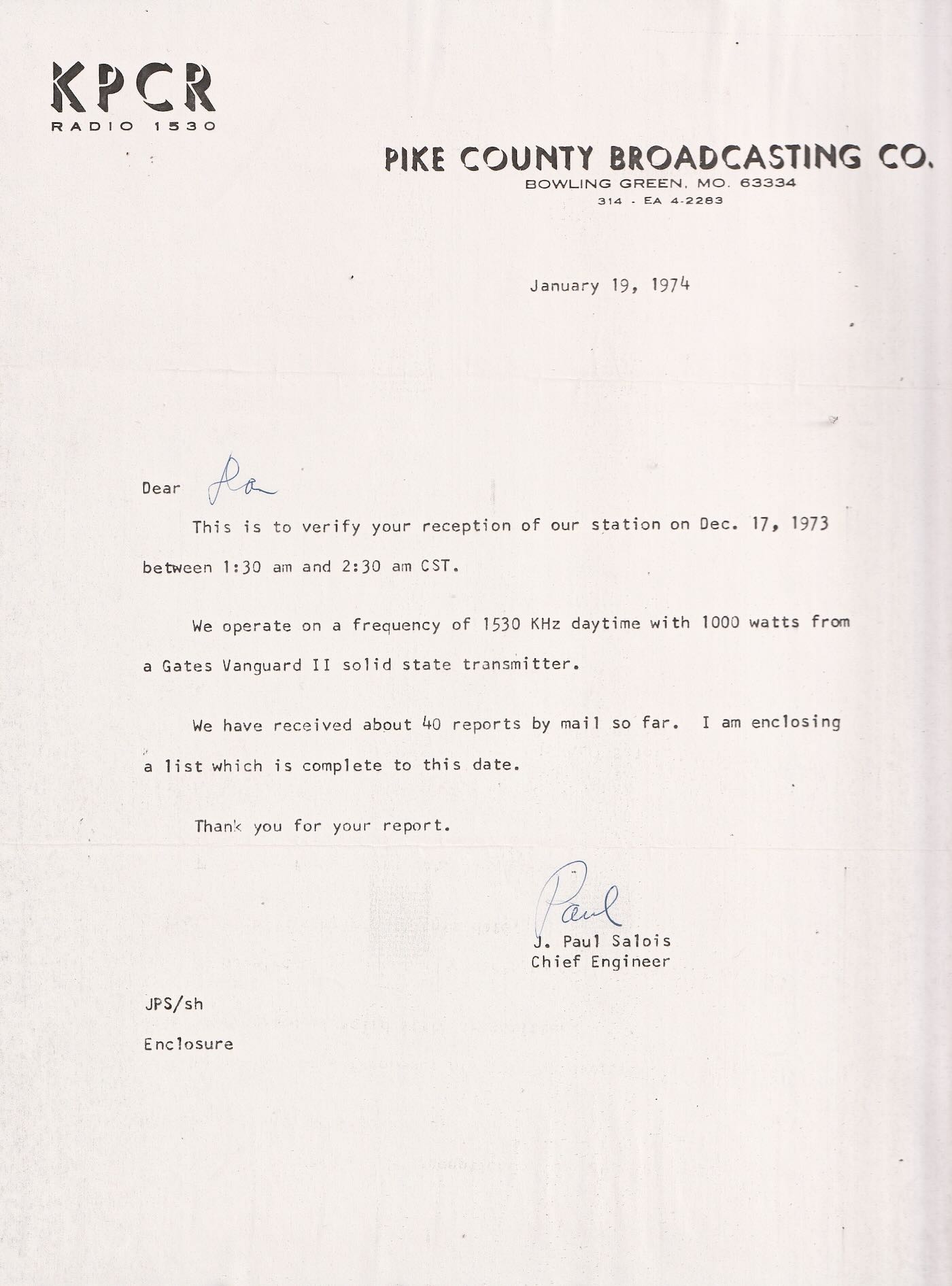
KPCR radio in Bowling Green, Missouri as heard in Ancaster, Ontario, Canada on 1530 kHz during an overnight DX test on December 17, 1973. They only ran 1000 watts, but 50 kw WCKY in Cincinnati was off the air that night. Used a Realistic DX150A receiver and a longwire antenna.
KFDI Wichita, KS 1974
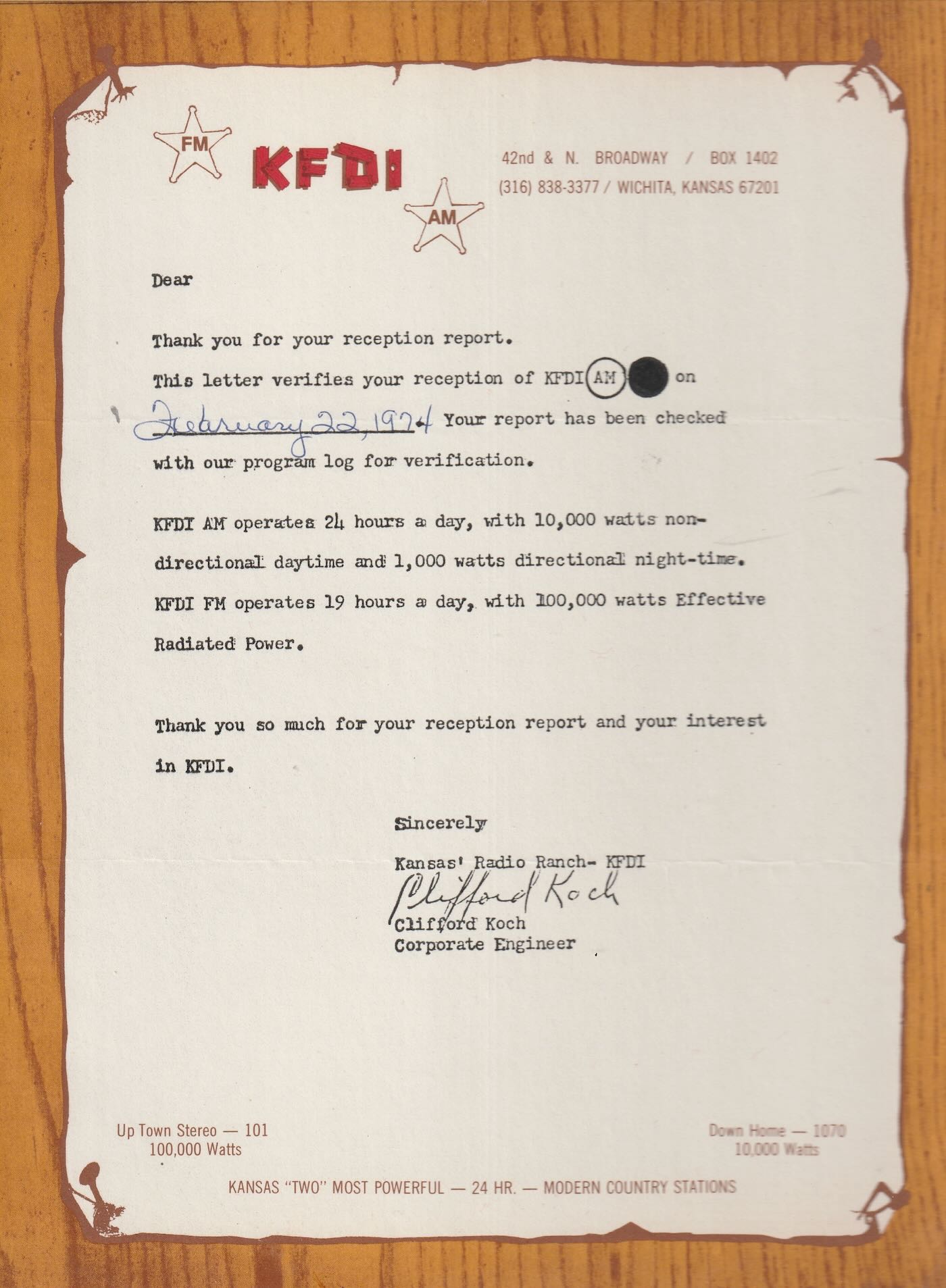
A brief aircheck from KFDI Radio 1070 in Wichita, Kansas as heard in Ancaster, Ontario, Canada on February 22, 1974. Receiving equipment was a Realistic DX150A using a longwire antenna.
WDXR Paducah, KY 1974
WDXR radio in Paducah, Kentucky is heard signing off for their broadcast day. This recording was made circa 1974 while they were operating on 1560 kHz. Receiver location was Ancaster, Ontario, Canada and equipment was a Realistic DX150A and longwire antenna.
WANN Annapolis, MD 1974
A brief aircheck of WANN radio in Annapolis, Maryland heard here signing off for their broadcast day. The recording was made circa 1974 while they were operating on 1190 Khz, A lucky catch for me since WOWO in Fort Wayne, Indiana was usually heard on 1190. Receiver location was Ancaster, Ontario, Canada, (40 miles SW of Toronto) and equipment used was a Realistic DX150A and a longwire antenna.
WCPC Houston, MS circa 1974
One of the easiest ways to log the state of Mississippi on the AM broadcast band in the 1970’s from my location near Hamilton, Ontario, Canada, was WCPC in Houston, MS on 940 kHz around local sunset. Here they are giving a station ID as heard on a Realistic DX-150A receiver and a long wire antenna.
XEMO Tiajuana, Mexico circa 1971
Here is a brief English language aircheck from radio station XEMO in Tiajuana, Mexico as received in Ancaster, Ontario, Canada (a distance of 3392 km or 2108 miles) circa 1971. They were broadcasting on their frequency of 860 kHz. At the very end, there is a quick “X E M O Tiajuana Mexico” in Spanish.
WGR Buffalo, NY 1973
Here is a brief aircheck/jingle from radio station WGR in Buffalo, New York on 550 kHz as recorded in 1973 at Ancaster, Ontario, Canada. That same year, the song “Get Down” by Gilbert O’Sullivan reached number 7 on the Billboard Top 100, and WGR aired it regularly as heard here in the second recording, Most of the time they would just ID as “GR-55”.
Vintage AM radio airchecks 1975 recorded from Bermuda
These brief vintage AM broadcast band airchecks were recorded in March 1975 while vacationing in Warwick, Bermuda at the Belmont Hotel.
1. ZDK, Antigua, West Indies 1100 kHz
2. WKAQ, San Juan, Puerto Rico 580 kHz
3. Radio Paradise, Basse Terre, St. Kitts, West Indies 1265 kHz
4. WHN, New York, NY 1050 kHz
5. WKBR, Manchester, NH 1250 kHz
6. WRKO, Boston, MA 680 kHz
7. CFBC, St. John, NB, Canada 930 kHz
KKJO St. Joseph, MO 1973
In the wee hours of October 28, 1973, this DX recording was made of radio station KKJO in St. Joseph, MO broadcasting on 1550 kHz in the AM broadcast band. My receiving post was some 800 + miles distant in Ancaster, Ontario, Canada. I was using a Realistic DX150A communications receiver hooked up to a long wire antenna. You can hear the station fade gradually in and out a number of times during the recording, but fortunately faded in around the 2:49 mark to catch their station ID and announcement about returning to Central Standard Time. Paul Simon’s “Kodachrome” is heard at first, and Art Garfunkel’s “All I Know” afterward, 2 very popular songs in 1973.
KRLD Dallas, TX 1974
KRLD in Dallas, Texas on 1080 kHz was not heard often at my listening post in Ancaster, Ontario, Canada during the 1970’s. WTIC in Hartford, CT was normally received on this frequency instead. Here is a recording made in early 1974 when KRLD managed to make it through. My receiver was a Realistic DX150A hooked up to a longwire antenna.
Vintage AM radio airchecks 1973 part 2
Here are a few more airchecks from the AM broadcast band recorded in 1973 at Ancaster, Ontario, Canada unless otherwise noted below.
1. WLW Cincinnati, OH 700 kHz
2. WIRK West Palm Beach, FL 1290 (recorded in West End, Bahamas)
3. WINZ Miami, FL 940 (recorded in West End, Bahamas)
4. WSMB New Orleans, LA 1350 (recorded in West End, Bahamas)
5. WDBO Orlando, FL 580 (recorded in West End, Bahamas)
6. WPOM Riviera Beach, FL 1600 (recorded in West End, Bahamas)
7. KFYR, Bismarck, ND 550
8. KWAM Memphis, TN 990
9. WPTR Albany, NY 1540
10. WOKY Milwaukee, WI 920
11. WIBC, Indianapolis, IN 1070
12. WPDX Clarksburg, WVA 750 (special DX test early hours of Feb. 18, 1974)
13. WMAQ Chicago, IL 670
14. WBT Charlotte, NC 1110
15. WNOE New Orleans, LA 1060
16. WSM Nashville, TN 650
17. WJR Detroit, MI 760
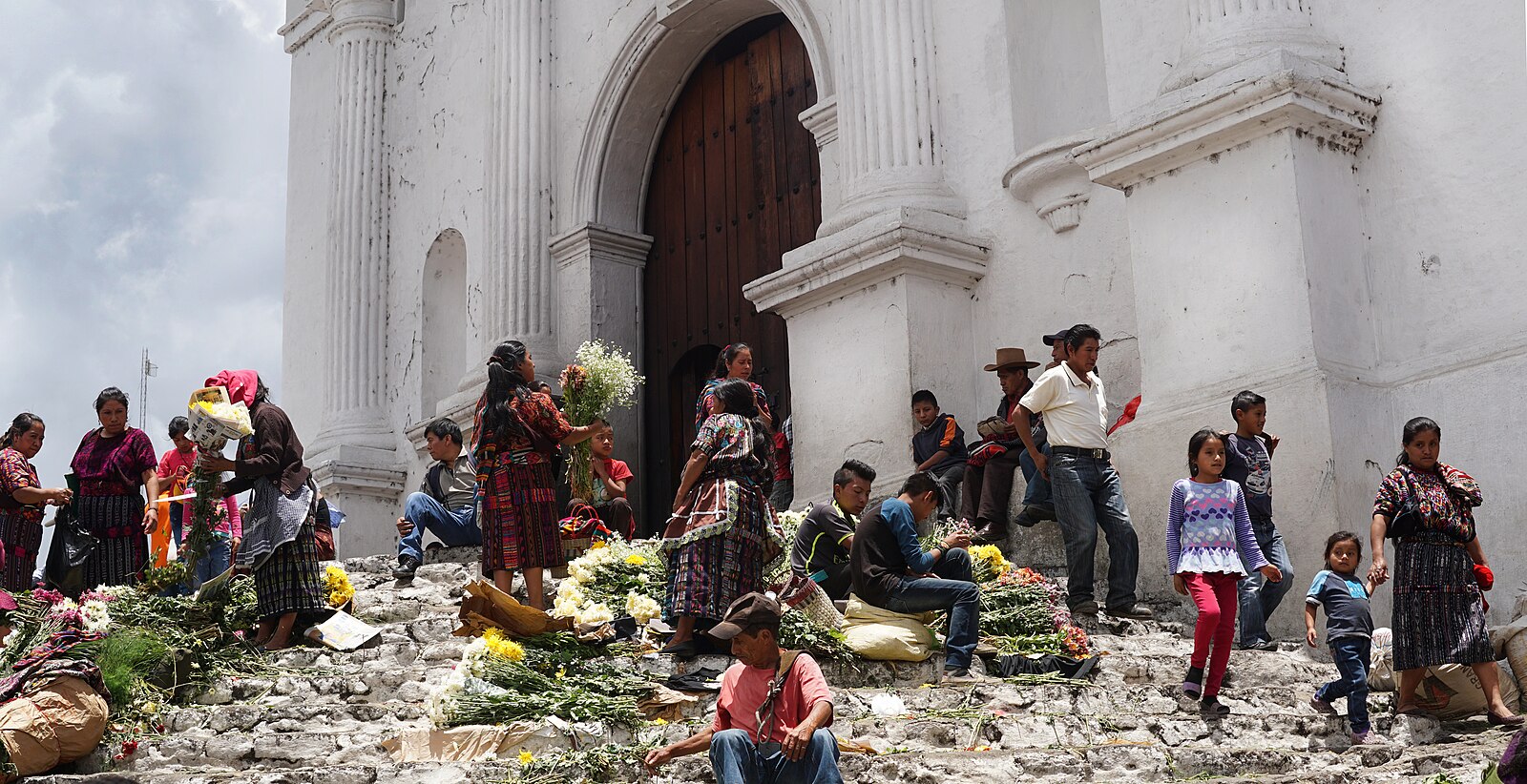
Santo Tomas Church, Chichicastenango, Guatemala (by Lucía García González via Wikimedia Commons)
Don Moore’s Photo Album: Guatemala (Part Five) – Visiting Nahualá
More of Don’s traveling DX stories can be found in his book Tales of a Vagabond DXer[SWLing Post affiliate link]. If you’ve already read his book and enjoyed it, do Don a favor and leave a review on Amazon.
After my first attempt to visit La Voz de Atitlán failed in June 1983, I turned my sights northward. The next morning in Panajachel I boarded a bus bound for Guatemala City but got off when the bus reached the main highway at the Los Encuentros intersection. A few minutes later I caught a ride on a ‘chicken bus’ headed north to my first destination of the day – Chichicastenango.
Chichicastenango is not a town that DXers would be familiar with but anyone who has seriously traveled around Guatemala has surely been there at least once. The outdoor markets held on Thursday and Sunday are among the largest in all of Central America. Guatemala has dozens of towns with long names ending in …tenango, meaning “place of.” Chichicastenango is the place of the chichicaste plant, in reference to a thorny bush that grows in the area. Most of the time people just call the town Chichi as it’s common to drop the tenango part from names when speaking.
For over five hundred years, Quiché Mayans from the surrounding area have been coming here twice weekly for the market held in the plaza in front of the Santo Tomás church. The steps to the church are always filled with flower vendors and men swinging containers of incense.
In the early days of the Spanish conquest, Catholic churches were often built on the sites already holy to the Indians. It was a clever way to get the newly forced converts to come to mass. In the case of Santo Tomás, however, they unknowingly picked a location of major spiritual importance in the Mayan religion. As a result many Mayan ceremonies involving nature and natural gods have survived in this area. Some became intertwined with Catholic practices while others were practiced in secret for centuries until it finally became safe to bring them out into the open again.
It was only June but I did my Christmas shopping that day and mailed everything home from Guatemala City a few days later. Guatemala’s post office was very reliable. Everything arrived safely in less than two weeks.
On to Nahualá
With my purchases packed in my now very heavy bag, I got on the next bus heading south and once again got out at Los Encuentros. This time I was looking for any bus heading west. I wasn’t going too far. A few minutes later a bus bound for Quetzaltenango stopped and I got on, telling the driver’s assistant that I wanted to get off at Nahualá.
I knew Nahualá was in the northwest corner of Sololá department a little way off the Pan-American Highway but I was surprised when about an hour later the bus stopped next to a cornfield in the middle of nowhere. I gave the driver’s assistant a puzzled look when he told me this was my stop. He explained that they could leave me off further down the highway where the road to Nahualá branched off. But it would be a long walk from there. From here, the walk was only about ten minutes. There was a well-worn path leading upwards through the cornfield, so I took him at his word. Continue reading →
Many thanks to SWLing Post contributor, Ronald, who writes:
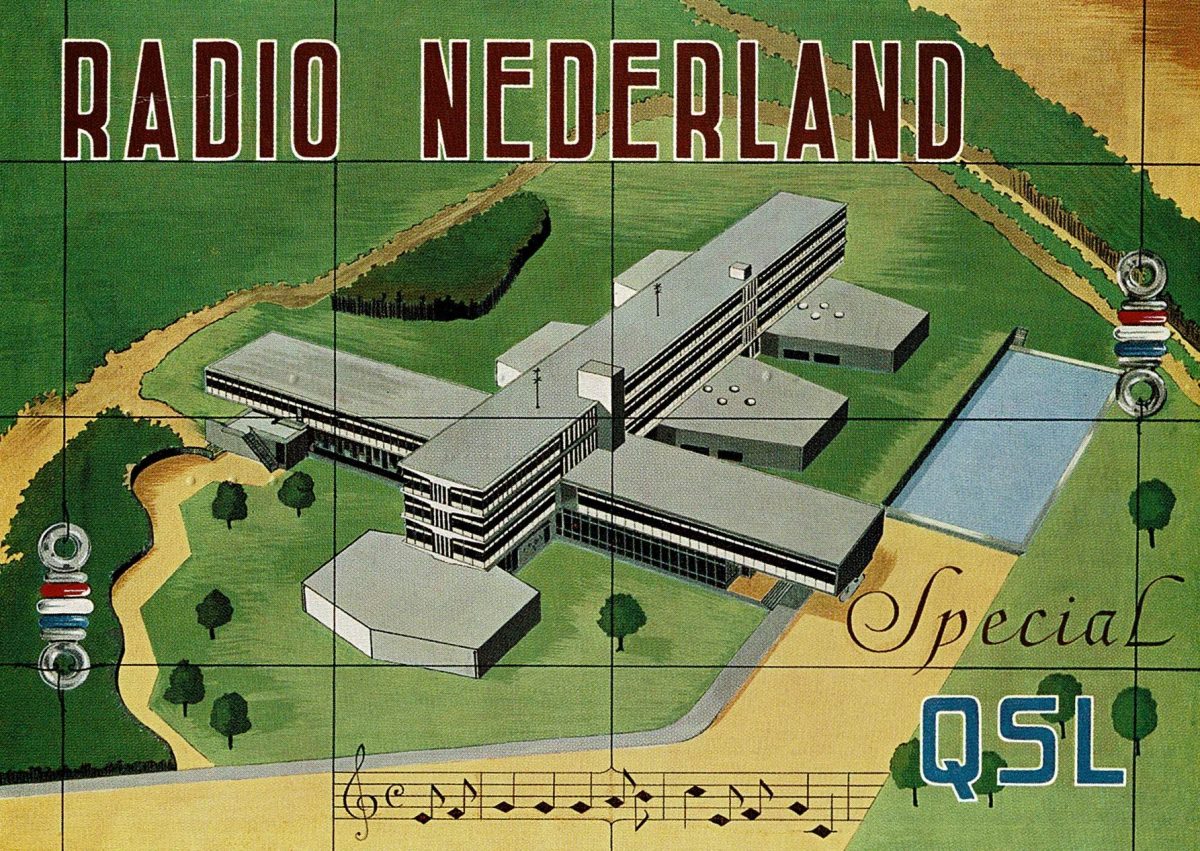
I am 83 years old now. When I was actively DXing from the late 1950s through the mid-1960s, some stations, such as Radio Prague and Radio Nederland, and clubs such as the Japan Short Wave Club (JSWC) organized contests with prizes, usually special QSL cards.
In 1957, Radio Nederland ran a DX contest and offered a special QSL card. The JSWC offered a special QSL card to SWLers who received confirmation of their special 5th Anniversary broadcasts from eight stations between December 1956 and January 1957. I reproduced the JSWC card and the Radio Nederland card in my book, QSL: How I Traveled the World and Never Left Home.
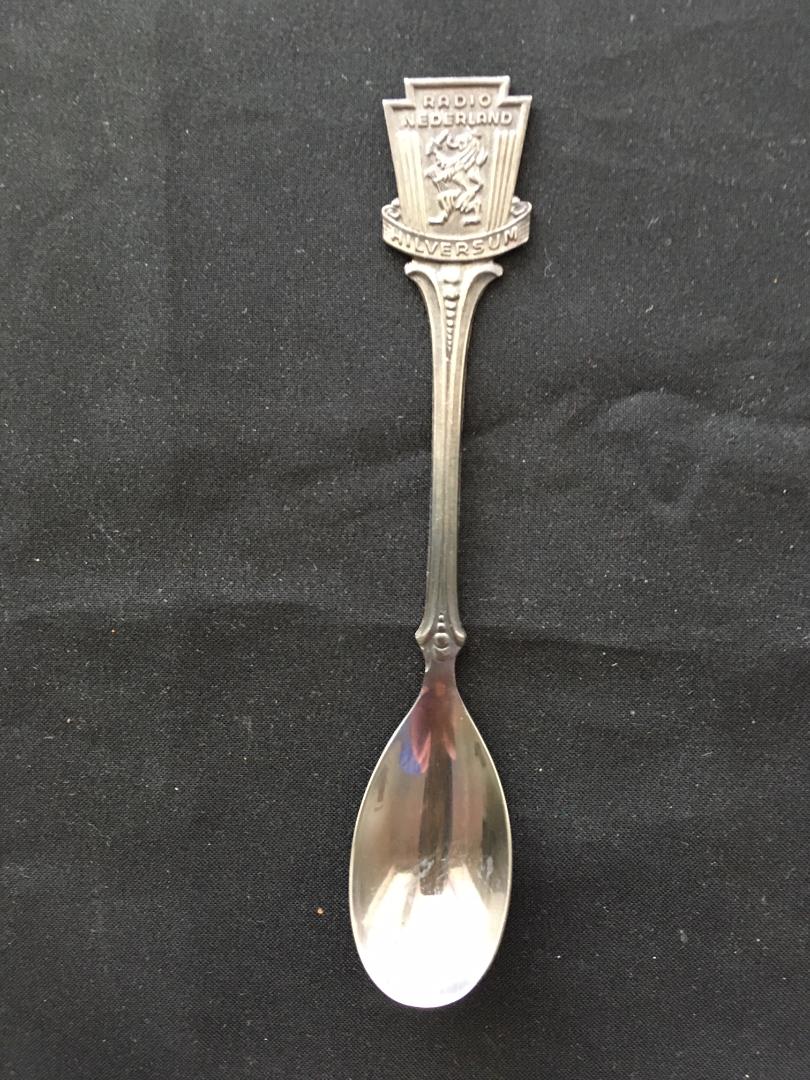
Perhaps on this occasion or another occasion, Radio Nederland ran a contest and offered
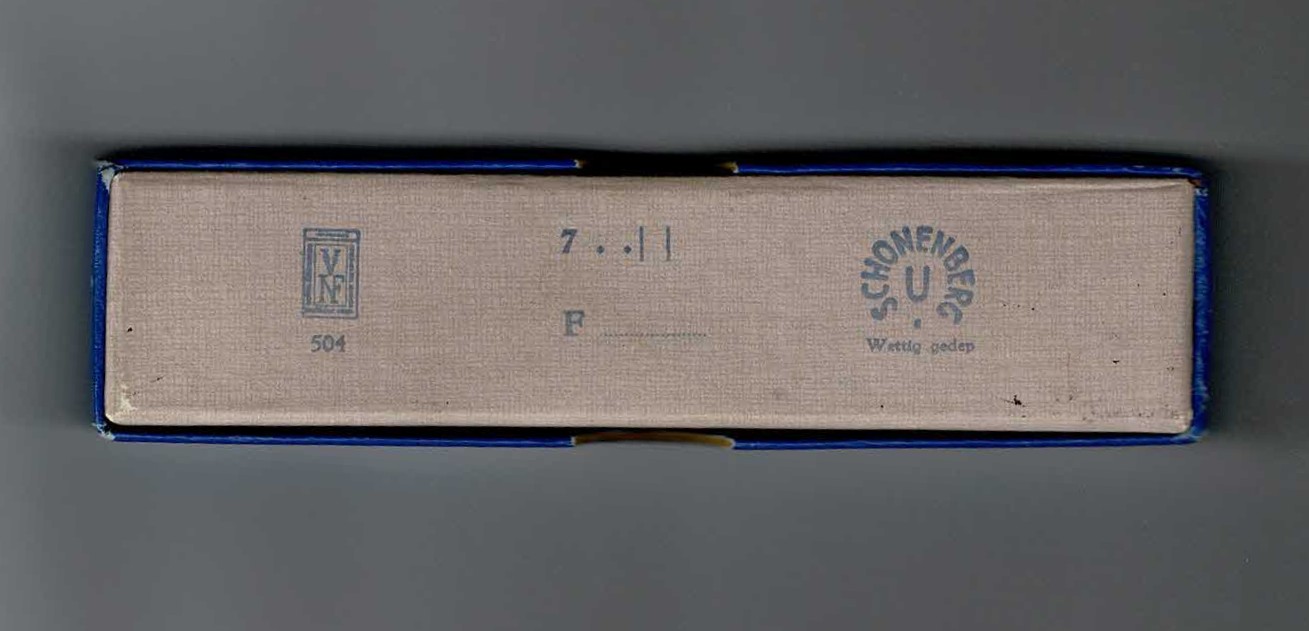
prizes. I won one of these prizes, a silver-plated commemorative sugar scoop spoon made by “Schonenberg.”
I illustrated it on the colophon of my book.Googling “Schonenberg,” I couldn’t figure out where it was located. Some said the Netherlands, some said Canton Thurgau, Switzerland, and one source (obviously wrong) said England.
“Wettig gedept” on the box is abbreviated Dutch for Wettig gedeponeerd “legally deposed,” which suggests “Trademark Registered” in English. Thus, I conclude that the spoons are made in the Netherlands–logical for Radio Nederland to have its prizes manufactured in its own country!
Questions:
When did this contest take place?
What were the rules of the contest?
How many Schonenberg spoons were offered as prizes?
Were there other prizes?
Ronald
Readers: If you can help Ronald answer these questions, please comment!
Many thanks to SWLing Post contributor Robert, who shares the following:
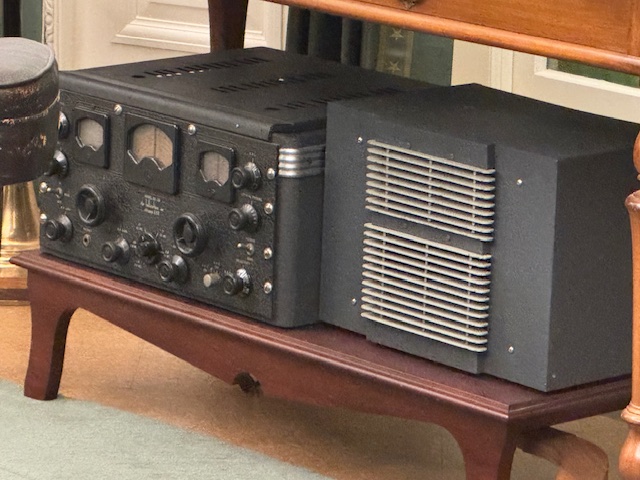
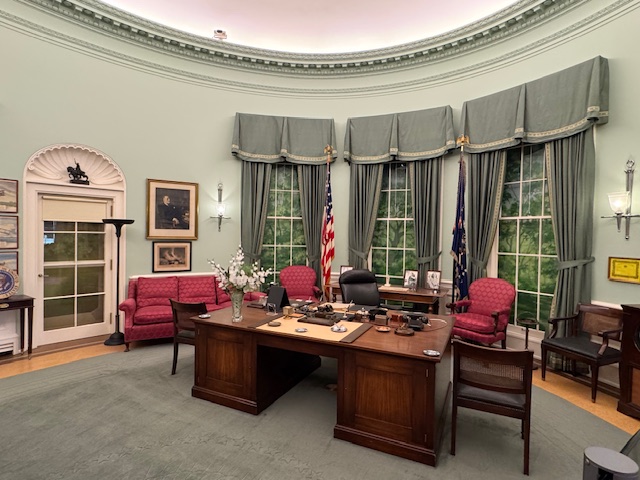
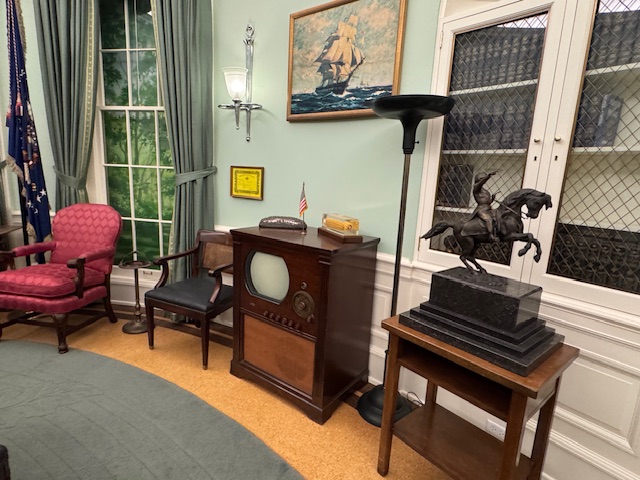
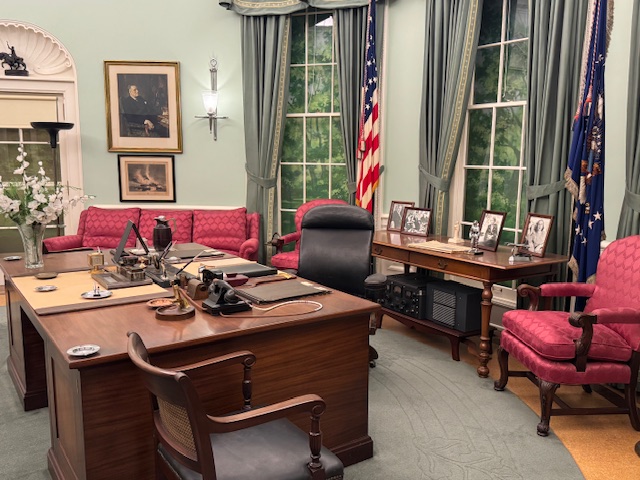
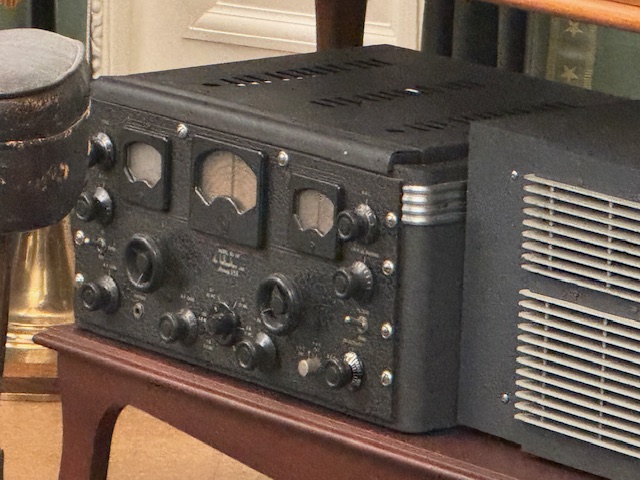
Hi Thomas – I visited the President Truman Library today and noticed an interesting item in their Oval Office recreation. It appears that not only did Mr. Truman have the first television inside the Oval Office, he apparently also had a Hallicrafters model SX-28 right behind his desk.
One wonders what stations he would specifically listen to, and what type of antenna was installed at the White House for this radio?