Shortwave listening and everything radio including reviews, broadcasting, ham radio, field operation, DXing, maker kits, travel, emergency gear, events, and more
Canadian Reginald Aubrey Fessenden in his lab believed circa 1906 (Source: Radio Canada International)
Now an annual Christmas tradition, Brian Justin (WA1ZMS) will put his longwave experimental station WI2XLQ on the air to commemorate the 110th anniversary of Reginald Fessenden’s first audio transmission.
WI2XLQ will be on the air from 17:00 UTC Dec 24th on 486 kHz and run for 48 hours until 16:59 UTC on Dec 26th.
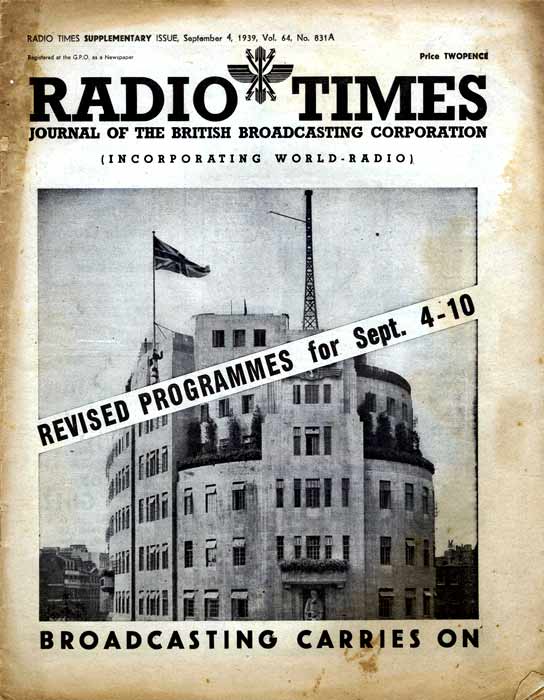
The 1930s was a turbulent decade. The country had to cope with the worldwide depression and mass unemployment that followed the Wall Street Crash of 1929. In 1936, King George V died, but his successor Edward VIII abdicated at the end of the year, to be replaced by George VI, his younger brother. Internationally, the decade was marked by the rise of the Nazis in Germany, and the sequence of events which culminated in the outbreak of war in September 1939.
It was a period of change in broadcasting too. At the start of the 1930s the BBC was still overseen by Sir John Reith, its first Director General. In 1932, the BBC moved from its cramped headquarters at Savoy Hill to the purpose-built Broadcasting House.[…]
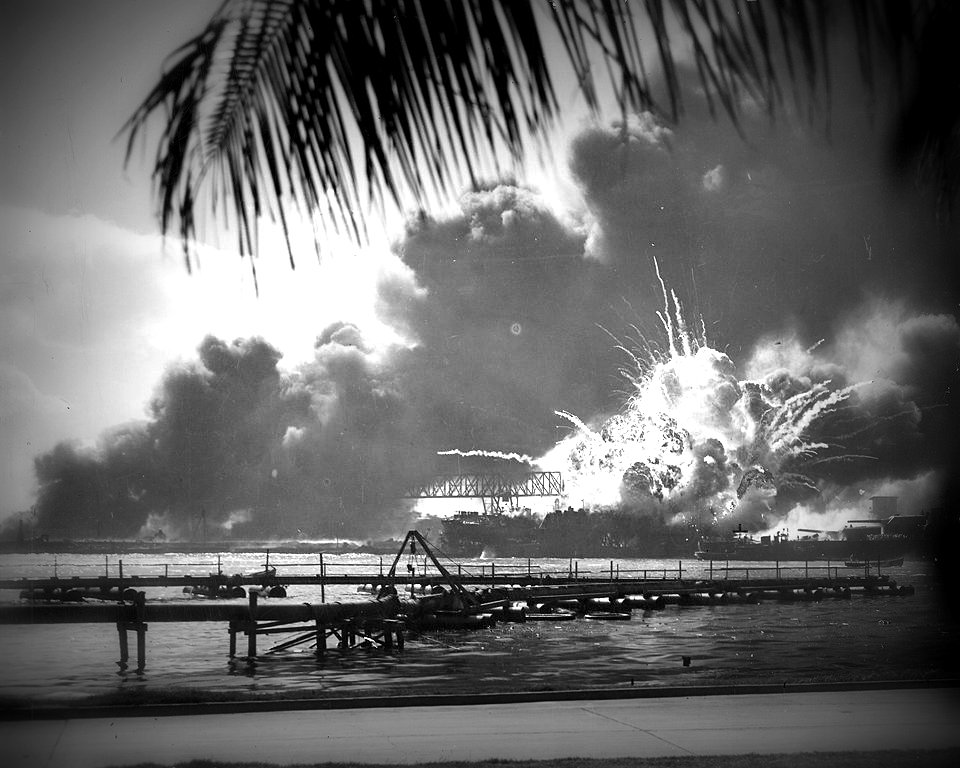
President Franklin Roosevelt called December 7, 1941, “a date which will live in infamy”–the day Japan attacked Pearl Harbor, Hawaii by air.
This morning, I was reminded of an off-air recording I made in 2013 of the pirate radio station, Radio Free Whatever. Please enjoy this bit of history from the Post archive:
USS Shaw exploding in Pearl Harbor on December 7, 1941
For your listening pleasure: one hour, seven minutes of the pirate radio station, Radio Free Whatever.
I recorded this broadcast on December 15 2013, starting around 2:40 UTC, on 6,925 kHz AM. This broadcast was a tribute to WWII and Pearl Harbor and contains news clips and music from the same time period. I believe my recording begins about five or so minutes into their broadcast.
I’ve mentioned many times before what a joy it is to curate the Shortwave Radio Audio Archive (SRAA). Sometimes I’m sent recordings that evoke a flood of memories. SRAA contributor, Tom Laskowski, just submitted another such recording.
Tom included the following notes with his Radio RSA – Voice of South Africa recording:
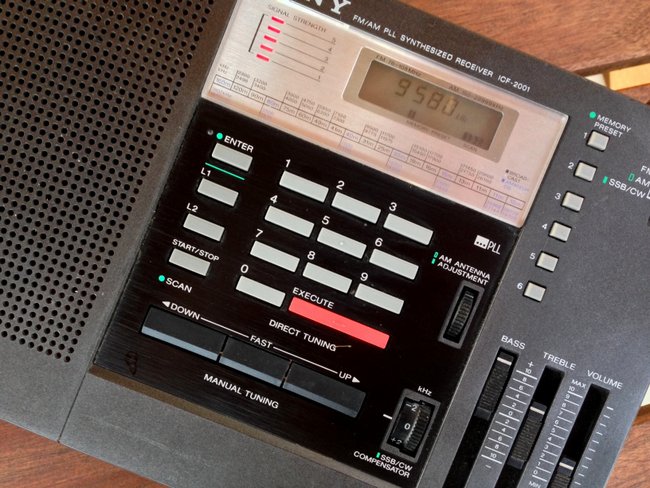
Every Saturday night during the early 1980s [in South Bend, Indiana] I would regularly tune to 9580 kHz at 0200 to listen to Radio RSA (Channel Africa as it is now known) to hear DX Corner, their regular DX program.
This episode from March 14, 1982 was a look at a brand new hot radio, the Sony ICF-2001.
The audio isn’t great but should be listenable. I think this was recorded using my new Realistic DX-302. Enjoy:
One of the joys of running the Shortwave Radio Audio Archive (SRAA) is that, over time, more and more people have become aware of it and submit recordings they’ve had in their private collections for decades.
Quite often, SRAA off-air recordings were originally made on reel-to-reel or cassette tapes which degrade with time. When SRAA contributors take the time to digitize these recordings, and share them via the SRAA, they put these collections in the hands of hundreds of archivists. We’re grateful each time we receive one of these shortwave or mediumwave/AM recordings.
You can imagine my excitement when I received the following message from one of our newest contributors, Colin Anderton:
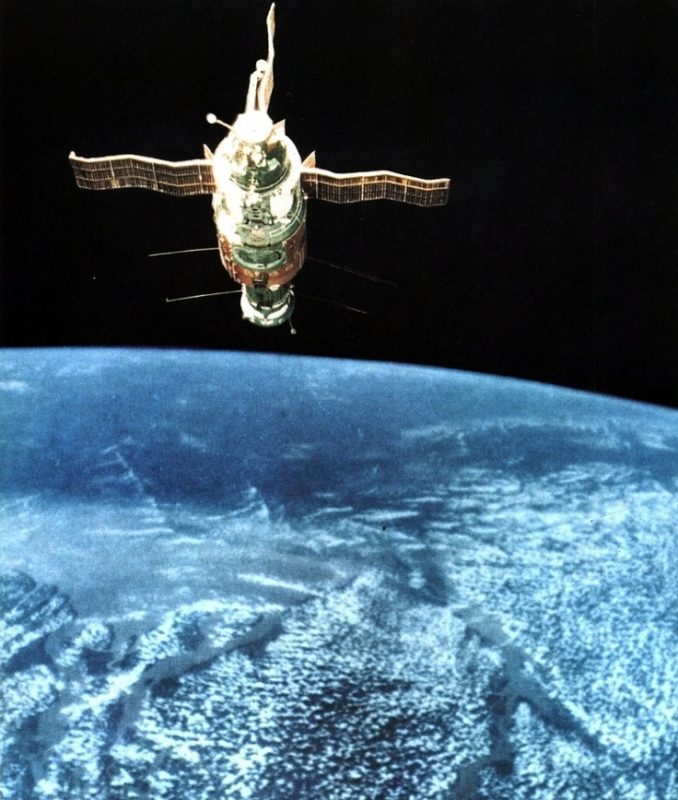
“As a space flight nut, I have many recordings from the 1970s from Radio Moscow. They used to broadcast on the medium wave, and I used to record the news bulletins during some of the space flights. In particular, there was a period between December 1977 and March 1978 when Soviet cosmonauts first lived aboard the Salyut 6 space station. I recorded each days’ news reports on the flights, and also some additional items about them.”
Colin’s recordings are amazing. Here’s a sample from December 10, 1977:
We’ve started publishing Colin’s recordings on the archive at regular intervals.
Interestingly, I discovered that Colin also has a website dedicated to NASA highlight recordings from the space age. Several months ago, he spent a considerable amount of time making the public domain series more listenable–removing voice-actuated recorder noises, tape clicks, etc.
Colin has made his collection of re-engineered NASA recordings free to download on his website. If you download and enjoy his recordings, consider dropping him a donation. If you’re into spaceflight like I am, you’ll certainly enjoy this collection:
Many thanks to SWLing Post contributor, Bill Patalon, who reminds us that 78 years ago today (September 21, 1939) radio station WSJV made an audio recording of its entire 19 hour broadcast day. Bill points to these details from Wikipedia:
This undertaking was a collaboration between the station and the National Archives, and it was the first time that such a comprehensive recording of a radio broadcast had been made. The station then donated its original set of recording discs to the National Archives, giving it a rare and complete artifact from an era frequently called the Golden Age of Radio. Due to their historical significance, the United States Library of Congress has since added these sound recordings to its National Recording Registry.
If you would like to relive September 21, 1939, you can listen to all of the WSJV recording segments courtesy of Archive.org. I’ve embedded the full playlist below–simply press play at the top of the player and each segment will load automatically as long as this page is open. Note that in the very first segment, due to a WSJV equipment glitch, there is a period of silence. Enjoy:
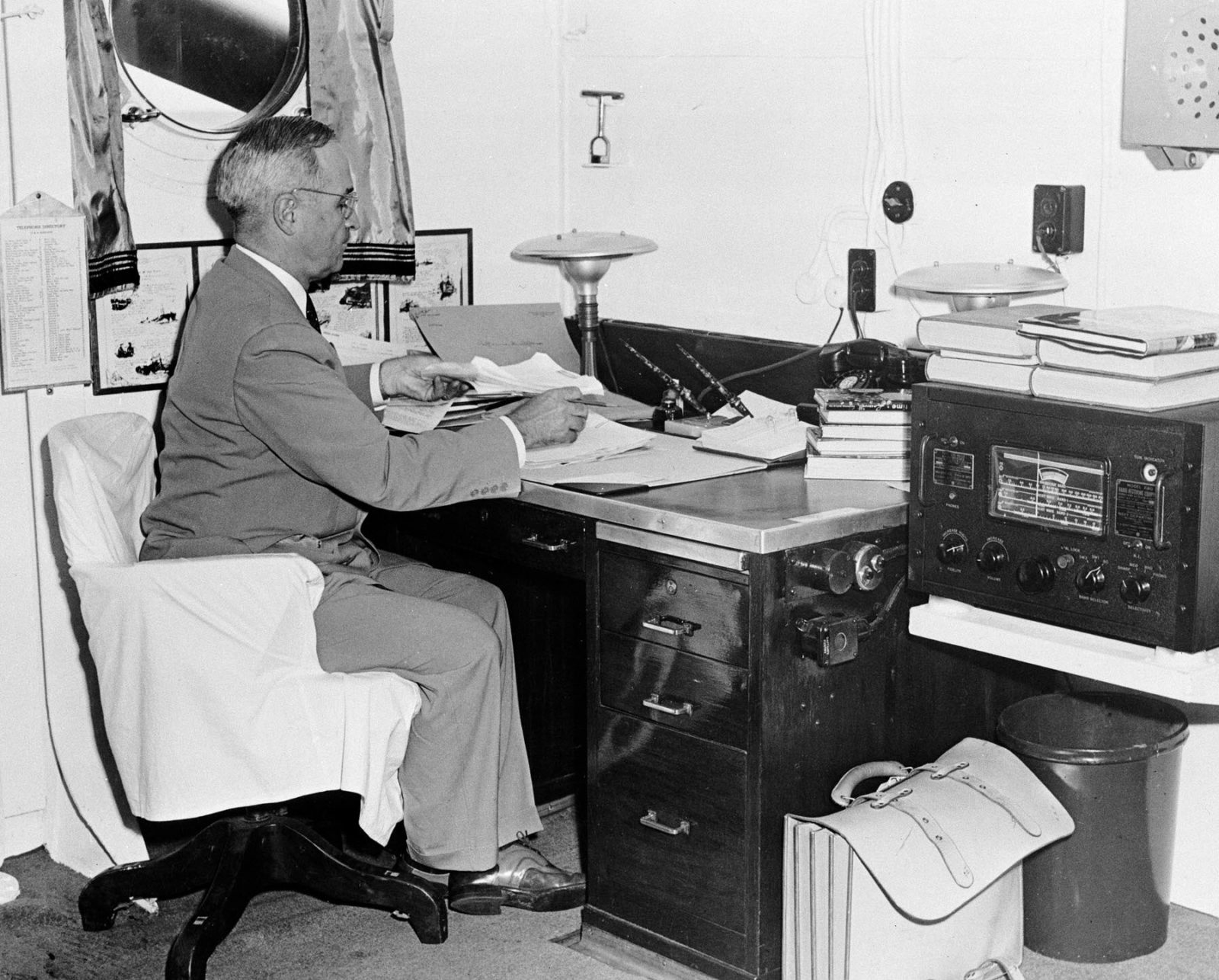
Many thanks to SWLing Post contributor, Kim Elliott, who recently shared the photo above of President Harry S. Truman via @RealTimeWWII.
If I’m not mistaken, that is a Scott Radio Labs Model RBO-2.
I’m guessing that’s also the speaker mounted on the wall directly above the receiver.
Scott Radio Labs marine receivers were shielded to the point that they had very low local oscillator radiation. This design prevented detection of the ship via the enemy’s use of radio direction finding gear.