Shortwave listening and everything radio including reviews, broadcasting, ham radio, field operation, DXing, maker kits, travel, emergency gear, events, and more
Many thanks to SWLing Post contributor, Al Quaglieri, who writes:
In the ’60s and ’70s, RAE had a really evocative theme song that opened and closed their broadcasts. For years I searched for a copy of this, even going as far as writing the station about ten years ago. They graciously obliged, sending me a recording of the LATER theme, not the one I wanted. Well, here it finally is. RAE used an edited-down version.
My clip begins with a vintage RAE open and close, and then the song! It’s an obscure composition by Argentine composer Waldo de los Rios, entitled “Sol Alegre,” from a 1957 Columbia album called “Kiss of Fire.” Hope it brings back some memories!
If you’re a regular here on the SWLing Post, you’ve no doubt discovered that I’m a fan of vintage radios.
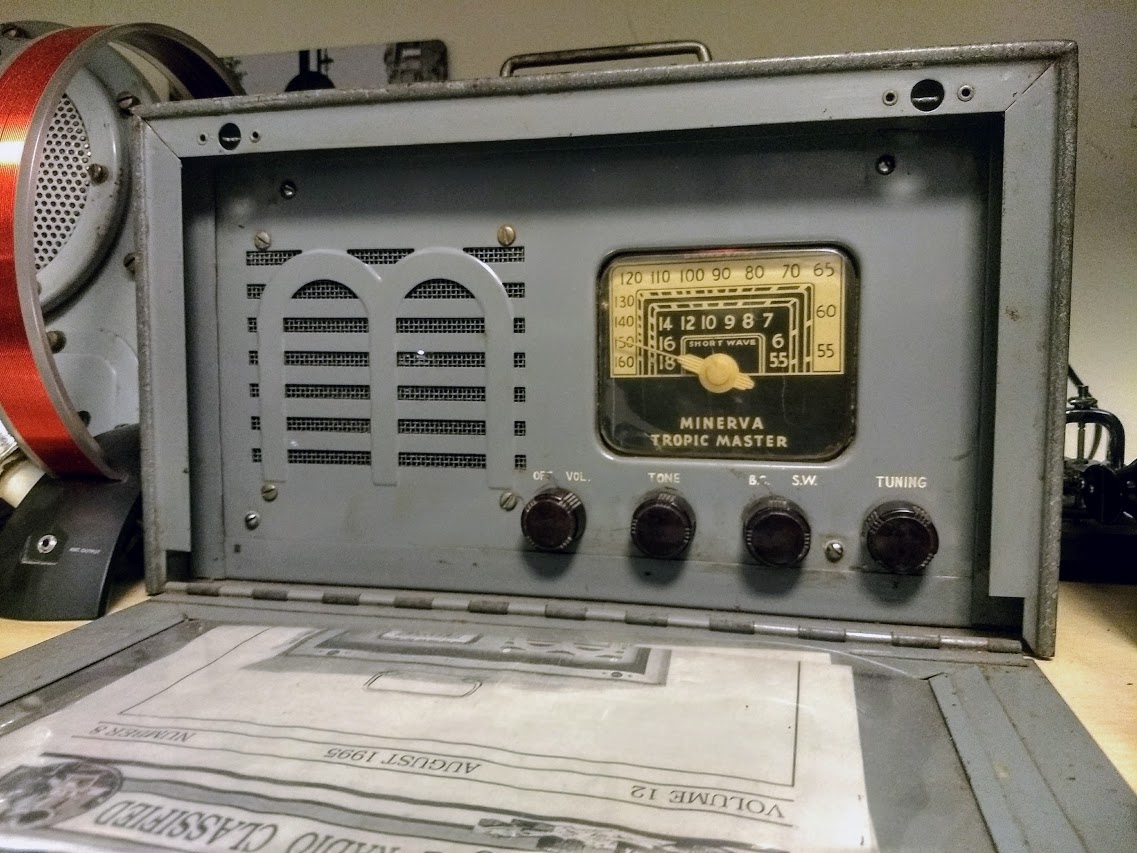
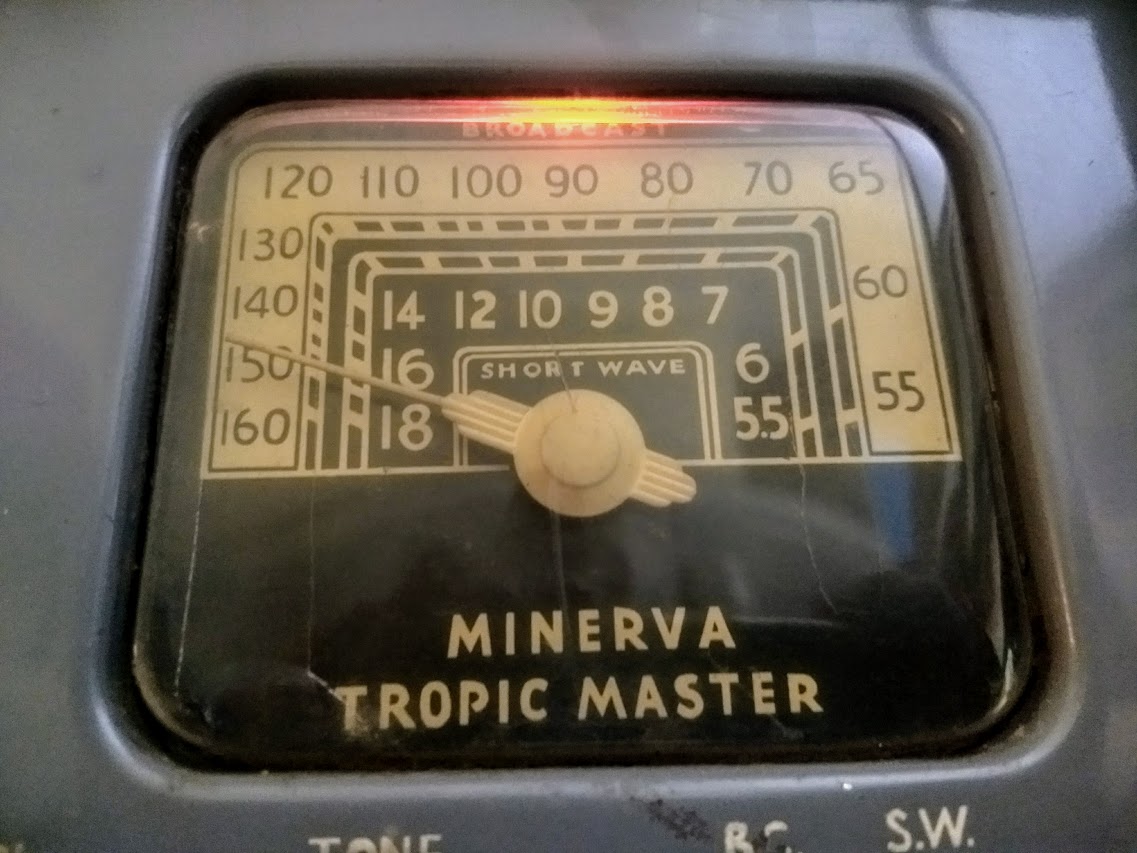
Lately, I’ve been attempting to let go of some of my vintage gear to give my favorite rigs proper shelf space and dedicated antenna time. To keep temptation at bay when I visit flea markets or hamfests (like Hamvention and the one in Shelby, NC) I now focus on WWII era radios; specifically “morale” radios that were used for troop entertainment. I’ve two morale sets: the Scott Marine Radio Model SLRM (technically, a commercial version of a Navy set) and the Minerva Tropic Master.
I purchased this Minerva set off of eBay a couple years ago. I got it for $50 or $60, if memory serves (the seller originally wanted $180 + shipping!). He claimed it worked, but after I asked him a few questions prior to making an offer and learned that “working” meant the speaker prodeced a noise and the backlight worked. I made a low offer and he accepted.
Last year, I took Minerva over to my buddy, mentor and boat anchor doctor, Charlie (W4MEC). Charlie discovered the radio had many issues and several poorly implemented repairs. Still, in a few short weeks, when parts arrived he brought the girl back to life.
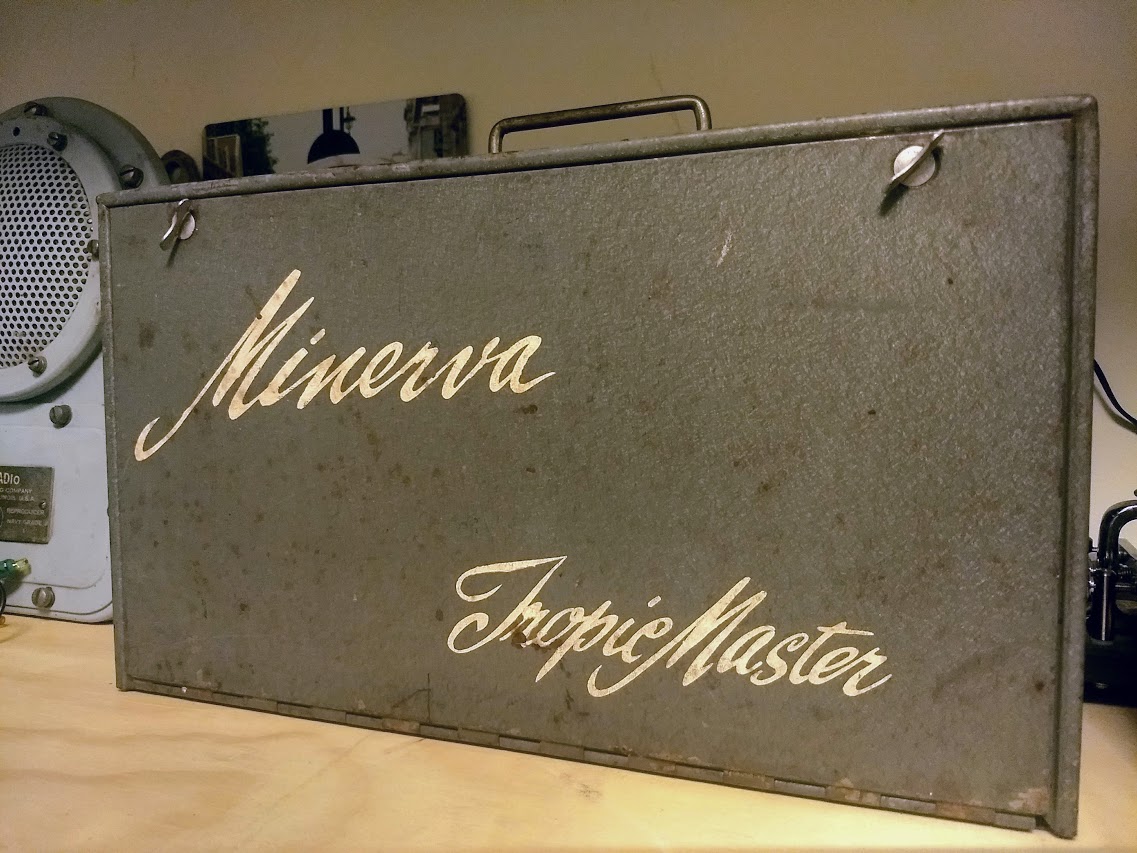
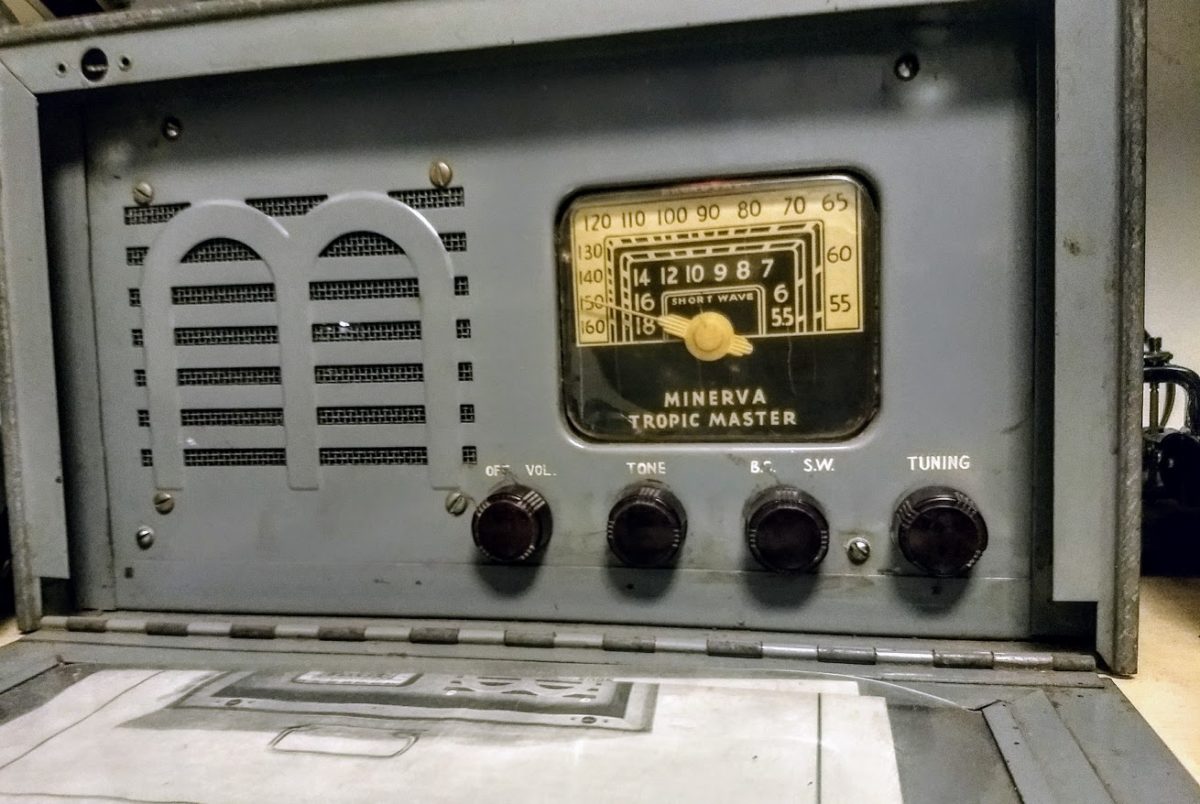
With front cover closed.
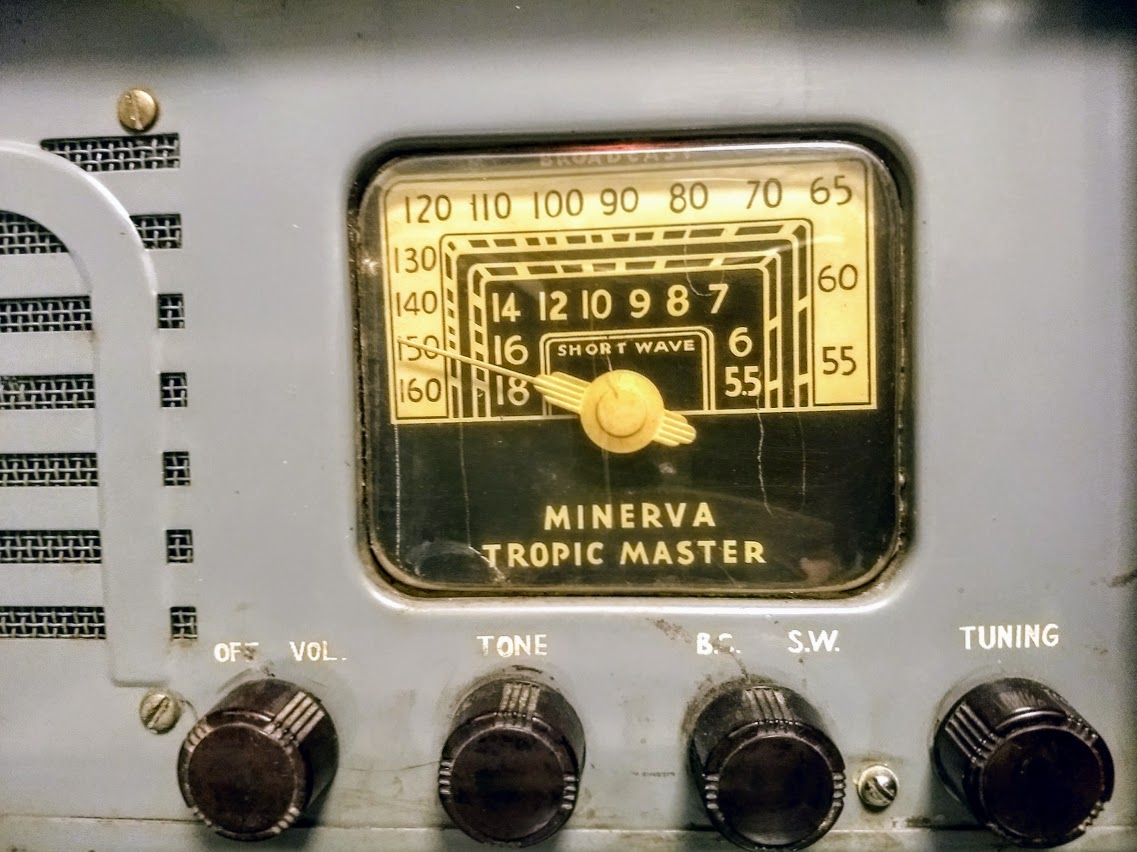
The Tropic Master is a portable eight tube receiver that covers both the AM broadcast band and shortwave bands from 5.5-18 MHz. It can be powered by AC or DC. It was “tropicalized” to withstand extreme heat and humidity. The internal speaker produces mellow, full-fidelity audio and the volume can be increased to room-filling.
The Tropic Master is portable and even has a fold down handle on top of the chassis. Though substantial, it must be the lightest of all of my vintage metal chassis radios.
Tuning isn’t exactly precise, but it does the job and is a pleasure to use. It’s quite sensitive on both shortwave and mediumwave. Last night, she was tuned to the Voice of Greece on 9420 kHz–I probably listened to two hours of Greek music while her eight tubes warmed the shack.
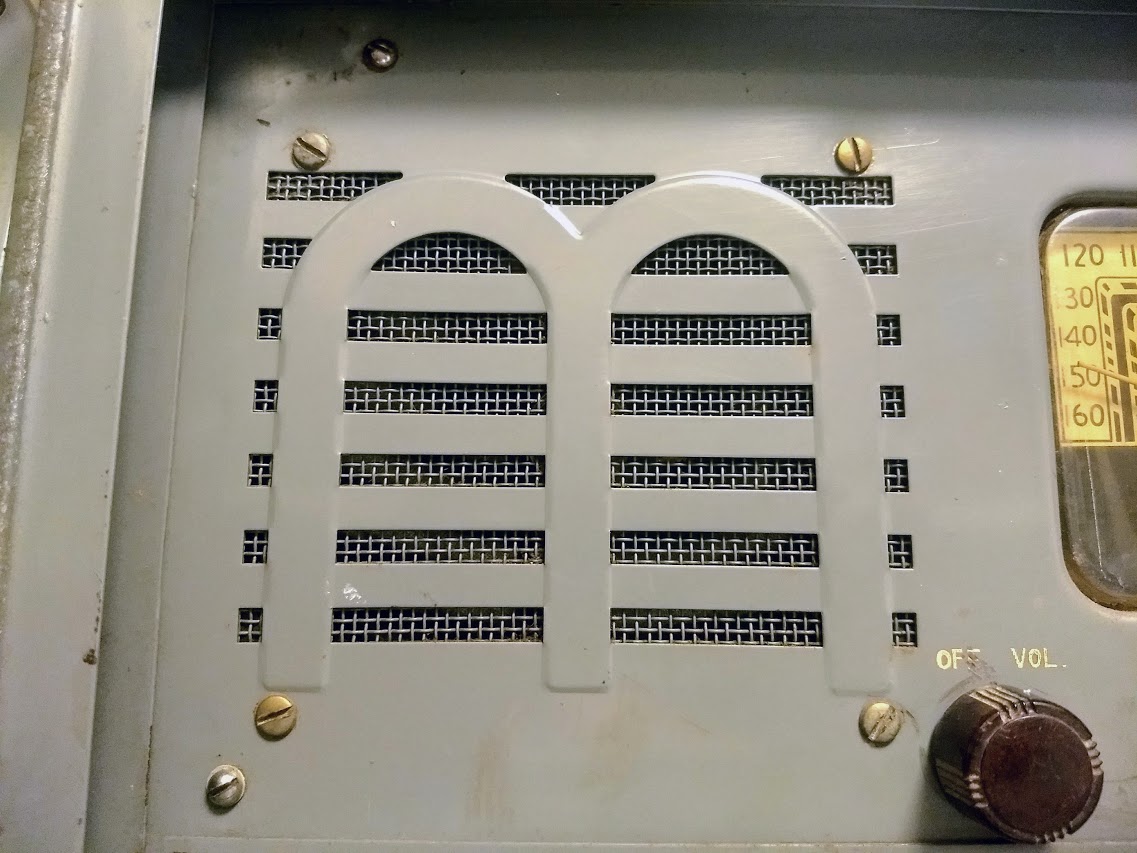
Who could turn down a radio with this speaker grill?
If you ever find a Minerva Tropic Master at a flea market or hamfest, I say adopt one! It’s a beautiful receiver and like all good vintage radios has a story and history of its own.
Post readers: Any other Tropic Master owners out there or do you have a morale radio? Have you ever spotted a Tropic Master in the wild? Please comment!
Many thanks to SWLing Post contributor, Andy Howlett, who writes:
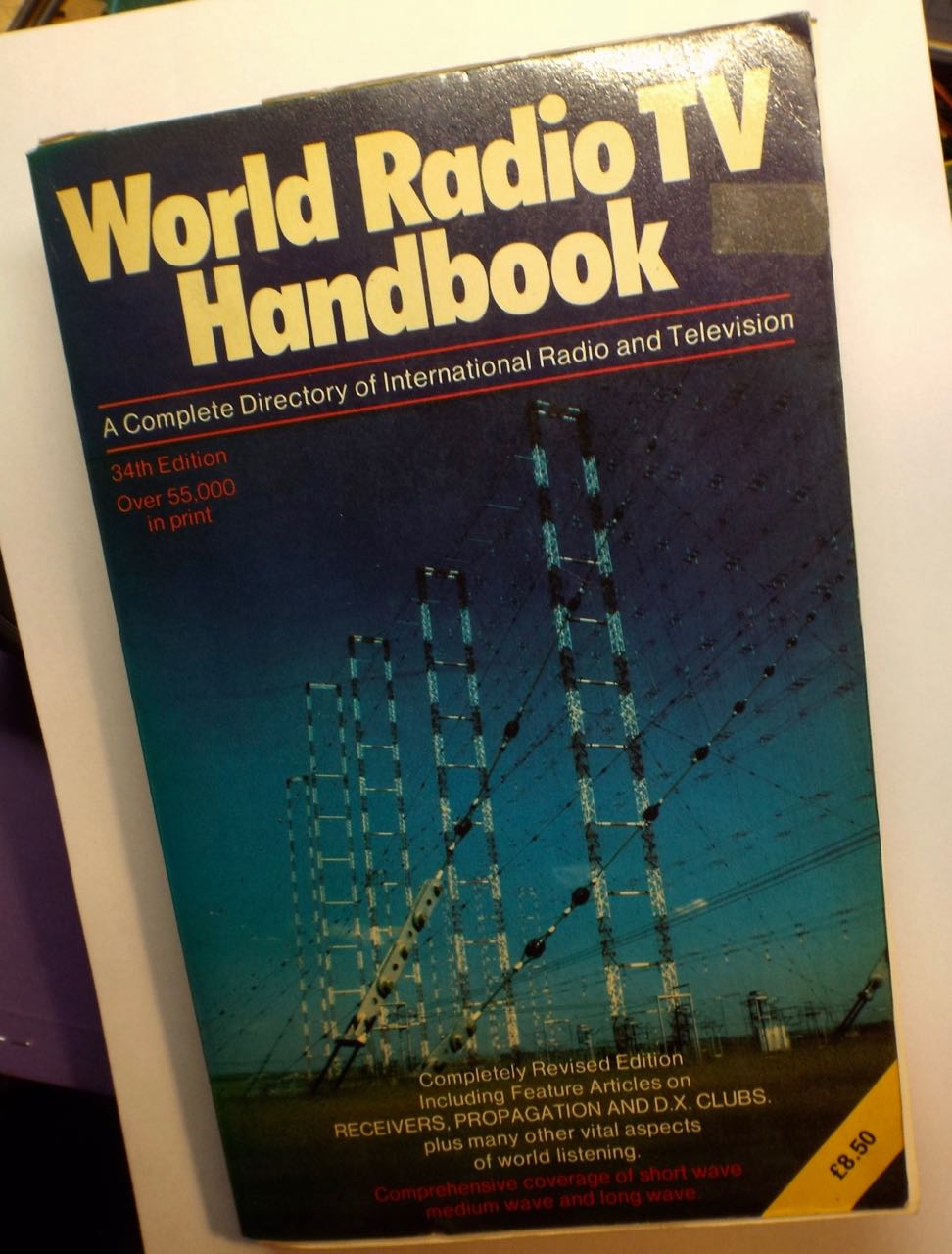
Always nice to see another WRTH arrive, even though I haven’t actually bought one for many years. Attached is a pic of the very first one I bought, back in 1980.
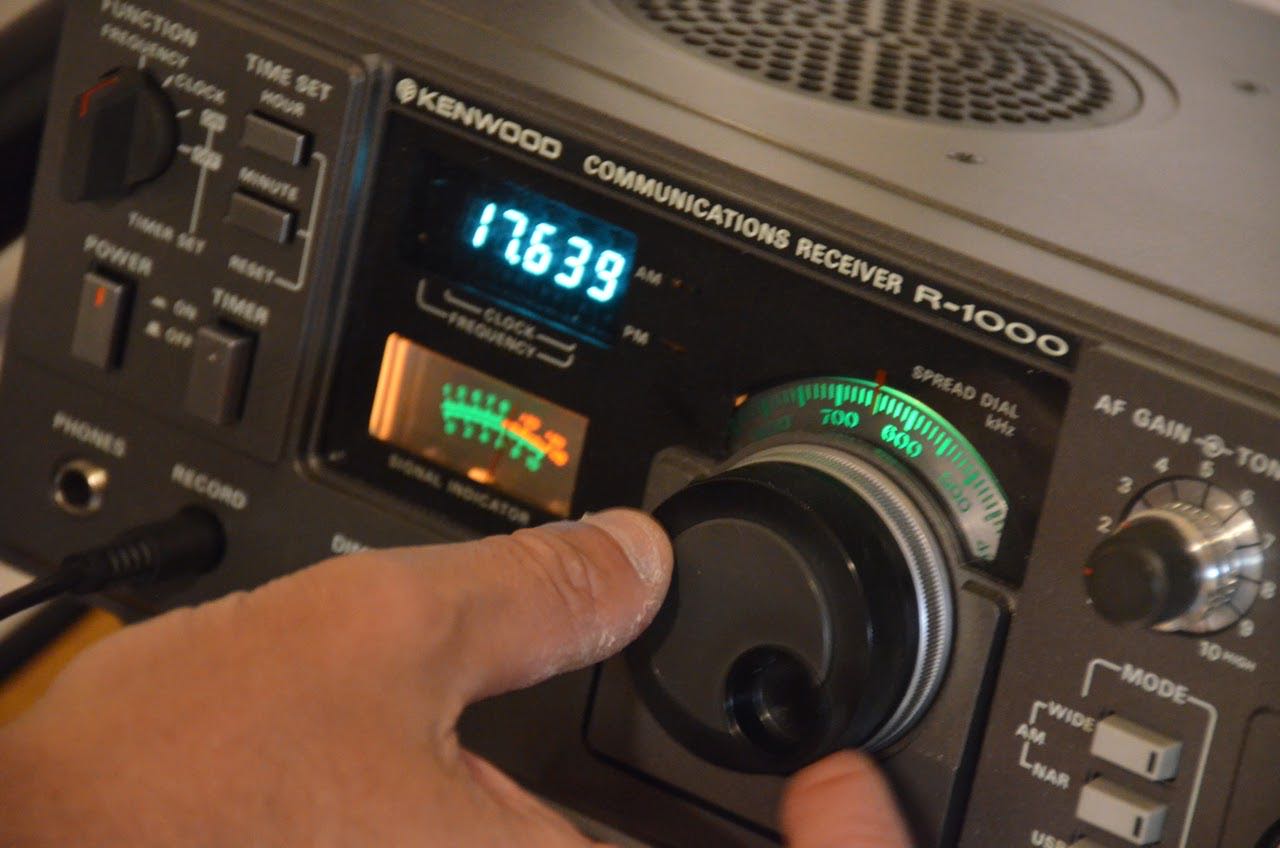
I only got it as it contained a review of the then spanking-new Trio R-1000 HF receiver, which I was thinking of splurging my meagre wages on.
On the basis of that review, I went ahead with the purchase and discovered it was a cracking RX and I only sold it on in the early 90’s to enable the purchase of an ICOM R-7000, another cracker!
Merry Christmas to you and all listeners everywhere.
Thank you for sharing your memories with us, Andy, and Merry Christmas to you!
Canadian Reginald Aubrey Fessenden in his lab believed circa 1906 (Source: Radio Canada International)
Now an annual Christmas tradition, Brian Justin (WA1ZMS) will put his longwave experimental station WI2XLQ on the air to commemorate the 110th anniversary of Reginald Fessenden’s first audio transmission.
WI2XLQ will be on the air from 17:00 UTC Dec 24th on 486 kHz and run for 48 hours until 16:59 UTC on Dec 26th.
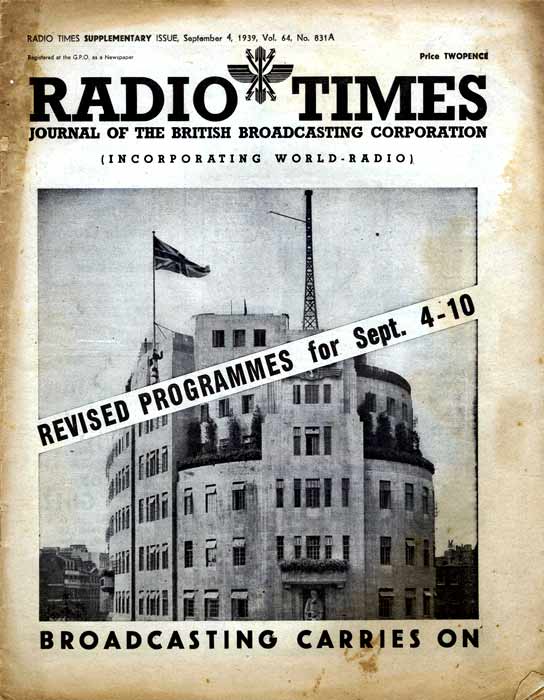
The 1930s was a turbulent decade. The country had to cope with the worldwide depression and mass unemployment that followed the Wall Street Crash of 1929. In 1936, King George V died, but his successor Edward VIII abdicated at the end of the year, to be replaced by George VI, his younger brother. Internationally, the decade was marked by the rise of the Nazis in Germany, and the sequence of events which culminated in the outbreak of war in September 1939.
It was a period of change in broadcasting too. At the start of the 1930s the BBC was still overseen by Sir John Reith, its first Director General. In 1932, the BBC moved from its cramped headquarters at Savoy Hill to the purpose-built Broadcasting House.[…]
President Franklin Roosevelt called December 7, 1941, “a date which will live in infamy”–the day Japan attacked Pearl Harbor, Hawaii by air.
This morning, I was reminded of an off-air recording I made in 2013 of the pirate radio station, Radio Free Whatever. Please enjoy this bit of history from the Post archive:
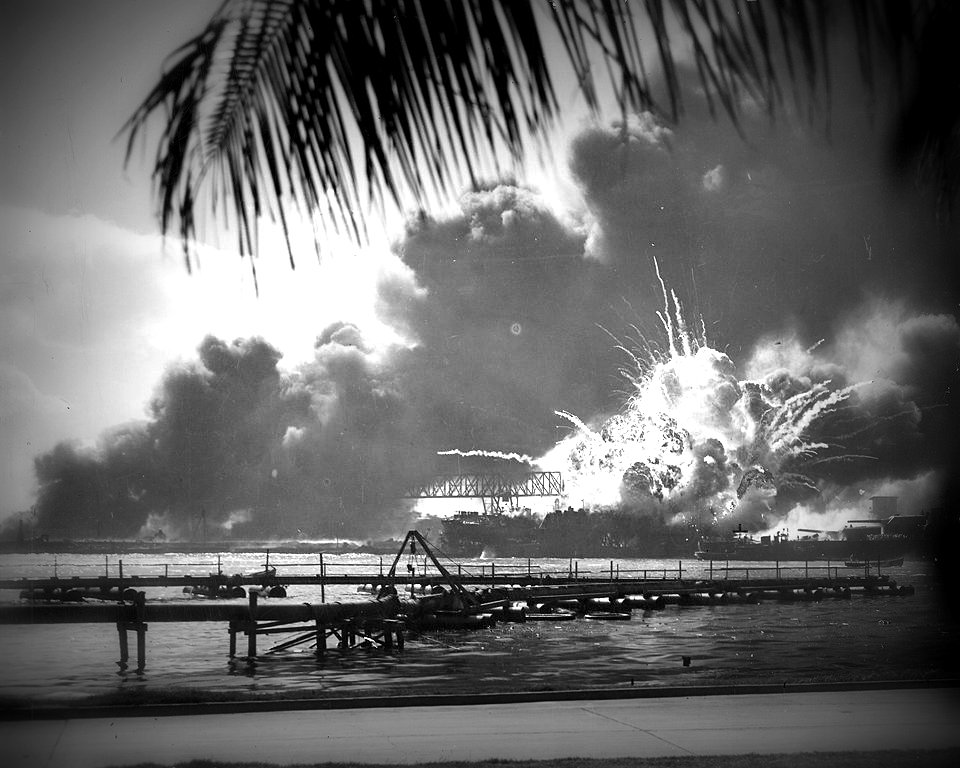
USS Shaw exploding in Pearl Harbor on December 7, 1941
For your listening pleasure: one hour, seven minutes of the pirate radio station, Radio Free Whatever.
I recorded this broadcast on December 15 2013, starting around 2:40 UTC, on 6,925 kHz AM. This broadcast was a tribute to WWII and Pearl Harbor and contains news clips and music from the same time period. I believe my recording begins about five or so minutes into their broadcast.
I’ve mentioned many times before what a joy it is to curate the Shortwave Radio Audio Archive (SRAA). Sometimes I’m sent recordings that evoke a flood of memories. SRAA contributor, Tom Laskowski, just submitted another such recording.
Tom included the following notes with his Radio RSA – Voice of South Africa recording:
Every Saturday night during the early 1980s [in South Bend, Indiana] I would regularly tune to 9580 kHz at 0200 to listen to Radio RSA (Channel Africa as it is now known) to hear DX Corner, their regular DX program.
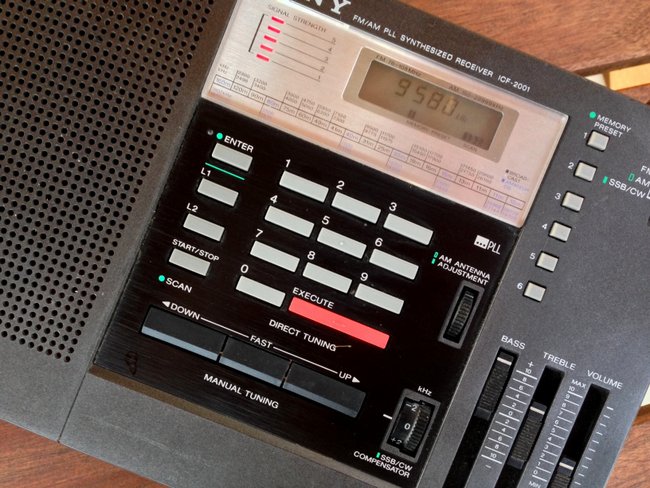
This episode from March 14, 1982 was a look at a brand new hot radio, the Sony ICF-2001.
The audio isn’t great but should be listenable. I think this was recorded using my new Realistic DX-302. Enjoy: