Shortwave listening and everything radio including reviews, broadcasting, ham radio, field operation, DXing, maker kits, travel, emergency gear, events, and more
Many thanks to SWLing Post contributor, Jonathan Marks, who shares the following details about the ‘Keep in touch with the Dutch’: Symposium marking the ninetieth anniversary of international radio broadcasting in the Netherlands, 1927-2017:
Symposium marking the ninetieth anniversary of international radio broadcasting in the Netherlands, 1927-2017
Thursday 1 June 2017, 2-5pm
Doelenzaal, Singel 425 Amsterdam
On 1 June 1927 Queen Wilhelmina officially inaugurated international radio broadcasting from the Netherlands with a speech to listeners in the Dutch colonies. This transmission attracted attention from all over the world as it was one of the first times that sound had been transmitted via radio waves across such a distance. In the decades that followed Dutch radio-makers continued to play a pioneering role in international broadcasting, experimenting with new technologies and programming formats. This symposium aims to highlight several themes from this rich history and explore source-materials in order to think about a research agenda in this field and new broadcasting techniques in the digital age.
Program
2.00-2.15pm: Vincent Kuitenbrouwer (University of Amsterdam)
Introduction
2.15-2.45pm: Bas Agterberg (Beeld en Geluid)
Everybody Happy? Archiving RNW and the Heritage of Eddy Startz at Sound and Vision
2.45-3.00pm: break
3.00-3.30pm: Jonathan Marks (CEO Critical Distance)
International Radio Broadcasting in the Era of Amazon Echo
3.30-4.00pm: Rocus de Joode (Independent Consultant at JRCC)
The Importance of Shortwave, the Madagascar Relay station Now and Then
4.00-4.15pm: break
4.15-5.00pm: Panel: International radio in the digital age
– Alec Badenoch (University of Utrecht/Vrije Universiteit): Radio Garden
– Leon Willems and Suzanne Bakker (Free Press Unlimited): Radio Dabanga
5.00-6.00pm: drinks reception
Please register
Vincent Kuitenbrouwer, History Department, University of Amsterdam
Email: [email protected]
This symposium is sponsored by the Amsterdam School of Historical Studies (ASH) and the Modern History Research Group
If I lived within a reasonable distance of Amsterdam, I would certainly attend this afternoon symposium. Impressive line-up!
Many thanks to SWLing Post contributor, Gerard Koopal, who shares the following:
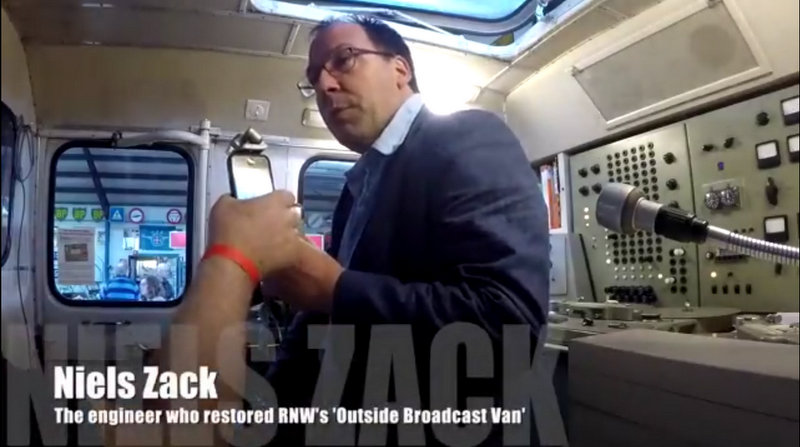
Below an article about the return of RNW Netherlands out of a 1958 truck on april 15.
Although i suppose you can’t read German, the times and freq’s should be clear.
… zwar nur für einen Tag aber immerhin:
Am 15. April, also diesen Samstag, gibt es eine Sondersendung aus dem
Automuseum Schagen im Norden der Niederlande. Die ehemaligen Mitarbeiter
Dick Klees, Hans Hogendoorn, Pieter Damave und Ruud Poeze werden aus einem
originalen Ü-Wagen des RNW aus dem Jahr 1958 eine 7-stündige Live-Sendung fahren.
Die Sendung wird über Stream, Mittelwelle van Radio Paradijs auf 1584, 1332 und 1224 kHz und im DAB Kanal 8A in Randstad ausgestrahlt.
Ach ja: Kurzwelle gibt’s auch, von diesen bösen Menschen beim
Schortwääävsörvizzz:
… auf 3985 kHz zw. 11-18 CEST … auf 6005 kHz zw. 11-15 CEST … auf 7310 kHz zw. 11-12 und 16-17 CEST … auf 15560 kHz zw. 14-17 CEST
Hi there, back in 1990 I was given a Panasonic RF-B40 for my birthday (I think it was my birthday…1990 was a long time ago!). I found that radio to be very sensitive on shortwave, more so perhaps than my Sangean ATS-803A, but ultimately it didn’t really add much value to any serious DXing because it would only tune on shortwave in 5 kHz steps. This rather course tuning arrangement was very limiting in terms of tuning out adjacent noise and copying tropical band – and other signals that weren’t quite on-frequency etc. Frustrated, I lent my RF-B40 to my brother a few years ago and serves me right; following a house move, he managed to lose it! Quite a shame really because almost three decades later, I would have been very interested to put the RF-B40 through it’s paces on a DXpedition or two. You really don’t see them in action very often at all these days.
Above: the Panasonic RF-B40 (not mine – unfortunately) and the RF-B60, mid-DXpedition!
At that time, which was around the beginning of the 1990s, I read a review somewhere and it became clear that the better receiver was quite obviously the RF-B65. Upon it’s introduction into the market, the RF-B65 was immediately recognised as an excellent receiver, however, in the intervening years it’s reputation has continued to grow to the point today where it enjoys legendary status amongst DXers and bit of a cult following. There’s a lot of information on the RF-B65 to be found on the internet, so I won’t go into huge detail, but the obvious question is: what makes thsi receiver so special? Well, it’s a quite compact PPL double conversion receiver, covering 153 kHz to 29,999 kHz AM and 87.5 to 108 MHz, FM. It has a keypad for direct frequency input, although you have to press either the ‘FREQ’ or ‘METER’ buttons prior to punching in the numbers to define whether you wish to access a particular frequency, or band. I actually find that slightly annoying, but you easily learn to live with such trivial matters when using a radio of this quality and performance.
Furthermore, there’s an electronic signal strength meter, a DX/local attenuation switch, external antenna jack, SSB reception mode, 1 kHz tuning steps on shortwave (unlike it’s little brother the RF-B40) and fine tuning. The single bandwidth filter is 6 kHz wide and thus limits selectivity a little, although the SSB option and fine tune helps offset that somewhat. It would have been nice to have a couple more filtering options, particularly narrower for serious DXing in crowded bands, to combat adjacent channel QRM. Build quality is generally excellent as you would have expected from a high-end Panasonic portable and with a very compact form-factor – roughly the size of a paperback book and weighing in at just 1.4 Ibs, it is eminently more portable than a Sony ICF-SW77 or the iconic ICF-2001D/2010.
Ultimately, the RF-B65 continues to enjoy an excellent reputation today, nearly 30 years after it was introduced because it is a wonderfully sensitive receiver and arguably the best-ever performing shortwave portable in the paperback book size category – often touted as ‘travel portables’. I managed to acquire an example in as-new condition from eBay, although mind you, I paid through the nose for it lol – that cult following ensures prices remain very robust! I have tested my example against the equally legendary Sony ICF-2001D, still considered by many to be the benchmark for shortwave portables, and in my experience the Panasonic is right up there with it. There’s virtually no difference whatsoever in sensitivity. Where the Panasonic comes a little unstuck is the lack of bandwidth filtering and SYNC, leading to lower selectivity. However, clever use of SSB and fine tuning does provide quite good compensation for these shortcomings. Overall though, given it’s size, sensitivity, build quality and audio, as a complete package, in my opinion, the RF-B65 is equal to the ICF-2001D, and this is why today, it remains so highly sought after.
Below are embedded reception videos and text links to the Oxford Shortwave Log YouTube channel, with various DX catches on the RF-B65. Some of these are considered quite rare in Europe, for example EXPPM Radio Educación’s 1 kW signal from Mexico City, the now defunct ABC Northern Territories on 120 metres and Radio Bandeirantes from Sao Paolo, Brazil, amongst others. Please note; right at the bottom of this post is a link to some very recent comparisons with the brilliant Eton Satellit – one of the very best portables currently on the market today. The vintage Panasonic holds its own, despite 30 years of supposed technical innovation in electronics. Thanks for reading/watching/listening and I wish you all great DX.
Clint Gouveia is the author of this post and a regular contributor to the SWLing Post. Clint actively publishes videos of his shortwave radio excursions on his YouTube channel: Oxford Shortwave Log. Clint is based in Oxfordshire, England.
BBC makes 1920s Radio Times magazines available to public
The BBC is making the earliest issues of the complete Radio Times magazines publicly available online for the first time. This release is part of the BBC Genome Project – a digitised searchable database of programme listings – from 1923 to the end of 2009.
BBC programme records have been available to the public via the BBC Genome Project since October 2014. Now, users can access digitised editions of the magazines from 1923-1929. Opening up this archive means researchers will be able to make direct links between the listings in the database and the original published listings.
Early colour front covers, specially commissioned illustrations and letters from the BBC’s first radio audience form part of the content in this fascinating record of early broadcasting.
Radio Times began in 1923, a year after the British Broadcasting Company started regular broadcasts, and thus provides a valuable record of the programmes that have been broadcast over nine decades.
More than five million programme records, scanned from Radio Times magazines, form the backbone of the BBC Genome website. Now, members of the public will be able to view the 1920s listings in facsimile, as well as all the extra material contained in articles and features in the magazine that have previously been unavailable on the site.
Hilary Bishop, Archive Development Editor, says: “We are particularly pleased that it is easy for our users to flick between the listings in the database and the related text in the magazine, as well as to scroll through articles not seen previously on BBC Genome. It is part of our commitment to continually improving BBC Genome and helping to open up the BBC’s archives as much as possible.”
Radio Times in the 1920s featured regular articles by the first Director General of the BBC, Lord Reith, and the BBC’s chief engineer, Peter Eckersley, addressing topics that concerned the BBC audience of the time, such as how to choose the best ‘receiving set’ and how to prevent ‘oscillations’ over the airwaves.
Articles, cartoons and programme listings all provide an insight into the history of broadcasting and the BBC’s first listeners, while adding some context, for a modern audience, to the earliest BBC programme records. The first editions of Radio Times show a nation still enthralled by the technological wonder of the new ‘wireless’ sets.
In each edition for the first few years of publication, cartoons explored the comic possibilities of a public who still didn’t quite understand how radio worked. “Would you kindly remove your hat madam?” asks a man at a ‘wireless village concert’. Yet the performer on stage is a radio set.
As the public wrestled with their new radio antennae, legendary cartoonist W. Heath Robinson illustrated two editions with eccentric designs of aerials.
Other historical snippets include a ‘new experiment’, in 1924, to broadcast a programme from California, to London. The exercise was to be repeated in the opposite direction. “If suitable conditions exist in the atmosphere”, concludes the article, “there is no reason why the experiment should not be successful”.
(Source: The Telegraph via Mike Barraclough on Facebook)
On 17 March 1899, the East Goodwin Sands Lightship, operating under a licence from the General Post Office, BT’s predecessor, sent a signal on behalf of the merchant vessel Elbe, which had run aground on the treacherous Goodwin Sands off the coast of Kent.
The message was received by the radio operator on duty at the South Foreland Lighthouse, who was able to summon the aid of the Ramsgate lifeboat.
Goodwin Sands featured again a few weeks later when, on 30 April 1899, the East Goodwin Sands Lightship sent a distress message on her own account when she was rammed by the SS R F Matthews.
Rather than the now-famous signals of “SOS” or “Mayday”, the recognised call sign for ships in distress at the time was “CQD”. Devised in 1904 by the British Marconi Society, it was popularly mistaken to mean “Come Quick – Danger” or, more bleakly, “Come Quickly – Drowning!”. However, its actual official meaning came from the land telegraph signal CQ – “sécu” from the French word sécurité – followed by D for Distress.
The “SOS” Morse code signal – three-dots/three-dashes/three-dots – was established as an International Distress Signal, agreed at the Berlin Radio Conference on 3 October 1906 – though the signal wasn’t formally introduced until 1 July 1908.
The face which inspired hope to a nation during the dark days of WW2 will once again light up the White Cliffs of Dover.
Forces Sweetheart Vera Lynn turns 100 today with a special tribute to the singer and the song she made famous…They’ll be Bluebirds Over The White Cliffs of Dover.
(Source: The Mirror)
A 150ft image of the inspiring Vera is being projected onto the iconic white cliffs in Kent as she becomes the first centurion to release an album! [Continue reading…]
Mike adds:
“It is March 20, the 100th birthday of the wonderful Forces Sweetheart. Remember her boys who flew the Spitfires and the Lancasters. Remember her boys at Arnhem.
Remember them all.”
Mike knows I’m a WWII buff and also a fan of Dame Lynn.
Many thanks to SWLing Post contributor, @K7al_L3afta, who suggested I post photos of the TAR-224 Radio. Obviously, he knows I’m a fan of this sort of rig!
He discovered the TAR-224 on the excellent CIA online museum where they give a brief description of the unit:
A compact, high-frequency, paramilitary transceiver, the TAR-224 enabled communications with field agents operating behind enemy lines. It saw service in Vietnam as well as during Operation EAGLE CLAW.
TAR-224 was a very compact, self-contained spy radio station, developed by AVCO Corporation in Cincinnati (Ohio, USA) around 1970 for the CIA. It was intended for communication with field agents operating behind enemy lines, and can be seen as a successor to the ageing GRC-109 (RS-1) of the 1950s. It was used for many years until it was phased out in the late 1980s.
The entire unit is completely waterproof, with all switches and controls at the front panel properly sealed, allowing the radio to be stored under harsh conditions for an extended period of time. A plastic lid can be placed over the controls to protect them against dust and dirt. It is held in place by three metal latches at the edges.
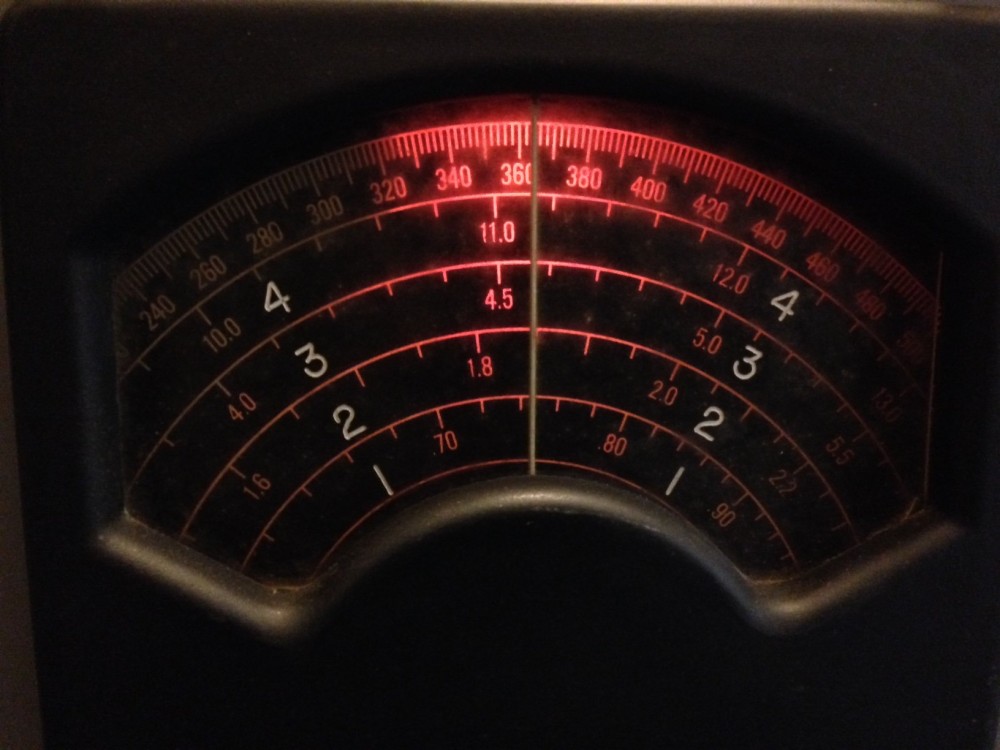
[…]The radio coverages all frequencies between 2 and 24MHz. The receiver has a Variable Frequency Oscillator (VFO), allowing continuous tuning of all 4 frequency bands, whereas the transmitter is crystal operated. The unit can be powered by an external 12V source that is connected to a 3-pin socket at the front left, or by a special 12V battery pack that is installed behind a watertight panel at the front left. A plastic grip, at the left of the radio, allows the unit to be carried around easily.
[…]Most TAR-224 units were used by the CIA on special (overseas) missions, but the radios were also used by intelligence services in Europe. It is known to be used on a mission in Angola in 1975. According to CIA communication specialist Teddy Roberts, the TAR-224 was still being used in operational context in 1983, when he trained a unit of US Army Green Barets on its use.