Category Archives: Radios

Jeff gives high marks to the Sangean PR-D4W

Sangean

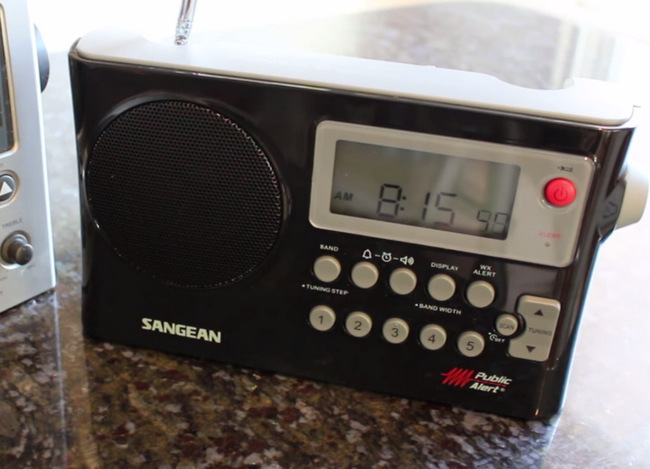
My pal, Jeff McMahon, over at the Herculodge, has just posted a video review of the Sangean PR-D4 portable radio. In summary, he writes:

“It’s a great radio with top FM, AM, and speaker sound. It blows away my C.Crane Radio-2E. Lack of illumination, however, makes it less than ideal as a bedside clock radio.”

Wow! I’m most impressed that Jeff places the PR-D4W (which retails for $69 on Amazon) above the venerable CCRadio-2E (which retails for $169 on Amazon) in terms of AM performance.

I just checked and it appears that Universal Radio also retails the PR-D4W for $69.95.

Follow Jeff at the Herculodge and on YouTube.

The Sangean ATS-909X: Marty’s bedside radio review

Sangean-ATS-909X-Marty

SWLing Post reader, Marty (W5MRM), comments:

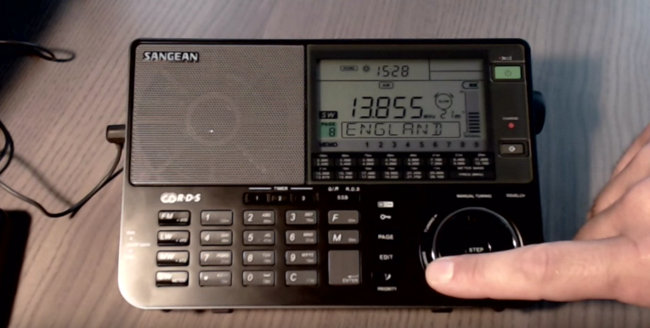
I recently picked up a Sangean ATS-909X to use as a bedside radio.

This blog post inspired me to put together a video review of the ATS-909X as a bedside radio. The video review can be found on my youtube page [or via the embedded player below]:

Great video, Marty, and thanks for the thorough review!

You can follow all of Marty’s videos on YouTube by visiting this page.

National RF 75-NS-3 receiver kit

NationalRF-75-NS_2

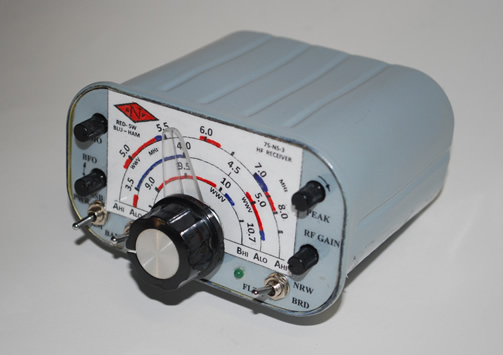
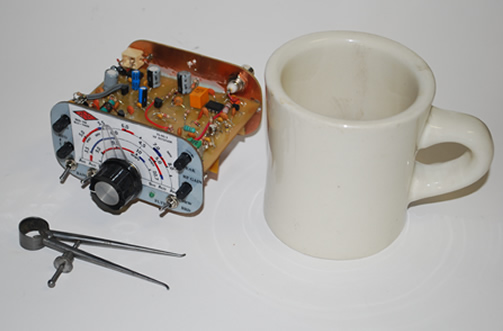
National RF, of California, has introduced a new “semi-kit” receiver: the RF 75-NS-3. Here’s an excerpt from the product description page of the National RF website:

National RF’s 75-NS-3 receiver is a complete super-hetrodyne mini high frequency receiver, designed specifically for the short-wave listener, electronics enthusiast or radio amateur, who wants to use their hands and build a radio. The receiver is offered as a semi-kit in which the electronic assembly is loaded and functionally tested at the National RF facility. The customer must then go to the grocery store (yes…the grocery store!), procure a can of [Spam] lunch meat, eat it or give it to the dog, and then proceed to drill and paint the can, in order for it to become the receiver’s enclosure! […] Detailed drilling instructions and final assembly instructions are provided as part of the kit. All other parts required for completion of the receiver are provided as well. Recognizing that the finished assembly looked somewhat like the fabled Collins receiver of the ‘60s, the 75S-3, (particularly when the can is painted a light gray) National RF engineers dubbed it (with tongue firmly planted in cheek, of course) the 75-NS-3! Although we have had fun packaging this receiver in a lunch meat can, it is nothing to turn your nose at! Its performance and portability will surprise you, and it is an ideal radio to bring with you on any trip!

75-NS_3

The receiver architecture is that of a single conversion super-hetrodyne receiver, that is capable of receiving AM, SSB, or CW. The receiver incorporates a dual gate FET as an RF amplifier with manual peaking and gain controls. A ceramic filter is used in the IF section with a front panel switch that controls a broad or narrow IF response. Other front panel controls include audio drive, BFO setting, and a band switch for the HF bands. The 75-NS-3 has internal receive frequency coils that are switched at the front and rear panels. The frequency range of the receiver, over three band set positions, is 3.5 through 12 MHz. This allows reception of several international short-wave bands, the 80, 60, 40, and 30 meter amateur radio bands, and of course, WWV time and frequency standard stations at 5 and 10 MHz.

For those who simply want a lower cost receiver to monitor the shortwave frequencies, National RF offers two variants of the original receiver: the 75-NS-1 and the 75-NS-2. Both are based on the design and circuit of the 75-NS-3, but do not have the band switching and frequency range of the 75-NS-3 receiver. The 75-NS-1 covers between 3 and 6 MHz, including the 80 and 60 meter amateur band. The 75-NS-2 covers between 6 and 12 MHz, including the 40 and 30 meter amateur bands. Both units have the fixed ceramic resonator band width set for about 6 KHz. And, of course, they are both designed to fit in the tasty potted meat can!! All other specifications presented apply to both of these models as well.

Pricing of the 75-NS-x versions:

  • Type 75-NS-1 Mini HF Receiver Semi-kit (covers 3 to 6 MHz) $189.95
  • Type 75-NS-2 Mini HF Receiver Semi-kit (6 to 12 MHz) $189.95
  • Type 75-NS-3 Mini HF Receiver Semi-kit (band switched from 3.5 through 12 MHz in three switched positions) $269.95
  • Shipping and Handling to within the US $10.00 each

Click here to view on the National RF website.

An Elecraft KX3 Go Box by OE2ATN

KX3box1

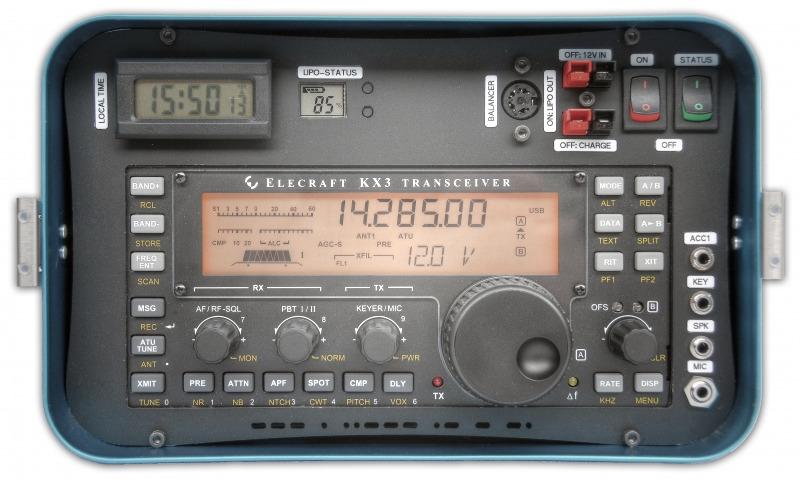
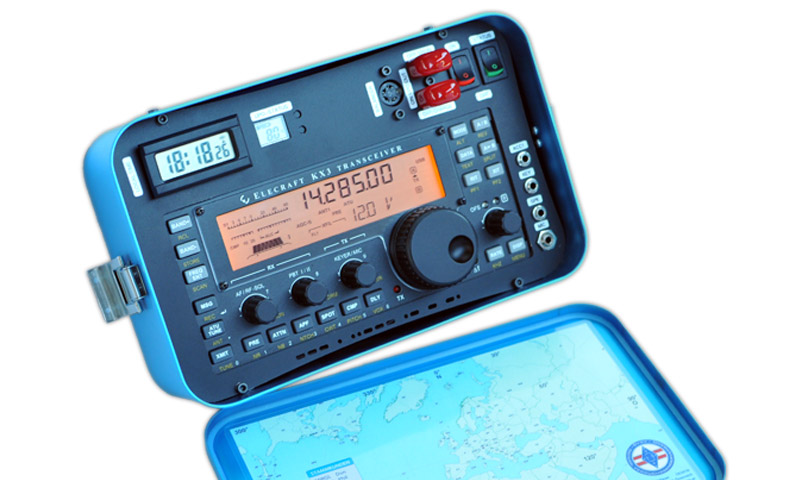
Many thanks to SWLing Post reader, John, N4HNO, who shares a link to this brilliant “go box” for the Elecraft Kx3 designed by Thomas Müllauer OE2ATN.

kx3box02Thomas’ design is based on a Sigg Maxi Aluminum Snack Box which seems to accommodate the KX3, a LiPo battery and host of connections quite easily.

Thomas does not sell go boxes, rather, he has outlined the full list of components used along with tips on his website. Click here to view.

Guest Post: Joris’ home brew Si4835-based receiver

Many thanks to Joris van Scheindelen (PE1KTH)–an SWLing Post contributor from the Netherlands–for the following guest post:


High Tech AM-FM DSP Receiver From
AM FM ontvanger P3060601

The old mode AM is still an interesting mode for amateur radio communication, also in amplitude CW.

Building your receiver is not difficult and quite fun. The semiconductor industry makes interesting integrated receiver chips today that will be useful for an AM receiver. Not only for broadcast reception but also for amateur AM reception or as part of an AM transceiver.

Silicon Labs also makes Si4734/35 receivers; these need a CPU to control the receiver, but are of interest for amateur use because the frequency can be tuned in 1 KHz steps and the audio channel bandwidth in 7 steps. There is no need for the transmitter to be on the receiving channel…

Si4835 AM-FM receiver

Looking for a small SW broadcast receiver design, and pocket size, I came to the excellent range of modern DSP receivers in a single chip from Slicon Labs.

I made a test bed set up has been made for the Si4835 AM-FM receiver.

The target specification was:

  • minimal components,
  • no micro-controller,
  • low power,
  • backlash free mechanical tuning,
  • good sensitivity,
  • earphone,
  • robust housing,
  • a short and small antenna system for outdoor use,
  • and minimal controls.

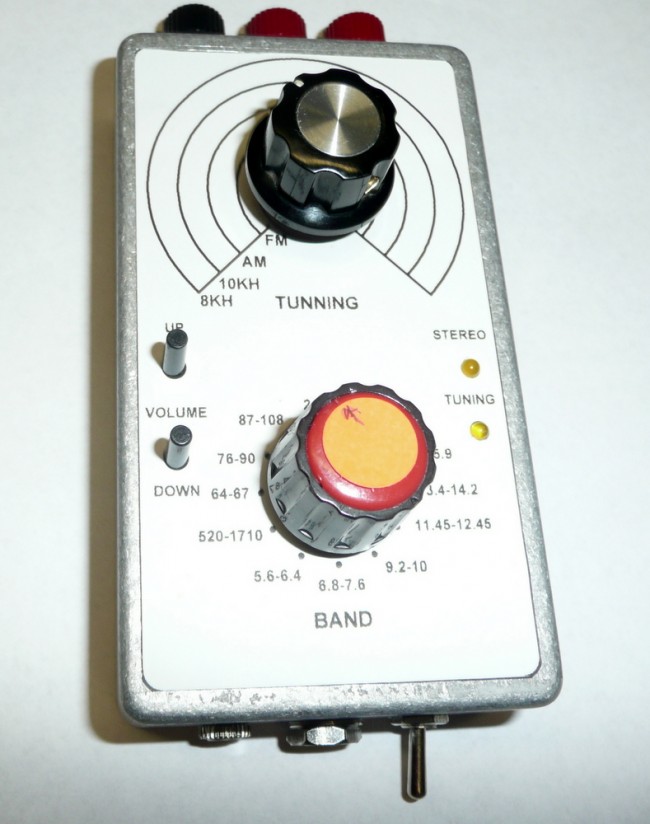
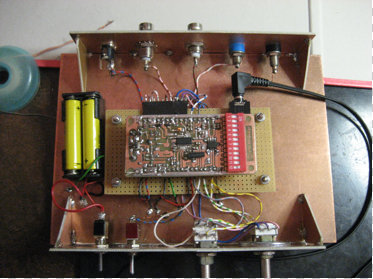
The Si4835 makes miniature design possible on a PCB (see photo Figure 1).

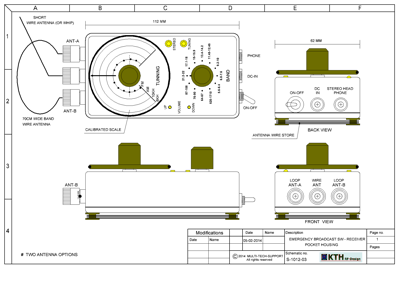
The red Dip (band) switch was replaced by a rotary switch in the final receiver design (Figure 4).

The receiver power is minimal 2 x 1.2 = 2.4 volts or a one cell LI-ION accu.
5 volts is the maximum for the Si4835 chip; current consumption is 30 mA.

Fig 1. Testbed setup for the Si4835.

Fig 1. Testbed setup for the Si4835.

The receiver has an RF pre-amplifier transistor and the LF amplifier is the TDA7050T.
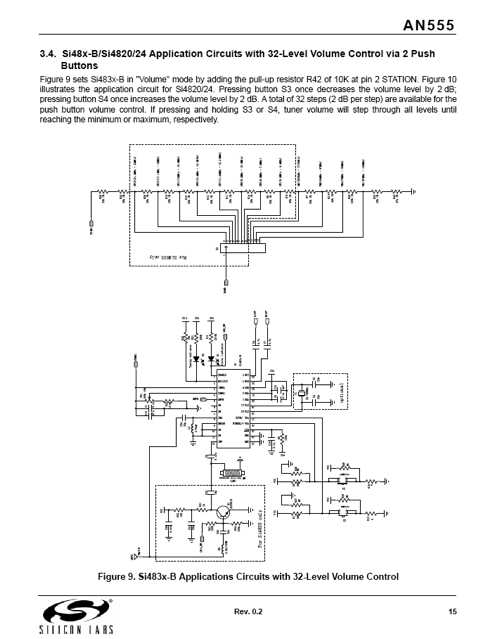
All receiver functions are in the chip; the schematic is very simple and can be built with minimal components (see schematic appnote AN555 Fig 2. below).

Only an LF amplifier has to be added to complete the receiver.

schematic

Fig 2. Receiver schematic Si4835 in the AN555 application note.

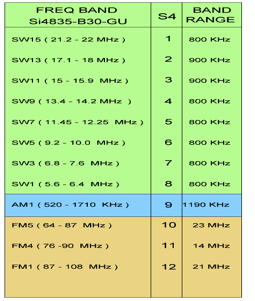
The Si4835 receiver has the following frequency bands–they are divided in sub bands 800 or 900 KHz wide (See Figure 3). The frequency step tuning is 10 kHz on AM, following the international broadcast raster standard.

Fig 3. Si4835 receiver sub bands.

Fig 3. Si4835 receiver sub bands.

This means there are 80 or 90 receive channels in the sub bands and make finding the BC stations on the scale more easy. The 10 KHz scale steps are linear. The frequency stability is locked to the 32 kHz X-tal via the synthesizer so there is no frequency drift. The AM LF audio channel is 5 kHz wide set by the DSP filter. Volume control can be done width 2 up-down push switches or by a LF potentiometer..

Fig 4. The experimental pocket aluminium receiver housing on PCB2.

Fig 4. The experimental pocket aluminium receiver housing on PCB2.

Receiving results

I have been testing many hours and I am surprised about this little receiver.

The receiving results are excellent on FM and AM and signals of 2 -3 uV are well received.

Also the audio quality is good–especially on FM. As can be seen in the frequency table the 40 and 20 meter band are in the range. Clear AM phone amateur transmission has been received when the transmitter was tuned on the 10 kHz raster in 40 meter band on AM.

Also AM modulated CW signals can be received bud not un-modulated carrier CW–they sound “plop…plop”.

The 5 kHz wide LF channel is a bid too wide so many CW signals pass through the audio at the time, but if AM modulated that should not be a serious problem.

The broadcast stations in the SW bands (when the daytime conditions are good) up to 20 MHz are good and strong.

Conclusions

The Si4835 receiver can be a fine broadcast receiver for outdoor work and if an AM transmitter is tuned in the 10 kHz raster this receiver can also used for amateur phone reception.

Addendum: The Si4734/35 is a better amateur AM Receiver

The Si4734 and Si4735 are a better receiver choice for amateur AM purpose because the frequency tuning can be done in 1 kHz steps. Also the BW of the LF channel can be adjusted to 1 kHz wide.

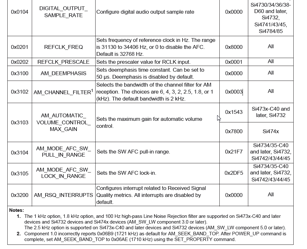
In Fig 5. from the programming APP note you see the code 0X3102 AM CHANNEL_FILTER it is possible to adjust the audio width by sending this code to the Si4734/35.

Fig 5. From the programming APP note

Fig 5. From the programming APP note

The LF bandwidth can be set on 1, 1.8, 2.5, 2, 3, 4 and 6 kHz wide.

This is excellent for modulated CW and AM phone discrimination in the audio channel.

The disadvantage is the need of an CPU and LCD display, “away from a minimalistic design”.

See also the note 1 and 2 improved 100 Hz rejection. See data sheet of the Si4734/35.

It look like that this receiver is a good receiver for building a modern AM-(AM)CW receiver or in a transceiver application. Tuning can be done digitally.

Think about this receiver [and the Si4835 chipset] when you intent to build a high tech AM – T/RX.

73 ‘ Joris van Scheindelen PE1KTH


What a fantastic home-brew receiver, Joris! I love the simple design of your receiver and the fact that it’s quite portable.  Thanks so much for sharing your notes and documentation.

Hearing shortwave on the Sony SRF-59 AM/FM walkman

The Sony SRF-59

The Sony SRF-59

SWLing Post reader, Steve, writes:

I check in on your blog frequently. I’ve been a casual SW and AM dxer since my childhood. I’m a mechanical engineer, and have some basic electronics knowledge, but I’m no RF expert, and half forgot most of what I used to know.

On 9-13-15, around 11am eastern time, I was playing with a Sony SRF-59 down low on the AM band. The lowest station I can hear at my location near Valley Forge PA is a Spanish language station on 540–WLIE, on Long Island I think. My dial is badly calibrated but I know I was below that station on 540, maybe even below 530 or 520, and heard some noise. It took some really careful back and forth tuning, but I could hear a voice. I put the radio against my AN200 passive loop and heard the clear unmistakable voice of “Brother Scare”, (Overcomer Ministry). I scanned the shortwave and found a simulcast on 9840, WHRI Cypress Creek SC. The info I have says it’s a 250 kW broadcast.

Grundig AN200 Loop Antenna

Grundig AN200 Loop Antenna

I scratched my head and thought there must be a pirate rebroadcasting it on the bottom of the AM band, but I couldn’t hear it on my CC 2E, or my Grundig G3 which tunes continuously from LW into MW. It is really touchy to tune on the SRF-59, but with work, I could hear him barefoot, and very cleanly with the loop. I checked in several times the next few hours and it was there until WHRI went off the air at 3pm I think. Unfortunately, I never got a station ID.

On the morning of Monday Sept 14, at 9pm local time, with the same radio and loop, I got a station ID for China Radio International, and then found the same broadcast on 9570 from Quivican Cuba–also a 250 kW signal. I could not hear it clearly barefoot, as with WHRI, (it is quite a bit more distant) but with the loop is was incredibly clear. Also it doesn’t seem to matter where the tuning dial on the loop is, or how it’s oriented (I was aimed east/west). The radio and loop both function normally higher up the AM band (you need to tune the loop, and the reception is amazing with it).

I know I was below 540, because I passed local stations on the way down–610(WIP), and 560 (WFIL)–and could hear Spanish voice just below that, which had to be 540. The shortwave was just below that. The only thing i get below that on any other AM radio is Cuba and Canada on 530, both of which I can obviously only get at night time. I don’t know how the tuning circuits could jump 9mHz so suddenly.

Call me mystified. I thought I could find something about this on the net; I can’t be the only one with this experience; but no. Have you ever heard of this?

Steve followed up later noting that he is actually able to tune in the whole 31 meter band, as long as a signal is strong enough to overload the SRF-59.

I’ve done a lot of MW DXing with the SRF-59 and had never noticed harmonics, but I’m not surprised they can be heard either. I might try to replicate what Steve did using my AN200 loop coupled to the SRF-59.

Has anyone else as heard 31 meter band signals on their SRF-59?

Does the Tecsun PL-880 have a hidden ETM function?

PL-880-ETM-Display

SWLing Post reader, Claudiu, writes:

I have a question regarding the ETM (Easy Tuning Mode) function on the Tecsun PL-880 model. Its indicator is visible on the LCD screen [see above], but I couldn’t find any mention of this function for this model. What should one do to enable that indicator and use the function? I’ve seen mention of this for earlier models (PL-380/PL-390), but not for PL-880, even after looking over the hidden features. Do you, or your followers, have any idea on this?

Very good question–it would be nice if the PL-880 had a hidden ETM function, but I suspect the PL-880 may simply use a stock Tecsun display; “ETM” may be standard print.

By chance, has anyone discovered a hidden ETM function on the Tecsun PL-880? If so, please comment.