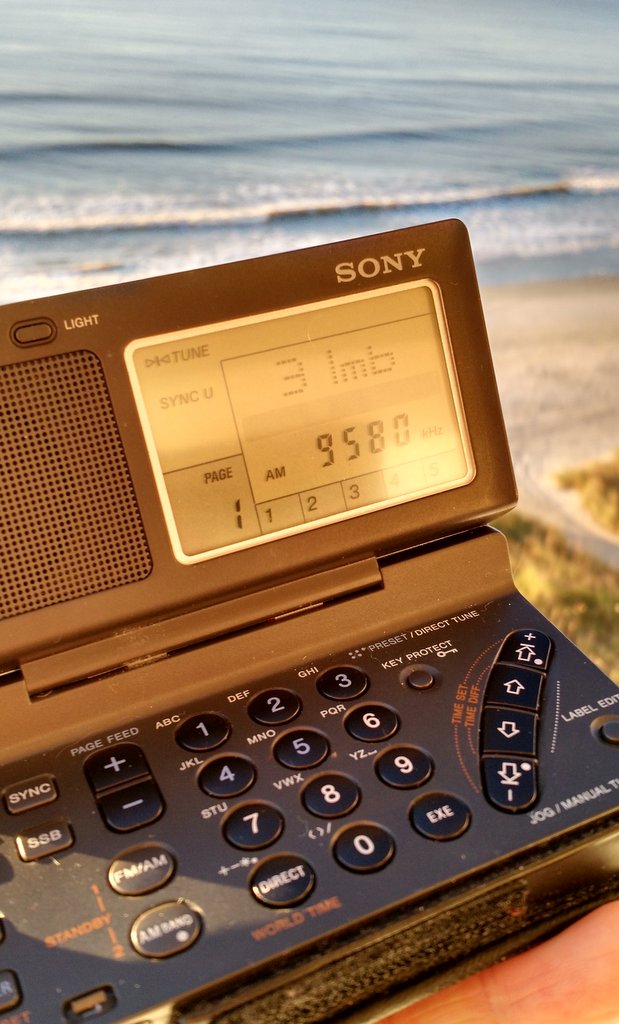
It doesn’t matter that propagation is rather poor this morning: I have a Sony ICF-SW100, a good cup of coffee, a beautiful sunrise and Radio Australia is loud and clear on 9,580 kHz.
All is well.

It doesn’t matter that propagation is rather poor this morning: I have a Sony ICF-SW100, a good cup of coffee, a beautiful sunrise and Radio Australia is loud and clear on 9,580 kHz.
All is well.
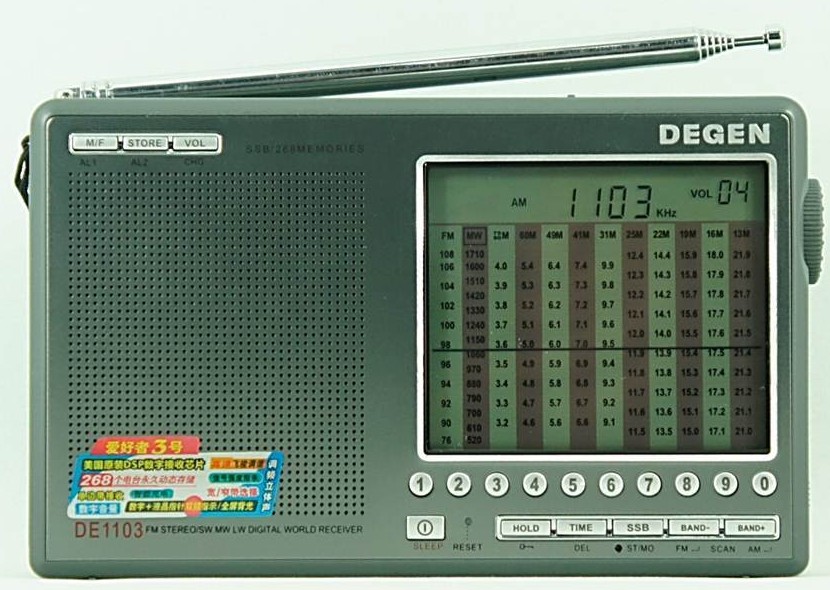 After publishing our previous post about a potentially redesigned Degen DE1103 with DSP, SWLing Post reader, Tudor, comments:
Yes, the DE1103 looks like it’s been redesigned. You can see it dissected here:
http://bbs.tecsun.com.cn/0002.asp?open=724665
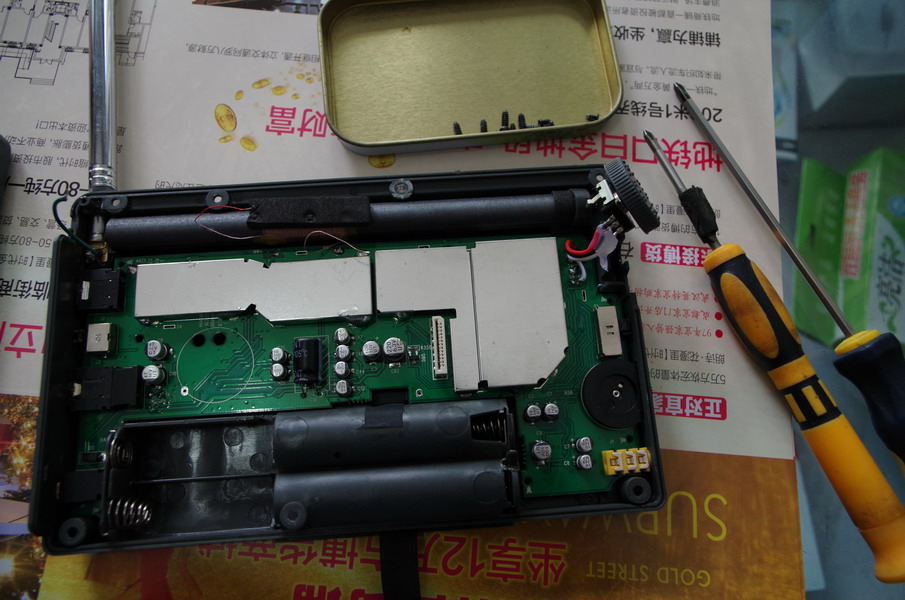
Photo source: http://bbs.tecsun.com.cn/ via Tudor. Click to enlarge.
And, if I’m not mistaken, the SiLabs DSP chip can be seen in this picture:
https://dl.dropboxusercontent.com/u/5417175/2015102316185240911.jpg
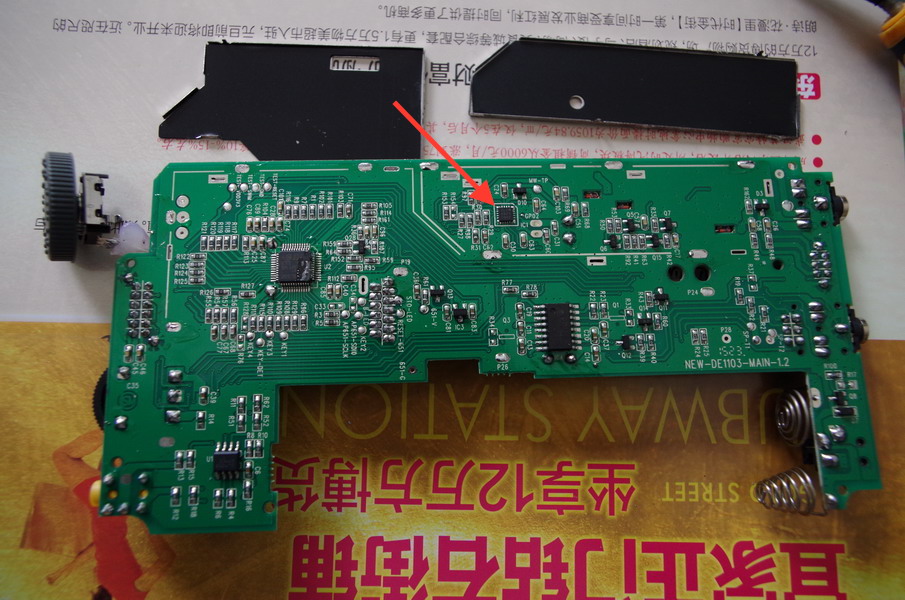
Photo source: http://bbs.tecsun.com.cn/ via Tudor. Click to enlarge.
Wow–thanks so much for confirming this, Tudor! This is obviously a redesigned Degen DE1103. I also noticed “NEW-DE1103-MAIN-1.2” silk-screened on the board:
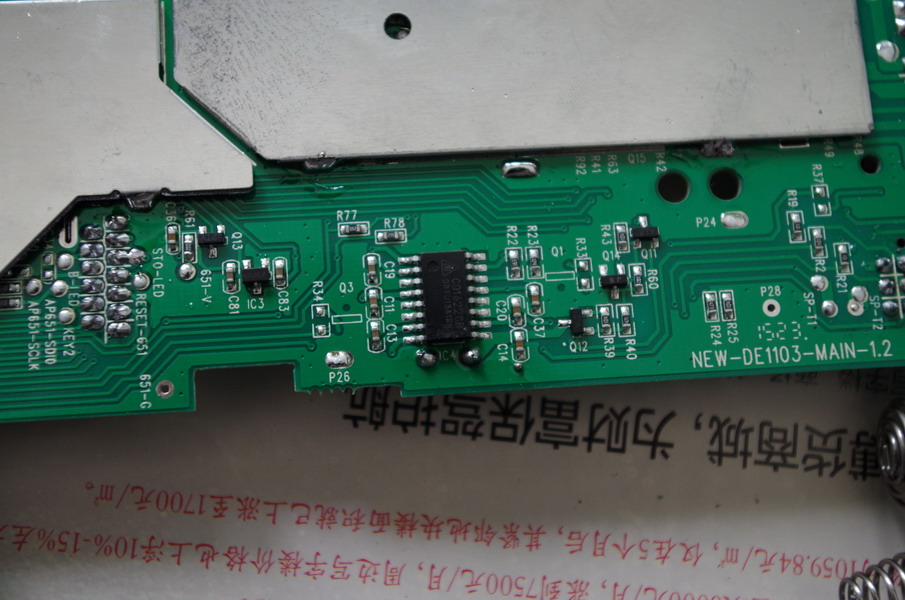
Photo source: http://bbs.tecsun.com.cn/ via Tudor. Click to enlarge.
The Hong Kong-based eBay vendor Bigbargainonline is selling the new Degen DE1103 for $79.00 US shipped. I’ve purchased from them several times before and was pleased with the experience.
There are other vendors selling the new Degen DE1103 as well (click here to search eBay) but make sure you’re purchasing the 2015 version of the Degen DE1103 since you can still find the cosmetically-identical legacy DE1103 new in box.
Tudor, thanks again for sharing a link to the discussion on tecsun.com.cn–while I can’t read Chinese (and the Google translation leaves something to be desired!) the photos certainly tell the story.
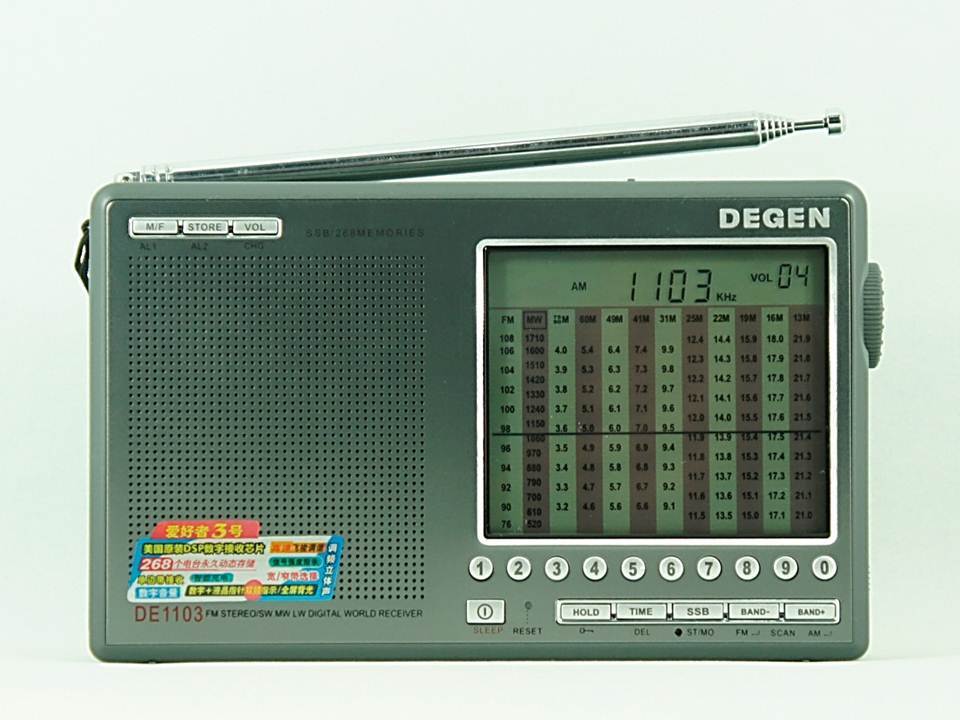
[Click here to read our update to this post.]
SWLing Post reader, Dan, recently sent me this link to the Degen DE1103 on AliBexxpress: http://m.aliexpress.com/item/32521065066.html
The vendor notes a “USA DSP chip” in this unit.
The Degen DE1103 has been around for many years; a testament to its popularity. I’m pretty sure it never had DSP receiver components, though.
I told Dan that this was most likely an error of 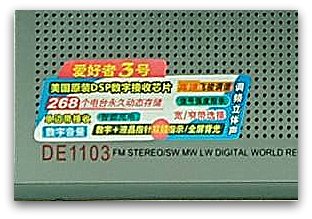 the Aliexpress web marketing person.
Today, Dan sent me another link, this time to an eBay listing with the title:
“DEGEN DE1103 DSP FM/LW/SW/MW Stereo Dual Conversion Digital World Band Radio”
I took a close look at the photos and noticed that “DSP” is featured on one of the front panel stickers.
Could it be that the DE1103 has been re-designed with a DSP chip? Can anyone confirm?
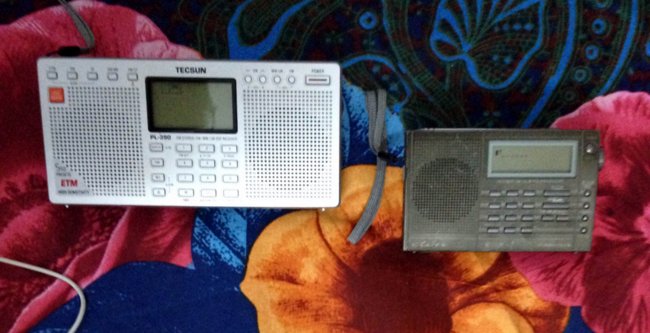
Vimal’s favorite radios are the Tecsun PL-390 and the Eton E100. (Photo: Vimal)
Please join me in congratulating SWLing Post reader, Vimal, for winning our October Shack Photo contest!
Vimal notes:
“I love these radios (see photo above). The Tecsun PL-390 stereo DSP radio with selectable band width- is able to pull in a slew of shortwave stations in quite clearly (of course a lot depended upon time of day and atmospheric conditions.) I can routinely receive signals from Asia, Australia, South America and Europe which is exciting!
And another one is my small Eton E100 Radio- The highlights of this one is that the stereo through headphones sounds great. Its Informative LCD display includes the frequency and the time while the radio is on (some other radios require a keypress to display the clock). It also features a nice amber backlight for the LCD display. Not to forget the sturdy whip antenna.”
Congratulations, Vimal–and many thanks to everyone who shared their photos.
Vimal’s entry was chosen at random from the 62 SWLs and ham radio operators who shared their shack/listening post photos. What an amazing number of entries!
I plan to take the many photos and notes we received from readers and turn them into an online photo galley. I’ll post this as soon as I’ve curated and formatted entries.
If you didn’t win this contest, fear not! We’re already plotting another simple & fun contest before the end of the year.
Note, too, that we are still collecting entries for the latest reader challenge: Emergency radio and a chance to win a prepper radio package!
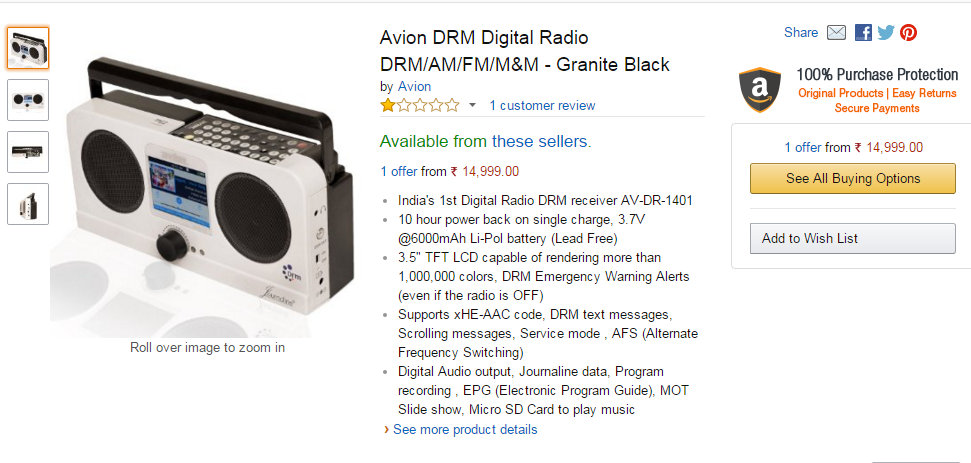
The Avion portable DRM receiver is now available on Amazon India (click here to view). It’s being sold for 14,999.00 INR (roughly $230 US).
At time of posting, The Avion DRM receiver only has one review by someone who has (obviously) never used the radio. They give one star then state: “price is very high. so i hate this product.”
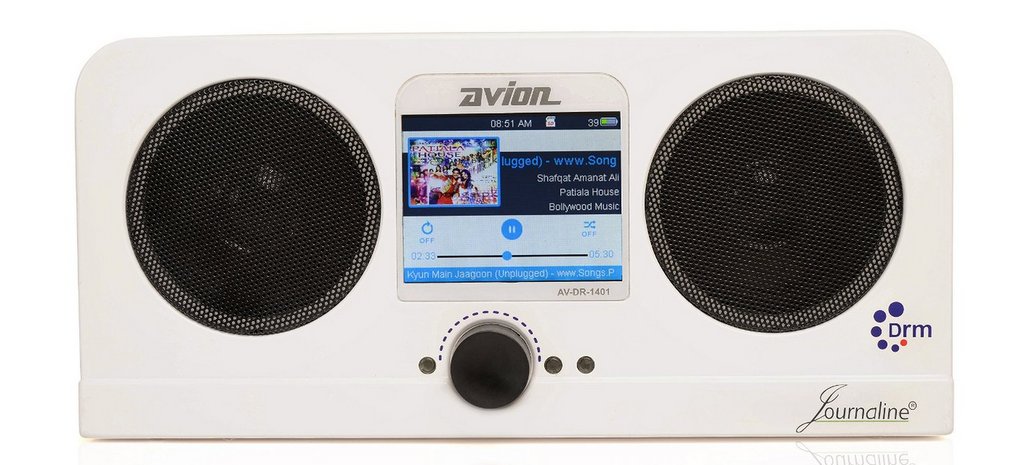
While I dismiss reviews like this, I must believe that this price is, indeed, high for most Indian consumers; especially when compared with alternate forms of media consumption (smart phones, analog radio, FTA satellite TV, etc.). It would be high for me, too.
I hope, at least, that the Avion performs well. I have no plans to review the Avion DRM receiver at this point simply because it’s challenging for me to find and decode DRM here in North America with my SDRs hooked up to large external antennas. Don’t get me wrong–occasionally, I do get amazing copy–but it’s typically when conditions are favorable. Listeners in Europe, Asia, and Oceana would have better results, no doubt.
Has anyone seen an objective review of the Avion DRM receiver? Please comment.

If you’re a subscriber of The Spectrum Monitor (TSM) magazine, you’re in for a treat this month: the November issue is the TSM annual Radio Buyer’s Guide.
Many SWLing Post readers know that I write occasional features and reviews for TSM. Since the November issue will feature my shortwave radio buyer’s guide, I was sent a draft of the November issue. After double-checking my review, I thought I’d glance through some of the other articles–what a rabbit hole that was! Two hours later and I’m still reading. Since I’m primarily a shortwave guy, TSM expands my horizons with articles about parts of the spectrum I seldom explore. That’s a good thing!
TSM Publisher and Managing Editor, Ken Reitz (KS4ZR), has done an amazing job collecting a group of writers who are not only experts in their respective fields, but are effective writers as well. These two qualities do not always go hand-in-hand.
At $3 per issue or (especially) an annual subscription for $24 ($2/issue) I think TSM is a bargain. When the November issue is posted on the TSM website later today, you’ll be able to read through the table of contents online.
It’s hard to believe TSM is almost in its third year of publication–this TSM writer is wishing it many, many more!
Many thanks to former VOA correspondent and noted DXer, Dan Robinson, for the following guest post:
-Dan Robinson
The end of summer is a wistful time, as we begin to mourn the passage of warm days and anticipate the arrival of autumn.
For those of us in love with shortwave, even in these waning days of HF broadcasting, August brings changes in propagation that herald the approach of improved reception, thoughts of getting antennas in shape, and preparing receivers for the new DX season.
It’s also a time when Hamfests are winding down for the year — for me, it’s still great fun to attend these and see what equipment is available.
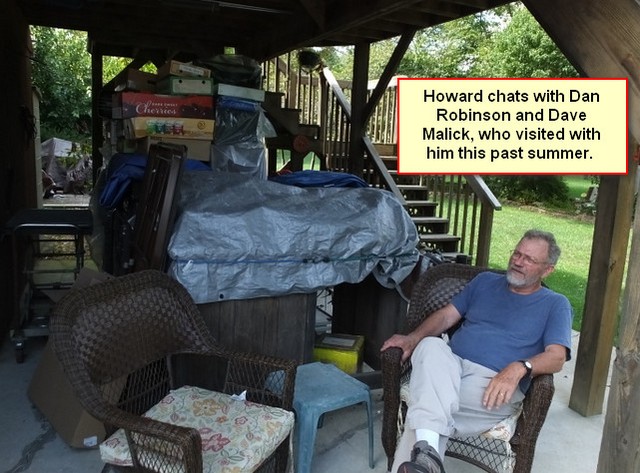
A few months ago, I and fellow Washington, DC area SWL Dave Malick took the opportunity to visit a couple of Hamfests. At one of these, in Berryville, VA, I ran across someone who over the years has become somewhat of a legend in the field of radio restoration — Howard Mills.
Howard lives in rural West Virginia, at a point about equidistant from Harper’s Ferry and Sheperdstown. That’s about an hour or so from DC and the immediate Maryland suburbs. From DC, you drive out Rt 270 to Frederick, Maryland and then up Route 15 and 340.
It’s beautiful country — on the way you pass through small towns, past farms, and in late summer, roadside stands selling huge ears of corn and about every type of vegetable, along with peaches and apples of every type and size.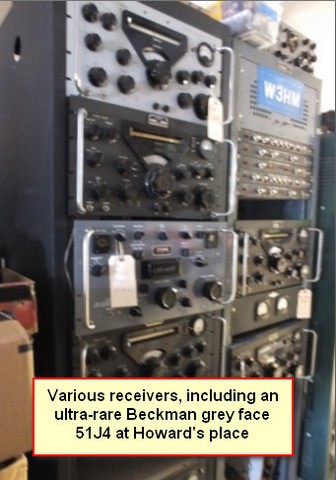
Back in the late 1990’s I first became aware of Howard Mills when I brought my Collins 51J4 to him for refurbishing. Howard is one of the few persons remaining in this country capable of going through classic tube receivers from top to bottom.
A visit to Howard is an experience everyone should have at least once in a lifetime. Restoration activities take place in the lower/ground level of his home.
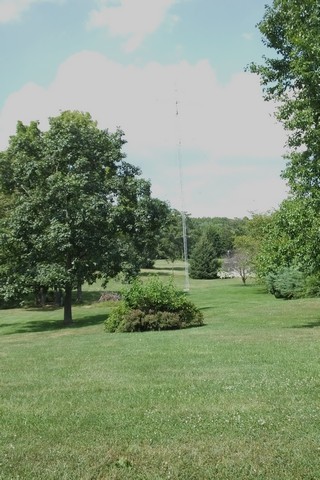
Outside there are some amazing antennas, long wires, and beams which support both his amateur radio and receiver activities.
 Under a porch, covered in tarps, are some of his latest equipment and parts acquisitions, from thousands of tubes to some of the rarest radios and transmitter items one may ever see.
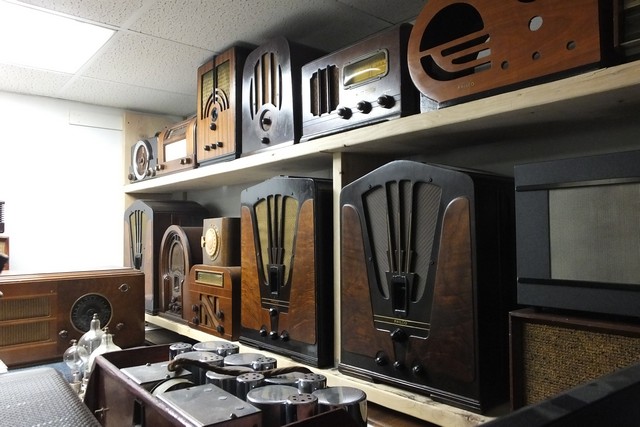
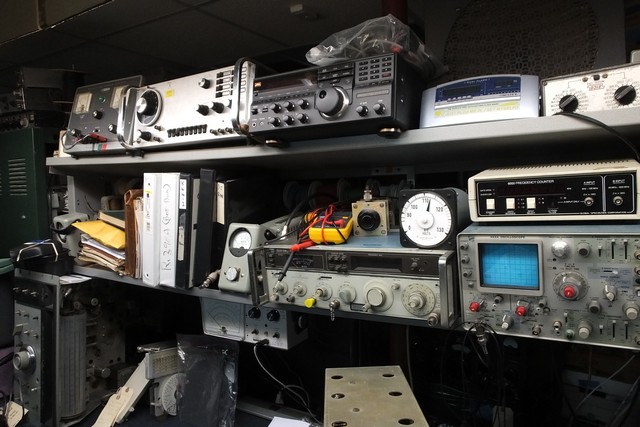
Inside, you find a wonderland of receivers. You name it, Howard has it. In racks, there are specialized Beckman 51J4s, SP-600s, AR-88s and R-390/As, Eddystones, and others. In another room, you see some of the most beautiful, and collectible and valuable, American and foreign-made radios dating back to the earliest days.
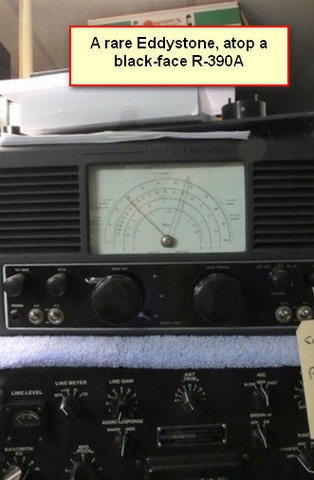
On tables in one portion of the basement of Howard’s place, you find several R-390s in various stages of refurbishment. One, he notes (probably among his “keepers” ) was found still new in its original crate (how I would love to have that one!).
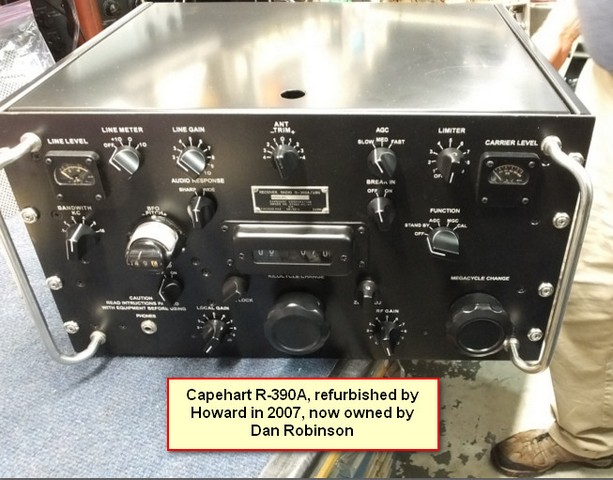
On the day Dave and I visited, the purpose was to pick up one of the most beautiful R-390s I have ever seen — a Capehart that was refurbished by Howard in 2007 and placed in a custom cabinet, complete with an easy-left-off top, similar to the HQ-180 design. This black beauty is now sitting in my shack at home.
Howard has been at it for many decades, as I said. A conversation with him is a voyage through radio history, punctuated by references to a range of major radio manufacturers. He clearly loves what he does, though one wonders how much longer he will be at it.
Howard emphasizes by the way that his work is in restoring TUBE radios — he doesn’t get into solid state. There are a few well-known receivers in his place — I noticed an ICOM IC-R72 and a JRC NRD-535– but most of what you see are the classics that we have all come to know and love.
His primary specialty appears to be the 51J series. A link to him on the Collins site notes that his main focus is on A line equipment, J series, and 32V series, but he is certainly capable on a number of models, including as I saw, HQ-180s and AR-88s (http://www.collinsradio.org/howard-mills/)
I was able to take some photos of Howard’s operation and offer them to SWLing Post readers here. At this point, Howard remains in business. He has had customers from all over the U.S. and I assume around the globe.
For each refurbishing job, Howard provides an extensive print out of every single modification and component replacement he does, along with the results of sensitivity and calibration tests done for each set.
Please do note that Howard makes clear that basically as long as it takes him to refurbish a radio — is as long as it will take. If you give him one of your radios, you basically agree to it being with him for several months if not longer. He does have a backlog.
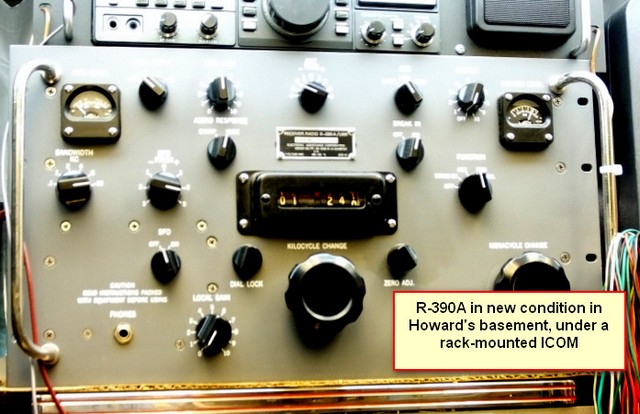
Things like sandblasting front panels for R390s (I am not certain to what extent he does this himself or out-sources this particular aspect) also takes time. And the detail with which he approaches a breakdown of an R390/A, evidenced by the sets I saw in process, is quite extraordinary and time-consuming.
Howard gets mostly superb reviews from those who have used his services. If you look him up on the Internet, and he has time for you to visit, it’s an experience you will always remember, though it’s not that I would suggest a crowd descend on him.
Hope everyone enjoys the photos — I had intended to get this article to Tom much sooner than October. Keep in mind, of course, that though Howard is one of the last to do this kind of work, there are a few others, including Chuck Rippel in Virginia.
We are indeed lucky to have anyone still doing this work. We know they do it not just as a business, but out of a love for this wonderful old equipment.
Many thanks, Dan, for taking us on this virtual tour of Howard Mills’ collection and workshop!
Your Capehart R-390A is absolutely gorgeous; Howard, no doubt, brought it back to mint status through loving, considerate restoration. What a great addition to your collection, Dan.
Thank you, again, for sharing your guest post.
