Shortwave listening and everything radio including reviews, broadcasting, ham radio, field operation, DXing, maker kits, travel, emergency gear, events, and more
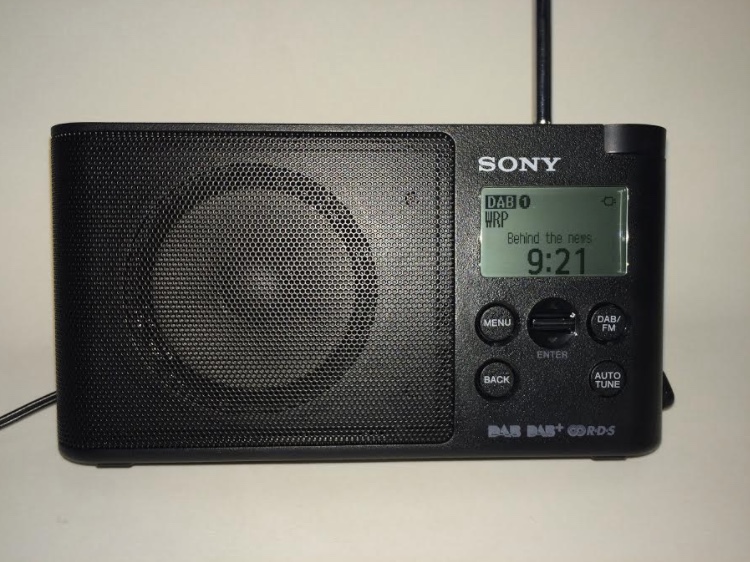
I wanted to buy a DAB/DAB+ portable receiver just to see what Europe was doing with digital radio. I bought a recently introduced Sony XDR-S41D DAB/DAB+/FM(with RDS) receiver for 79€ (about 11€ off list price).
I can use it in North America to listen to FM and take it with me when I visit Europe for DAB/DAB+ as well as FM.
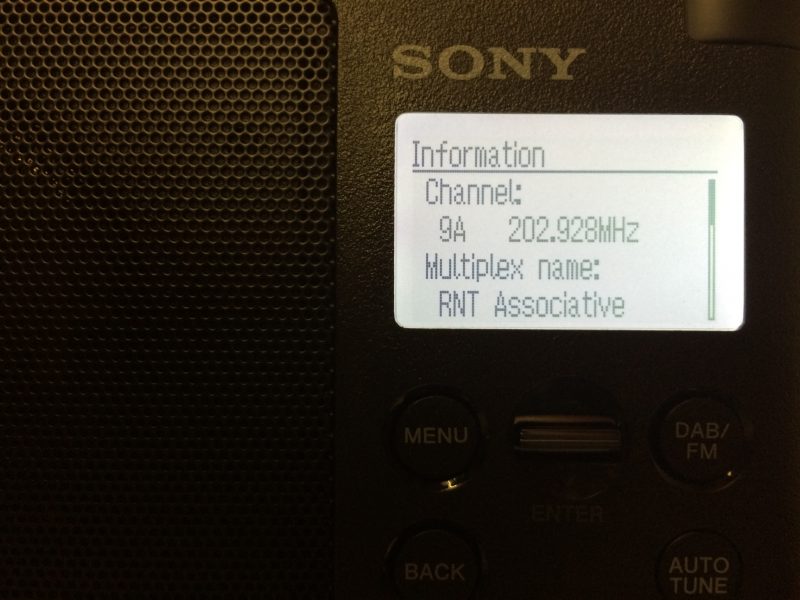
It has reasonable sound from its 8-cm speaker and pretty good stereo sound on headphones. It has an automatic search mode on both DAB/DAB+ and FM and creates a list of available stations.
In my hotel room in the 13th arrondisement, I could receive 46 DAB+ stations. One of the stations is World Radio Paris (WRP) and they provide English language programming 24 hours per day from BBC World Service, Public Radio International, Radio France International, and Radio Canada International, among others as well as their own programming.
There is no line output from the receiver but I was able to use the earphone output and crank the volume to maximum to get an acceptable recording level without noticeable distortion.
Happy with my purchase and can’t wait to go back to Europe again, say to England, to try out DAB+ there.
I also spotted three receivers with SW capability on the shelves at the Darty store:
Panasonic RF-3500 for 45€
Brandt BR200D for 45€
Brandt BR120A for 15€
You don’t see SW receivers in North American consumer electronics stores anymore and I’ve not spotted any in airport duty free stores lately either.
I’ve been listening to the XDR-S41D at home and it sounds pretty good on FM, too, and does a good job of displaying the RDS information although a character or two is sometimes cut off the end of the data but that could be the fault of the station. Need to investigate that some more.
By the way, the radio doesn’t come with a case but I found (just before I was going to toss it) that it just fits in the magnetic-clasp case of one of those Air Canada amenities kits that they give you in business class (see photo below).
That’s the second Air Canada item I have recycled. They used to use full-ear headphones with disposable foam covers. They were a perfect fit for the deteriorating covers on my old Sony noise-cancelling headphones. I’ve since upgraded to Bose. 😉
Thank you for sharing your thoughts, Richard! The Sony XDR-S41D sounds like a keeper for sure and is certainly compact enough to easily accompany you on travels to Europe. I was not aware of World Radio Paris either–I see they’re available via TuneIn, so I’ll add them to my WiFi radio station favorites!
Many thanks to SWLing Post contributor, Cezar Vener, who writes with the following inquiry:
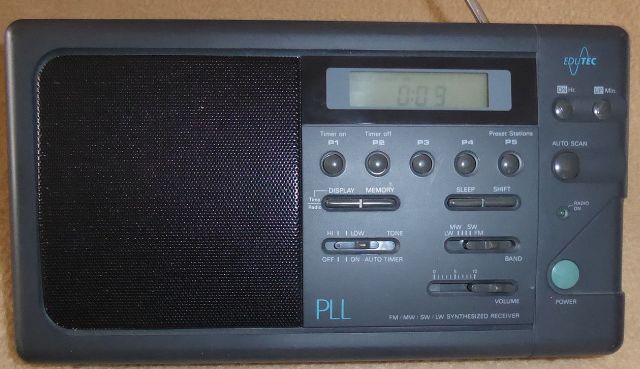
I would like to ask you if you can help me with a schematic diagram for an EDUTEC 4-Band digital radio (PLL EDUTEC 4-Band Digital Radio Weltempfänger). It is not broken, but I would like to modify it. Of course, I could spend some time and manually extract the schematic, but I would lose too much time.
While I know that “EDUTEC” is a registred trade mark for technical (“non-food”) products that was sold by “Eduscho Handelsgesellschaft” in Bremen and also I found that it is now owned by Tchibo, well – I would like to kindly ask you for help in this matter? (course, if you can).
It is an old product, probably made in the 90’s and until now, I didn’t find anything on the net about it. I opened it and I found that its core is TA8132AN, and the FM section is made around TA7358AP. The audio stage is built with C1212C, and there is one more integrated circuit there, TA8148S (no datasheet on the net, but I found that is a DC-DC converter for electric tuning – built-in stabilized supply output for biasing VHF tuner variable capacitor / sine wave oscillation).
BTW, I found it also in SONY CFS-W504L 🙂
The PLL chip is soldered with the unmarked side, so I don’t know what type it is.
[See photo at top of post.]
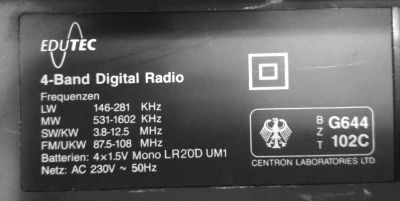
Here is a photo of the rear back stand:
Unfortunately, there is no other model or name written on the radio.
I see there “CENTRON LABORATORIES LTD”, that points to the company with the same name from Gujarat, India. Very interesting :))
In the hope of an answer from you, please allow me to thank you and to congratulate you for the very nice site that you maintain there!
Many thanks, Cezar! It’s readers like you who make this site such a great one!
Post Readers: I hope someone may be able to help Cezar. This radio looks familiar–perhaps I’ve seen it badged with a different company name? Please comment if you can help Cezar locate a schematic.
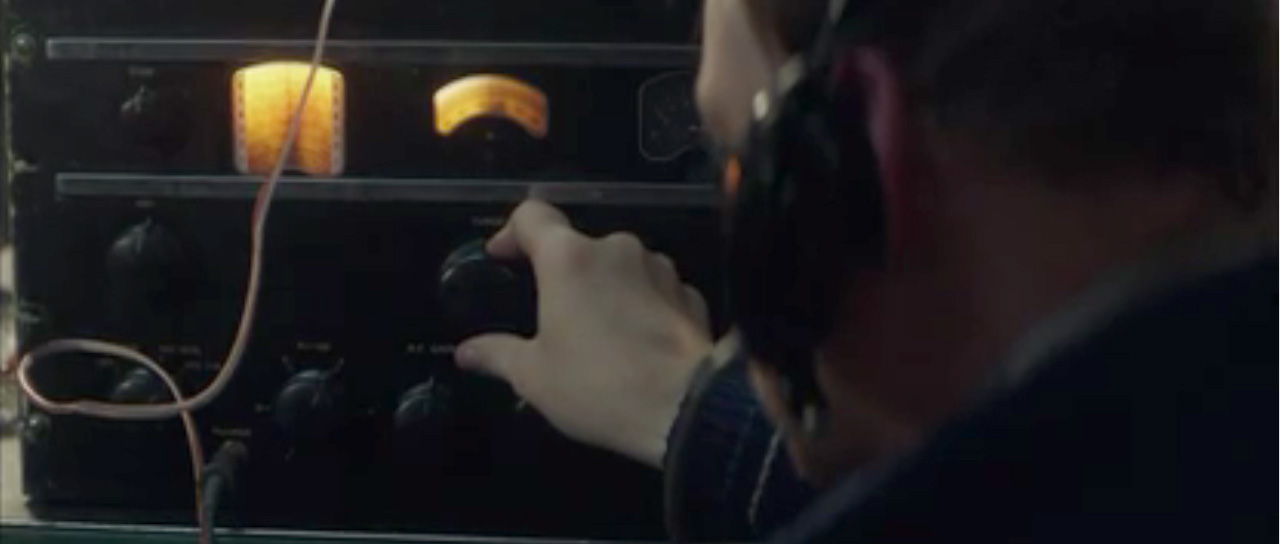
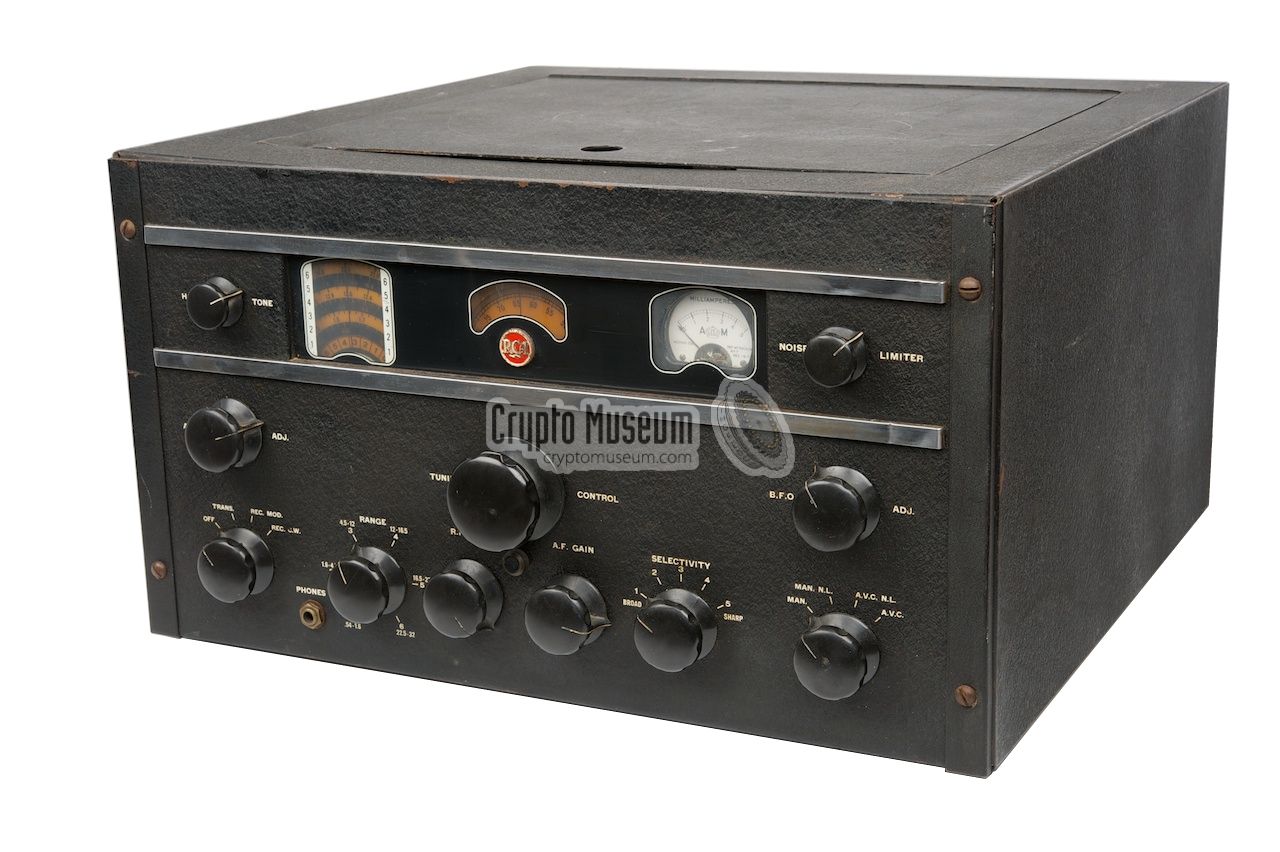
The AR-88 was a valve-based shortwave general coverage communications receiver, developed and built by the Radio Corporation of America (RCA) in the early 1940s. Although the receiver was initially intended as the successor to the AR-77 amateur receiver, the outbreak of WWII made it evolve into a professional high-end military-grade receiver for which cost was no object.
The AR-88 is a 14-valve (tube) receiver, which covers a frequency range of 535 kHz to 32 MHz. Unlike the National HRO receiver, which had pluggable coil packs for each frequency band, the AR-88 uses a six-position band selector. A special version of the receiver, the AR-88LF, was suitable for LF and MF, covering 70 to 550 kHz (continuously) and 1.5 to 30 MHz (continuously).
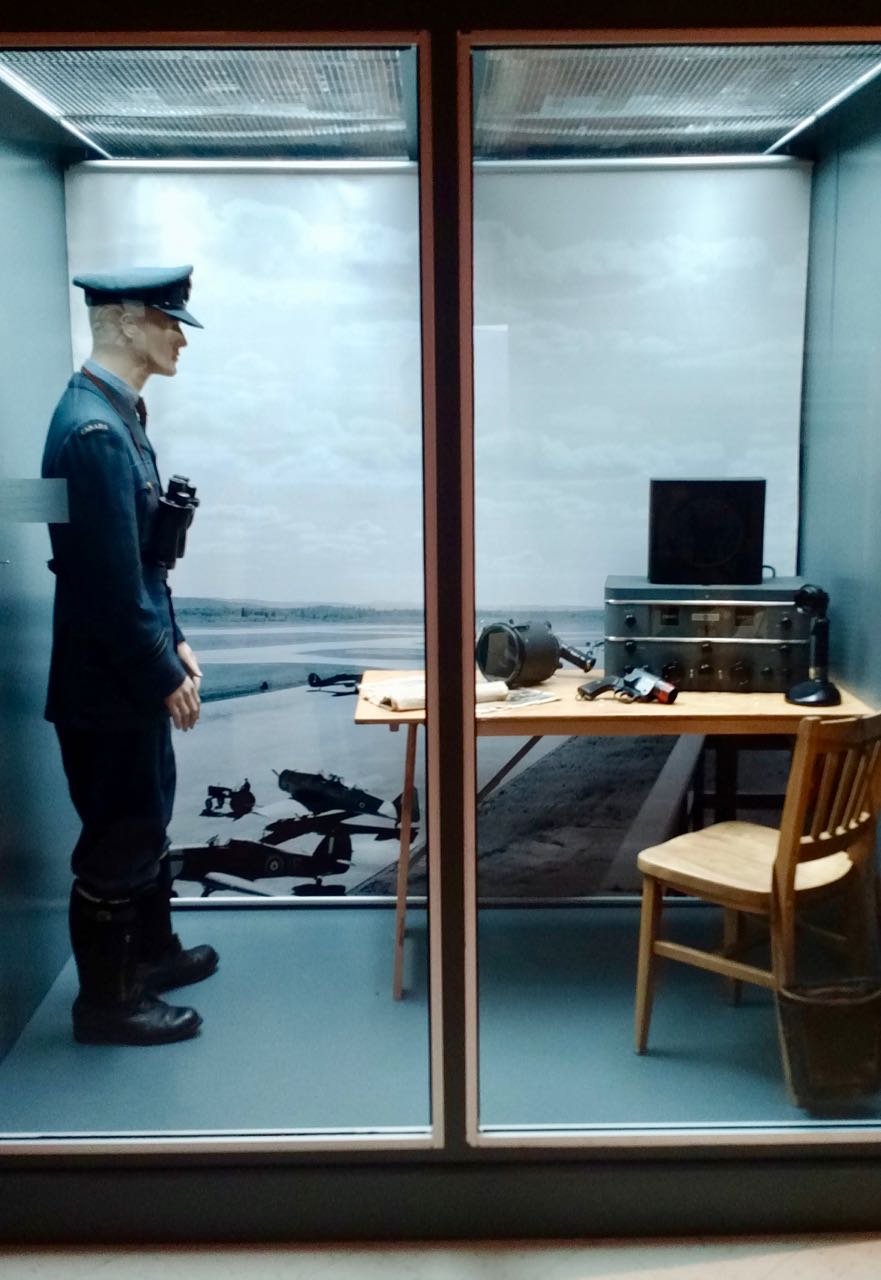
I’m sure I actually have a close up of this receiver somewhere. It also appears to be an RCA AR-88 based on dial and control configuration, though I certainly could be wrong.
Do any SWLing Post readers have an AR-88? Please comment!
Many thanks to SWLing Post contributor, Larry Thompson, who writes:
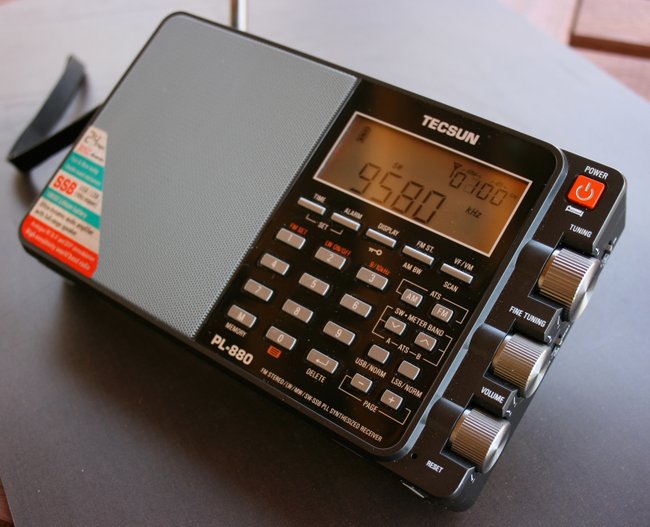
There’s been some confusion on my part whether the Tecsun PL-880 is a dual conversion or triple conversion receiver. Amazon and eBay list the receiver as double conversion, whereas Universal Radio doesn’t mention either.
After scouring the Instruction Manual, I was pleased to learn that the PL-880 uses the Silicon Labs si4735 DSP microchip and has 4 Intermediate Frequencies.
To me, that looks like a triple conversion architecture. The combination of the DSP microchip, and the triple conversion would explain why my Tecsun PL-880 is so much more sensitive and selective than my Sony ICF-SW8600GR.
My CountyCom GP-5/SSB emergency portable also has the same Silicon Labs DSP chip and it is almost as sensitive as the Tecsun PL-880, far more sensitive than the Sony. I’ve owned a Japan Radio JRC-525 and a Yaesu FT-900AT transceiver for many years, and the PL-880 digs out weak signals better than both those tabletop receivers, both dual conversion.
To quell the speculation, yesterday I contacted Anna at Anon-Co, the worldwide distributor for Tecsun radios. Her quick reply confirms my suspicions that the Tecsun PL-880 is indeed a triple conversion receiver. That would explain why it blows my Sony ICF-SW7600GR out of the water in senitivity and its ability to pull out weak stations.
Among all the other great attributes, this is an welcome discovery and one never mentioned in the specs by the various retailers of this receiver!
Thank you Larry, for shedding light on this–Anna would certainly know.
Your note makes me realize that I really should order a second, current production model PL-880. My PL-880 is from one of the first batches produced. I imagine I could benefit from some of the firmware tweaks that have been made to this receiver over time. Perhaps it would even be a good time to compare the 1st generation with the current generation?
Many thanks to Dennis Walter who shares the photo above from the 2017 Ham Radio Friedrichshafen convention.
I’ve always thought the FDM-DUO was a cool transceiver, but I must admit it looks even better in camouflage.
I did warn our buddy Clint (Oxford Shortwave) that he should stick with his stock black FDM-DUO. You see, he takes his FDM-DUO to the field…literally. Can you imagine how he’d feel losing his top-notch camouflaged DX rig in the rough? 🙂
I’ll follow Dave’s updates for sure as he’s a thorough and top-notch reviewer.
To give you an idea of what Dave’s evaluated so far, check out some of his initial impressions:
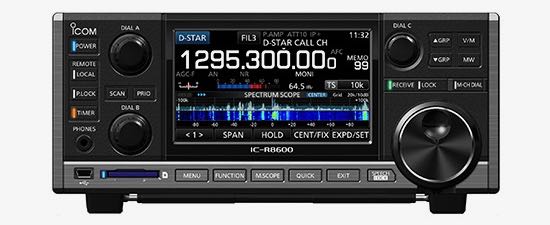
A few “first” IC-R8600 observations (latest 1.10 firmware) :
General size is slightly smaller than the IC-7300 SDR HF Transceiver.
With the IC-R8600 having a near 2 AMP current draw, does make for very warm operation after a few hours on (that is over double current requirement of what the IC-7300 uses in receive.) It does NOT make use of any cooling fans…whew good news here ! The receiver requires an external power supply, and I REQUIRE my regulated linear power supplies NOT to run HOT with any continuous operation (I would never use a noisy switching supply with it , but that’s my choice). I say the minimum size to use is the Astron RS-12A. While this may seem overkill, we tried a smaller RS-7A and after being on for 2 hours it’s lone pass transistor was too hot to touch which is totally unacceptable to N9EWO’s standards. The RS-12A has 2 pass transistors and a larger heatsink (and thankfully still no fan to create room noise). We have NOT tested a RS-12A with the IC-R8600 to verify this, but should be the one to try (I say don’t go with a lower current model) ???
S-AM modes (AM Synchronous Detector) sadly works the same as in the IC-R9500. In other words, it does NOT help with AM mode fading distortion (adjacent interference help only). So another Icom receiver with very poor “Sync” performance. We can HOPE for improvement on this with later firmware update, but I would not hold my breath ?? Yeah, one can use manual ECSS (zero beat in SSB modes) which does excellent, but SSB modes have limited top bandwidth of 3.6 KHz as all Icom’s do.
It’s top mounted Internal speaker is surprisingly good for it’s size. Tone control has much larger “Bass” range over the IC-7300 (excellent). Super clean audio as with the IC-7300. Connected to a classic Realistic “Minimius 77” 2 way speaker sounds stunning.
Tuning knob is of a “clicky” type (detents) out of the box. Good news , there is to way select a “smooth” feeling knob by moving the 3 position slider adjustment on the bottom of the knob (it’s not so easy to do however). So it goes from left to right : smooth loose – smooth tight – clicky. It has some rotational play in the “clicky” mode (but so does the IC-R9500’s knob in “clicky ” mode), but overall it feels good and this knob scheme was well done.
FMBC reception has a strange ACG pumping trait. Of course on the FMW mode the AGC and decay rate are not adjustable.
Uses no (or fewer) relays with it’s front end filters at least on SW. The “click and clack” when tuning around with the IC-7300 in the SWBC bands does not exist with the IC-R8600 (uses didoes ??). When we can locate a schematic will tell the whole story here (NOTE : No schematics are included with the set).
I’m really curious to see how the IC-R8600 stacks up to the IC-7300 on the HF bands. Looking forward to your updates, Dave!
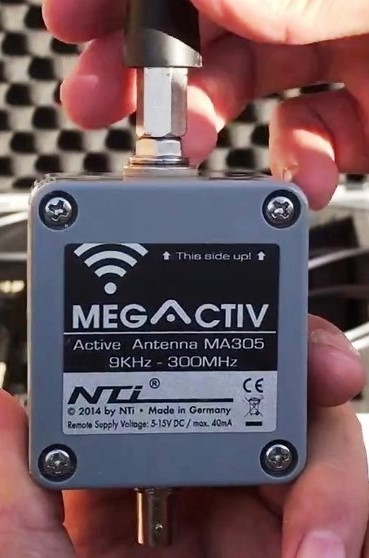
Hi there, you might remember my post from last month focussing on the Bonito MegActive MA305 E-field antenna, kindly supplied to me for testing, by Bonito themselves. That post was essentially a report on my experiences travelling to Crete with the MA305, navigating through security at London Gatwick and Heraklion airports (mostly with relative ease), but more importantly, how well it worked with the equally excellent Eton Satellit portable receiver. Whilst in Crete I managed to copy a number of personal firsts, including CRI on 7295 kHz, via their relay in Bamako, Mali, The Voice of Beibu Radio on 5050 kHz, Nanning, XSL ‘Slot Machine’ on 6251 kHz USB, Ichihara, Japan, S32 ‘The Squeaky Wheel’ on 3828 kHz and NHK World Radio Japan, 11910 kHz. I also copied RTM Wai/Limbang FM on 11665 kHz from Kajang, Myanmar Radio on 5985 kHz and AIR Bhopal on 4810 kHz, amongst others – all of which I would certainly consider to be difficult catches in Europe.
The USB-powered MegActive MA305 is perfect for DXing on the move…
Despite excellent all-round results from the ultra-portable USB powered MA305, there was one signal I copied, which more than any other, demonstrated the DXing credentials of this antenna; Radio Tarma from Peru on 4775 kHz. With a TX power of 1 kW, this is a very difficult station to hear in Western Europe, even with a longwire. To catch this station in Crete, with a 22 cm antenna was incredible and it was at that point during my trip that I realised E-field antennas really can work superbly well for hard-core DXers on the move.
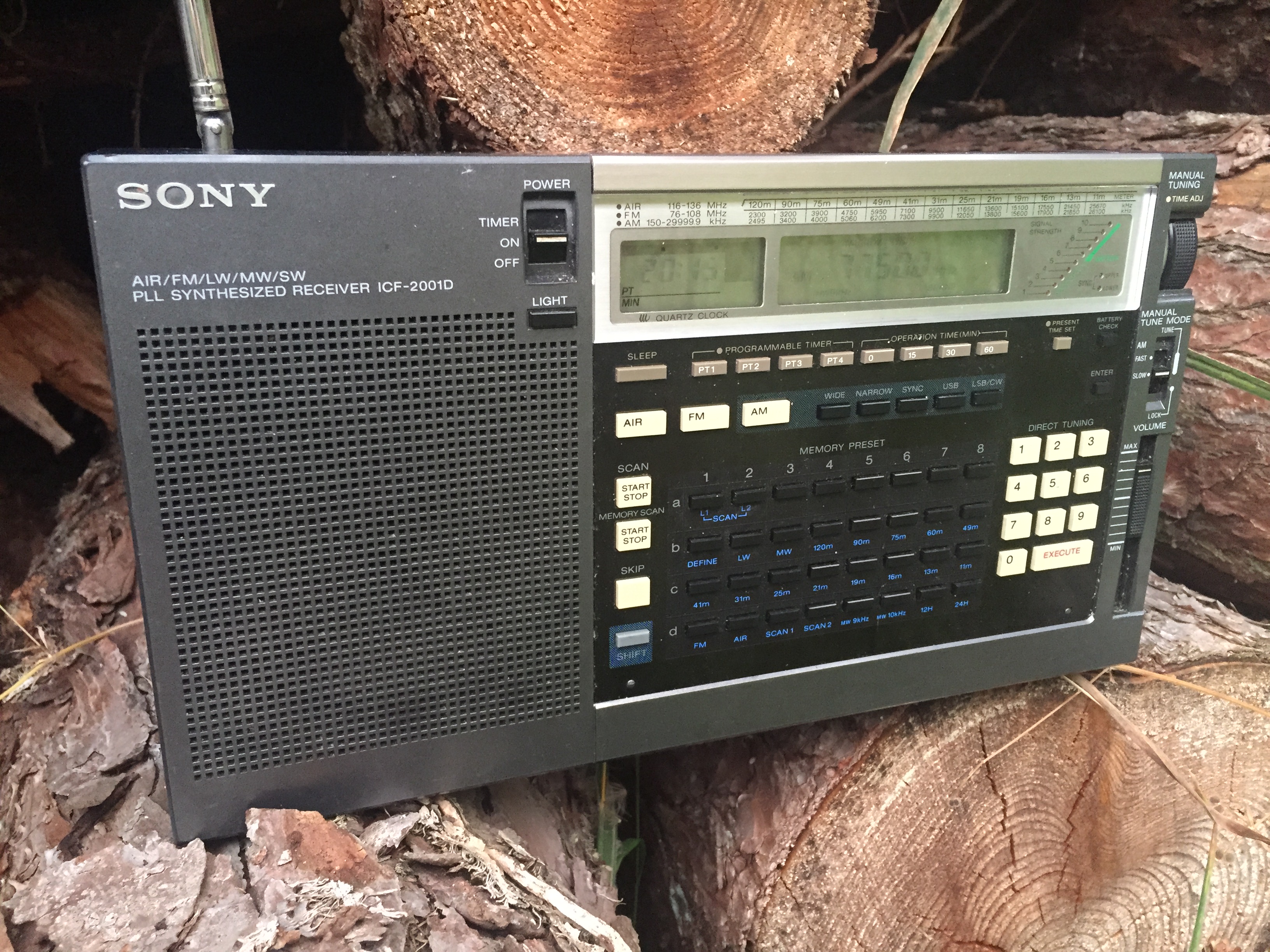
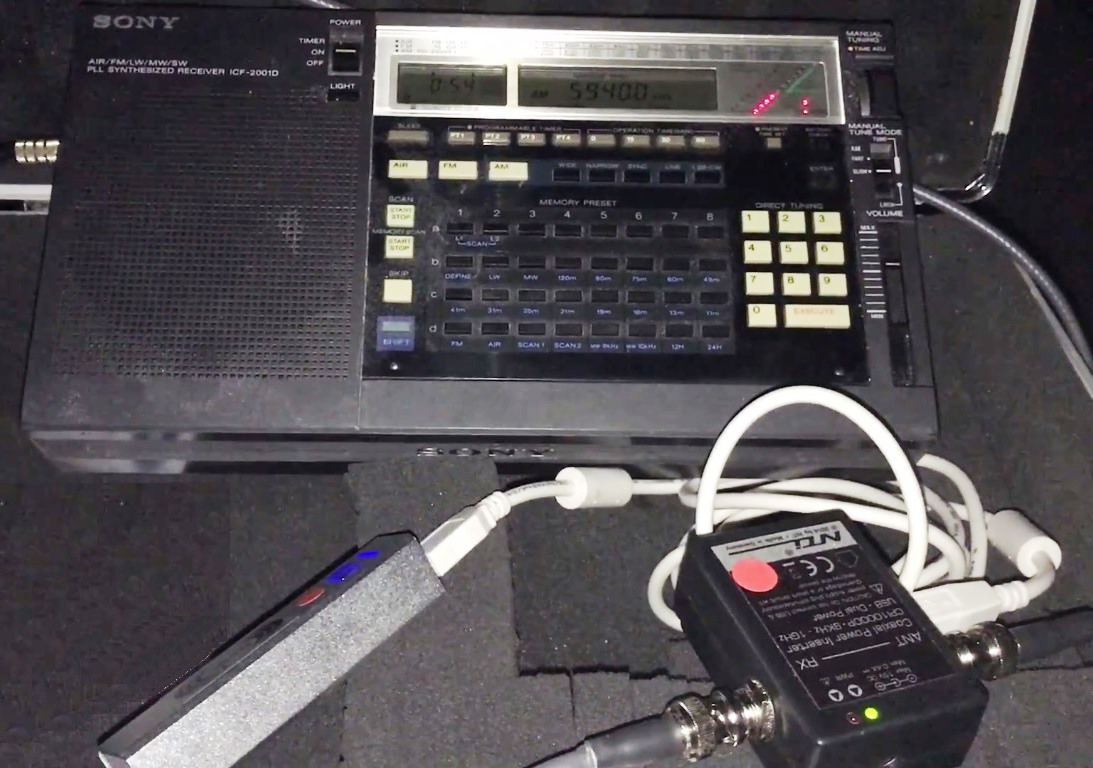
Upon my return to Oxford, I immediately started thinking about a DXpedition to the local woods I use for what I consider serious DXing. For obvious reasons, E-field antennas require an electrically quiet environment to ensure maximum SNR performance. In noisy environments, these types of antennas amplify the signal of interest and the background ‘electro-smog’, thus increasing signal levels but critically, not signal-to-noise. Fortunately, the Oxfordshire wood I have been using for a couple of years is only a 10 minute drive from my QTH as I sort of live in the countryside anyway and the QRM levels there are just about zero. Now, given that this was essentially an experiment to determine the best possible performance from the MA305, I decided to use my best portable radio. It was quite tempting to pack up the Elad FDM DUO which running on a home-brew battery pack has proven itself to be my best (pseudo) portable radio. However, this is supposed to be a real-world test and in this type of scenario, DXpeditions with the Bonito antenna are much more likely to be undertaken with a portable radio. For these reasons I decided to conduct the test with the venerable Sony ICF-2001D. Having proven to be a superb receiver over many, many dxpeditions (check out the evidence on my YouTube Channel Oxford Shortwave Log) and still regarded by DXers as one of the best ever portable radios – possibly the best – it was the obvious choice.
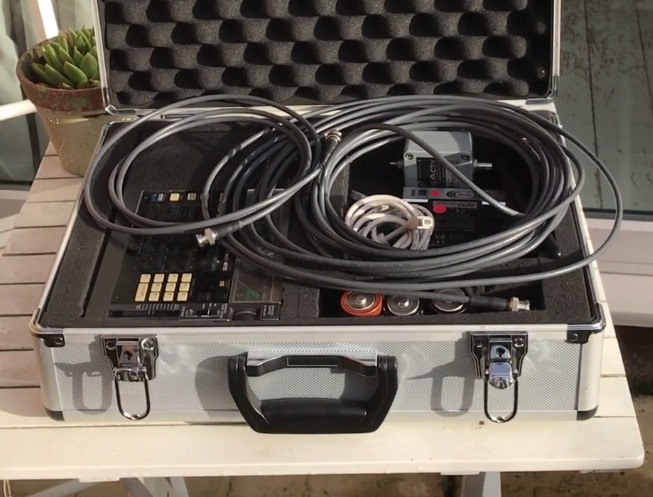
My portable DXing kit comprising the Bonito MegActive MA305 antenna and the Sony ICF-2001D…a bit of a legend in DXing circles…
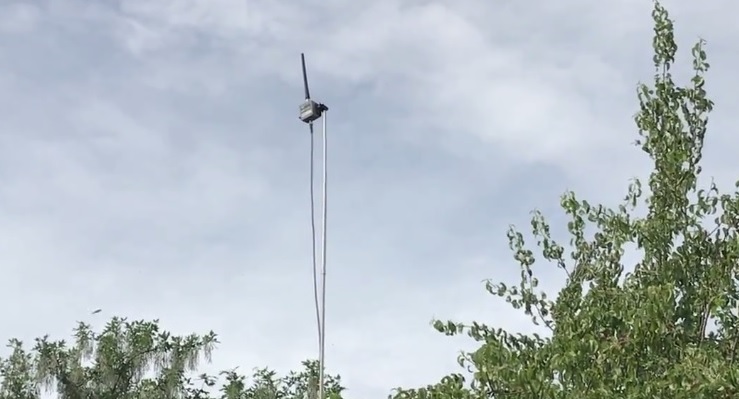
I ventured out in early June around 23:00 hrs BST (22:00 hrs UTC), parked the car on the edge of the wood and proceeded to set up my cheap camera tripod, slightly modified to accept a 2 metre-long stainless steel tube, into which a slightly thinner 1 metre tube was mounted, topped off with my partially disassembled ‘Selfie Stick’ – which made it back from Crete lol. The antenna was set up in less than 5 minutes and approximately 4 metres above the ground – much quicker and easier than de-spooling 100 metres of wire! With fresh batteries in the Sony and the MA305 powered up using the USB power brick supplied by Bonito, I was ready to start listening. Almost immediately I heard and recorded a personal first; Lao National Radio, Laos, signing on 6130 kHz, with an excellent signal. Hearing them in the UK was only made possible by the annual two week shut down of the PBS Xizang transmitter in Lhasa, Tibet, but hey, I’ll take it. A brilliant start to my listening session.
Over the next two hours I was amazed at what could be heard using this 22 cm amplified antenna. Bearing in mind I have spent many hours at the woods previously, listening via various 100 metre longwires and a 200 metre Beverage, my expectations were, I thought, realistic in that the MA305 coupled to the Sony would catch some very good DX. However, I did believe there might be an absence of at least some of the more exotic low power stations on the Tropical Band – afterall the MA305 is a very short antenna. Clearly I was wrong, because what transpired during the session surpassed anything I thought possible with this set-up. A list of reception videos follows below and further below, a selection of embedded videos. Some of the entries on this list simply stunned me at the time. Rádio Educação Rural for starters is such an incredibly difficult signal to hear in Europe, even with a very large antenna. Thus, to hear them on an ultra-compact set-up felt very special. Radio Mali is another station that is very difficult to catch with any modulation, except on a large antenna and yet there they were – at the first time of trying. Similarly, Rádio Nacional de Angola and Alcaravan Radio are exotics that at best deliver very weak audio – and most of the time no audio. Furthermore, the signals from Emisoras Pio XII, Myanmar Radio and Rádio Clube do Pará were verging on what I would call superb…I’d never heard anything like it previously except via 100 (or more) metres of wire.
The ICF-2001D and MegActive MA305 Rádio Educação Rural transmitter site in Tefé, Brazil
So what’s next? Well it would certainly be an interesting experiment to compare the performance of the MegActive antenna with the Wellbrook ALA1530 active loop in a similar environment. I have used the Wellbrook on DXpeditions several times, with often excellent results, however, it’s not designed to be portable and if SNR performance could be demonstrated as similar between these two products, given a very favourable price delta, the Bonito antenna would add up to be a very compelling purchase decision. More on that to come. In the meantime, thank you very much for reading/watching/listening and I wish you all excellent DX.
Please click on the links below for the reception videos on the Oxford Shortwave Log YouTube channel.
Selected embedded reception videos from the list above:
Clint Gouveia is the author of this post and a regular contributor to the SWLing Post. Clint actively publishes videos of his shortwave radio excursions on his YouTube channel: Oxford Shortwave Log. Clint is based in Oxfordshire, England.