Category Archives: Schedules

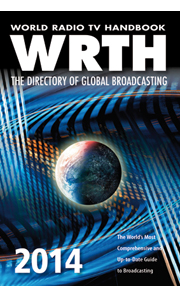
2014 WRTH: A look inside

wrth-2014I received my copy of the 2014 World Radio and TV Handbook (WRTH) directly from the publisher a few days ago, just prior to a 24 hour power outage.

As many SWLing Post readers know, I always look forward to receiving this staple radio reference guide each year. While other reference guides have dropped out of the scene, WRTH has remained strong, somehow resistant to the economy’s negative influence upon radio–and the publication’s quality has been wonderfully consistent. It’s no wonder that WRTH has a loyal readership–not only among hobbyists, but also among commercial broadcasters, thus giving it a much broader reader base.

WRTH’s team of noted DXers from around the world curate frequencies and broadcaster information by region; while I’m not sure how they orchestrate all of this, the end result is truly a symphony of radio information. In addition to broadcaster listings, WRTH’s radio reviews, feature articles, and annual HF report make for excellent reading.

But the WRTH isn’t just a frequency guide: the publication always devotes the first fifty or so pages to articles relating to the hobby. Following, I offer a quick overview of these.

The first article always features a WRTH contributor (indeed, it’s this very network of contributors that make WRTH and its listings such a success):  this year, writer Max van Arnhem tells us how he got interested in the hobby and what being a contributor means to him.
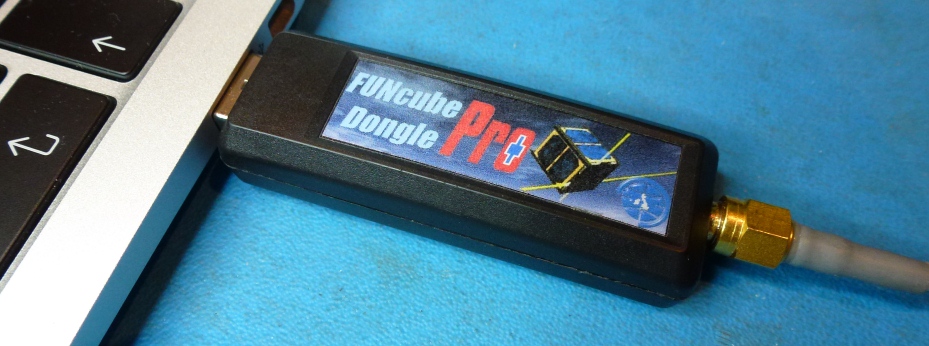
FunCubeDongleProPlusThe second set of articles is always my favorite: WRTH receiver reviews. And the review in this issue is no exception. This year, WRTH reviewed the CommRadio CR-1 (which won their Best New Receiver award, and, I was pleased to see, received many of the same good marks I gave it).  They also review the FunCube Dongle Pro+ (above), the new AOR AR6000, the WinRadio Excalibur Ultra (spoiler: the reviewers say it’s the best they’ve ever tested!), the AOR AR8200D handheld receiver, and the YouKits FG-01 Mk II Antenna Analyzer. As I’ve come to expect from this publication, these are all great comprehensive reviews.

The following article is “The History of Shortwave Broadcasting in a Nutshell,” written by noted radio historian and author, Jerry Berg. In just a few pages, Berg takes you through the remarkable history of shortwave radio broadcasting.
SriLankaMap-SM

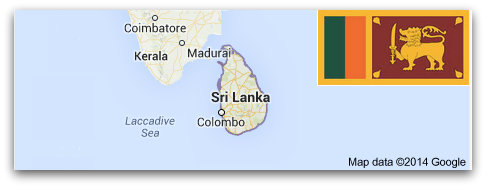
Following this, noted DXer and WRTH contributor, Victor Goonetilleke, offers a fascinating article focusing on broadcasting on his home island country of Sri Lanka. It’s a enlightening overview of some of the changes that have occurred within the Sri Lankan broadcasting scene (DXers and SWLers will likely recognize many of the stations Goonetilleke mentions).

Voice-Of-VietnamWRTH always highlights a radio broadcaster as well, and this year, it’s the Voice of Vietnam. Despite my many years of hearing VoV on the air, I did not realize how deeply involved they were during the Vietnam War (which took place when I was a kid). The station today prides itself on responding to QSL requests and listener comments.

The final sections of articles are dedicated to the WRTH digital update–this year’s subject is “Digital Future“–and their HF propagation report/forecast.

In summary, this is another great edition of the World Radio TV Handbook. As I’ve said many times, though I use online frequency databases fairly regularly, there is just no replacement for a good printed frequency guide. For DXers who collect QSL cards, you’ll find that broadcaster contact information in WRTH is often more up-to-date than a broadcaster’s own website.

Not only does WRTH contain more in-depth information on broadcasters and schedules, but it makes for quick reference, and doesn’t require a computer or Internet connection–much like, well, your shortwave radio.

Purchase your copy of WRTH 2014 directly from WRTH’s publishers, or from a distributor like Universal Radio (US) or Radio HF (Canada). Happy reading–and listening–in 2014!
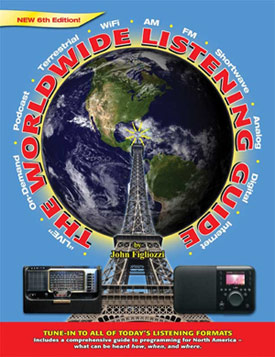
The sixth edition of The Worldwide Listening Guide

wwlg-2013-cover-webI’m very pleased to have just received the 6th edition of John Figliozzi’s Worldwide Listening Guide (WWLG). This is the latest updated version of the guide I reviewed last year.
As I said then, you may want a copy of the WWLG in your shackand, may I suggest, next to your computer or wi-fi radio.

SWLing Post readers know that I’m a huge fan of the Word Radio TV Handbook (WRTH)–it’s my go-to guide for radio frequencies–and Figliozzi’s Worldwide Listening Guide is my helpful companion for programming and for content.

Figliozzi exhaustively curates more than 4,000 programs, indexing their airing times, stations, days of broadcast, program types, frequencies, and web addresses. He also sorts the programs by genre:  from arts, culture, and history; to music, sports, and more. In fact, he has a well-thought-out directory of at least forty genres–this directory has helped me locate programming about which I would otherwise have never known. Want to find jazz and blues programming, or shows focusing on sports?  This book’s got you covered. Frankly, I’m not sure how Figliozzi manages to curate such a vast assortment of programming, but I’m happy he does, and that he offers it for our benefit!

Figliozzi even dedicates a section of his book to “The Big Six” English language broadcasters–namely, NPR, BBC, CBC, ABC, RTE and RNZ. These networks are widely regarded as the best in the business, with audience numbers to back this claim. The WWLG dedicates several pages to describing the structure and programming diversity of each, with listening tips and more.

I’ve always liked the WWLG, and it has become a permanent reference book in my shack, alongside my trusty WRTH. There is a surprising amount of information packed into this slim, spiral-bound book…enough to keep even a seasoned DXer contented for years.

The 6th edition of Worldwide Listening Guide can be purchased here:

Alex updates shortwave frequency charts for Winter season

AlexChartsSWLing Post reader, Alex, has just informed me that he’s updated his printer-friendly shortwave frequency charts once again. Alex writes:

“I am pleased to say I have just managed to put up the latest charts for listening in Europe in all languages on the site shortwavetimes.com.

There’s also a version 2 of the BBC World Service global frequencies all on one A4 sheet.  And also a revised chart for listening in English in Europe.”

Note that Alex creates his charts based on listening to broadcasters rather than importing schedules from other sources.

You can download the free charts on his website:
Shortwavetimes.com

Many thanks, Alex!

Radio Slovakia International wishes to resume shortwave service

USA NASB logoMany thanks to SWLing Post reader, Dominik, who points us to the National Association of Shortwave Broadcasters’ latest newsletter, which mentions Radio Slovakia International’s intentions to, once again, broadcast on shortwave from Slovakia.
“The NASB organized the B13 Conference in cooperation with Radio and Television Slovakia (RTVS) and its international service, Radio Slovakia International (RSI). RSI stopped broadcasting on shortwave from Slovakia at the end of 2010, but NASB member WRMI in Miami has continued to relay the station’s English and Spanish broadcasts to the Americas since January of 2011. And RSI would like to resume shortwave broadcasts from Slovakia in the near future if funding can be restored.”

The NASB newsletter summarizes the full B13 HFCC Conference.  The following is an excerpt from the NASB Newsletter newsletter, featuring Maria Mikusova, Chief of Radio Slovakia International:

[…]Tuesday morning, August 27, the HFCC Conference began with some words of welcome from Maria Mikusova, Chief of Radio Slovakia International. “As the General Director of Radio and Television Slovakia pointed out yesterday,” she said, “the fact that this conference is taking place in Bratislava is a great inspiration and impulse for us. It broadens the horizons of us — journalists and professionals from the foreign broadcast of Radio Slovakia International, on behalf of whom I’d like to welcome you to Bratislava as well.”

Mrs. Mikusova noted that RSI has received feedback from listeners in 130 countries. “The core of this feedback,” she said, “comes from broadcasting our programs via short waves. We left shortwave broadcasting only recently, at the beginning of the year 2011, and not fully.” She noted that RSI remains on shortwave via WRMI in the Americas.

Mrs. Mikusova said that RSI is busy developing a new website. “In regards to the variety of languages we broadcast in, you can listen to RSI in six languages, which is the same number as Radio Prague, our Czech colleagues and closest partners, broadcast in. This says a lot about the power of tradition and our efforts and ability to preserve this kind of a broadcast at a time of such a vast choice of communication channels opening on the internet and social networks.”

Mikusova said that RSI still receives good listener feedback from areas such as Russia, and the station still sends QSL cards to listeners. “We consider this to be a very important form of communicating with our listeners, although we know that QSLs are traditionally a shortwave communication.”

“Let me wish all the best to this coordination meeting,” she continued. “Your conference allows us to get to know better your work, and makes us feel that we are still part of the world network of shortwavers. For us, this conference is a firsthand, live encounter with the shortwave network and its significance for broadcasting. But at the same time it unveils what strategies of radio broadcasting and shortwave transmission are out there in the modern world. After all, the outlook and future strategy of Radio and Television of Slovakia is to bring RSI back to shortwave broadcasting. Although this issue has not been resolved yet, it shows just how important the HFCC Conference in Bratislava is, and why we, RSI, are so very interested in it.”

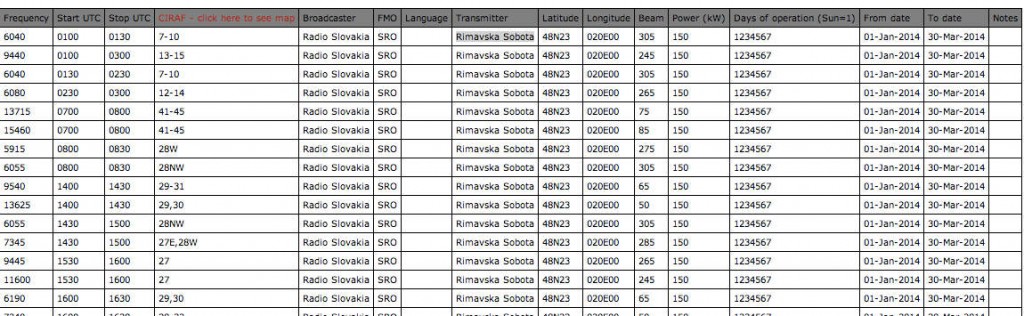
Dominik also pointed to the HFCC schedule where RSI already has a slate of broadcasts listed from the RSI Rimavska Sobota transmitter site:

HFCC-Clip-RSI

Again, thanks to Dominik for sharing this hopeful news!

Shortwave Radio Recordings: Marion’s Attic

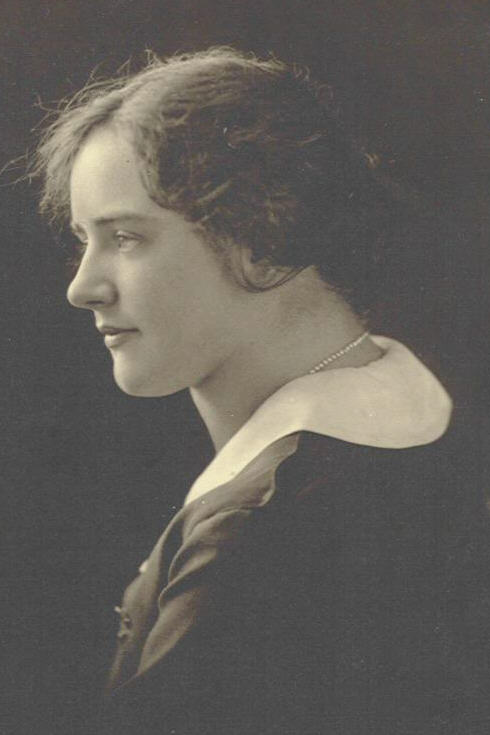
Marion Webster (Source: Marion's Attic)

Marion Webster (Source: Marion’s Attic)

If you’ve never heard Marion’s Attic on WBCQ, you don’t know what you’ve been missing–especially if you love early music recordings. Marion’s Attic describes the show as:

“[A] unique radio program, broadcasted on WBCQ, The Planet, [7.49] MHz (Shortwave Radio) every Sunday at 5 PM Eastern time. Hosted by Marion Webster & Kristina, and with occasional special guests.”

“Marion’s Attic is an eclectic radio program which plays original cylinder and disc records from the late 1890’s to the mid 1930’s. Having a library containing thousands of standard size cylinder records, dozens of 5 inch Concert Cylinders and an unknown amount of 78’s allows us to share unusual and forgotten music that you cannot hear anywhere else. What makes this special radio program unique is I play original records on the original phonographs when possible; many of which are over 100 years old. The theme varies from week to week; a show may feature popular songs from the early 1900’s one week, wild dance music from the roaring 20’s the next week.”

Marion’s Attic has been on WBCQ since September 21st, 1999 and is certainly one of their most popular shows. It’s quirky and authentic. I love it.

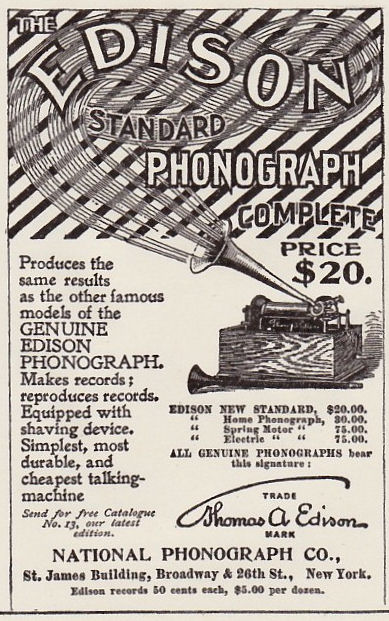
(Source: edisonphonology.com)

(Source: edisonphonology.com)

Mary tells us that each episode is recorded in her attic using simple recording equipment and original phonographs including:

  • 1898 Edison Home phonograph for brown wax cylinders
  • 1900 Columbia Graphophone AG for Concert Cylinders
  • 1908 Edison Standard Model D phonograph for 2 & 4 minute wax cylinders
  • 1913 Edison Amberola V phonograph for Blue Amberol cylinders
  • 1923 Edison London Upright phonograph for Diamond Discs
  • 1965 Gerrard electronic turntable for 78 rpm records

Yesterday afternoon, at 16:59 EST (21:59 UTC), I tuned to Marion’s Attic on 7,490 kHz and started recording. You’ll hear about one minute of WBCQ’s interval signal and station ID, then straight into Marion’s Attic. Click here to download the show as an MP3 or simply listen via the embedded player below:

If you missed Marion’s Attic yesterday, you can catch it again tonight on WBCQ–check out the full broadcast schedule below:

  • Sundays:  7,490 kHz, 05:00PM – 06:00PM ET (22:00 – 23:00 UTC)
  • Mondays: 5,110 kHz, 09:00PM – 10:00PM ET (02:00 – 03:00 UTC)

WBCQ is easily heard in North, Central and South America–also in Europe.

Marion and Kristina often give shout outs to their listeners. You can contact them at [email protected] or:

Marion’s Attic
P.O. Box 583
Coventry, CT 06238

Many thanks to Marion and Kristina for sharing your wonderful collection of early music recordings!  I’d also like to thank SWLing Post reader, Mike, who is a big fan of Marion’s Attic and unknowingly gave me a nudge to mention their show here.

Alex updates his shortwave frequency charts

AlexChartsSWLing Post reader, Alex, has just informed me that he’s updated his shortwave frequency charts once again. Alex said he has, “improved the layout of the charts so that they have a bigger, clearer type.” He continues:

“They should be more legible this time, even if you print off from a basic printer and carry the bits of paper around when travelling. They also now divide the day into Early and Late, rather than Dark and Daylight, which seems to work better.”

Note that Alex creates his charts based on actually listening to broadcasters, rather than importing schedules from other sources.

You can download the free charts on his website:
Shortwavetimes.com

Here are the direct links to download the charts:

Thanks, Alex, for the time and dedication you put into these fine charts!

Call me anachronistic, but I listen to digital tech shows on shortwave

BBC_ClickWhile I’m passionate about shortwave radio–a technology that has, of course, been around for many decades–I also love to hear about emerging digital technologies, especially those that make our world a better place.

These days, I listen to several shows about technology, many of which are only available as a live stream or podcast (like TWIT, for example).

There are two shows, however, that I like to listen to on shortwave radio when my schedule allows.

One such show is the BBC World Service technology show, Click (formerly Digital Planet). I’ve listened to Click for years, and have even been interviewed on the show by its marvelous host Gareth Mitchell (click here to listen). I especially love the show’s focus on technologies that have a positive impact in developing countries (hence my interview, about my non-profit, ETOW). Mitchell, I’m delighted to add, is quite the fan of shortwave radio as well, and is not afraid of reporting on technologies that are not exclusively tied to smart phones and the like.

DownloadThisShow-RadioAustraliaAnother show I’ve been listening to for a few months is Download This Show on Radio Australia. It’s a fun and informative technology program and always has a great panel discussion on technology news. What I really love about this show is its take on Australian technology in particular, and how this compares with technology in the rest of the world.

Since Download This Show is broadcast via Radio Australia’s Shepparton transmitting site, the signal is quite strong here in North America and easily received on portable shortwave radios.

Click here to download over two hours of Radio Australia, including Download this Show, or listen via the embedded player below. This broadcast was recorded on August 2, 2013, on 9,580 kHz, starting around 13:00 UTC.

You’ll find Download This Show in the second hour of the recording, following the news headlines at 1:05.