Category Archives: Shortwave Radio

Radio Waves: X-Class Flare & Halloween CME, Ham Callsign History, 2/3 UK Listeners Now Digital, AM/FM Until 2030, and Rampisham’s New Plan

Radio Waves:  Stories Making Waves in the World of Radio

Because I keep my ear to the waves, as well as receive many tips from others who do the same, I find myself privy to radio-related stories that might interest SWLing Post readers.  To that end: Welcome to the SWLing Post’s Radio Waves, a collection of links to interesting stories making waves in the world of radio. Enjoy!


Significant X-class solar flare (Southgate ARC)

There was a global eruption on the sun today. It started with a powerful X1-class solar flare from sunspot AR2887.

The blast created a massive tsunami of plasma in the sun’s atmosphere, which rippled across the entire solar disk. A CME is probably heading for Earth, raising the possibility of a geomagnetic storm on Halloween. More information and updates @ Spaceweather.com.

Solar Flare Alerts: Sign up for Space Weather Alerts and get instant text notifications when solar flares are underway.

History of the Ham Radio Callsign (Southgate ARC)

In this video Mike Ritz W7VO looks at the history of amateur radio call signs in the United States

Every legal amateur radio operator in the world has a unique callsign assigned to them by their government, and many of us are better known by our callsign than our given name. But what world event was it that caused these monikers to be? Why are they constructed the way they are? Continue reading

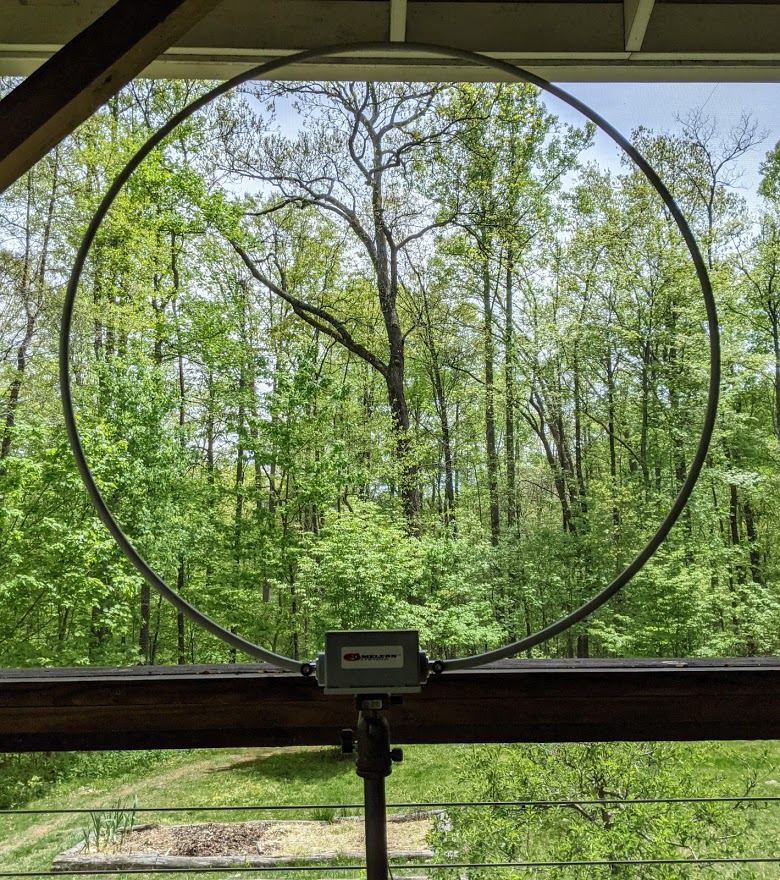
Video: Dave sets up the Chameleon CHA-RXL

Many thanks to SWLing Post contributor, Mike, who shares the following video from David Casler featurin the CHA RXL amplified loop antenna:

Click here to view on YouTube.

Thank you for the tip, Mike!

I just checked out the loop at Chameleon and discovered that they’re currently offering a sale on the “two sections” version of the CHA-RXL. Click here to check it out.

Also, if you live in Switzerland or Europe, Lutz Electronics is now a distributor of Chameleon products.

Halloween weekend will offer up excellent SW pirate listening!

Halloween is typically the most active day of the year for shortwave pirates. This year, Halloween falls on Sunday, October 31st which essentially opens up a Friday through Sunday Halloween Piratefest. Expect pirates to emerge like The Great Pumpkin!

Here are two things you’ll want to do this Halloween weekend:

HF Underground

hfunderground

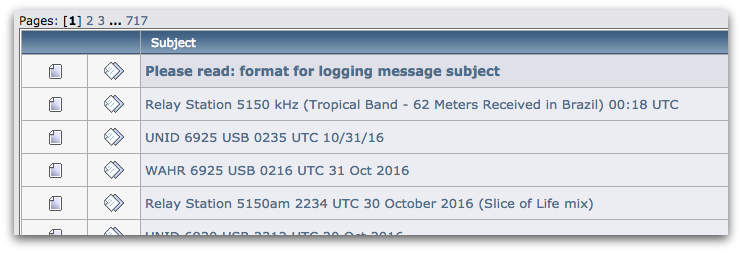
Follow real-time pirate radio spots and loggings on the HF Underground discussion forum. Chris Smolinski at HFU typically posts post-Halloween pirate stats on the SWLing Post as well–always a fascinating overview.

You might also venture over to Andrew Yoder’s pirate radio blog, the Hobby Broadcasting blog. Although he doesn’t log frequently, he usually makes time on Halloween (no pressure, Andy! Ha ha!)

Listen!

Photo by Bill Patalon

Listen for pirate radio stations today and throughout the weekend!  Turn on your radio anytime today, but especially around twilight and tune between 6,920 – 6,980 kHz. Pirates broadcast on both AM and SSB; you’re bound to hear a few. If you’re brand new to pirate radio listening, you might read my pirate radio primer by clicking here. I will be listening until late in the evening.

Happy Halloween to all! 

Re-Visiting Calibration on Tecsun Receivers

Many thanks to SWLing Post contributor, Dan Robinson, for the following guest post and review:


Re-Visiting Calibration on Tecsun Receivers

Dan Robinson

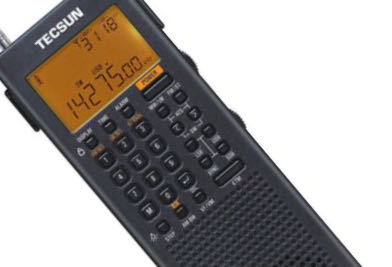
As owners of the latest Tecsun receivers should know by now, the PL-990x, H-501x and the new PL-368 (also sold by CountyComm as the GP7/SSB) provide the user with the ability to re-calibrate.

I wrote about this in my past reviews of these receivers.  With the PL-368, the addition of re-calibration combines with a new keypad to make this receiver even more attractive as a prepper type radio.

Recently, an exchange with Gilles Letorneau who runs the OfficialSWLChannel on You Tube and viewing one of his videos brought to my attention a variation in the method I had been using.

Since the 990x, 501x and more recently the 368 came out, I had been following this method:

Receive a clear and audible strong station in shortwave, then switch to USB and LSB.   If adjustment is needed, hold down USB or LSB until a double display flash.  Hit the STEP button once and then quickly again to move the display down arrow so it’s above the far right digit.  Then fine tune for zero beat.  Hold LSB or USB in for a couple of seconds until the LCD blinks again.

At one point, Tecsun engineers had cautioned against using re-calibration and apparently had de-activated it in the PL-330 and PL-368, worrying that using the feature might result in unwanted complications for some users.  But it was later restored.

My exchanges with Gilles alerted me to the fact that the additional step of first holding down USB or LSB for a double display flash, depending on which is being re-calibrated, is not actually necessary.

I owe Gilles a beer on my next visit to Montreal.

Of course, switching to SSB does not automatically place the receiver in fine tune mode, which is still necessary, so after entering USB or LSB you still have to move the fine tuning cursor to the right with two presses of the STEP button.  But it’s not necessary to long press USB or LSB first to achieve a first double flash

As I stated in my reviews, re-calibration doesn’t mean the receiver is then permanently zeroed up and down the shortwave bands.  You will have to repeat the process from, say 25 meters, to 19 meters, to 49 meters, etc.

Revisiting the re-calibration issue on the Tecsun PL-368, and now on a sample of the CountyComm GP7/SSB has underscored a couple of other issues on these handy walkie-talkie style receivers.  I will have more on this in an upcoming review of the CountyComm version of the PL-368.

Radio Waves: DAB on UK Smart Speakers, MORE Project, Sun Getting Busy, and RTI’s German special “garners thousands of responses”

Radio Waves:  Stories Making Waves in the World of Radio

Because I keep my ear to the waves, as well as receive many tips from others who do the same, I find myself privy to radio-related stories that might interest SWLing Post readers.  To that end: Welcome to the SWLing Post’s Radio Waves, a collection of links to interesting stories making waves in the world of radio. Enjoy!

Many thanks to SWLing Post contributors Skip Arey, Mike Hansgen, and David Iurescia for the following tips:


Nobody cares about DAB radio – so let’s force it onto smart speakers, suggests UK govt review (The Register)

Britain’s anti Amazon and Google war gets a second front

The UK may require smart speakers such as Amazon Echo and Google Home devices to broadcast UK DAB radio stations, over government fears that Brits aren’t consuming enough of the unloved radio tech.

Under the guise of “protecting UK radio stations’ accessibility” the Department for Culture, Media and Sport (DCMS) has published a report calling for smart speakers to rebroadcast domestic radio stations’ output. The recommendation is as follows:

The government to consider regulatory changes to ensure radio stations and radio and audio content can be easily found and is discoverable by users of voice assistant platforms, including smart speakers and in-car infotainment systems.

The call, made in the Ministry of Fun’s Digital Radio and Audio Review, was backed by national broadcaster the BBC and commercial radio groups.

The same report found that 64 per cent of audio on smart speakers is live radio, though smart speaker users make up around 6 per cent of radio listeners at present. Nonetheless, DCMS called for governmental action to enforce the provision of something that’s already provided.

Media minister Julia Lopez said in a canned statement: “We must make sure this treasured medium continues to reach audiences as listening shifts to new technologies and that we have a gradual transition away from FM to protect elderly listeners and those in remote areas.” [Continue reading…]

Interested in getting a U.S. Amateur Radio license? (David Sarnoff Radio Club)

Earlier this year, the IEEE Princeton / Central Jersey Section’s Broadcast Technology Chapter (IEEE PCJS BT) received a generous grant to provide mentoring and equipment that encourages understanding of digital and analog aspects of radio communication, through hands-on activities and explorations. Over the next 2 years, our Make Operating Radio Easier (MORE) Project will be training 500 new U.S. Amateur Radio (“Ham”) operators in small (10 to 15 person) groups. We are especially seeking youth (ages 12-18) and non-males to help increase the demographics for these underrepresented groups on the air, but are currently accepting applicants of all ages (12+) and all genders.

Class sessions are primarily virtual (via Zoom) but may be arranged to be on-site if there is sufficient interest by a school, club or organization (as allowed, given the ongoing health situation). Virtual or in-person FCC amateur license testing sessions will also be arranged (throughout the USA) by our ARRL-certified MORE Project Volunteer Examiner (VE) team. There is no charge for the classes, and ALL testing and licensing fees for participants in the MORE Project are covered by our grant. Trainees in our program will also receive (paid by the MORE Project) a Software Defined Radio USB dongle, a pre-assembled 25-foot longwire receiving antenna, and (after successfully licensing) a hand-held Yaesu 2 Meter (HT) radio. The MORE Project course will provide instruction in the use of this equipment and assistance in Getting On The Air (GOTA) to make radio contacts.

Additional information about the MORE Project, including how to register for a training course, is at n2re.org/m-o-r-e-project and in our IEEE PCJS Call for Participation flyer. Questions should be directed to Dr. Rebecca Mercuri K3RPM at [email protected].

Our Sun is About to Get Busy | Solar Storm Forecast 10.25.2021 (Tamitha Skove)

RTI’s German-language special program garners thousands of responses (RTI)

During the third quarter of every year, Radio Taiwan International (RTI) broadcasts a special one-hour radio program via shortwave directly to German-speaking countries. The programs were transmitted over four weekends between July and August. Usually, RTI’s German programs are relayed through Bulgaria.

This year, thanks to conducive weather conditions and precise engineering, RTI’s signal was stronger than in prior years. In response to the program, listeners from 33 countries sent over a thousand reception reports confirming they received the broadcast. According to RTI, it received a record number of reports.

Radio Taiwan International President Chang Cheng says that even though most of the station’s programs are available online, there is still a significant community of people that prefers listening to shortwave radio.

This year, listeners who sent in a reception report for the special one-hour broadcast will receive a limited edition RTI QSL card featuring Taiwan’s iconic Formosan Blue Magpie. RTI says that it is still in the process of responding to all of the listening reports it received.


Do you enjoy the SWLing Post?

Please consider supporting us via Patreon or our Coffee Fund!

Your support makes articles like this one possible. Thank you!

Jock’s radio-related book recommendations

Many thanks to SWLing Post contributor, Jock Elliott, who shares the following guest post:


Some radio-related books you might want to read

By Jock Elliott, KB2GOM

Radio-related books – books in which radio is not the main subject but plays a significant role in the storyline or plot (whether it is fiction or non-fiction) – can inspire us. Whether we are shortwave listeners, HF utilities monitors, or VHF/UHF scanner fans, radio-related books can heighten our appreciation of what we do, I think.

With that in mind, below are some radio-related books that I have read and can heartily recommend.

This Is Chance!: The Shaking of an All-American City, A Voice That Held It Together

In 1964, a 9.2 earthquake shook Anchorage, Alaska, with a ferocity not seen in North America before.

When the shaking stopped, night fell; the city went dark, and people began tuning their transistor radios to hear a familiar voice.

Genie Chance, a part-time reporter and working mother, would stay on the air almost continuously for the next three days as an eclectic group of officials and volunteers worked to begin picking up the pieces. This is a moving story about radio, ham radio (a bit), and people rallying together.
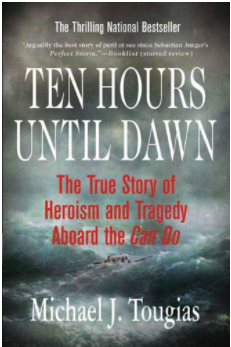
Ten Hours Until Dawn: The True Story of Heroism and Tragedy Aboard the Can Do

In 1978, in the midst of a blizzard, the tanker Global Hope floundered on the shoals in Salem Sound off the Massachusetts coast.

In response to Mayday calls, the Coast Guard dispatched a patrol boat. Within an hour, the Coast Guard boat lost its radar, depth finder, and engine power in horrendous seas.

Pilot boat Captain Frank Quirk was monitoring Coast Guard VHF radio and decided to act.

Read this book sitting by the fire, far from the sea. A chilling account.
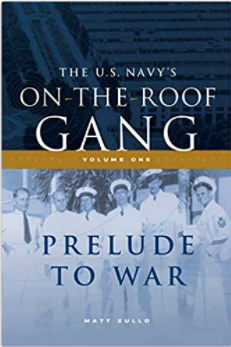
The US Navy’s On-the-Roof Gang: Volume I – Prelude to War

Between WWI and WWII, the US Navy realized the need to intercept and decode Japanese military and diplomatic radio traffic.

Matt Zullo calls this book a novel because he had to fill in the blanks in some areas, but most of the book is based on official documentation and personal recollections.

It is a ripping good yarn, written in an engaging style, that spans the globe from Samoa to Greenland, and I found it fascinating and will soon be reading the second volume.
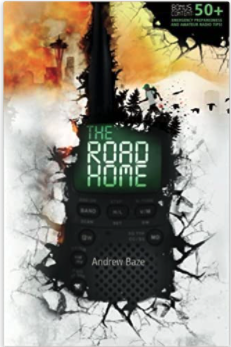
The Road Home

After an earthquake rips Seattle, Robbie and his father have to rely on their wits and some new-found skills to get home safely.

This fictional story includes many emergency preparedness and ham radio tips. Some are a bit dated, but many are still applicable today.

Well worth the reading.

The Day After

The sequel to The Road Home.

After learning that his neighbor Katy is injured, alone, and needs help, Robbie ventures out, and a short trip across the city will turn into a race for survival that cleverly illustrates useful emergency preparedness while emphasizing the importance of communication and thinking ahead.

Again, in my humble opinion well worth the time.

And now . . . it’s your turn!

What radio-related books – fiction or non-fiction — would you recommend? As a dyed-in-the-wool, unrepentant, not-on-the-12-step-program bookaholic, I’m always looking for a good read!

Please note that all SWLing Post Amazon links are auto-converted to affiliate links which support the site at no cost to you. Your purchase helps support the SWLing Post.