Shortwave listening and everything radio including reviews, broadcasting, ham radio, field operation, DXing, maker kits, travel, emergency gear, events, and more
Many thanks to SWLing Post contributor, Jason, who writes:
Hi Thomas,
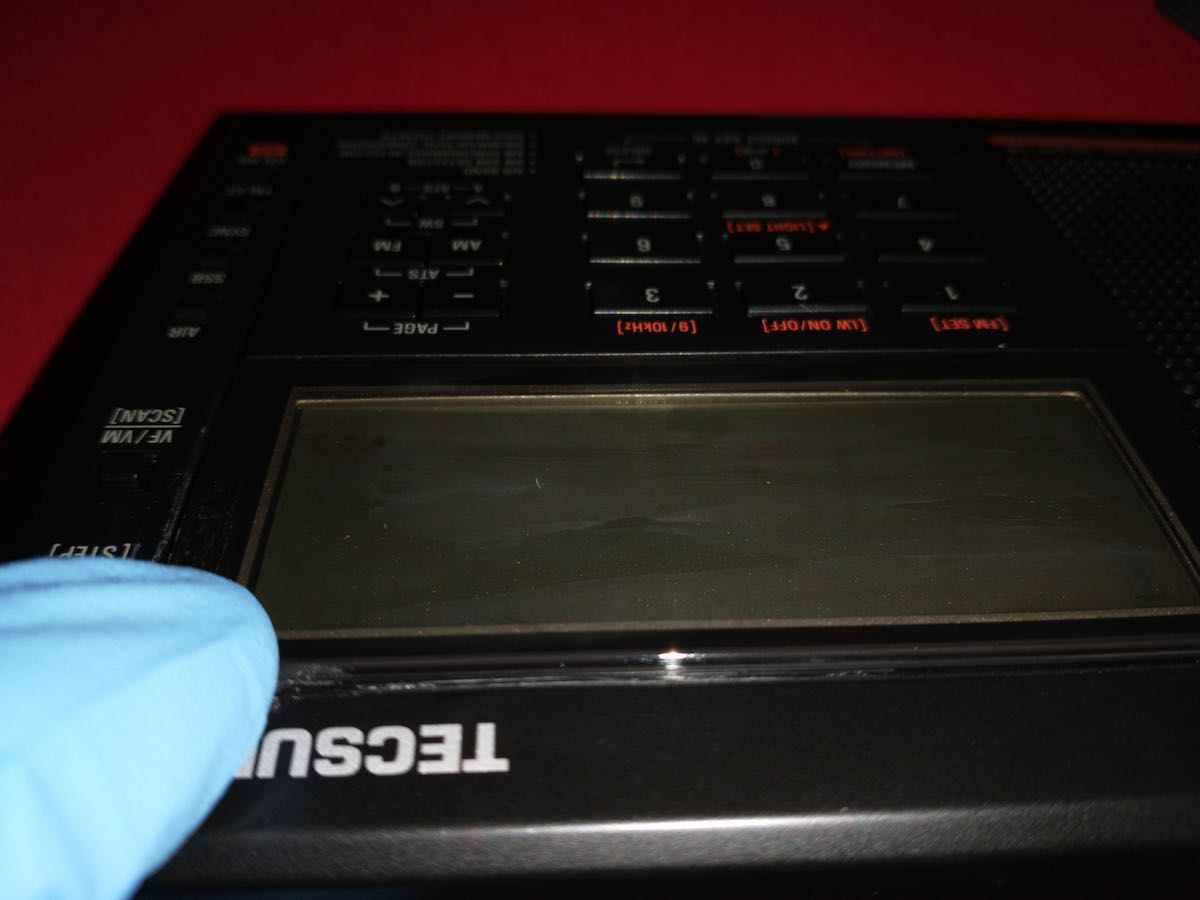
Recently I was cleaning and foolishly decided to clean the face of my Tecsun PL680 with 90% iso alcohol using an ear cleaner / Q-tip. Now the LCD has a smudge look to it, almost like a fog. The display is still legible thankfully, but only when looking head on. I quickly wiped it down with a cloth and left it in an airtight container filled with silica gel packets for a week.
Would you or other SWLING readers have any idea how to remedy this? It is my understanding that this is just cosmetic damage and shouldn’t impact the usage of the radio.
Regards,
– Jason
Sorry to hear about this, Jason. Yes, isopropanol/isopropylalcohol is a solvent and can corrupt plastic surfaces like this. I’m familiar because my wife once tried to clear a DVD with 90% isopropylalcohol and it made the surface so hazy, the DVD player could no longer read it. I don’t think this will have any impact on the radio itself since you didn’t exactly did it in iso alcohol.
I understand that in some cases, polishing the surface can minimize the haziness, but how to do that, I’m uncertain. My hope is, another SWLing Post contributor can chime in with some real-life experience!
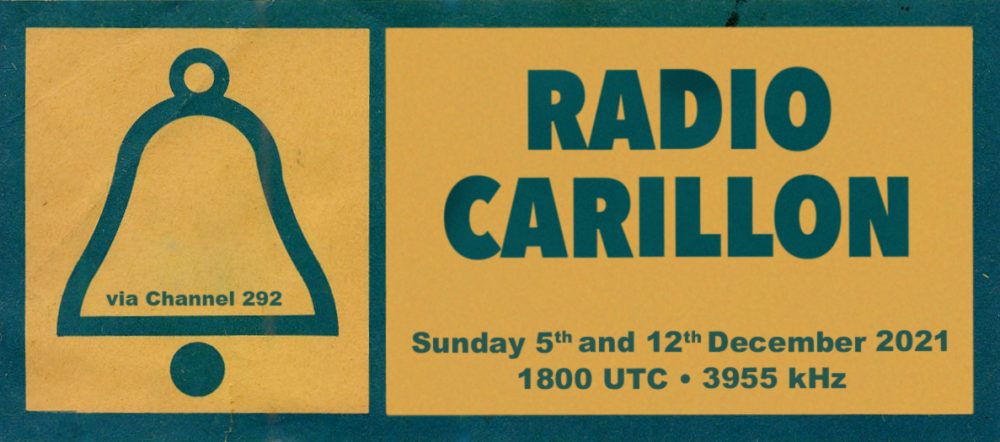
Many thanks to SWLing Post contributor, Fastradioburst23, who shares the Radio Carillon flyer above announcing a broadcast on Monday, December 5th and 12th, 2021 at 1800 UTC on 3955 kHz via Channel 292. Make sure to mark your listening calendar!
Many thanks to SWLing Post contributor, Haluk Mesci, who shares the following guest post:
AGA is the agha of radios…
by Haluk Mesci
Full disclosure: Contains nostalgia of ‘my parent’s radio’ and some 36 ‘and’s…
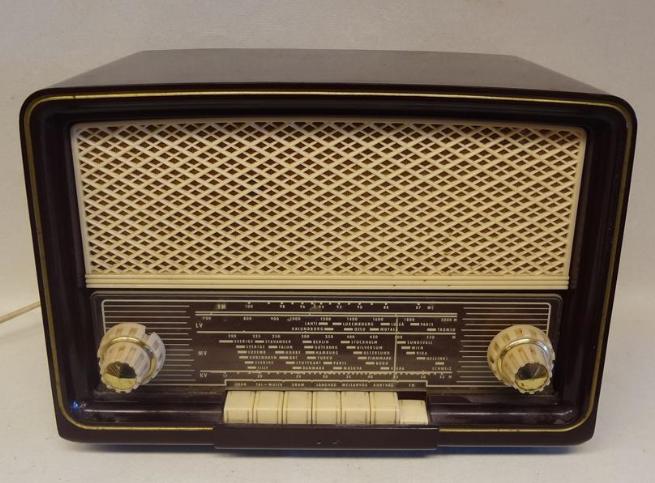
I was born and raised in Turkey. Throughout some part of my primary and secondary school years–between 1960 to 1968–we enjoyed listening to an AGA tube radio in the family room.
Although AGA is mainly Swedish as far as I know, I re-discovered a stock photo of it on agamuseum.nl which is Dutch:
Ours had a ‘magic eye’ just above the tuning knob on the right
I remember, at age 9, trying to listen to a live broadcast of a soccer match between Fenerbahce–my favorite team–and the French team of Nice: There was a ‘Nis’ -Turkish spelling- on the MW screen, so there had to be a broadcast, right? Wrong.
I learned much later that it wasn’t that easy on radio. (Alas, my team was devastated 5-1 anyhow.) Similar ‘search’ for ‘Russian Sputnik sending messages to the world’ yielded nothing but strange sounds like ‘a diesel engine working loudly’… I wasn’t a silly kid, but nobody taught us basic radio then.
Years passed and my family relocated to Samsun, another city by the Black Sea, because of my father’s work. I was about to graduate from ODTU and there was the famous leftist (anti-US etc) ‘boycott’s of 1968 and later, I had to go live with my parents while my university courses remained suspended.
Ironically, the city had a US radar base; the base had a low power MW radio station broadcasting news and music -rock and country etc- 24 hours in English to the base staff: AFRTS 1590 kHz.
Shortly thereafter, the base was closed and the radio station went off the air, maybe because of the boycotts and the political winds in Turkey, so I had to look up another such station. Continue reading →
Many thanks to SWLing Post contributor, Giuseppe Morlè, who writes:
Dear Thomas,
This is Giuseppe Morlè, from Formia central Italy on the Tyrrhenian Sea,
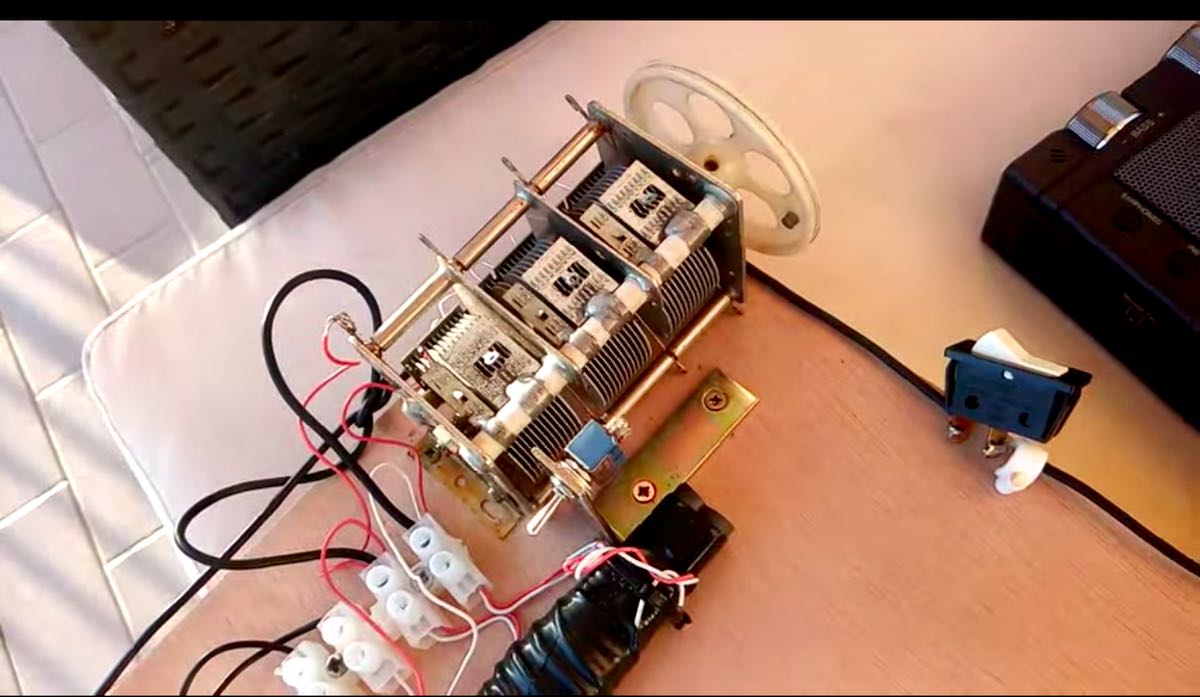
I built this “Magic Tablet. during a rainy afternoon to test various portables I have.
The tablet is composed of 2 separate circuits: one for the short waves, a single coil along the entire perimeter of the tablet, and another with 2 ferrites wrapped around 36 turns of telephone cable for the medium waves.
The heart of the system is a 1050 pf variable capacitor with its old wheel.
To listen to medium wave I have to exclude the short wave loop with a switch on the loop.
I also added another small switch to connect it to a capacitor for more or less capacity, but this I will do later.
I can test my portables like this because the tablet tunes very well from 500 kHz to 18 MHz. I spent very little to make all this as it is all recycled stuff.
You can see the first tests on the balcony of my house with a Tecsun H-501 via my YouTube channel:
Note: this video is in Italian, but you can turn on closed captions and have it translate into the language of your choice.
As I always say, I am not a technician and I have little manual skills in building things, not having a proper laboratory. When I get an idea, I put it on paper and I start to find all the materials and then see if they work. Not all of us are of the experts in electronics–what drives me is a passion for radio listening. Now being retired, I have more time to devote to it.
Thanks to you and hello to the whole SWLing Post community …
73. Giuseppe Morlè (IZ0GZW)
I love this, Giuseppe! What a clever all-in-one portable antenna system for your shortwave radios. I especially love the fact you were able to create all of this from parts you have at your home. You’ve got a winning attitude, too: build and experiment! Thank you for sharing.
Many thanks to SWLing Post contributor, Jock Elliott, who shares the following guest post:
The Essential Listening Post
By Jock Elliott, KB2GOM
Listening to shortwave radio (or any radio, for that matter) is just plain fun.
So what do you need to get in on the fun?
A radio. With today’s crop of portable SW radios, many of which have search and store capabilities, a newbie SWL can get started quickly without a lot fuss and bother and no extra stuff. Just hit the search and store function (it has different names on different radios), let the search function do its thing, and step through the memories to see what’s out there. If your radio doesn’t have search and store, you can just tune around to see what’s currently broadcasting or, if you have a computer or smart phone, use it to explore one of the online directories like https://shortwaveschedule.com/
What follow next are some things that I’ve found increase my enjoyment of SWLing. Continue reading →
Radio Waves: Stories Making Waves in the World of Radio
Because I keep my ear to the waves, as well as receive many tips from others who do the same, I find myself privy to radio-related stories that might interest SWLing Post readers. To that end: Welcome to the SWLing Post’sRadio Waves, a collection of links to interesting stories making waves in the world of radio. Enjoy!
Many thanks to SWLing Post contributors Marty, Dennis Dura, Dave Zantow, Al Holt, and Rich Cuff for the following tips:
I have an MFJ-434 voice keyer that has saved a lot of wear and tear on my vocal cords over the years. It has been a big asset during ham radio contests and when I’ve been calling CQs with reduced power (QRP) transceivers.
One of my new favorite pastimes has been operating QRP radios from remote off-the-grid locations. Most of the time, it’s important to pack only the bare essentials for these mini-DXpeditions. I have never taken the MFJ keyer, primarily due to its size. An “accessory” measuring 6-1/2 x 7 x 2-1/2 inches fills up a lot of backpack. It also weighs a pound and a half. On the other hand, I’m absolutely positive the lack of a keyer has resulted in fewer radio contacts. I always run out of voice before I run out of battery.
Last winter, I was packing a QRP “Go Box” for a trip to Florida. Since that stay was planned to last longer than my normal field trips, I decided to take my MFJ keyer for its first outing. What a difference that keyer made! In less than three months, I worked stations in 31 countries and five continents running a 10 watt transmitter and a dipole antenna!
The enormous number of contacts warranted a closer look at a keyer for shorter field trips. The MFJ-434 has 11 buttons to push, three potentiometers to turn, and two LEDs to show me the keyer is doing what I told it to do. Could I get by with fewer amenities and shrink the size, weight, and power requirements to something more backpack friendly? It was worth an investigation.
The MFJ keyer stores five messages. For field operation, I could live with a single CQ. I found a 20 second record-playback module on eBay for $2.59.
I also found a repeat-cycle timer (variable on and variable off delays) on eBay for $2.38. I could use it to “turn on” the playback message, then turn it “off” for a predetermined period of time before turning it on again.
A relay could be added to key the transmitter’s PTT circuit every time my CQ message was played. The receiver would automatically listen for any replies between messages. (This might actually work!) [Continue reading…]
Sony TFM1000 AM FM SW Vintage Radio Decrustification (YouTube)
RTHK has often set the news agenda with its aggressive coverage of the city. But a Beijing clampdown has changed that, with pro-China coverage filling the void.
HONG KONG — Not long after Patrick Li took over as the government-appointed director of Hong Kong’s public broadcaster, a digital lock pad appeared outside his office entrance.
In the past, the director’s office had been where staffers at the broadcaster, Radio Television Hong Kong, gathered to air grievances with management decisions: programming changes, labor disputes. Now, the lock pad signaled, such complaints were no longer welcome.
For many employees, the closed room was an emblem of the broader transformation sweeping through RTHK, the 93-year-old institution venerated by residents as one of the most trusted news sources in Hong Kong’s once freewheeling media landscape.
RTHK was once compared to the BBC for its fierce editorial independence. But under a sweeping national security law that Beijing imposed last year to silence dissent, many say it now more closely resembles China Central Television, the propagandistic Chinese state broadcaster.[Continue reading…]
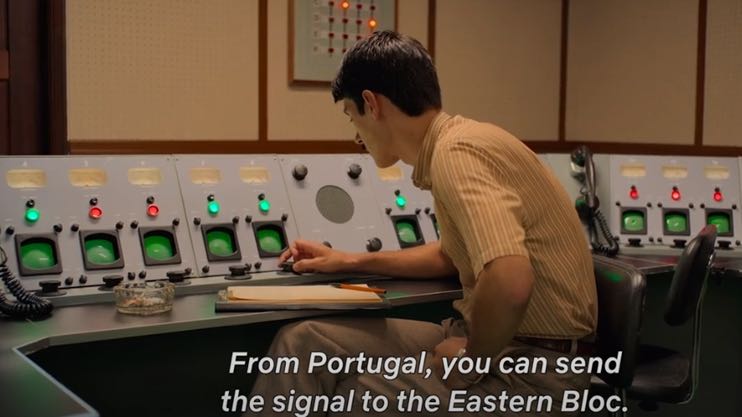
Netflix has released its first Portuguese original series. Glória is on Netflix since November 5. Produced by the SPi production company of Grupo SP Televisão and co-produced with RTP, Glória is an intense historical spy thriller taking place during the Cold War. It is a high-quality series from Portugal with an intricate storyline.
Set in a small Portuguese village named Glória do Ribatejo in the 1960s, the ten-part series follows João Vidal (played by Miguel Nunes), a young man whose family has connections with the leaders of the Estado Novo, the authoritarian Portuguese Regime. João works as an engineer at RARET, a U.S. re-broadcasting office of Radio Free Europe. The series shows how this small village became “an unlikely Cold War stage where American and Soviet forces fought through dangerous sabotage maneuvers to achieve control of Europe,” the Netflix synopsis explains. João gets recruited by the KGB, and will find himself in the middle of the intricate webs of spy games at play in RARET.
An original series created by Pedro Lopes and directed by Tiago Guedes, Glória is a slow-burning series that is a mixture of historical drama based on real events and espionage thriller. The series paints a dark image of Portugal’s past, its violence toward women and its brutal colonial war. It is the highest budget series in the history of Portuguese production, according to The Portugal News. [Continue reading…]

 Many thanks to SWLing Post contributor, Jason, who writes: