Category Archives: Shortwave Radio

Radio Waves: RIP Phil Erwin, Federal Watchdog Targets Pack, Eclipse Festival of Frequency Measurement, and VOA testing DRM

Radio Waves:  Stories Making Waves in the World of Radio

Because I keep my ear to the waves, as well as receive many tips from others who do the same, I find myself privy to radio-related stories that might interest SWLing Post readers.  To that end: Welcome to the SWLing Post’s Radio Waves, a collection of links to interesting stories making waves in the world of radio. Enjoy!

Many thanks to SWLing Post contributors Dave Zantow, Michael Guerin, Eric McFadden, and Dan Robinson for the following tips:


The voice of Phil Irwin will be greatly missed (Rappahannock News)

Where wasn’t the presence of Phil Irwin felt in Rappahannock County?

A constant of virtually all proceedings of the Rappahannock County community and government, cherished innkeeper of Caledonia Farm – 1812, founding member of the Rappahannock League for Environmental Protection, regional director of the Virginia Farm Bureau, committee member for both Rappahannock County Farmland Preservation and the Agricultural Forestal District, Rappahannock tourism advisory member — for 25 years chief of morning broadcasts for Voice of America (VOA) — Irwin was found dead Thursday at his working cattle farm north of Washington.

“What a contribution Phil made to our county over his many years here,” Huntly friend Ralph Bates reacted upon learning of Irwin’s death. “He will live in our memories as we drive and see how well our viewshed and environment has been protected because of his commitment and work.”

Former Washington Mayor John Fox Sullivan recalled “a good man and such a part of the Rappahannock fabric. His love for this county, and commitment to it, was unmatched.”[]

Federal watchdog finds ‘substantial likelihood of wrongdoing’ by Trump appointees overseeing Voice of America (NBC News)

The federal watchdog’s findings mark the latest rebuke of the Trump-appointed CEO of the U.S. Agency for Global Media, Michael Pack.

WASHINGTON — A federal watchdog agency has found “a substantial likelihood of wrongdoing” by Trump administration appointees who oversee the Voice of America and other U.S.-funded media outlets.

The finding from the U.S. Office of Special Counsel, an independent government agency charged with safeguarding federal employees’ rights, marks the latest rebuke of Michael Pack, who President Donald Trump appointed to run the U.S. Agency for Global Media, the parent agency to VOA and other broadcasters.

A federal judge last month ordered Pack to stop interfering in the newsrooms of VOA and other media outlets and found that he had jeopardized the First Amendment rights of journalists that his office had targeted for investigation. Lawmakers from both sides of the aisle and press freedom groups have blasted Pack over his actions since he took over in June, accusing him of undermining the broadcasters’ editorial independence and defying congressional authority.

After reviewing allegations from current and recent employees, the Office of Special Counsel wrote to the whistleblowers Wednesday saying it had demanded Pack and the U.S. Agency for Global Media conduct an investigation into the allegations.[]

The December 2020 Eclipse Festival of Frequency Measurement (HamSCI)

Changes in ionospheric electron density caused by space weather and diurnal solar changes are known to cause Doppler shifts on HF ray paths. For example, see Figure 7 in Boitman et al., 1999. HamSCI’s first attempt at a measurement of these Doppler shifts was during the August 2017 total solar eclipse. We plan a careful measurement during the 2024 eclipse. As part of the WWV centennial, 50 stations collected Doppler shift data for the original Festival of Frequency Measurement, demonstrating the value of volunteer participation in collecting this data. During the June 2020 Eclipse Festival, we enlisted participants around the globe and experimented with different data collection protocols. This winter, we request that all amateur radio stations, shortwave listeners, and others capable of making high-quality HF frequency measurements help us collect frequency data for the December 14 total eclipse.[]

USAGM, VOA Testing Innovative Digital Radio Platform (Inside VOA)

A few weeks before the COVID-19 pandemic shut down much of the world, broadcast engineers in Greenville, North Carolina, launched a test of digital radio signals. The U.S. Agency for Global Media began aiming a digital broadcast at Cuba and Latin America, which included Office of Cuba Broadcasting and Voice of America content.

With this 2020 test, VOA embarked on a new phase of global innovation on a platform called Digital Radio Mondiale (DRM), a versatile digital signal not well known in the U.S., but the only one that can cover the entire spectrum: shortwave, mediumwave and longwave, as well as VHF (FM). As digital radio emerged in the 1990s, VOA was among the first broadcasters testing a signal that promised to even out shortwave radio signals that often faded in and out and were marred by static.

VOA tested the DRM signal in the 1990s at the agency’s Morocco transmitter site, one of five facilities opened in a period of expansion in the previous decade. However, other digital signals became the standard in various markets around the world. The U.S. standard audio digital platform is called HD.

Around the world, as other digital radio platforms were adopted, DRM was held back by the marketplace. Nobody was making commercially available receivers.

By the end of the 1990s, VOA innovation focused more on television, the platform that promised larger audiences, even in some places in the world where shortwave dominated. By the early 2010s, the rallying cry became “Digital First,” as VOA strived to attract readers for its language service websites and began tapping into the growing audiences on new social media sites like Facebook, Twitter, Instagram and YouTube.

By 2020, however, DRM had come full circle.

“You’re no longer limited to just reading the news or playing music,” says Gerhard Straub, supervisory director of the USAGM Broadcast Technologies Division.

Straub, along with Gary Koster, Broadcast Radio Technician and transmitter expert and Macon Dail, Chief Engineer at the Greenville Transmitting Station, set up the test broadcast in February of this year, not long before the COVID-19 pandemic grounded global travel. The trio put up a DRM signal with Radio Marti and VOA audio along with scrolling text messages and rotating images.

Engineers have received reports of a clear signal as far south as Brazil.

The USAGM test, says Straub, is “coasting along” in the pandemic, but additional content will be added when technicians can travel again. Straub says the VOA signal was taken off in the initial test to concentrate on the OCB digital content and to keep the signal robust. Now that there is good reception data, he noted, the digital bit rate can be increased and VOA content added back into the test in 2021.

Because DRM operates at lower power, more radio stations and digital signals can be broadcast on a single transmitter. The platform is starting to grow in countries of interest to Western international broadcasters. DRM signals will soon cover all of China, though its government is expected to attempt to control the stations accessed by its citizens. India built 39 transmitters and, more importantly, 2.5 million vehicles already are equipped with DRM radios. Indonesia, Pakistan, Brazil and North Korea all have nascent DRM operations.

Religious broadcasters, who sometimes target audiences similar to those sought by Western governments, are experimenting with the technology. For example, a missionary group, TWR.org, sent the Bible’s Gospel of Mark from Guam to Cambodia via DRM shortwave.

“You have to stop thinking of it as radio, because it’s not,” says USAGM’s Straub. “We are now broadcasting digital data. Just like we broadcast digital data on the internet, we can broadcast digital data over shortwave without being hampered by an internet firewall that maybe limits what we can send to a particular country.”

Reason enough, Straub believes, for VOA to continue leading innovation in a new-again technology.[]


Do you enjoy the SWLing Post?

Please consider supporting us via Patreon or our Coffee Fund!

Your support makes articles like this one possible. Thank you!

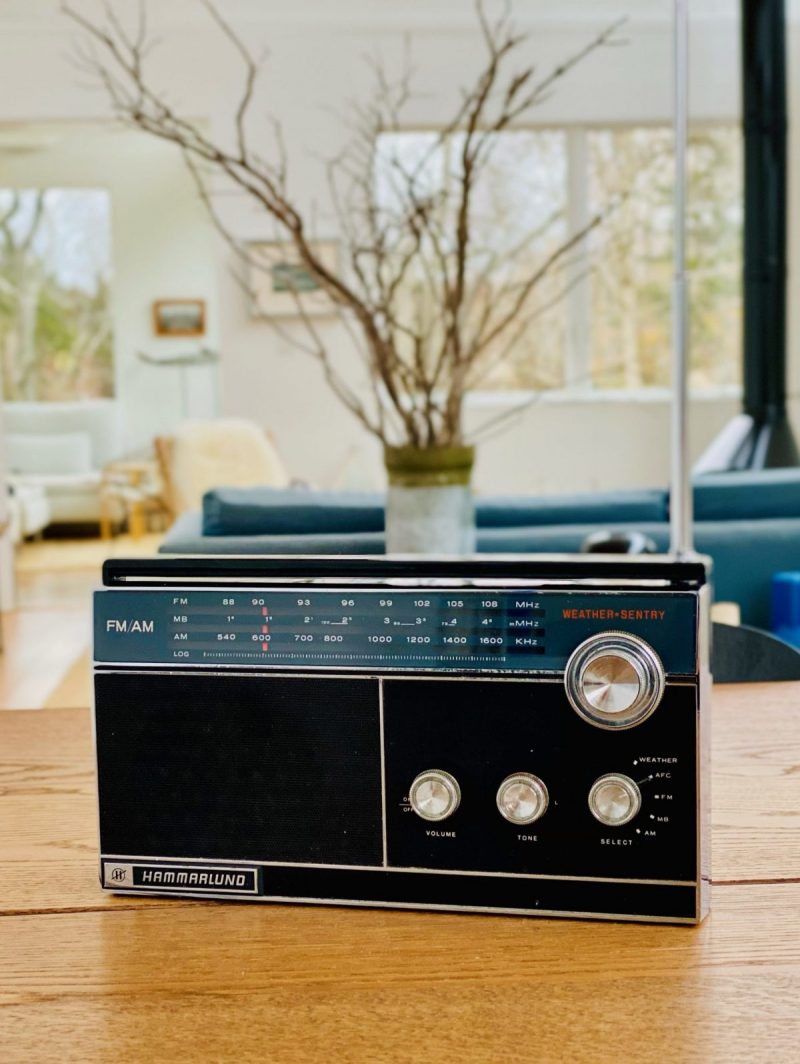
Hammarlund HR-10: David seeking advice about weather frequency adjustment

Many thanks to SWLing Post contributor, David Korchin, who needs a little advice regarding his recently restored Hammarlund HR-10:

After doing a heart transplant on my Hammarlund HR-10 Weather Sentry multi band receiver (I found a rough user on eBay and swapped out the chassis into my unspoiled case) the rig is running to spec; MW is very strong with that long bar antenna, the FM+AFC is terrific , and I’ve been sandbagging 75-80 m hams in their AM QSO’s. But the Weather band is fixed reception at 162.550 MHz—that works in New York City but the NOOA stations out here in easternmost Suffolk County NY use different frequencies. I’m wondering if the radio can be adjusted to another frequency? Or the crystal swapped?

Any ideas would be appreciated!

Please comment if you can help David sort out how he might add or modify the HR-10’s weather frequency!

Solar Cycle 25: Sunspot Cycle “Could Be One Of The Strongest On Record”

(Source: SpaceRef via Eric McFadden)

In direct contradiction to the official forecast, a team of scientists led by the National Center for Atmospheric Research (NCAR) is predicting that the Sunspot Cycle that started this fall could be one of the strongest since record-keeping began.

In a new article published in Solar Physics, the research team predicts that Sunspot Cycle 25 will peak with a maximum sunspot number somewhere between approximately 210 and 260, which would put the new cycle in the company of the top few ever observed.

The cycle that just ended, Sunspot Cycle 24, peaked with a sunspot number of 116, and the consensus forecast from a panel of experts convened by the National Aeronautics and Space Administration (NASA) and the National Oceanic and Atmospheric Administration (NOAA) is predicting that Sunspot Cycle 25 will be similarly weak. The panel predicts a peak sunspot number of 115.

If the new NCAR-led forecast is borne out, it would lend support to the research team’s unorthodox theory – detailed in a series of papers published over the last decade – that the Sun has overlapping 22-year magnetic cycles that interact to produce the well-known, approximately 11-year sunspot cycle as a byproduct. The 22-year cycles repeat like clockwork and could be a key to finally making accurate predictions of the timing and nature of sunspot cycles, as well as many of the effects they produce, according to the study’s authors.[…]

Click here to continue reading the full article.

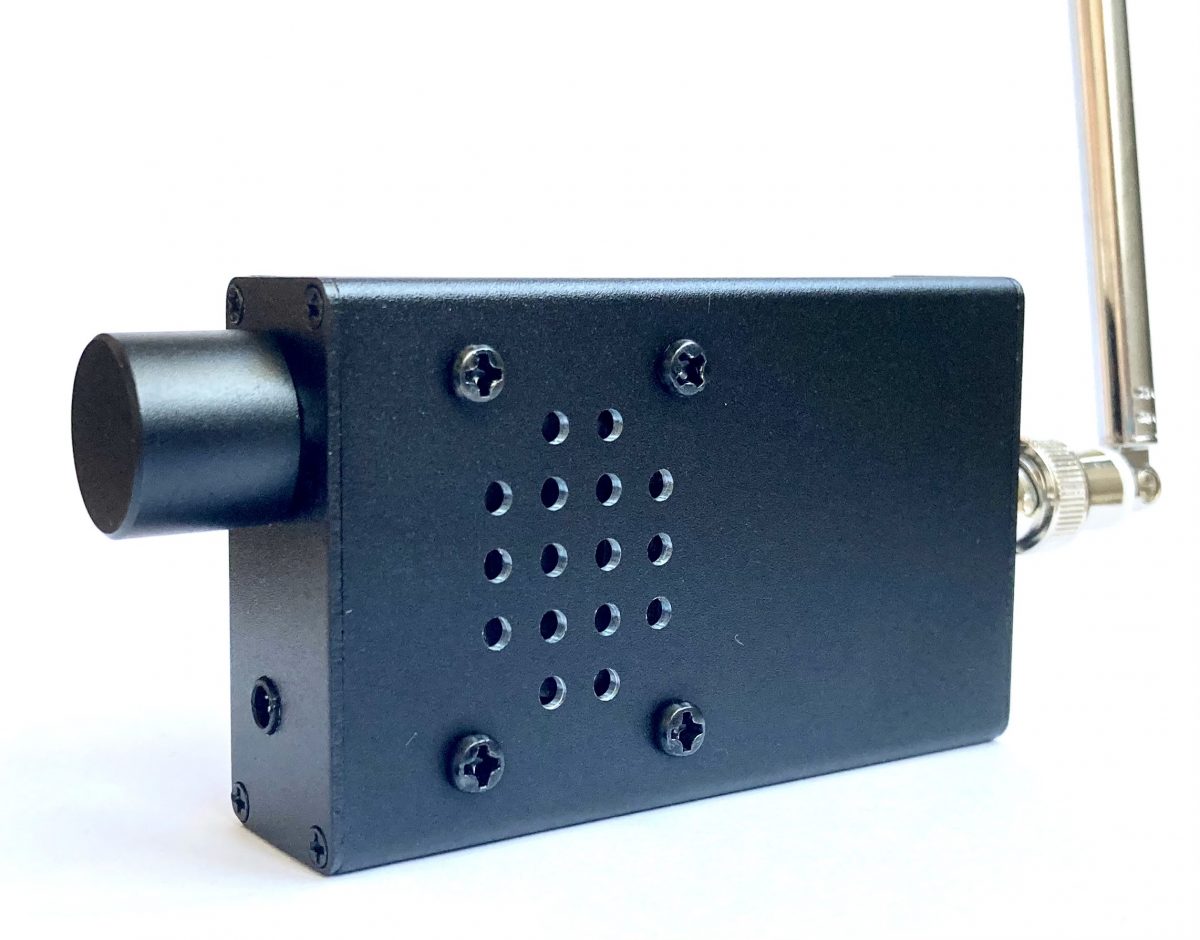
The new Belka-DX speaker option

Belka-DX Speaker

Many thanks to  Alex (EU1ME)–developer and manufacturer of the Belka DX  and Belka DSP shortwave receivers–who shares information about a new version of the Belka-DX:

[Based on customer feedback, we’ve] added a built-in speaker to the Belka DX version. It’s an option that I believe also can be useful when listening this radio (broadcasts for example).

The dimensions of the receiver remain the same. See photos attached.

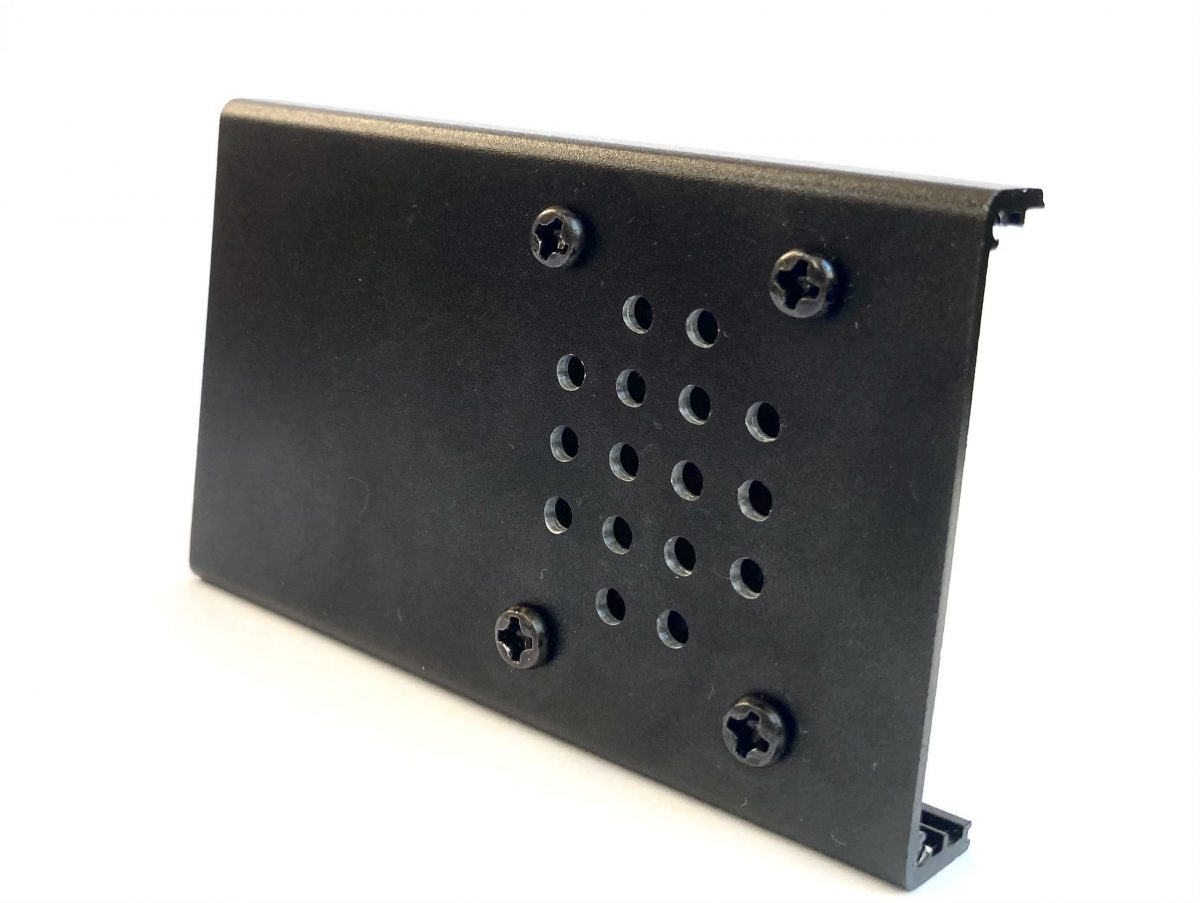
Belka-DX Speaker

Battery capacity is reduced from 2200 to 1250 mAh. Still, the built-in LI-Ion battery [will power] it for about 12 hours.

As far as battery and speaker are connected to the device with sockets, it is quite easy to change batteries and back covers with or without speaker depending on situation.

When back cover with speaker is installed one may still listen to the device with headphones (speaker will be muted).

Many thanks, Alex, for sharing this announcement. While I do most of my DXing with headphones, I love the idea of a speaker option for the Belka-DX especially for casual broadcast listening. The speaker appears to be an option you can purchase separately, or you can purchase the Belka-DX with the speaker option installed. I look forward to checking this out!

Click here to check out the speaker option for the Belka-DX on Alex’s website.. 

TX Factor Episode 27

Many thanks to SWLing Post contributor, Eric (WD8RIF), who notes that the 27th episode of TX Factor was recently released. Here’s the show summary:

Another post-lockdown special? – Indeed! And we hope you are safe and well and looking forward to some TX Factor action. In this final show of 2020, we visit the home of a well-known and long-established amateur radio aficionado Don Field G3XTT. A year ago Don moved to a new QTH near Wells in Somerset, and back in March we visited him to find out how he’s settled in.

Bob and Mike get to grips with setting up an OpenSpot Gateway for mobile use.

And, we hear from RSGB General Manager Steve Thomas M1ACB on the amazing media response to this summer’s amateur radio revival during the lockdown period. All this and a free-to-enter draw!

TX Factor – Episode 27:

Click here to view on YouTube or on the TX Factor website.

Radio Waves: More Cuts to Radio Canada International, RCI Action Comments, End of Radio Disney, Changes to German Phonetic Alphabet and Is FM More Efficient than DAB?

View of the western cluster of curtain antennas from the roof of RCI Sackville’s former transmissions building. Photo from June, 2012.

Radio Waves:  Stories Making Waves in the World of Radio

Because I keep my ear to the waves, as well as receive many tips from others who do the same, I find myself privy to radio-related stories that might interest SWLing Post readers.  To that end: Welcome to the SWLing Post’s Radio Waves, a collection of links to interesting stories making waves in the world of radio. Enjoy!

Many thanks to SWLing Post contributors Kris Partridge, Gareth Buxton, Dave Zantow, and Paul R for the following tips:


Canada’s public broadcaster announces new cuts to Radio Canada International (Radio Canada International)

Officials at CBC/Radio-Canada announced a fresh round of cuts at Radio Canada International (RCI) on Thursday as part of a “major transformation” of the beleaguered international service of Canada’s public broadcaster.

A joint statement released by Radio-Canada executive vice-president Michel Bissonnette and his CBC counterpart, Barbara Williams, said the goal of the transformation was “to ensure that the service remains a strong and relevant voice in the 21st-century media landscape.”

“In its strategic plan Your Stories, Taken to Heart, the public broadcaster committed to ‘taking Canada to the world’ and ‘reflecting contemporary Canada,’” the joint statement said.

“Transforming RCI is a necessary step to allow the service to effectively fulfil the important role it must play in delivering on those commitments.

“To that end, RCI will soon be offering more content in more languages, drawing on the work of CBC/Radio-Canada’s respected news teams to reach new audiences at home and abroad.”

Earlier in the morning Radio-Canada executives held a virtual meeting with RCI employees to inform them of upcoming changes.

In all, the transformation will reduce the number of RCI employees by more than half, from the current 20 to nine, including five journalists assigned to translate and adapt CBC and Radio-Canada articles, three field reporters, and one chief editor.

As part of the announced transformation, the English and French language services of RCI will be eliminated and will be replaced by curated content created by CBC and Radio-Canada respectively.

The remaining Arabic, Chinese and Spanish services will also be reduced in size.

However, two new language services – Punjabi and Tagalog – will be added to the editorial offering presented by RCI, officials said.

RCI content will also get more visibility by being incorporated into CBCNews.ca and Radio-Canada.ca with its own portal page featuring all the languages, the statement said.

RCI apps will be folded into the CBC News and Radio-Canada Info mobile apps, while the service’s five existing apps will be deleted, the statement added.

Under the new plan, RCI’s operations will focus on three main areas: translating and adapting a curated selection of articles from CBCNews.ca and Radio-Canada.ca sites; producing a new weekly podcast in each RCI language; and producing reports from the field in Chinese, Arabic and Punjabi.

“This transformation will help bring RCI’s high-quality, relevant content to more people around the globe and allow them to discover our country’s rich culture and diversity,” the statement said.

The union representing Radio-Canada employees lambasted the move as a “rampage.”

“It feels like Groundhog Day with more cuts to RCI under the guise of transformation,” said Pierre Toussignant, president of Syndicat des communications de Radio-Canada (SCRC).

In 2012, CBC/Radio-Canada slashed RCI’s budget by nearly 80 per cent, forcing it to abandon shortwave radio broadcasting altogether. The cuts also resulted in significant layoffs and the closure of RCI’s Russian, Ukrainian and Portuguese language services.[]

‘Modernizing’ RCI to death! (RCI Action)

On December 3, 2020, Canada’s national public radio and television broadcaster CBC/Radio-Canada announced “a major transformation” of Radio Canada International (RCI) titled “Modernizing Radio Canada International for the 21st century”. And if you didn’t know anything about the toxic relationship between the two, you would really think this was great news.

After all the budget cuts the national broadcaster has imposed on RCI (for example an 80 % cut in 2012) the news this time is more languages, greater visibility, and an expanded editorial line-up.

Let’s take these “improvements” one at a time.

How has CBC/Radio-Canada decided to give “greater visibility” for RCI’s Internet content? They’re going to bury it in inside the CBC and Radio-Canada websites, and not allow RCI to continue on a site that has existed since 1996.

In this same announcement, CBC/Radio-Canada says it’s adding complete sections in Punjabi and Tagalog to the existing services in English, French, Spanish, Arabic and Chinese. In fact it’s adding one “field” journalist to work in Punjabi, and one in Tagalog – not whole sections.

As far as the Spanish, Arabic and Chinese services which each have three seasoned experienced presenter-producers offering tailored content for their target audiences outside Canada, well, they’re all fired. What will remain is one “journalist” per language, who will be obliged to translate texts given to them in English and French.

And now we come to the sections working in Canada’s official languages of English and French. Again, each of these services has three seasoned experienced presenter-producers offering tailored content for an international audience that needs explanations that the domestic service is not obliged to do. So what will Canada’s Voice to the World be obliged to do in this “major transformation”? Fire all six producers and have an editor at CBC, and one at Radio-Canada, choose some stories, and place it on the “RCI website” which is just a section of the CBC and Radio-Canada websites. Yes, the ones that give RCI “greater visibility”.

The CBC/Radio-Canada announcement speaks glowingly about how RCI has provided a Canadian perspective on world affairs, but then starts skidding into talking about “connecting with newcomers to our country”, “engaging with its target audience, particularly newcomers to Canada”, and making this new content “freely available to interested ethnic community media.” Certainly sounds like CBC/Radio-Canada is intent on servicing ethnic communities in Canada.

But there’s a problem. That’s not RCI’s mandate. And CBC/Radio-Canada has no right to change that mandate. Because Canada’s Broadcasting  Act,  Article 46 (2), makes it a condition of the national public broadcaster’s licence to provide an international service “in accordance with such directions as the Governor in Council may issue.”

And the latest Governor in Council, Order in Council, PC Number:2012-0775, says Radio Canada International must “produce and distribute programming targeted at international audiences to increase awareness of Canada, its values and its social, economic and cultural activities”.

This latest announcement by the CBC/Radio-Canada is, unfortunately, yet another in a string of actions over the last 30 years to eliminate Canada’s Voice to the World.

After failing to shutdown the service in 1990, 1995 and 1996 when pressure from listeners from around the world, and from Canadian Members of Parliament and Senators stopped the closure, the national broadcaster went about dismantling RCI one section after another, one resource after another in a death by a thousand cuts.

This assault on RCI really started in earnest in 1990 when Canada’s Voice to the World was a widely popular and respected international service of 200 employees, broadcasting in 14 languages heard around the world. The 1990 cut removed half the employees, and half the language sections. Over the years, under the guise of streamlining and improving the service, it’s been one cut after another. With this year’s announcement RCI will have a total of nine employees!

Not satisfied with cutting resources, CBC/Radio-Canada has also continually tried to undermine RCI’s international role.

When in 2003 a Canadian parliamentary committee agreed with the RCI Action Committee, in emphasizing RCI’s important international role and suggested more resources should be given to RCI, CBC/Radio-Canada responded by removing two key corporate policies that specifically outlined the necessity for producing programmes for an international audience, again, despite an obligation under the Broadcasting Act.

The reductions in resources, the limiting or decreasing of RCI’s outreach, culminated in 2012 when CBC/Radio-Canada announced it was taking RCI off of shortwave radio broadcasts which had been the main way of communicating to the world since 1945.

This decision deliberately ignored the 2003 Order in Council that specifically obliged CBC as part of its licence to have RCI broadcast on shortwave. Two months after protests by the RCI Action Committee highlighted the illegality of this move, the Canadian Heritage Minister at the time, changed the Order in Council, eliminating shortwave from RCI’s obligations.

This whole sorry tale underlines a key problem facing Radio Canada International:

A domestic national broadcaster is deciding whether or not Canada should have an international voice to the world, and how well it should be funded.

Clearly however, the decision of whether Canada has a Voice to the World and how well it should be funded, should be a decision made by Parliament.

In the meantime, Canadian Heritage Minister Steven Guilbeault should tell CBC/Radio-Canada that it is not allowed to make this latest policy change. Then he should freeze any changes to the service until there is a serious renewal of the Voice of Canada, one that will give it financial and political protection from a toxic relationship with the national broadcaster.[]

Radio Disney, Radio Disney Country to End Operations in Early 2021 (Variety)

Radio Disney and Radio Disney Country are shutting down early next year.

Disney Branded Television president Gary Marsh announced the news Thursday, which impacts 36 part-time and full-time employees. The move comes as Marsh’s division looks to emphasize the production of kids and family content for streaming service Disney Plus and the linear Disney Channels.

Radio Disney first debuted in Nov. 1996 as a terrestrial broadcast network, aimed at kids, who would pick music playlist by calling a toll-free phone request line. The station was key to amplifying a bevy of musical artists, including the Jonas Brothers, Miley Cyrus, Selena Gomez, Demi Lovato, Hilary Duff, Aaron Carter and others.

Radio Disney Country launched in 2015 as a digital platform, expanding two years later with two Los Angeles terrestrial stations.[]

Germany to wipe Nazi traces from phonetic alphabet (BBC News)

Germany is to revamp its phonetic alphabet to remove words added by the Nazis.

Before the Nazi dictatorship some Jewish names were used in the phonetic alphabet – such as “D for David”, “N for Nathan” and “Z for Zacharias”.

But the Nazis replaced these with Dora, North Pole and Zeppelin, and their use has since continued with most Germans unaware of their anti-Semitic origin.

Experts are working on new terms, to be put to the public and adopted in 2022.

The initiative sprang from Michael Blume, in charge of fighting anti-Semitism in the state of Baden-Württemberg, backed by the Central Council of Jews in Germany.

The job of devising new terms for the problematic letters is now in the hands of the German Institute for Standardization (DIN).

The commonly-used equivalent in the UK is the Nato phonetic alphabet, with terms such as “F for Foxtrot, T for Tango”. But many English speakers also use terms like “D for Dennis, S for Sugar” on the phone.[]

Click here for the Newsroom audio via BBC Sounds.

How much energy is used to deliver and listen to radio? (BBC Research and Development)

Is FM radio more energy-efficient than DAB? Do transmitters or audio devices consume the most electricity? What effect will switching off certain radio platforms have on energy use? As part of our work to improve the environmental impact of BBC services, we now have the answers to these questions and more.

Today, we are publishing our research which explores the energy footprint of BBC radio services, both as it stands now and how it may change in the future. This work is the first of its kind in analysing the novel area of radio energy use and forms an extension to the research we released back in September looking at the environmental impact of BBC television.

In our study, we considered the energy use across all available platforms, namely AM, FMDAB, digital television (DTV) and via internet streaming services (such as BBC Sounds), revealing which ones have the largest footprints. We also compared energy use at various stages in the radio chain – not just looking at what the BBC is directly responsible for, such as preparation (playout, encoding and multiplexing) and distribution (transmitters and internet networks), but also in the consumption of our content by audiences. This highlighted the key energy hotspots in the BBC radio system and where best to focus our efforts if we want to reduce our energy footprint.[]


Do you enjoy the SWLing Post?

Please consider supporting us via Patreon or our Coffee Fund!

Your support makes articles like this one possible. Thank you!