Category Archives: Shortwave Radio

Radio Waves: LPFMs Go Non-Directional, ABC Cuts Remain, WBCQ Videos, and Demolition of Hara Arena

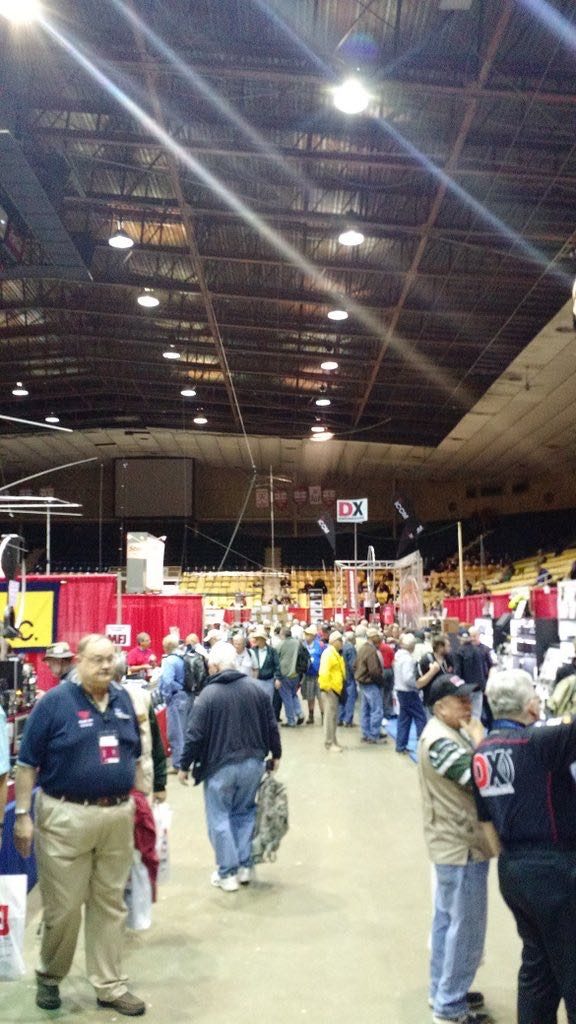
Hara Arena during the 2016 Dayton HamventionRadio Waves:  Stories Making Waves in the World of Radio

Because I keep my ear to the waves, as well as receive many tips from others who do the same, I find myself privy to radio-related stories that might interest SWLing Post readers.  To that end: Welcome to the SWLing Post’s Radio Waves, a collection of links to interesting stories making waves in the world of radio. Enjoy!

Many thanks to SWLing Post contributors Ulis (K3LU), Michael Bird, and Trevor Dailey for the following tips:


New FCC Rules Would Allow LPFMs To Use Non-Directional Antennas. (Inside Radio)

The FCC is scheduled to vote on controversial new rules that would potentially end a prohibition on low-power FM stations using directional antennas, among other things. At its April Open Commission Meeting, the agency will vote on a Report and Order to update its technical rules for LPFM stations.

Since the Local Community Radio Act of 2010 was passed nearly a decade ago, the number of LPFMs has grown to more than 2,100 stations. The LPFM service has “matured since engineering requirements were first established in 2000,” FCC Chair Ajit Pai said in a blog post announcing the April meeting agenda. “This maturation means that LPFM stations should be able to take advantage of additional engineering options to improve reception.”

In addition to improving reception, the proposed new rules would “increase flexibility while maintaining interference protection and the core LPFM goals of diversity and localism,” Pai said.

Along with expanded LPFM use of directional antennas, the proposal would allow LPFM stations to use FM booster stations.[]

The ABC is an essential service but funding cuts remain, says boss (The Age)

The ABC could have to look at closing a channel if the government remains committed to the funding cuts announced in the 2018 federal budget, according to managing director David Anderson.

“We don’t think we can bridge the gap purely from efficiency alone,” said Mr Anderson on Thursday, as the broadcaster revealed a suite of programming that it hopes will help Australians through the next three months of social isolation.

“That’s where you start to look at what it is you’re providing on what service. At the moment we have no plans to turn off a channel or a network, but I have to say that in the foreseeable future turning off a channel will happen one day. It’s just not right now.”

The ABC is in the second year of its current triennial funding round, in which the government declined to index its base funding, effectively meaning its budget has been cut by $84 million over the three years to 30 June, 2022.[]

Two WBCQ Videos

Trevor Dailey shares two videos produced by Peter Kroon and OfficialSWLchannel that focus on WBCQ and their free speech mission. Click here for the first video (18:30) and here for the second video (4:37).

Note that while all of the commentary in the first video is in Dutch, much of the content is in English.

Demolition of most of Hara Arena will start soon (Dayton Daily News)

Michael Heitz, the developer of the Hara Arena property, said Monday that sometime in the next two to three months, demolition of about two-thirds of the tornado-damaged property should begin.

Heitz said he is putting together a legal description of the recently rezoned former entertainment property, with an environmental report and surveys, for JobsOhio. He expects JobsOhio, the state’s private jobs creation arm, to put its marketing muscle behind the 130-acre site, to help him find a future user.

“This is one of their biggest tracts in the state of Ohio, under one piece of land,” Heitz said in an interview. []


Do you enjoy the SWLing Post?

Please consider supporting us via Patreon or our Coffee Fund!

Your support makes articles like this one possible. Thank you!

RNEI now broadcasting in Comb Stereo

Many thanks to SWLing Post contributor, Roseanna, who shares the following announcement from Radio Northern Europe International:

Hello everyone,

The show is finished, transmitter time booked and pre-processing done so it’s time to announce RNEI #3 & TIAEMS April 2020 to all of you!

Before we continue, we need to announce something pretty special and unique about this and future RNEI broadcasts:

RNEI is now broadcasting in Comb Stereo. It’s a standard we made and it’s a really nice addition to having a mono only broadcast. It’s easy to decode and it doesn’t degrade the mono signal!

For more information about the system and how it is decoded please see https://rnei.org/stereo/

RNEI #3 features 30 minutes of our favourite music from all over Northern Europe; Sweden, Finland, Norway, Denmark and Iceland this show. I’ve really enjoyed choosing the music and putting it all together, I really hope you enjoy listening to it.

We will also have the playlist sent in MFSK32 embedded into the final song, very similar to show #1 (we’ve worked extra hard to make it as hidden as possible which was a massive challenge this time, it’s in 2 parts during the final song with an RxID at the start of the final song).

Just like last month, TIAMS has been kind enough to join forces and make us a 30 minute express version of his show which I have loved listening to and I’m sure you will love it too![…]

Click here to continue reading the announcement and view the full RNEI schedule.

Radio Waves: The Future of On-Air DJs, SDR Comparison, Radios That Never Were, and an Internet Radio Player for Linux

Radio Waves:  Stories Making Waves in the World of Radio

Because I keep my ear to the waves, as well as receive many tips from others who do the same, I find myself privy to radio-related stories that might interest SWLing Post readers.  To that end: Welcome to the SWLing Post’s Radio Waves, a collection of links to interesting stories making waves in the world of radio. Enjoy!

Many thanks to SWLing Post contributors Jack Kratoville, Dave Zantow, and Dennis Dura for the following tips:


Live From Everywhere? The American Radio DJ In An On-Demand World (1A)

iHeartMedia owns and operates 858 broadcast radio stations, serving more than 150 markets throughout the U.S. The company reaches over a quarter billion monthly listeners ?in America.

In January, news hit that iHeartMedia was reassessing its ability to adapt to the modern music industry. The company said that it plans to make “significant investments … in technology and artificial intelligence.”

However, its on-air DJs were caught off guard when they found out that the company’s restructuring plan didn’t include them.

Streaming platforms has ushered in the digital age of music where each person make their own playlists. What does that mean for the future of the on-air DJ in the United States?

Click here to listen to the audio.

A comprehensive lab comparison between multiple software defined radios (RTL-SDR.com)

Librespace, who are the people behind the open hardware/source SatNOGS satellite ground station project have recently released a comprehensive paper (pdf) that compares multiple software defined radios available on the market in a realistic laboratory based signal environment. The testing was performed by Alexandru Csete (@csete) who is the programmer behind GQRX and Gpredict and Sheila Christiansen (@astro_sheila) who is a Space Systems Engineer at Alexandru’s company AC Satcom. Their goal was to evaluate multiple SDRs for use in SatNOGS ground stations and other satellite receiving applications.

The SDRs tested include the RTL-SDR Blog V3, Airspy Mini, SDRplay RSPduo, LimeSDR Mini, BladeRF 2.0 Micro, Ettus USRP B210 and the PlutoSDR. In their tests they measure the noise figure, dynamic range, RX/TX spectral purity, TX power output and transmitter modulation error ratio of each SDR in various satellite bands from VHF to C-band.

The paper is an excellent read, however the results are summarized below. In terms of noise figure, the SDRplay RSPduo with it’s built in LNA performed the best, with all other SDRs apart from the LimeSDR being similar. The LimeSDR had the worst noise figure by a large margin.[]

Radios that Never Were (N9EWO)

Dave Zantow (N9EWO) shares a new page on his website devoted to receivers and amateur transceivers that never quite made it to the marketplace. []

Shortwave: A Modern Internet Radio Player for Linux (It’s Floss)

Brief: Shortwave is a modern looking open source Internet Radio player for Linux desktop. We take a quick look at it after its recent stable release.

Shortwave is an interesting open-source radio player that offers a good-looking user interface along with a great experience listening to the Internet stations. It utilizes a community-powered database for the Internet stations it lists.

Shortwave is actually a successor of the popular radio app for Linux, Gradio. Its developer Felix joined GNOME and discontinued Gradio to create Shortwave from scratch in Rust programming language. If you were using Gradio as your preferred Internet radio station player, you can import the library as well.

Recently, Shortwave released its first stable version and seems to push new updates after that as well.[]


Do you enjoy the SWLing Post?

Please consider supporting us via Patreon or our Coffee Fund!

Your support makes articles like this one possible. Thank you!

The Airspy Youloop is a freaking brilliant passive loop antenna

Before I start talking Youloop, I have a little confession to make up front:

At the Winter SWL Fest when I gave a presentation about Portable SDR DXing, not only did I give attendees the wrong name of the Airspy Youloop antenna, but I also configured it incorrectly, hence the poor performance via my Miscrosoft Surface Go tablet PC.

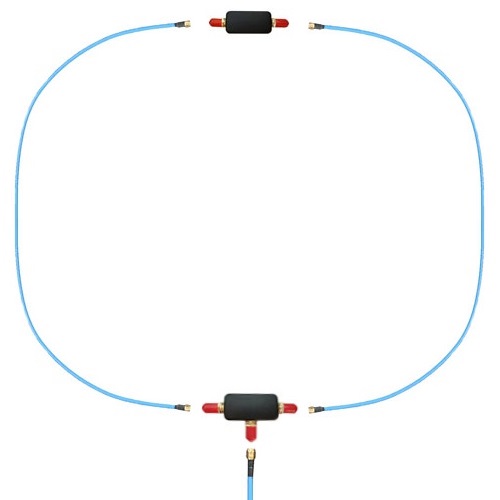
I had assumed the the crossover component of the antenna was the transformer component. I realized the mistake I made when I saw some of the first promotional photos of the Youloop antenna a few weeks ago.

The crossover connects both sides of the loop while the tee junction contains the transformer.

Doh! I’m trying to forgive myself for making such an obvious mistake, but in my defence–and in the spirit of full disclosure–my antenna was a very early sample prototype without instructions, diagrams, etc. so I set it up imagining it being similar to the homebrew loop Vlado and I built. (FYI: When I say “Vlado and I built” it, I really mean, “Vlado built it.”) 

So obviously I made a poor assumption.

Once I assembled the antenna correctly? Wow. Just. Wow!

Youloop: The ideal travel antenna for high dynamic range SDRs

The Youloop, Airspy HF+ Discovery, SDRplay RSPdx, and all cables easily fit in my Red Oxx Lil Roy pack.

The Youloop is truly the travel antenna I’ve always wanted for portable SDR DXing. Here’s why:

  • It’s incredibly portable and can be rolled up to fit in a small travel pouch
  • It has all of the low-noise characteristics of other magnetic loop antennas
  • It’s wideband unlike many passive loop designs
  • It requires no variable capacitor or tuner
  • It’s made of quality components
  • It requires no external amplifier nor power source
  • It takes one minute to assemble
  • It’s affordable (~$35 USD shipped)

The only caveat? To take advantage of the Youloop, you must use a high dynamic range receiver.

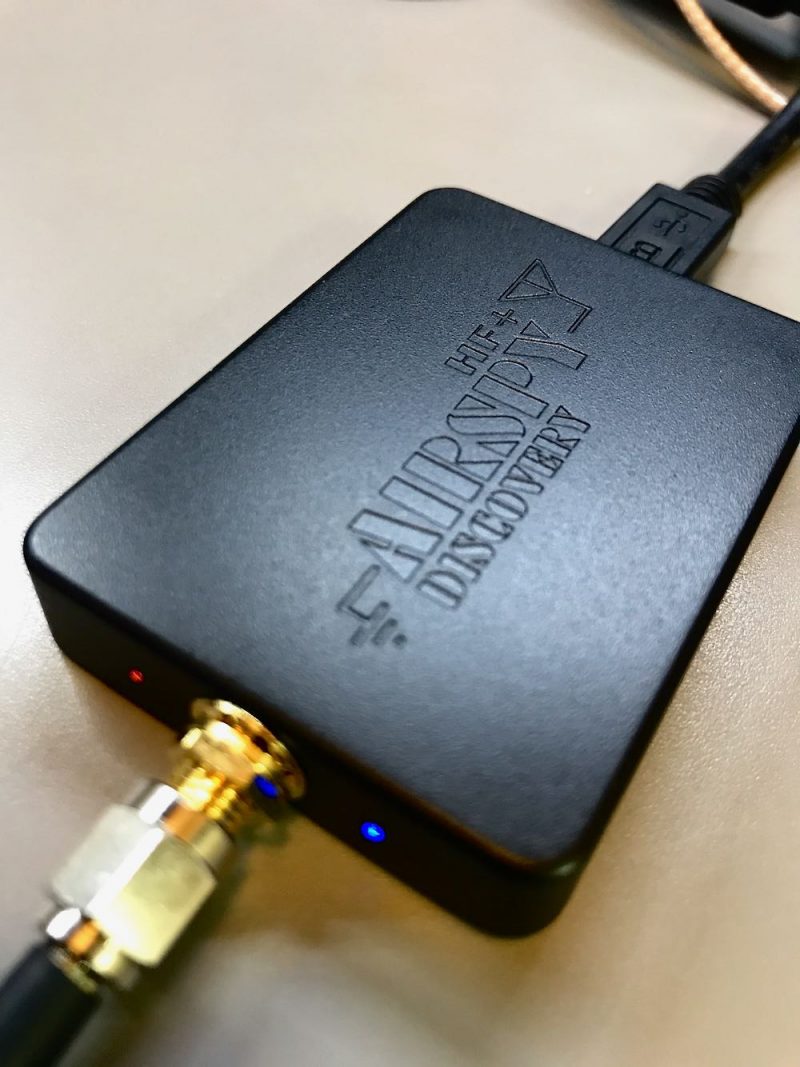
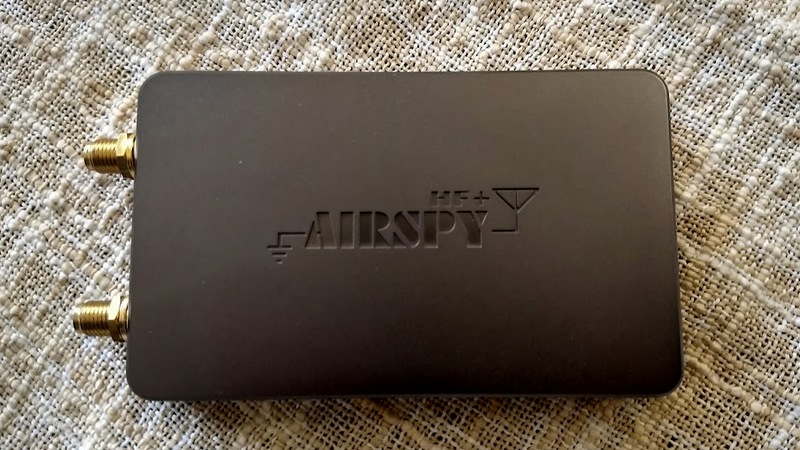
Airspy HF+ Discovery SDR

I can verify that this antenna works brilliantly with the Airspy HF+ Discovery.

The AirSpy HF+ SDR

It will also pair well with the Airspy HF+  if you shortcut R3 via the R3 modification.

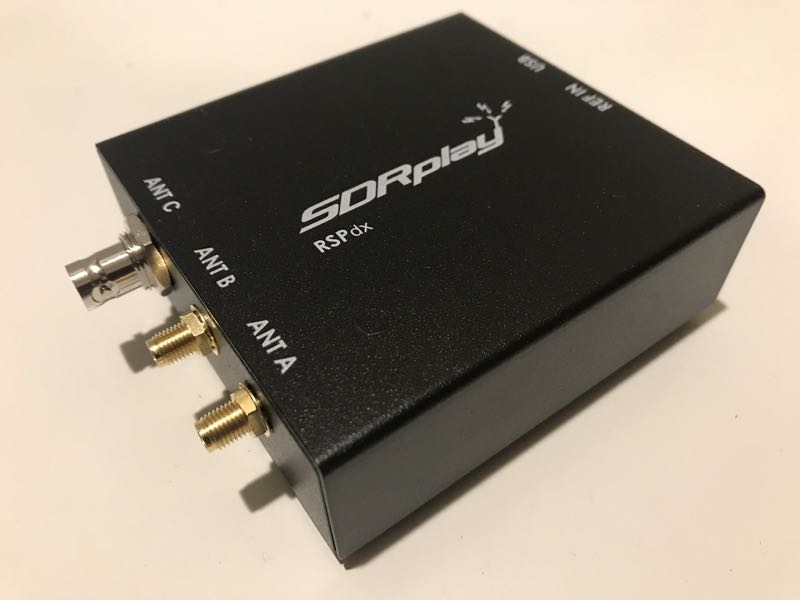
SDRplay RSPdx SDR

I’ve also used it numerous times with the new SDRplay RSPdx while using SDRuno in High Dynamic Range (HDR) mode. With the RSPdx, I can make spectrum recordings of the entire AM broadcast band. Note that HDR mode is only available on the RSPdx at 2 MHz and below, using the SDRuno app.

I have not tested the Youloop with other SDRs yet. I will soon test it with my WinRadio Excalibur.

So how well does the Youloop perform?

Listen for yourself!

I’m doing a little cargiving family members today. Their home is swimming in RFI (radio interference/noise). In the past, I’ve struggled to make good mediumwave recordings at their home–certainly an ideal situation for a mag loop antenna.

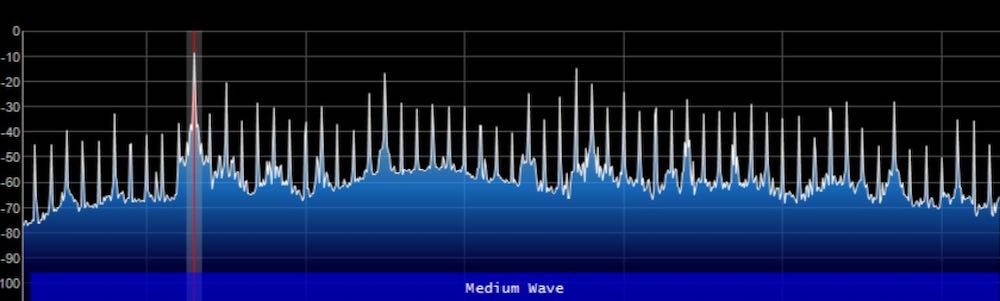
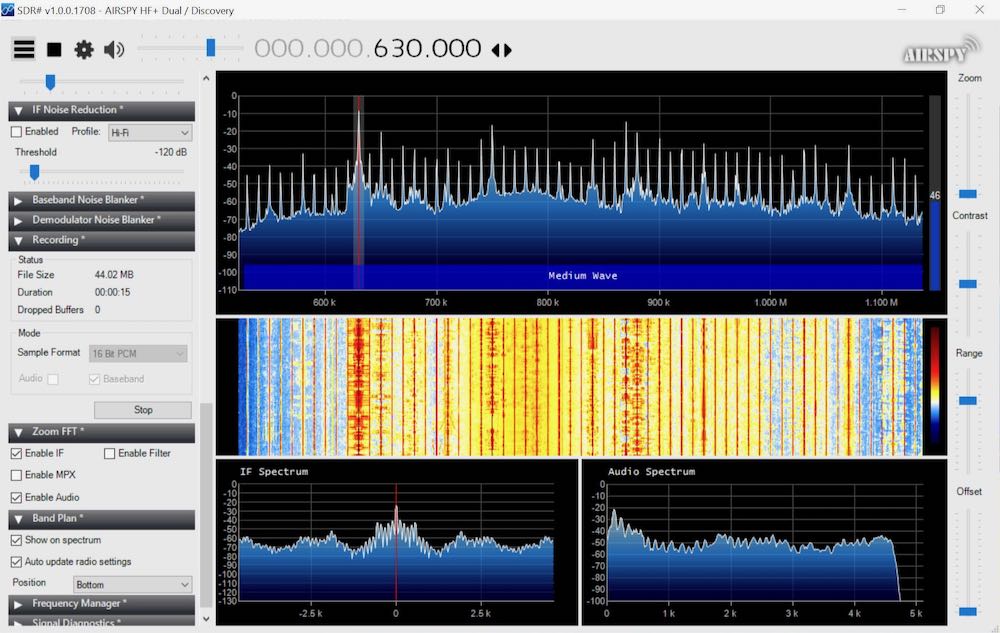
This morning, I wanted to record one of my favorite local AM stations (WAIZ at 630 kHz), so I set up the Youloop in the middle of a bedroom, hanging off a large bookshelf set against an interior wall. In other words: not an ideal situation.

When I plugged in the Airspy HF+ Discovery and loaded the Airspy SDR application, I fully expected to see a spectrum display full of broadband noise.

Instead, I saw signals. Lots of signals:

Sure, there’s some noise in there, but it’s low enough I could even do proper mediumwave DXing on most of the band if I wished.

In fact, if you’d like to experience the HF+ Discovery/Youloop pairing in this compromised, less-than-ideal DXing setup, why not tune through one of the spectrum recordings I made?

Click here to download the spectrum file [885.7MB .wav].

The recording was made on March 30, 2020 starting around 10:50 UTC. You’ll need to open this file in AirSpy’s free application SDR# or a third party SDR app that can read AirSpy .wav files.

I can’t wait to try the Youloop in other locations. Since we’re in lock-down due to Covid-19, I won’t be able to try the Youloop in a hotel any time soon. Almost all of my 2020 travel plans have been canceled.

Highly recommend

If you have one of the SDRs mentioned above, go grab a Youloop. At $35 USD, it’s a fantastic deal.

Click here to check out the YouLoop at the RTL-SDR.com store ($34.95 USD shipped).

Click here to check out the YouLoop at Airspy.US ($29.95 + shipping).

Click here to search for AirSpy distributors in your region/country.

If you don’t have a high dynamic range receiver, note that Airspy is exploring the idea of making a pre-amp for the Youloop. If interested, you might drop them a note of encouragement!

Do you have a Youloop? Please share your comments!


Do you enjoy the SWLing Post?

Please consider supporting us via Patreon or our Coffee Fund!

Your support makes articles like this one possible. Thank you!
Free Radio Skybird now on the air weekly

Many thanks to SWLing Post contributor, Pete Madtone, who writes:

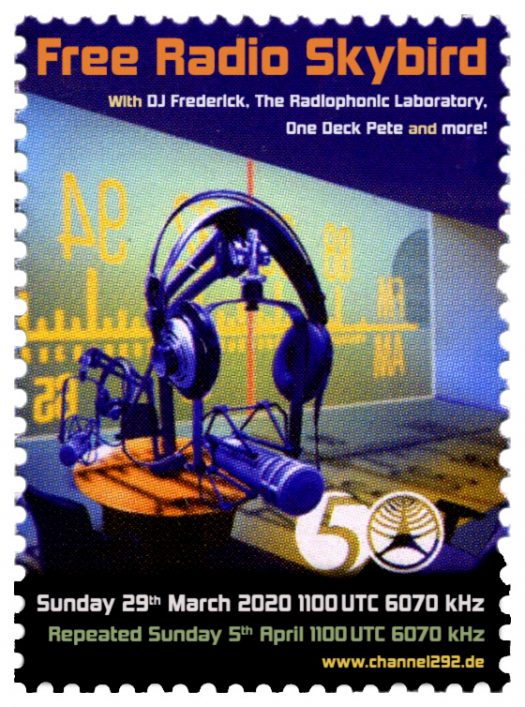
Free Radio Skybird will be on the air every week!

Once a fortnight will be new programmes and a repeat on the Sunday after. There may be changes due to what’s happening in the world but listeners can always check the Channel 292 schedule if in doubt.

All broadcasts are via 6070 and are at 1100 UTC:

March 29 – new broadcast
April 5 – repeat
April 13 – new broadcast
April 19 – repeat
April 26 – new broadcast
May 3 – repeat
May 10 – new broadcast
May 17 – repeat
May 24 – new broadcast
May 31 – repeat.

Excellent news, Pete! Thank you for sharing!

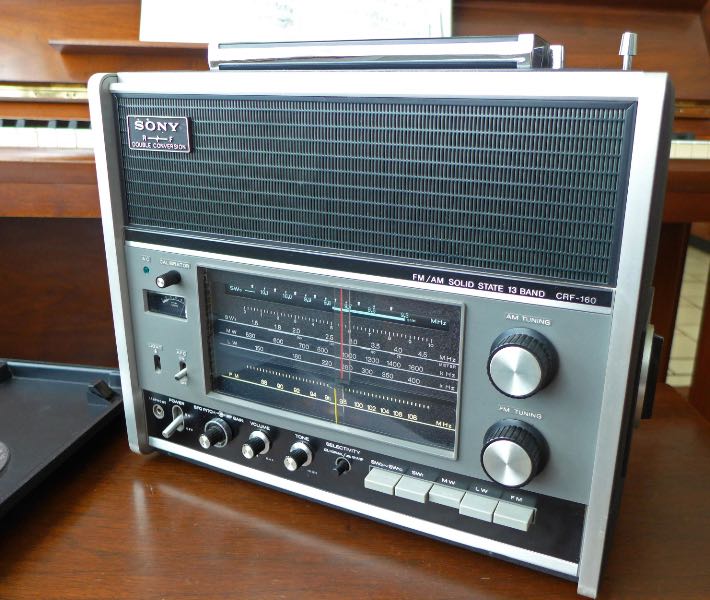
Jon’s Sony CRF-160: Should it stay or should it go?

Many thanks to SWLing Post contributor, Jon Helberg, who writes:

Greetings!

During our COVID-19 shutdown I located my old Sony CRF-160 which has been closet bound for some years now, however it has always worked as new.

[…]Other than the broken toggle switch for the light, all knobs and dials work, are present and accounted for. Upon powering up after many years in storage it lights up just fine and appears to be operational, however once powered up the volume control and every knob I turned brought loads of static to the speakers indicating corrosion of contacts, etc., so I just shut it down without testing any further.

The power cord has become a bit sticky as some plastics and rubber do over time, but of course that easily can be cleaned up. The entire radio case and front cover is intact (nothing broken, warped or bent), with the standard wear marks on the outside but otherwise fine. I do not have the box, manual, or any other accessories. The telescoping antenna looks as if it may have been slightly bent at one time (not kinked), and it extends and retracts just fine.

I have owned this radio since new but raised a family who used it as well (kids broke the light switch), so I do know it worked the last time I used it before storage, but I haven’t used it since other than just turning it on as I have mentioned above.

Photos

I don’t do much with radio any longer other than listening to AM, therefore this radio had no value to me other than sentimental (purchased it after an Army tour with ASA as a radio intercept operator), therefore looking for your thoughts on whether it’s worth getting repaired, or just focus on selling on eBay, or somewhere else?

I would have no idea as to its value, who could repair it, or the cost involved.

Tough decision, Jon, so thanks in advance for allowing me to share your inquiry here with the SWLing Post community.

I’m hoping readers can comment with thoughts on the actual value of the radio, the availability of spare parts (toggle switch), and their thoughts on whether you should keep or sell it.

I’m a nostalgic guy, so my inclination would be to keep it unless you really wanted to liquidate it for funds, or you simply have no attachment to it at all.  As custodians of vintage radios, I also feel we should try to keep them in working order.

In terms of repairs, I know my good friend Vlado (at HamRadio.repair) could re-cap it and make it like new. If you could locate a parts radio or simply a similar toggle switch, Vlado could sort that out too I’m sure.

Post readers: What are your thoughts? Should Jon keep the Sony or sell it? Are parts easy to find. Please comment and include any relevant links!